On this page
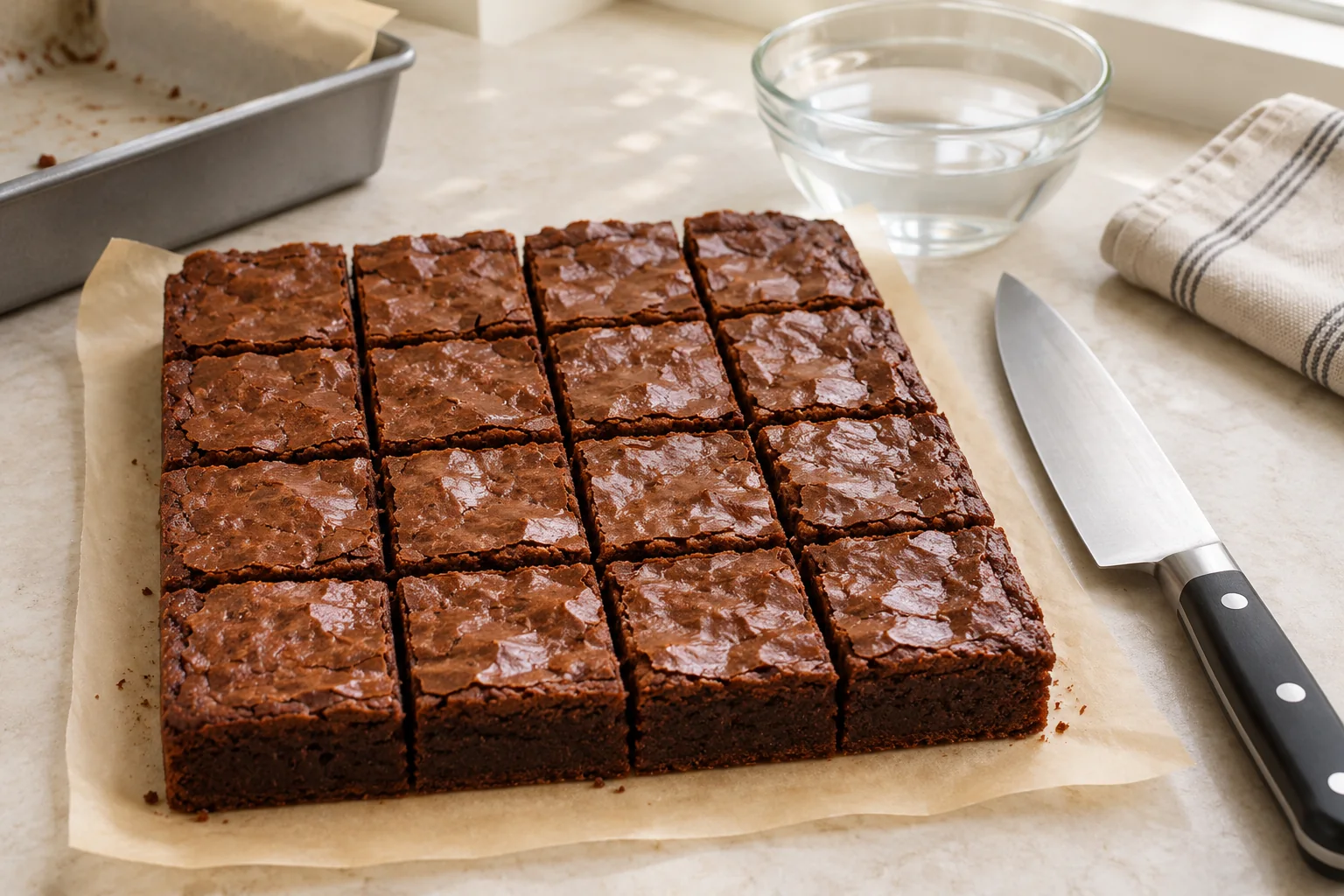
A perfectly baked pan of brownies deserves slices that show off its tender interior and shiny crust. Yet a knife dragged through warm fudge can smear chocolate across the surface, tear the edges and create uneven pieces. Clean cutting is more about managing temperature, using the right tool and planning the portion size than about having an expensive pastry gadget.
Let the slab set before cutting
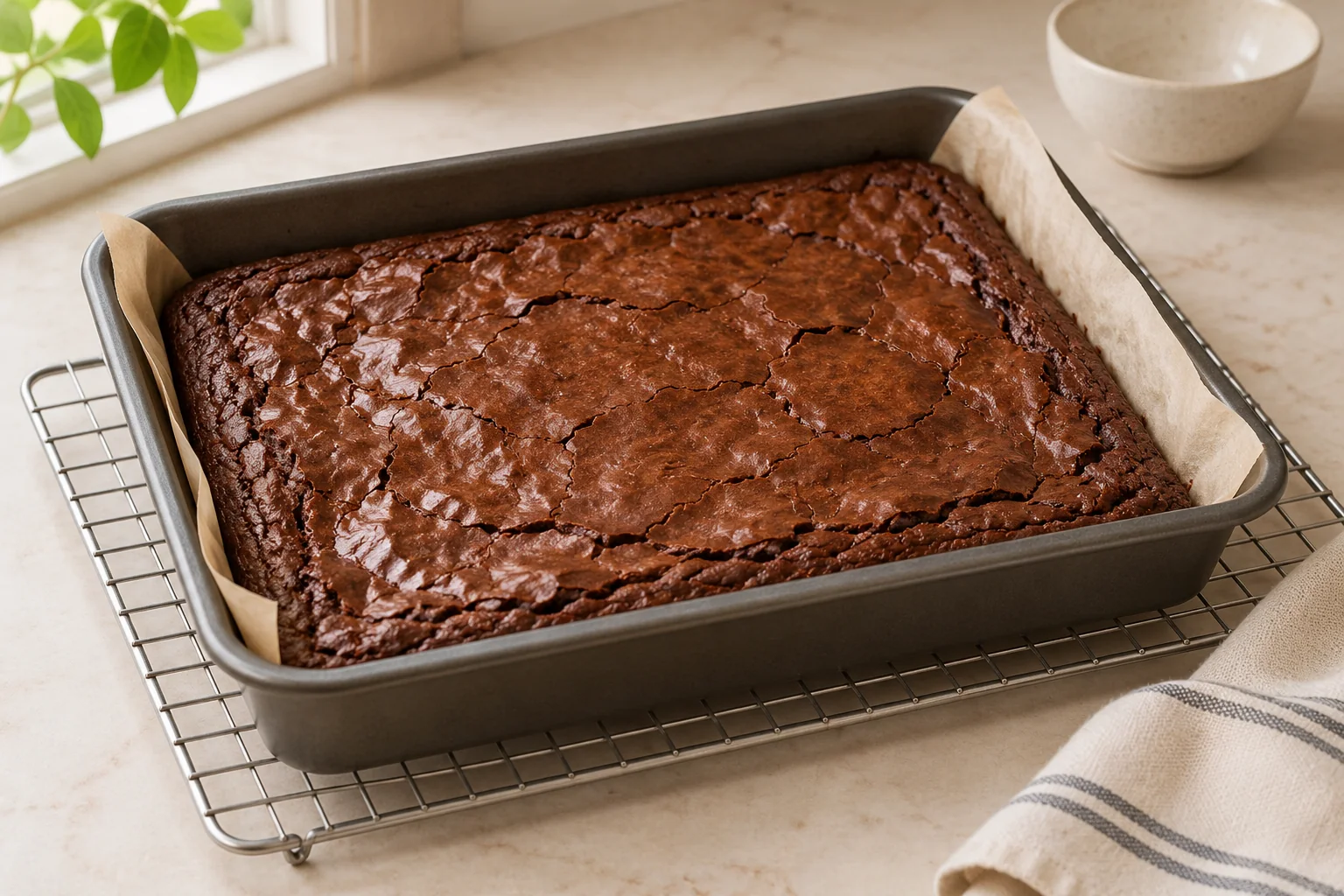
Warm brownies are more delicate because fat and sugar are still soft. As they cool, the crumb becomes firmer and holds together better. Wait for the recipe's cooling period. Cutting immediately after baking often produces ragged edges even when the brownie is perfectly cooked.
Fully cool versus chilled
Many brownies cut well at cool room temperature; very dense or extra-fudgy bars may benefit from a brief recipe-approved refrigerator chill. Chilling firms the fat and makes a soft slab less sticky. But cutting a rock-hard frozen slab can crack it, so use the temperature suited to the recipe.
Use a parchment sling
Line the baking pan with parchment extending up two opposite sides if the recipe permits. After the slab has cooled and is strong enough, lift it onto a large cutting board. This allows straight full-length cuts without trying to wedge a knife against pan walls.
Protect nonstick pans
Never make repeated deep knife cuts directly in a coated nonstick baking pan. Sharp blades can damage the surface and release coating fragments. Use a suitable spatula to remove cooled brownies or a parchment overhang to transfer them before cutting.
Choose a long sharp knife
A clean chef's knife with a sufficiently long blade can slice an entire row in one deliberate motion. A short, dull blade often requires sawing and pulls the centre apart. For especially sticky bars, a smooth-edged knife can reduce snagging, while a gentle serrated tool may suit very firm toppings.
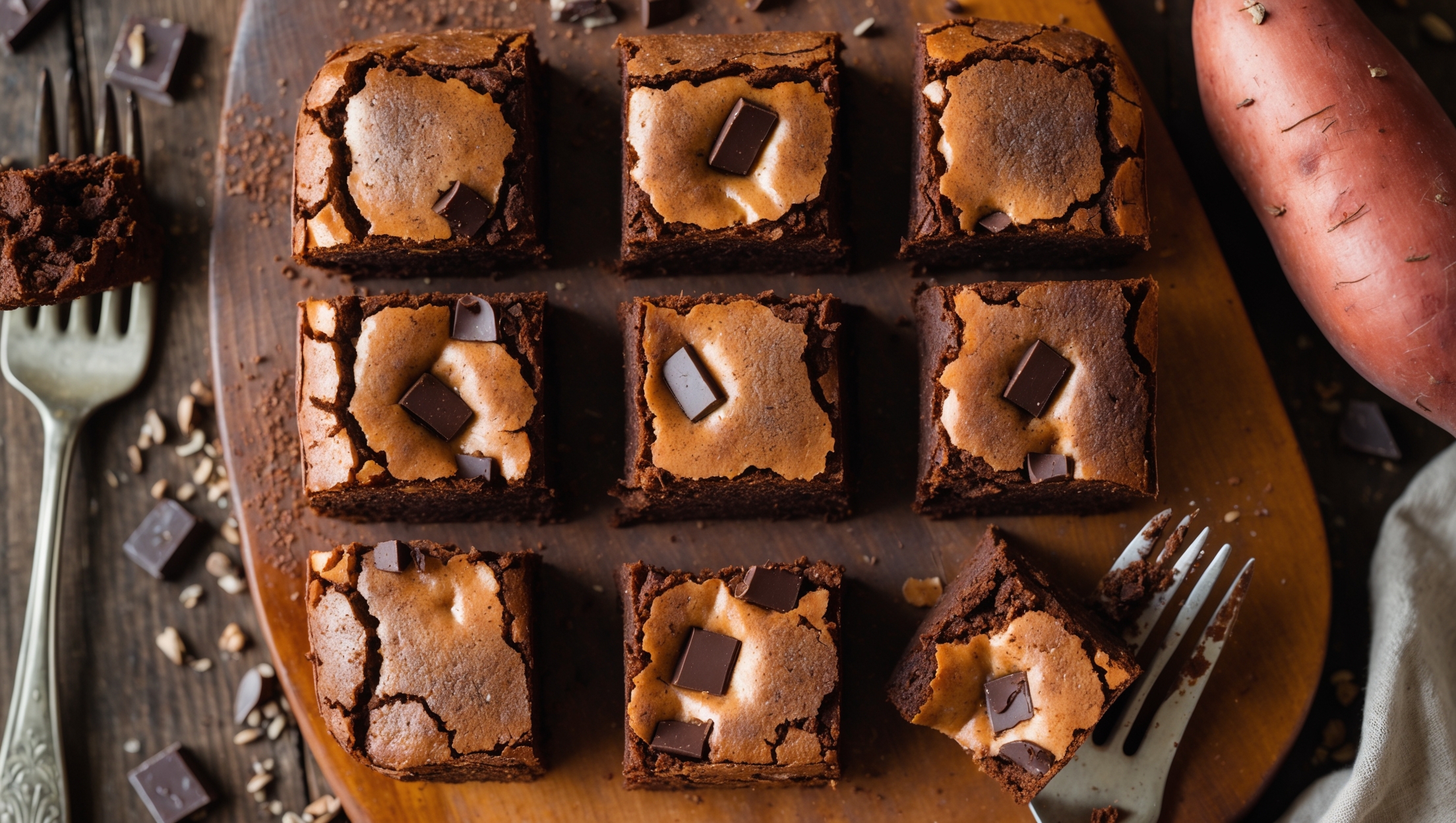
Recipe to try: Sweet Potato Brownies. These brownies use sweet potato in their own formula. Treat them as a separate option, not a direct conversion of a conventional brownie batter.
Why wiping matters
Chocolate and crumbs collect on the blade after every cut. If you make the next incision without cleaning, that residue drags through the top and coats the next slice. Wipe the knife with a clean cloth or paper towel between cuts, taking care around the edge.
Use a warm knife only when appropriate
Some bakers briefly warm a knife, then dry it completely to help pass through a chilled fudgy slab. Excessively hot or wet blades can melt chocolate or mar the glossy top. If the brownie is already soft at room temperature, chilling and a clean dry knife may work better.
A ruler makes portions consistent
Measure the cooled slab before cutting and mark equal intervals along two edges. For an eight-inch square, a four-by-four grid gives sixteen two-inch squares; a five-by-five grid gives twenty-five smaller portions. Choose portion size according to richness and audience rather than cutting at random.
Cut straight, then lift
Bring the blade down with controlled pressure and keep the line straight. Lift it out, wipe it, and repeat. Long dragging motions across a sticky surface can tear the top crust. Work at a relaxed pace instead of making repeated jagged corrections in one slice.
How to preserve a shiny crust
A delicate crackly brownie top can fracture along any cut; that is part of its character. Use a sharp blade and cool slab to minimize tearing. Pressing a blunt utensil into the surface crushes and flakes the crust more than a decisive slice.
Cutting brownies with chocolate chunks
Whole chunks and nuts create resistance. If a large chocolate piece pulls through the crumb, let the slab cool more firmly and use a sharp knife. Don't saw aggressively through the whole tray; a few neatly cut pieces matter more than preserving every chunk intact.
Recipe to try: Almond Flour Brownies. This version combines almond flour with dark chocolate. Its proportions are specific to that flour and are not a one-for-one wheat-flour conversion.

Cutting cheesecake brownies
A cheesecake swirl is softer and moister than ordinary brownie crumb. Refrigerate according to the complete recipe, use a clean sharp blade and wipe carefully between strokes. Treat these as perishable dairy-containing bars and return them to refrigeration after cutting.
Cutting caramel-topped brownies
Caramel can stretch into threads or stick to the knife. Some tested recipes recommend chilling until the caramel sets before portioning. A thin dry blade and cleaning between cuts can reduce dragging. Avoid heating the knife until it melts the entire topping.
Cutting layered bars
Bars with a brittle top, soft middle and firm biscuit base sometimes need their own temperature and cutting technique. If a chocolate topping shatters, follow the layered-bar recipe's recommendation, which may involve scoring the top before it fully firms.
How to make triangular pieces
For a party platter, cut even squares first and then divide each diagonally. This creates small elegant portions without requiring complex measuring on the full slab. Use a sufficiently sturdy bar so the diagonal point doesn't crumble on transfer.
How to make bite-size cubes
Small pieces showcase rich chocolate without overwhelming guests. Mark a grid with a ruler, cut after complete cooling and handle with a flat spatula or clean gloved hands. Very soft brownies may need more chilling before they can hold a tiny cube shape.
A pizza wheel isn't always ideal
A wheel can work for firm cookie bars but may drag through very fudgy brownies or compress their crackly crust. Try a sharp knife first. If you do use a wheel, clean it between rows and ensure the slab is firm enough to prevent smearing.
Presentation on a dessert tray
Arrange pieces with a little space so glossy tops remain visible. A light dusting of cocoa or powdered sugar can be applied just before service where the recipe permits. Avoid hiding irregular cuts beneath thick frosting that changes the dessert's intended balance.
Recipe to try: Black Bean Brownies. Black beans and cocoa form a different brownie base. Use the stated preparation and baking cues for this formula.

How to store cut brownies
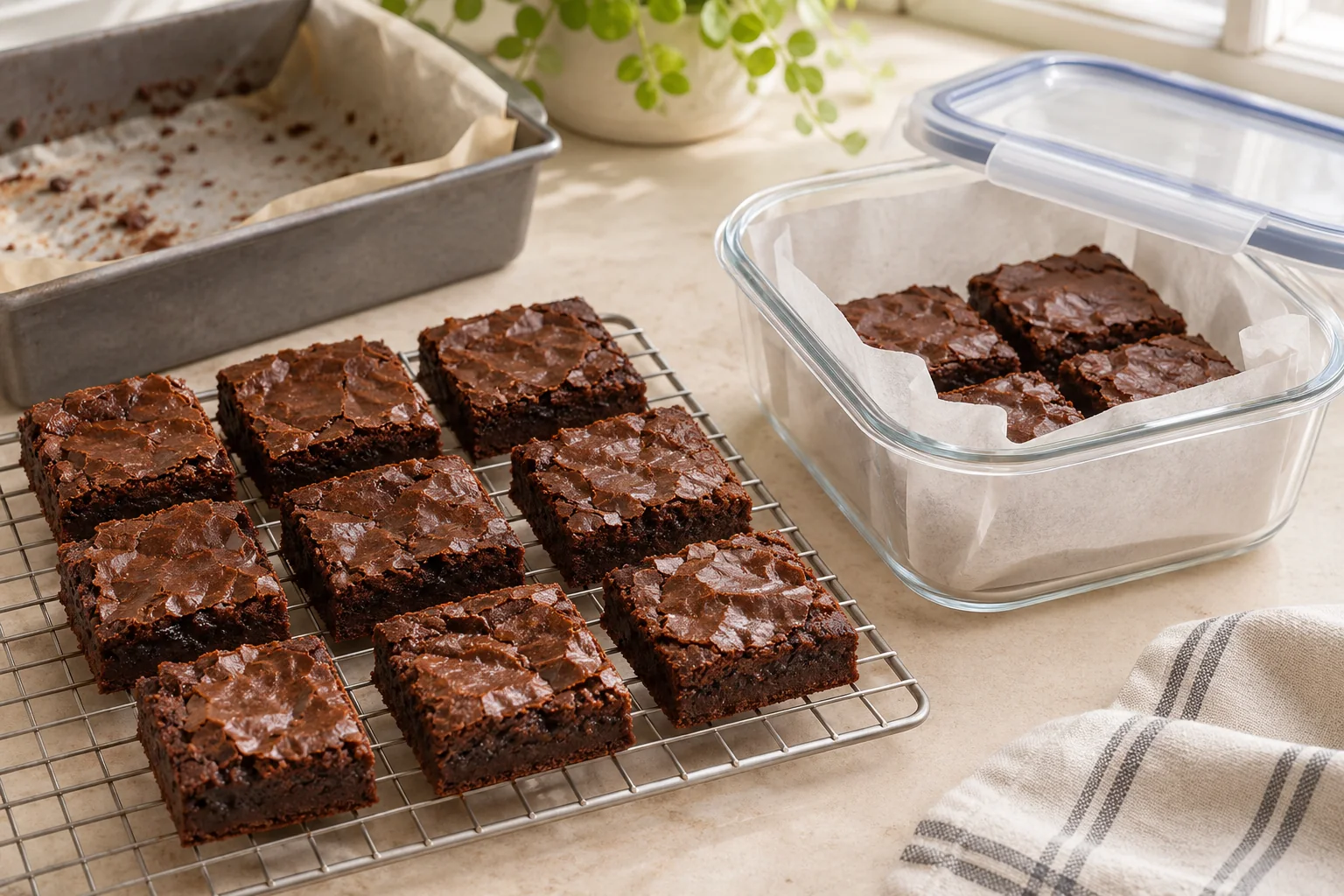
Every cut exposes another surface to air. Wrap cooled portions promptly or keep them in a suitably sealed container, with parchment between layers when sticky. Refrigerate perishable versions. For a make-ahead party, consider leaving the slab whole until shortly before serving.
Fixing crumbs and broken corners
A few fragments are normal, especially at the crusty corners. Use a clean knife and gentler handling for the next cut. Crumbs can be reserved for another fully cooked dessert if safe to use; don't press broken bits back into the finished slab and claim they're seamless.
Why your knife still sticks
The slab may be too warm, very high in chocolate fat or insufficiently cooked, and the blade may carry residue. Try longer cooling or a short chill according to the recipe. If the centre is genuinely raw, chilling won't make it safely cooked.
Frequently asked questions
Should I cut brownies hot? Not for clean edges. Is a warm knife better? Sometimes for chilled fudgy bars, if dried carefully. Can I cut in the pan? Avoid doing so in nonstick cookware. How do I get equal squares? Measure the slab and use a grid. Does refrigerating always help? It often firms a soft slab but may alter the eating texture.
Cut once, cut cleanly
Cool the brownie until its structure can support slicing, lift it onto a board, mark portions and use a long clean blade. Wiping between cuts is the small professional habit that makes the biggest visible difference.
IN PICTURES
From the baking notebook
FROM THE RECIPE BOX


