On this page
A brownie recipe can fail even when its ingredients were measured perfectly if the batter goes into the wrong pan. Move it from an eight-inch square to a nine-inch square and it becomes noticeably shallower; squeeze the same batch into a smaller pan and the centre has farther to cook while the edges brown. Knowing how pan area affects batter depth helps you choose a better pan and troubleshoot chewy, fudgy or dry results.
Start with the pan area
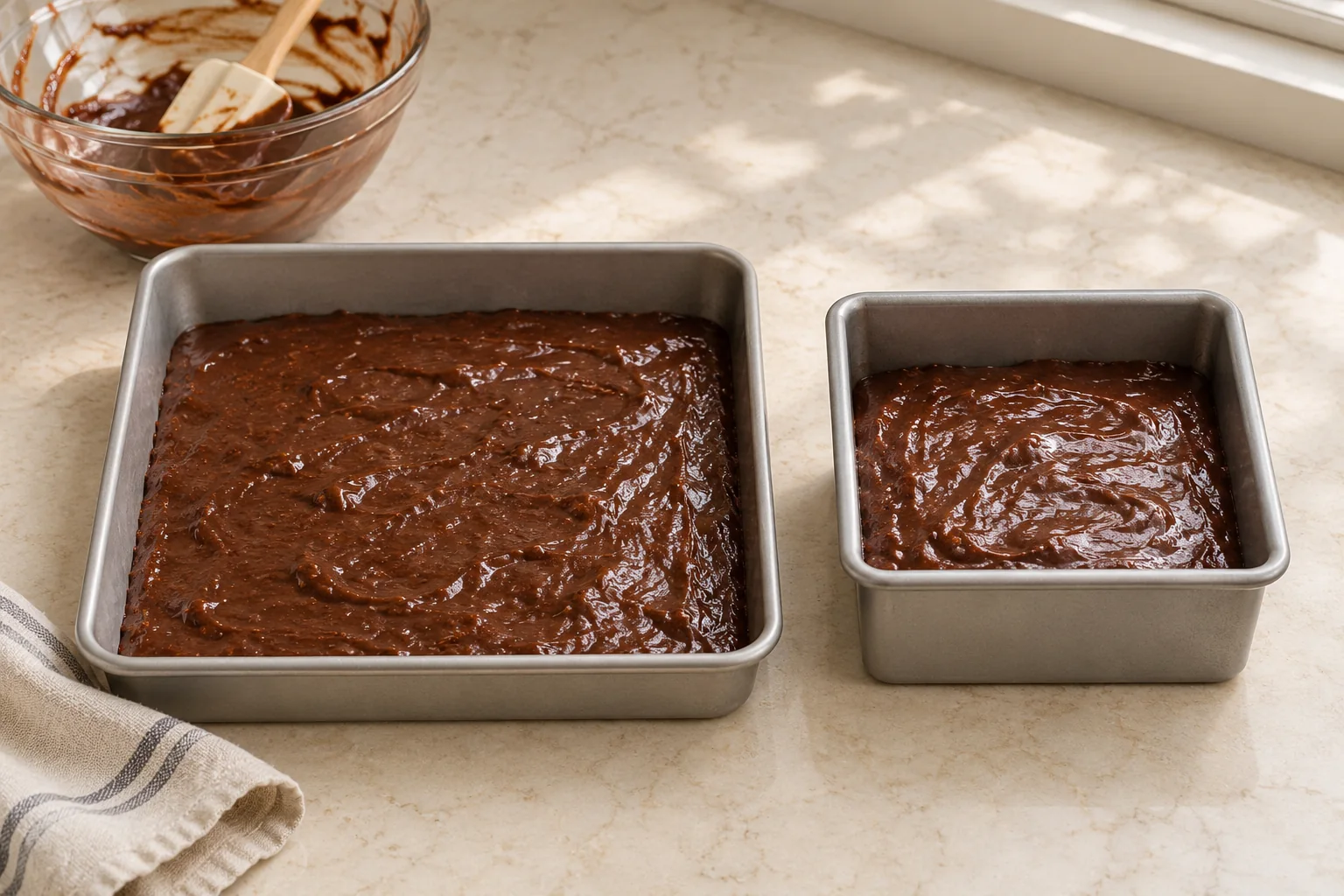
For ordinary rectangular pans, multiply the inside length by width to compare their footprints. An eight-inch square is 64 square inches, while a nine-inch square is 81. A nine-by-thirteen-inch pan is 117. That means the same amount of batter spreads much thinner in the larger pans, assuming broadly similar wall shapes.
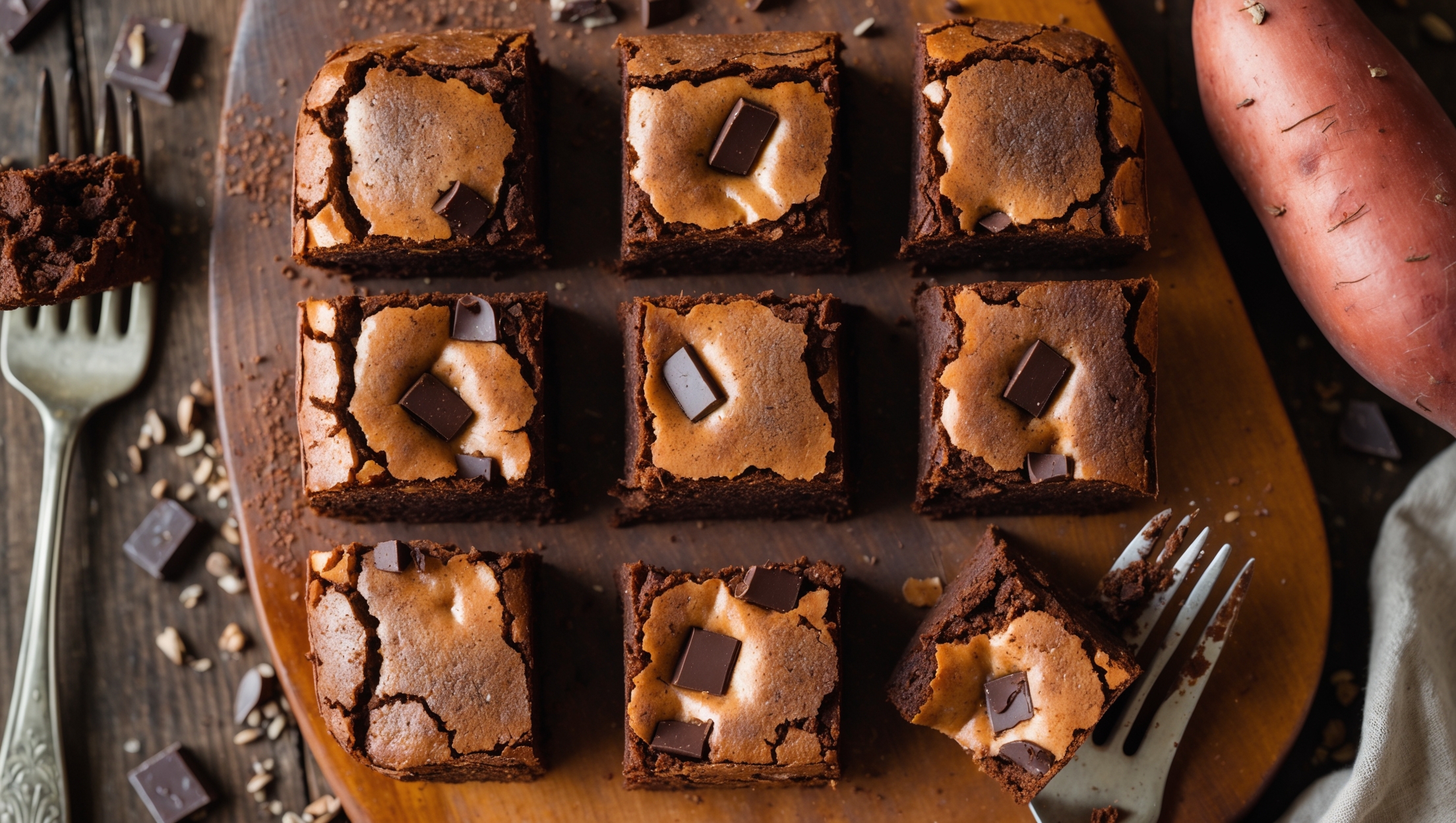
Recipe to try: Sweet Potato Brownies. These brownies use sweet potato in their own formula. Treat them as a separate option, not a direct conversion of a conventional brownie batter.
The difference is bigger than it looks
An eight-inch square and nine-inch square differ by just one inch on each side, but the larger area is roughly 27% greater. That's significant for a brownie batter. Using a nine-inch pan instead of the specified eight-inch one generally produces a thinner slab and can change when the centre finishes cooking.
What happens in a smaller pan?
The batter becomes deeper, so the oven must heat the centre through a greater thickness. The outer edges can set and brown before the middle finishes. This is especially important with very fudgy formulas that look soft even when cooked. A recipe-tested conversion is safer than simply extending baking indefinitely.
What happens in a larger pan?
A wider pan makes a shallower layer with more exposed surface. It may bake faster and develop a higher proportion of crisp edge relative to chewy centre. If baked for the original time, it can become dry or hard. Begin checking earlier only when using a conversion supported by the recipe.
How to scale batter by area
When you want the same approximate thickness in a different same-depth pan, the area ratio is a useful starting point. A nine-inch square is 81 divided by 64, or about 1.27 times the area of an eight-inch square. However, multiplying every ingredient by 1.27 can be awkward for eggs, small amounts of leavener and pan depth, so a tested resized recipe is preferable.
An eight-inch square pan
This size often produces relatively thick brownies from recipes designed around it. The centre can stay fudgy while the edges become set. Its depth makes accurate doneness checking important. Don't assume every dense brownie should be baked in an eight-inch pan; the required batter amount varies by formula.
A nine-inch square pan
This pan can be a good choice for a moderately thinner brownie or for formulas specifically developed around its area.
The nine-by-thirteen-inch pan
A larger rectangular pan is useful for party-sized batches. But a recipe intended for a small square pan may produce an unappealingly thin slab if poured into it unchanged. Use a tested large-batch recipe with a suitable ingredient yield and baking time rather than making a single small batch stretch.
Depth matters as well as width
Two pans with the same footprint may have different wall heights. The actual amount of batter and the fill level determine whether there is enough headroom. Brownie batter normally needs room to rise and set; overfilling can produce overflow or a very wet centre.
Glass, metal and ceramic bake differently
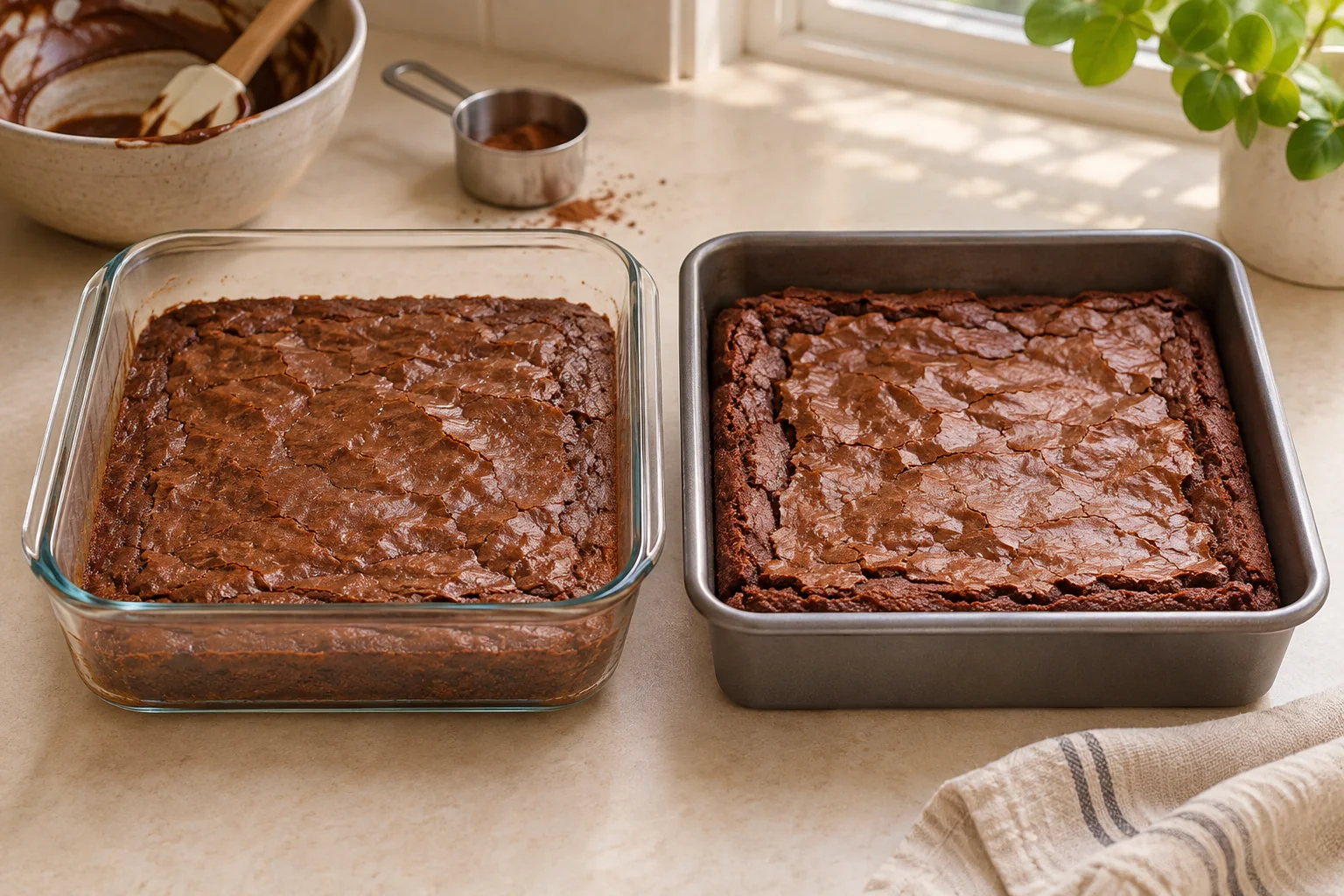
Metal typically transfers heat differently from glass or ceramic, and dark finishes may promote faster browning. A pan-size conversion is therefore only one variable. Switching size and material simultaneously makes troubleshooting difficult because you won't know which change drove the outcome.
Why edge pieces differ from centres
Pan walls deliver heat to the edges earlier. Edge pieces may be firmer or slightly crisp, while the centre can stay denser. A wider, shallower pan changes the ratio of edge area to interior. If you're baking for people who prefer chewy centres, pan dimensions are part of the dessert design.
Does pan colour matter?
Dark-coloured metal can brown the base and edges more aggressively than shiny or light-coloured metal. The recipe may specify a temperature adjustment. Avoid assuming that dark metal requires one universal reduction across every oven and formula.
Parchment affects handling more than depth
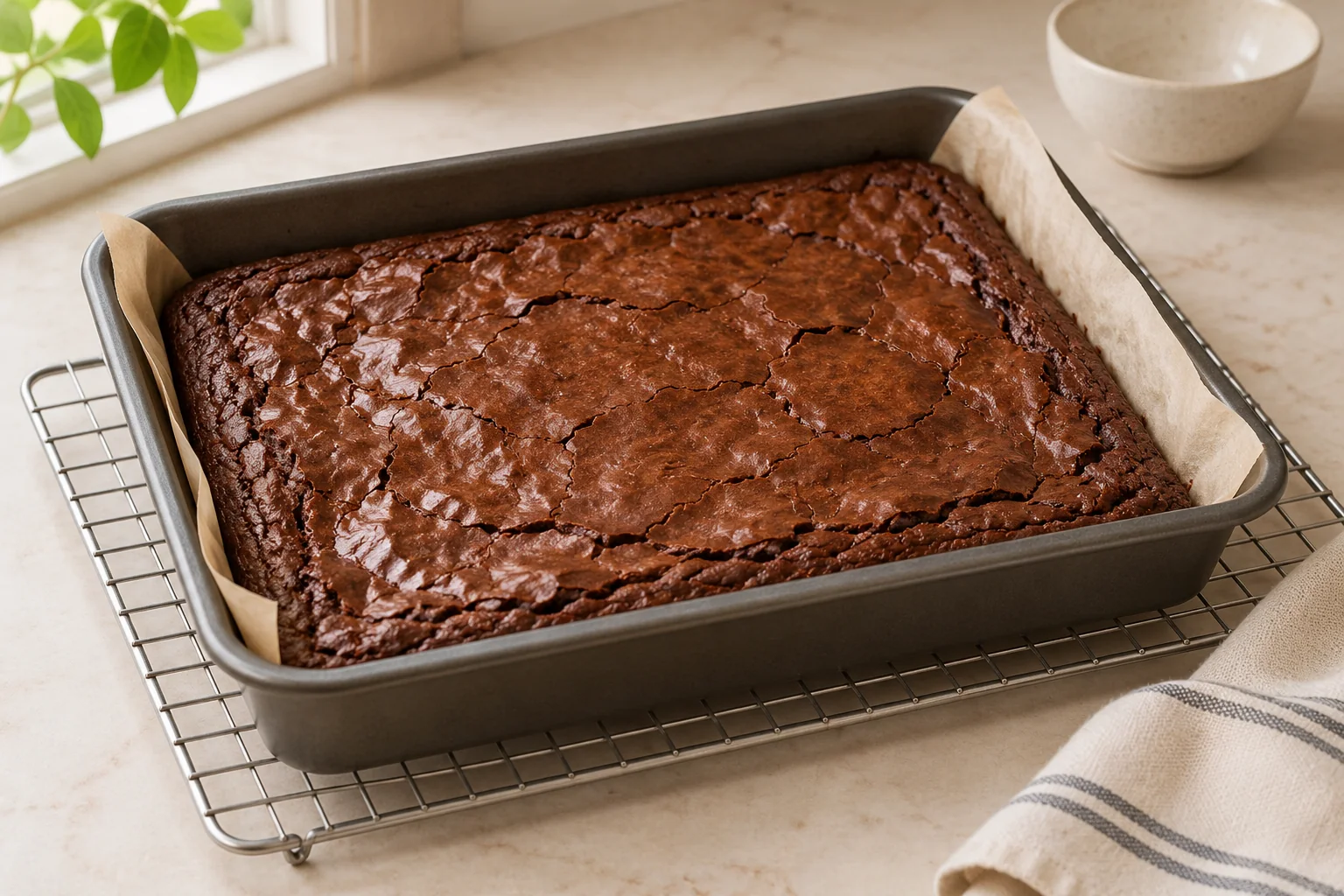
A parchment sling helps lift a slab without damaging the pan or cutting around its walls. Use it according to the recipe and keep it beneath the recommended oven temperature limit. It doesn't compensate for choosing a pan far too deep or too shallow.
How to estimate batter thickness
Before baking, spread the batter evenly and compare its approximate depth with the recipe's images or written description. A notably deeper layer is a warning that the pan may be undersized. The exact height varies because some batters are aerated and others very dense.
Why a toothpick can mislead
A fudgy brownie may leave baked moist crumbs on a tester; a melted chocolate chip may also coat it. Raw batter is smoother, shinier and less structured. Inspect the actual centre and use the formula's tested cues rather than baking until a toothpick comes out completely dry.
Recipe to try: Almond Flour Brownies. This version combines almond flour with dark chocolate. Its proportions are specific to that flour and are not a one-for-one wheat-flour conversion.

What if the centre remains raw?
If the exterior is dark but the centre is uncooked, consider pan depth, oven temperature and the formula's bake time. For an ongoing bake, follow appropriate additional baking guidance rather than serving raw flour or egg batter. Next time, use the correctly sized pan.
Why brownies collapse in the middle
A slight settling is common in dense brownies, but a pronounced crater can follow underbaking or an ingredient imbalance. An extremely deep layer raises the risk of overdone edges and a middle without enough structure. Check the recipe before adding extra baking powder.
Why thin brownies turn hard
Overbaking is often the culprit when an oversized pan produces a thin slab. The same oven duration drives more moisture out of a shallow layer. Compare actual depth and begin checking at a time appropriate for the converted pan rather than relying on the original schedule.
Scaling for a crowd
A large batch requires more than a wider pan. Measure ingredients by weight, use a formula that accounts for the full yield and ensure your oven has room for proper airflow. Several correct-sized pans may bake more predictably than one improvised extra-deep pan.
Recipe to try: Black Bean Brownies. Black beans and cocoa form a different brownie base. Use the stated preparation and baking cues for this formula.

A simple pan conversion checklist
Confirm the recipe's inside pan dimensions, compare areas, consider depth and material, and use an established alternative baking schedule. Prepare parchment, distribute batter evenly and evaluate centre doneness. Record what changed if you experiment so the results are repeatable.
Frequently asked questions
Can I substitute a nine-inch square for an eight-inch? Sometimes, but expect a thinner layer and different timing. Does a smaller pan make brownies fudgier? It may make them thicker, but a raw centre isn't desirable. Can I double batter in the same pan? Not without a tested deep-pan method. Why are edges overdone? Pan depth, material and oven conditions may contribute.
Let the pan support the recipe
Pan choice determines how the brownie bakes from edge to centre. Match the vessel to the formula and change only one variable at a time. You'll get more consistent texture than by trying to rescue an overdeep slab with random extra minutes.
IN PICTURES
From the baking notebook
FROM THE RECIPE BOX


