On this page
Recipes tell you to rest pastry for thirty minutes, an hour or even overnight, but these aren't interchangeable instructions. Resting gives gluten time to relax, flour a chance to hydrate and butter an opportunity to reach a workable firmness. Some doughs need just one rest before rolling; laminated pastry needs several rests between folds. Learning why each pause exists makes the process less frustrating and helps avoid shrinking crusts and torn layers.
What resting accomplishes
Pastry dough changes after mixing even when it sits untouched. Hydration continues, the elastic tension from handling can ease, and chilled fat becomes firmer. These effects make rolling easier and help the pastry hold its shape during baking. The amount of rest needed depends on flour, mixing method and temperature.
Rest isn't the same as proofing
Pie crust and sweet tart dough generally rest without yeast fermentation. Croissants and some laminated yeasted pastries have both gluten rests and true proofing periods. Don't treat a refrigerated pie-dough chill as a rise, or assume an unfermented puff pastry needs to double.
Flaky pie dough: before rolling
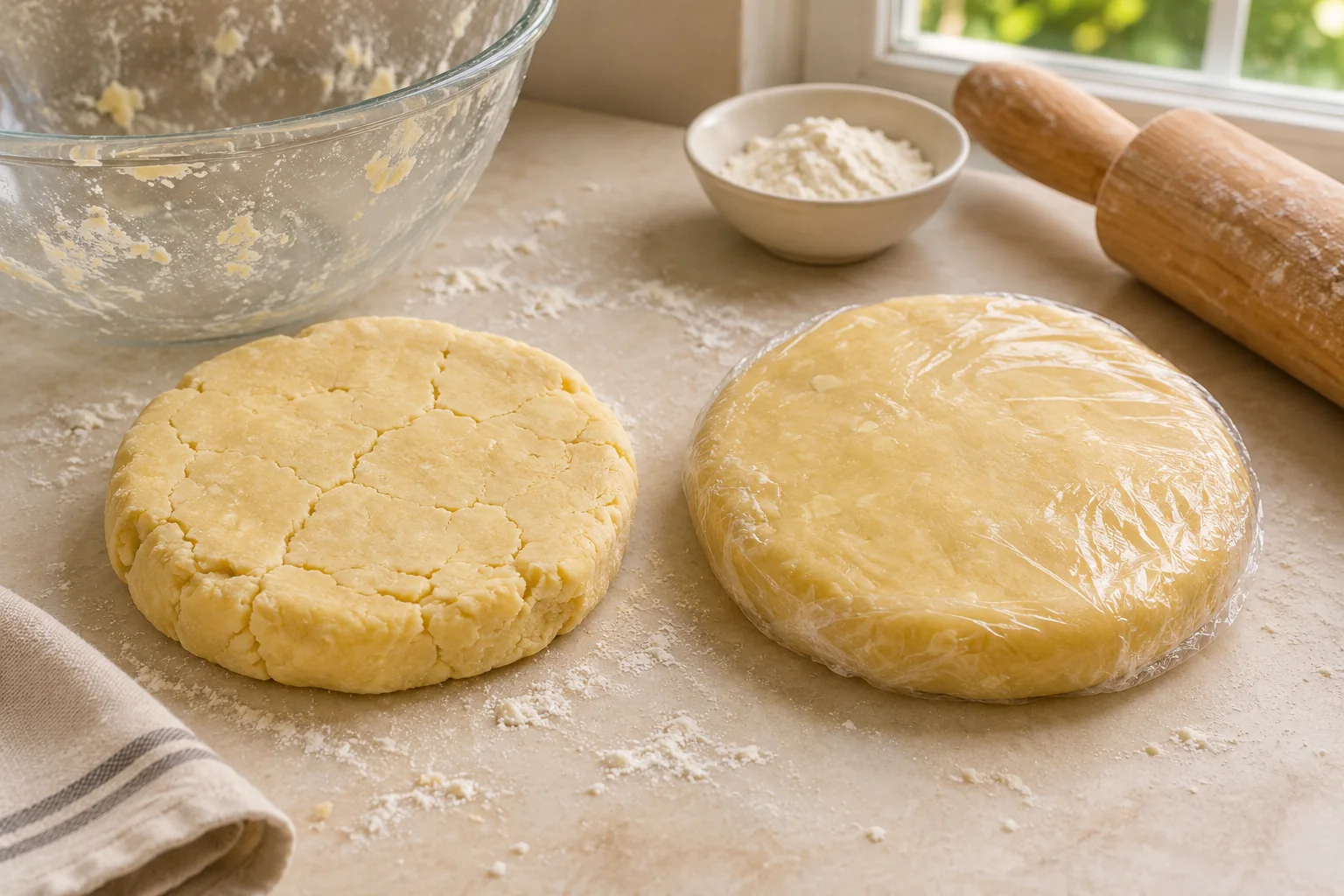
Many flaky pie crust methods ask for a covered refrigerator rest after mixing. A disk should feel cool throughout yet become pliable enough to roll without extensive cracking.
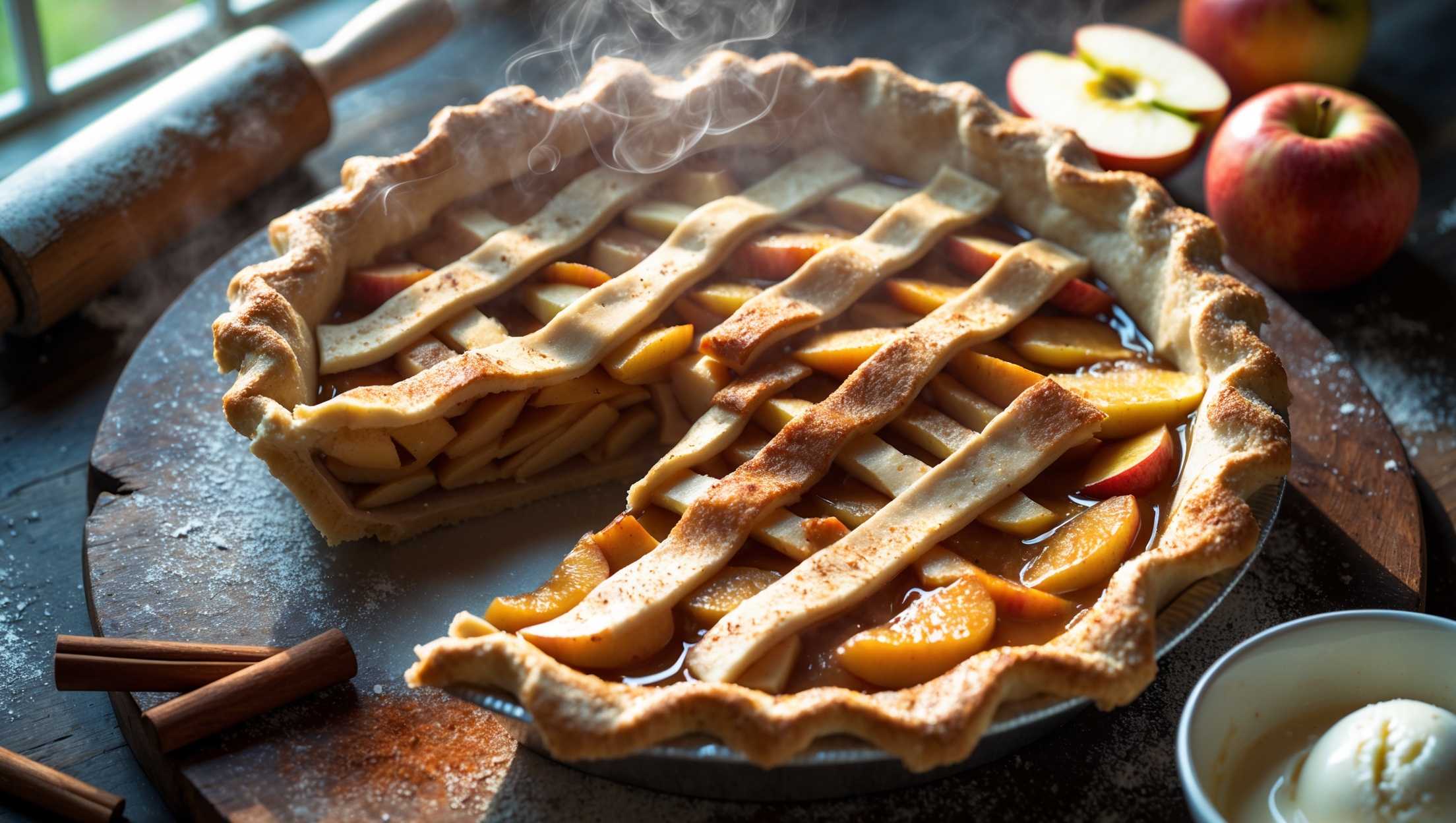
Recipe to try: Classic Apple Pie. Use the apple preparation, filling quantities and pastry method specified for this pie. A different fruit can require a different thickener balance.
Flaky pie dough: after lining the pan
Rolling stretches dough and warms fat again. Many recipes therefore specify a second chill after the shell is fitted and crimped. This is particularly useful for blind baking an empty shell, where the walls otherwise may slump when butter softens.
Why pastry shrinks without rest
Gluten formed during mixing behaves elastically; stretching can cause it to retract. An unrelaxed sheet pulled tight across the pan may spring back under heat. Resting reduces that tension, but it must be paired with fitting the dough gently rather than stretching it to reach the rim.
Sweet tart dough needs a different touch
Pâte sucrée and pâte sablée contain different proportions of sugar, fat and sometimes eggs. They can become delicate or brittle after chilling and may need a short tempering interval before rolling. Follow the tart formula's rest rather than assuming a sweet cookie-like dough should always behave like pie crust.
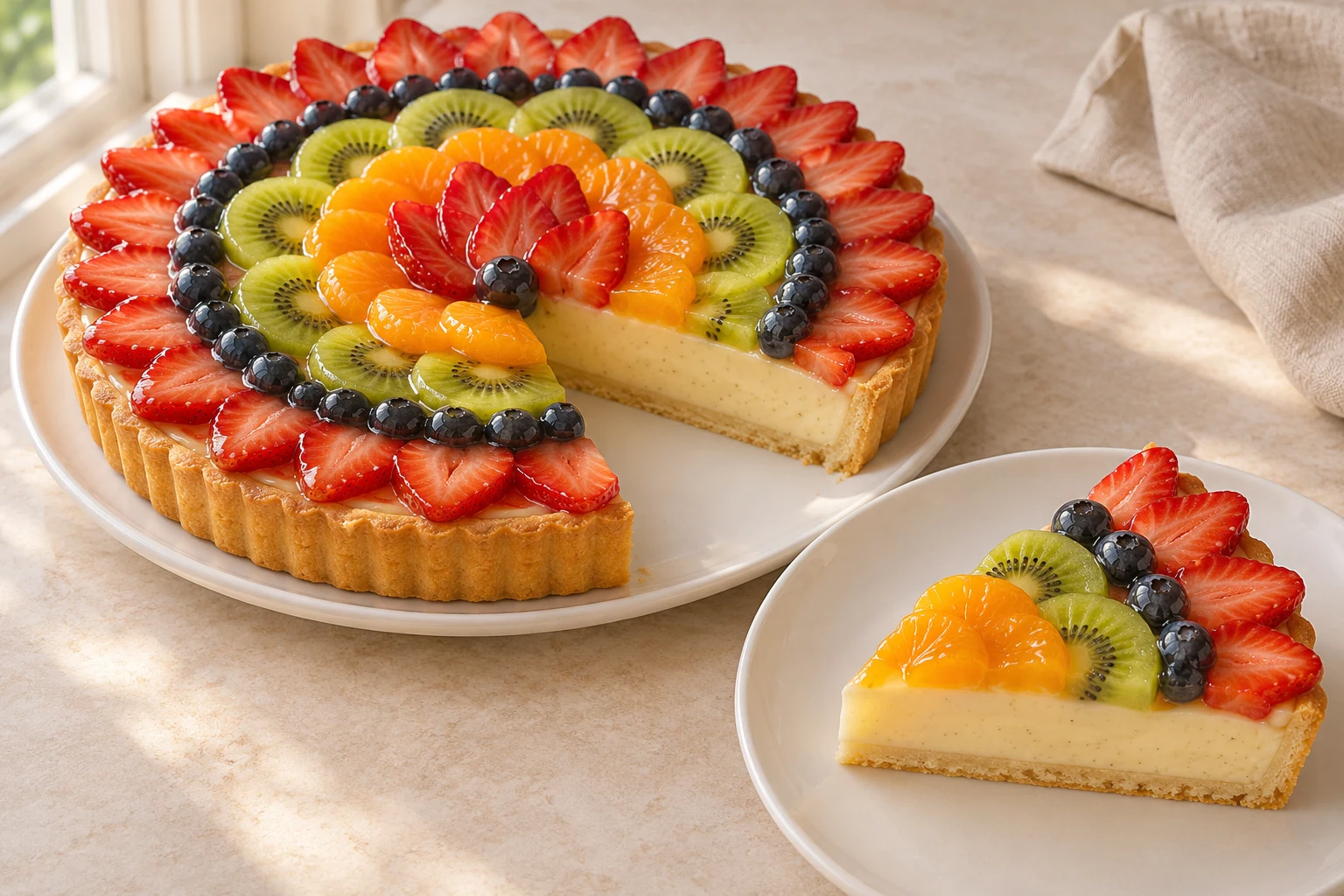
Recipe to try: Classic Fruit Tart. This tart combines a separate pastry shell and filling. Follow the recipe’s order for baking, cooling and assembly.
Puff pastry rests between turns
Each roll-and-fold sequence stretches gluten and warms the butter. Refrigeration between turns restores a compatible butter firmness and helps the dough relax. The number and duration of pauses depend on the lamination schedule, dough temperature and room conditions.
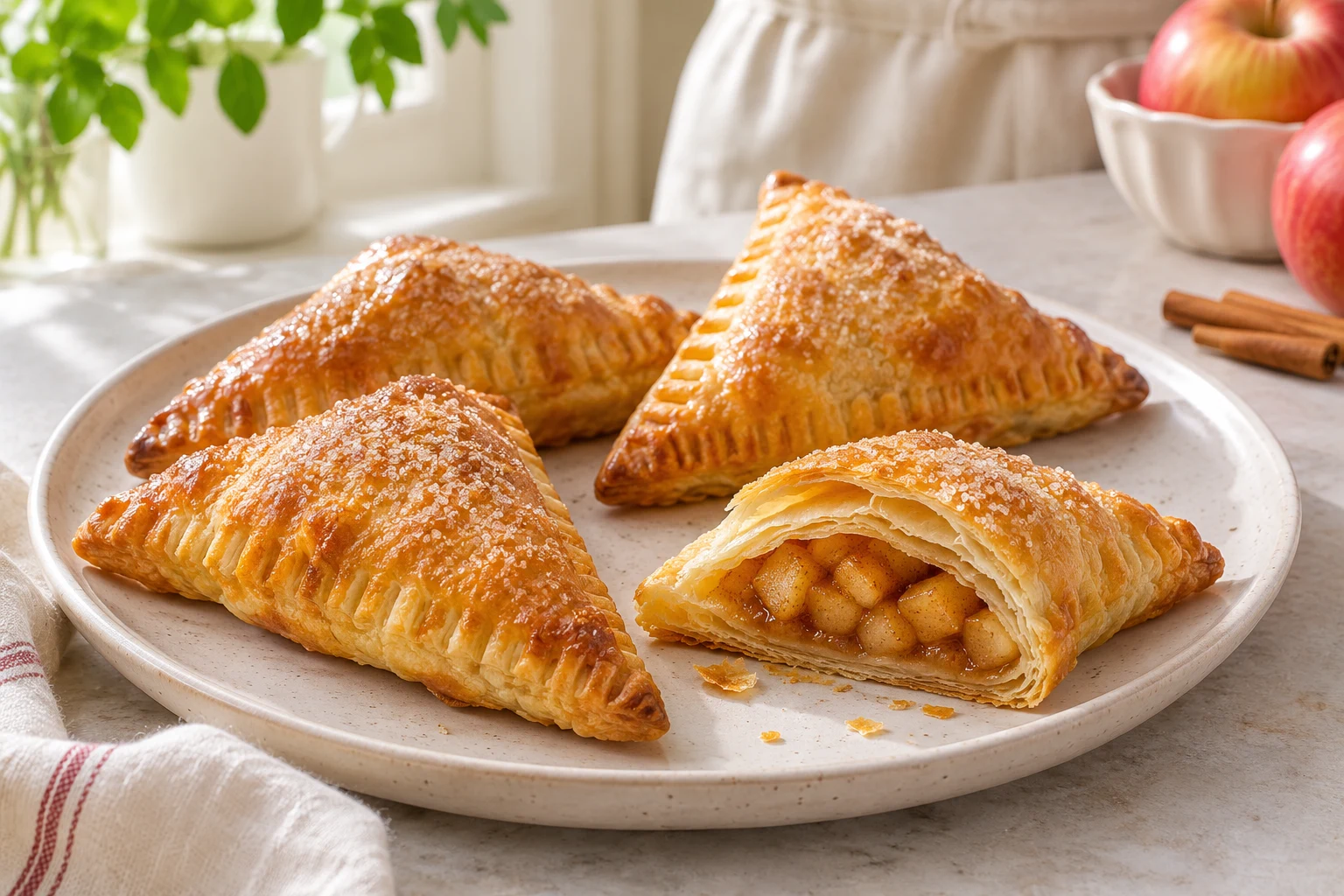
Recipe to try: Apple Turnovers. These turnovers use ready-made puff pastry. Keep their assembly and baking directions distinct from a shortcrust pie.
Why butter consistency matters
Butter that's too warm smears between dough sheets; butter that's too hard can crack into pieces during rolling. Resting is not simply about reaching the coldest possible temperature. You want a cool pliable packet whose butter and dough bend together.
Croissant dough has two kinds of waiting
Yeasted laminated dough needs refrigerated rests for rolling and separate proofing to develop gas. The final proof is generally warm enough for yeast activity but controlled so butter layers aren't ruined. Use a croissant-specific schedule, not the same chill-rest pattern as unyeasted puff pastry.
What about shortcrust quiche dough?
Savoury shortcrust commonly benefits from a covered rest before fitting into the pan. A second chill can help it maintain a clean edge through blind baking. Because quiche contains a wet custard filling, fully following the prebake method matters as much as the rest.
What if dough is too hard after refrigeration?
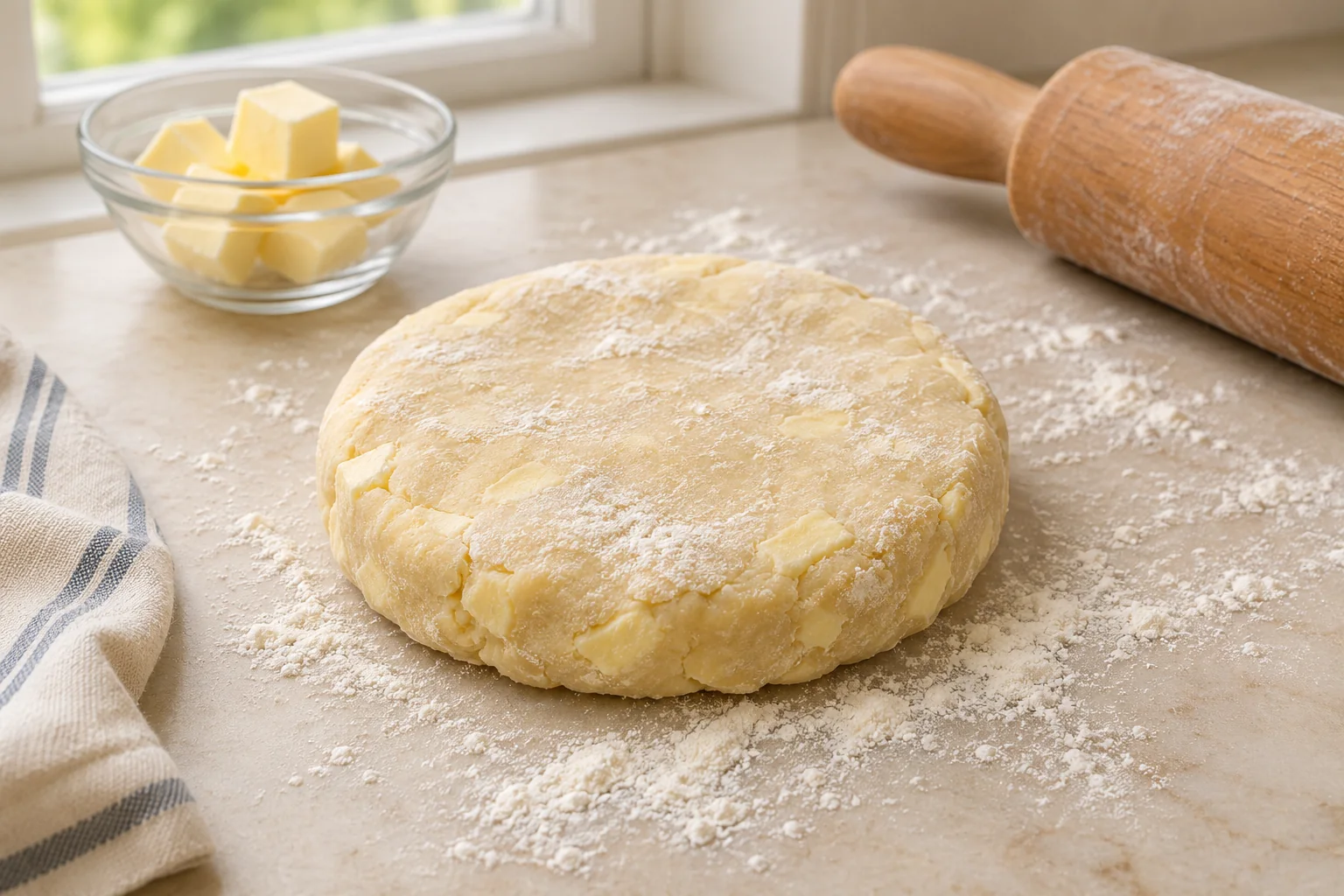
A thick butter-based disk can become extremely firm and crack if immediately rolled from a cold refrigerator. Allow the recipe's appropriate brief tempering period, checking that it remains cool. Don't soften pastry until the butter turns greasy merely to avoid using rolling pressure.
What if dough is sticky after resting?
A warm kitchen or insufficient chilling may leave the fat soft. Return the covered dough to the refrigerator and prepare a cooler working surface. Adding large amounts of flour just to eliminate stickiness can create a tougher crust.
Resting overnight
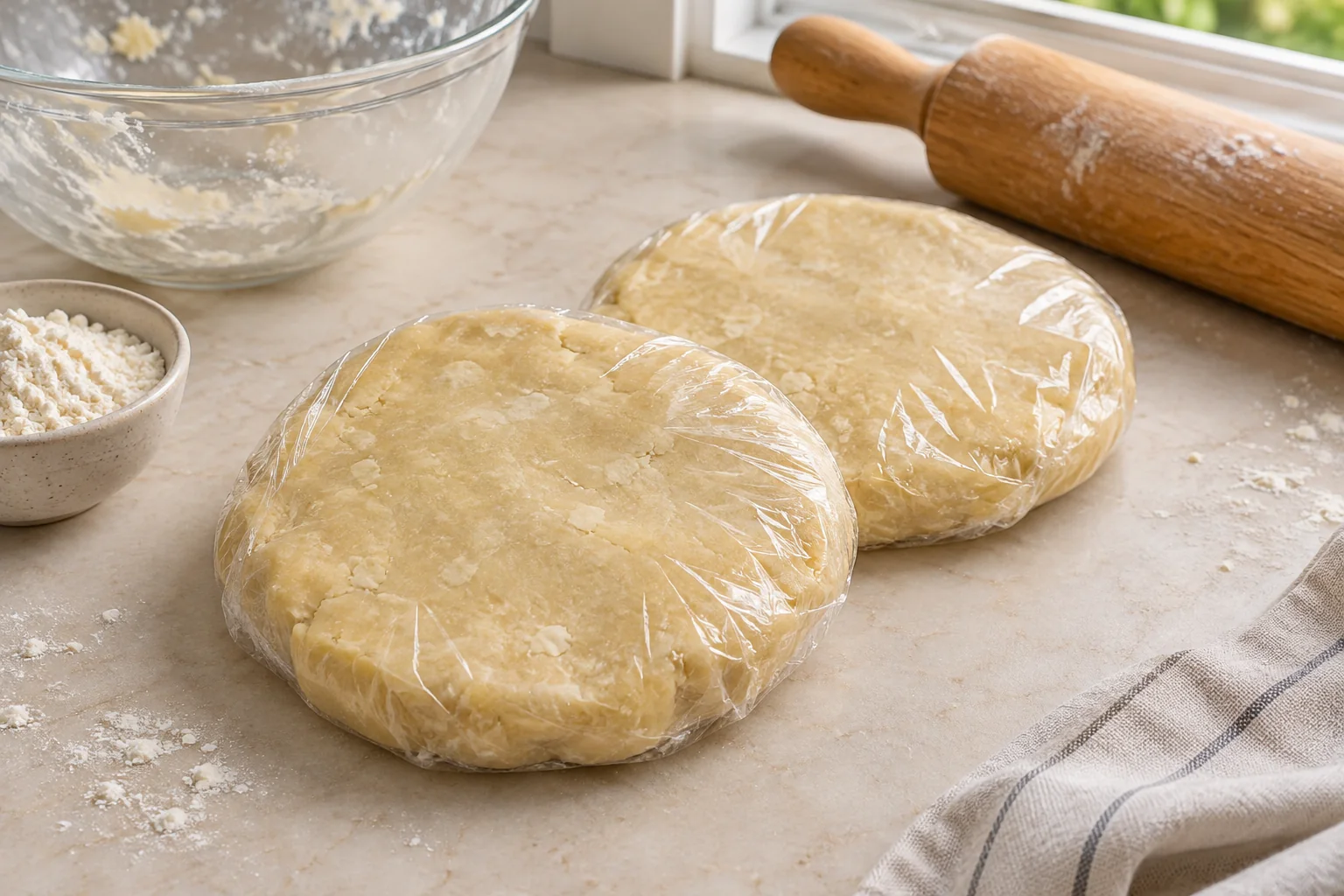
Some recipes allow or encourage an overnight refrigerator rest, which can simplify timing and further hydrate flour. Others may specify shorter holds for particular doughs. Wrap thoroughly against drying and follow food safety when the recipe contains eggs or dairy.
How do you know it has relaxed?
When rolling, properly relaxed dough extends under controlled pressure rather than springing sharply back or tearing. Its surface should not feel greasy. If it repeatedly contracts, a short additional covered rest may be more useful than pressing harder.
Why you shouldn't rush with a freezer
Rapid freezing can make the outside brittle while the interior is still warm, especially in a thick disk. For ordinary pie dough, a controlled refrigerator chill often gives more even temperature and better rolling texture. Some specific shaped-shell formulas use the freezer intentionally; follow their instructions.
When chilling isn't the answer
A dough made with too much water and excessive kneading may remain tough even after resting. Similarly, a poorly balanced pastry can slump despite cold butter. Rest supports a good formula but doesn't replace accurate ingredient ratios or gentle mixing.
Can the dough rest on the counter?
Certain recipes permit short room-temperature rests, particularly during specific stages of lamination or before rolling, but perishable ingredients limit safe holding. Follow the tested method and use the refrigerator whenever required. Don't leave egg- or dairy-containing dough on a warm counter overnight.
Handling after rest
Dust the surface lightly, roll from the centre and rotate the dough. If it warms noticeably, pause and chill again as needed. Don't knead the dough smooth to restore elasticity; that works against flaky pastry and can damage butter layers.
A practical timing checklist
For pie crust: mix, chill, roll, fit and chill again as directed. For sweet tart dough: chill until firm, temper briefly if too hard, then line and chill. For puff pastry: alternate controlled rolling and refrigerated rests. For croissants: separate lamination rests from yeast fermentation and final proof.
Frequently asked questions
Is thirty minutes always enough? No; use the recipe and dough feel. Can I chill overnight? Often when approved. Why does pastry crack? It may be too cold or too dry. Why does it shrink? Stretching, gluten tension or warm fat may contribute. Does freezing replace resting? Not automatically.
A rest is productive baking time
While pastry chills, its handling qualities improve. Plan the pauses in advance, protect dough from drying and work at a temperature where butter and flour layers remain cooperative. Those quiet intervals are part of the recipe's structure, not wasted time.
IN PICTURES
From the baking notebook
FROM THE RECIPE BOX


