On this page
It's tempting to pull a brownie from the oven and immediately cut a square while the chocolate is still soft. That warm first bite can be delicious, but it rarely produces a clean slice. Cooling is part of how brownies develop their final structure: chocolate and butter firm, moisture redistributes, and the delicate crust becomes easier to handle. The right wait depends on the recipe, the depth of the pan and whether you're serving warm dessert or neat squares.
The shortest answer
Follow the brownie recipe's cooling instructions before slicing. Some recipes recommend roughly an hour, while particularly dense or deep brownies may need to cool completely and benefit from additional chilling for immaculate presentation. There's no fixed thirty-minute rule that guarantees perfect cuts for every brownie.
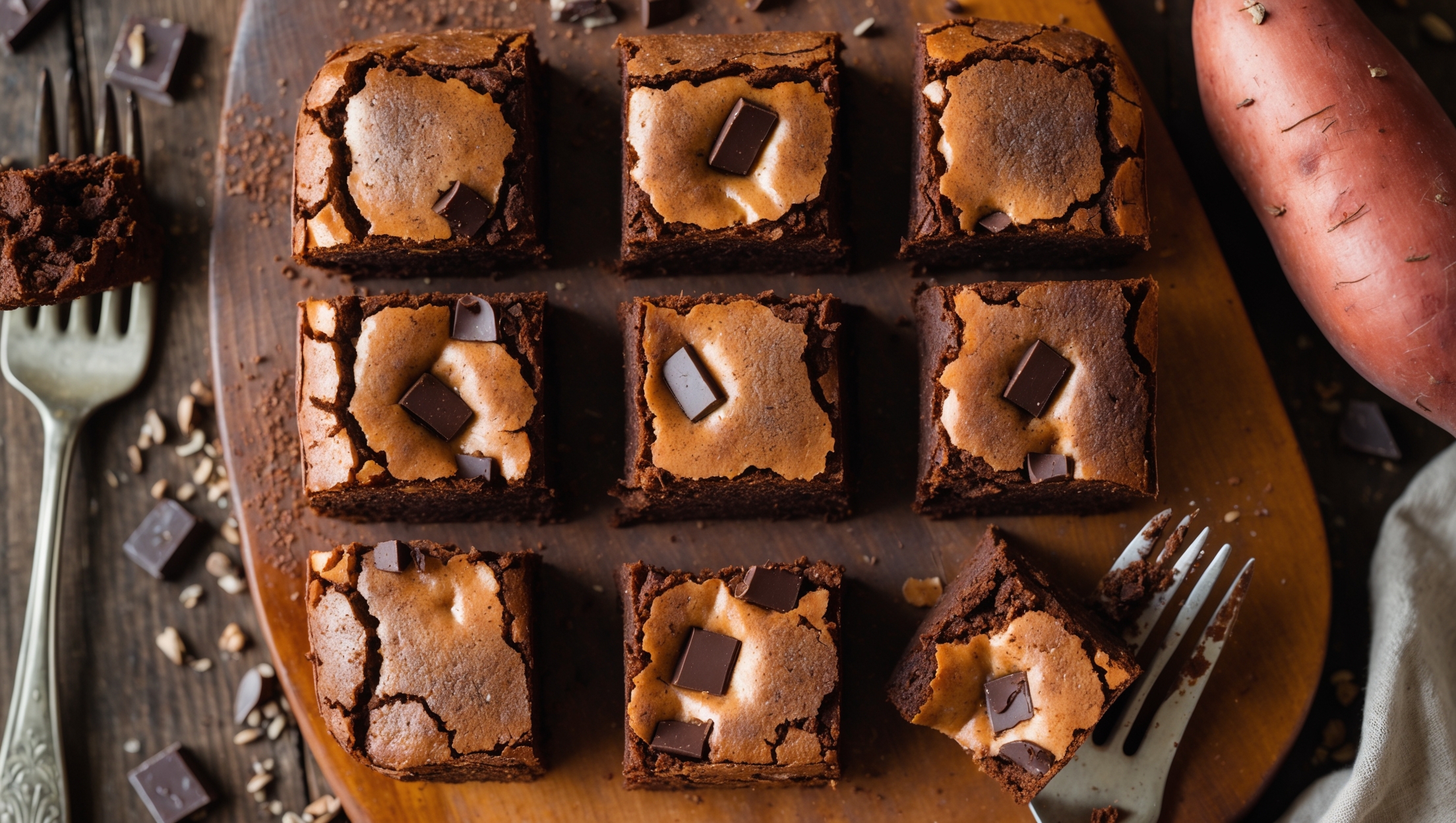
Recipe to try: Sweet Potato Brownies. These brownies use sweet potato in their own formula. Treat them as a separate option, not a direct conversion of a conventional brownie batter.
Why hot brownies feel underdone
Butter and chocolate remain fluid when warm, and a moist baked crumb is still fragile. A properly cooked fudgy brownie can therefore seem softer hot than it does later. However, raw shiny batter is different from a tender set interior; cooling does not cook an underbaked centre.
How cooling changes structure
As temperature falls, fats firm and dissolved sugar interacts with the baked matrix differently. The slab becomes more sliceable and less likely to smear. Even a cakey brownie benefits from cooling because its crumb can tear if cut immediately after baking.
Why cooling time varies
Allow the whole slab to cool before lifting and cutting. A deep pan or a thick filling needs more time than a thin plain brownie. The centre should hold its shape when lifted; a clock alone cannot tell you that it is ready.
The pan's depth makes a difference
A thick eight-inch square brownie cools more slowly through the centre than a thin sheet baked in a broad pan. Even when the top feels cool, the middle may remain warm. Don't assume that a pan-size change leaves the cooling schedule unchanged.
Pan material influences retained heat
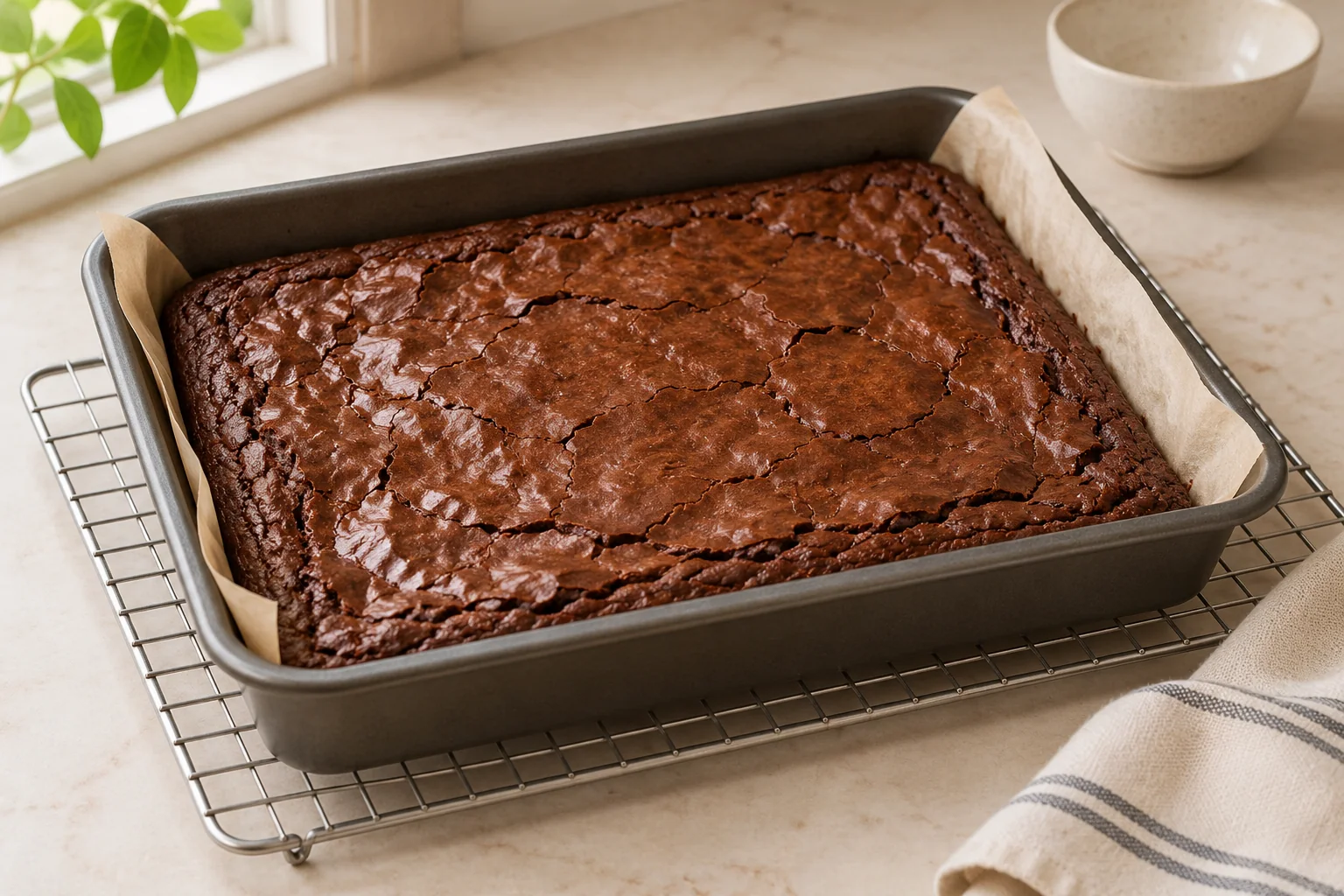
A thick ceramic or glass dish may stay warm for longer than a thin metal pan. Set it on a suitable rack or heat-safe surface as directed. All pans can remain hot enough to burn hands after the exterior of the brownie looks settled.
Why a wire rack helps
Airflow around the pan allows heat to dissipate more evenly. Keeping a hot pan on a thick, heat-sensitive tabletop is unsafe and may prolong heat retention. Use stable heat-safe supports and avoid sudden temperature changes to glass or ceramic dishes.
What about very fudgy brownies?
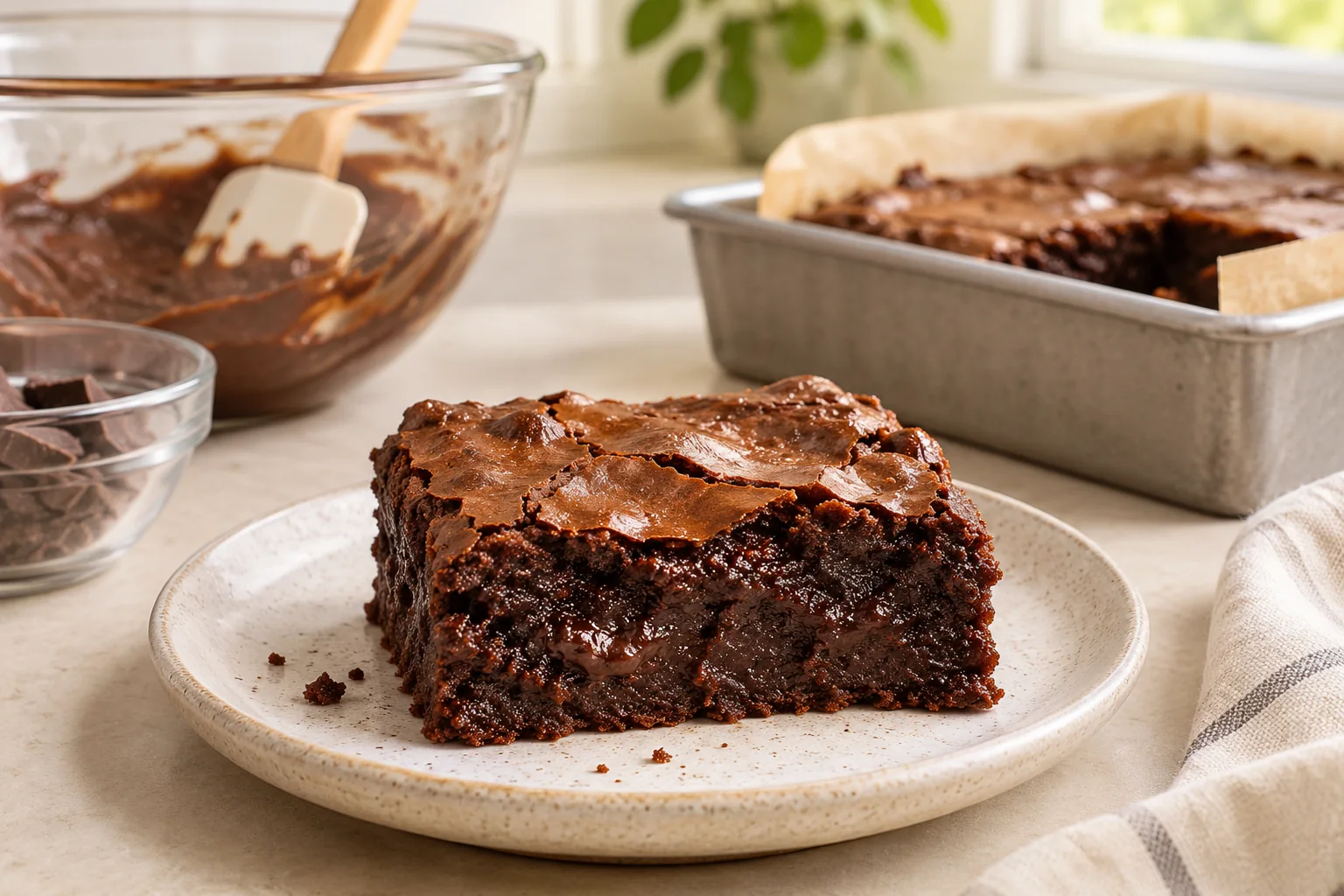
High-fat, low-flour batters often remain softer after baking than cake-like brownies. Extra cooling can improve clean portioning. Some bakers chill a fully cooled fudgy slab before cutting, then return plain portions toward serving temperature for the intended rich bite.
What about cakey brownies?
Cakier formulas contain a more aerated crumb that can tear while warm. They generally need cooling to slice neatly too, though they may not require the same chilling as an extremely fudgy recipe. Overcooling doesn't make a badly overbaked brownie tender again.
How mix-ins affect waiting
Large melted chocolate pieces, caramel ribbons, nut butter or cream cheese swirls can remain soft after the base has set. Follow the most delicate component's cooling and refrigeration rules. A thick caramel layer may need separate time to stabilize before a knife can pass through neatly.
When a warm brownie is the point
If you're serving a deliberately warm brownie dessert in a bowl with ice cream, perfect geometric edges may not matter. Still verify the centre was fully baked using the recipe's endpoint. Serve safely and expect a softer, messier slice than one from a cooled slab.
When clean squares are the point
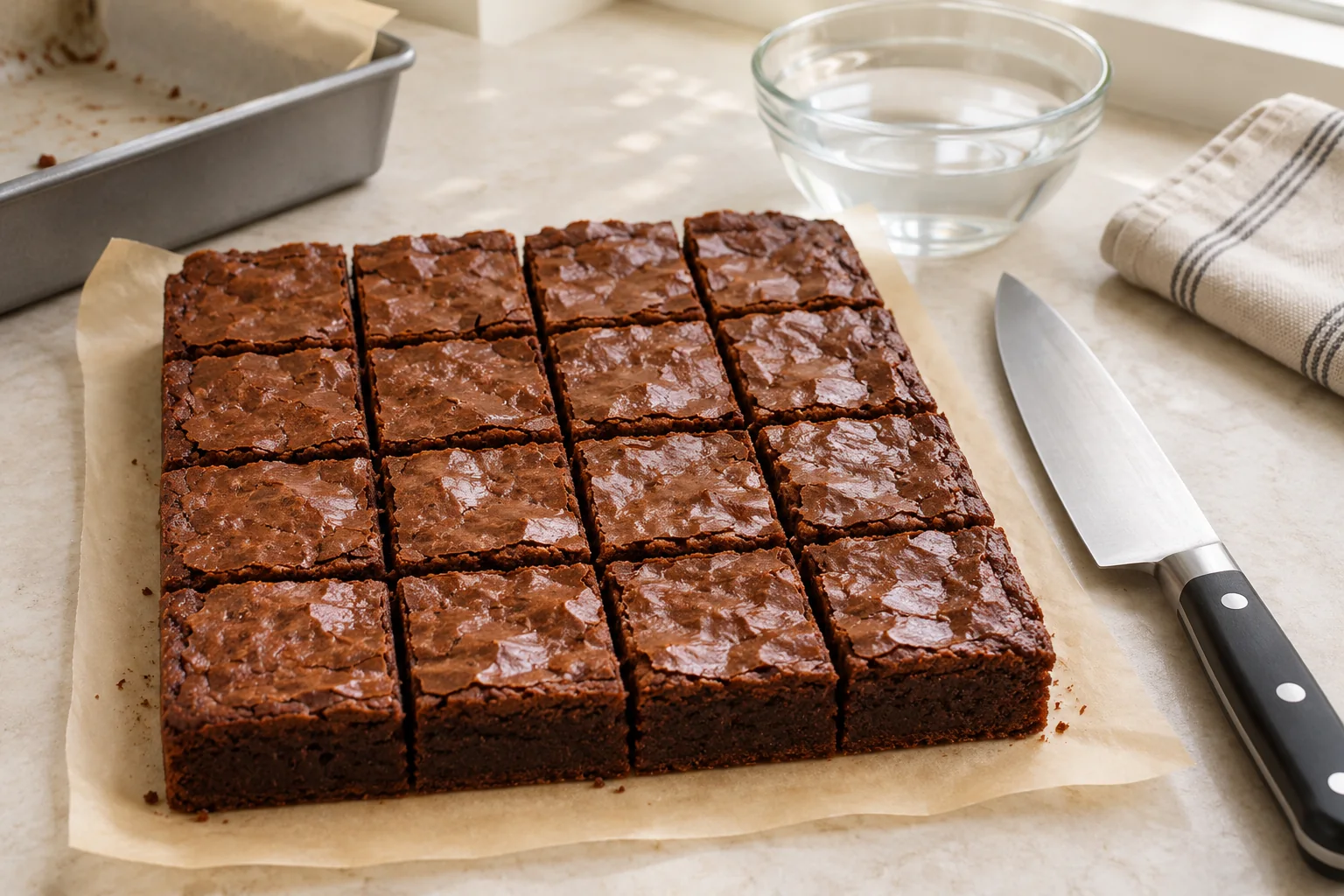
For a bake sale, gift box or styled photograph, cooling completely is usually worth the wait. A chilled slab may provide especially sharp edges. Use a long clean blade and wipe between cuts for a professional result.
Should you refrigerate straight from the oven?
Putting a very hot pan into the refrigerator can warm nearby foods and stress some cookware. Follow the recipe's safe cooling and chilling steps; don't place hot glass onto an icy shelf or into cold water. Move perishable versions to refrigeration promptly according to food-safety guidance.
How long can dairy-filled brownies cool?
Brownies containing cream cheese, custard or other perishable ingredients should not be left at room temperature for many hours just to obtain better cuts. Cool and refrigerate in accordance with the complete recipe and keep cold storage at 4°C (40°F) or colder.
Why edges may be firm before the centre
The outer batter touches hot pan walls, so it cooks and cools differently from the middle. That is normal for many dense bar desserts. The important issue is whether the centre achieved its proper baked state, not whether every square has an identical texture.
How to tell when brownies are ready to cut
The pan should be safely cool enough to handle using the stated method; the slab should hold together when gently lifted or touched; and any toppings should have set. If a knife leaves long chocolate smears, allow more cooling or a short recipe-approved chill.
How to check doneness before cooling
Use the recipe's actual visual test. Don't intentionally leave raw flour-and-egg batter because you expect the refrigerator to firm it.
Recipe to try: Almond Flour Brownies. This version combines almond flour with dark chocolate. Its proportions are specific to that flour and are not a one-for-one wheat-flour conversion.

Cooling without drying the surface
A brownie need not sit exposed overnight. Follow the recipe's cooling time, then wrap or cover once fully cool. Leaving a thin slab uncovered for many hours may dry exposed edges even if it improves cutting ease.
Can you speed cooling with a fan?
Gentle ambient airflow may help the pan shed heat, but avoid blowing dust or contaminants across exposed food. Rushing with a freezer or extreme temperature shock can create condensation or damage unsuitable pans. A planned cooling window is more reliable than an emergency shortcut.
Scheduling for a party
Bake brownies the day before or early on event day when the formula supports that plan. Let them cool completely, then wrap and portion at the intended serving time. A long cooling window improves presentation and avoids squeezing warm sticky bars into a gift box.
Recipe to try: Black Bean Brownies. Black beans and cocoa form a different brownie base. Use the stated preparation and baking cues for this formula.

Frequently asked questions
Why do brownies fall apart while hot? Their structure is still soft. Does cooling make raw batter safe? No. Should I chill for perfect squares? It can help very fudgy slabs. Can I leave brownies in the pan overnight? Only if the recipe's safe storage and cooling instructions permit. Why are my edges hard? Overbaking or pan differences may be involved.
Patience is an ingredient
Bake until properly done, cool on an appropriate rack and wait for the centre and topping to firm before cutting. A warm spoonful and a tidy party square are different serving goals; choose the cooling time that suits yours.
IN PICTURES
From the baking notebook
FROM THE RECIPE BOX


