On this page
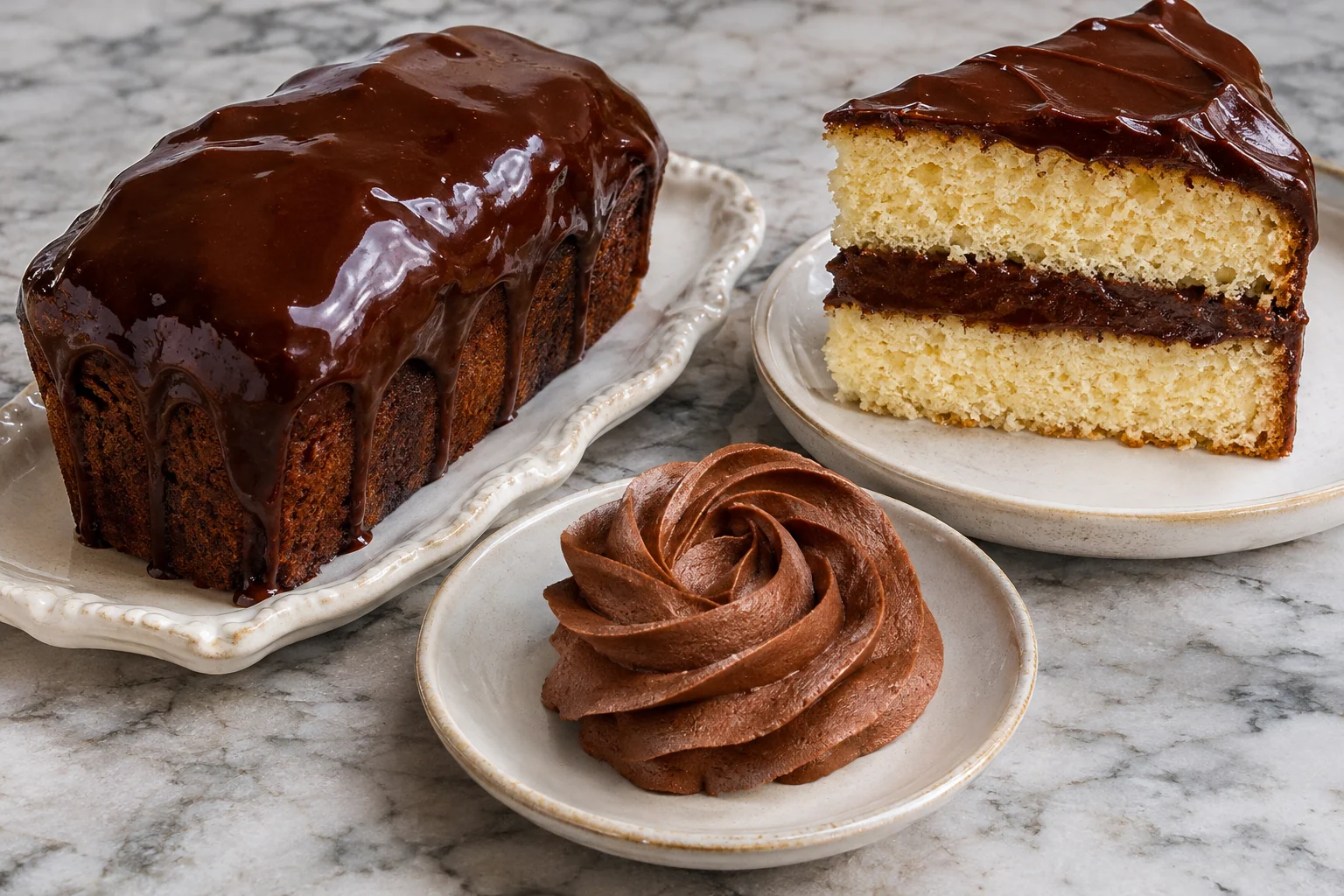
A ribbon of ganache that slips perfectly down the side of a cake at noon can be thick enough to spread at one. The ingredients have the same ratio at both times. Temperature, chocolate type and mixing history help determine whether that ratio will pour, pipe or roll. Decide what the finished dessert should do before you weigh the cream.
Understand the ratio notation
This guide writes the chocolate first and the cream second, both by weight. A 2:1 formula uses two parts chocolate for each part cream, such as 200 g chocolate and 100 g cream. A 1:1 formula uses equal weights. Check the order in someone else’s recipe before you scale it, because reversing the same two numbers makes a very different bowl.
Read both the chocolate and cream units in Chocolate Tart. Grams and millilitres printed beside one another are not automatically a weight ratio.
Why weight matters more than volume
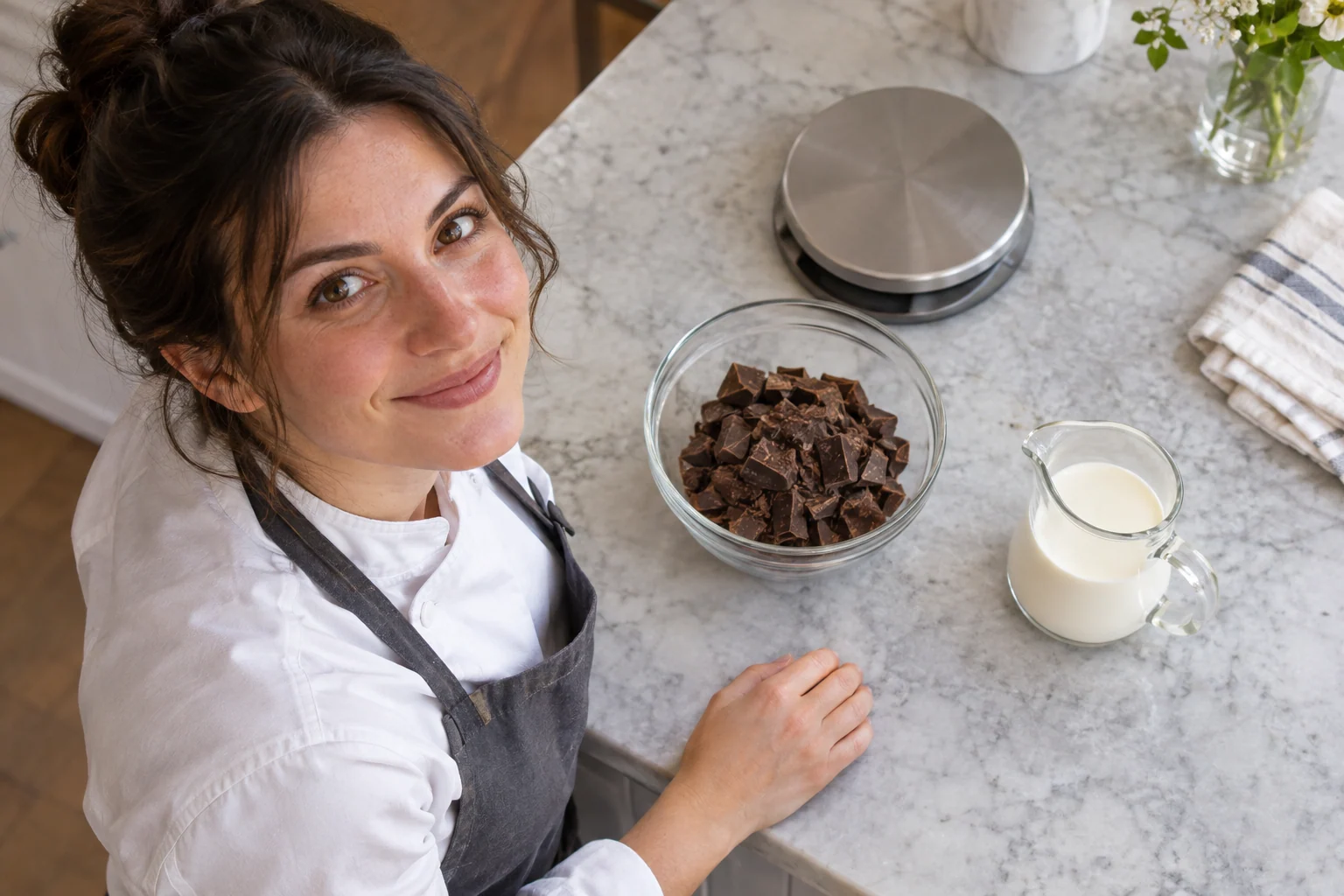
Chocolate chopped into large pieces takes up different space from small chips or fine shavings. A cup of each may not weigh the same. Cream can also be measured by volume, but a scale gives consistency when testing ganache. Accurate gram quantities make it possible to compare formulas across dark, milk and white chocolate, and to repeat a successful drip on the next celebration cake.
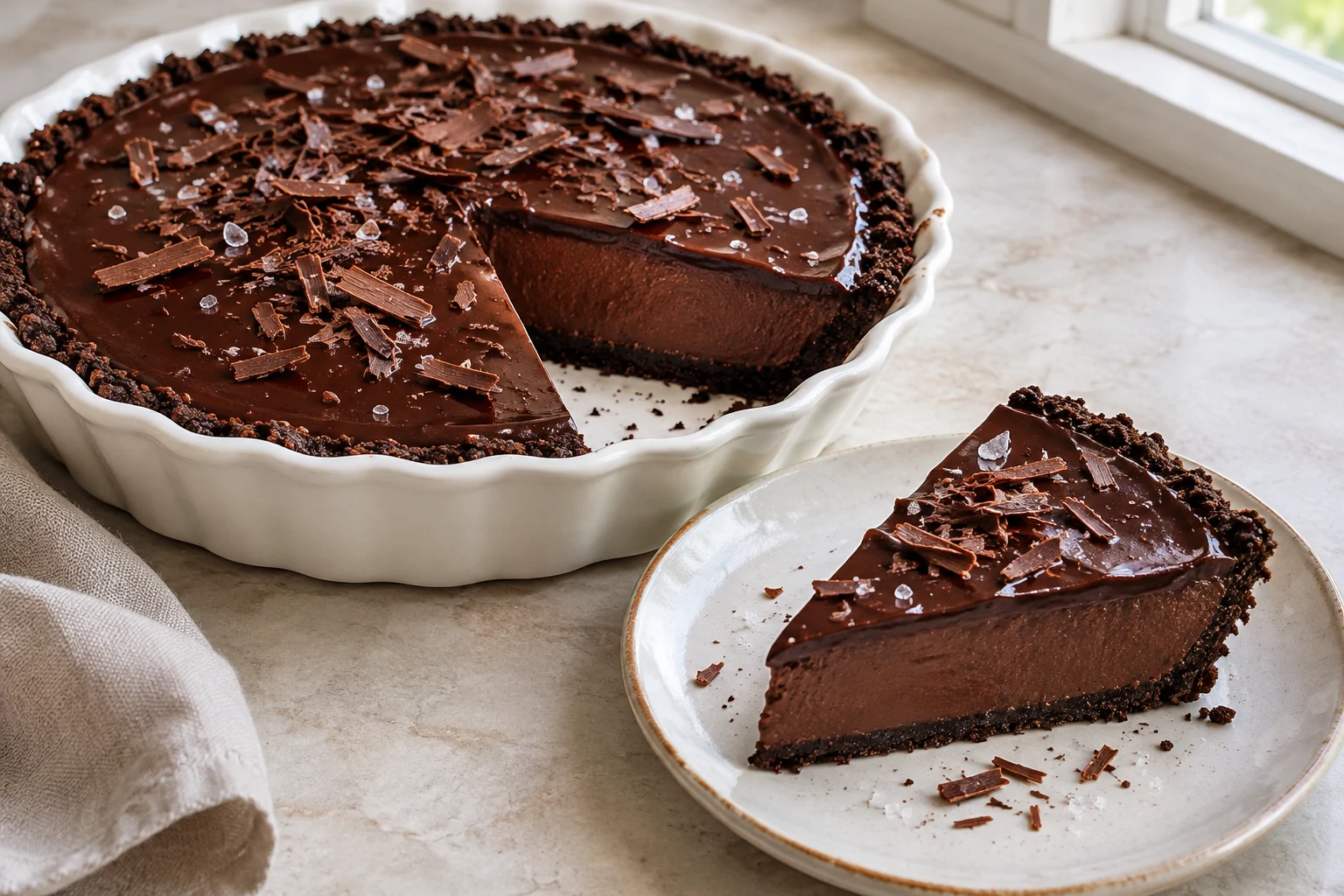
When scaling Smoked Chocolate Cream Pie with Barrel-Aged Whiskey Ganache, include the whiskey and butter in your notes. They affect the finished ganache even though neither appears in the simple chocolate-to-cream ratio.
Dark chocolate ganache basics
Dark chocolate generally contains cocoa solids and cocoa butter, but percentage and brand change the composition. Many home bakers use equal weights chocolate and cream as a starting point for a moderately thick dark ganache, with firmer fillings often using more chocolate. The actual set depends on the chocolate's fat and sugar balance. A 70% dark couverture may not act exactly like an ordinary semisweet bar in the same proportion.
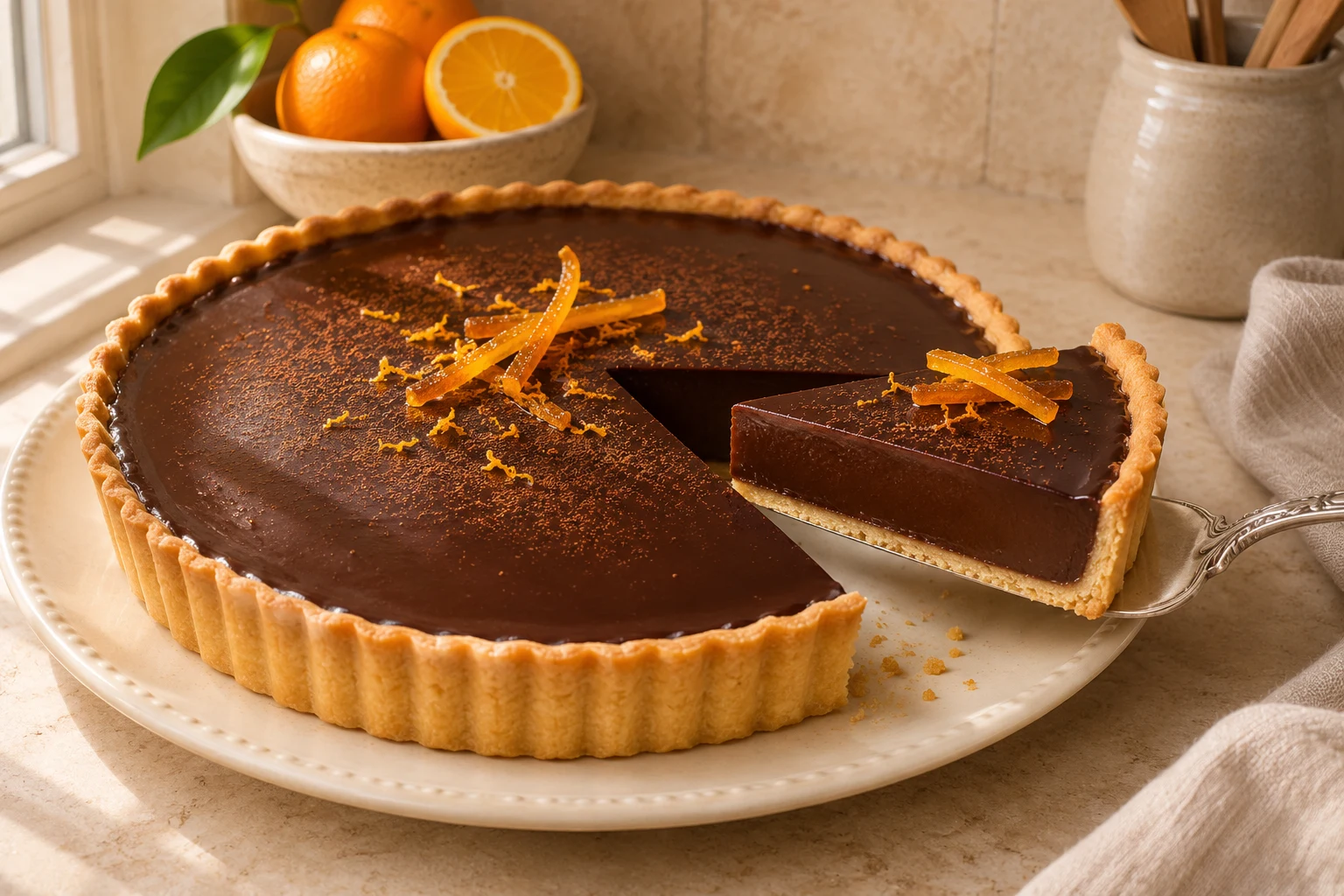
The dark bar, cream and citrus in Dark Chocolate and Orange Tart produce a sliceable filling. Compare it at serving temperature before adjusting the proportion for a firmer cut.
Milk chocolate often needs less cream
Milk chocolate contains milk components and usually more sugar relative to cocoa solids than a comparably dark chocolate. For a similar firmness, a ganache made with milk chocolate commonly requires a greater chocolate-to-cream proportion than a dark chocolate formula. Avoid converting a dark 1:1 recipe directly to milk chocolate without testing. A syrupy milk ganache isn't automatically undermixed; the formula may simply contain too much cream.
The milk chocolate in Milk Chocolate Custard Tart is part of a custard. Its set also depends on other ingredients, which is why its cream quantity is a poor shortcut for plain ganache.

White chocolate is another system
White chocolate contains cocoa butter, sugar and milk components but no nonfat cocoa solids. Its texture and sweetness differ substantially from dark chocolate. White-chocolate ganache often requires still more chocolate relative to cream for a set filling or pipeable frosting. Use a recipe developed for actual white chocolate rather than white baking chips whose ingredients and fat blend may differ.
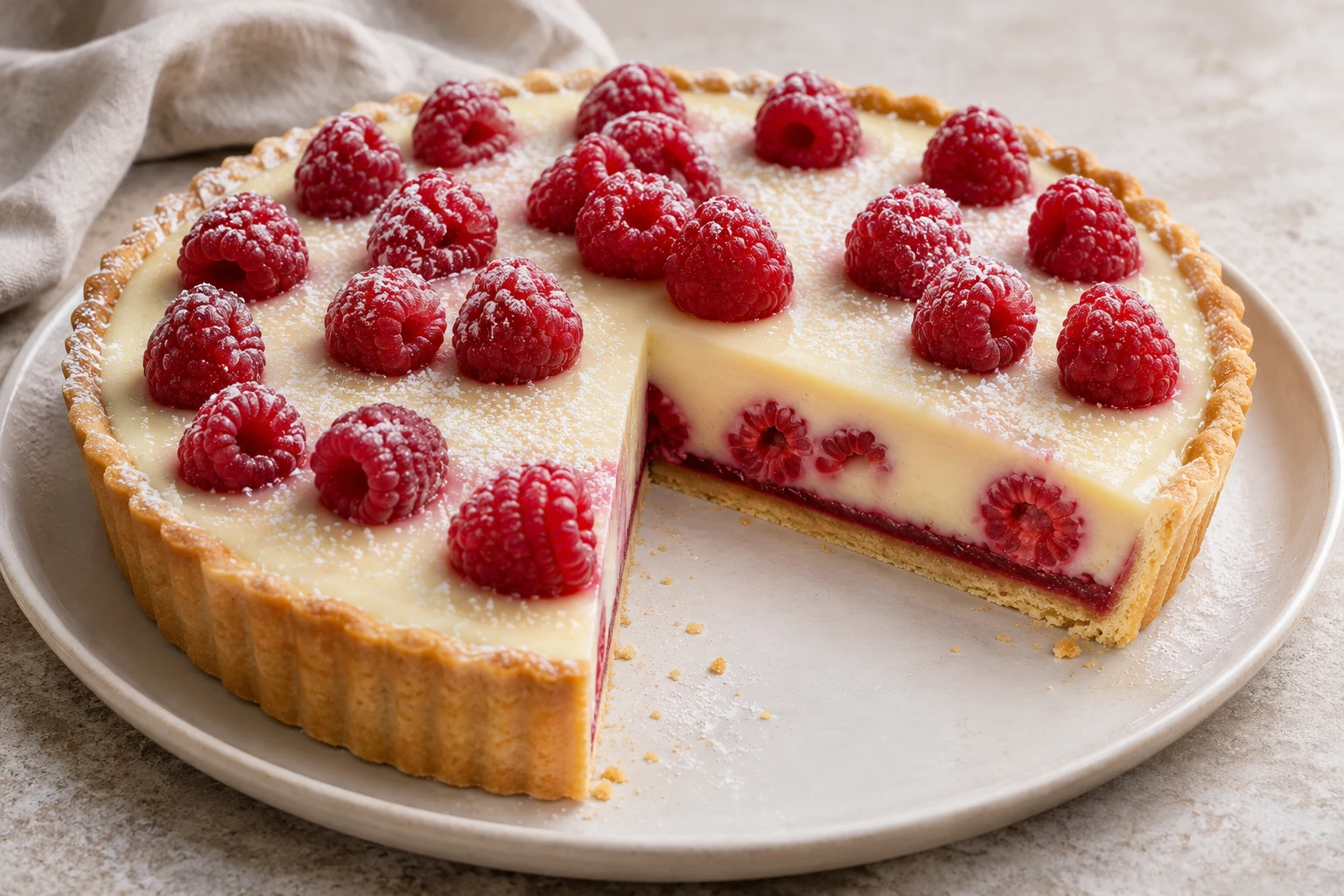
Use Raspberry White Chocolate Tart as a white-chocolate example. Start with the amount of cream written for that bar, then refrigerate as directed before judging the slice.
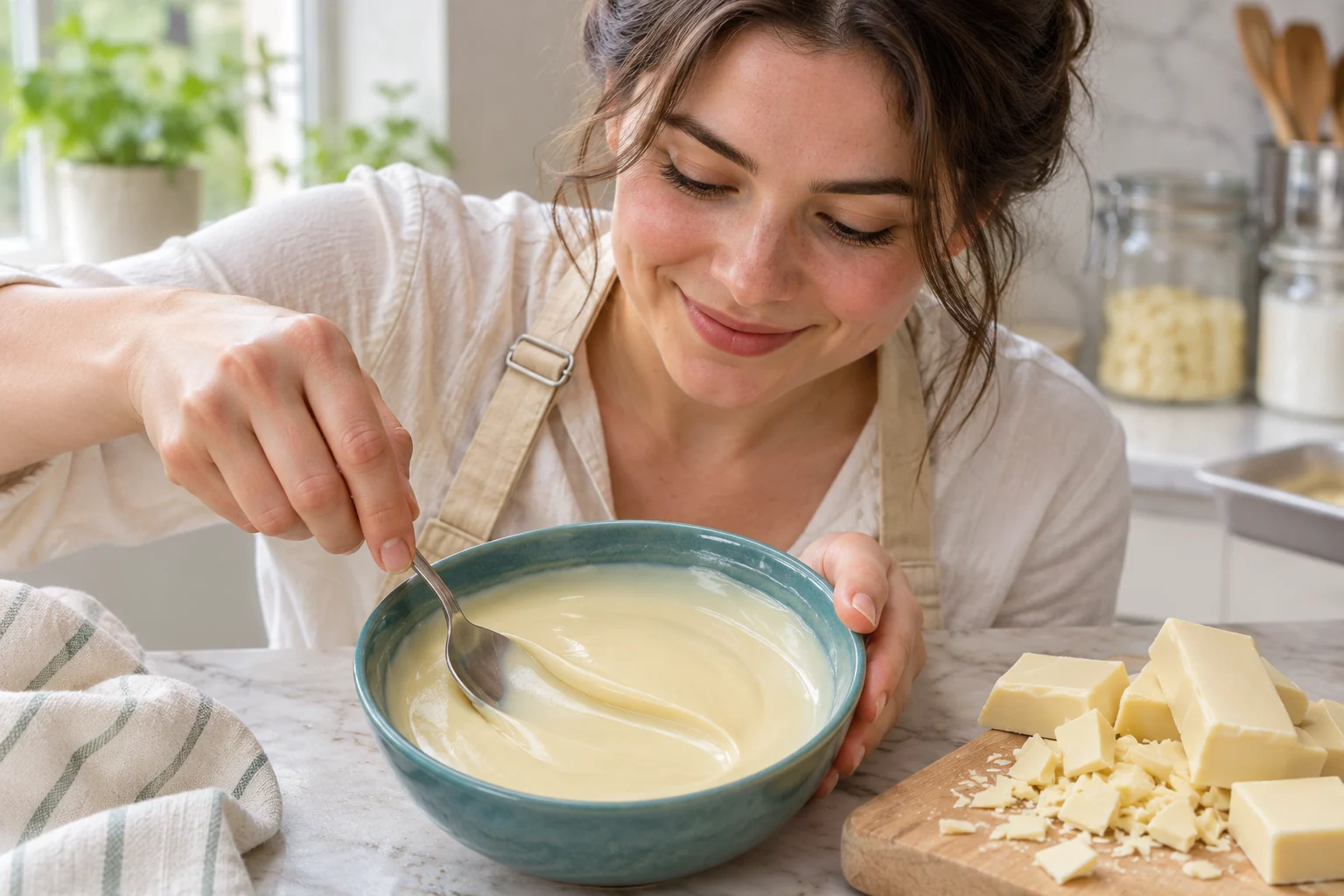
A pourable glaze
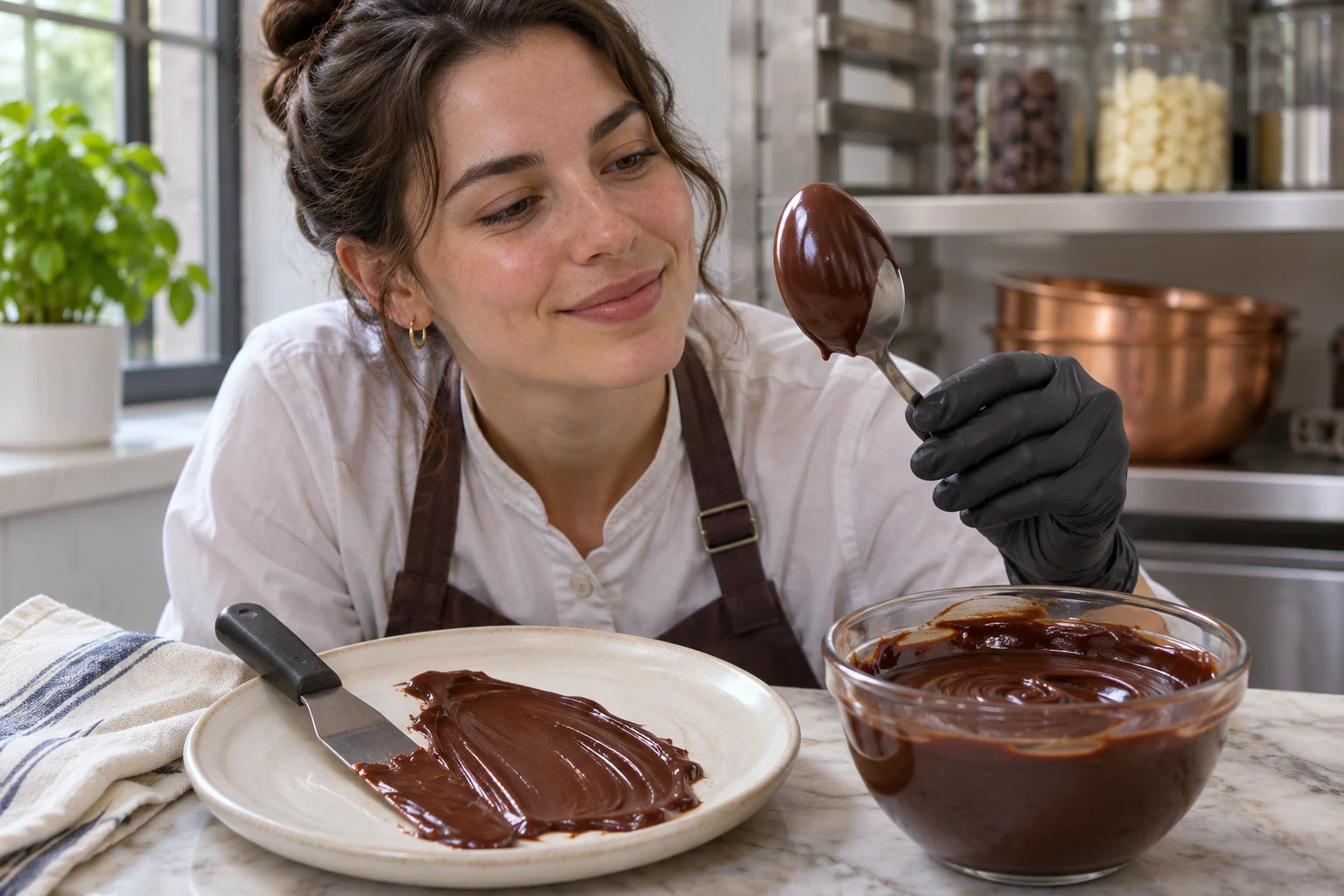
For a glaze, follow a recipe designed to pour over the dessert you have made. Let the mixture emulsify fully, then lift the spatula. A continuous ribbon that briefly marks the surface is easier to control than a thin stream that vanishes immediately. Try a spoonful on the cooled cake before pouring across its top.
On Chocolate Fudge Bundt Cake the glaze needs to flow over a curved surface. Check how a spoonful moves before committing the whole bowl.
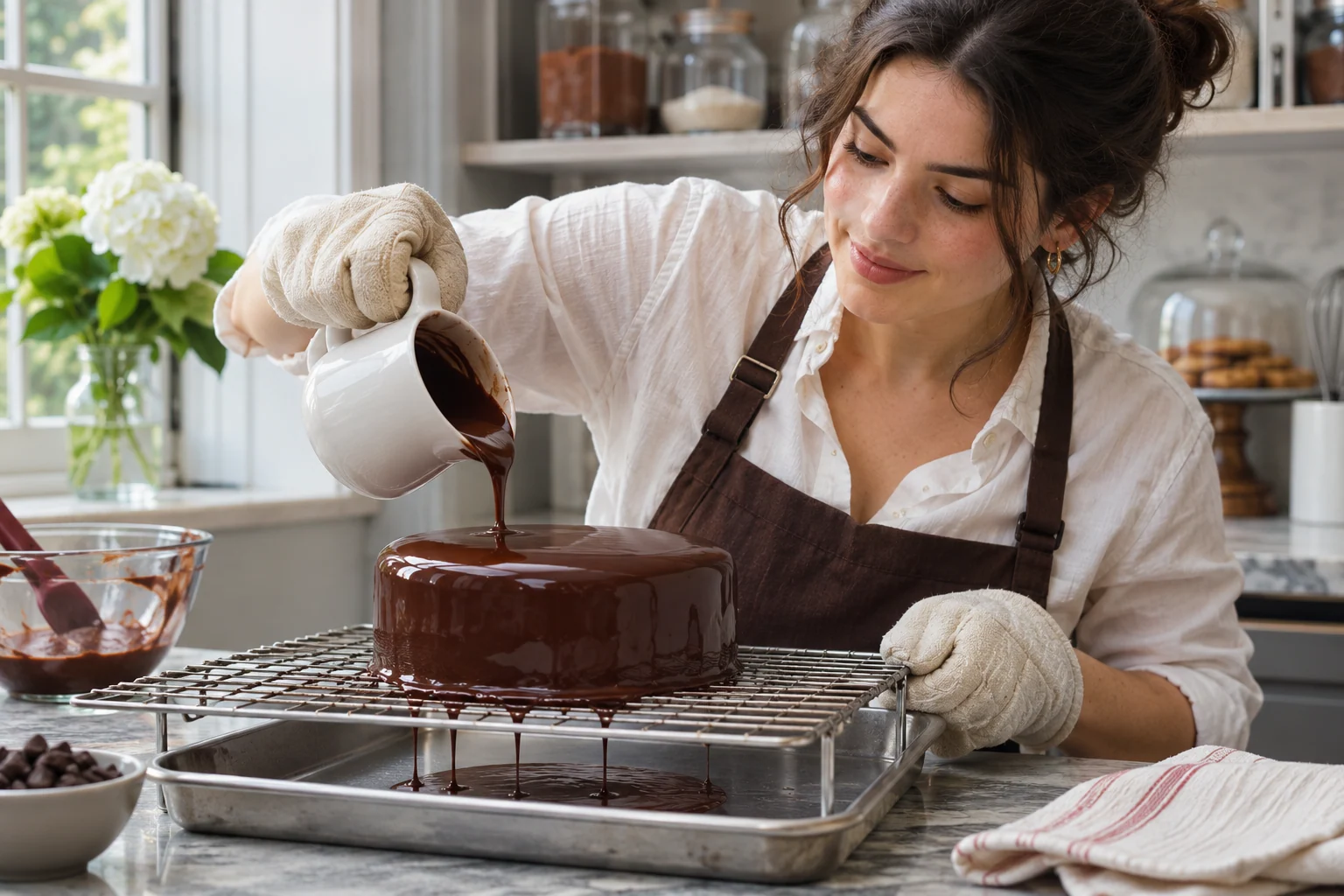
Drip cake consistency
Make the first drip on the back edge of the chilled, frosted cake. If it reaches the board in one run, wait briefly and repeat on a fresh edge. If it sits at the top like a button, warm a small portion gently and test again. Change the formula only after you have checked how that ganache behaves at working temperature.
The drip on Malted Chocolate Layer Cake is an opportunity to try one drop on the back edge. Its resting place shows you whether the ganache needs a little more cooling.
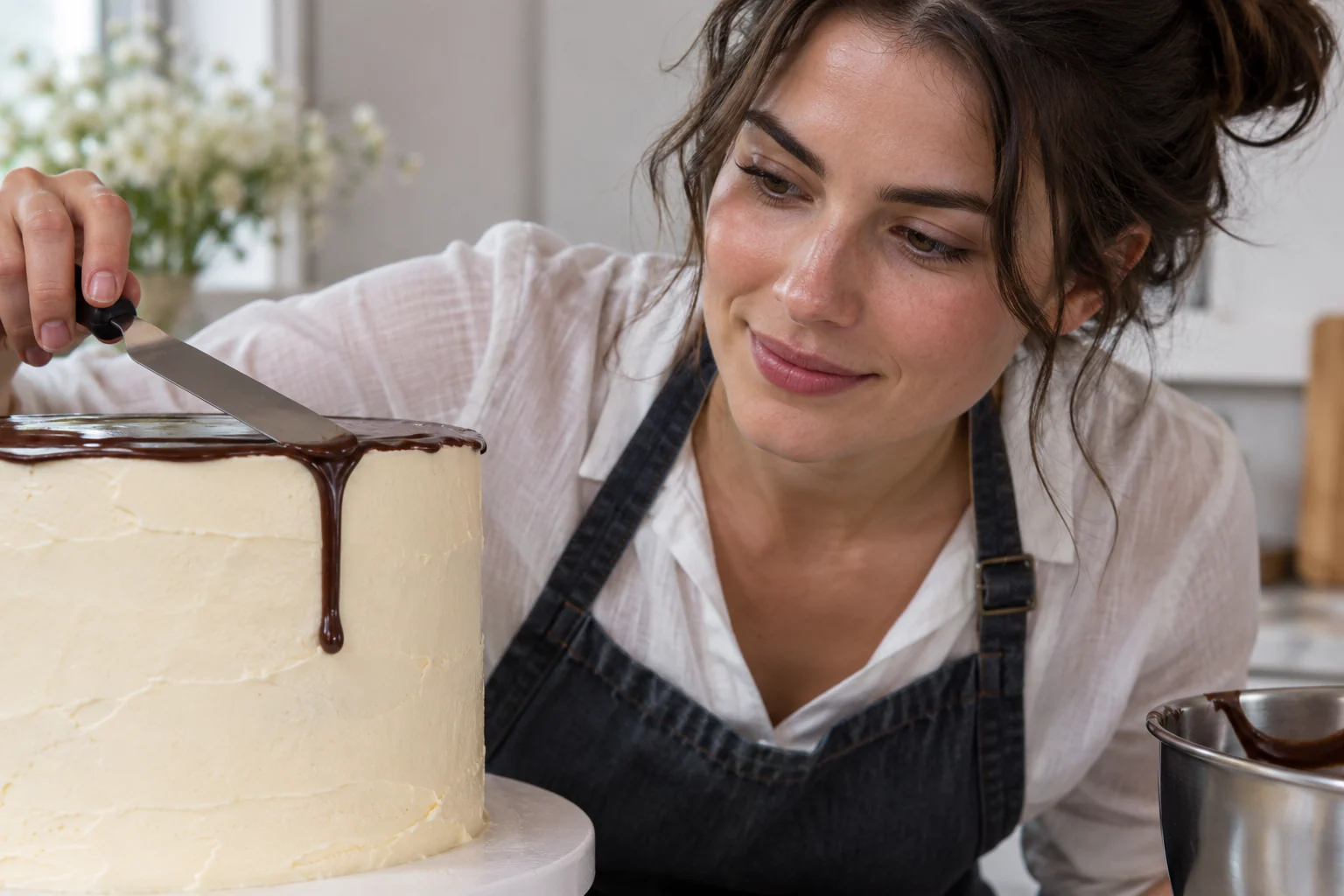
Filling between layers
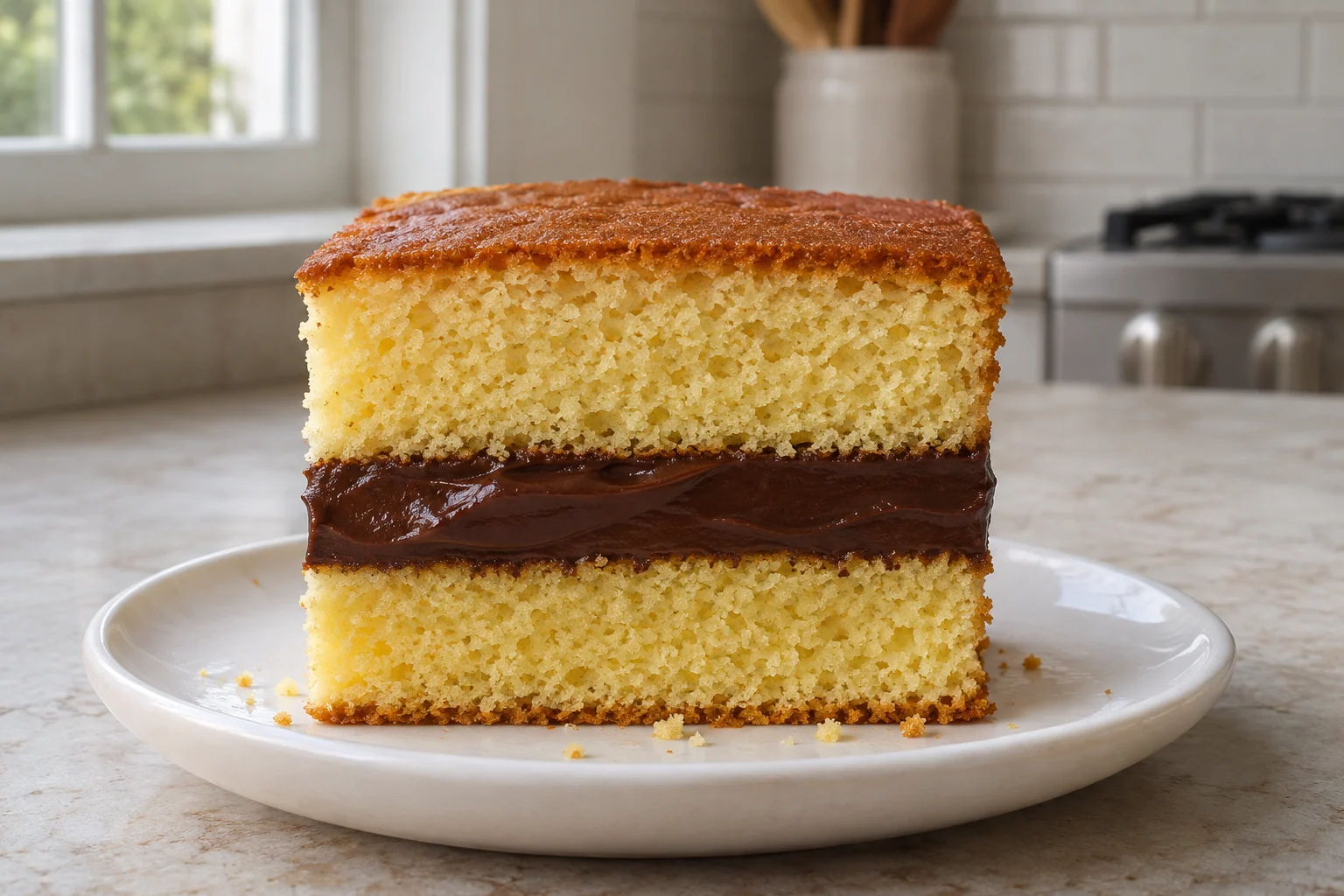
A filling needs to stay in place while the next cake layer is added. Use a ganache formula that reaches a sufficiently firm spreadable consistency after resting. Very thin ganache may seep outward or make layers slide. A stable buttercream dam can help where the cake design permits it, but the filling itself should still be prepared according to its own chocolate-to-liquid balance.
A spoonful of filling for Double Chocolate Sandwich Cookies needs to hold between two flat cookies. That is a useful small-scale test for a ganache destined to sit under weight.
Truffle centres
A truffle centre must stay rounded after it leaves the refrigerator. A dark-chocolate formula with more chocolate than cream is a common starting point. Allow a test spoonful to chill fully, then scoop it onto parchment. A filling that spreads into a puddle will not become a stable hand-rolled centre just because it is covered in cocoa.
The centre in Keto Chocolate Truffles is firm enough to scoop after chilling. Its chocolate quantity and cream measure belong to that particular shaping formula.
Whipped ganache frosting
For whipped ganache, choose a formula designed to incorporate air. Cool it in the refrigerator as directed, then whip gently and stop as soon as soft ridges hold. The whisk leaves a trail and the mixture lightens in colour. Continuing to beat a fully thickened mixture can make it grainy. Warm glaze and already-set truffle paste are poor starting points for this job.
The frosting in Vegan Chocolate Layer Cake uses coconut cream with dark chocolate. Follow its own cooling and finishing method if you want the same spreadable texture.

How temperature changes thickness
Warm ganache flows; cooled ganache thickens as cocoa butter crystallizes. A ratio chart without a working-temperature note is incomplete. Let a sample cool to the temperature at which it will be used before deciding the mixture is too thin. Conversely, do not judge a truffle filling while freshly mixed and warm. Temperature is often the missing variable when two people get different results from the same ratio.
The white glaze on White Chocolate Raspberry Bundt Cake shows the effect of a few minutes of cooling. A first ribbon on the back of the cake is easier to judge than a whole pour.
How cocoa butter affects the set
Couverture may contain additional cocoa butter for fluidity, while baking chips can be formulated to hold shape. That changes a ganache even when cocoa percentage looks similar. A chocolate's total fat percentage and manufacturer recommendations are important, especially in professional formulas. If a high-end recipe specifies one couverture, changing brand may require adjusting liquid or resting temperature.
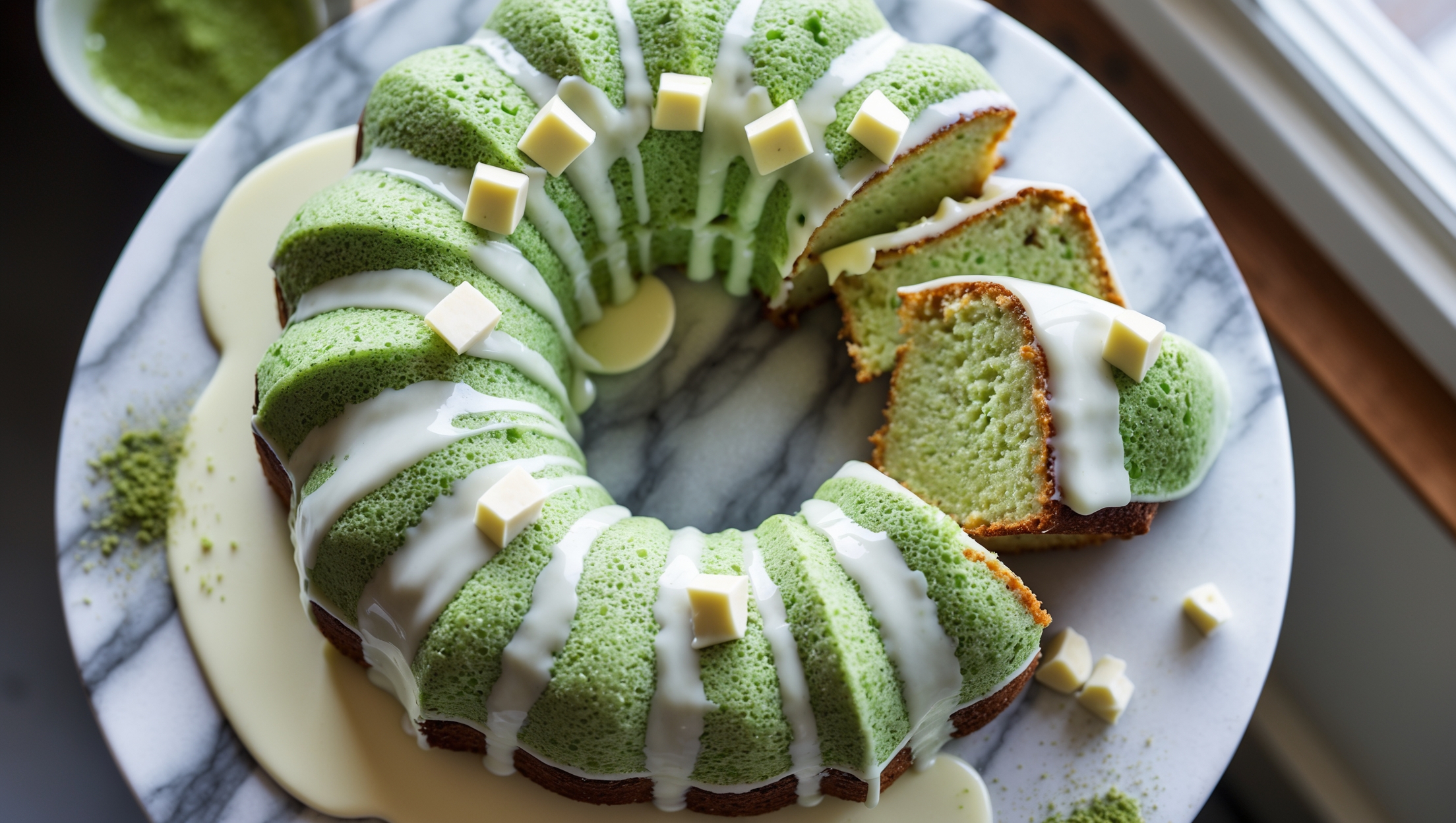
Keep the white bar named for the glaze in Matcha White Chocolate Bundt Cake on your shopping list. A different white coating can change the way the glaze flows and sets.
Cream fat content matters
Heavy whipping cream has a different fat and water balance from ordinary milk or half-and-half. Replacing one with another changes both mouthfeel and emulsion stability. Plant-based cream products vary even more: some contain added oils, stabilizers or coconut fat. Use the exact cream called for whenever possible, or choose a complete ganache recipe developed for your substitute.
The double cream in Espresso Chocolate Tart is part of the filling’s structure. If you need a different dairy product, start with a formula developed for it.
Chocolate chips versus chopped bar
Some chocolate chips contain less cocoa butter or other formulation components that make them melt thicker than a bar. They can make a usable ganache, but the same ratio may not produce identical flow. Read the ingredient list and follow a tested chip-based formula where possible. Do not assume a grainy result means the chips were inferior; temperature and mixing also influence texture.
The filling for Dark Chocolate Orange Macarons calls for chopped dark chocolate. A pile of baking chips with the same weight can melt and pipe differently.
An example chocolate ratio comparison
Here is a direct comparison using the same dark bar and 100 g of cream. With 50 g of chocolate, the ratio is 1:2 and the cooled mixture will generally be the loosest. With 100 g it is 1:1. With 200 g it is 2:1 and will usually be the firmest. Let all three samples reach the same temperature before comparing their ribbons on a spoon.
Preventing split ganache
Start with reasonably evenly chopped chocolate and the liquid temperature specified by the recipe. Mix gently from the centre outward or use the recommended emulsification tool. Excessively hot liquid, incompatible ratios or vigorous introduction of air may destabilize the texture. If it begins to look oily, stop and consult the recipe's repair method rather than adding random amounts of water or powdered sugar.
Troubleshooting ganache that's too runny
First let the mixture reach its expected setting temperature. If it's still too thin, check the actual chocolate weight and whether you used milk or white chocolate in a dark-chocolate ratio. Also check the cream type and any added syrup or fruit purée. Adding more chopped chocolate to a cold bowl may not incorporate properly without a new controlled warming and mixing step.
Troubleshooting ganache that's too firm
A firm ganache may simply be cooler than its working range. Gently warming according to the recipe can soften it. If the chocolate-to-cream ratio is too high, the formula may need a measured adjustment using compatible warm liquid. Don't heat a whipped ganache as though it were an ordinary glaze, because its aerated structure is a separate part of the recipe.
Storage and shelf life
Ordinary homemade ganache made with fresh cream is perishable. Cover and refrigerate it promptly at 4°C (40°F) or colder and use it within the recipe’s safe storage period. At a gathering, hold the bulk of the dessert cold and replenish small portions. Discard cream-filled pieces left at room temperature for more than two hours.
The cream and fresh fruit in White Chocolate and Raspberry Tart determine how the tart is stored after slicing. A firm white filling still needs a cold shelf.
Frequently asked questions
Is 1:1 always right for dark ganache? No; it's a starting point for certain textures. Can I use a dark ratio for white chocolate? Not reliably. Why is my drip too long? Temperature or liquid balance may be wrong. Will extra whipping thicken any ganache? No. Can I replace cream with milk? Only with a suitable reformulation. Does a shiny ganache mean it can sit unrefrigerated? No.
The ratio is only the beginning
Choose the intended application first, then the chocolate and a formula developed for it. Measure by weight, form a smooth emulsion and judge texture at working temperature. A small test batch will teach you far more than blindly applying a universal number to glaze, frosting, fillings and truffles.
Before you scale up a ganache ratio
Record the brand and cocoa percentage of the bar, the dairy used, and both weights. Save a small spoonful from the batch to compare with the finished cake at serving temperature. If the result is too firm, that note tells you which single variable to change next time.

IN PICTURES
From the baking notebook
FROM THE RECIPE BOX


