On this page
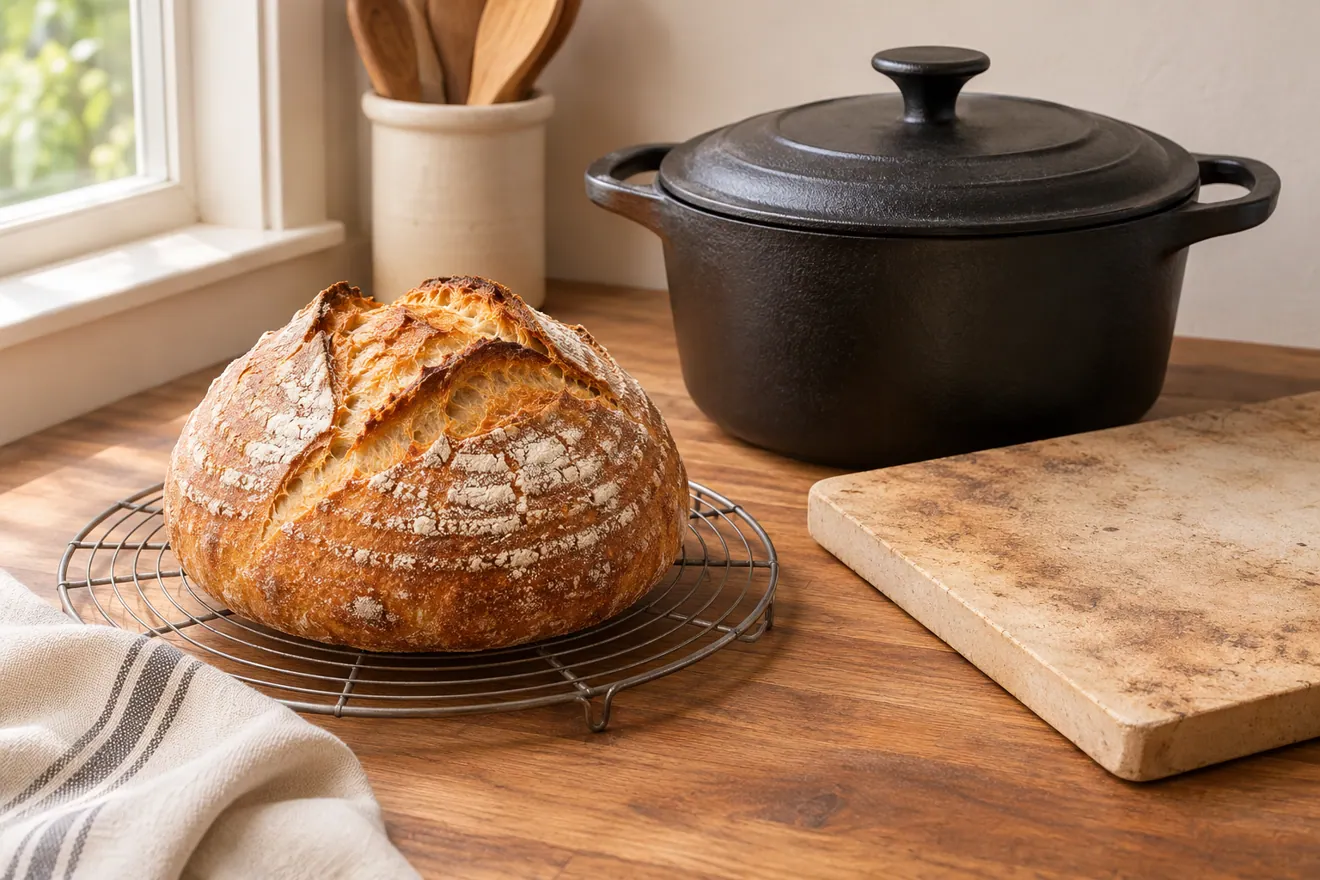
A crusty loaf can be baked in a covered Dutch oven or on a preheated baking stone. Both methods can produce excellent bread, but they manage heat and moisture differently. A Dutch oven creates a small enclosed environment that traps steam from the dough; a baking stone provides a large hot surface and usually needs a separate, oven-safe steam plan. The better choice depends on bread shape, oven space, batch size and how comfortable you are handling heavy hot equipment.
Why bread needs strong initial heat
When dough enters a properly preheated oven, gases expand, yeast activity briefly accelerates before stopping, and the loaf begins to set. Strong initial heat contributes to oven spring and crust development. The baking surface influences how efficiently heat reaches the loaf's bottom.
Why steam is important for many crusty loaves
Moisture in the early baking environment delays the crust's surface hardening, giving the dough room to expand. As baking progresses and moisture dissipates, the crust browns and dries. Not every bread needs the same steam; enriched dinner rolls are different from a scored artisan boule.
What a Dutch oven does
A Dutch oven or suitable covered bread pot traps steam released from the dough, creating a humid local environment during early baking. The heavy vessel also holds heat. A common method bakes with the lid on initially, then removes it for browning, following the formula's exact timing.
What a baking stone does
A baking stone is a thick heat-retaining surface used inside an oven. Once preheated, it supplies bottom heat to the loaf. Unlike a covered pot, the stone doesn't surround the bread and cannot by itself trap steam, so artisan recipes may call for an appropriate steam method.
The main difference at a glance
Dutch ovens combine retained heat and enclosed moisture in one piece of equipment. Baking stones provide an open baking surface with flexibility for loaf shapes and multiple loaves, but usually need separate steam management for crusty artisan bread. Both can work very well when the recipe is designed for the method.
Which gives better oven spring?
Both can support strong expansion. A covered Dutch oven is often a dependable choice for home sourdough because it simplifies early steam. A properly preheated stone plus effective steam can also produce excellent rise. Fermentation, dough strength and proofing remain more important than one device alone.
Crust from a Dutch oven
A covered bake keeps the crust flexible early, followed by an uncovered stage for colour and crispness. Pot shape and dough placement influence how the loaf expands. A deep pot with a narrow base may restrict a very wide loaf, so match vessel dimensions to the dough.
Crust from a baking stone
Direct contact with a hot stone can produce a well-browned bottom crust, while steam and oven conditions affect the top. A stone may be useful for baguettes, batards and multiple smaller loaves that won't fit neatly inside a pot. The recipe should specify how to load and steam safely.
Dutch oven advantages
It is relatively self-contained, requires less separate steam equipment and offers a predictable environment for a single round or oval loaf of suitable size. Many beginner sourdough guides use it for that reason. A properly rated lidded vessel is important; not every pot or knob tolerates high bread-baking temperatures.
Dutch oven disadvantages
The pot is heavy, becomes extremely hot, and may only fit one loaf at a time. Lowering dough into it can be awkward, and a lid or handle may impose temperature limitations. Some kitchens lack enough space to manage it safely. Never handle a hot pot without suitable protective equipment.
Baking stone advantages
A stone stays in the oven and can accept different loaf shapes, including long baguettes if the oven is wide enough. It can be useful for baking multiple loaves and for pizza. You need a peel or other safe transfer method and a recipe-approved plan for steam.
Baking stone disadvantages
Stones need sufficient preheating, and thermal shock can crack some materials. They can also be difficult to clean if heavily soiled. A stone is not a substitute for steam on bread formulas that need early humidity. Follow its manufacturer's instructions for placement and temperature.
Baking steel as another option
A baking steel conducts heat differently from stone and is frequently used for pizza or bread bases. It may require different preheating and placement choices. Treat a steel as its own tool rather than assuming every baking stone instruction applies unchanged.
Can you use a Dutch oven without preheating?
Some tested bread recipes use cold-start or non-preheated pot methods, while others require full preheating. These cannot simply be interchanged because baking time, crust and oven spring may change. Follow the exact method and the pot maker's instructions.
How to safely load a hot Dutch oven
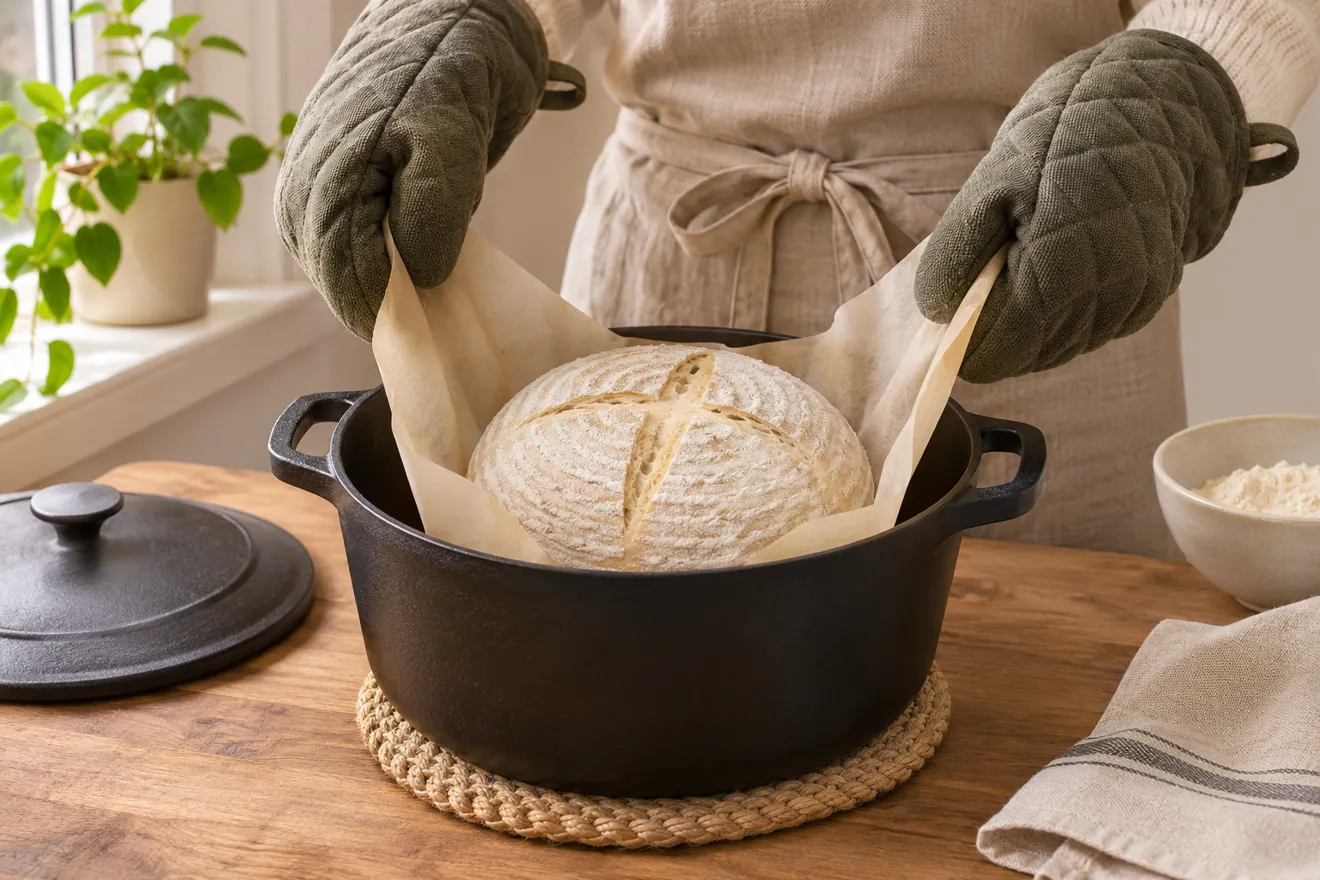
Set the hot vessel on a stable heat-resistant surface, lift the lid away from your body and lower the dough using a recipe-approved parchment or other transfer method. Keep loose sleeves and hands away from the sides. Don't use parchment above its safe temperature rating or near an exposed heating element.
Use a dry oven mitt on each hand. Set the pot on a stable heatproof surface and make sure the oven and parchment ratings allow the intended temperature. Lift the hot lid away from your face.
Why you should avoid unsafe steam tricks
Throwing water onto hot glass or oven surfaces can damage equipment, cause burns or create dangerous steam bursts. Use only steam methods suitable for the specific oven and baking setup. Do not pour cold water into a searing hot Dutch oven or onto its enamel interior.
Which method for round boules?
A suitably sized Dutch oven is often convenient for a single boule, though open baking on a stone works with an established steam setup. The recipe's shape and size determine whether the vessel provides enough expansion room. An undersized pot isn't a good solution for a very large dough piece.
Try Sourdough Country Loaf for a covered first stage and an uncovered finish. Use cookware rated for the recipe’s temperature and preheating method.

Which method for baguettes?
A stone leaves space for long loaves that may not fit into a Dutch oven. Use a setup compatible with the oven and stone manufacturer’s instructions. Follow a recipe that provides a safe loading method and uses the oven's built-in steam setting if it calls for that feature.
What if the bottom burns?
Excessive bottom heat or incorrect placement can overbrown the underside before the rest of the bread is ready. Check rack position, equipment preheat and the recipe's method. Don't insert unapproved insulation, foil or materials into a hot oven without considering safety and the equipment instructions.
In Rustic Porridge Bread with Ancient Grains, the crust develops after the lid comes off. Record how the bottom browns before making any change to rack height or bake time.
What if the loaf is pale?
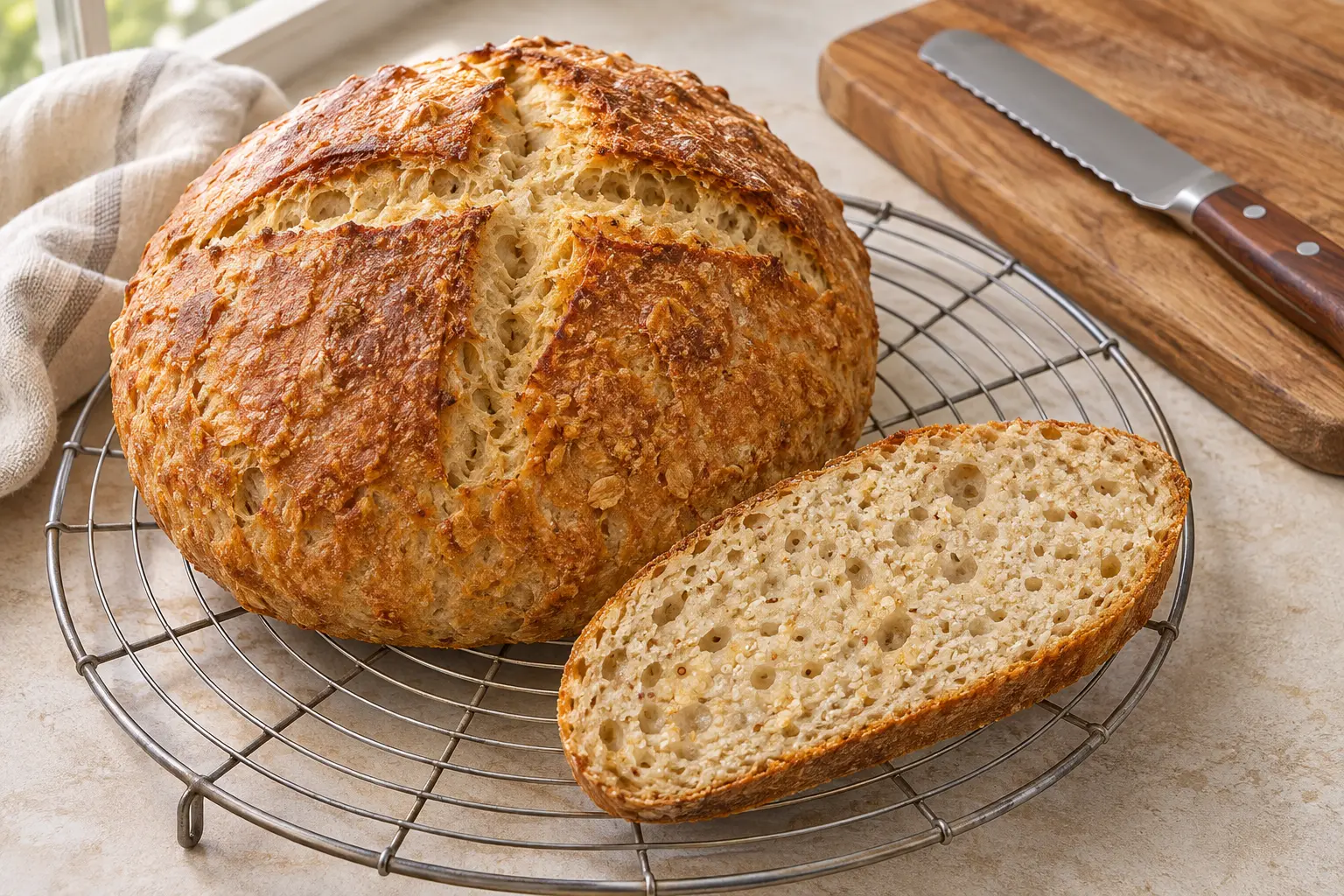
Insufficient baking time, a lid left on too long or a cool oven may limit browning. Most Dutch oven methods have an uncovered stage, while stone methods rely on oven environment and crust development. Check the recipe's target colour and final doneness instead of simply raising the temperature.
Maintenance and storage
Allow either tool to cool completely before handling or cleaning. Respect care instructions for seasoned cast iron, enamel and porous stone. Avoid thermal shock and heavy impacts. A well-maintained tool often lasts through many batches, making it worth learning one method thoroughly.
Frequently asked questions
Is a Dutch oven necessary for sourdough? No. Does a stone create steam? Not on its own. Can you bake multiple loaves on a stone? Often, if space and steam methods are adequate. Can a glass casserole replace cast iron? Only when specifically rated and permitted by the recipe. Which is best for beginners? A compatible covered bread vessel is often simpler.
Choose the method that fits your bread
For a home baker making single boules, a Dutch oven offers convenient heat and humidity. For baguettes or larger batches, a stone with a safe steam method provides flexibility. Neither tool compensates for poor fermentation. Learn the equipment's strengths and work within its temperature and safety limits.
Related recipe: Sourdough Country Loaf.
Some images are AI-generated illustrations of the dishes and techniques described.
IN PICTURES
From the baking notebook
FROM THE RECIPE BOX


