On this page
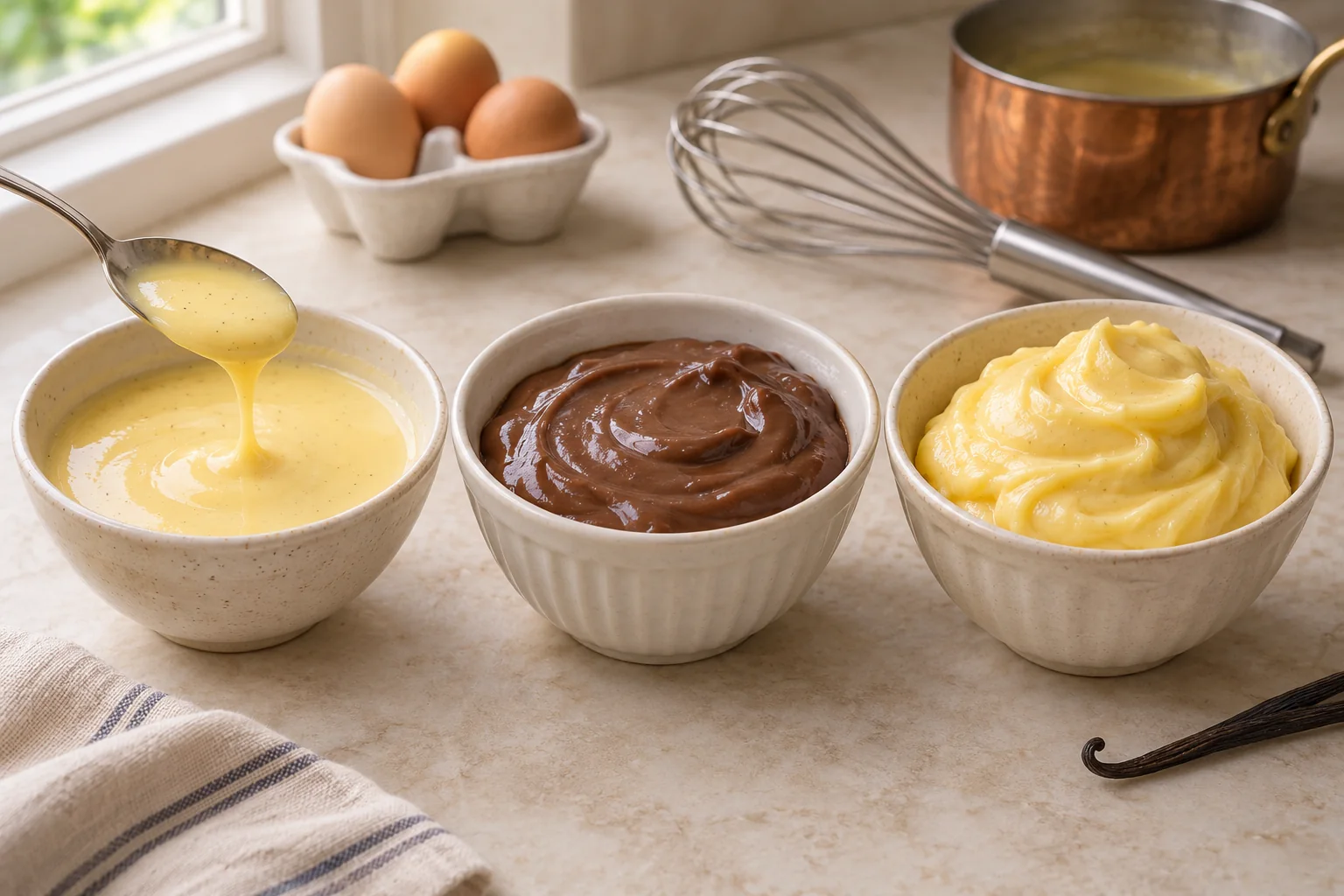
Vanilla custard, chocolate pudding and pastry cream can look similar in bowls, yet they aren't quite the same dessert. One may be a delicate egg-set sauce, another a spoonable starch-thickened dessert, and the third a firm cooked filling that supports a fruit tart or éclair. The names overlap across countries and recipes, so the most useful distinction is how each mixture gets its structure and what it is meant to do after cooking.
Custard is a broad family
Custard generally means a mixture whose thickening relies substantially on eggs, often combined with milk or cream and sugar. It can be poured as a sauce or baked until set. Some custards also include starch. The word describes a family rather than one fixed consistency.
Pudding has multiple meanings
In North America, pudding commonly refers to a smooth spoonable dessert thickened with starch, sometimes with eggs. In other English-speaking regions, pudding can describe many kinds of dessert, including baked or steamed dishes. For this comparison, we're discussing the North American creamy pudding style.
Pastry cream is a filling
Crème pâtissière is a cooked custard typically thickened with eggs and starch so it becomes firm enough for éclairs, cream puffs, fruit tarts and other pastries. Unlike a poured crème anglaise, it is designed to hold a fairly thick layer or piped shape once cooled.
The role of eggs in custard
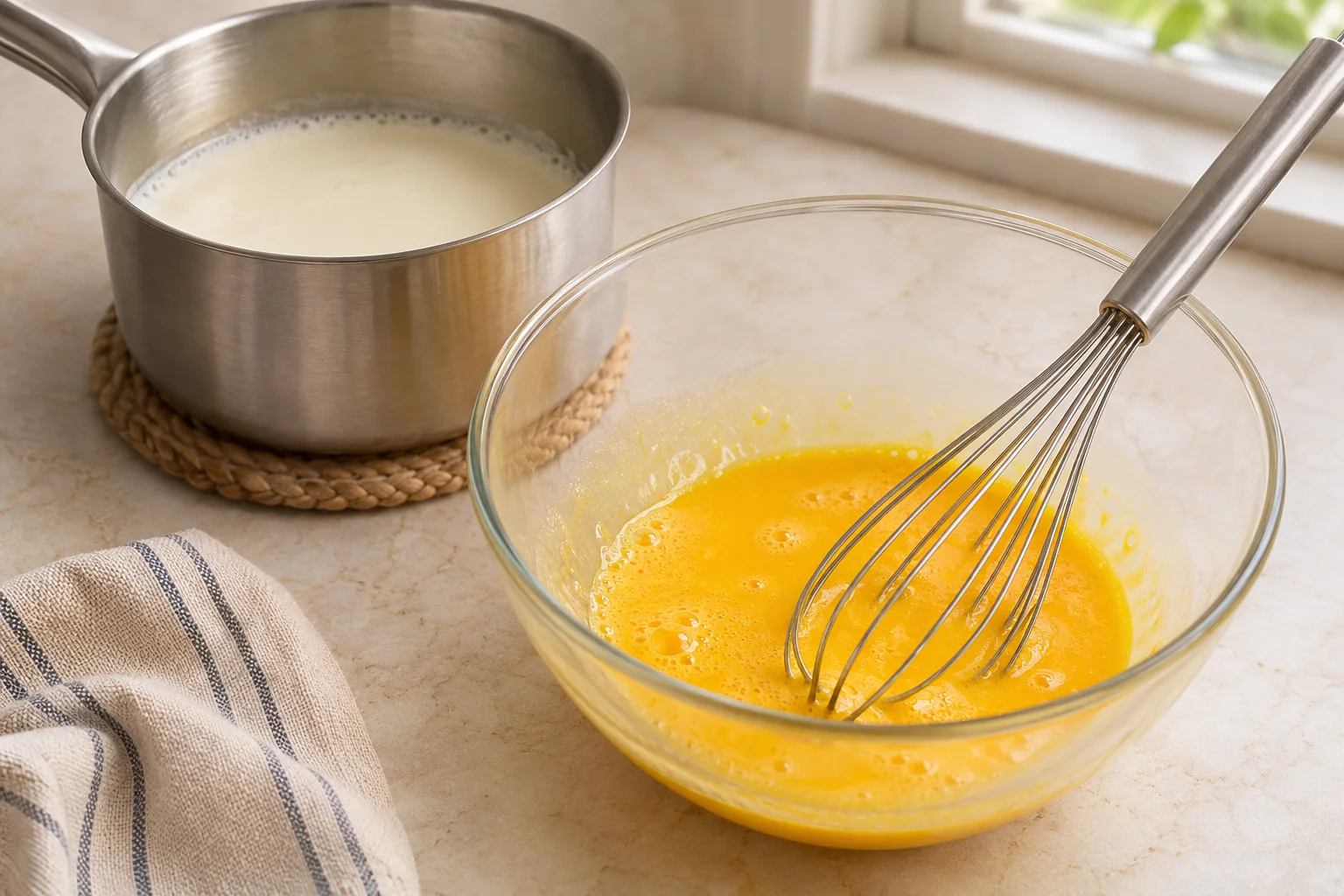
When heated carefully, egg proteins form a network that thickens the surrounding liquid. The amount of egg and the heating method determine whether the mixture flows or sets. Overheating can lead to graininess and watery separation.
The role of starch in pudding
Cornstarch and other thickeners absorb liquid and gelatinize as heated. This gives many puddings their familiar smooth, spoonable texture. Some are entirely egg-free, while others use yolks for richness and additional structure.
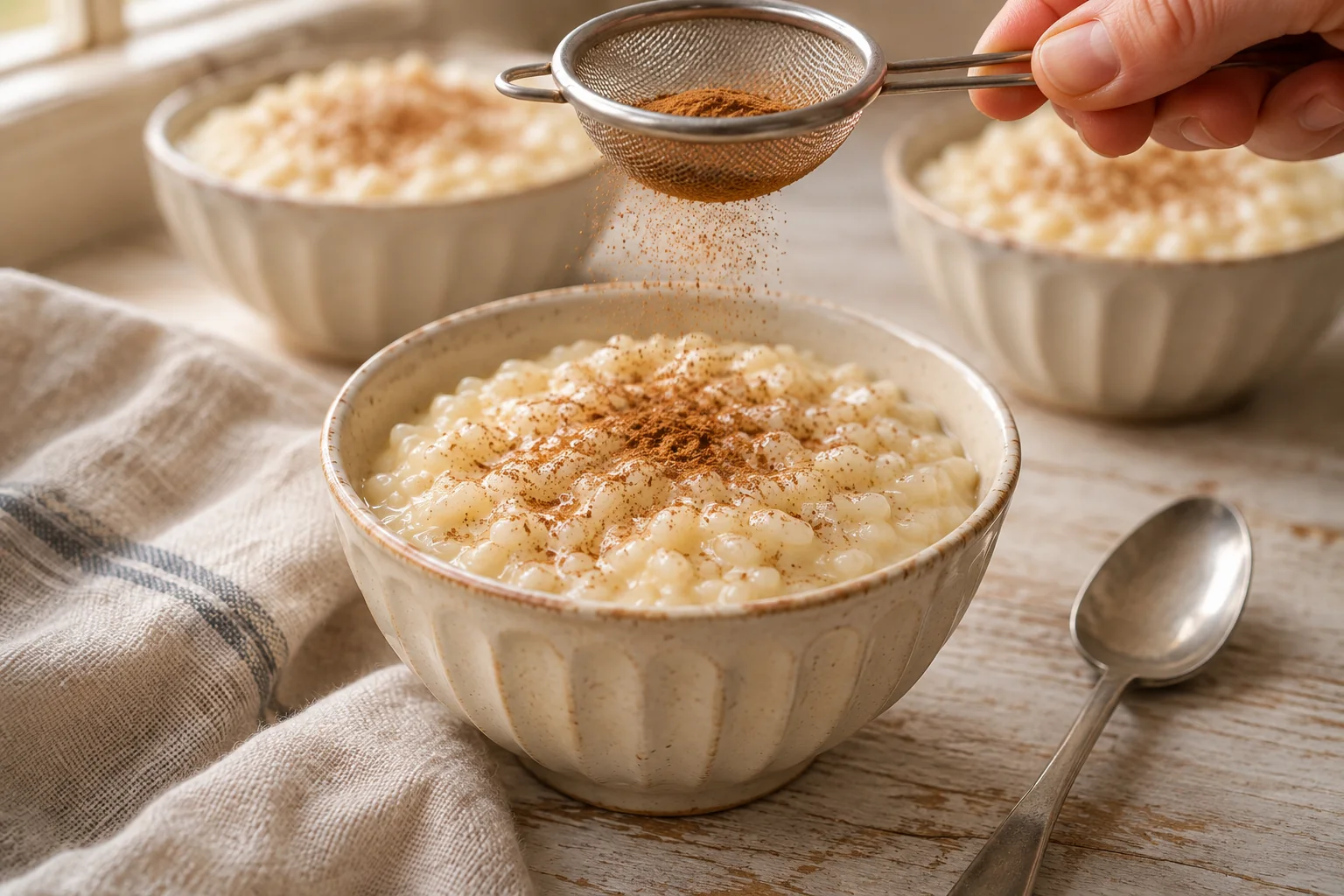
Recipe to try: Rice Pudding. Rice pudding shows a different route to a creamy dessert. Rice supplies starch, so its cooking cues differ from a smooth egg custard.
The role of eggs and starch together
Pastry cream often uses both. Starch provides thickness that remains useful once chilled, while egg enriches the flavour and texture. The cooking schedule must activate starch properly and address egg safety. It isn't simply ordinary vanilla pudding with more sugar.
What crème anglaise is
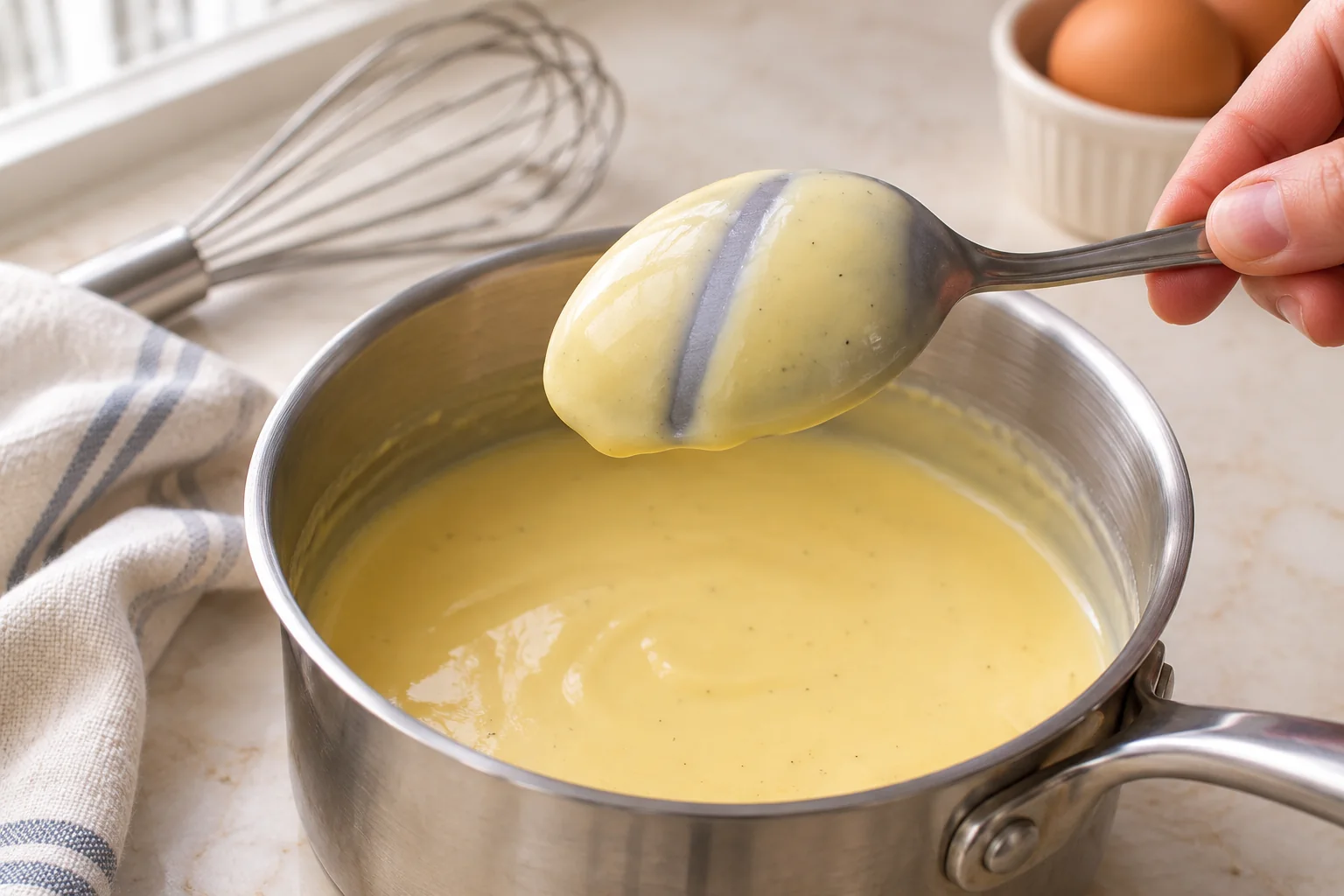
Crème anglaise is a pourable vanilla custard sauce, generally thickened with eggs rather than significant starch. It is commonly served alongside cake, fruit or plated desserts. A successful anglaise lightly coats a spoon instead of standing in stiff peaks.
What baked custard is
Crème brûlée, pots de crème and many custard pies set in the oven or water bath. Their texture ranges from softly set to firm depending on ingredients. The formula is usually designed to be eaten from a dish or sliced when properly chilled, not piped into choux pastry.
Recipe to try: Classic Custard Tart. This offers a baked custard inside pastry. Check the filling according to its recipe rather than judging by crust colour alone.

Texture comparison
A poured custard is fluid, a creamy pudding holds a spooned mound but remains soft, and pastry cream is usually thicker and more structured. However, a heavy starch pudding may be firmer than a lightly made pastry cream. Compare the specific recipe rather than relying on an absolute rule.
Cooking on the stovetop
Many puddings and pastry creams are cooked in saucepans with careful stirring. The mixture thickens as starch hydrates and cooks, while egg-containing versions also require controlled heat. A heavy saucepan and attentive whisking help prevent scorching and lumps.
Cooking in a water bath
Egg-forward baked custards benefit from gentle oven heating. A water bath moderates the heat surrounding the dish and can reduce curdling. The dish's size and the recipe's target set remain important; immersion in hot water does not guarantee safety or doneness.
Why pastry cream sometimes boils
Starch-thickened pastry cream recipes may specify a brief boil after thickening, helping fully cook the starch and produce a stable filling. A delicate egg-only anglaise generally cannot tolerate the same treatment without curdling. Never transfer the boil instructions from one to the other.
Can vanilla pudding fill an éclair?
Possibly, if it is sufficiently thick and stable, but a loose pudding may seep out or soften the choux shell. A tested pastry-cream or éclair-filling recipe is a better starting point. The intended holding time and serving temperature matter as much as sweetness.
Can pastry cream be eaten as dessert?
Yes, when properly cooked, cooled and refrigerated it is edible as a custard-like dessert, though its thickness may feel heavier than pudding. Some chefs fold in whipped cream to make crème diplomat, a lighter filling with separate stability requirements.
Is crème brûlée a pudding?
It's commonly classified as baked custard, set principally by egg yolks rather than ordinary pudding starch. Its caramelized sugar top is the defining serving contrast. Calling it pudding casually isn't a technical recipe instruction.
Chocolate variations
Chocolate pastry cream adds cocoa or chocolate to a formula designed for the added solids and fat. Chocolate pudding may use cocoa and starch for a spoonable bowl dessert. The amount and type of chocolate affect final firmness, so substitutions between formulas can change texture.
Why vanilla bean doesn't determine the category
Vanilla can flavour custard sauce, pudding or pastry cream. Chocolate, coffee and citrus work too. The thickening method and intended use are more important than whether the recipe uses whole beans or extract.
Recipe to try: Vanilla Bean Custard Tart. For another custard project, use this tart’s measured filling and baking sequence. Vanilla flavour does not change the need for careful heat control.

Sugar and dairy differences
All three styles can contain milk, cream and sugar in different proportions. Higher cream content often feels richer, while sugar changes sweetness and how eggs and starch behave. Don't remove a large portion of sugar without considering the recipe's balance.
How gelatin fits in
Some puddings or chilled desserts use gelatin to create a set without relying primarily on eggs or starch. Panna cotta is a familiar example, but it is not identical to pastry cream. Identify the gelling ingredient before treating any chilled cream as cooked custard.
What happens during cooling
Hot pudding and pastry cream may seem looser than their chilled state. Proper refrigeration lets them finish setting. Baked custards also firm as they cool. But cold temperatures do not make raw egg or uncooked starch safe and do not reliably fix a fundamentally incorrect formula.
Refrigeration and safety
Most preparations containing milk, cream and eggs require refrigerated storage at 4°C (40°F) or below. Cook egg mixtures to a validated safe endpoint, cool promptly and do not leave a bowl of custard on the counter overnight. Follow the complete recipe's storage window.
Frequently asked questions
Is pastry cream just thick pudding? They overlap, but pastry cream is designed as a structured filling. Can pudding be egg-free? Yes. Is all custard baked? No, sauces can be cooked on the stove. Does cream mean whipped cream? Not in crème pâtissière. Are the three interchangeable? Only when a tested formula suits the intended pastry.
The simplest choosing rule
For a pourable sauce, choose an egg custard such as crème anglaise. For a bowl dessert, choose pudding. For an éclair or tart, choose pastry cream. Understanding how each thickens will make both your cooking and your dessert assembly much more predictable.
Related recipe: Classic Fruit Tart.
IN PICTURES
From the baking notebook
FROM THE RECIPE BOX


