On this page
Set your own mini, standard or jumbo tin on the counter. Measure one empty well with water, then dry it. Use the fill level specified in your recipe to choose a starting portion. Weigh the batter for one trial cupcake and note how high it rises before filling the whole pan.
Three common cupcake categories
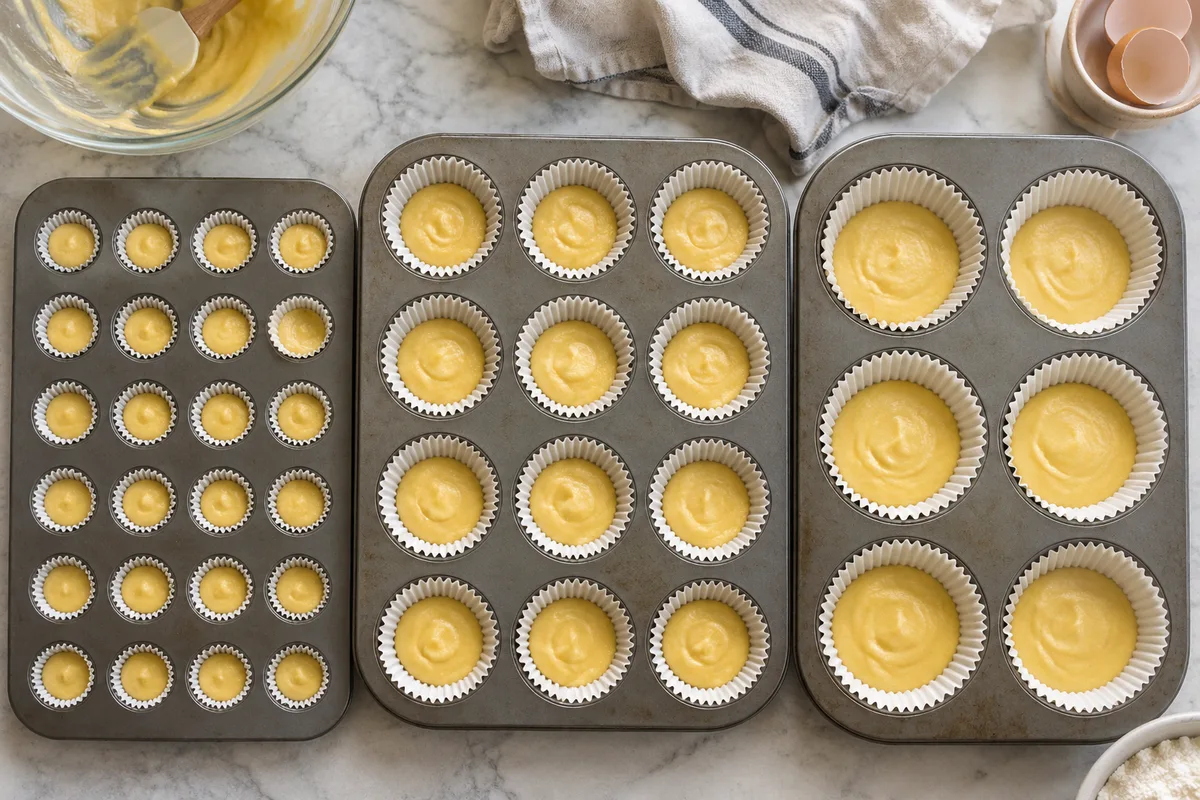
Mini pans produce bite-size cupcakes, standard pans make typical individual portions, and jumbo pans yield larger desserts. Actual cavity dimensions vary across manufacturers, as do liners. Some pans advertised as muffin pans have deeper or wider cavities than comparable cupcake pans. Measure or check capacity instead of assuming that every standard twelve-cup pan is identical.
Why cavity capacity matters
The amount of batter a liner can safely hold depends on its volume and the recipe's rise. A high-rising foam or baking-powder cake may overflow at a fill level that works for a denser batter. When using a new pan, compare its dimensions with those specified by the recipe. Do not fill cavities to the rim unless the formula expressly requires it.
The fill fraction isn't universal
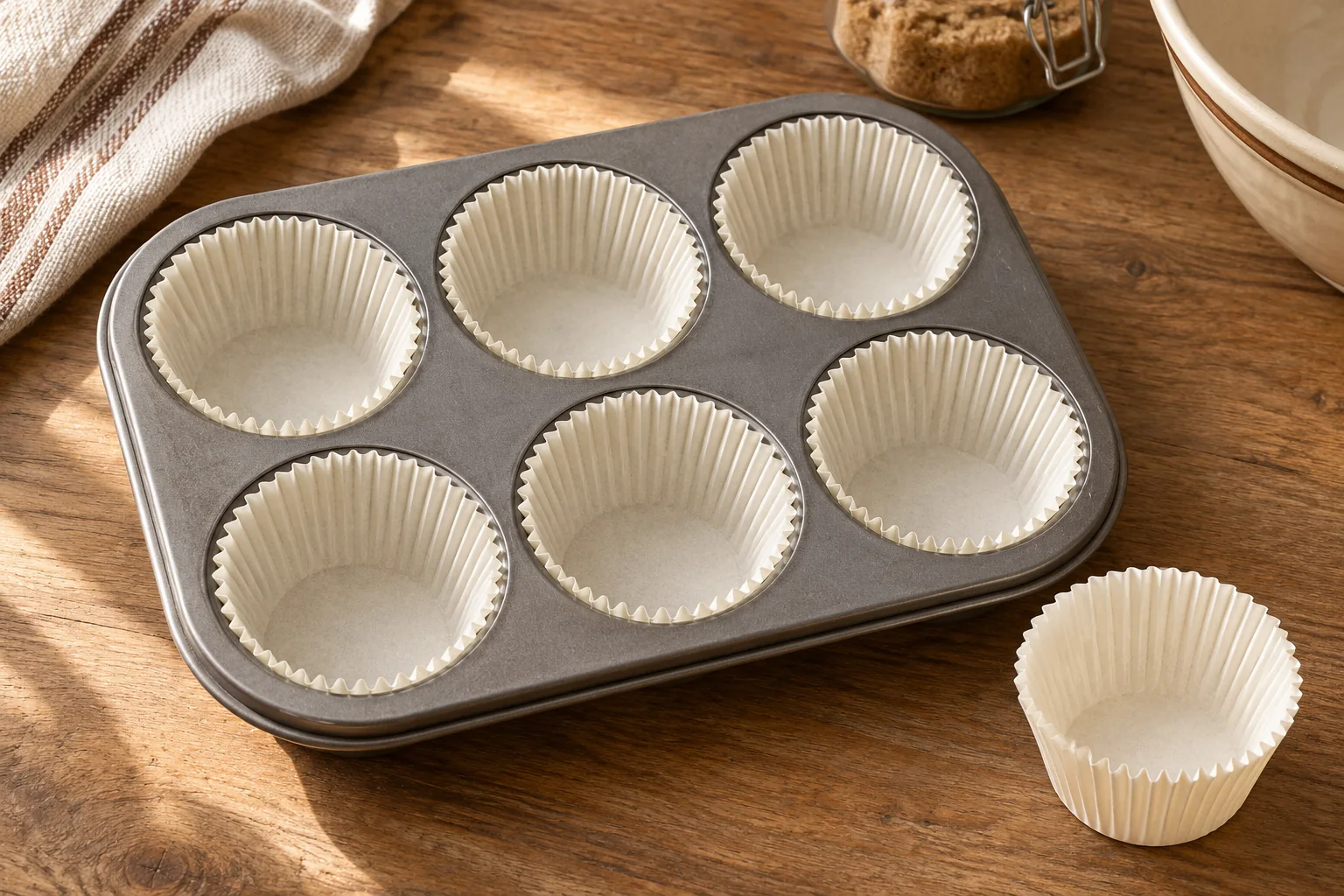
Many conventional cupcakes are filled somewhere around two-thirds of the liner, but recipes vary. Some cake batters rise strongly and use less; others require a higher starting level. Follow the specific instruction, ideally with a weight or scoop reference. A fill line is only a guide when both pan capacity and batter expansion match the source.
Start with the fill instructions for Vegan Vanilla Bean Cupcakes before changing liner sizes.
Measure batter by weight
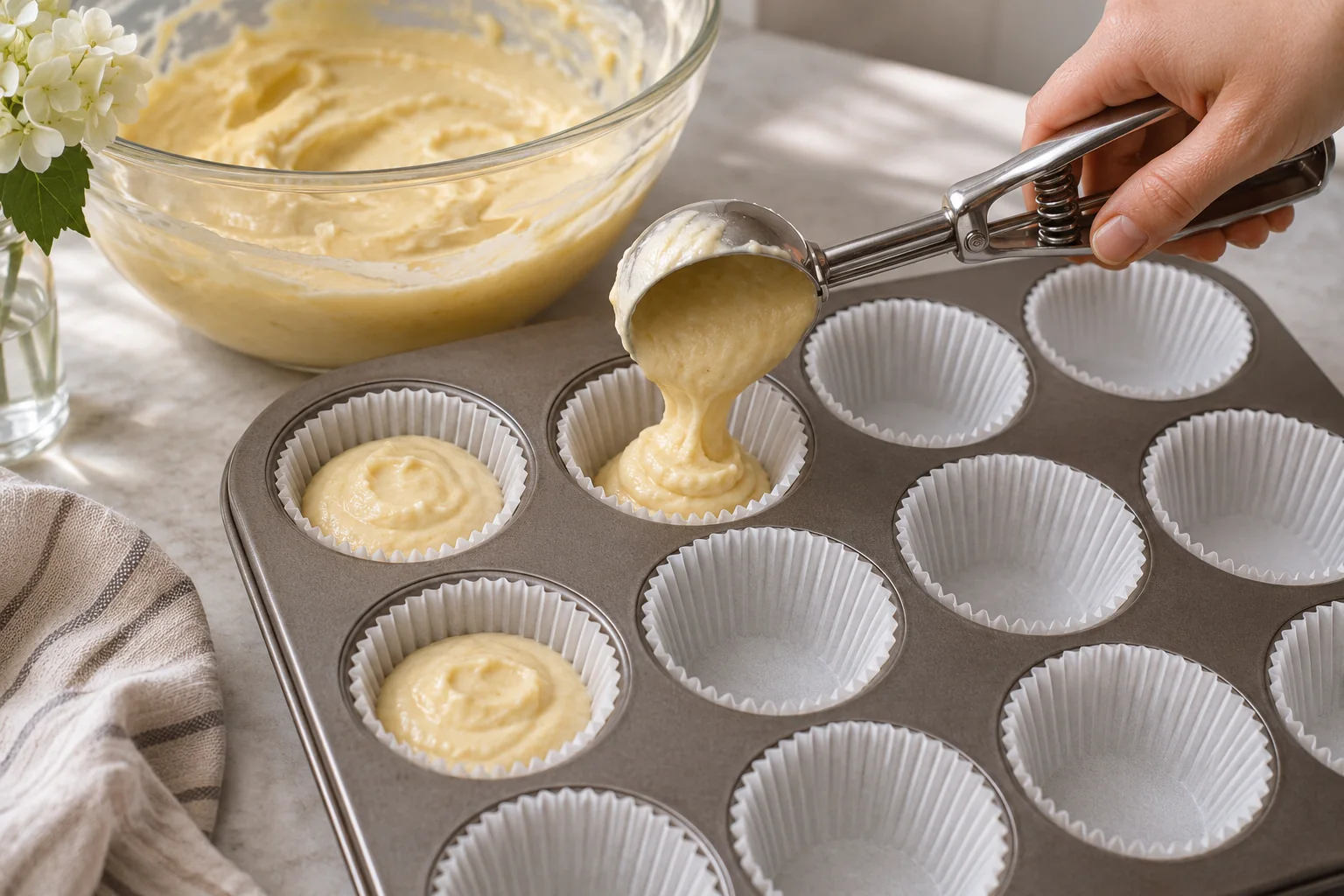
If you want uniform cupcakes, weigh the mixing bowl with batter, subtract the empty bowl weight, then divide usable batter weight by the intended yield. A scale makes it easier to portion equal amounts than eyeballing sticky batter in paper liners. Don't scrape every last smear of thick batter into the final cavity if that makes one cupcake substantially larger.
A simple batter math example
Suppose a recipe yields 720 g usable batter for twelve standard cupcakes. That's 60 g per cup on average, if the original pan and recipe support that amount. If you instead use a pan holding much less, 60 g may overflow. The arithmetic helps replicate the recipe's tested portions; it doesn't authorize pouring 60 g into every cupcake liner regardless of actual capacity.
Mini cupcake planning
Mini cupcakes heat through more quickly because of their smaller size. They can be excellent for dessert tables where guests want several flavors. Use a recipe with tested mini instructions when possible and check doneness earlier than for standard cupcakes. Tiny portions can dry out quickly if baked until they have the same dark crust color as a large muffin.
Standard cupcakes
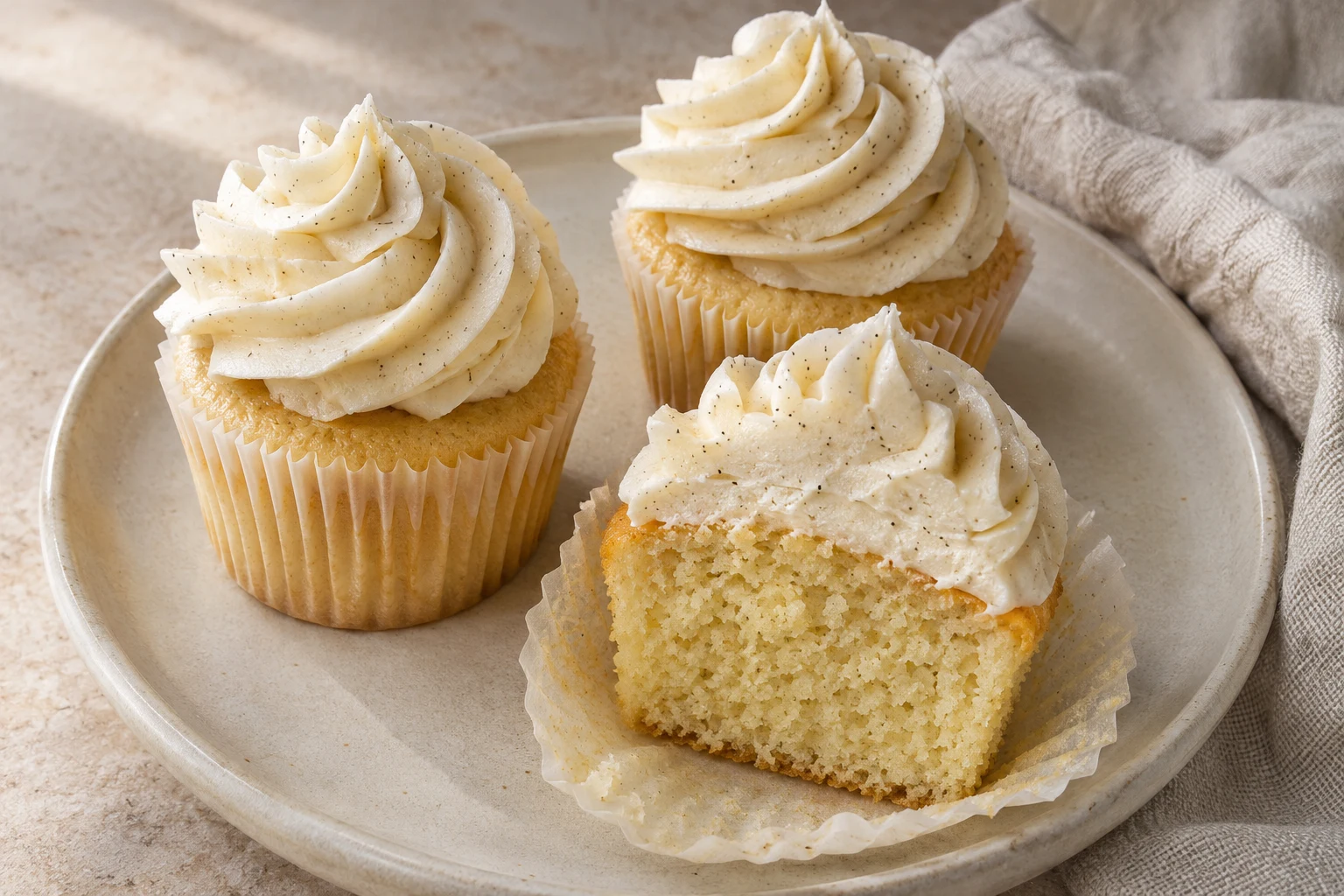
A well-tested standard cupcake should rise to an attractive top without spilling over the liner. The target may be rounded or fairly level depending on frosting style. The recipe's butter, sugar, leavening and pan fill determine the result. Keep one consistent scoop or portion weight across all cavities and avoid mixing full and half-full liners on one tray.
For a chocolate batch, use the portion and doneness cues in Vegan Chocolate Cupcakes.

Jumbo cupcake concerns
Jumbo cupcakes have thicker centers and need an appropriate baking schedule to cook through before their tops become too dark. Some formulas require a different temperature strategy. A very large portion may also need a sturdier liner or a cake-style filling method. Do not simply double standard-cupcake time and assume the result is safe or moist.
Muffins versus cupcakes
Muffins may use a different mixing technique, batter thickness and doming goal. Some recipes intentionally fill muffin cups more fully to create high tops, whereas a cupcake is often designed for an even frosting-friendly surface. The same pan can hold both, but the fill instructions shouldn't be transferred across unrelated batters.
Compare the batter in Coconut Flour Cupcakes before transferring a scoop measurement from another formula.

Choosing a scoop
Cookie scoops or portioners can help distribute batter, but scoop numbers and actual capacity vary. Test one scoop's weight with your batter and compare it to the recipe's target. A pourable batter may be easier to portion from a jug, while thick butter cake batter may need a disher. Consistency matters more than purchasing a particular advertised scoop size.
The value of paper liners
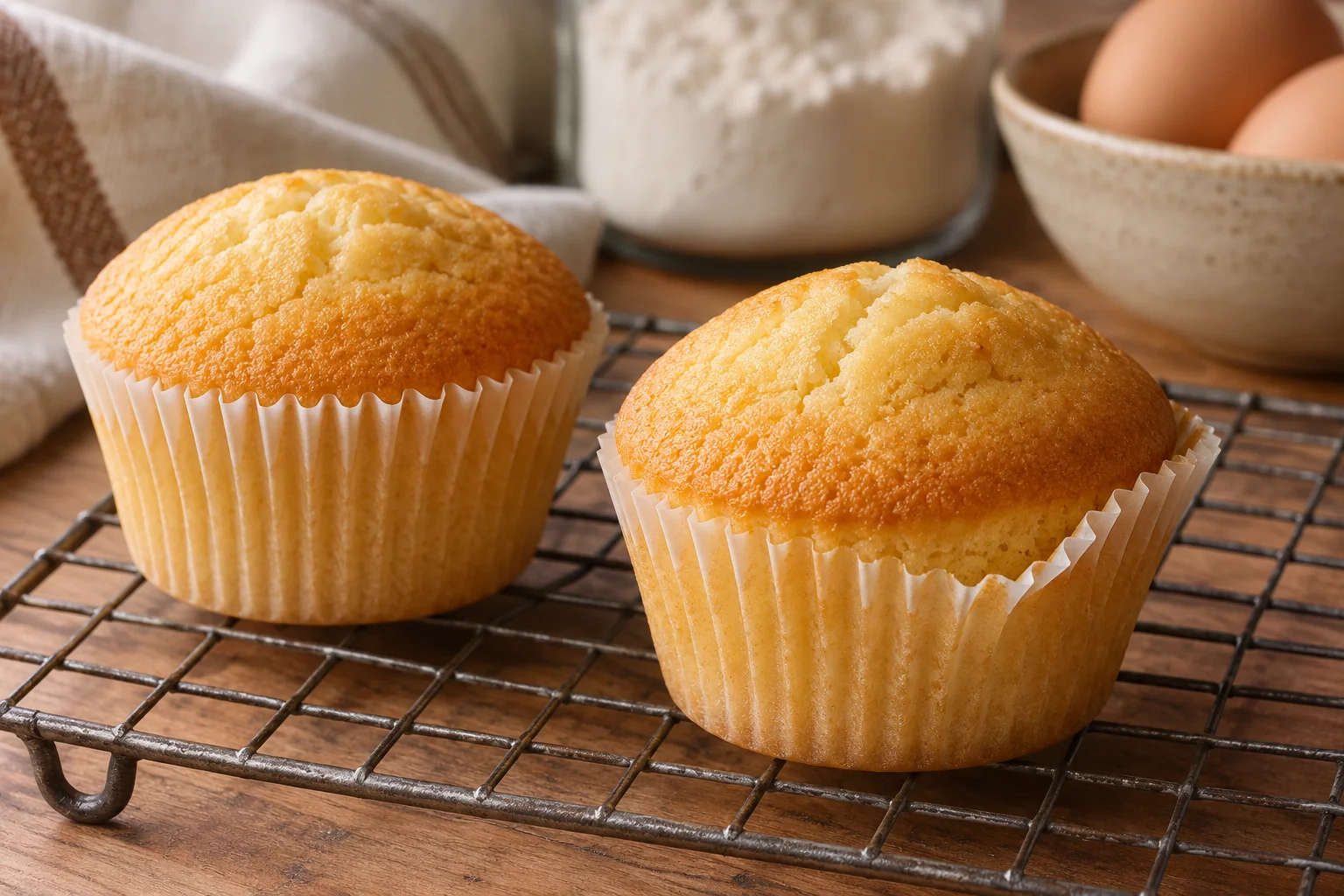
Use oven-rated paper liners that fit the pan. One properly fitted liner is normally enough; doubling papers is not a remedy for an unsuitable pan or overfilled batter. Tall tulip liners can make the apparent fill level misleading, so measure the portion rather than judging the paper height.
Foil and silicone liners
Foil liners, reusable silicone cups and nonstick pan coatings may affect release and how heat reaches the batter. A flexible silicone cup can need external support to hold shape. Follow the manufacturer's instructions and compare the actual baking result before scaling up. Do not assume every liner has identical usable capacity simply because it fits inside the same metal cavity.
Spacing and air circulation
For a full tray of cupcakes, standard cavities naturally keep portions separate. Filling only some cavities in a large pan can change heat distribution slightly, though effects vary. If the recipe or manufacturer recommends adding water to unused cups, follow the specific instruction; don't do it arbitrarily. Keep the pan centered on the oven rack and avoid overcrowding with another large tray.
Why cupcakes overflow
Overfilling is a leading cause, but incorrect leavening, oven temperature and batter aeration can also contribute. A very hot oven may push rapid rise, while a poorly mixed batter can produce uneven pockets. Check pan volume and portion weight first. Adding extra flour at the end isn't a reliable rescue for too much batter per cup.
When testing Vegan Mocha Cupcakes, leave room above the batter and record what your first tray does.
Why cupcakes stay flat
Some cupcakes are designed for relatively flat tops, while others should dome. If the recipe expects lift, check freshness and measurement of leavener, oven temperature, ingredient temperature and mixing. Too much batter in a heavy large liner can also change how the top sets. A flat but fully baked cupcake may still be ideal for elaborate frosting.
Why tops crack
A very high oven temperature may cause the surface to set before continued internal expansion, producing cracks. Overfilled liners and very stiff batter can contribute. Some muffin formulas intentionally make cracked high tops, but cupcakes may need a smoother surface. Follow the stated temperature and mixing method before changing fat or liquid proportions.
Doneness by size
Mini, standard and jumbo portions need different center checks and may have different visual endpoint cues. A lightly springing top or clean tester can be helpful where the recipe specifies it. A jumbo cupcake can be dark on top and still underbaked within. Avoid tasting raw batter or using frosting to hide a wet center.
Cooling before frosting
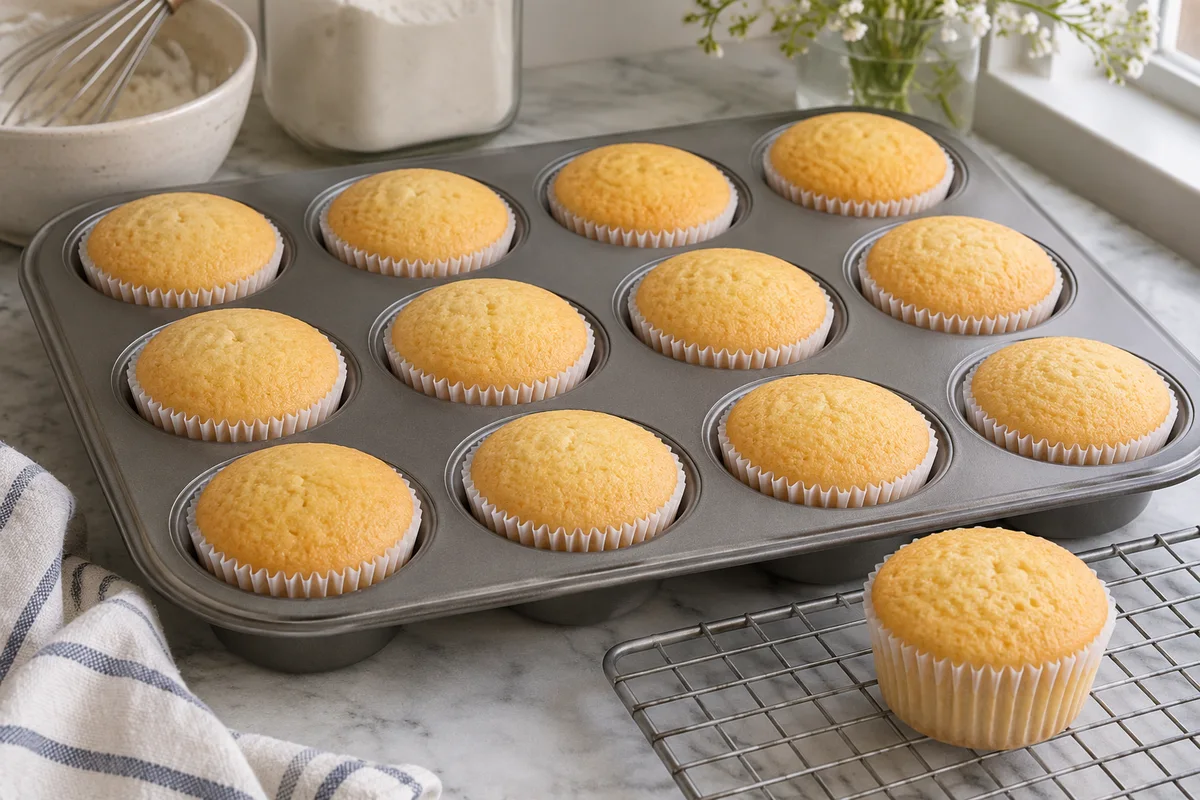
Leave cupcakes in the pan only as long as the recipe directs, then cool on a rack where appropriate. Steam trapped in hot liners can affect bottoms and cause papers to peel. Frosting added to warm cake melts and slides. Larger cupcakes may need more cooling time than minis. Chill perishable finished frostings according to their ingredients.
Let Vegan Strawberry Shortcake Cupcakes cool before adding their topping.
Scaling for a party
For twenty-four guests, decide whether each person will receive one standard cupcake or perhaps two minis plus other desserts. Calculate actual batter yield from the tested recipe and the chosen pan size. Bake in multiple manageable batches if you have only one pan, cooling the metal between rounds. Don't mix leftover small amounts into random oversized cups.
Frosting portions
A mini cupcake usually needs a modest decorative swirl, while a jumbo dessert may carry considerably more frosting. Piped height affects overall sweetness and whether the cupcakes fit inside transport boxes. Use a frosting amount chart or test one finished portion before preparing the entire batch. A stable lower swirl can be more appealing than a towering mound that collapses during travel.
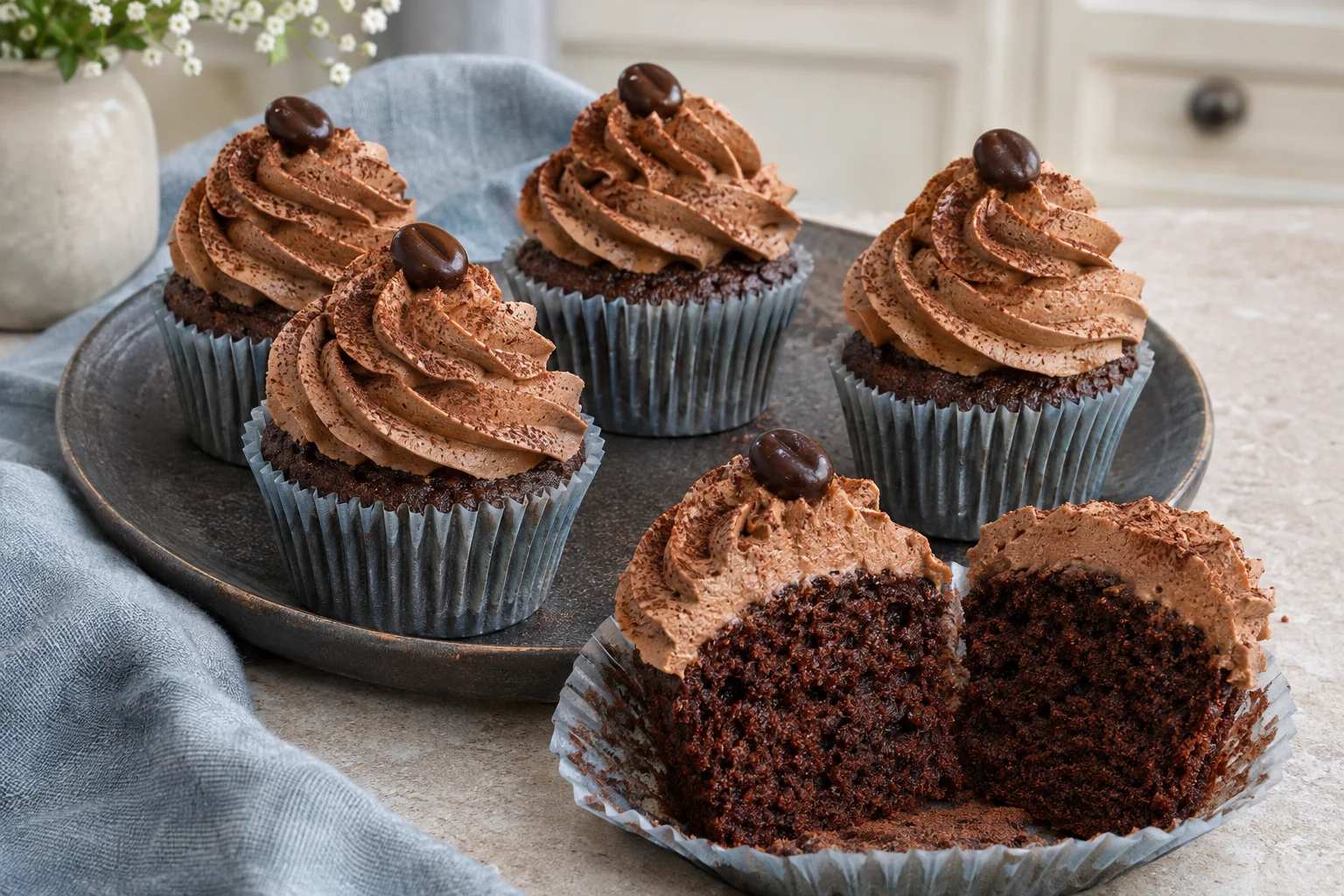
Use one decorated serving of Vegan Chocolate Espresso Cupcakes to judge how much frosting your chosen size needs.

Safe transport
Use a cupcake carrier with cavities matching the actual baked size and frosting height. Oversized cupcakes won't necessarily fit a standard insert. Chill perishable frosting appropriately and keep the carrier level during travel. Don't stack frosted cupcakes directly together, since the topping can smear or become contaminated.
A first trial with a new pan
Bake half a tested batch and weigh how much batter goes into each cup. Record the fill fraction, rise, cooling and frosting needs. If the result overflows, adjust using recipe-supported guidance before making dozens for a special event. Pan familiarity improves consistency more than a generic online table of cup capacities.
IN PICTURES
From the baking notebook
FROM THE RECIPE BOX


