On this page
Cookie bars offer all the buttery, chocolate-studded flavour of a favourite cookie without rolling dozens of individual dough balls. But a pan of cookie dough doesn't bake exactly like separate cookies. Heat reaches the edges first while the middle remains thicker and softer, and that changes the time, texture and doneness cues. A successful conversion starts with the dough's total yield and the size of the pan.
Can every cookie recipe become bars?
Many drop-cookie doughs can be adapted for bars, particularly chocolate chip and oatmeal varieties. Delicate cutout, meringue, macaron and very crisp wafer formulas have different structures and may not translate well. For dependable results, begin with a recipe that already provides a bar variation or a tested cookie-bar formula.
Why bars bake differently
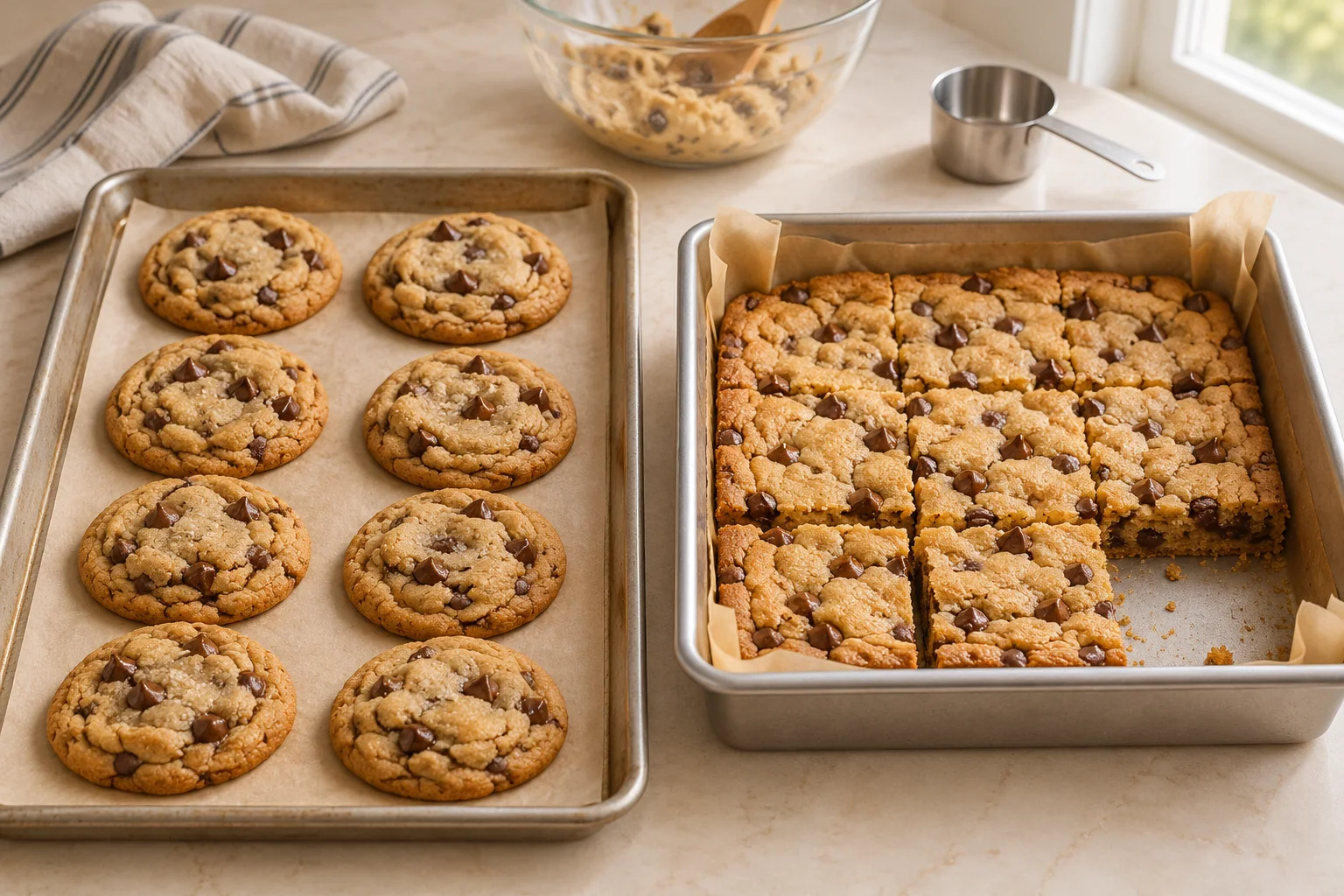
A cookie on a sheet has exposed edges around every portion; in a pan, the dough forms one continuous slab. The centre takes longer to set than a small cookie, while the perimeter receives extra heat from the pan walls. That is why standard cookie minutes cannot simply be multiplied by a guessed number.
Choose the pan before mixing
An 8-inch square pan gives a deeper layer than a 9-inch square with the same dough. A 9-by-13-inch pan produces a broader, thinner slab. If a cookie recipe makes a full batch of dough, estimate its total weight and consult a recipe-tested pan conversion rather than pressing everything into whichever pan is clean.
Recipe to try: Chocolate Chip Cookie Bars. This formula is designed for a pan of bars. Use its pan dimensions and centre-doneness cues before adapting another cookie dough.
Batter depth matters more than pan shape
A thick centre needs more time in the oven and may stay soft long after the edge turns brown. A very shallow slab can become crisp or dry. Follow the intended thickness and remember that glass, dark metal and light metal bake differently.
Line the pan for easy removal
Parchment with overhanging handles makes it easier to lift a cooled slab onto a board. Grease the pan or paper only as the formula instructs. Keep the parchment away from exposed heating elements and observe its temperature rating.
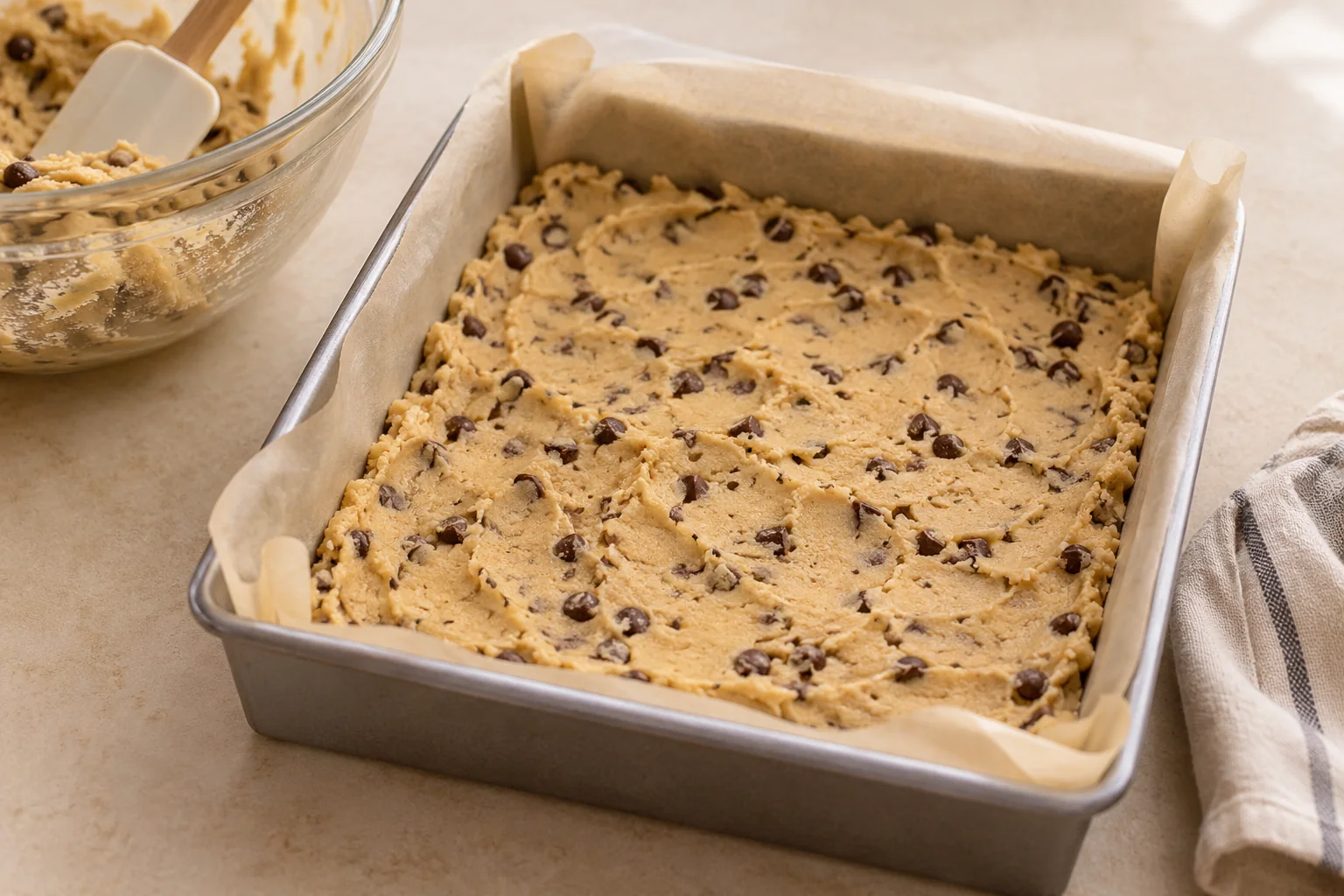
Press dough evenly
Spread cookie dough into the corners with a spatula or clean fingertips, avoiding large compressed lumps. The goal is similar thickness across the whole pan. If one corner has a mound of dough, it may remain underdone while the opposite edge overbakes.
Do you need to chill the dough?
Some cookie formulas benefit from chilling, while others should be pressed into the pan and baked promptly. Chilling affects spread, texture and timing. Use a bar-specific instruction when possible; a chilled slab and a room-temperature slab will not always bake identically.
Recipe to try: Classic Chocolate Chip Cookies. Use the stated butter texture, dough portions and bake time together to establish a consistent cookie baseline.

Mix-ins need balance
Chocolate chips, nuts and dried fruit add weight and can influence cutting. A recipe designed for discrete cookies may use a high ratio of bulky additions, which can make thin bars crumble. Keep quantities measured and avoid adding extra candy simply because the pan looks spacious.
What about stuffed cookie bars?
Caramel, cream cheese and chocolate spreads introduce moisture and weight between layers. A tested stuffed-bar recipe coordinates the filling and pastry so the middle cooks properly. Don't add a thick, wet centre to an ordinary cookie dough without adjusting the method.
Oven temperature isn't universal
Some tested bar variations use the same oven temperature as the cookie recipe; others use a lower setting to cook the centre more evenly. Avoid raising the oven heat to hurry a deep pan, since edges may burn before the interior sets.
How to identify doneness
Look for an appropriately coloured edge and a centre that has begun to set according to the recipe. A tester may bring up a few moist baked crumbs in chewy bars, but it should not show liquid raw dough. A chocolate chip on the tester is not the same as unbaked batter.
Why the middle seems too soft
Hot cookie bars continue firming as they cool. A soft centre isn't necessarily underbaked, but a shiny raw layer or loose batter requires more baking. Distinguish intended chewiness from a centre that never fully cooked.
Cooling before slicing
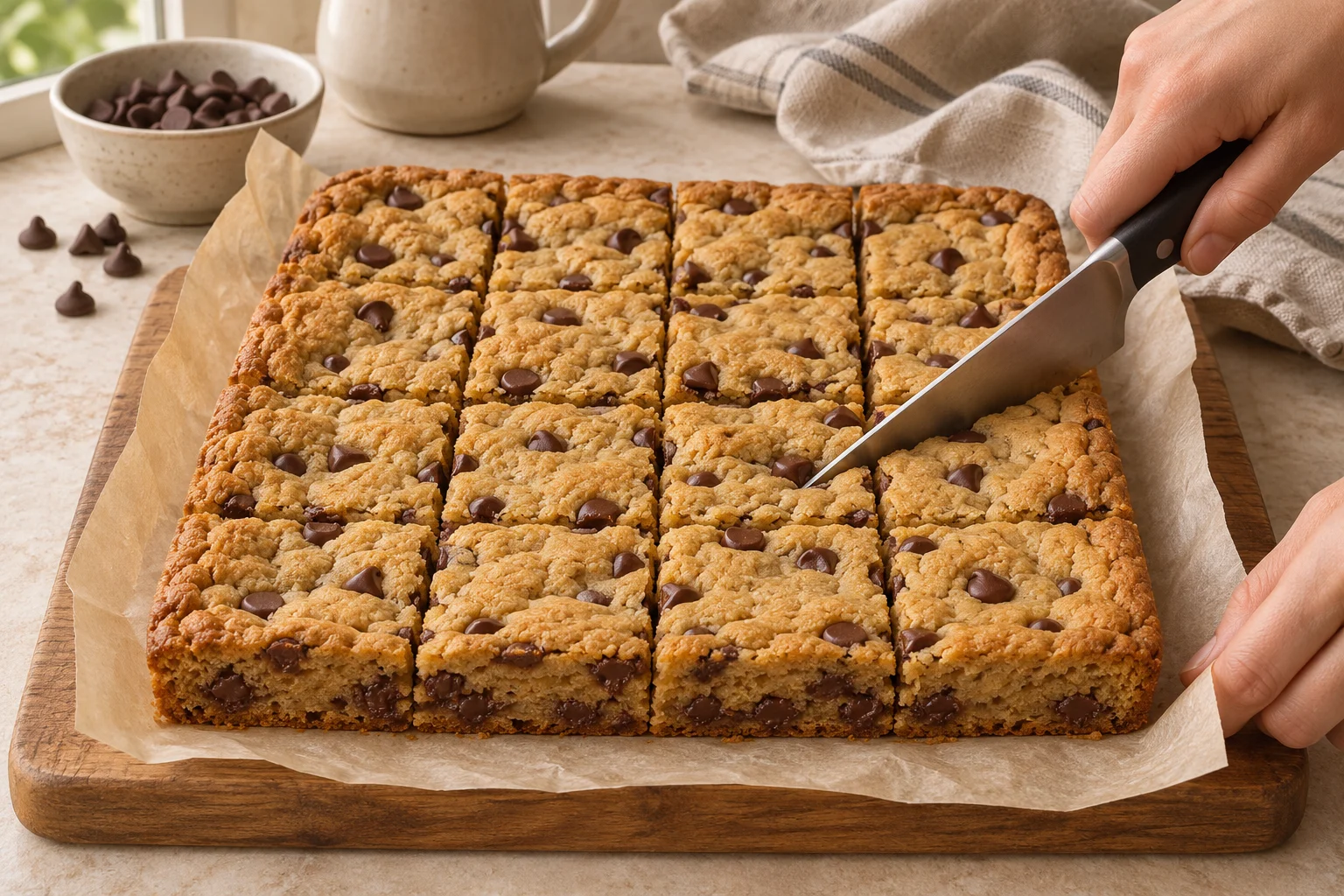
A warm slab is fragile and may stretch or smear around chocolate. Allow the time specified by the recipe, then lift it using the parchment handles when sufficiently set. Cutting cold or cool bars with a sharp knife usually creates straighter edges.
How to get chewy bars
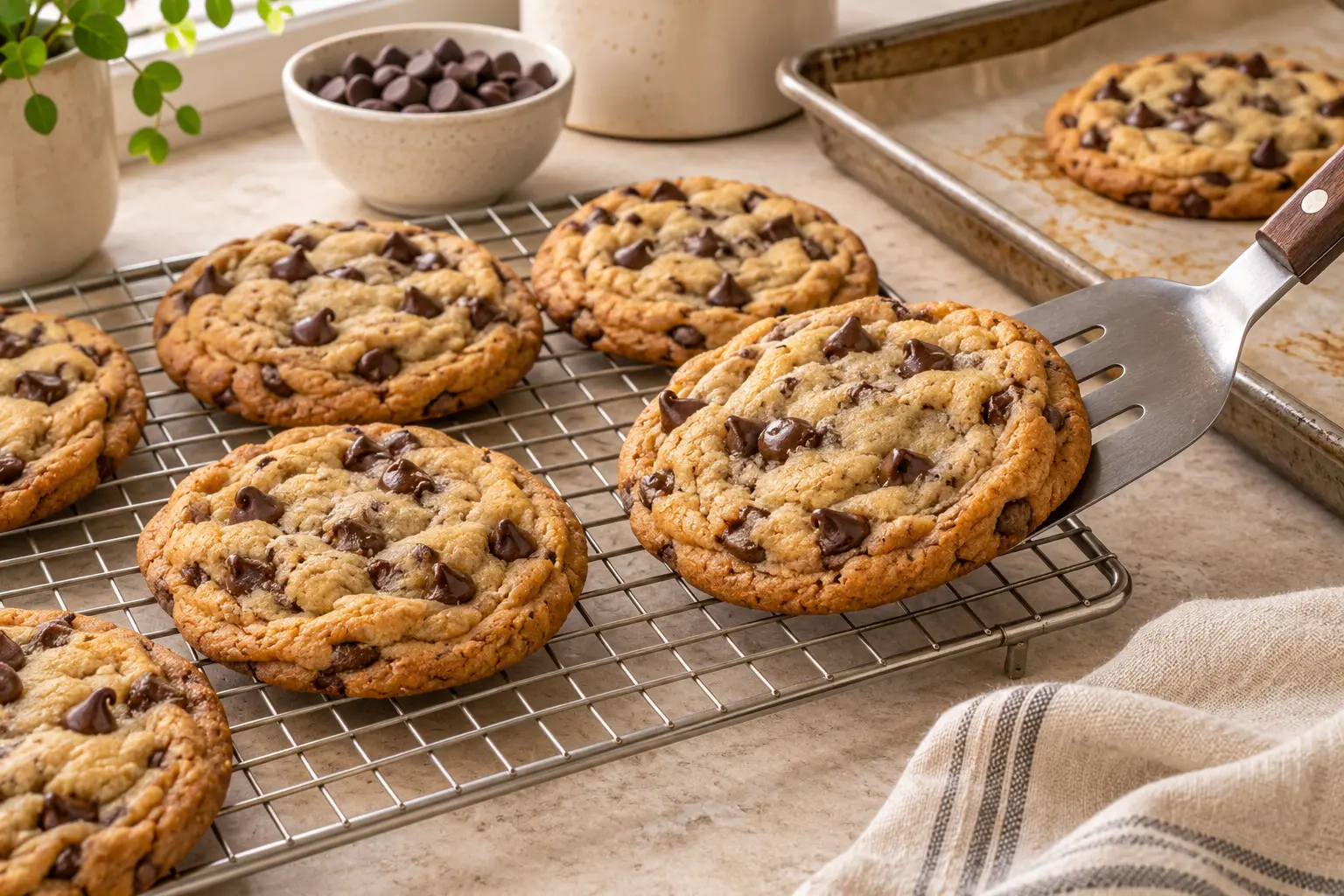
Choose a formula designed for a chewy texture, often balancing brown sugar, butter, egg and flour carefully. A thicker layer and measured baking endpoint can help, but deliberately underbaking raw dough is not the answer. The recipe's ingredient proportions matter more than one quick trick.
Recipe to try: Chewy Chocolate Chip Cookies. For a chewy cookie option, use this complete formula. Sugar, flour and cooling work together; changing only baking time is not the whole method.
How to get crisp-edged bars
A shallower, appropriately baked layer often offers more edge relative to centre. Pan material also changes browning. Don't use an extremely dark pan at arbitrary temperatures to achieve crunch; it can create burnt bottoms and a dry middle.
Troubleshooting dry bars
Excess flour, an oversized pan and excessive baking time are common suspects. If bars taste dry, check dough weight and pan area first. Adding extra milk to the original cookie recipe may distort the structure rather than creating chew.
Troubleshooting a sunken centre
Very thick dough, too much wet filling, poor leavening balance or insufficient bake time may produce a depressed middle. Remember that some chewy bars settle slightly during cooling. Judge texture across a cut slice before assuming the recipe failed.
Storage after baking
Store cooled plain cookie bars according to the recipe, usually protected from drying. Cream cheese or custard fillings can require refrigeration. For longer storage, use recipe-approved freezing methods and label the date.
Frequently asked questions
Can I put any cookie dough in a brownie pan? Many drop-cookie doughs work, but not every formula. Does the temperature stay the same? Sometimes. How much longer? It depends on pan depth and recipe. Do bars need to cool first? Yes, for neat cutting. Can frozen dough become bars? Use a tested thawing and baking plan.
The simple conversion principle
Choose a compatible drop-cookie recipe, match the dough quantity to a sensible pan and bake to the slab's own doneness cues. That produces a chewy, sliceable dessert rather than a tray of cookie dough with burnt edges.
IN PICTURES
From the baking notebook
FROM THE RECIPE BOX


