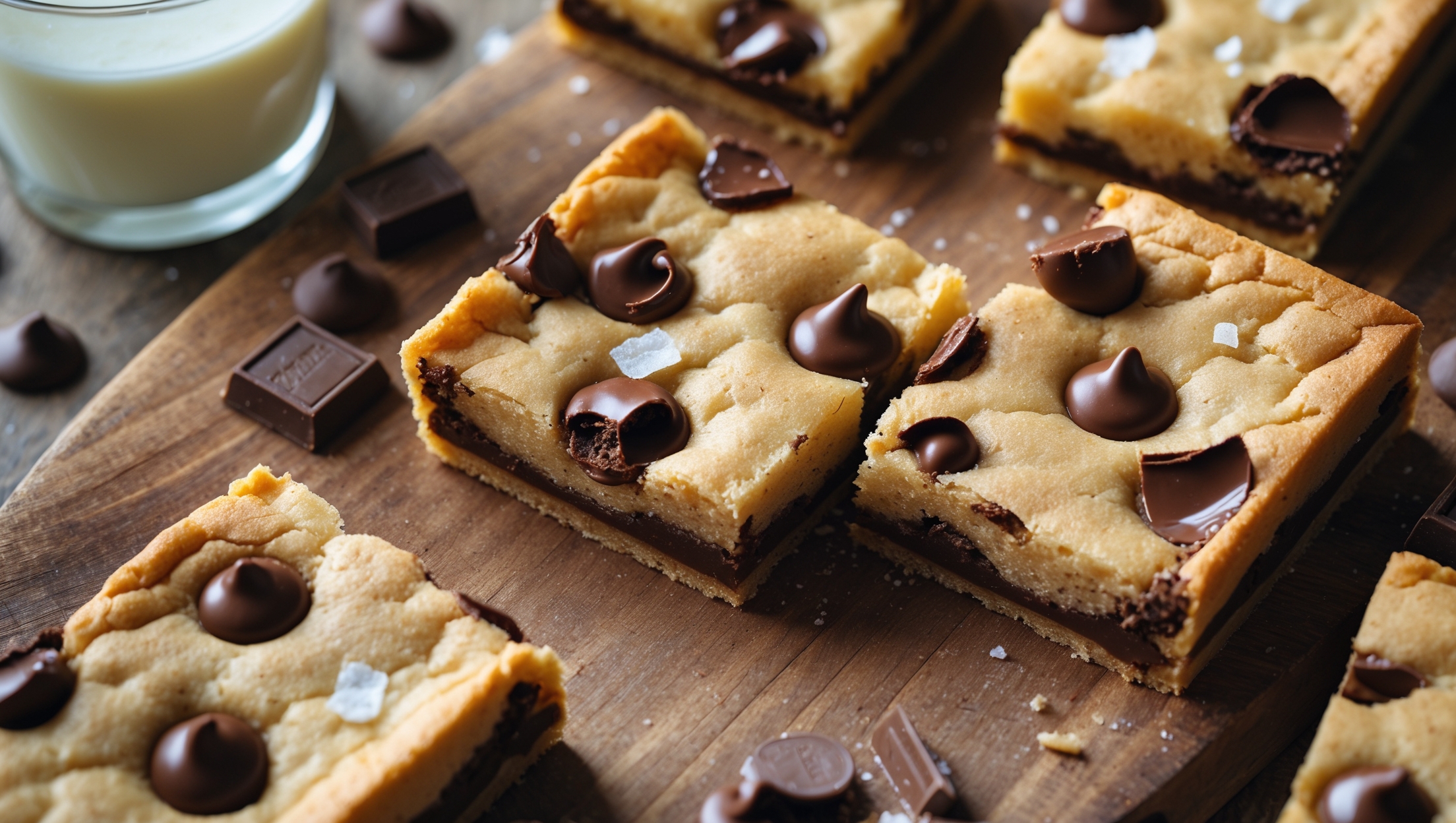
Directions
<ol class="no-list-style"><li class="MethodStepper"><h4 class="step-title">Step 1</h4>Preheat your oven to 180°C (350°F) and line your baking pan with parchment paper, leaving an overhang on the sides to easily lift the bars out later. This overhang will act as handles for clean removal.</li><li class="MethodStepper"><h4 class="step-title">Step 2</h4>For an enhanced flavor (optional), brown the butter: In a light-colored saucepan, melt the butter over medium heat. Continue cooking, swirling occasionally, until the butter turns amber and smells nutty, about 5-7 minutes. The milk solids will turn golden brown at the bottom of the pan. Immediately transfer to a large heat-proof bowl to stop the cooking and let cool for 10 minutes. Browning butter adds a complex toffee-like flavor that elevates the cookies.</li><li class="MethodStepper"><h4 class="step-title">Step 3</h4>Add both sugars to the cooled browned butter (or regular melted butter if skipping step 2) and whisk vigorously for about 2 minutes until well combined. The mixture should look smooth and shiny. The brown sugar provides moisture and deep caramel notes while the granulated sugar helps create those crispy edges.</li><li class="MethodStepper"><h4 class="step-title">Step 4</h4>Beat in the eggs one at a time, mixing well after each addition, then stir in the vanilla extract. Make sure the butter mixture isn't too hot before adding eggs to prevent them from scrambling.</li><li class="MethodStepper"><h4 class="step-title">Step 5</h4>In a separate bowl, whisk together the flour, baking soda, and salt. The baking soda will react with the acidic brown sugar to provide just the right amount of lift without making the bars cakey.</li><li class="MethodStepper"><h4 class="step-title">Step 6</h4>Gradually fold the dry ingredients into the wet ingredients, mixing just until no flour streaks remain. Overmixing develops gluten which can make your bars tough rather than tender.</li><li class="MethodStepper"><h4 class="step-title">Step 7</h4>Fold in about 3/4 of the chocolate chips or chunks, saving some to sprinkle on top. Using a mix of chips and hand-chopped chocolate creates varying pockets of chocolate throughout the bars.</li><li class="MethodStepper"><h4 class="step-title">Step 8</h4>Press the dough evenly into the prepared baking pan, using the back of a measuring cup to create a smooth, even surface. This ensures uniform baking and thickness across the entire pan.</li><li class="MethodStepper"><h4 class="step-title">Step 9</h4>Sprinkle the remaining chocolate chips over the top and gently press them into the dough. If using, sprinkle a small amount of flaky sea salt over the top – this creates a delicious sweet-salty contrast that enhances the chocolate flavor.</li><li class="MethodStepper"><h4 class="step-title">Step 10</h4>Bake for 22-25 minutes until the edges are set and golden brown but the center still looks slightly underdone. Don't overbake! The bars will continue to cook and set as they cool. A slightly underbaked center ensures that classic chewy texture everyone loves.</li><li class="MethodStepper"><h4 class="step-title">Step 11</h4>Allow the cookie bars to cool completely in the pan on a wire rack before lifting out with the parchment paper handles. This cooling period is crucial for proper setting and texture development – rushing this step can result in bars that fall apart.</li><li class="MethodStepper"><h4 class="step-title">Step 12</h4>Once completely cooled, cut into 16 squares (or larger or smaller as desired) with a sharp knife. For the cleanest cuts, wipe your knife between slices and consider chilling the bars for 30 minutes before cutting.</li><li class="MethodStepper"><h4 class="step-title">Step 13</h4>Store in an airtight container at room temperature for up to 4 days. The flavor actually improves on day two as the ingredients have time to meld. You can also freeze the bars for up to 3 months – individually wrap them for easy grab-and-go treats!</li></ol>