On this page
Use canned full-fat coconut milk when a dessert needs a pourable liquid, such as in cake batter or rice pudding. Use unsweetened coconut cream when the recipe calls for a thicker, higher-fat ingredient, such as in some whipped toppings or ganache. The products vary by brand, so compare the fat on the nutrition labels using the same serving size.
The ingredient photographs are AI-generated editorial illustrations.
Which coconut product should you buy?
Canned coconut milk
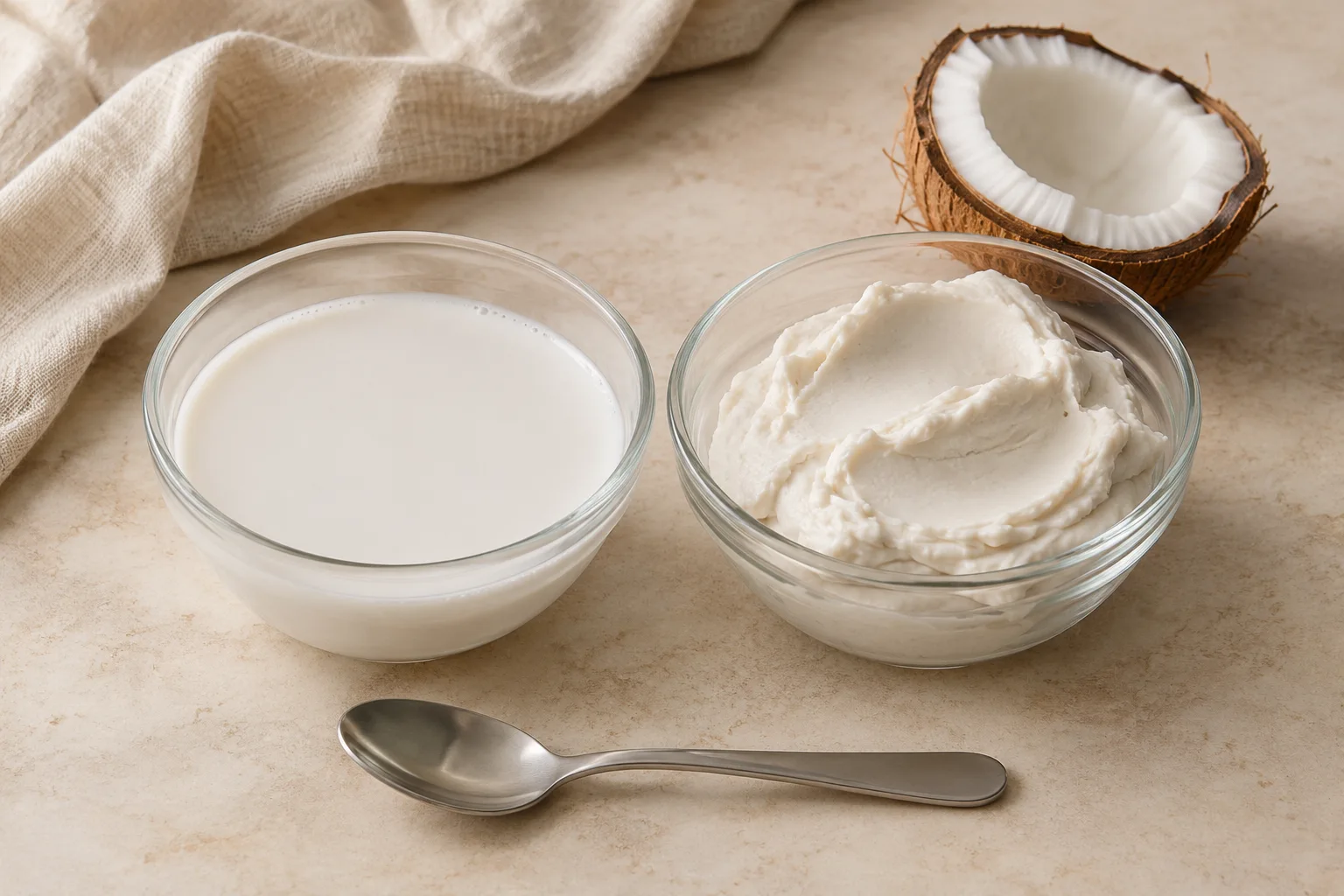
Canned coconut milk is typically a coconut-and-water product suitable for cooking and baking. Full-fat versions can be rich and may separate when cold; light versions contain more water. Packaged drinking coconut beverages are often much thinner and are not automatic substitutes for canned full-fat coconut milk.
Unsweetened coconut cream
A practical example is our coconut cream sandwich cookies recipe: its filling uses the thick coconut cream collected from the top of a chilled can of full-fat coconut milk. The filling also contains dairy butter.
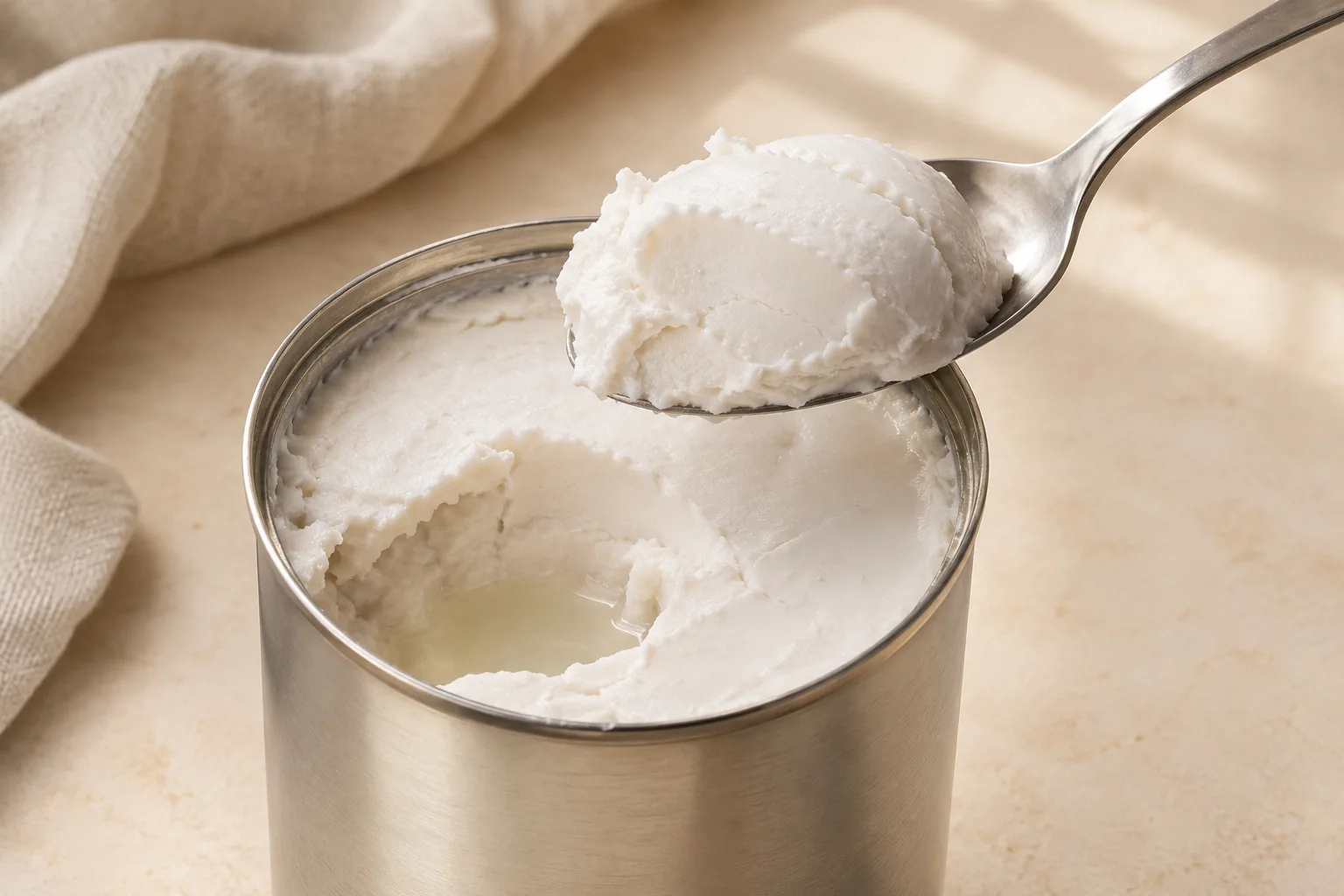
Coconut cream generally contains a higher proportion of coconut solids and fat, making it thicker and richer. Some products are smooth and pourable; others set firmly under refrigeration. Always check the ingredient panel and nutrition label because stabilizers and fat percentages affect how the product behaves.
Sweetened cream of coconut
Sweetened cream of coconut is a different product, commonly intended for drinks and sweet applications. It can contain substantial added sugar. Unsweetened coconut cream and sweetened cream of coconut cannot be exchanged one-for-one in a custard without changing sweetness and water balance.
How fat and water affect dessert texture
Higher fat can make a dessert feel richer, give sauces body and contribute to a stable whipped topping in suitable formulas. But fat alone does not thicken every recipe; a pudding may depend on starch, egg or other ingredients. Don't assume coconut cream can replace an entire custard structure.
Extra liquid can make chocolate ganache thin, batter loose or a no-bake filling difficult to set. Coconut milk and coconut cream have different water-to-fat balances. When replacing dairy, choose a recipe that specifies the coconut product and quantity by weight or volume.
When to use coconut milk or cream in desserts
Coconut milk in rice pudding
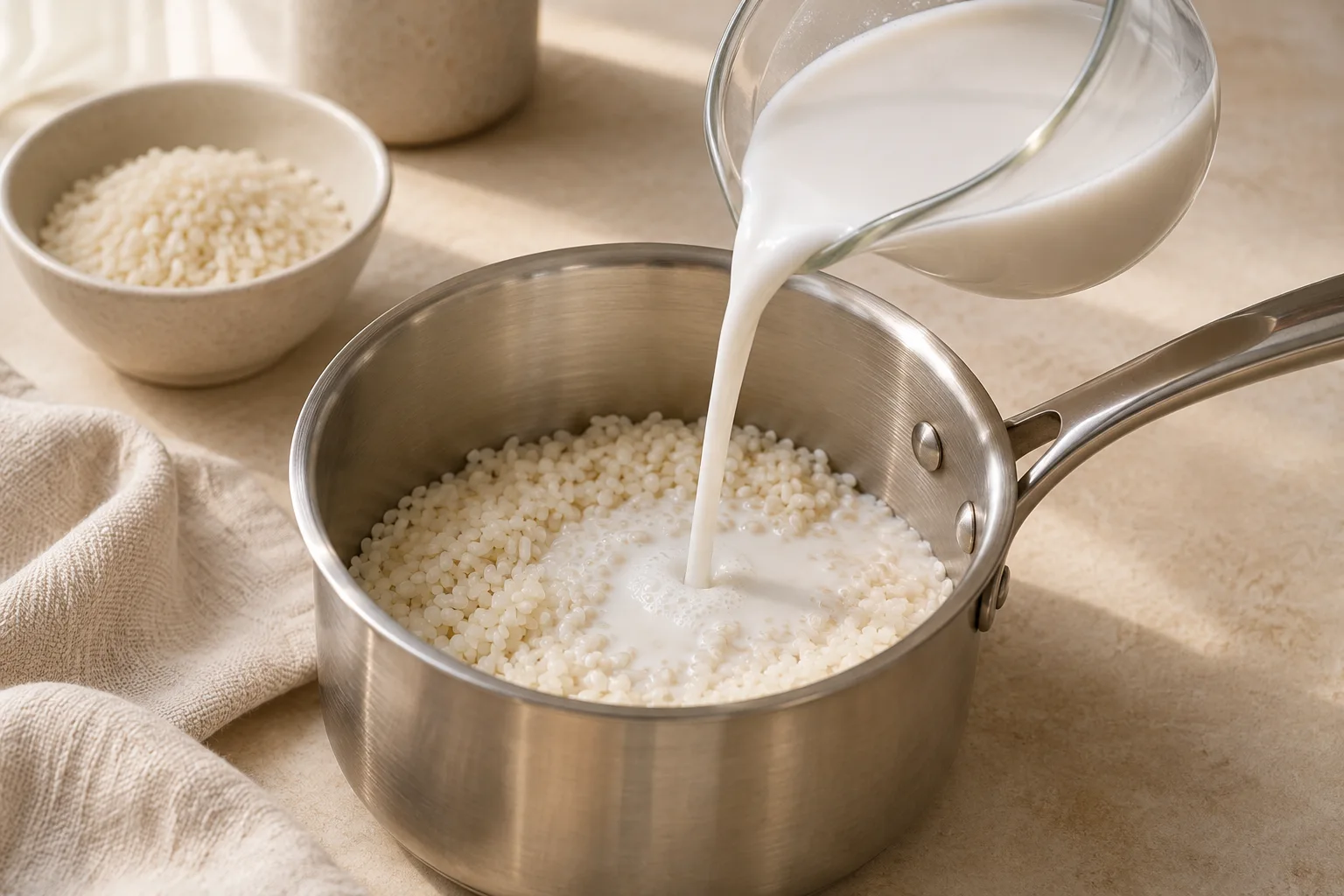
Canned coconut milk can provide creaminess and flavour to cooked rice pudding, often with added water or another liquid as directed. A very concentrated coconut cream may make the dessert overly heavy or separate if used without adjustment. Follow the recipe's simmering and stirring steps to prevent scorching.
Coconut cream in whipped toppings
A high-fat chilled coconut product may yield a thick layer suitable for whipping. Full-fat coconut milk can sometimes work if it separates appropriately, but coconut cream is generally a more promising starting point. Light coconut milk and coconut drinks are usually too watery for stiff peaks.
Coconut milk in cakes
Some dairy-free cake formulas use canned coconut milk as part of their wet ingredients. Its coconut fat and water influence texture differently from ordinary milk. A carton beverage can produce a different result, while substituting concentrated coconut cream may change the fat ratio. Our mango coconut layer cake uses full-fat coconut milk in the batter and coconut cream in the frosting.
Coconut cream in ganache
Chocolate ganache depends on the balance of cocoa butter, chocolate solids and added liquid and fat. A coconut-cream ganache can be delicious when developed specifically for it. Replacing heavy dairy cream with thin coconut milk can result in a softer mixture. The ganache in our vegan chocolate layer cake uses the thick cream from chilled full-fat coconut milk.
Coconut-based pastry cream
Some recipes build a custard or pudding with coconut milk and starch or eggs. The thickener provides much of the final set. Coconut cream may enrich that mixture, but the ingredients must be balanced so the finished filling holds its shape when piped.
Frozen desserts
Ice creams and semifreddos may use coconut cream to supply fat and improve body, but freezing behaviour depends on sugar, water, stabilizers and churning. A high-fat coconut product alone will not guarantee smooth scoops, and a thin beverage may produce more ice crystals.
How coconut products separate
Coconut fat can form a firmer layer when cold while water settles below. Some commercial stabilizers reduce separation. A can that stays uniform is not necessarily spoiled, nor does separation automatically mean it's suitable for whipping.
When to shake the can
If a recipe needs a homogeneous pourable coconut milk, shake or stir the can as directed. If it asks you to scoop a solid chilled layer, do not shake immediately before opening. Those instructions intentionally use the same product in different ways.
Why brands behave differently
Fat concentration, coconut source, stabilizers and processing affect consistency. For recipes that depend on a firm separated layer, brand and exact product are part of the method. Record what works rather than assuming every carton or can will match photographs online.
Can you substitute coconut milk for coconut cream?
For a soup or forgiving sauce, one product may sometimes be diluted to resemble another. In a precise whipped topping, ganache, cheesecake or cake batter, use a tested conversion rather than adding water by guesswork. Sweetened cream of coconut particularly needs sugar adjustments.
Coconut allergies and dietary preferences
Health Canada’s tree-nut labelling guidance treats coconut separately from tree nuts. Coconut can still cause an allergic reaction. If you’re baking for someone with an allergy, check the ingredients and any ‘may contain’ statements on every package and prevent cross-contact during preparation.
Storage after opening
Transfer any unused coconut milk or cream to a clean, covered container and refrigerate it promptly at 4°C (40°F) or colder. Follow the package’s after-opening time limit. Discard bulging or leaking cans. Keep whipped coconut toppings refrigerated until serving.
Troubleshooting coconut desserts
Thin pudding
Ask whether the recipe meant canned full-fat milk or carton beverage, whether the thickener was fully cooked and whether quantities were measured. Swapping in coconut cream can change richness without correcting a starch-cooking error.
Grainy whipped coconut cream
The fat may be too cold and lumpy, insufficiently concentrated or separated during whipping. Use the exact product and chilling procedure recommended for the topping. More mixer speed rarely repairs an unsuitable coconut base.
Frequently asked questions
Can I whip light coconut milk?
Light coconut milk usually has too much water to hold whipped peaks. Use the unsweetened product your topping recipe calls for.
Can I bake with cartons of coconut drink?
Use a carton coconut drink when the recipe specifies one. If the recipe calls for canned full-fat coconut milk, the thinner drink changes the amount of fat and water in the batter.
Read the product, then the recipe
Choose coconut milk for formulations designed around its pourable balance and coconut cream where a richer concentrated base is required. The label, fat content and dessert's structure are more useful than the words on the can alone.
IN PICTURES
From the baking notebook
FROM THE RECIPE BOX


