On this page
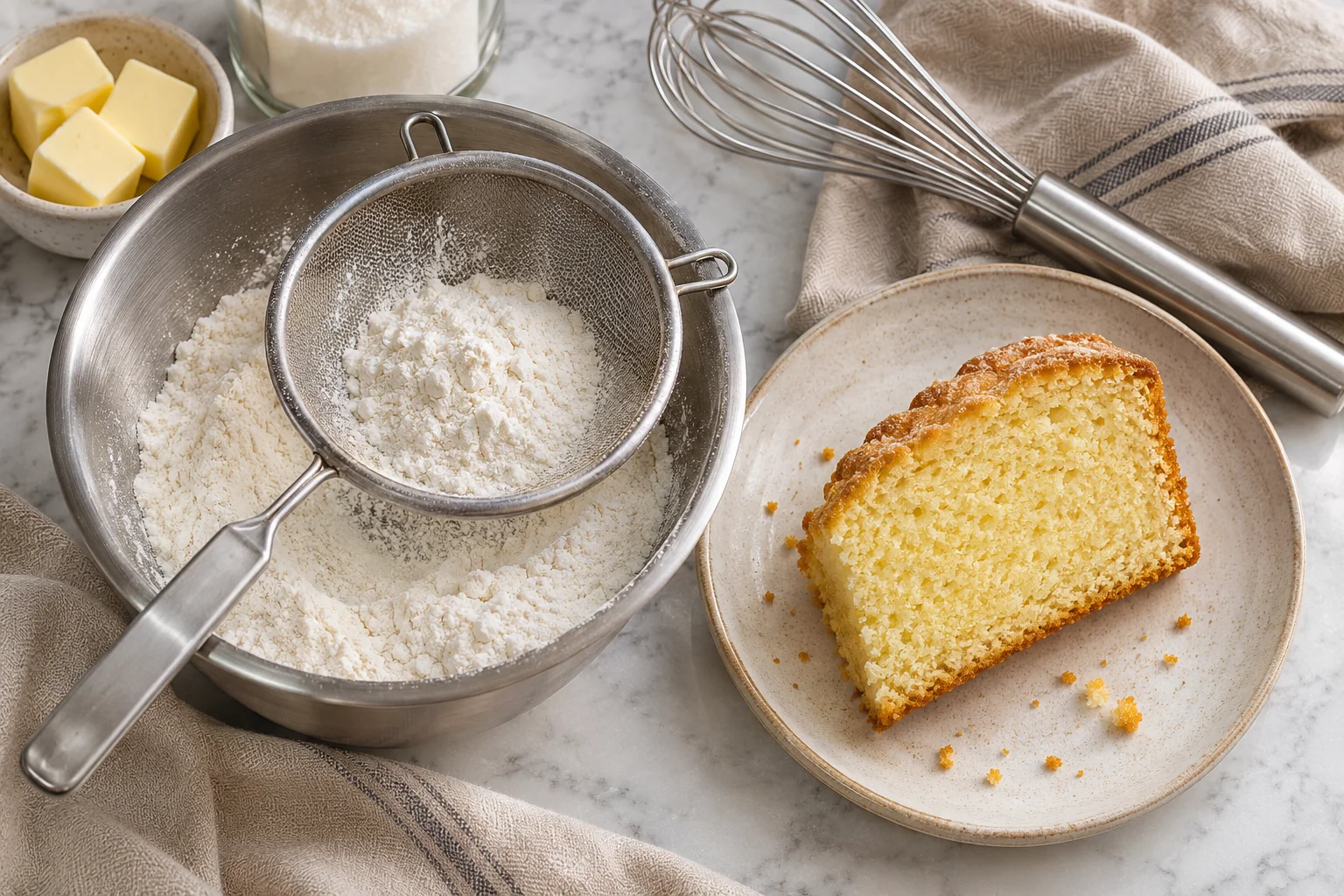
A tender vanilla layer cake often begins with a small ingredient choice: cake flour instead of all-purpose flour. If your pantry only contains all-purpose flour and cornstarch, you may have seen the familiar advice to remove a little flour and replace it with starch. The trick can be useful in certain recipes, but it doesn't transform ordinary flour into genuine commercial cake flour.
What is cake flour?
Cake flour is generally finely milled wheat flour with a lower protein content than typical all-purpose flour. Lower protein potential helps produce a fine, delicate crumb in cakes made with an appropriate recipe and mixing method. The exact protein percentage and flour treatment depend on the manufacturer and market; not every bag labelled cake flour is identical.
Why protein changes cake texture
When wheat flour is hydrated and worked, gluten-forming proteins contribute structure. A tender cake needs enough structure to hold its rise without becoming chewy. Lower-protein flour can reduce gluten potential, but sugar, eggs, fat, leavening and mixing are equally important. Flour choice alone won't rescue an improperly mixed batter.
The familiar homemade substitute
A common volume-based workaround for one cup of cake flour is to measure one cup of all-purpose flour, remove two tablespoons of flour, and replace that space with two tablespoons of cornstarch. Then whisk or sift thoroughly to distribute the ingredients. This is an approximation that dilutes wheat protein; it does not replicate commercial cake flour's milling or processing.
Measure before you combine the ingredients, and keep the method consistent with the recipe’s units. With a larger cake, use its specific weight and substitution note. Treat the volume example above as a one-cup illustration.
Why the measurement method matters
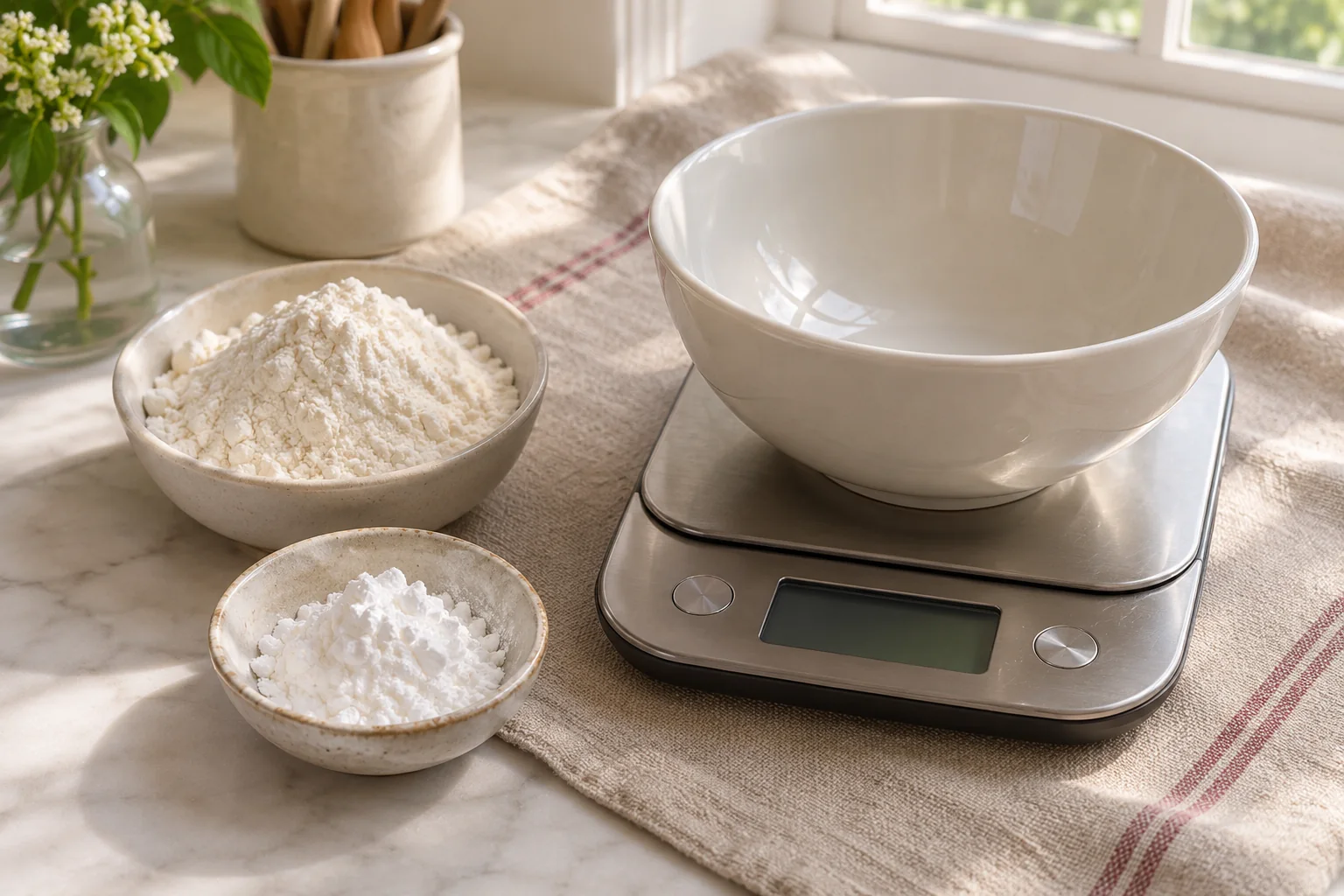
Flour can compact dramatically in a measuring cup. Follow the recipe's intended measuring method before removing the two tablespoons. When the formula provides a weight for cake flour, do not assume that one cup of your homemade flour-and-starch mixture weighs exactly the same. Accurate substitution by weight requires a tested conversion for the specific flour.
When the substitute can work
In a forgiving butter cake, snack cake or casual cupcake recipe, the homemade mixture may give an acceptable texture if the developer allows the substitution. It can be particularly useful when you need a small quantity and don't bake delicate cakes very often. Expect a result that is similar rather than identical.
The ingredient list for Classic Vanilla Layer Cake includes a flour option. Use the note for that recipe and record which flour you used so you can compare the crumb on a later bake.

When real cake flour is worth buying
Fine-textured layer cakes, chiffon-style preparations and recipes carefully formulated around cake flour may benefit from the real ingredient. Some commercial cake flours are treated differently, and that treatment can affect how they absorb liquid and behave in high-ratio cake formulas. For a special cake where the crumb matters, choose the exact flour named in the recipe.
Cornstarch is not interchangeable with cake flour
Adding cornstarch changes the proportion of starch to gluten-forming proteins, but straight cornstarch lacks the wheat proteins needed for ordinary cake structure. You cannot replace the entire cake-flour quantity with cornstarch. Likewise, a gluten-free starch blend is not a direct substitute unless a recipe was designed for it.
What if you don't have cornstarch?
Don't substitute another powder blindly. Potato starch, rice flour and tapioca starch have different properties and may not produce the same crumb. Choose a recipe that explicitly permits ordinary all-purpose flour or obtain the specified cake flour rather than improvising a new flour blend.
All-purpose flour versus cake flour
All-purpose flour is formulated to work across a wide range of recipes, from cookies to some breads and cakes. Cake flour is more specialized for tender baked goods. In recipes where flour supplies significant strength, switching to cake flour can reduce the intended structure, so neither is universally superior.
A cake written for all-purpose flour is a good choice when you want to use the flour as it comes. The Classic Vanilla Bundt Cake was written for plain all-purpose flour.

What about self-rising cake flour?
Self-rising flour contains leavening, and some products also contain salt. Plain cake flour does not automatically include those additions. Read the label and never assume self-rising flour is a direct replacement when the recipe already includes baking powder and salt.
How to mix a homemade substitute
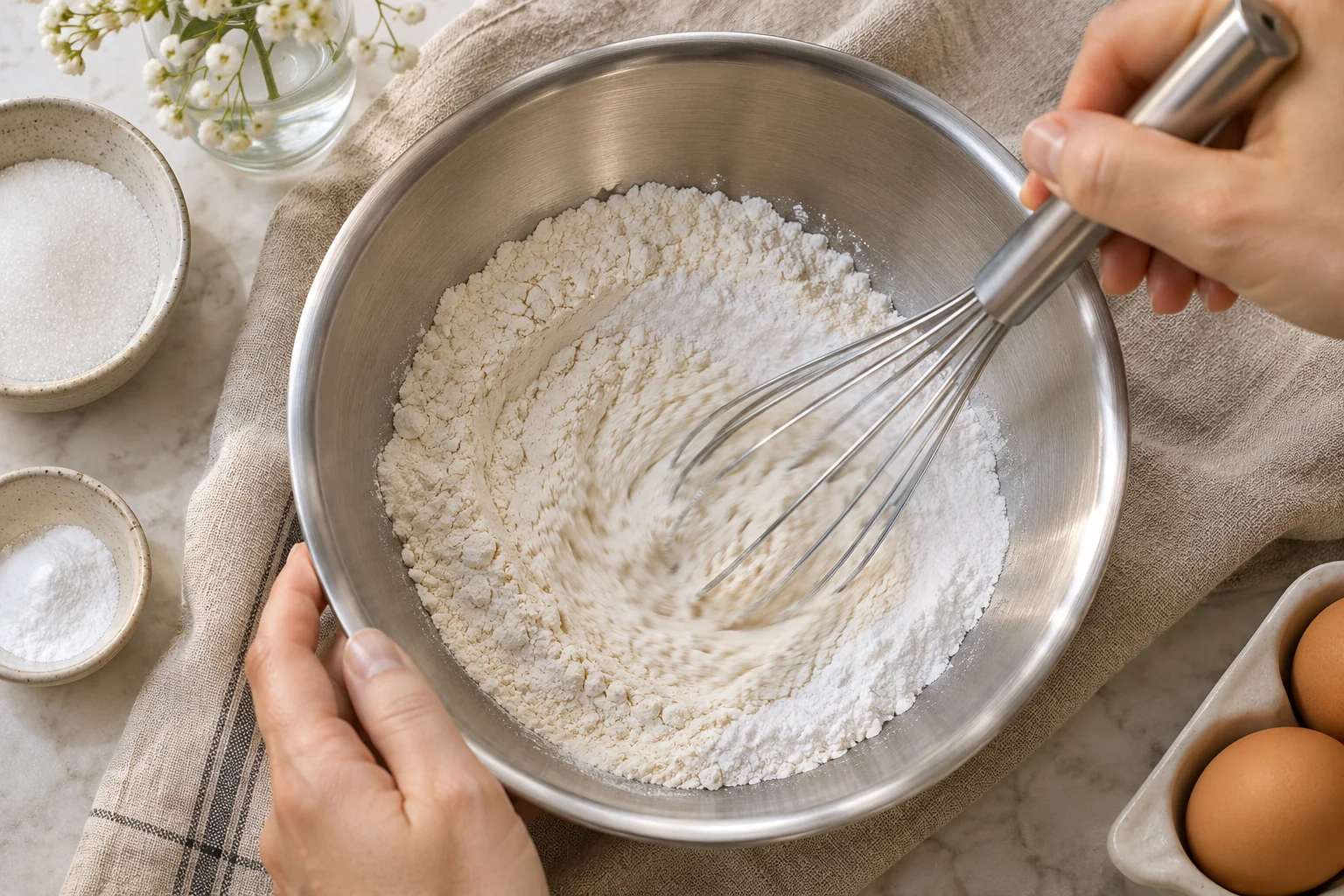
Prepare the blend before adding it to the batter. Combine the measured flour and cornstarch evenly by whisking or sifting as the recipe directs. A few unmixed pockets of starch can cause uneven texture. Make only the amount you need and clearly label any stored blend so it isn't accidentally used for bread.
Whisk the measured powders thoroughly, including the flour around the edges of the bowl. If you see streaks or clumps, sift the blend before adding it to the batter.
Does sifting make all-purpose flour into cake flour?
Sifting helps aerate and distribute flour and dry ingredients, but it does not remove gluten-forming proteins or change the grain's milling. Simply sifting all-purpose flour several times is not equivalent to using lower-protein cake flour.
Why your cake may still be tough
Overmixing after flour addition, incorrect ingredient temperatures, too much flour, excessive baking or a formulation that doesn't match your pan can all make cake less tender. If you tried the substitute and the cake was tough, compare every part of the method rather than blaming the flour alone.
Why your cake may sink
Replacing flour changes the balance of starch and protein. In a recipe needing more structure, too much starch or inaccurate measuring can contribute to sinking. However, underbaking, overleavening, excessive liquid and wrong oven temperature are also common causes. Identify the pattern before adjusting the blend.
Can you make a whole batch in advance?
A dry flour-and-starch blend can generally be prepared in a clean, completely dry container and labelled with its ingredients and date. Store according to the ingredients' packaging directions, away from humidity and pantry pests. For best precision, measure a new batch for the particular cake recipe rather than relying on an old unlabelled jar.
Choosing flour for cupcakes
Many conventional cupcake recipes work well with cake flour or all-purpose flour, depending on their formula. A delicate bakery-style vanilla cupcake may use lower-protein flour, while a sturdier cupcake meant for heavy fillings may require a different structure. Follow the recipe's instructions.
Frequently asked questions
Can you make cake flour with flour and cornstarch? You can make a common approximate substitute, but it isn't identical to commercially milled cake flour. Can you use it in every cake? No; specialized cakes may rely on a particular flour. Is cake flour gluten-free? No, ordinary wheat-based cake flour still contains gluten. Does it have baking powder? Plain cake flour does not automatically contain leavening.
The practical takeaway
Try a tested all-purpose-flour-and-cornstarch substitute for a forgiving cake when the recipe permits it. For an especially delicate cake or precise professional result, real cake flour is worth sourcing. A carefully followed recipe and accurate measurements do more for tenderness than any one pantry trick.
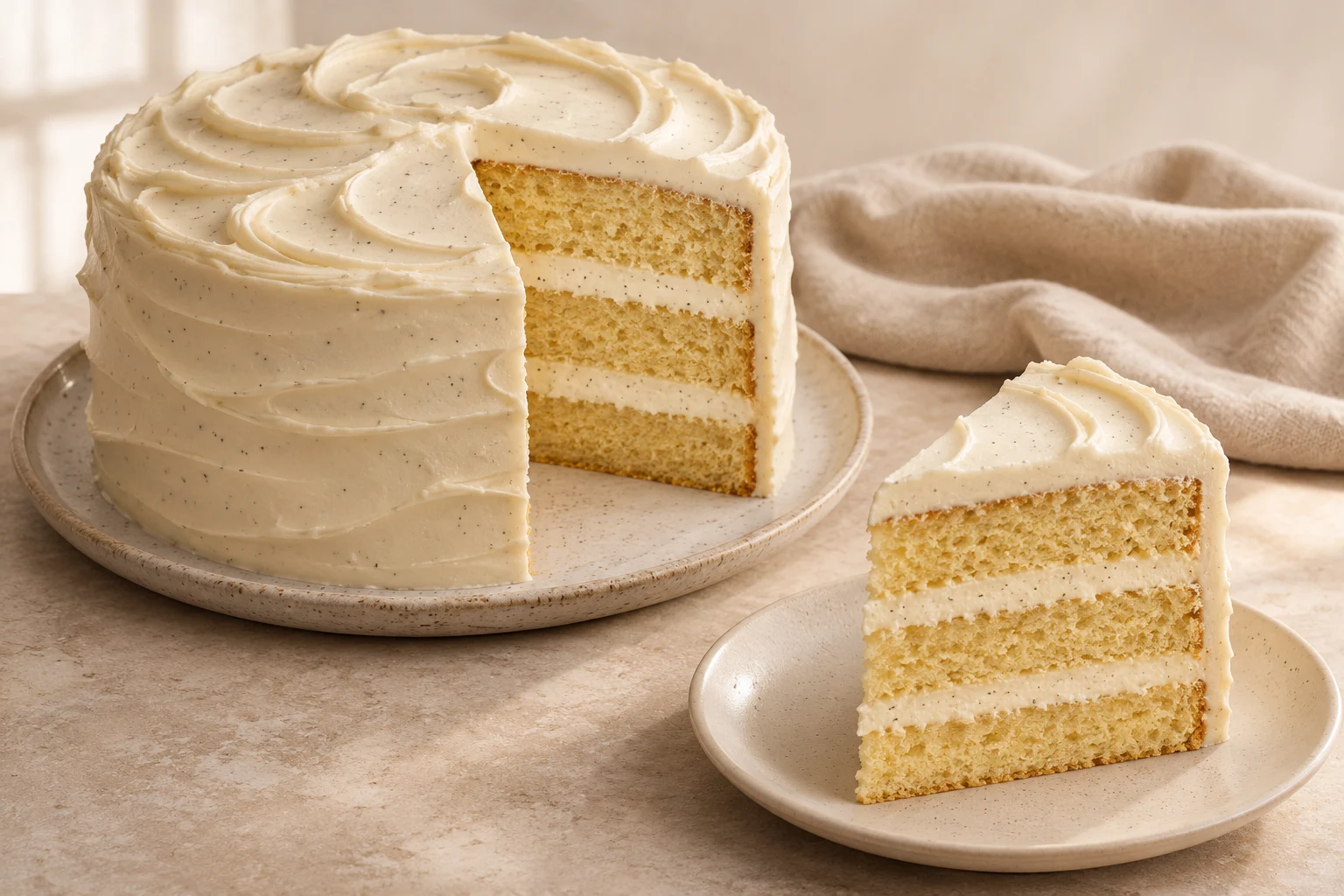
Our Vanilla Bean Layer Cake gives another cake-flour example. Bake with commercial cake flour first when you want a baseline for the crumb and slice texture.
IN PICTURES
From the baking notebook
FROM THE RECIPE BOX


