
On this page
A heavy vegan cake usually reflects a mismatch between lift and the structure needed to hold it. Eggs are not indispensable in every cake, but removing their protein and emulsifying functions changes the formula. Begin with a tested recipe rather than assuming one extra spoonful of baking powder fixes everything.
Dense versus intentionally fudgy
Some egg-free chocolate cakes are designed to be close-textured and rich. A problem feels pasty, rubbery or compressed when the original recipe promises lightness. Decide what texture you are aiming for before modifying a cake that may already be correctly baked.
Check your baking powder
An old or improperly stored leavener can produce weak rise. Measure accurately and replace unreliable supplies. Too much leavener isn't a cure: the batter may expand quickly, then sink if there is not enough structure to set around its bubbles.
Baking soda needs acid
Many vegan cakes use baking soda with vinegar, lemon juice or acidic ingredients. Altering either side of the reaction changes the amount and timing of carbon dioxide produced. Follow the designed combination rather than adding extra soda for height.
Too much flax or chia gel
Seed gels retain water and help certain batters bind. In excessive amounts they create a dense elastic texture that can feel gummy. Check the measured binder quantity and avoid adding a second one just because the batter looks thin before resting.

Fruit purées can weigh batter down
Applesauce and banana contribute water and solids but not egg protein. Using a large amount in an airy cake can leave a heavy centre. Choose a recipe that balances fruit purée instead of replacing all eggs independently.
The plant milk swap
Soy, oat and coconut beverages vary in fat, protein and stabilizers. Rich canned coconut milk is not equivalent to a carton drink. Return to the milk recommended in the formula before diagnosing the cake flour or leavening.
Recipe to try: Vegan Lemon Blueberry Loaf. This is a separate vegan formula. Follow its stated fat, liquid and binder proportions instead of combining substitutions from different recipes.

Fat choice affects structure
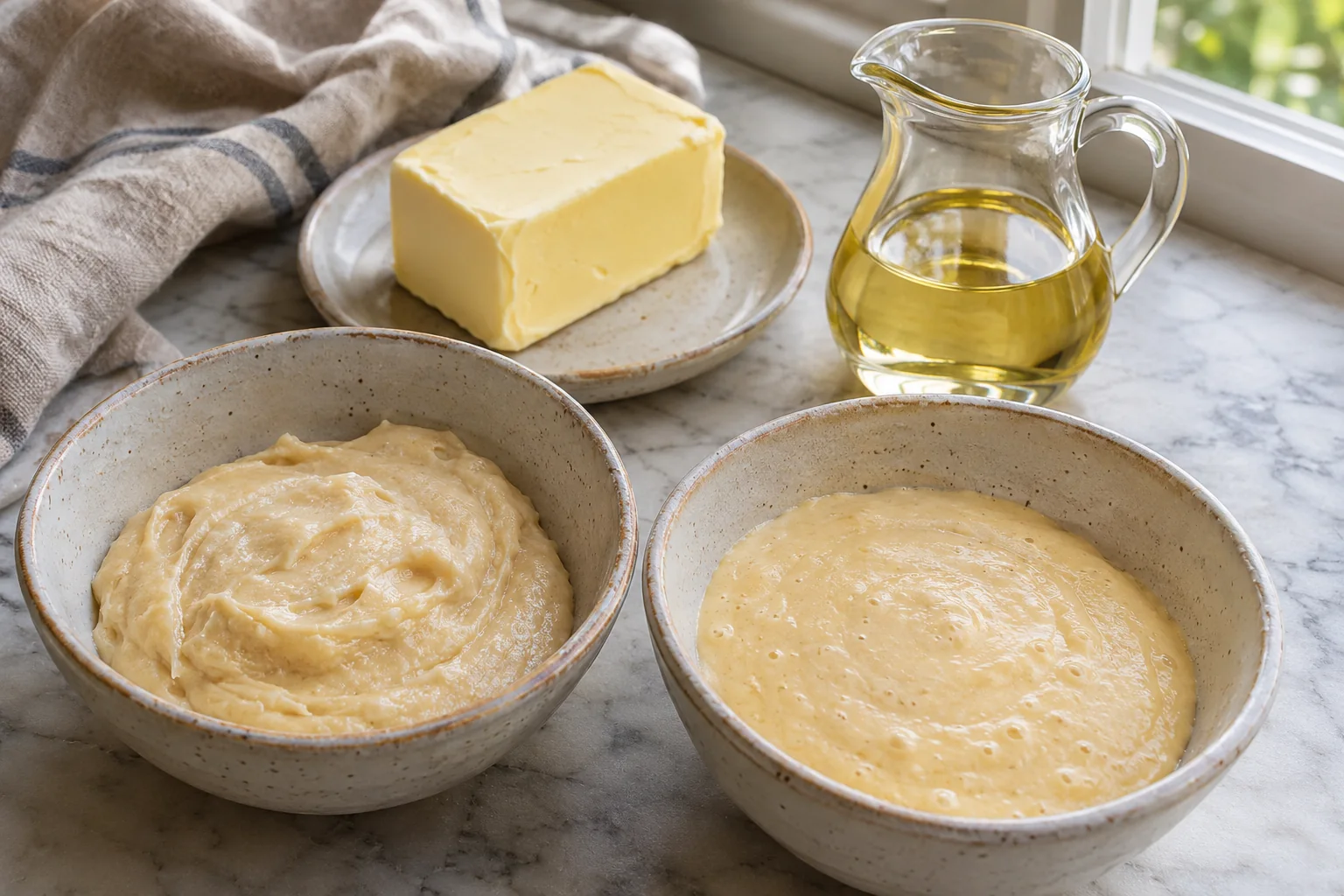
Oil creates tenderness in formulas designed for it, while block plant butter may be used for creaming. A watery table spread can change hydration and an unmeasured oil substitution can create a greasy middle. Use the intended type and weight.
Recipe to try: Vegan Chocolate Layer Cake. This is a separate vegan formula. Follow its stated fat, liquid and binder proportions instead of combining substitutions from different recipes.
Check flour measurements
Too much flour makes a tight dry crumb; too little weakens the structure. Weigh by grams when possible and measure gluten-free blends with particular care. Flour types differ in density and absorption, so equal cup measures aren't always equivalent.
Overmixing
A wheat-based vegan cake can become tougher if the flour is beaten for too long. Some batters also lose early leavening gas during prolonged mixing. Combine according to the tested method rather than leaving the mixer running to create more air.
Undermixing
Dry flour streaks, pockets of leavener and separated oil can create inconsistent density. Scrape the bowl and incorporate every ingredient fully. The goal is even distribution without overworking the hydrated wheat flour.
Bake promptly when directed
Certain acid-and-soda batters react immediately after wet and dry ingredients are combined. Allowing them to sit for an hour may use up some initial gas before the structure can bake. Other recipes intentionally rest, so follow the actual schedule.
Preheat the oven
A cool oven can delay setting and produce a sunken centre. Excessive heat can brown the top before the interior is cooked. Check actual temperature and rack position instead of changing leavener amounts first.
Match the pan
Pouring a double batch into one deep tin can leave raw batter in the centre. Use the original pan area and fill level, or a properly tested conversion. A cooked edge is not proof that the middle has set.
Recognize underbaking
Follow the recipe's centre tester and spring cues. Raw wet streaks need more cooking regardless of surface colour. Cooling does not finish an underbaked centre that never reached sufficient heat.
Why collapse happens
Excess moisture, excess leavening or weak structural ingredients can cause bubbles to expand then fail. A sunken crater provides a clue but not a unique diagnosis. Compare bake time, ratios and pan before adjusting several ingredients together.
Gluten-free vegan requires special care
When both wheat gluten and eggs are absent, two useful structural systems must be replaced. Choose a dedicated recipe with compatible starches and binders. Swapping a conventional gluten-free mix into a wheat vegan cake may not hold its rise.
Recipe to try: Vegan Gluten-Free Banana Bread. This is a separate vegan formula. Follow its stated fat, liquid and binder proportions instead of combining substitutions from different recipes.

Don't cut too early
Some cakes need cooling to stabilize before slicing. A hot crumb may smear or appear wetter than it will later. Allow the required rest before judging, but do not treat cooling as a substitute for baking.
Change one thing per trial
Weigh ingredients, keep the same pan and record oven temperature. If the centre was fully cooked but gummy, inspect binder or fruit-purée amounts; if raw, address baking. Multiple simultaneous substitutions obscure which one helped.

Frequently asked questions
Is density inevitable without eggs? No. Will extra powder make a fluffy cake? Not necessarily. Can too much flax make it gummy? Yes. Is soy milk always equivalent to oat milk? No. Why did my cake rise then fall? Structural or baking imbalances may be responsible.
Correct the whole method
A lighter vegan cake depends on suitable ingredients, proper mixing and a fully set centre. Fix the specific imbalance rather than relying on more oil, powder or oven heat as a universal remedy.
A symptom-based troubleshooting sequence
If the cake was flat from the beginning, check chemical leavener and mixing first. If it rose and then fell, check liquid-to-flour ratio, binder strength and whether the centre finished baking. If the outside is dry but the middle gummy, investigate pan depth and oven temperature. If the entire cake is rubbery despite adequate baking, consider excessive binder or overmixing. This order helps avoid random ingredient changes.
Separate formulation problems from oven problems
Bake a second small portion of the exact same batter in a correctly sized shallow pan if the formula permits. A shallow portion that sets well while a deep portion remains gummy suggests the heat path deserves attention. If both show the same rubbery texture, the flour, binder or mixing is more suspect. Compare results only after fully cooling both samples.
Recognize a broken emulsion
An oily film or separate shiny streaks in the raw batter can signal that fat was not incorporated as intended, or that a plant-based spread introduced an unexpected water balance. Scrape the bowl and use the prescribed temperature and mixing sequence. A smooth batter isn't always sufficient evidence of good structure, but visible separation gives a useful clue before baking.
Why a longer bake isn't always the fix
If a cake contains excessive gum or purée, keeping it in the oven far beyond the recipe time can dry the edges while leaving a sticky centre. Once the tested bake endpoint is reached, allow cooling and evaluate the crumb. If still rubbery, focus the next trial on measured ingredients rather than simply adding ten minutes to every subsequent bake.
IN PICTURES
From the baking notebook
FROM THE RECIPE BOX


