On this page
A recipe tells you to rest pancake batter for fifteen minutes. Another asks you to put muffin batter straight into the oven. A chocolate cake says to bake immediately, while cookie dough spends a night in the refrigerator. These instructions are not arbitrary: resting changes how flour hydrates, how gluten relaxes, how sugar dissolves and, sometimes, how the leavening works.
What happens while batter rests?
Water and other liquids continue moving into dry ingredients after mixing stops. Flour starches and proteins hydrate; sugar may dissolve further; and some mixtures become more uniform in consistency. Depending on the formulation, gluten may relax as well. These changes can improve texture, but they don't help every recipe.
Hydration takes time
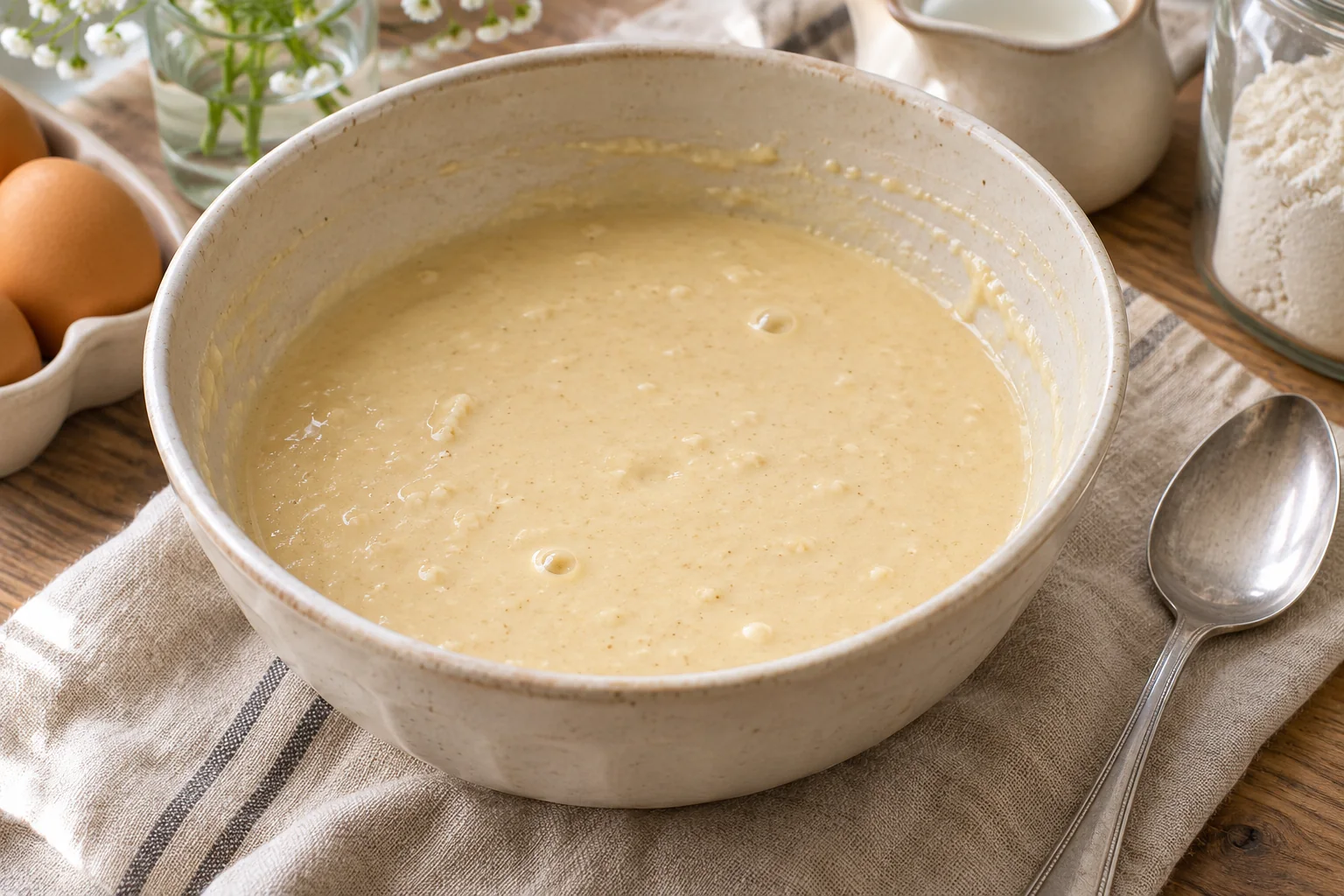
Flour doesn't always absorb liquid instantly. In thick batters, a short rest can reduce dry pockets and allow starch to hydrate, which may change viscosity and final texture. This is one reason some pancakes or crepes behave more consistently after a specified rest.
Why gluten relaxation matters
Mixing and handling develop tension in a wheat-based mixture. Resting can allow that tension to relax. This is especially useful in doughs that need rolling or shaping, where elastic resistance makes the dough shrink back. In pourable cake batter, other considerations may be more important than gluten relaxation.
The leavening trade-off
Baking powder and baking soda help create gas, but their timing differs by formulation. Baking soda can react as soon as acid and moisture are present; some baking powders release gas in more than one stage. A long unplanned rest can waste some of the initial lift before baking.
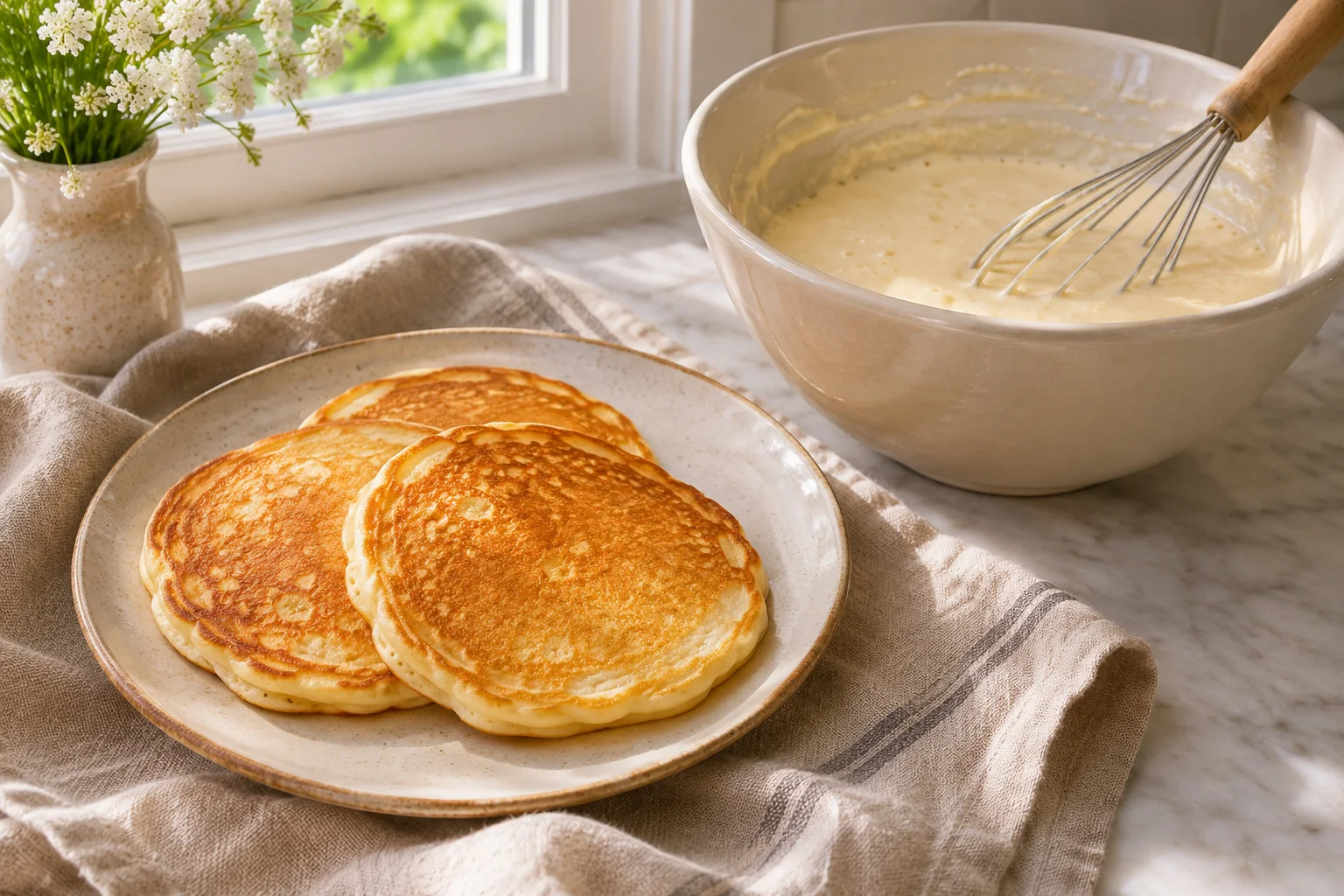
Pancake batter
Some pancake recipes specifically call for a brief rest, allowing ingredients to hydrate and bubbles to develop. Others are designed to cook right after mixing. Follow the stated time and avoid repeatedly stirring rested batter until completely smooth, which may change its texture.
The One-Bowl Pancakes use a five-minute rest. Mix the batter as directed and use the pause to bring the cooking surface up to temperature. Any small lumps left after mixing can hydrate during that rest.
Crepe batter
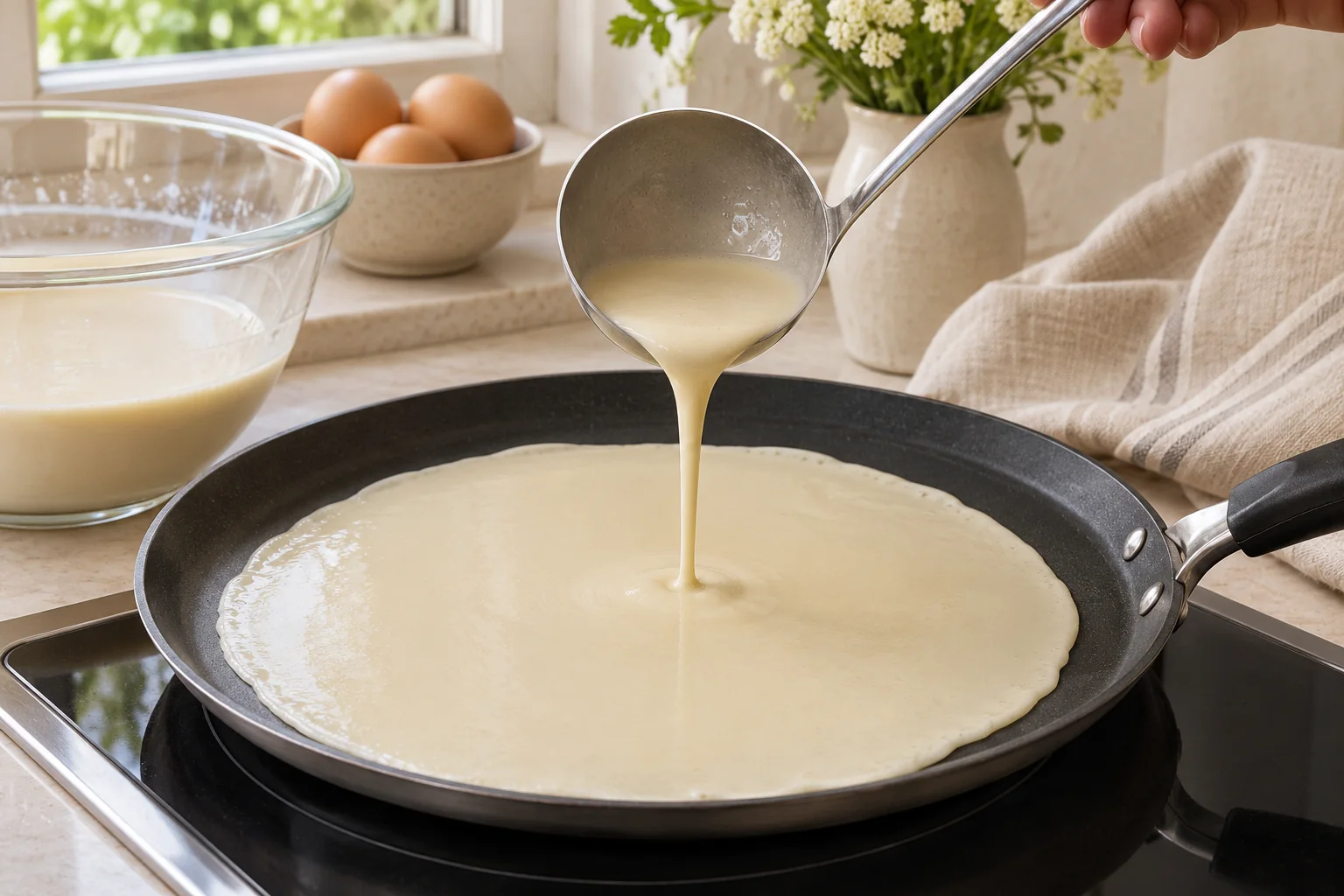
Crepe batters are often deliberately rested so the flour hydrates and the mixture becomes smooth enough to spread thinly. Because crepes need flexibility rather than a lofty cake-like rise, their resting needs differ from fluffy chemically leavened pancakes.
The Classic French Crepes specify a longer rest. Follow the recipe’s covering and refrigeration directions if resting the batter for the longer interval.
Muffin batter
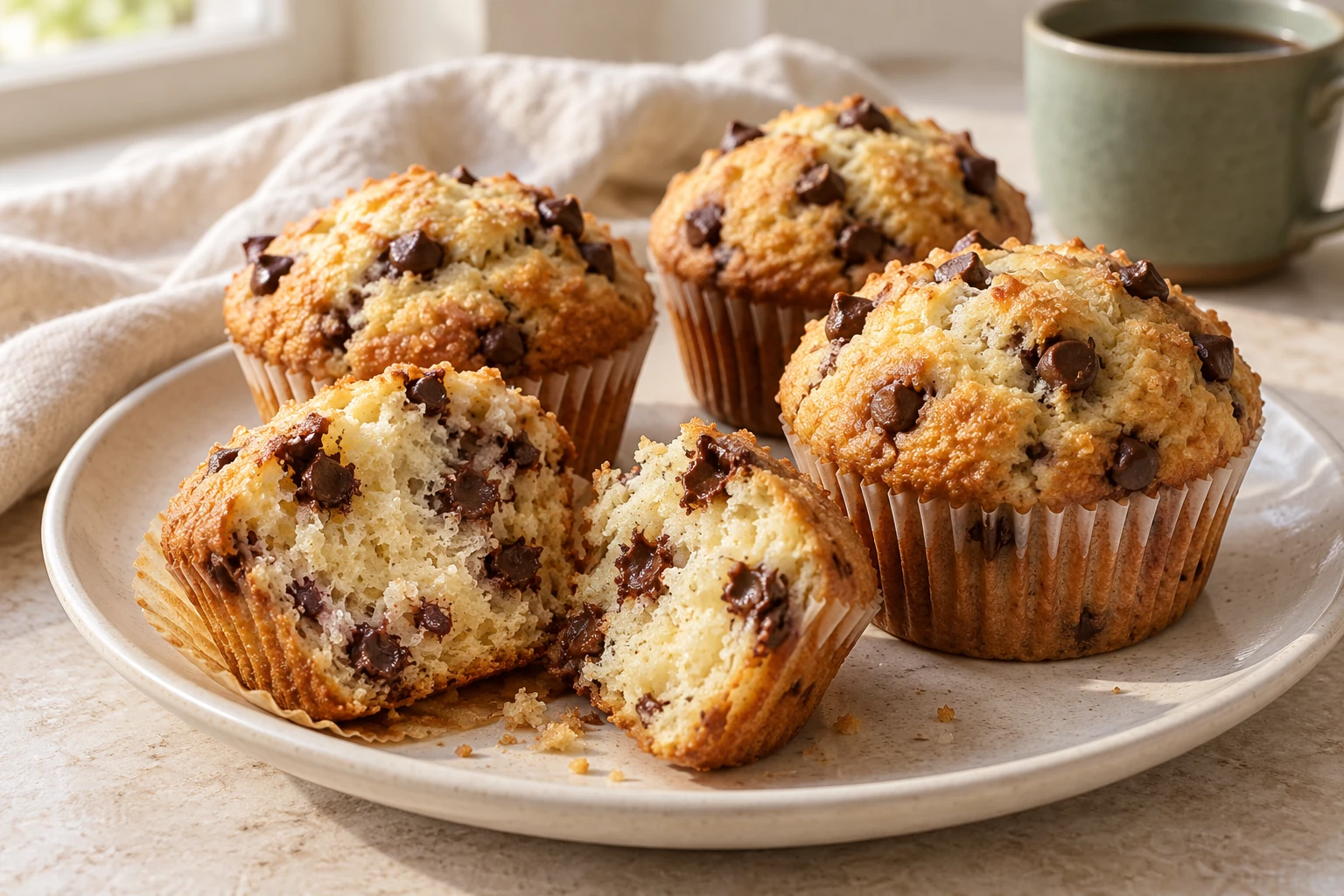
Many traditional muffin-method recipes are mixed briefly and baked promptly after wet and dry ingredients are combined. Waiting too long can change leavening action and batter thickness. However, some bakery-style muffin recipes explicitly use an overnight chilled rest to develop texture and a tall rise. Those are designed for that technique.
Our Chocolate Chip Muffins give you a different batter to compare. Read the complete mixing and baking sequence before adding a resting step to a formula that was written for a different schedule.
Cake batter
A typical chemically leavened layer cake should be baked in the timeframe specified by its recipe. Leaving the bowl on the counter for an hour while the oven preheats may reduce rise or cause inconsistency. Prepare pans and preheat before mixing unless the method says otherwise.
Prepare the pans before starting Classic Vanilla Layer Cake. Once it is mixed, divide and bake it as directed so your mixing and oven timing stay consistent.

Sponge and foam cakes
Sponge cakes that rely on whipped eggs or whites are particularly sensitive to time and handling. Their incorporated air can be lost if the batter stands or is stirred repeatedly. For these recipes, timely transfer to the prepared pan and oven is especially important.
Cookie dough
Cookie dough is a different case. Many recipes benefit from chilling: fat firms, flour hydrates and flavours develop. Chilling may reduce spread and change browning. But some drop cookies are developed for immediate baking. Treat chilling as an ingredient in the method, not a universal improvement.
Brownie batter
Brownies can rely on melted chocolate, butter, sugar and eggs for structure. Letting batter sit unexpectedly can change temperature and viscosity, especially if melted chocolate begins setting. Use the recipe's timeline rather than assuming a rested brownie batter will be fudgier.
Quick breads
Banana bread, zucchini bread and other quick breads often rely on baking soda or powder. Mixing and baking promptly is common, particularly for acidic fruit-rich batters. Some recipes specify a brief pause, but an arbitrary long rest may reduce the intended rise.
Yeast and sourdough are different
Bread dough rests or ferments so yeast activity, gluten development and flavour can progress. That process is fundamentally different from leaving a baking-powder cake batter on the counter. A yeast-based cinnamon-roll dough needs controlled fermentation; muffin batter does not.
Does resting always improve flavour?
Not always. Time can allow some aromas and ingredients to mingle in certain doughs, but a long rest may also affect freshness, oxidation or leavening. Choose a recipe validated for a flavour-development rest rather than adding one to every batter.
Should batter rest in the fridge?
Use the temperature and duration specified by the recipe. Batters containing raw eggs, dairy or other perishables may require refrigeration during any extended rest. A recipe that directs room-temperature rest for a brief period should not be used as an excuse to leave egg batter out overnight.
How to manage an overnight rest
Choose a formula designed for it; mix on its schedule, cover appropriately and refrigerate at 4°C (40°F) or colder when needed. Follow instructions about whether to stir, portion cold or warm slightly before baking. Don't add new baking powder the next morning unless the recipe explicitly calls for it.
Why rested batter becomes thicker
Flour and other starches can continue absorbing water, making a batter seem more viscous after resting. Oats and whole-grain flours can absorb significant moisture. Adding extra liquid without recipe guidance may change the finished texture, so evaluate consistency as instructed.
How to tell if a rest is worthwhile
Look for explicit instructions in a well-tested recipe and for the desired result: relaxed crepes, adequately hydrated pancakes, chilled cookie dough or immediate rise in muffins. Compare the same formula made both ways only if you are deliberately testing and can manage food safety.
Frequently asked questions
Can you leave cake batter overnight? Usually not unless the recipe was created for that method. Does resting pancake batter make it fluffier? Sometimes it improves hydration, but excessive rest can diminish leavening in other recipes. Is cold batter bad? Not inherently; some formulas deliberately bake from the refrigerator. Can you rest any quick bread? Follow its specific method.
Let the recipe set the clock
Resting is a technique, not a blanket rule. Give dough and batter time when hydration or relaxation helps, and bake promptly when chemical leavening or foam structure needs it. The most reliable timing is the timing the recipe was designed around.
To compare breakfast batters, cook the pancakes and crepes on their own schedules first. Note how the batter flows and how it cooks. That gives you a baseline the next time you adjust one variable.

IN PICTURES
From the baking notebook
FROM THE RECIPE BOX


