
On this page
A cake usually sinks when it rises before its centre has developed enough structure to hold that height. Underbaking, an unsuitable pan, inaccurate ingredient amounts and mixing problems can all contribute. The shape of the dip alone cannot identify the cause.
This guide focuses on ordinary butter- and oil-based cakes. Cheesecakes, flourless cakes, soufflés and some foam cakes can settle differently, so use the expectations of your particular recipe before deciding that a small dip means failure.
Start with When It Sank
- It dipped while still baking: check the formula, mixing, pan depth and oven conditions.
- It looked tall, then collapsed after removal: the centre may not have finished setting.
- The top is fairly level but the bottom is gummy: investigate ingredient temperature and mixing as well as doneness.
- A small dip appears in a cake designed to settle: compare it with the recipe’s description before changing anything.
Keep the recipe, ingredient amounts, pan dimensions and actual baking time beside you. A useful diagnosis begins with what happened in your kitchen, not a universal rule to add more flour or reduce the baking powder.
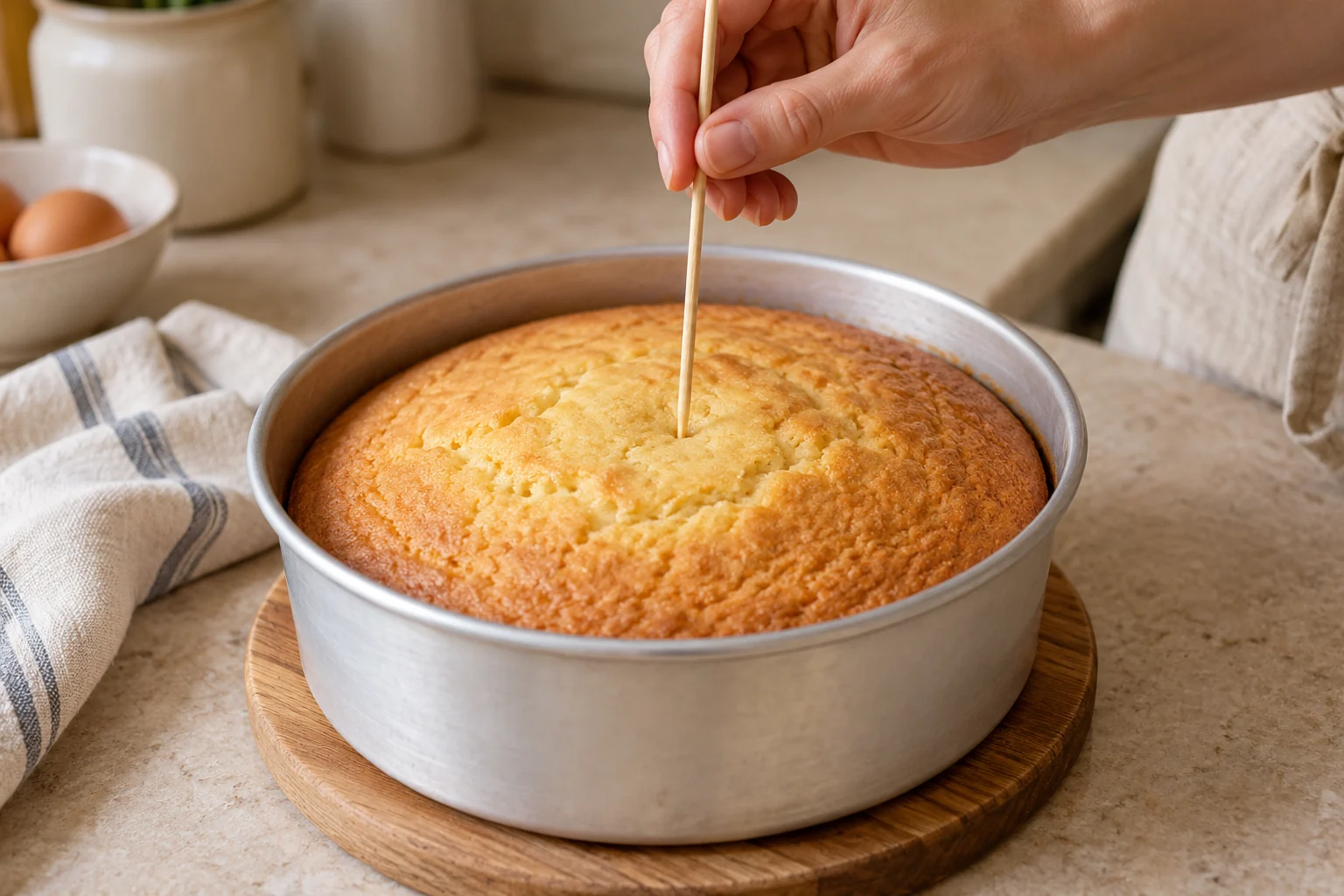
1. The Centre Was Not Fully Baked
Edges can brown while the middle is still developing. Check doneness in the centre, using the cues your recipe gives. For many conventional cakes, a gently springing surface and a tester without wet batter are useful together; either sign on its own can be misleading.
Check more than one spot if fruit, chocolate or a filling interferes with the tester. Follow the recipe’s timing range as a point to begin checking, not a guarantee. A cake that looks done through the oven window may still need more time.
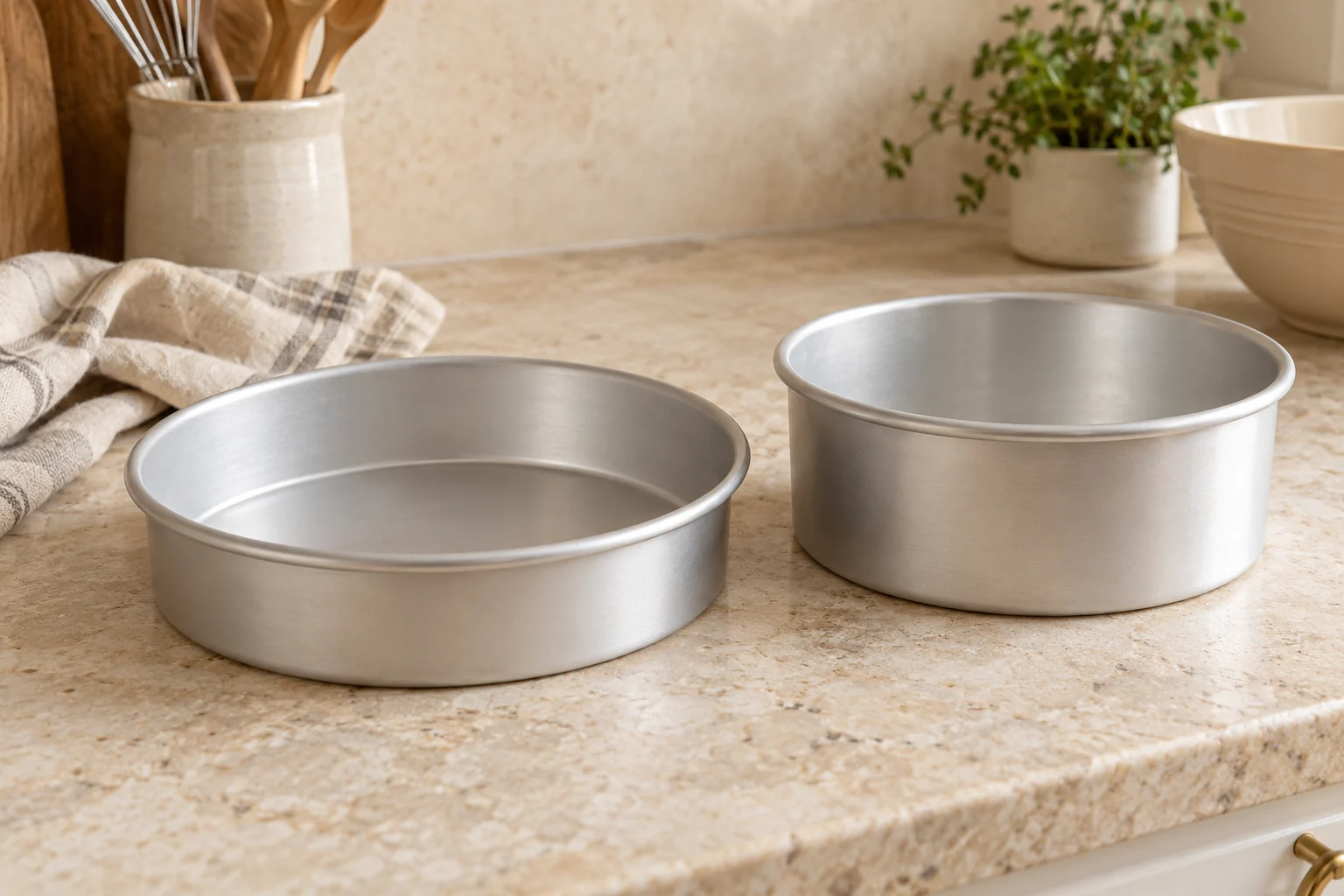
2. The Pan Changed the Batter Depth
A smaller pan holds the same batter in a deeper layer, so the middle can take longer to bake. Changing from a shallow layer pan to a deep tin, or from the specified pan material to another material, also changes the heat transfer.
Use the stated dimensions and material when diagnosing a failed bake. Do not pour excess batter into a smaller pan simply because it fits below the rim. For layer cakes such as Gingerbread Maple Layer Cake, divide batter between the specified tins rather than combining it into one deep cake.
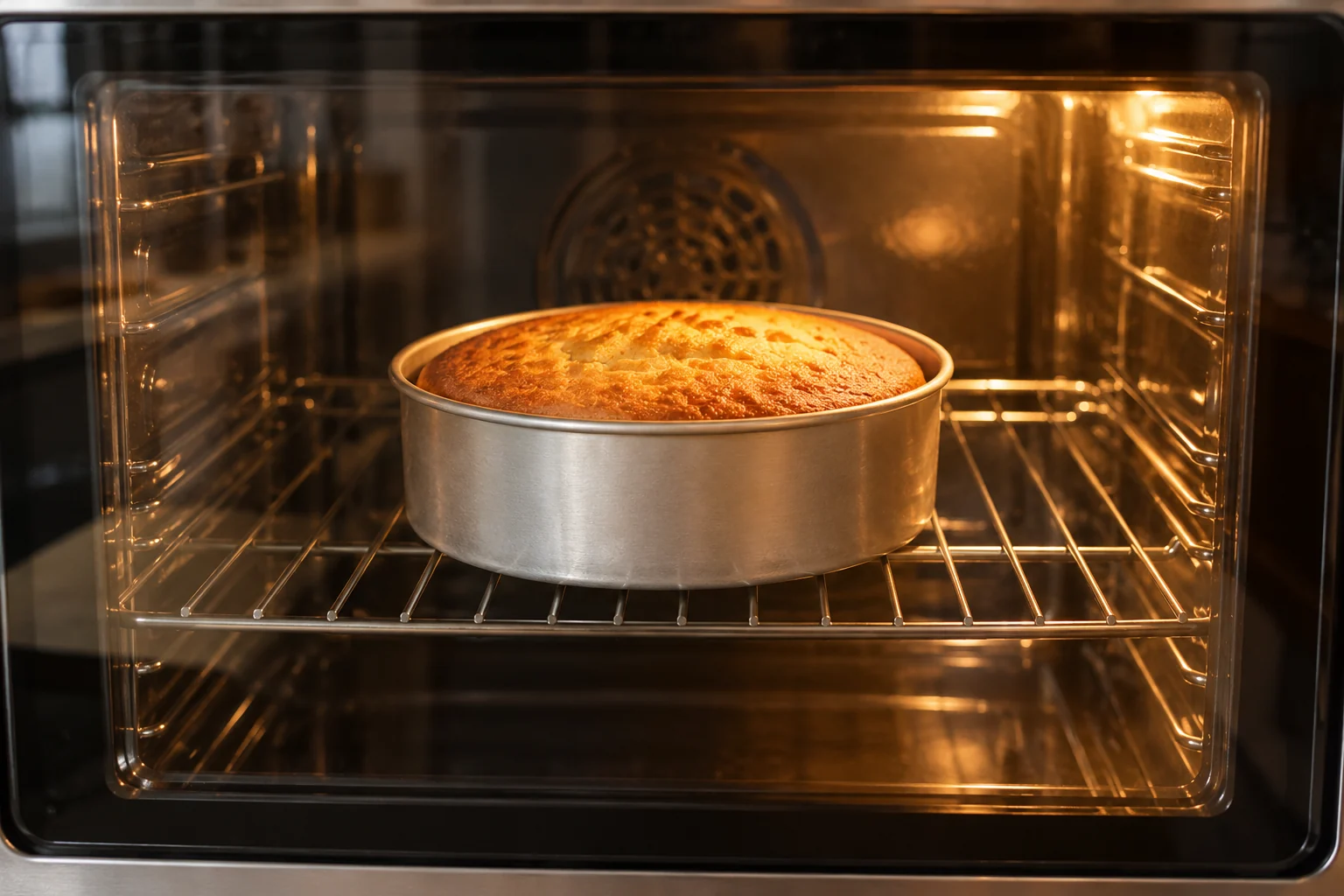
3. The Oven Was Not Delivering the Expected Heat
A dial setting does not prove that the oven is at that temperature. Allow it to preheat as directed and use an oven thermometer to investigate a repeated problem. Record whether you used a fan setting and which rack held the cake.
Check for crowding too. Several tins or a large tray below the cake can change air circulation. If the edges bake much faster than the centre, note the pan material, oven setting and placement rather than increasing the temperature without a plan.
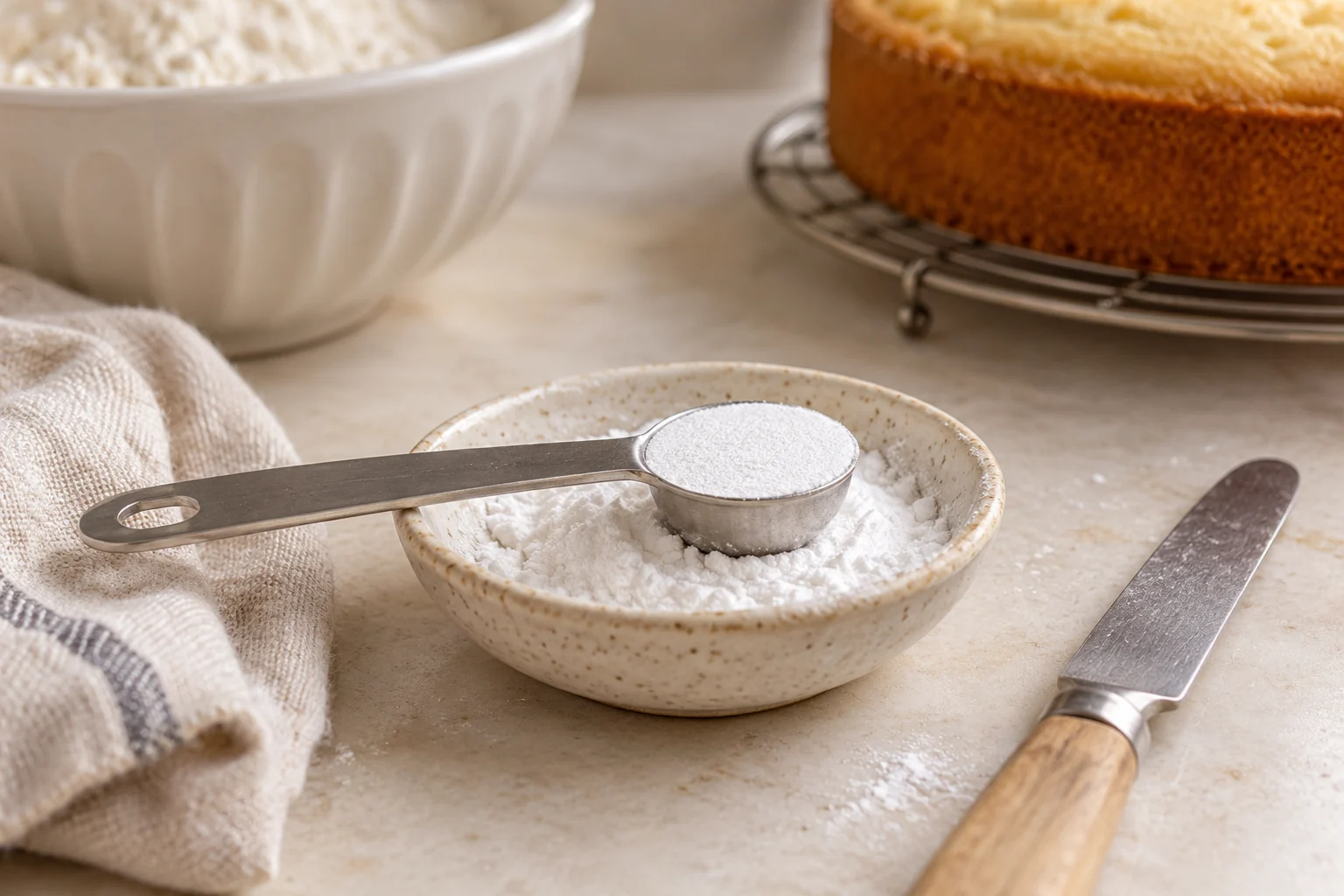
4. The Leavening Was Incorrect
Too much baking powder or soda can produce more lift than the developing cake can support. Too little or weakened leavening can leave a dense result. Check that you used the correct product and a level measure, and that you did not accidentally double an amount.
Baking soda and baking powder are not interchangeable spoon for spoon. Start with the recipe’s stated quantity and test freshness if necessary; do not cut the leavener merely because the cake sank once. King Arthur Baking’s leavener freshness guide explains how to check the products.
5. The Mixing Method Was Changed
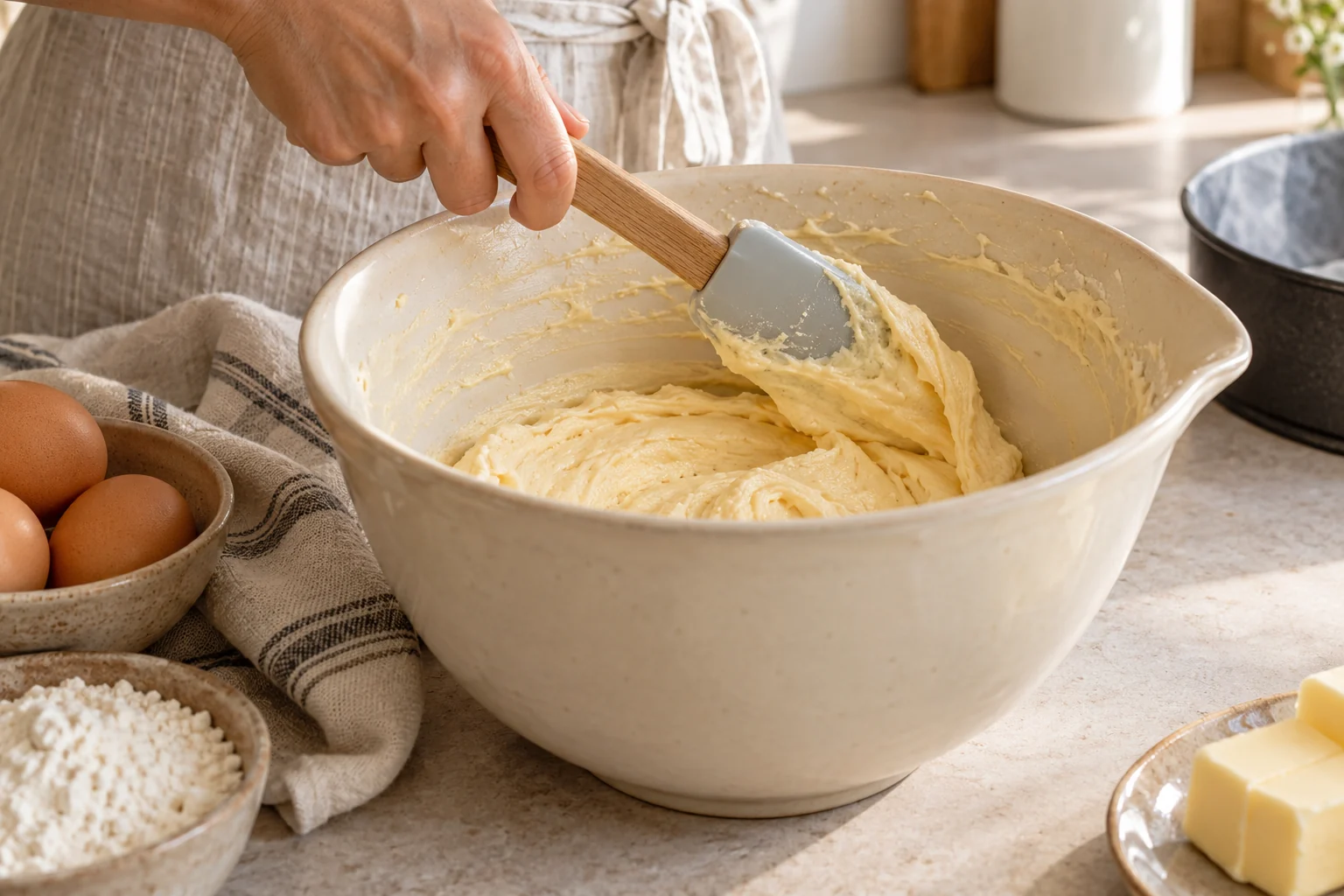
Creaming, reverse creaming and foam mixing are different methods. Mixing too briefly can leave a batter uneven or insufficiently developed; excessive mixing can also change its structure. “Mix as little as possible” is not a substitute for the method in the recipe.
Scrape the bowl when directed, use the specified speed and follow any timed mixing step. Do not assume that stopping at the first disappearance of flour is correct for every cake. Dense streaks at the base can be a mixing issue even when the top looks normal.

6. Ingredient Measurements or Substitutions Changed the Balance
Recheck flour, sugar, eggs and liquid against the ingredient list. Forgetting an egg, adding extra liquid or using a flour with different properties changes the formula. If the recipe provides grams, weighing makes the comparison clearer.
For a vegan cake, choose a recipe built around its egg replacement instead of assuming any substitution will support the same batter. Our Beginner’s Guide to Vegan Baking is a useful starting point for understanding those decisions.
7. The Cake Was Disturbed Before It Set
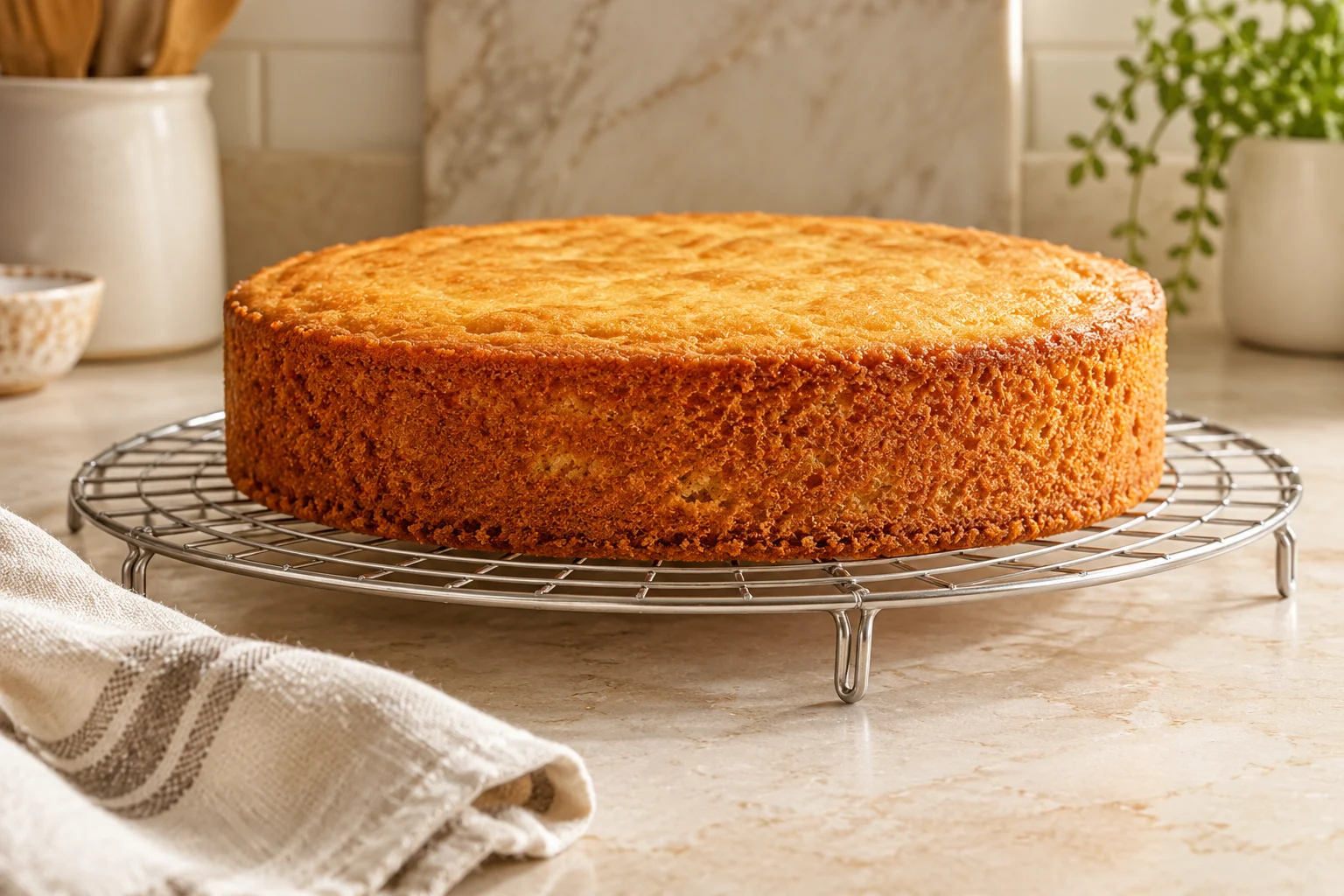
A delicate batter can suffer when a tin is moved or the oven door is opened early. Leave the cake undisturbed until the recipe’s first checking point, then work quickly and gently. If your recipe instructs you to rotate tins, follow its timing rather than rotating repeatedly.
Cooling matters too. Use the specified resting and unmoulding instructions. For a Gingerbread Bundt Cake, do not substitute an improvised cooling routine because a layer cake behaved differently.
Can You Still Serve a Sunken Cake?
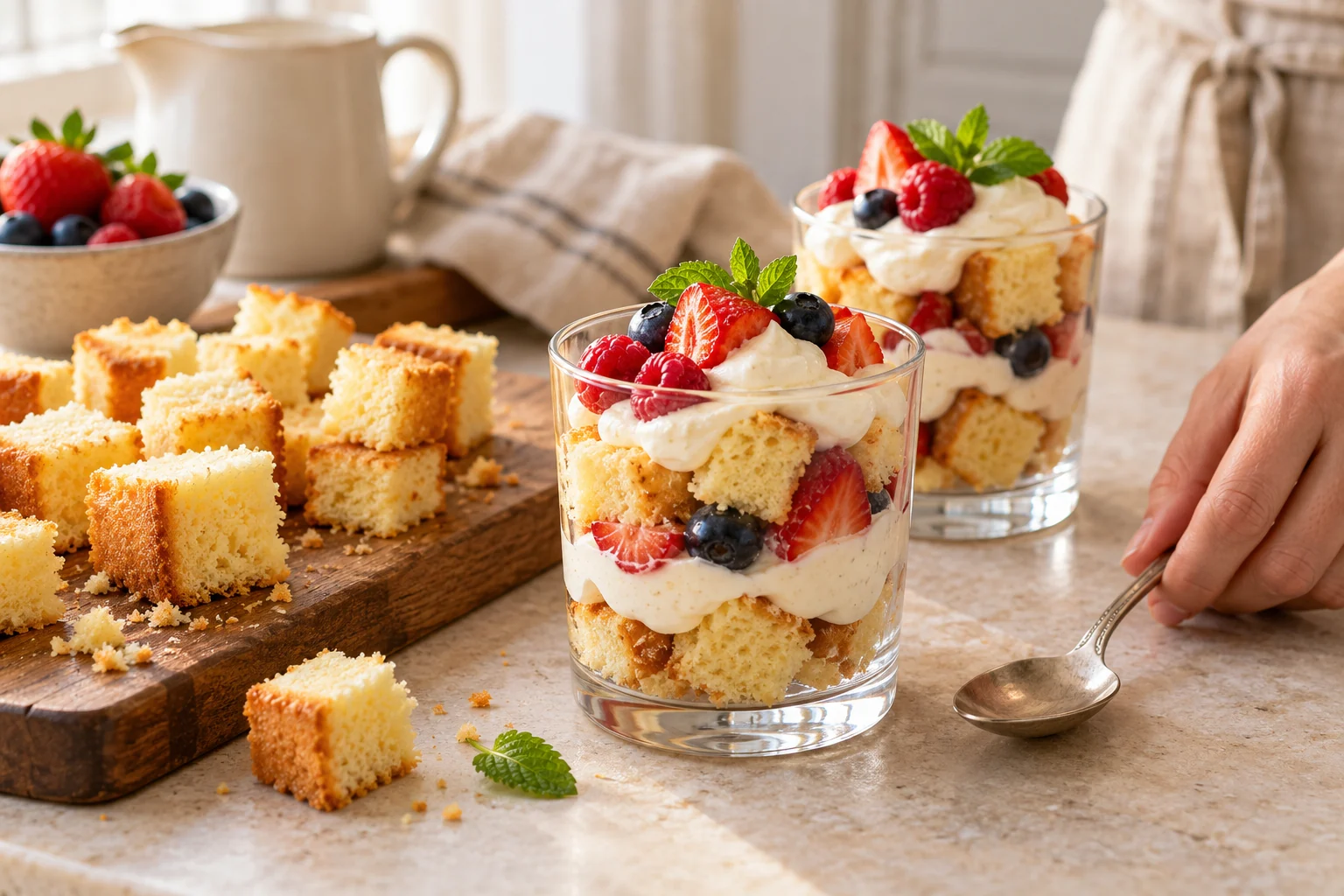
A fully baked cake with a modest dip may still be useful as a single-layer cake or in a dessert made from pieces. Check texture and taste only after you have established that it is cooked and safe to handle. Do not hide a wet, raw centre under frosting or describe it as intentionally fudgy.
If the cake is still baking and fails its doneness checks, continue according to the recipe. Once a collapsed cake has cooled, putting it back in the oven is not a reliable way to rebuild its structure. Never taste raw batter to judge whether it is safe.
Make the Next Bake a Useful Comparison
Return to the specified pan and ingredients, check your measurements and follow the mixing method. Change one suspected cause at a time. Keep notes on the oven, baking time and where the cake sank; that gives you a much stronger basis for the next decision.
Identify when the cake sank before changing the recipe
A cake that collapses in the oven may have a different problem from one that looks tall when removed and sinks during cooling. Write down whether the centre fell before the planned baking time, immediately after opening the door or only when the cake began to cool. That observation narrows your next troubleshooting step more effectively than immediately adding extra flour or leavener.
For example, a batter that rises rapidly and then collapses while still baking may have too much leavener or not enough structure. A cake whose middle appears wet after cutting may have been underbaked or made in a deeper pan. A cake that sags after removal may need a closer look at its doneness. One visible symptom can still have several causes.
Cause one: The centre was not fully baked
The outside of a cake reaches heat before its middle. A browned surface and clean-looking edge do not always mean the centre has set, especially in a deep or unusually moist cake. Use the recipe's doneness cues, check the centre rather than the edge, and allow any suggested resting time. If a tester shows wet batter, continue baking according to the recipe rather than relying solely on colour.
Our Gingerbread Bundt Cake uses a 280 g flour base with molasses, buttermilk and three eggs, with approximately fifty minutes of baking. A Bundt's pan shape and moisture balance differ from a round layer cake. Moving the batter to another vessel can change how quickly the centre heats, so follow the named pan and temperature.
Cause two: The pan was too small or deep
If the same amount of batter is placed in a smaller pan, its depth increases. The surface can brown while the core remains unset, creating a risk of a sink on cooling. The Gingerbread Maple Layer Cake uses three 20 cm round pans and bakes at 180°C. Combining the full formula into one deep pan without a tested adjustment is not a reliable shortcut.
Even pans that share a diameter can have different depths and heat conduction. Glass, ceramic and metal may behave differently. If you change pan size, calculate capacity and follow a tested conversion instead of assuming you can preserve the same baking minutes.
Cause three: Oven temperature was not what the dial indicated
Ovens can heat unevenly, preheat slowly or fluctuate around their settings. An oven that is too hot may set and brown the exterior before the middle cooks through. An oven that is too cool may delay structure formation and extend baking time. A separate oven thermometer can help reveal a persistent difference between actual and displayed temperatures.
Position the pan according to the recipe and avoid blocking airflow with too many tins. If a cake bakes unevenly, note whether the centre or one side is affected. Repeatedly opening the oven early can also interrupt heating when the batter is still fragile.
Cause four: Leavener was missing, old or excessive
Baking powder and baking soda contribute gas that lifts batter, but more is not always better. Too much may inflate the cake beyond what its structure can support, followed by collapse. Too little can leave the cake dense. Check that the leaveners are fresh, correctly measured and evenly distributed among dry ingredients. The amount should match the original recipe's acids, moisture and flour.
The gingerbread Bundt and layer cake use different formulas and leavener amounts. Do not treat their baking powder or soda as interchangeable despite their similar spices. Making a new formula by mixing parts of two recipes is an experiment, not a dependable fix for a sunken centre.
Cause five: The mixing method was changed
Different cake recipes use creaming, whisking, or oil-based mixing methods. An overly aggressive approach can introduce or damage an inappropriate amount of air or develop too much gluten, depending on the formula. A cake whose method asks for creaming butter and sugar should not automatically be mixed like a one-bowl oil cake.
Read the source recipe's mixing stages. When flour is incorporated, stir or fold as instructed. When eggs are added, use the stated timing and ingredient temperatures. If the batter looks separated, review whether the ingredients were at the correct temperature and whether the emulsion formed properly before adding more flour.
Cause six: Ingredient substitutions altered the balance
Replacing butter with oil, changing the type of flour or dramatically reducing sugar can change a cake's structure, moisture and rate of setting. Ingredients play multiple roles. Sugar affects tenderness and browning; eggs contribute structure; flour absorbs liquid; fats influence texture. Replacing one ingredient requires more thought than matching volume in a measuring cup.
If an ingredient was unavailable, use a tested alternative from the specific recipe where possible. A cake that sinks after multiple substitutions is difficult to troubleshoot because the effects overlap. For the next bake, return to the original formula and change only one variable once a consistent baseline has been established.
Cause seven: The cake was disturbed before the structure set
Opening the oven, moving the tin sharply or slamming the door early in baking can affect fragile batter. Some cakes are more sensitive than others, particularly light foams. This is not a reason never to check a cake, but it is a reason to avoid unnecessary handling during the first part of its intended bake.
When the recipe's bake window approaches, check doneness carefully. If the centre is not ready, return the cake to appropriate heat rather than removing it for a long cooling period. If the cake has already cooled and its middle is raw, do not assume a few minutes in the oven will reliably repair the structure.
How to judge whether a sunken cake can still be served
First determine whether the cake is cooked through. A cosmetic dip with a fully set crumb may be suitable for a simple frosting or fruit topping. A damp raw centre is not something to hide beneath buttercream. Uncooked flour and eggs can carry pathogens, so do not serve an underbaked cake as if decoration made it safe.
A fully baked but sunken cake can sometimes be used in a trifle or dessert cups, provided the recipe, ingredients and food handling support that use. Do not promise that every collapse is purely cosmetic. Taste and texture matter, but doneness and safe storage come first.
What to record before baking the cake again
Write down pan dimensions, oven setting, actual timing, mixing method, ingredient weights and any substitutions. If possible, note whether the collapse occurred during baking or after removal. Compare the next attempt against the same recipe and change one likely variable rather than several. That method gives you information you can use again.
For a deep cake, start by restoring the intended pan size and doneness checks. For a rapid in-oven collapse, review leaveners and mixing. For a cake that sinks during cooling, check whether the centre had set before removal. These are useful starting points, not diagnoses that can be guaranteed without observing the bake.
Common sunken-cake questions
Can I level a sunken cake and frost it?
Yes, if the cake is fully baked, safe and structurally stable. Trim only what is necessary and assess whether the remaining layers can support the filling.
Does every cracked cake sink?
No. A cracked top can be normal for some loaf and Bundt cakes. A crack alone does not prove a structural problem.
Will more flour keep the centre up?
Not necessarily. More flour can make a cake dense and dry, and it will not reliably correct a problem caused by pan size or oven heat. Start with accurate measurement and the original formula.
Which of the seven causes is most likely?
If the cake rises well and sinks while still inside the oven, investigate whether its structure was developing fast enough to hold the expansion. Leavening amounts, mixing and pan depth are all possibilities. If the middle drops immediately on removal, underbaking is an important suspect. If a cake seems stable until it is cut and then reveals a heavy wet centre, doneness and ingredient ratios deserve attention.
Use the timing as a clue, not a definitive diagnosis. A sunken cake can have more than one issue, particularly after several substitutions. Write down the original recipe, exactly what was changed and when the collapse occurred. Start your next test with the published formula and intended pan before trying new fixes.
How to check whether a cake is really done
Different cakes use different visual and physical cues. Many layer cakes are ready when the centre is set and a skewer inserted into an appropriate part of the crumb comes out without wet batter. A moist chocolate cake can leave a few crumbs on a tester, while a fruit-heavy cake can stain the tester with juice. Do not mistake a berry streak for raw batter, but do not ignore liquid cake mixture either.
Look for even structure around the centre, not just browned edges. The pan material, shape and amount of batter all influence how quickly heat reaches the middle. For a Bundt cake, the centre tube helps heat enter the batter from another surface, but the same batter poured into a deep solid round pan will not necessarily have the same timing.
Our Gingerbread Maple Layer Cake is written for three 20 cm round cake pans. Its bake window belongs to relatively shallow layers. If all the batter is squeezed into one deep tin, the centre may still be wet when the outer crust looks dark. The Gingerbread Bundt Cake is a separate tested formula and requires its own pan and baking method.
Leavening errors and cake collapse
Baking powder and baking soda are not simply interchangeable white powders. Soda requires an appropriate acid balance and creates gas as it reacts; powder contains its own acid components and acts according to its formulation. The recipe designer considers flour, eggs, fat and other ingredients when determining amounts. More leavener does not necessarily mean more reliable height.
If you suspect incorrect leavener measurement, check the measuring spoon and whether you accidentally used a tablespoon instead of a teaspoon. Confirm that the powder was stored dry and is within its useful period. For the next attempt, use new appropriately stored leavener when necessary and the exact amount specified. Do not double it as an intuitive cure for a low cake.
Uneven distribution can create pockets that rise differently from the rest of the batter. Whisk leaveners into dry ingredients as instructed before incorporating the wet components, and scrape the bowl thoroughly. Excessively vigorous mixing afterward may cause other texture problems, so use the mixing method intended for the particular cake.
How pan dimensions affect cake structure
A pan's diameter, depth and material change how batter is heated. Two pans of the same diameter can have different capacities. A smaller or deeper tin may produce an underbaked centre when the timer was written for thinner layers. Filling pans beyond their safe level can also create overflow or irregular rising.
Do not make an untested pan substitution for a special-occasion cake. If the recipe requires three round pans, use that arrangement where possible. For a different pan, consult a tested conversion that accounts for total capacity and baking depth. Expect to check doneness rather than assuming the original cook time transfers unchanged.
Glass and ceramic heat differently from many metal cake tins. Very dark pans can brown exteriors quickly, making it even more important to assess the centre. Follow the baking author's temperature adjustments if specified, and avoid making multiple changes to pan, temperature and recipe ratios in the same trial.
Why a cake can collapse after mixing changes
A creamed-butter cake may depend on incorporating air into softened butter and sugar before eggs and flour are added. An oil-based cake may use an entirely different mixing sequence. Beating them all as if they were the same recipe can change aeration and structure. Overmixing flour can make a cake tough, but undermixing eggs or leaveners can also create unevenness.
Ingredients at the wrong temperature can destabilize some batters. Very cold eggs added quickly to creamed butter may leave a curdled-looking mixture. Follow the recipe's temperature and mixing instructions rather than attempting to repair every separated batter with extra flour. A correctly mixed base gives the cake a better chance to rise evenly.
What ingredient substitutions can do
Replacing eggs can change the proteins that set and hold a cake. Swapping butter for oil alters fat behaviour and aeration. Substituting whole wheat for all-purpose flour affects absorption and crumb texture. Reducing sugar dramatically may alter moisture and how the cake sets. Some substitutions work in recipes designed around them, but they are not reliable universal fixes.
If the original cake works but your modified version sinks, test one substitution at a time. Keep the same pan and oven conditions and weigh ingredients carefully. Make a record of what was changed. Without a comparison, it is difficult to know whether the collapse came from the substitute, overmixing or an underheated oven.
How to salvage a cake that has already sunk
If the cake is fully baked and the centre is only cosmetically depressed, consider levelling the layers or using an appropriate frosting to create a more even finish. A cake intended for a layered assembly must still have enough structure to support its filling. Trim carefully, and do not hide an unstable or raw centre beneath a thick layer of icing.
A fully baked cake with an unattractive shape can sometimes be cut into cubes for dessert cups or used in a trifle. Follow safe food handling for any cream, fruit or custard added. If the centre contains wet raw batter, it is not suitable to serve as-is. Reheating a cooled, severely underbaked cake is not a dependable way to restore its original structure.
A test-bake plan for the next attempt
- Return to the complete original recipe and ingredient list.
- Use the intended number and size of cake pans.
- Weigh flour and other ingredients where grams are given.
- Check that baking powder or soda is the correct type and quantity.
- Preheat the oven fully and use the specified rack position.
- Follow the mixing stages and ingredient temperatures.
- Check centre doneness within the recipe's baking window.
- Observe when the cake rises or falls, and record the result.
- Allow the cake to cool under the written instructions before assembling.
Further questions about cakes that sink
Will frosting cover a sunken middle?
A small dip in a fully baked cake can sometimes be disguised, but the crumb still needs to be structurally sound. Do not use frosting to hide raw batter.
Can opening the oven really cause collapse?
Repeated disturbance can affect a fragile cake before its structure sets. However, an underbaked centre, leavener imbalance or pan mismatch may be more important. Do not blame one brief glance without checking the other possibilities.
Why did only one of my cake layers sink?
Uneven portioning, different oven positions, pan shapes or temperature variations may be involved. Make sure each pan receives a similar amount of batter, and follow the source method for oven placement.
Three realistic cake-collapse scenarios
Scenario one: A birthday layer cake collapses after cooling
You use the published gingerbread maple layer cake recipe but pour all the batter into one deep pan instead of three separate 20 cm pans. The exterior browns while the deeper centre remains underbaked. Once removed from the oven, the unsupported middle collapses. For the next attempt, return to the intended pans and check the centre's doneness rather than simply baking the same tall pan for the original thirty-five-minute estimate.
Scenario two: A Bundt cake rises too fast
A measurement error adds more baking soda than the gingerbread Bundt cake formula specifies. The cake may rise aggressively and then lose support as the crumb sets. Review the amount of baking soda, the measuring spoon and the formula's acidity. Do not add extra flour as a blanket correction; restore the correct leavener amount and repeat the original method.
Scenario three: A cake has a gummy centre but a golden surface
The batter may have been underbaked, mixed incorrectly or changed by a substitution. Cut a fully cooled sample only after checking it is safe to handle and see whether the crumb is uniformly set. If raw batter remains, do not serve it. For the next attempt, check the full recipe method, pan capacity, oven accuracy and actual baking time before making any changes.
How to improve the next cake without wasting ingredients
Pick the most likely cause based on when and how the cake fell. Write down a single change for the next test, such as using the intended pan rather than a smaller one or verifying oven heat with an independent thermometer. Keep the original flour, sugar, eggs and fat amounts stable. If the second cake improves, you have learned something useful. If it does not, review another possible cause systematically.
Document what the cooled centre looked like rather than relying only on how tall the cake appeared in the oven. A high initial rise can look impressive but still lead to collapse. A moderately domed, fully baked cake with a tender crumb is a more reliable goal than maximum height at any cost.
Extra answers to common sinking questions
Does a sunken cake always mean the oven is too cold?
No. Too much leavener, an overly deep pan, incomplete baking, mixing errors or ingredient substitutions can also contribute. Check evidence before changing oven temperature.
Can I prevent sinking by baking much longer?
Only bake for the time the recipe and doneness require. Prolonged baking can dry the outer crumb while failing to fix the underlying problem if the formula or pan is inappropriate. Watch the centre and use the correct equipment.
Should I throw away every sunken cake?
No. A fully baked cosmetic dip may be suitable for serving or repurposing. A genuinely raw centre should not be served. Assess the crumb and food handling first.
Further Reading
King Arthur Baking discusses cake collapse and doneness, pan size and batter depth, and gummy cake layers and mixing problems.
Visuals are conceptual editorial illustrations and explanatory graphics, not test photographs or a diagnosis of a particular recipe.
For raw batter precautions, see the FDA’s guidance on handling flour safely.
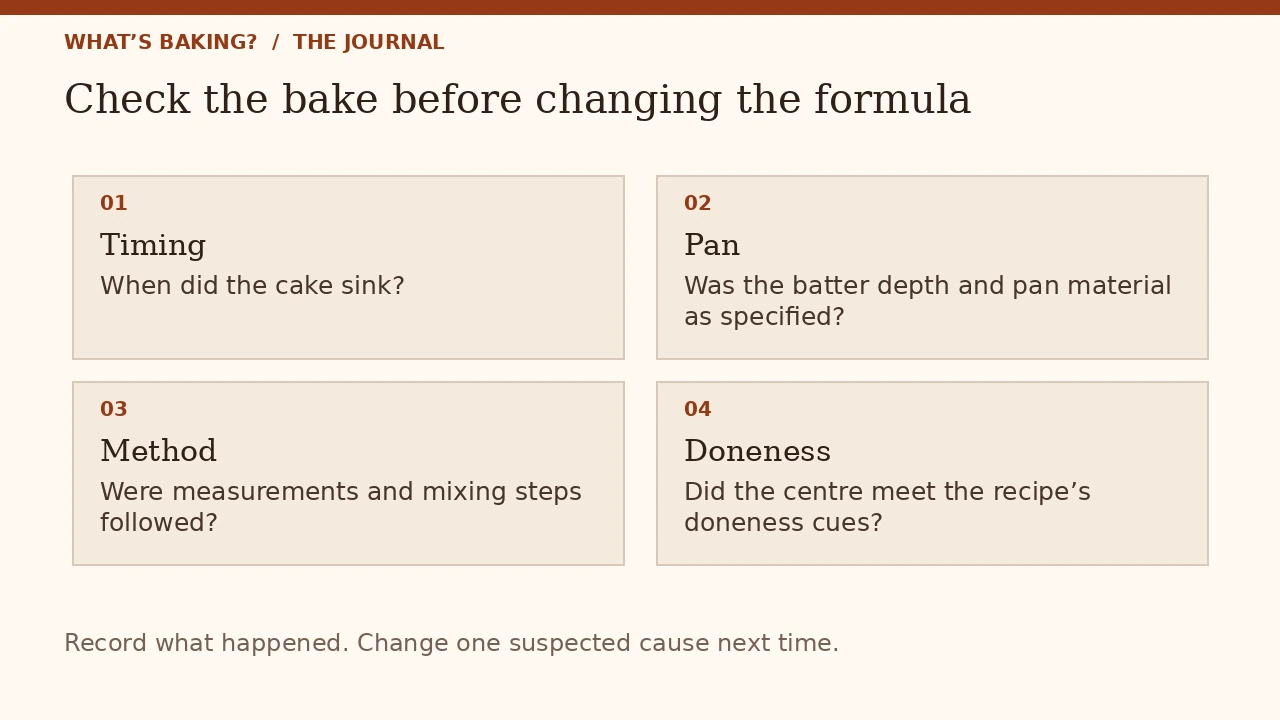
Original editorial quick-reference graphic; use the full written instructions for detail.
IN PICTURES
From the baking notebook
FROM THE RECIPE BOX




