On this page
Sponge cake and butter cake can both become beautiful celebration layers, but their lift is built in different ways. Many sponge cakes rely heavily on whipped eggs or egg whites to trap air, while traditional butter cakes use creamed butter and sugar, often supported by chemical leavening. Those differences influence tenderness, moisture, flavour and how the finished cake responds to syrups, frostings and fillings.
The central distinction
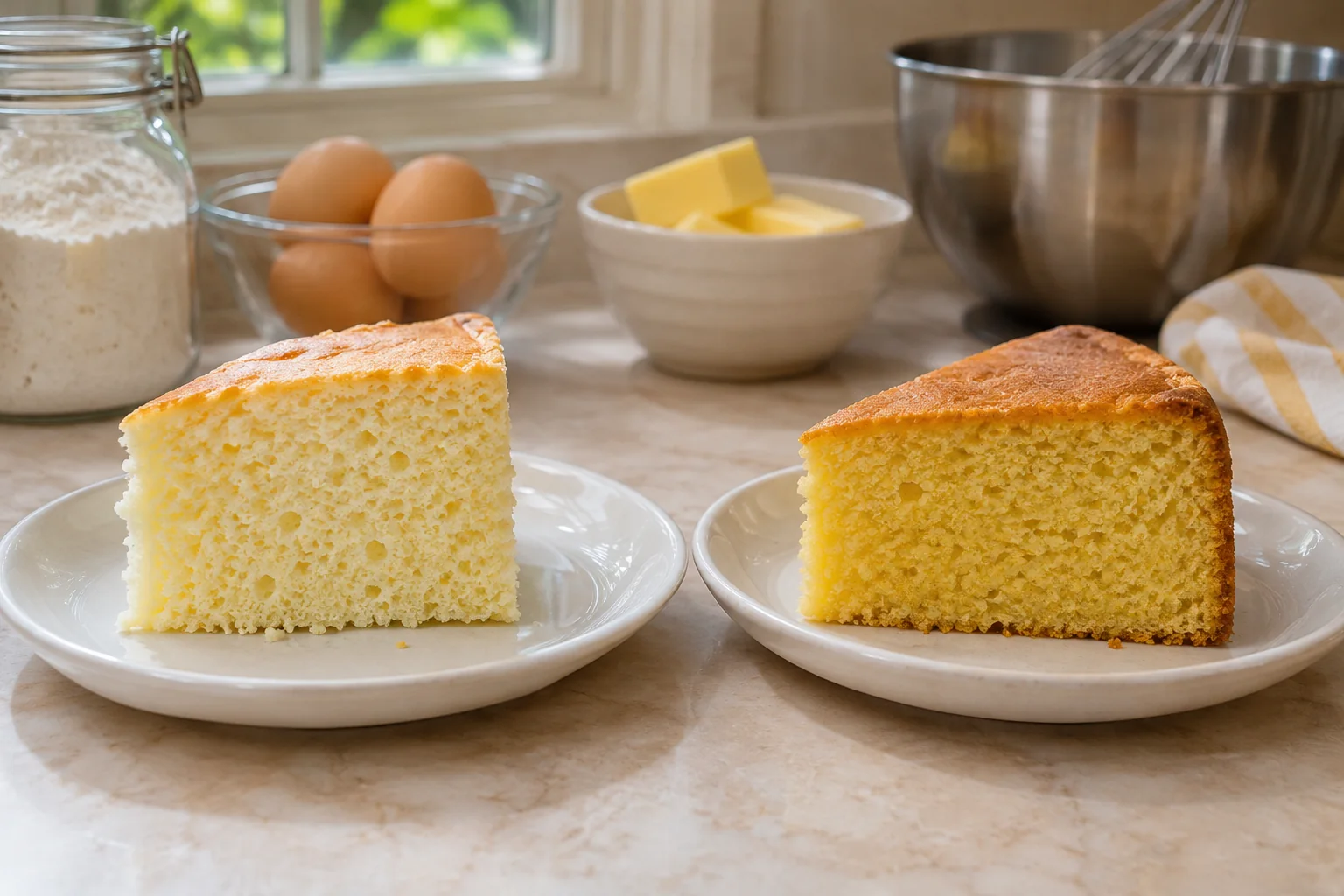
Sponge cake generally belongs to the egg-foam family, where aeration from beaten eggs plays a major structural role. Butter cake is defined by a substantial amount of butter in its batter and often uses creaming to build a fine structure. Real-world formulas overlap, so inspect ingredients and mixing method rather than assuming every cake has one simple label.
What makes a classic sponge
A basic sponge commonly includes eggs, sugar and flour, with variations using some melted butter or other ingredients. Genoise, for example, may fold melted butter into an egg foam. The airy crumb is designed to be light and springy, sometimes comparatively dry until it is paired with syrup or filling.
Recipe to try: Vegan Victoria Sponge Cake. This egg-free Victoria-style cake uses a different structure from a traditional whipped-egg sponge; it is an alternative cake formula, not an egg substitution guide.
What makes a butter cake
A classic vanilla butter cake combines butter, sugar, eggs, flour, liquid and leavening according to its recipe. The crumb is often tender, rich and evenly aerated. Butter brings distinctive flavour and a moist eating impression even when the finished sponge structure is relatively fine.
Recipe to try: Classic Vanilla Layer Cake. A tender, moist three-layer vanilla cake with silky buttercream frosting that delivers pure, aromatic vanilla flavor in every delicate, buttery bite.

Why eggs matter so much in sponge
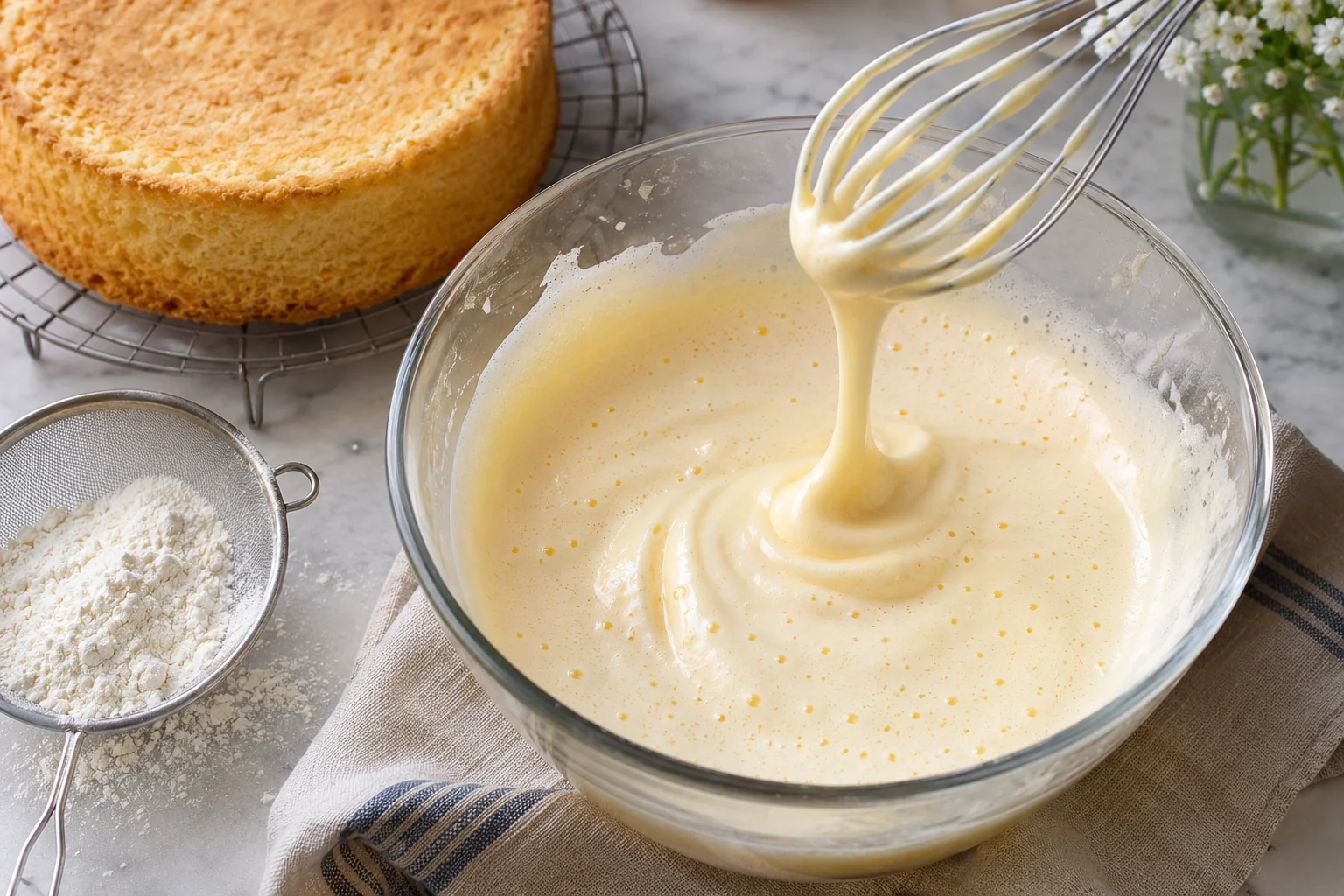
Whole eggs or separated whites can be whipped to incorporate many tiny air bubbles. Those bubbles expand in the oven and help the cake rise. The foam must be stabilized by the recipe's sugar and flour and handled gently, because excessive folding can deflate it before baking.
Creaming is a different kind of aeration
Softened butter and sugar are beaten so sugar crystals and mixing incorporate air into the fat. Those pockets can expand as the cake bakes. Most standard butter cake methods also use baking powder or soda to help lift the batter, though particular recipes vary.
Reverse creaming is another butter-cake method
Not all butter cakes start with butter and sugar. Reverse creaming coats dry ingredients with fat before most liquid is added, often producing a fine tight crumb. The existence of different butter-cake methods is one reason mixing directions are as important as ingredients.
Which cake is lighter?
A lean egg-foam sponge often feels lighter and springier than a rich butter cake. But an overbaked sponge can become tough, and a carefully made butter cake can feel wonderfully soft. Choose based on the recipe's intended texture rather than a blanket ranking.

Which cake is richer?
Butter cake typically has a stronger buttery flavour because its added fat is substantial. Sponge cake may taste more egg-forward and delicate. A genoise with butter falls somewhere between the extremes, demonstrating why the categories are useful but not absolute.
Recipe to try: Pound Cake Bundt. A buttery, dense pound cake with a tender crumb and crisp exterior, baked in a decorative bundt pan for an impressive yet comforting dessert.
Which stays moist longer?
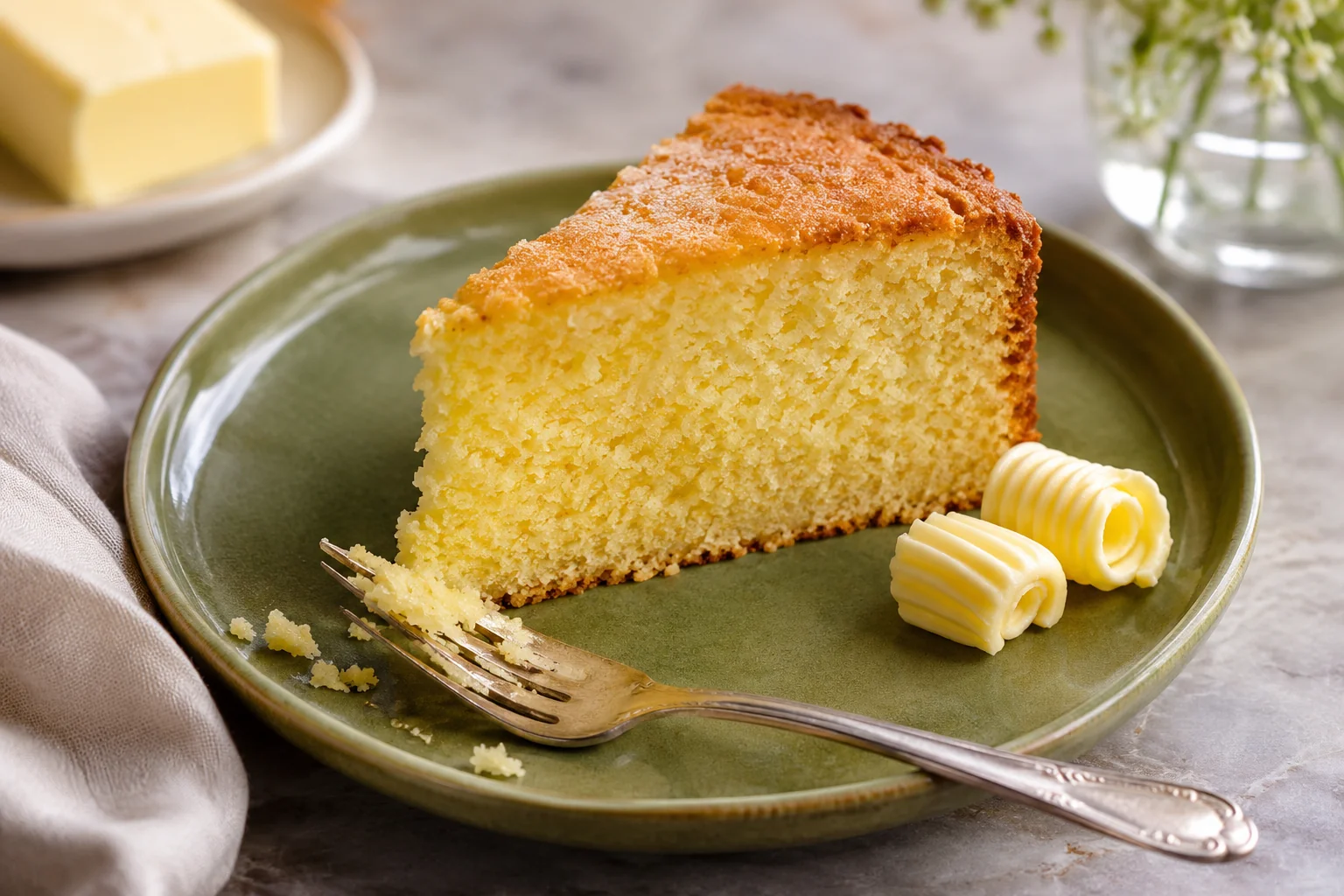
A butter or oil-rich cake may retain a softer eating texture during storage, while a plain lean sponge can dry more readily. Traditional sponge-layer desserts often use carefully measured syrup to add moisture and flavour. Neither syrup nor butter makes a cake with cream filling shelf-stable.
The role of flour
Low- or moderate-protein flour is often chosen for tender cake structures. A sponge must support its foam without becoming heavy; butter cake needs enough structure to hold its fat and moisture. Switching to bread flour can toughen some cakes, while inappropriate low-protein substitutions may weaken others.
Mixing a sponge correctly
Whip eggs to the stage specified, then incorporate sifted flour with controlled folding. The goal is to distribute flour without knocking out the foam or leaving dry clumps. In some recipes a portion of foam is mixed with melted butter first so the fat folds in more evenly.
Mixing a butter cake correctly
Cream butter and sugar or follow the designated reverse-creaming sequence, incorporating eggs and liquid gradually as directed. Scrape the bowl so ingredients combine completely. Overmixing after flour is added can increase toughness and create an undesirable dense streak in some batters.
Pan preparation may differ
Some sponges benefit from gripping an ungreased pan, while other sponge recipes require lined or greased tins for clean release. Butter cakes commonly use greased and lined pans. Never transfer pan instructions blindly from angel food cake to a conventional vanilla butter cake.
Temperature and baking
Foam cakes depend on the trapped air staying stable until the structure sets. Butter cakes have their own oven and mixing sensitivities. Both need a fully preheated oven and the correct pan depth. Opening the door prematurely can cause some fragile sponges to sink.
Layer-cake assembly
Butter cake is a familiar choice for substantial buttercream layers and celebration stacks. Sponge cake can be excellent in desserts with whipped cream, fruit or light syrup. Heavy fillings may compress a very airy sponge, so choose an assembly method designed for the cake.
Simple syrup on sponge
Because some genoise or biscuit-style sponges are comparatively lean, brushing measured syrup can add moisture without overwhelming the structure. Use the dessert's specified amount. Saturating a delicate sponge can produce wet layers that tear or slide.
Slicing and torting
A sturdy butter cake may split cleanly after cooling and brief chilling. A fragile sponge may compress under pressure or require a particular serrated knife technique. Support thin layers on boards rather than lifting them by one edge.

Frosting choices
Buttercream pairs naturally with butter cake, while lightly sweetened whipped cream or mousse can complement sponge. These are preferences, not strict rules. Consider total richness and the strength of the crumb so the frosting doesn't overwhelm or collapse it.
How to store either
Fully cool cake layers before wrapping. Store according to the formula and all added fillings. Pastry cream, cream cheese and whipped cream require refrigeration at safe temperatures regardless of whether the underlying cake is made from butter or whipped eggs.
Frequently asked questions
Is sponge cake always fat-free? No, genoise may include butter. Is butter cake always dense? No. Does sponge need baking powder? Some formulas don't, but others use it. Can you replace butter cake with sponge in a tiered design? Only if its structure and supports suit the plan.
Choose the intended bite
Pick sponge for a lighter foam-driven cake that can welcome syrup and delicate fillings. Pick butter cake for rich flavour and a soft, reliably sliceable crumb. Master the mixing method of each before trying to convert one into the other.
IN PICTURES
From the baking notebook
FROM THE RECIPE BOX


