On this page
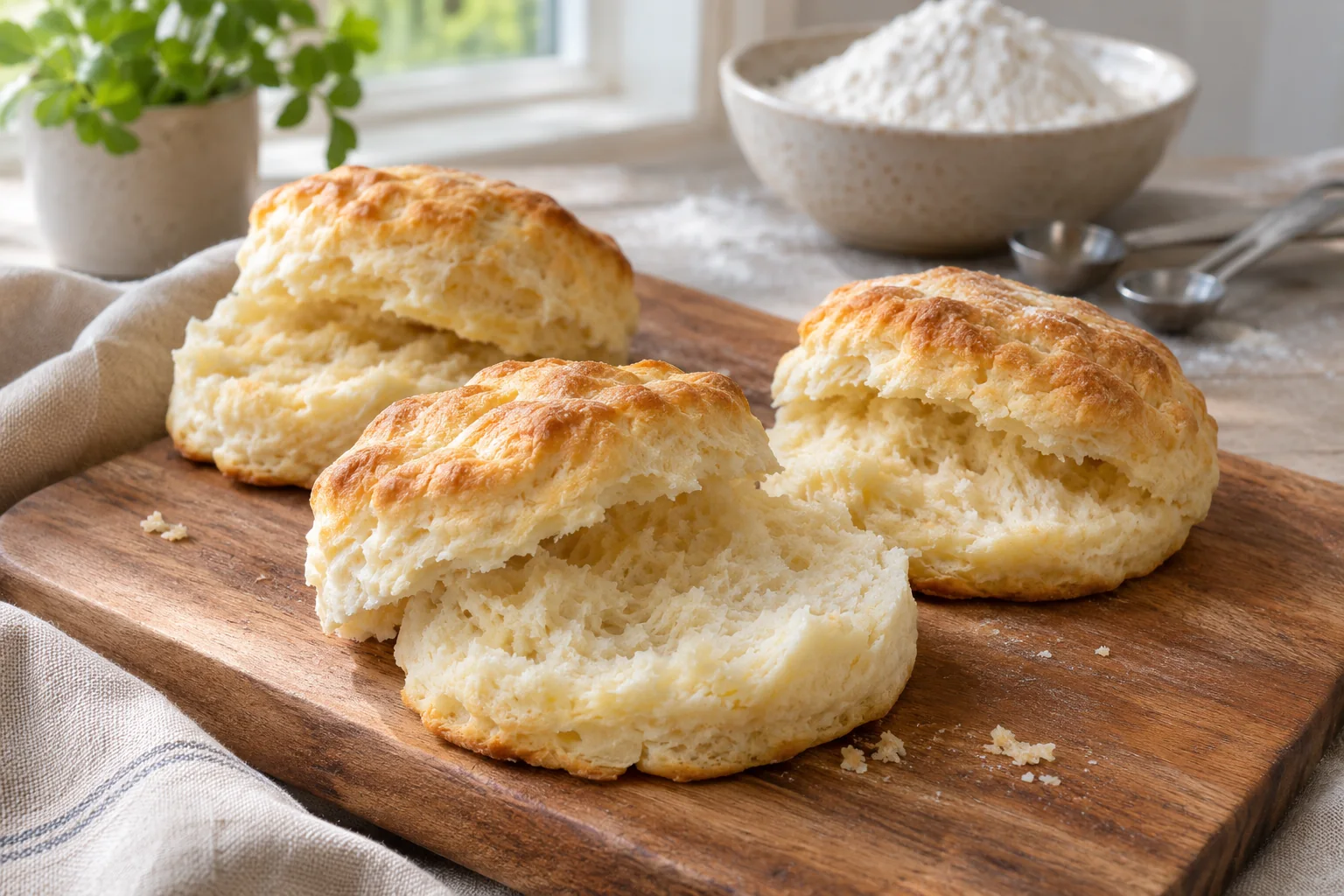
Self-rising flour and all-purpose flour look similar in the bag, but they perform different jobs in recipes. The difference is not simply a name: self-rising flour already contains baking powder and salt, and many commercial varieties are milled from softer wheat. Understanding the ingredients helps you decide when a swap is reasonable and when it will change the rise, flavour or crumb of your baking.
What is self-rising flour?
Self-rising flour is wheat flour blended with baking powder and salt. It simplifies recipes developed for it, such as certain biscuits, pancakes, scones and cakes. Traditional Southern-style versions often have lower protein than common all-purpose flour, helping create a tender crumb. Brand formulations differ, so always check the package.
What is all-purpose flour?
All-purpose flour is meant to serve a variety of recipes. It does not normally include leavening or salt, which are added separately. Its protein level varies by brand but is often higher than that of soft-wheat self-rising flour. This gives the baker more control over leavening and can produce a stronger structure.
The three differences that matter
First, self-rising flour adds chemical leavening. Second, it contributes salt. Third, the base flour may contain less gluten-forming protein than all-purpose flour. A homemade blend of all-purpose flour, baking powder and salt addresses the first two differences but cannot reproduce every characteristic of a commercial soft-wheat flour.
Check the ingredients on the bag before using it. Many self-rising blends include both baking powder and salt. All-purpose flour lets each recipe set those amounts independently.
A basic homemade self-rising flour blend
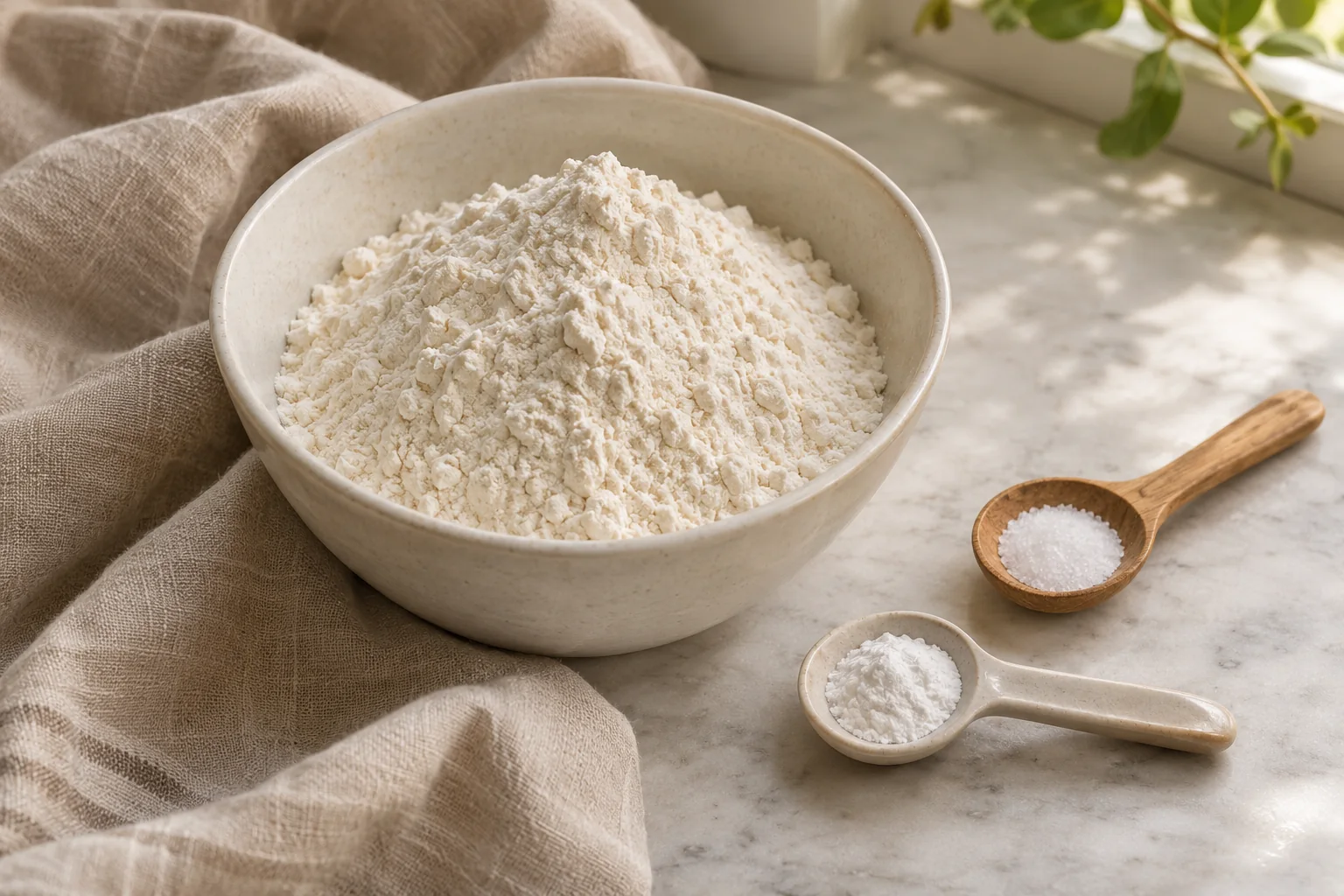
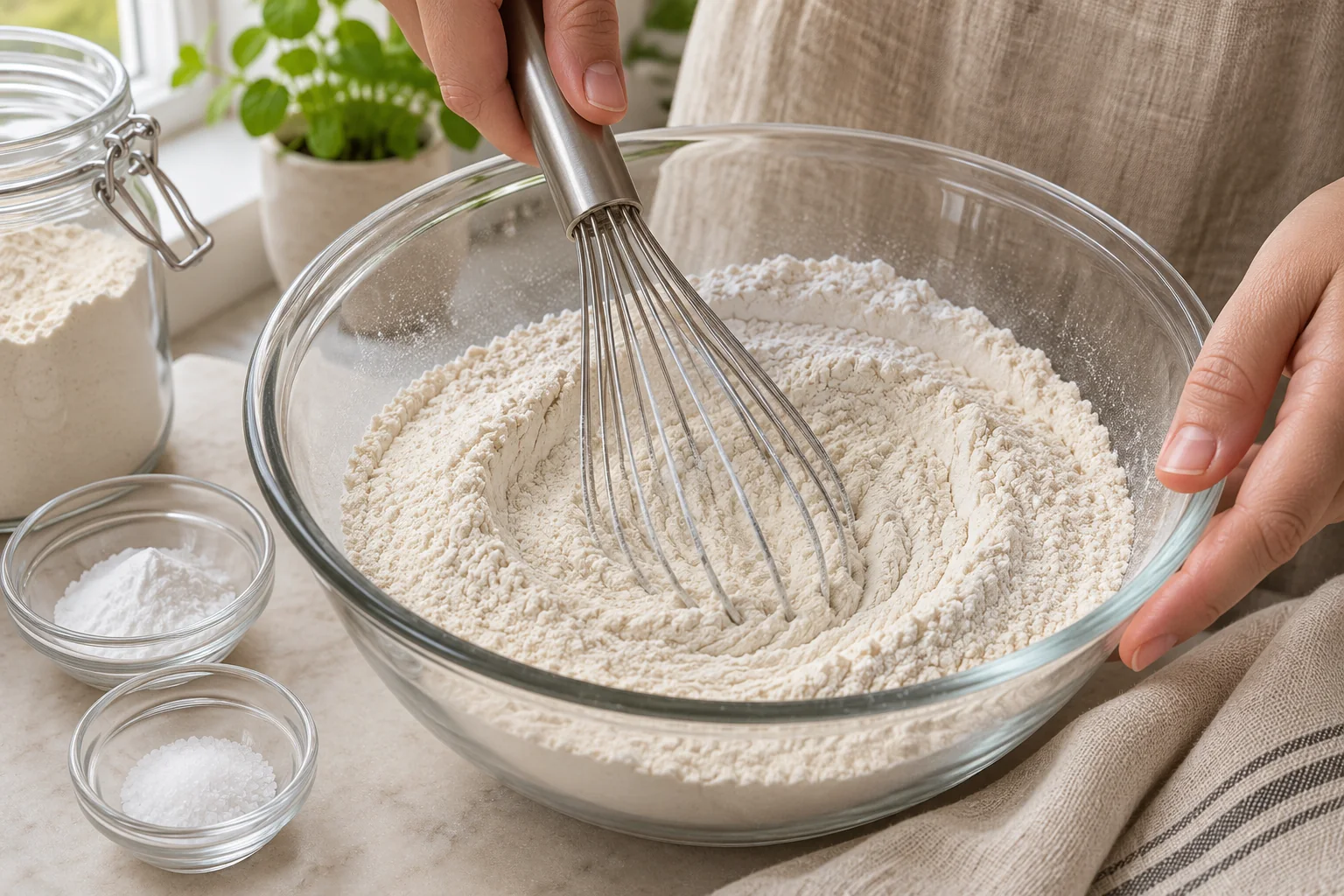
For a basic homemade blend, combine 1 cup (120 g) all-purpose flour, 1½ teaspoons baking powder and ¼ teaspoon table salt. Whisk to distribute the powders. The protein content of your flour can affect tenderness and how the dough absorbs liquid, so use the cues in the recipe you are making.
Measure all three ingredients first. Stir across the bottom and sides so the baking powder and salt are evenly mixed before the flour goes into the wet ingredients.
Why you should measure carefully
Start with the full cup of all-purpose flour before adding the baking powder and salt for that specific formula. Do not confuse this method with an unrelated cake-flour substitute that replaces some flour with cornstarch. A digital scale helps, but flour brands may use different weight-per-cup conventions.
Can self-rising flour replace all-purpose flour?
Recipes already designed around baking powder are better candidates for this swap. Read the complete ingredient list first and account for both the leavening and salt in the flour blend. If the recipe relies on a different leavener, use the flour specified.
What if the recipe also calls for baking soda?
Baking soda reacts with acidic ingredients and affects browning; baking powder supplies its own leavening components. If the original recipe includes both, do not automatically remove its baking soda when switching flour. The acid balance and total leavening need to remain appropriate.
Self-rising flour for biscuits
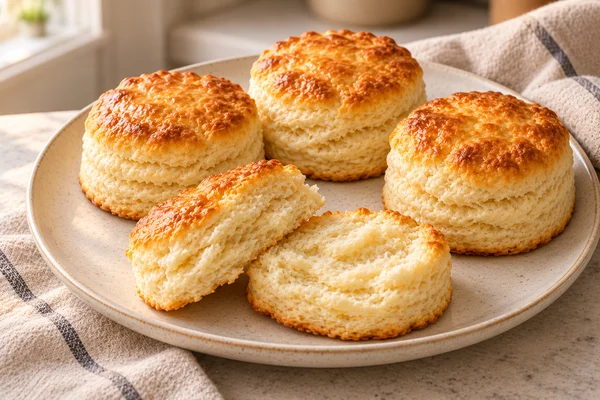
Self-rising flour is popular in tender Southern-style biscuits because the leavener is distributed through the flour and many varieties are relatively low in protein. But properly handling the fat and dough remains important. A recipe designed for low-protein self-rising flour may give a firmer result with a homemade higher-protein version.
For an all-purpose example, see Buttermilk Biscuits. The recipe lists its own leavening and salt. Make it with the listed flour and measure the baking powder and salt as written.
Self-rising flour for pancakes
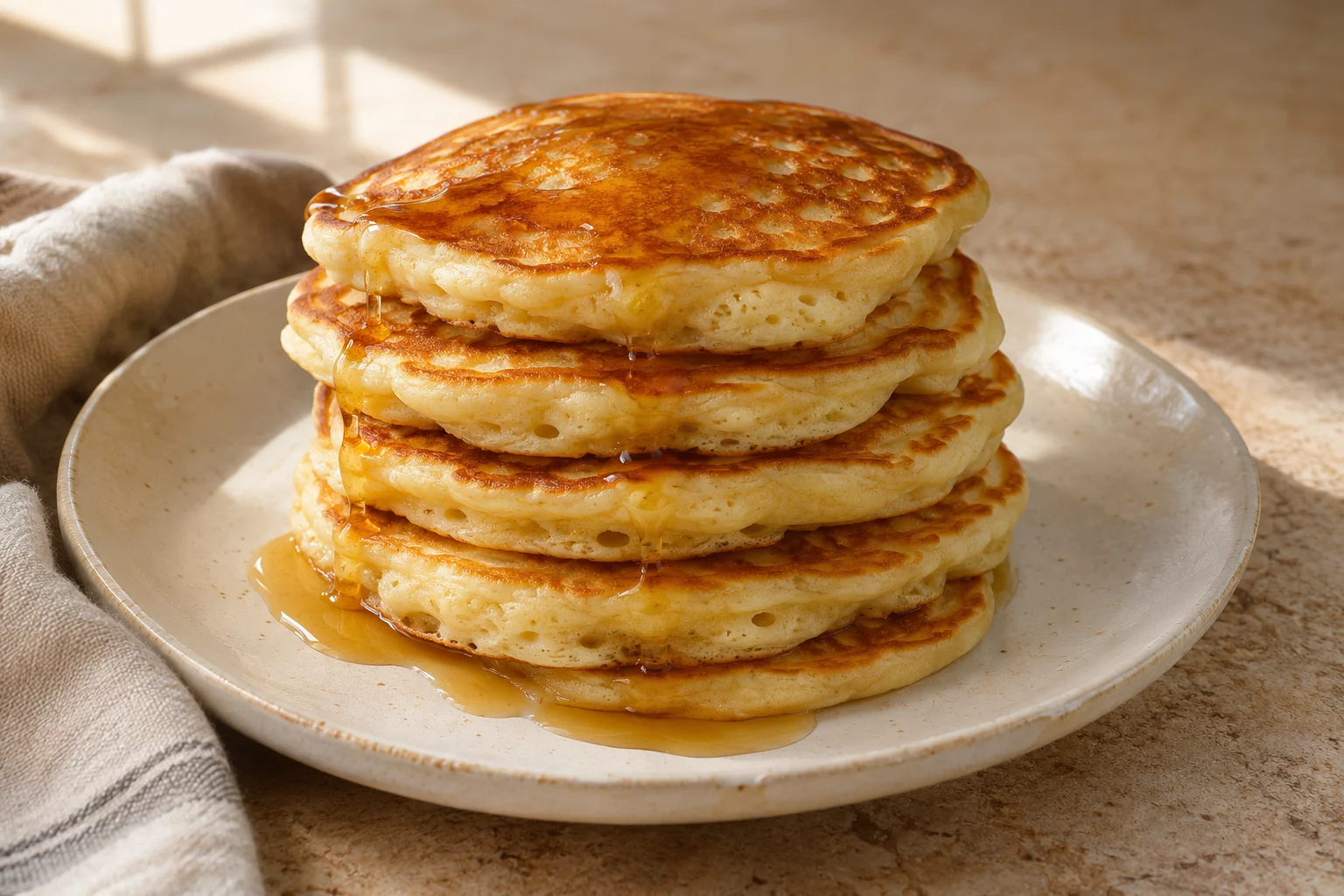
Pancake recipes are often compatible with self-rising flour when developed for it. They may require fewer measured dry ingredients. However, do not add all of the baking powder from an all-purpose-flour recipe on top of the amount already in self-rising flour. Follow the batter's intended thickness and mixing instructions.
The One-Bowl Pancakes also use all-purpose flour with separately measured baking powder. Follow the ingredient list so the batter gets the intended amount of leavening.
Self-rising flour for muffins and quick breads
Some muffins and quick breads are good candidates for a controlled substitution, but fruit, yogurt, buttermilk and baking soda can change the balance. A banana bread that depends on acidic ingredients and a small quantity of baking soda is not identical to a plain baking-powder muffin.
For a bake written for this blend, try Basic Scones. That recipe calls for self-raising flour and a measured extra amount of baking powder, so follow the full ingredient list.
Self-rising flour for cookies
Some cookies bake beautifully with self-rising flour, but others spread too much or develop a cakier texture. Flour protein, sugar, fat and leavening all affect spread. If a recipe uses little or no baking powder, self-rising flour isn't a neutral substitute. Test a small batch or follow an established conversion.
Use the flour and leavening listed in Classic Chocolate Chip Cookies. Changing both the flour blend and the added leavening at once makes changes in spread harder to diagnose.

Can it replace cake flour?
Not generally. Plain cake flour is usually a lower-protein flour without the built-in baking powder and salt found in self-rising flour. Delicate layer cakes and high-ratio cake formulas can be sensitive to flour processing and liquid absorption. Use the stated product or a tested replacement.
Can it replace bread flour?
Not as a direct swap in conventional yeast bread. Bread flour supplies a stronger gluten structure suited to kneading and fermentation, whereas lower-protein self-rising flour contains chemical leavening. Choose a bread recipe developed around the flour you have.
Self-rising vs self-raising flour
The names are closely related, but products sold in different countries do not always have the same salt and leavener content. A British self-raising flour and an American self-rising flour may call for different adjustments. Read labels and the recipe's regional notes.
Storage and freshness
Because self-rising flour contains baking powder, poor storage and age can reduce its rising performance. Keep it sealed and dry, check the package's date and label any homemade blend clearly. Otherwise, an accidental scoop into an all-purpose recipe may add unplanned salt and leavening.
Troubleshooting a failed substitution
If biscuits are tough, check protein, liquid and mixing. If cupcakes rise rapidly and collapse, check excess leavening and baking time. If cookies spread unexpectedly, look at the flour type as well as butter temperature and sugar. Changing several ingredients at once makes troubleshooting difficult.
Frequently asked questions
Can I make it without baking powder? Not by substituting baking soda alone without adjusting the acid and amount. Is self-rising flour gluten-free? Not when made from wheat. Which is more versatile? Ordinary all-purpose flour, because it lets you add leavening only where needed. Does it always produce softer cake? No; the complete formula and technique determine texture.
Final Takeaway
Self-rising flour is a convenient premixed ingredient, not simply ordinary flour with a new label. For reliable results, account for its leavening, salt and flour-protein differences. When the recipe was developed for self-rising flour, use that ingredient or a tested substitute rather than improvising halfway through mixing.
IN PICTURES
From the baking notebook
FROM THE RECIPE BOX


