On this page
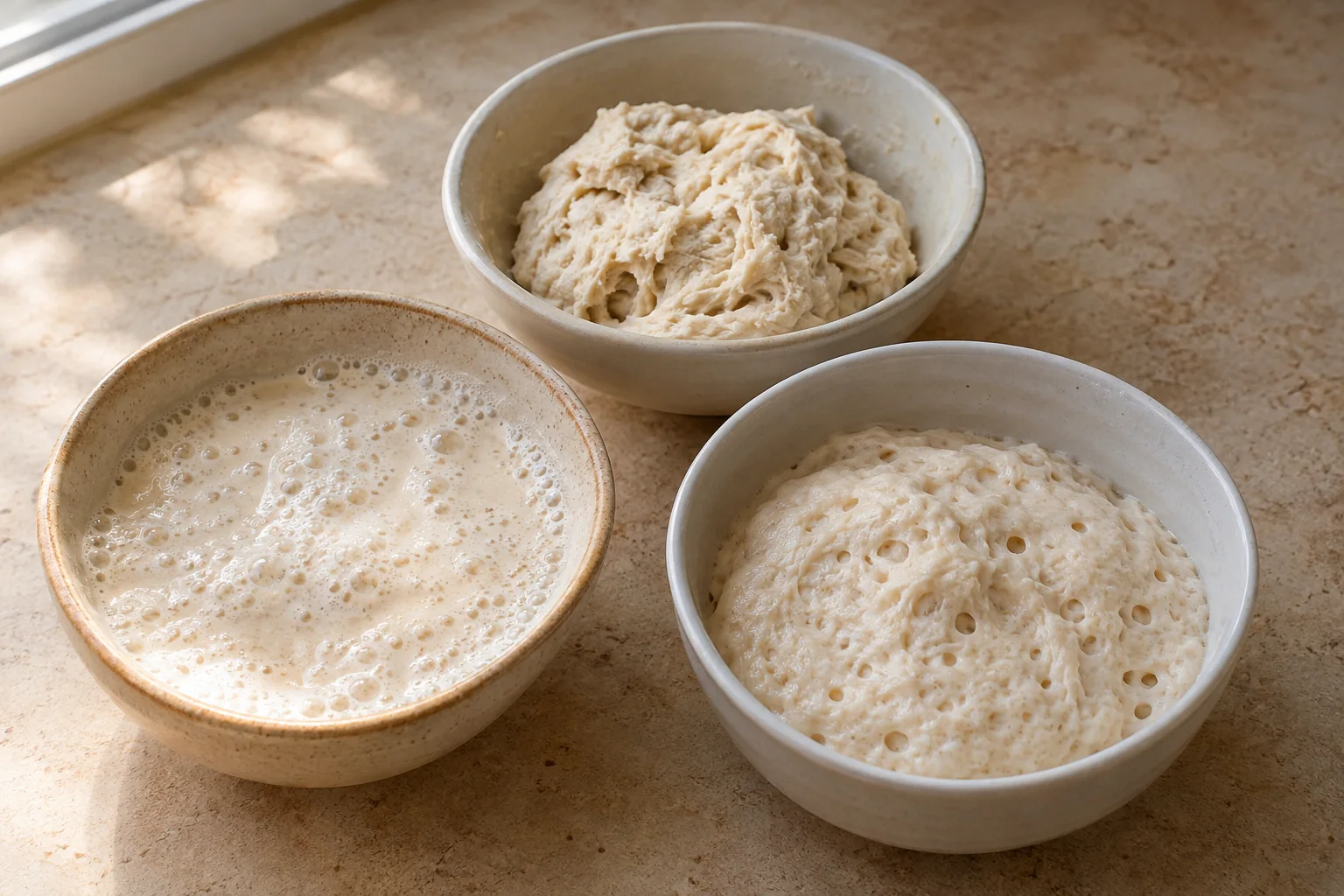
Poolish, biga and sponge are terms bread bakers use for mixtures prepared before the final dough. These preferments allow some flour and liquid to ferment in advance, developing flavour and changing how dough behaves. The names are useful, but they aren't entirely interchangeable across countries and traditions. Poolish is typically a loose equal-weight mixture, biga is often stiffer, and sponge is a broader term that can refer to several pre-fermented preparations.
What a preferment does
A preferment uses some of the bread's flour and water with a small amount of yeast or an established starter, allowing fermentation before the remaining ingredients are added. This gives yeast time to produce gas and flavour compounds. It can also affect dough strength and handling, but the specific benefits depend on formula and fermentation.
Poolish in one sentence
Poolish is a liquid yeasted preferment traditionally made with equal weights of flour and water—100% hydration—plus a small amount of commercial yeast. It generally contains no salt. It bubbles and develops aroma before being folded into the final dough.
Biga in one sentence
Biga is an Italian preferment commonly made relatively stiff, with flour, water and a little yeast. However, professional terminology can vary, and some Italian bigas are wetter. What matters for a recipe is its specified hydration and fermentation time, not assuming one universal stiffness.
What is a sponge?
Sponge is a broader term often used for a pre-fermented mixture of flour, liquid and yeast. It may be fairly loose or moderately stiff and is common in some sandwich breads, enriched doughs and traditional bakery processes. Because the definition is flexible, rely on ingredient amounts rather than the word alone.
Hydration compared
Poolish is characteristically one part flour to one part water by weight. A stiff biga uses much less water relative to flour, forming irregular chunks or a firm mass. Sponge hydration is recipe-dependent. Consistency affects fermentation and mixing, but isn't the only determinant of final bread flavour.
Commercial yeast versus sourdough
Poolish and biga typically use commercial baker's yeast, while levain commonly refers to a naturally leavened preferment. All fit into the larger preferment category. The distinction matters because sourdough starters also contain acid-producing bacteria, changing aroma and fermentation behaviour.
Recipe to try: Sourdough Country Loaf. A rustic, tangy loaf with a crackling crust and tender, open crumb structure that showcases the complex flavors developed through slow fermentation.

Why bakers use small yeast amounts
The preferment has hours to mature, so it often needs only a small amount of yeast. More yeast isn't always more flavourful; it can make the mixture peak and collapse too quickly. Use the amount chosen for the intended room temperature and maturation time.
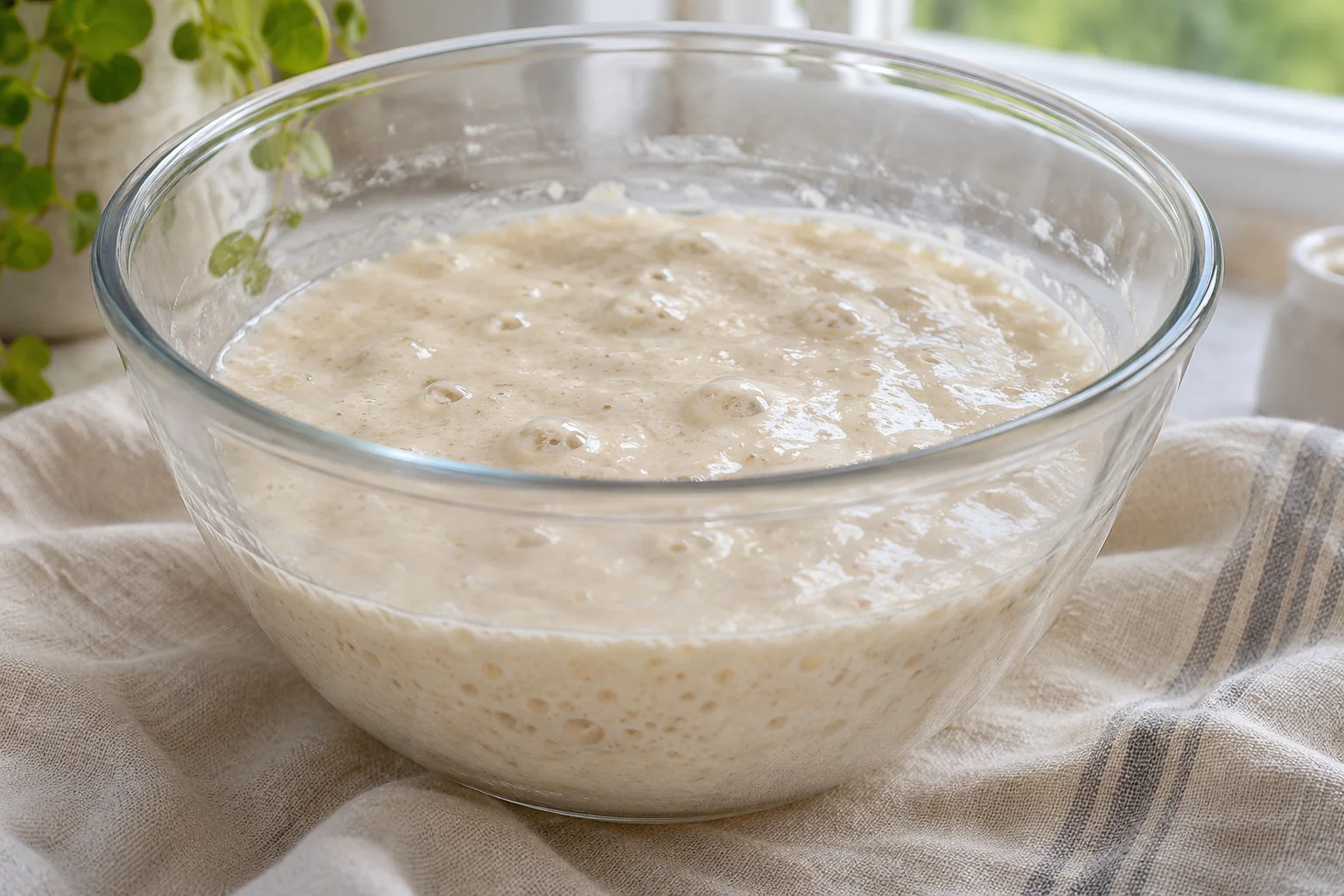
How to recognize ripe poolish
A well-timed poolish is bubbly, aerated and pleasantly fermented, often with a domed or gently flattening surface depending on formula. A collapsed, sharply alcoholic or overly acidic mixture may be past its ideal point. Use the recipe's appearance and smell cues rather than exact hours alone.
How to recognize ripe biga
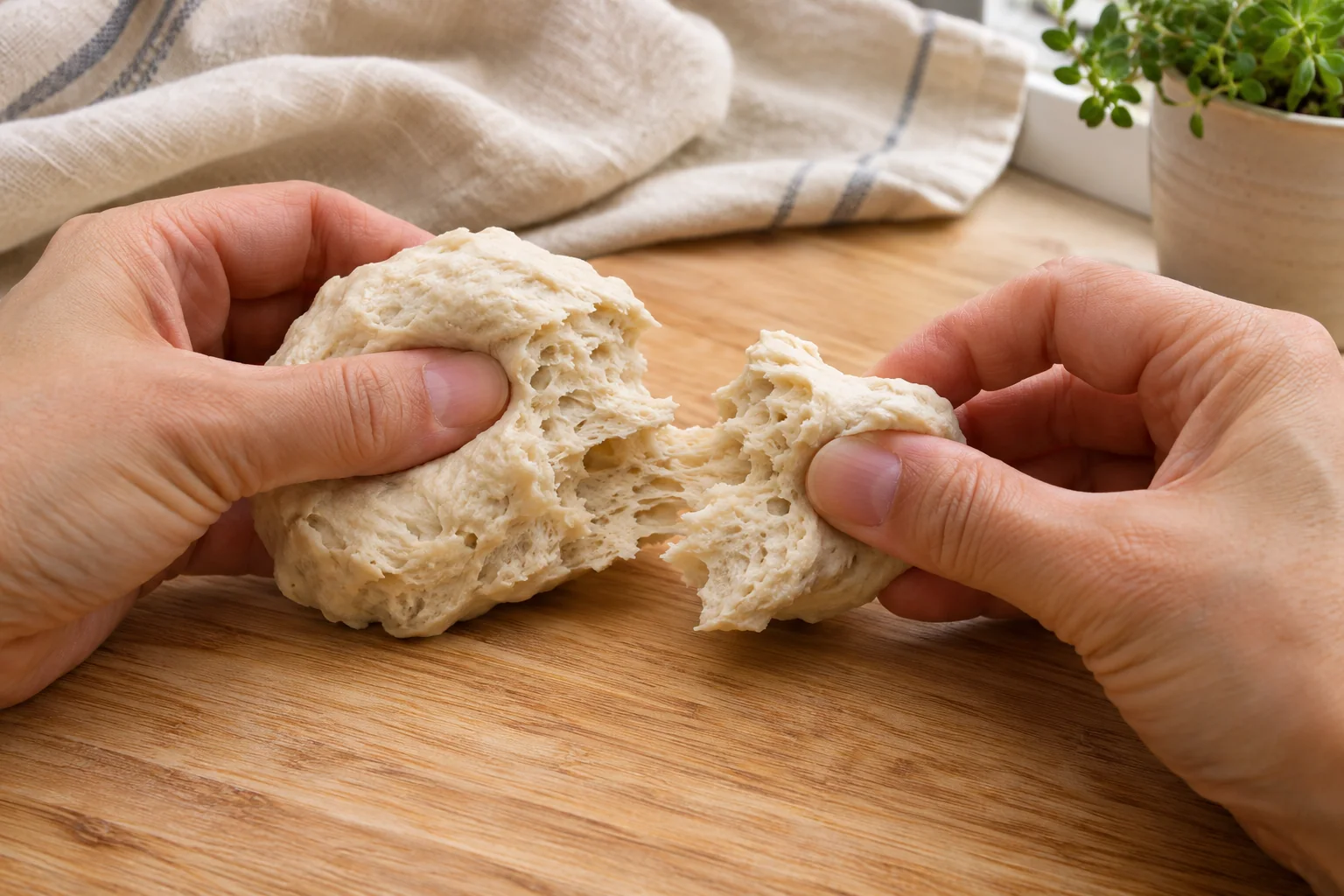
A stiff biga may expand and show internal bubbles when torn apart, rather than developing the foamy surface of poolish. Its aroma should be fermented but not unpleasantly rotten. Different hydrations produce different textures, so don't expect it to pour out of a bowl.
Why sponge appearance varies
A sponge may be a thick batter, a bubbly paste or a more dough-like mixture. Follow the method's maturity cues. A sponge designed for enriched dough may include milk or another ingredient, which changes food-safety and storage considerations.
The role of temperature
Warm conditions speed yeast fermentation; cool conditions slow it. A preferment built for an overnight room-temperature rise can mature too quickly in a hot kitchen. Never assume an exact twelve-hour schedule is universal across seasons and room temperatures.
Poolish and extensibility
Liquid preferments can contribute to dough extensibility and flavour in some bread formulas, making them appealing for baguettes and other lean breads. But the final result also depends on flour strength, mixing and folding. Poolish alone doesn't guarantee large open holes.
Recipe to try: Baguette. Crispy golden crust gives way to a tender, airy interior with that distinctive chew that makes homemade baguettes the ultimate expression of artisan bread baking.

Biga and dough character
Stiffer preferments may bring a different handling quality and flavour profile than a liquid poolish. Italian-style breads often employ biga in formulas designed around it. The precise crumb comes from the entire dough and fermentation schedule, not simply the word biga.
Recipe to try: Triple-Fermented Durum Wheat Bread with Biga. Rich, nutty bread with a complex flavor profile and chewy open crumb achieved through multiple fermentation cycles and robust durum wheat flour.
Sponge in soft breads
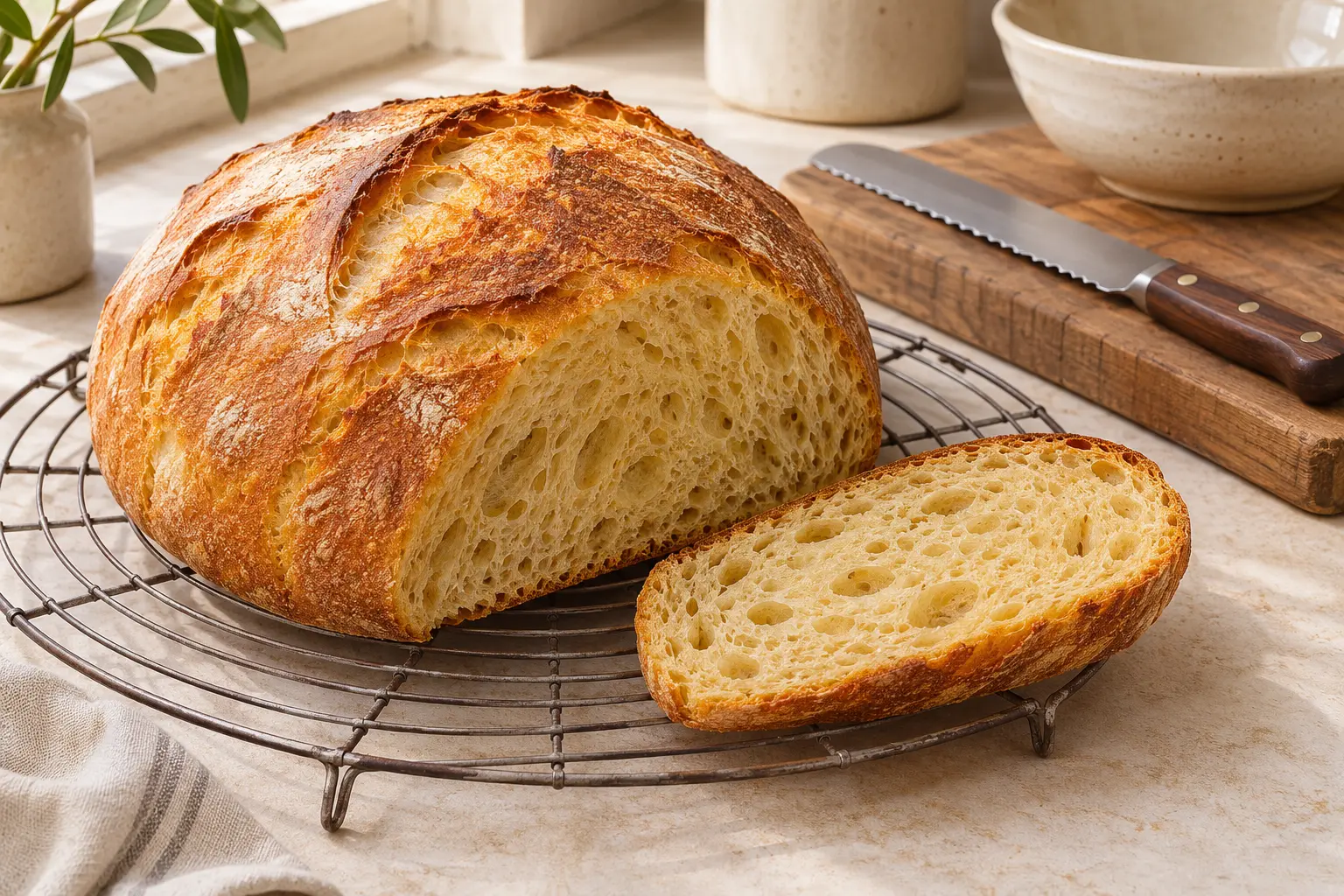
A sponge method can be convenient in enriched sandwich breads or rolls, where some flour ferments before butter and sugar are mixed into the final dough. It may improve flavour without requiring a maintained sourdough starter. Choose a tested sponge bread to learn the process.
Count preferment flour correctly
The flour and water in the preferment are part of the bread formula's total ingredients. If a dough has 500 g total flour and 150 g is in the poolish, the main mix receives the remaining 350 g. Adding another full 500 g changes hydration and loaf yield.
What about salt?
Many poolish and biga preparations are made without salt, but some old-dough preferments such as pâte fermentée include it. Salt affects yeast and gluten, so do not add it to the preferment unless the formula directs.
Can one preferment replace another?
Not as a casual equal-volume swap. Their hydration, yeast percentage and maturity differ. Converting poolish to biga requires rebalancing water and sometimes fermentation timing in the final dough. Use a recipe designed for the preferred method.
How to plan an overnight bake
Mix the preferment when the schedule and room temperature will allow it to ripen at the required time. The next day, incorporate it with the remaining dough ingredients, knead or fold, proof, shape and bake. Allow time for the final dough to ferment even if the preferment looks very active.
Frequently asked questions
Is poolish sourdough? Usually no, it uses commercial yeast. Is biga always stiff? Commonly, but definitions vary. Is sponge just another word for poolish? Not necessarily. Do preferments replace all yeast? Some formulas still add a small amount to the final dough.
Choose by the recipe's schedule
Use poolish when a formula calls for an airy equal-hydration mixture, biga for its specified often-stiff Italian style, and sponge for the broader technique described by your bread. Respect the measurements and time; the flavour develops in the process.
IN PICTURES
From the baking notebook
FROM THE RECIPE BOX


