
On this page
A cheesecake rarely announces doneness with the same clear signs as a loaf cake. A toothpick may emerge coated with creamy filling even after the eggs have set, and a completely rigid centre can mean the edges have gone too far. Understanding what a properly baked custard looks and feels like protects its smooth texture and helps you avoid both raw batter and an overcooked, cracked cake.
Why cheesecake is harder to judge than cake
A sponge cake forms a relatively firm network that often releases a mostly clean tester at doneness. Cheesecake is an egg-and-dairy custard designed to remain creamy. Its centre may still move slightly when the cake is ready to leave the oven. The appropriate endpoint depends on formula, pan depth and style.
The classic visual cue
Many baked cheesecake recipes ask for firmly set outer edges and a small central circle that jiggles gently when the pan is nudged. King Arthur Baking describes a gelatin-like wobble rather than the liquid motion of raw batter. The size of the wobbling area varies by recipe; a full-size deep cake differs from a mini cheesecake.
What a correct wobble looks like
Imagine gently moving the pan by its sides: the central filling moves together as a soft unit, then stops. It shouldn't ripple freely across the entire pan like uncooked custard. Do this carefully without jerking the cake or opening the oven repeatedly in a way that alters baking temperature.
What overbaked cheesecake looks like
A severely overbaked cake can puff, split, turn dry at the edges and lose its supple custard texture. Some recipes tolerate browning, while others aim for a pale surface. Colour alone isn't a universal endpoint, because Basque cheesecake intentionally develops a deeply browned top.
What underbaked cheesecake looks like
A centre that appears to flow as liquid batter, a large area that sloshes, or a slice that never sets after the prescribed bake and chilling process suggests underbaking or an ingredient imbalance. A refrigerator can firm fat, but it does not cook raw egg custard.
How a thermometer can help
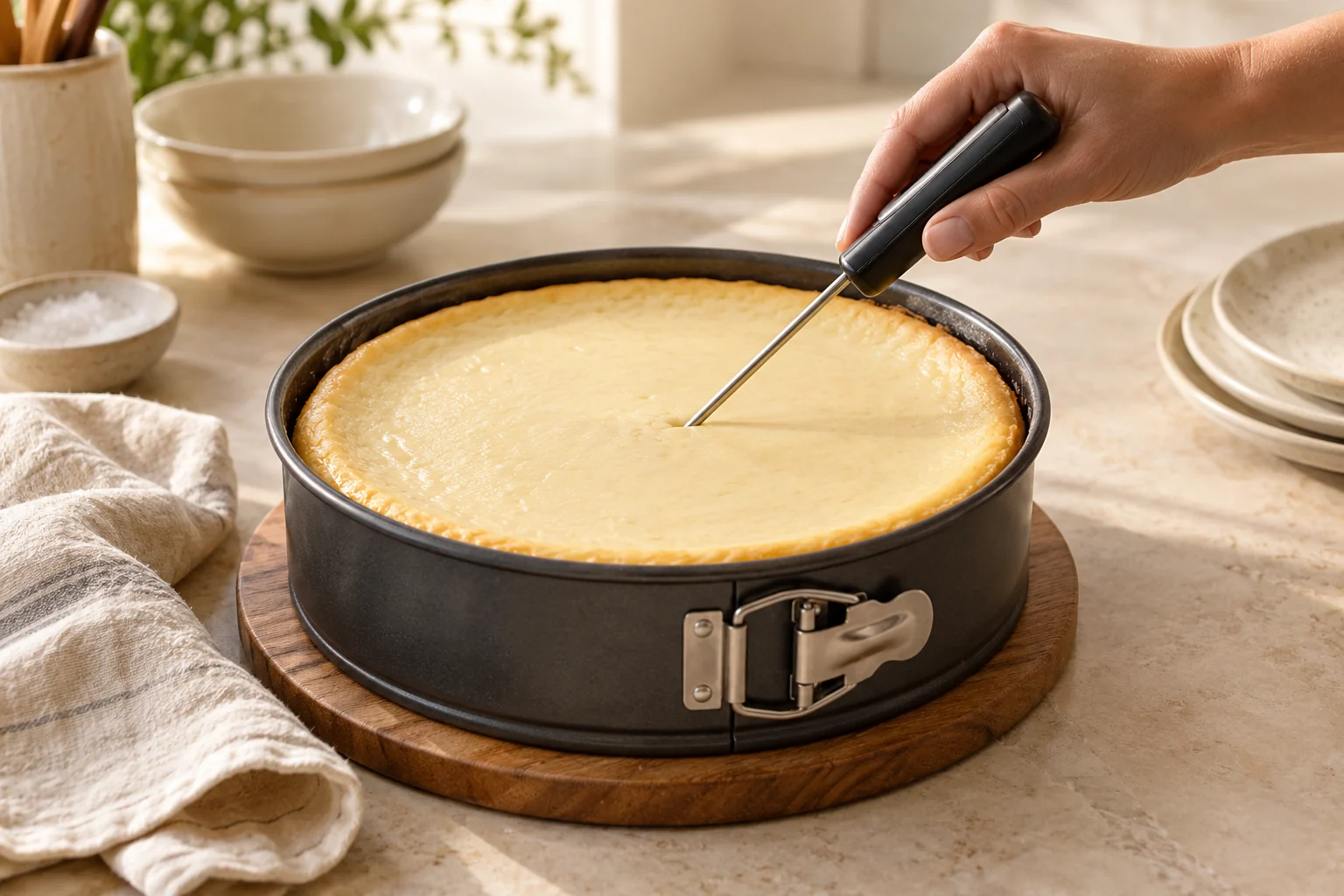
For a creamy style, King Arthur Baking's troubleshooting guide describes example targets near 150–155°F (66–68°C) in the centre and 165–170°F (74–77°C) closer to the edge, with specific insertion depth and positioning. These numbers reflect that guide's formulas; follow your particular cheesecake recipe when it supplies an endpoint.
Where to take a temperature
Insert a clean thin thermometer at the location and depth the recipe specifies, usually avoiding contact with the springform base. Measuring only the side can falsely suggest the middle is ready because the perimeter heats sooner. For a deep filling, inconsistent probe placement can create misleading readings.
Why carryover heat matters
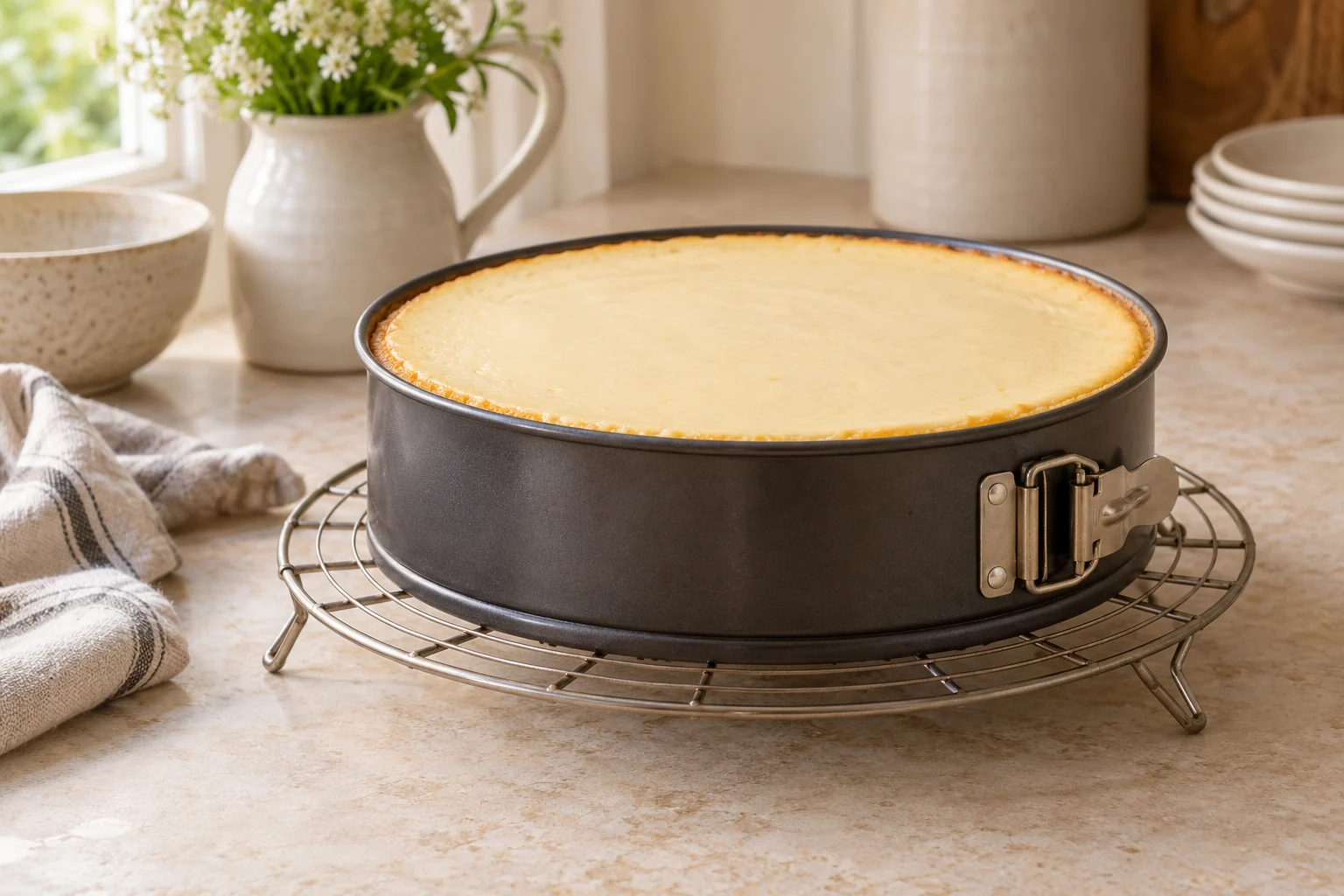
The cake continues receiving heat from its pan and cooked outer layers after removal or when left in a turned-off oven. This can firm the central custard further. Don't bake simply until it feels completely solid if the recipe expects carryover setting.
Does a water bath affect the result?
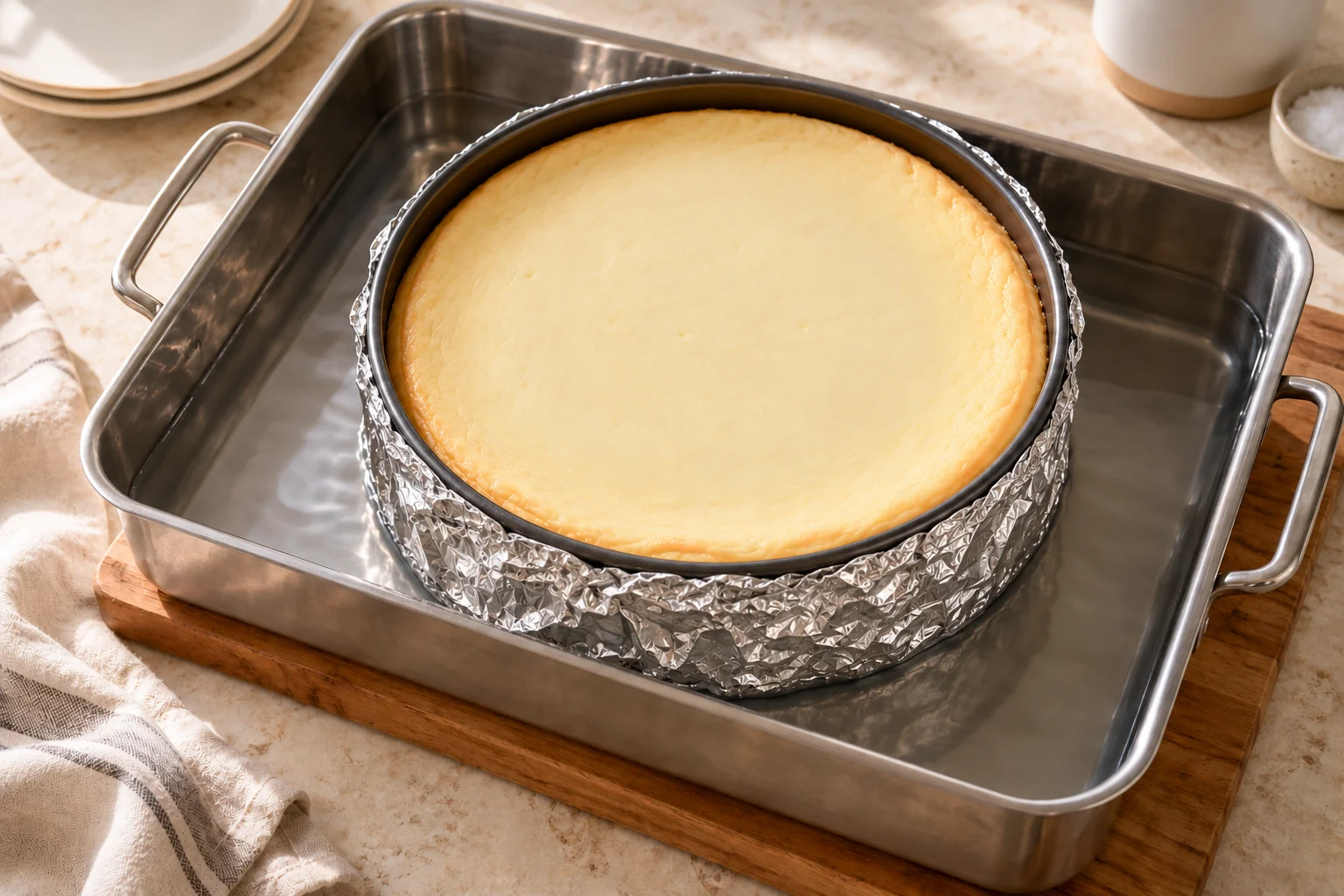
A water bath helps moderate heat around the pan and can make the custard cook more evenly. It may reduce cracking, but it also changes how a given oven schedule behaves. Use a method designed for water-bath baking, particularly when comparing timing with a dry-oven formula.
What if you aren't using a water bath?
Some cheesecakes bake successfully in a dry oven at a controlled temperature, especially with an appropriate pan and recipe. Follow the recommended visual and temperature cues. A water bath is a tool for even heat, not a mandatory ingredient of cheesecake.
Tall New York-style cheesecakes
A thick rich cheesecake can have a set perimeter while the centre remains comparatively cool. The depth makes time alone an unreliable guide, especially if you change from a ten-inch pan to a nine-inch pan. Use the formula's specified pan dimensions and doneness method.
Mini cheesecakes
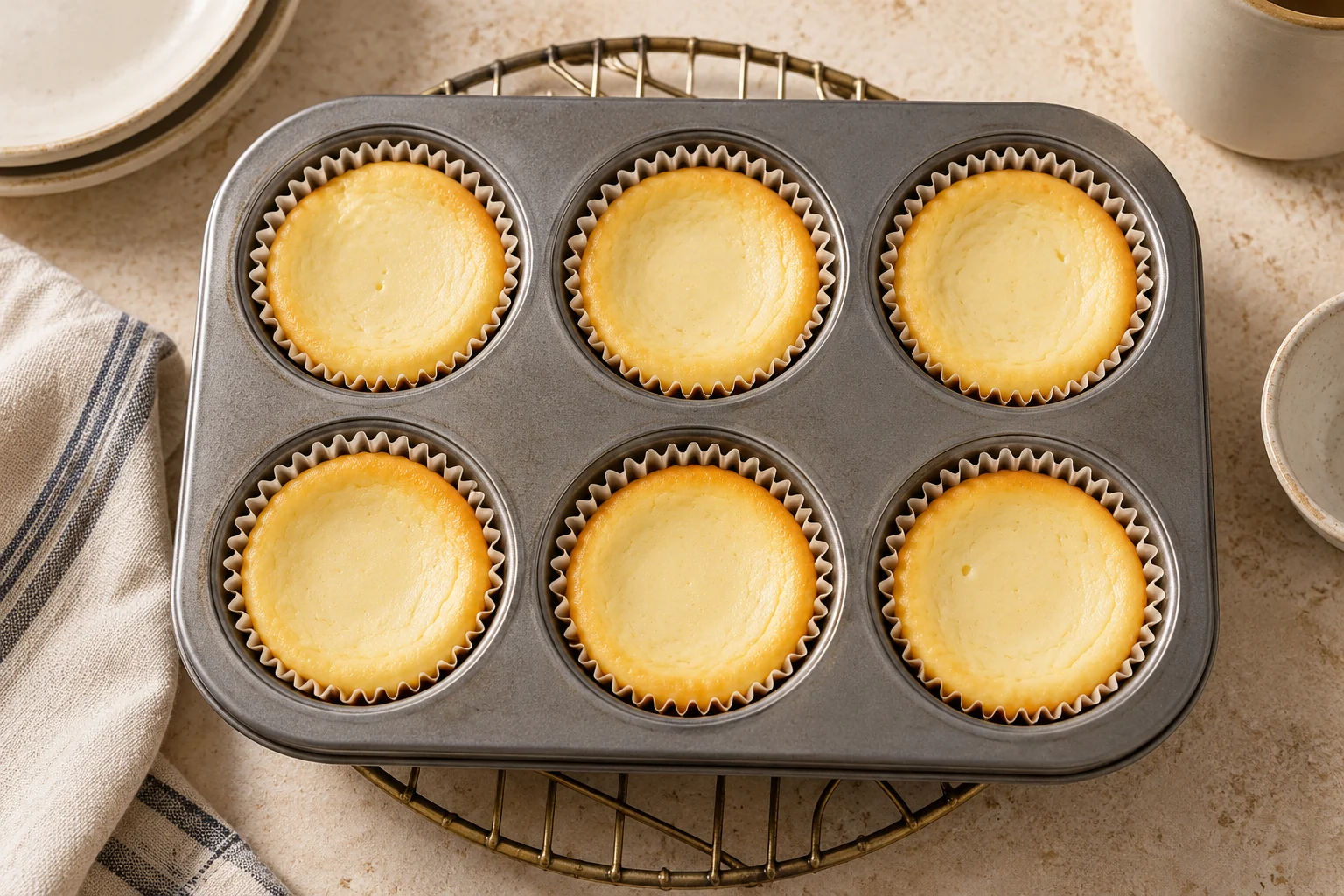
Individual cheesecakes bake faster because heat reaches the middle over a much shorter distance. The tops may look gently domed and then settle. Don't use the baking time or thermometer-placement guidance for a giant springform cake without consulting a mini-cheesecake recipe.
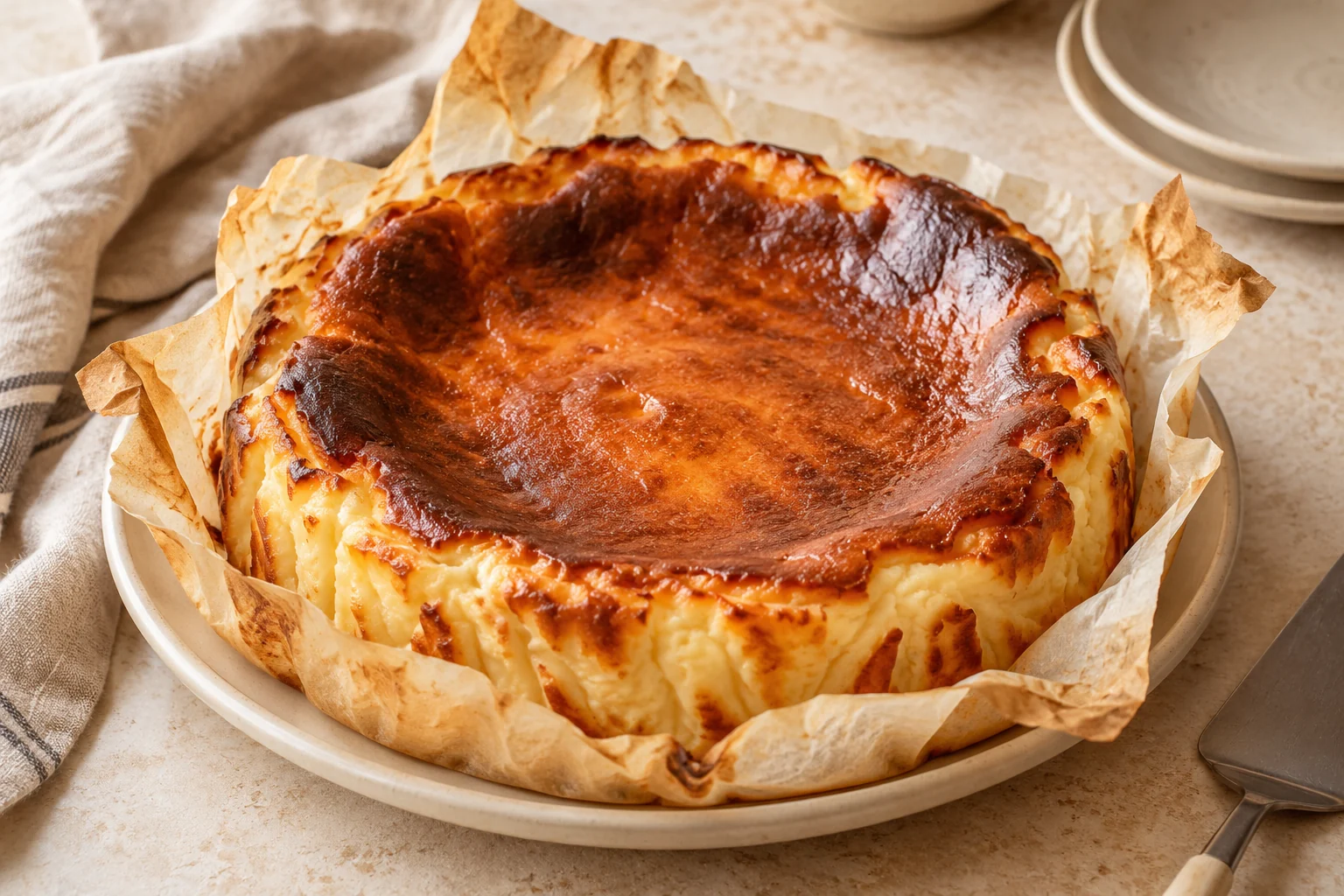
Basque cheesecake is different
Burnt Basque cheesecake often uses higher heat for a dramatic dark surface while retaining a soft centre. Its doneness targets and cooling behaviour are intentionally different from a pale classic cheesecake. Don't interpret its browned top as proof that every cheesecake should become dark.
Why the toothpick test misleads
Cheesecake filling is designed to be creamy; a clean dry toothpick may indicate a firmer result than intended. Chocolate swirls and crust crumbs further complicate the test. Follow centre movement or a measured internal temperature instead of borrowing conventional layer-cake rules.
How batter mixing affects doneness
High-speed whipping incorporates air that can make the cake puff as though fully baked, then sink and crack. Room-temperature cream cheese and gentle mixing help create a smooth batter without unnecessary aeration. A dramatic rise is not a reliable signal that the eggs have properly set.
What to do if the centre is still liquid
If the cake is still in the baking stage, follow the recipe's guidance for additional controlled baking, checking at suitable intervals. Do not increase the heat drastically, because the outer edges can overcook. If the recipe's limits are unclear, prioritize food safety rather than serving raw custard.
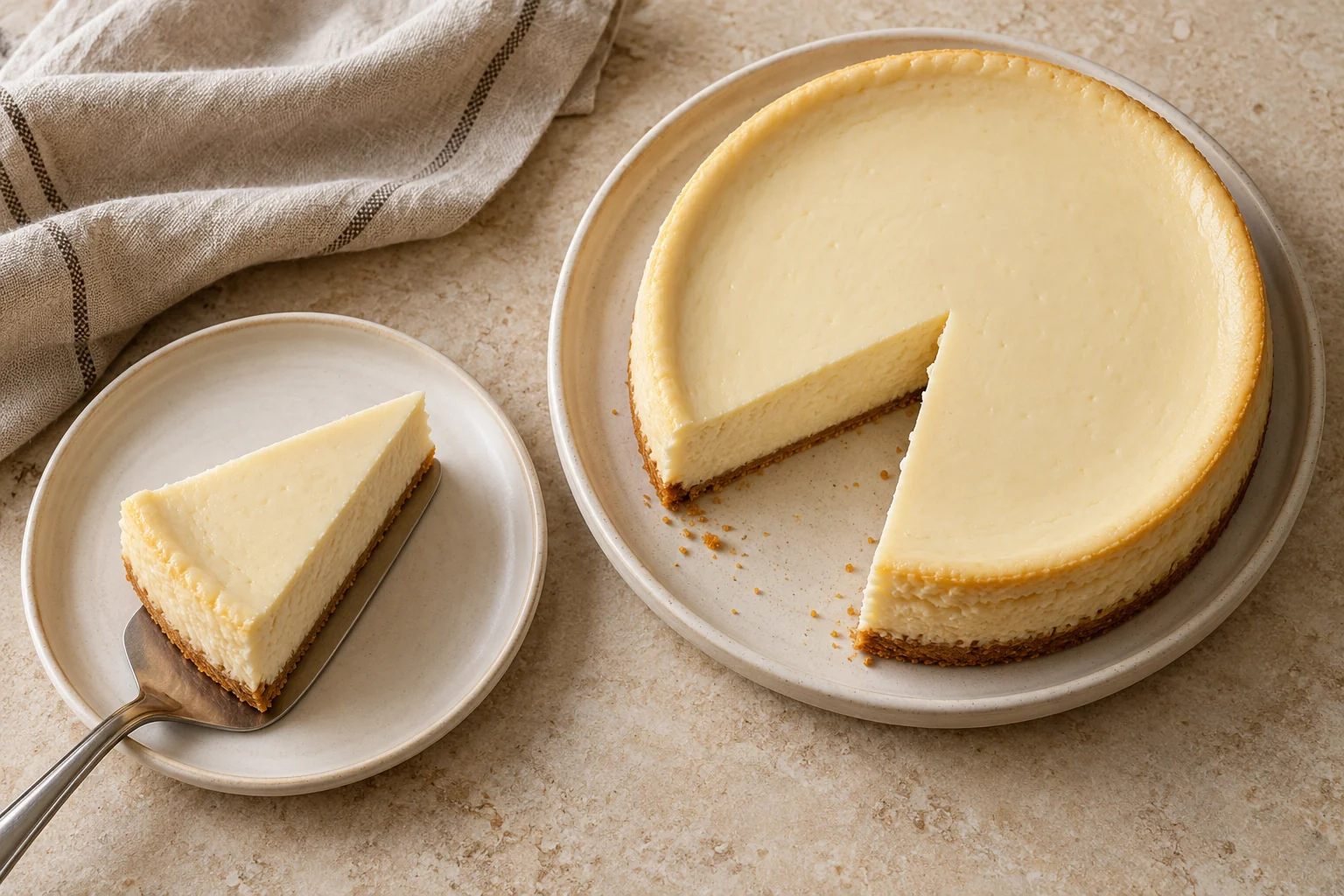
Why chilled cheesecake slices cleanly
After proper baking, cooling and refrigeration help the filling develop a stable serving texture. A hot baked cheesecake can smear and seem loose even when cooked sufficiently. The correct assessment separates oven doneness from the final cold-slice texture.
Frequently asked questions
Should the whole centre jiggle? Only as described by the recipe; a large liquid wave is different from a gentle wobble. Can I test by colour? Not reliably. Does a cracked cake mean overbaked? Often, but mixing and cooling also contribute. Is overnight chilling required? Many recipes recommend it, but check the formula.
A dependable doneness routine
Use the correct pan and oven temperature, check toward the end of the recipe's schedule, observe whether the outer ring is set, confirm the centre's intended wobble or measured endpoint, then cool and chill as directed. This protects creaminess far better than baking until the entire top is rigid.
Technique reference: King Arthur Baking.
IN PICTURES
From the baking notebook
FROM THE RECIPE BOX


