On this page
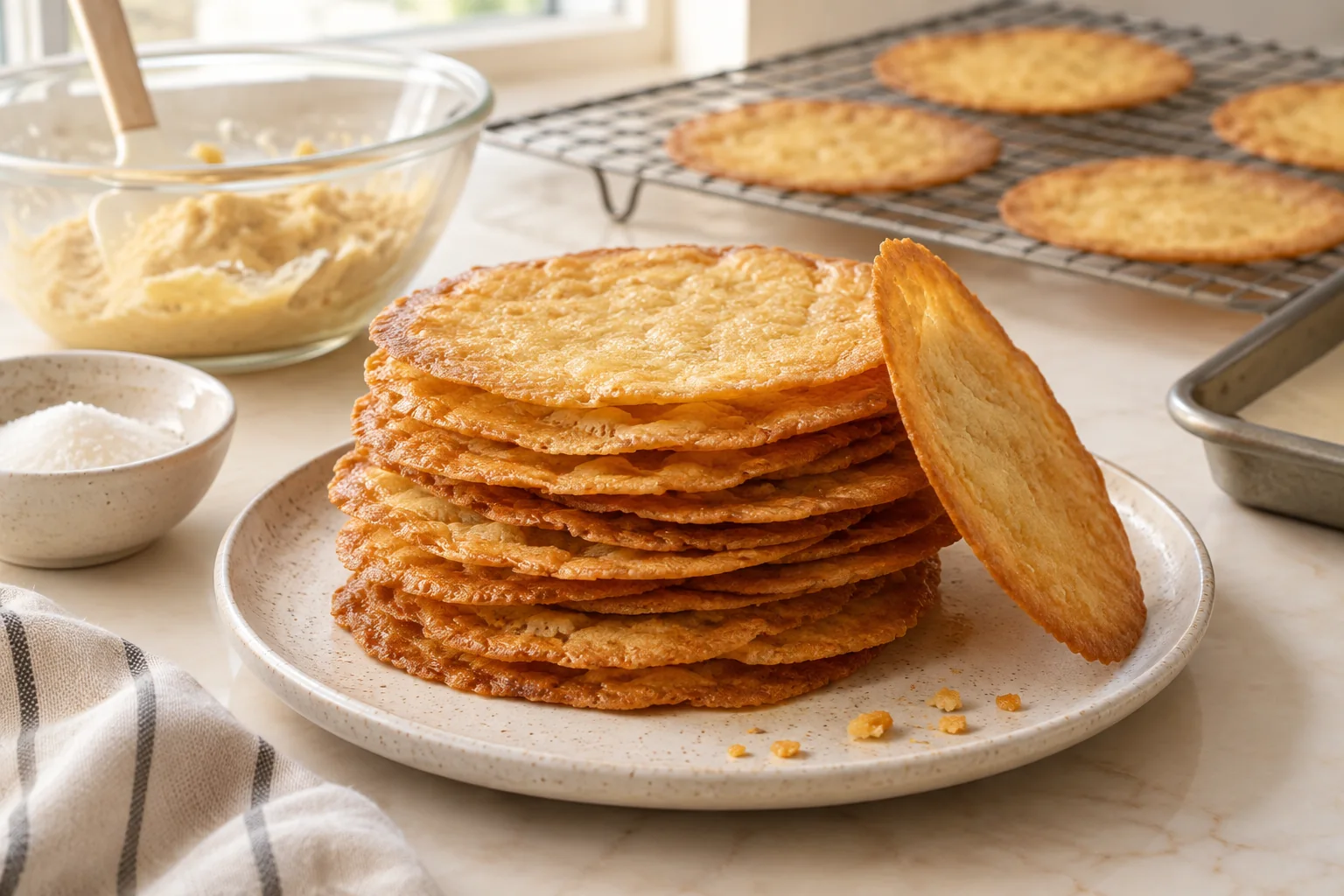
A thin, crispy cookie should snap cleanly or crunch lightly without tasting burned. Achieving that texture is more deliberate than pressing any cookie dough flat or leaving it in the oven until the edges turn dark. Sugar, butter, flour, liquid and heat affect how widely the dough spreads and how much moisture remains when it cools. The most reliable route is a tested crisp-cookie formula designed for that balance.
Crispy and thin are different goals
A thin cookie may still be chewy if its formula retains moisture, and a thick biscotti can be quite crisp. For a delicate crisp wafer, you need controlled spread and a finished bake that removes enough moisture without scorching the sugar.
Start with an appropriate recipe
Lace cookies, thin chocolate chip cookies, tuiles and wafer cookies have different mixing methods. Some are poured, others scooped, and some are spread with a spatula. Pick the style you want rather than expecting a puffy sugar cookie recipe to behave like a wafer.
Recipe to try: Classic Chocolate Chip Cookies. Use the stated butter texture, dough portions and bake time together to establish a consistent cookie baseline.

Sugar influences spread and texture
Sugar melts and dissolves during baking, contributing to spread, browning and crispness as it cools. Granulated and brown sugars behave differently, but total sugar quantity and the rest of the formula matter. More sugar isn't automatically better; an unbalanced dough can flow too far and burn.
Butter temperature matters
Melted butter can encourage spreading in certain cookie formulas, while properly creamed softened butter can support a different structure. Swapping melted for softened butter changes mixing and dough consistency. Choose the technique stated in a crisp-cookie recipe.
Flour quantity keeps spread in check
Too much flour can prevent the thin spread you want and create a dry, bready cookie. Too little can produce fragile puddles that merge. Accurate weight measurements help because thin cookies show small formula errors quickly.
Fat and flour must balance
A high fat-to-flour ratio may promote spreading, but it can also produce greasy cookies if poorly balanced. The goal is enough fat to yield a thin crisp texture while the structure remains intact. Don't just add melted butter to any dough.
Egg composition matters
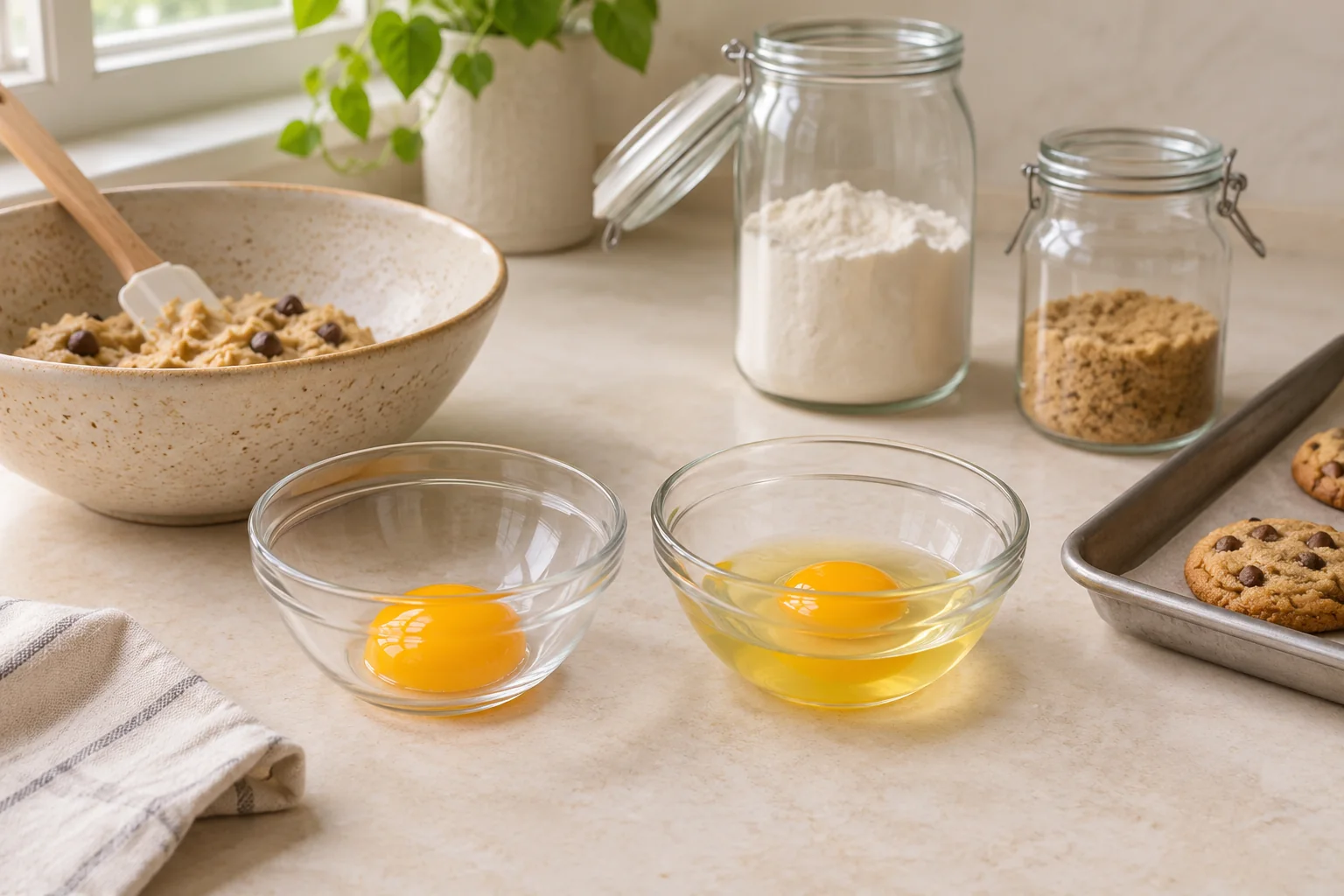
Egg whites contribute moisture and protein, while yolks supply fat and emulsifiers. Thin wafer-style cookies may use specific egg components for structure; other thin drop cookies use whole eggs. An untested replacement can turn a crisp wafer chewy or brittle.
Leavening may be minimal
Some thin cookies use little leavener because high lift isn't the goal. Other formulas include baking soda for browning and spread. Removing all baking powder or soda from a conventional dough without reformulation can create an odd texture.
Chilled dough may limit spreading
Cold butter-based dough often takes longer to spread in the oven. Some thin-cookie recipes therefore specify room-temperature dough or another handling stage. Others chill to control shape. Follow the particular method instead of skipping the chill automatically.
Small consistent portions
A tablespoon of dough can create a wide, thin disc depending on the recipe. Use the specified scoop size and leave generous room between portions. Oversized mounds can remain thick at the centre and may run together as they spread.
Baking sheets affect browning
Dark metal sheets may brown thin cookie bottoms quickly. A light-coloured pan with the recipe's liner often gives more control. An already hot sheet can make a fresh portion spread too rapidly before it reaches the intended oven temperature.
Spacing prevents joined cookies
Thin cookies often grow much wider than the initial dough balls. Leave the full distance recommended by the recipe. If two discs merge, they may still taste fine, but the shared edge can bake differently and become hard to separate neatly.
Why flattening isn't always needed
Some formulas spread sufficiently on their own, while others instruct gently pressing dough before baking. Forcing a wafer-thin disk out of stiff cookie dough may create cracked edges without producing the intended delicate texture.
Bake until properly dry and coloured
Crisp cookies often need an appropriately golden edge or surface and enough time for moisture to leave. They may still feel somewhat soft when first removed but firm as they cool. Don't extend the bake until deeply burnt simply to make them hard while hot.
Cooling can create the snap
As thin cookies cool, sugar and fat structures change and their final crisp texture becomes more apparent. Allow the method's rest, then move them to a rack or shaping form as directed. Tuiles may need to be curved while still flexible, before they fully harden.
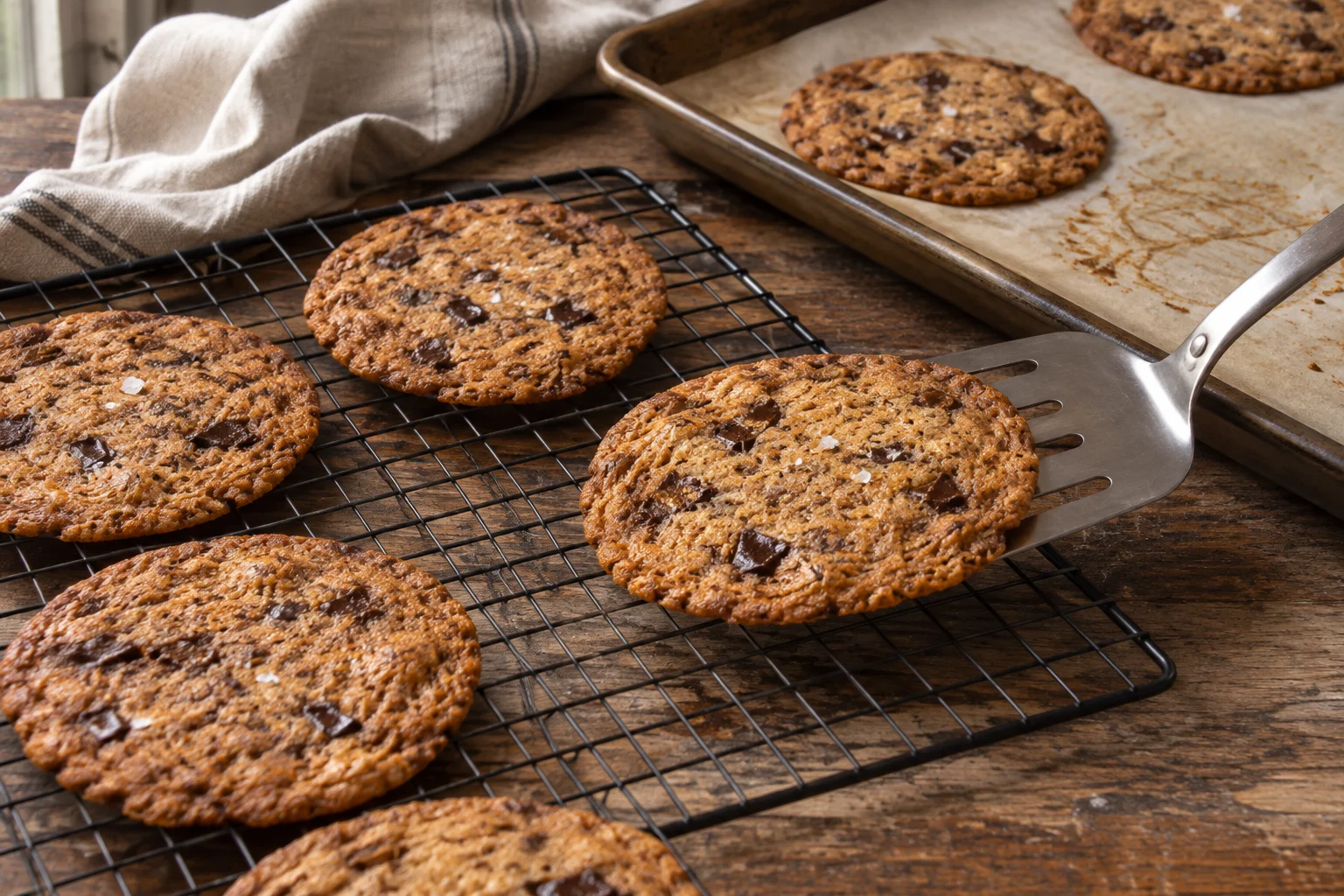
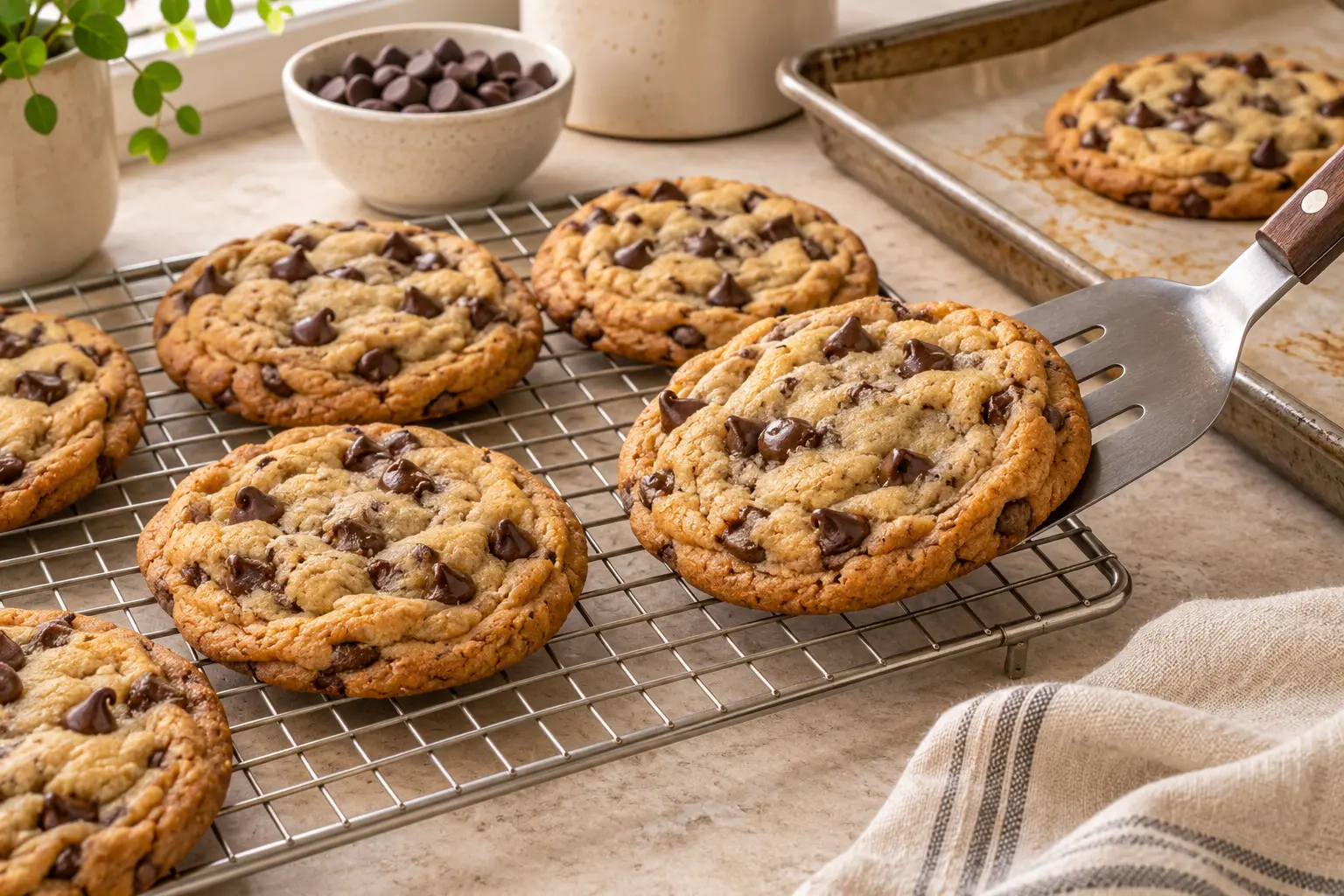
Recipe to try: Crispy Chocolate Chip Cookies. For a crisp cookie option, start with this formula and follow its baking and cooling cues. Thinness alone does not guarantee a crisp texture.
Humidity softens crisp cookies
Crisp cookies can absorb moisture from humid air and lose their snap. Cool fully and seal promptly in a suitable airtight container. Avoid storing them with moist brownies or very soft cookies that can transfer moisture into the crisp batch.
What if they're too hard?
Overbaking, too little moisture, excessive flour or inappropriate pan heat can make a cookie hard rather than pleasantly crisp. A quality crisp cookie breaks easily and tastes buttery or caramelized, not bitter. Check original bake cues and pan colour.
What if they stay chewy?
They may be underbaked for the chosen style, too thick, insufficiently cooled or exposed to humidity. The recipe's sugar and fat balance also matters. If the sheet is full of thick centres, review dough size before baking them longer.
What if they spread into one sheet?
Possible reasons include too much butter or sugar, too little flour, incorrect dough temperature and insufficient spacing. A single pan-sized cookie isn't always a failure of leavener. Return to the formula and change one variable at a time.
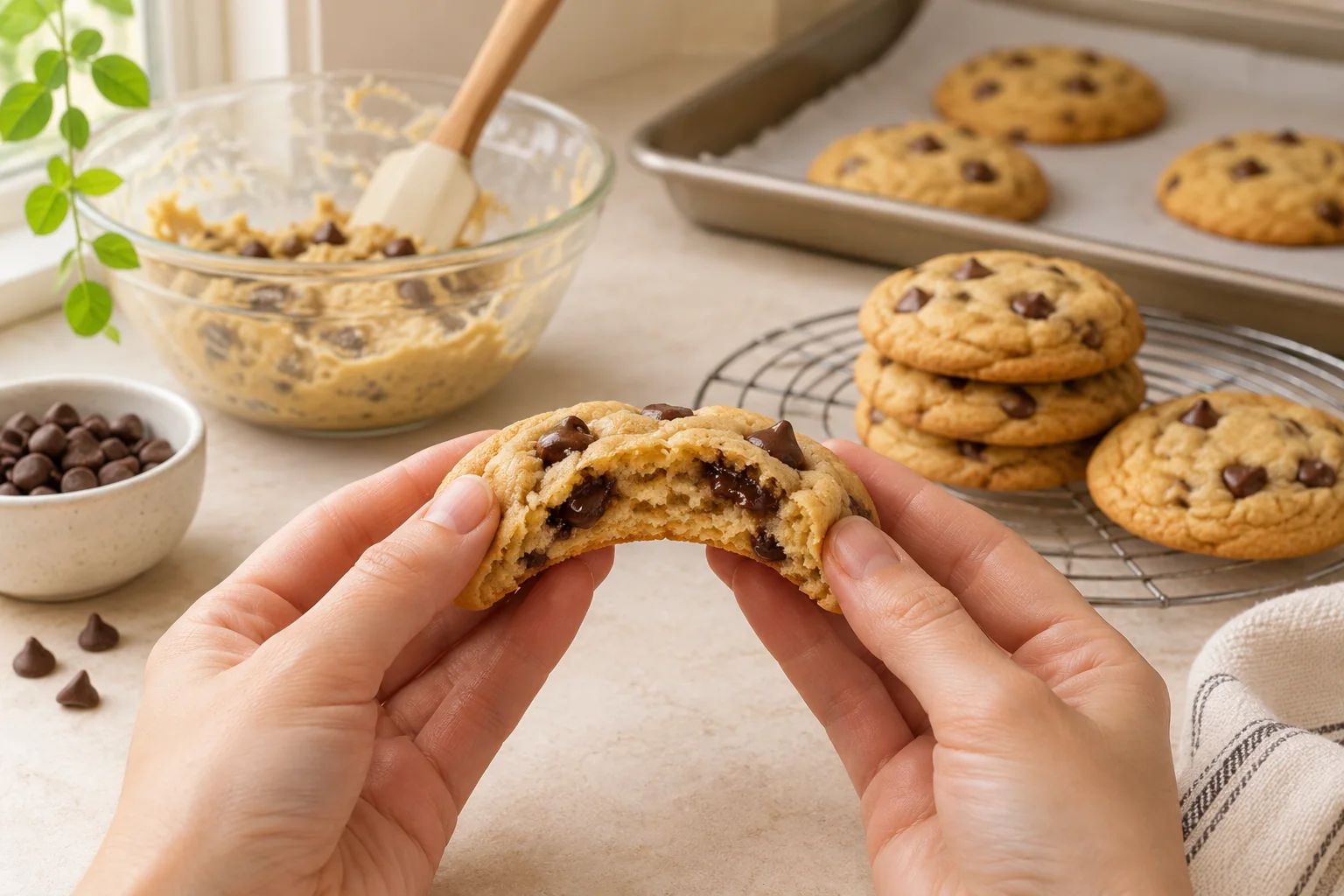
Recipe to try: Chewy Chocolate Chip Cookies. For a chewy cookie option, use this complete formula. Sugar, flour and cooling work together; changing only baking time is not the whole method.
Frequently asked questions
Do thin cookies need more baking soda? Not necessarily. Can I use melted butter? In recipes written for it. Is a dark pan better? It may burn thin edges. Why did my crispy cookies soften overnight? Humidity and storage are common causes.
Make the snap intentional
Use a formula meant to spread, portion small and evenly, provide space, bake until properly done and protect the finished cookies from moisture. Crispness is the product of a balanced recipe and controlled drying, not simply extra oven time.
IN PICTURES
From the baking notebook
FROM THE RECIPE BOX


