On this page
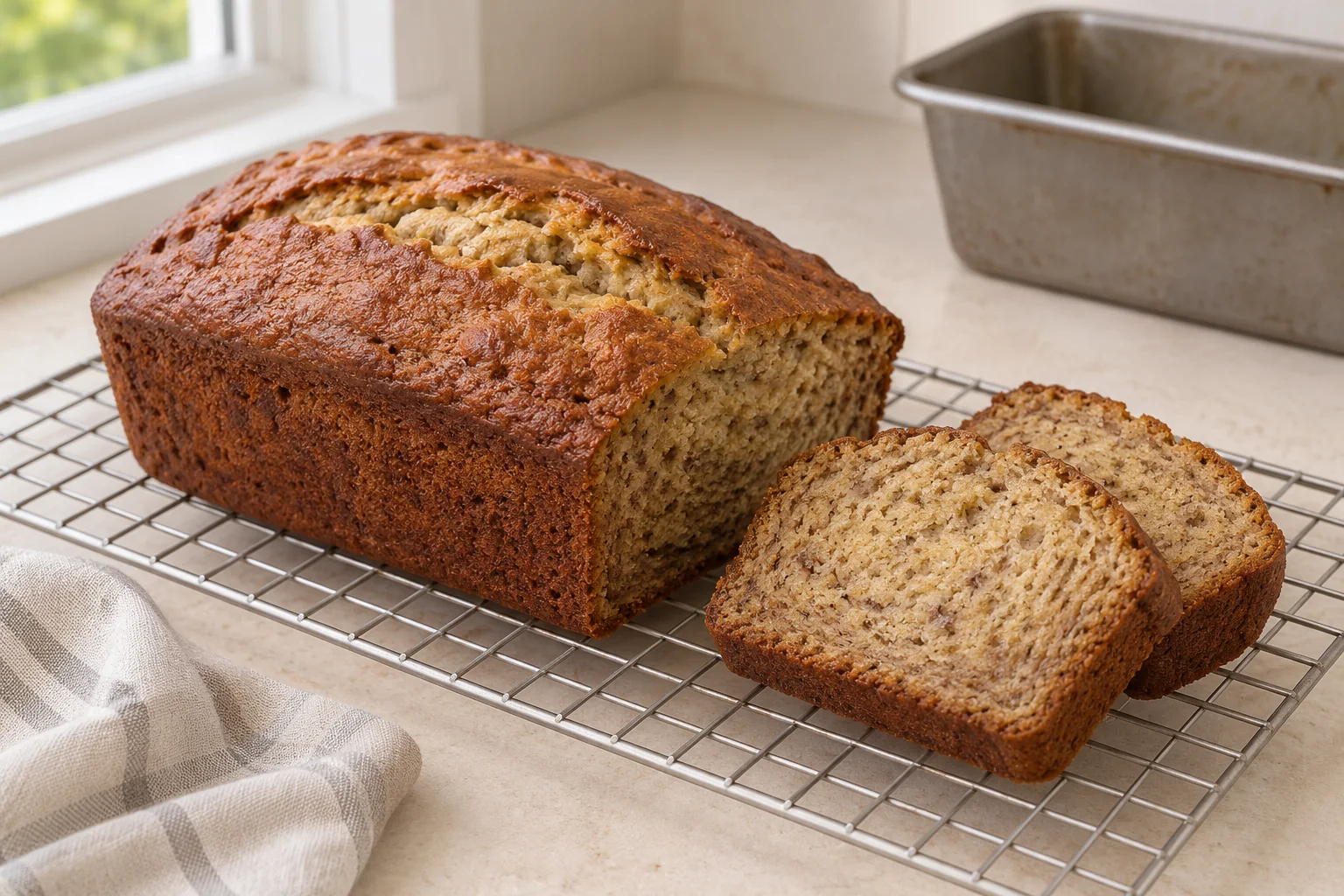
Banana bread is one of the trickiest quick breads to judge by appearance. The top can be richly browned and beautifully cracked while the centre remains wet and gummy. A toothpick may come out looking clean after passing between pieces of banana, only for the first slice to reveal a heavy, sticky stripe. Knowing when banana bread is done means checking its centre, not simply trusting the clock or the crust.
Why banana bread is difficult to judge
Banana bread contains mashed fruit, sugar and moisture that create a dense, tender crumb. The outside heats and browns sooner than the deepest part of the loaf, especially in a tall pan. Chocolate chips or fruit pieces can also make a skewer test misleading. A correctly baked loaf should have a set centre and a moist crumb, not a ribbon of raw batter.
Recipe to try: Classic Banana Bread. Weigh the banana and use the specified loaf pan. Extra fruit or a deeper pan can change the centre’s baking time.
The best clue: internal temperature
A digital thermometer can help you check the centre, especially when the surface is already brown. Use the temperature endpoint given for your recipe, alongside its crumb and tester cues. Pan depth, ingredients and gluten-free formulas can change the target.
How to insert the thermometer
Approach through the top centre of the loaf, aiming for the deepest part of the crumb rather than the crust, pan or a chocolate chip. Let the reading stabilize according to the thermometer's instructions.
Use the recipe's endpoint first
If your particular banana bread recipe specifies another tested internal temperature or a visual method, follow it. A dense, flourless or high-moisture loaf may have different characteristics from a conventional quick bread. Do not substitute a generic thermometer number for a purpose-built formula's instructions.
What does the top look like when done?
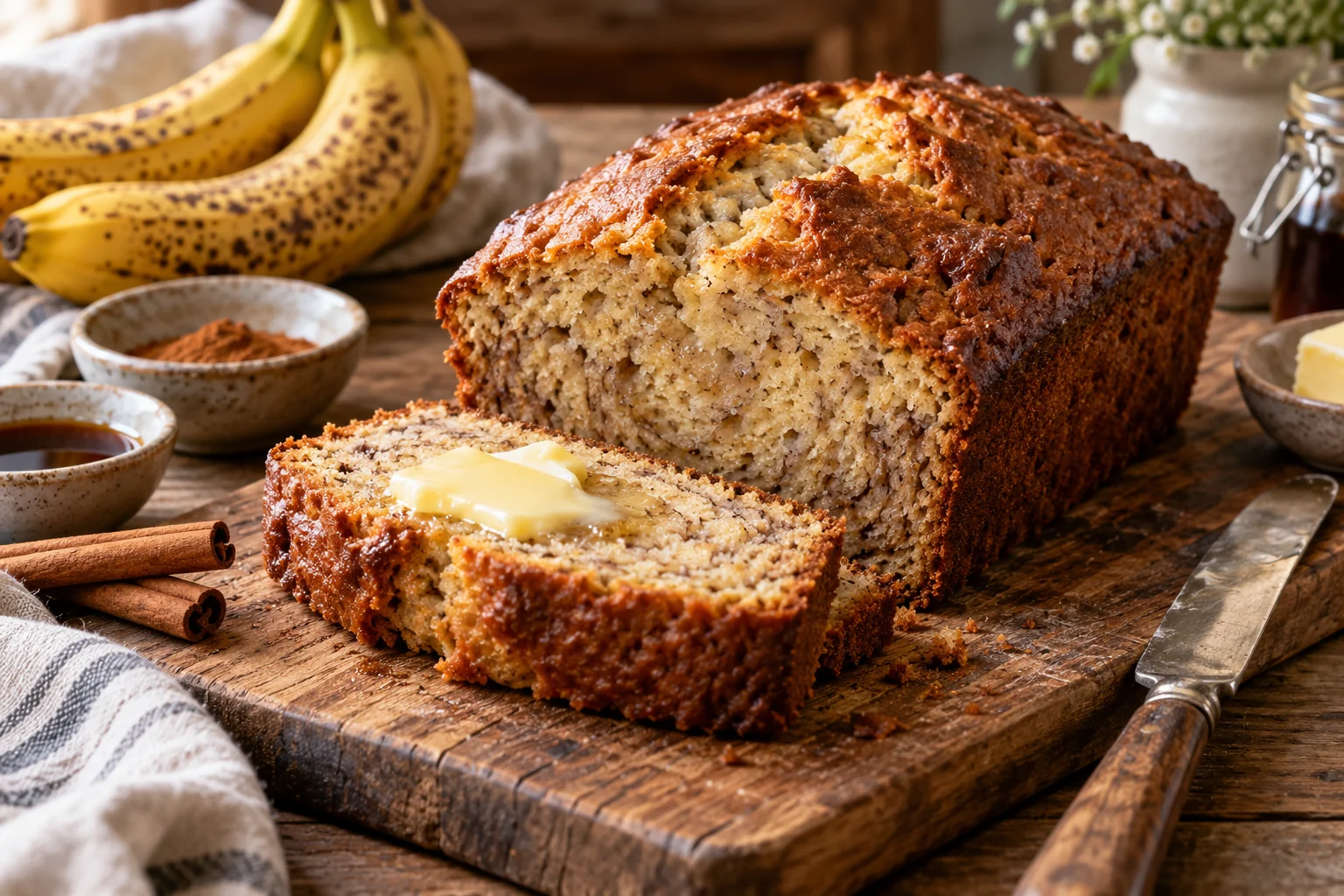
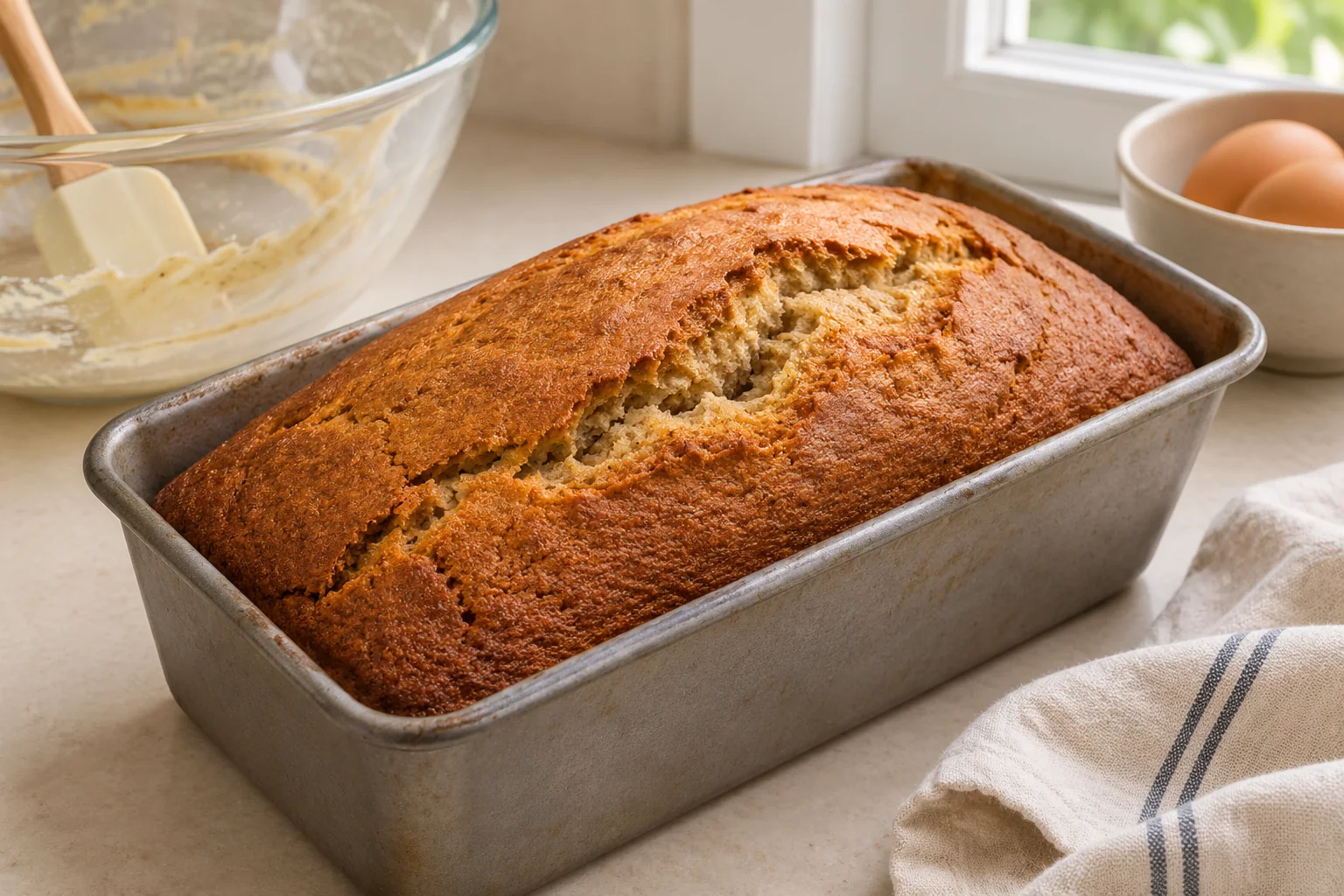
The top is often golden to deep brown with a long crack along the centre. That crack is a natural consequence of the surface setting while the centre continues expanding. However, a dark crust doesn't prove the middle is ready, and some recipes develop a lighter top depending on sugar, pan and oven temperature.
What does the centre feel like?
The loaf should feel set rather than sloshy or sharply jiggly at its centre. A gentle press may show some spring, but the surface can also be firm while the centre remains underbaked. Combine the tactile check with an internal temperature or a properly placed knife test for confidence.
The toothpick test
Insert a wooden skewer into the thickest central portion. Raw, glossy batter indicates more baking is needed; moist cooked crumbs can be acceptable when the recipe says so. Unfortunately, a tester can slide between banana pieces or come out deceptively clean, so use more than one cue for a particularly deep loaf.
Why a thin knife may be more revealing
Insert into the centre and check more than one location if needed. Avoid confusing a melted chocolate streak or mashed banana pocket with the surrounding crumb.
What about a long skewer?
A long wooden skewer can reach the middle of a deep loaf when an ordinary toothpick cannot. Push it toward the centre without touching the pan bottom. If you consistently see wet batter, return the loaf to the oven and continue testing according to the recipe.
How baking time varies by pan size
A loaf baked in a nine-by-five-inch pan can have a different depth and time than the same total batter spread into a longer pan or divided into mini loaves. A recipe's pan size is part of its formula. Pouring everything into a smaller pan can leave an overbrowned outside and a raw middle.
Metal versus glass loaf pans
Pan materials transfer and retain heat differently. Some glass pans continue holding substantial heat after removal, while a light metal pan may bake differently at the same oven setting. Choose the pan recommended in the recipe, and use a tested adjustment when substituting materials.
Why oven temperature matters
An oven that runs hotter than its display can brown the outside before the centre sets; an oven that runs too cool may extend baking. Ensure the oven has actually reached its intended heat before baking.
What if the top is browning too fast?
Some banana bread recipes recommend placing a loose foil tent over the top toward the end of baking to limit additional browning while the centre finishes. Use the particular recipe's timing and method. Avoid sealing the pan tightly, which can trap steam and affect the crust.
What if the middle is still raw after the stated time?
Continue baking in the increments specified by your recipe and recheck the centre. Resist turning the oven dramatically hotter; that can deepen the outside colour without helping the middle as evenly. Confirm the actual temperature and whether the pan is deeper than the formula expected.
How to tell moist from gummy
A moist banana bread has a tender crumb that holds together when sliced. A gummy bread may leave a heavy, almost translucent or paste-like strip, often near the bottom or middle. Raw batter appears shiny and wet. Cooling can firm a correctly baked loaf, but it cannot reliably convert an underbaked centre into a well-structured crumb.
Why too much banana causes problems
Mashed banana provides moisture, flavour and natural sugar. Adding several extra bananas can overwhelm the recipe's flour and egg structure, leaving the centre wet even when the top seems finished. Measure mashed banana by grams or the specified volume, not by an arbitrary fruit count.
Why baking powder and soda affect doneness
Excess chemical leavening may produce a rapid rise followed by collapse, leaving a compressed centre. Too little may give a dense loaf that takes time to set. Check exact measurements and avoid adding extra leavener to make a taller banana bread.
Why you shouldn't overmix
For many quick breads, excessive mixing after flour is added can develop extra gluten and produce a tougher or denser crumb. However, too little mixing may leave dry pockets or poorly distributed ingredients. Follow the recipe's stated method, usually stopping once ingredients are just combined.
The role of chocolate chips and nuts
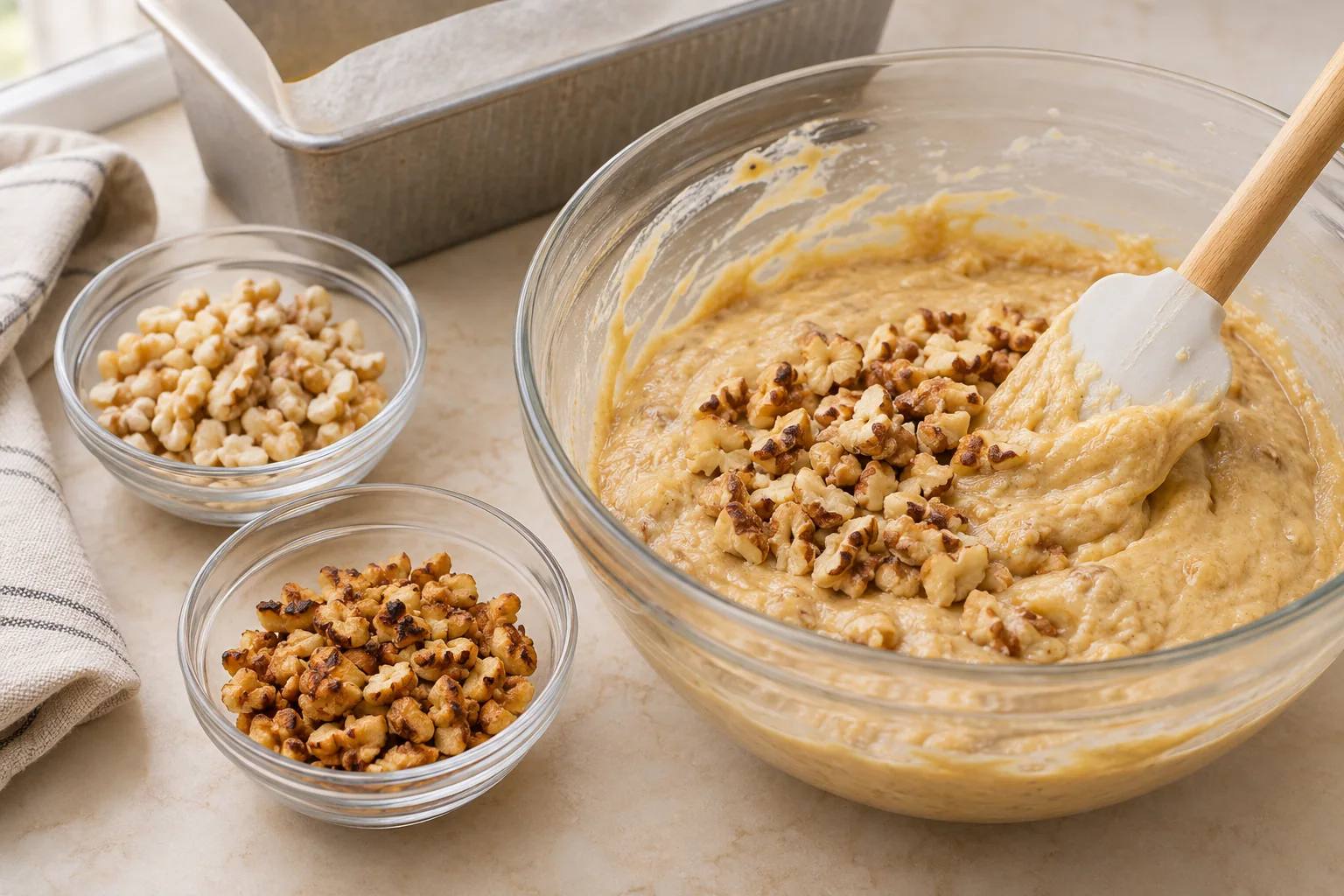
Add-ins can make doneness checks harder. Melted chocolate can coat a knife, and chopped nuts create irregular pockets. Weigh inclusions and fold them in according to the recipe. Probe the actual crumb, not a large chocolate cluster, when checking the centre.
Does a cracked top mean banana bread is done?
No. A crack can appear well before the centre is fully baked. It often reflects the surface setting as the middle continues to expand. Use it as one sign that the loaf is progressing, not as the final endpoint.
Should banana bread cool in the pan?
Many recipes call for a brief rest in the pan before transferring to a rack. That allows the loaf to firm enough for handling, while removing it later reduces trapped steam and soggy sides. Cooling times vary, so follow the developer's instructions rather than leaving the bread in a hot pan all afternoon.
When should you slice it?
A warm slice may be delicious but can crumble or seem stickier than a fully cooled slice. Some dense banana breads cut more neatly after adequate cooling. For the most accurate assessment of a new recipe, allow it to reach the recommended serving temperature before deciding whether its crumb is too wet.
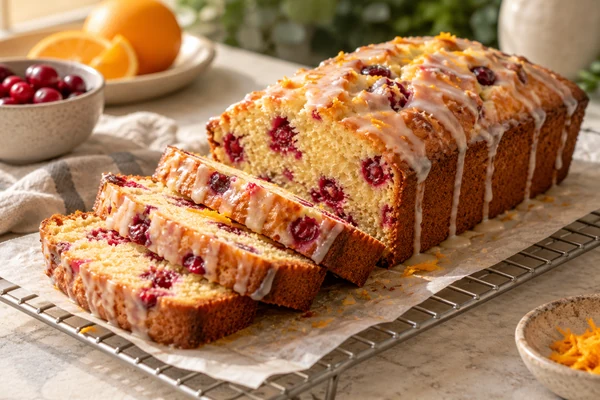
Recipe to try: Cranberry Orange Bread. The loaf pairs cranberries with orange zest. Use the specified cranberry type and loaf pan for its batter.
Can you put underbaked banana bread back in the oven?
If it has just been removed and is still hot, a recipe may allow additional baking. But once a loaf has cooled completely, reheating rarely restores the intended structure. Do not serve raw batter; uncooked flour and eggs can carry food-safety risks. If the centre remains clearly underbaked, a correctly baked new loaf is the safer choice.
How to prevent the next gummy loaf
Start with measured ripe bananas, the stated pan size and a fully preheated oven. Check the batter's leavener and liquid quantities; bake for the recipe's recommended range, then test the actual centre. Record the final time and temperature for your oven and pan so the next loaf is easier to judge.
Recipe to try: Pumpkin Bread. Pumpkin bread offers another moist loaf to compare. Follow its measured purée, leavening and pan instructions.

Frequently asked questions
Is banana bread done when the toothpick is clean? Usually that's helpful, but check the centre and use a thermometer for a deep loaf. Can it be moist and fully baked? Yes. Why is the top brown while the middle is raw? Pan depth, oven temperature or underbaking may be responsible. What internal temperature should I use? Many conventional quick breads fall around 200–205°F, subject to recipe guidance.
A dependable final check
When your banana bread approaches its stated bake time, assess the centre with a properly placed thermometer and, if useful, a knife or skewer. Look for a set crumb without raw batter, use the correct pan and let the loaf cool as instructed. Good banana bread is moist because the recipe is balanced, not because its middle was left uncooked.
IN PICTURES
From the baking notebook
FROM THE RECIPE BOX


