On this page
Few breakfast disappointments are as familiar as a beautiful golden waffle turning soft while the rest of the batch cooks. A crisp waffle fresh from the iron can lose its texture when stacked on a plate, sealed under a lid or left waiting beneath syrup. The good news is that feeding a group doesn't have to mean serving soggy waffles.
To keep waffles crispy for a crowd, you need to control moisture, give steam somewhere to escape and plan a sensible serving sequence. The recipe matters, but so do your waffle maker, the way you cool each waffle and how long you hold finished batches. Here is a practical guide for family brunches, holiday breakfasts and a waffle bar with guests choosing their own toppings.
Why Waffles Turn Soft After Cooking
A waffle's surface becomes crisp as moisture evaporates and the outer batter browns against the hot plates of a waffle maker. When a waffle is removed, steam continues to escape from the warm interior. If that steam becomes trapped against the crust, the exterior absorbs moisture and softens.
Stacking hot waffles, covering them tightly or placing them flat on a plate can all trap steam. Even a perfectly cooked waffle can lose its crunch in a few minutes when held the wrong way.
Start with a Recipe Designed for Crisp Waffles
If you prefer a vegetable-based variation, our sweet potato waffles is another waffle formula to explore. Follow that recipe's proportions and cooking cues, then apply the cooling-rack and serving practices described here.
Some waffles are meant to be tender and cake-like, while others have a distinctly crisp shell. A recipe developed for crisp waffles may use a particular flour, fat, sugar, leavening or egg technique to achieve that structure. Select the style you want before you turn on the machine.
Do not randomly add more oil, cornstarch or sugar to an unrelated batter and assume that will improve crunch. Those ingredients change texture, browning and how batter behaves in the iron. A tested crispy-waffle recipe is the most reliable foundation.
1. Preheat the Waffle Maker Fully
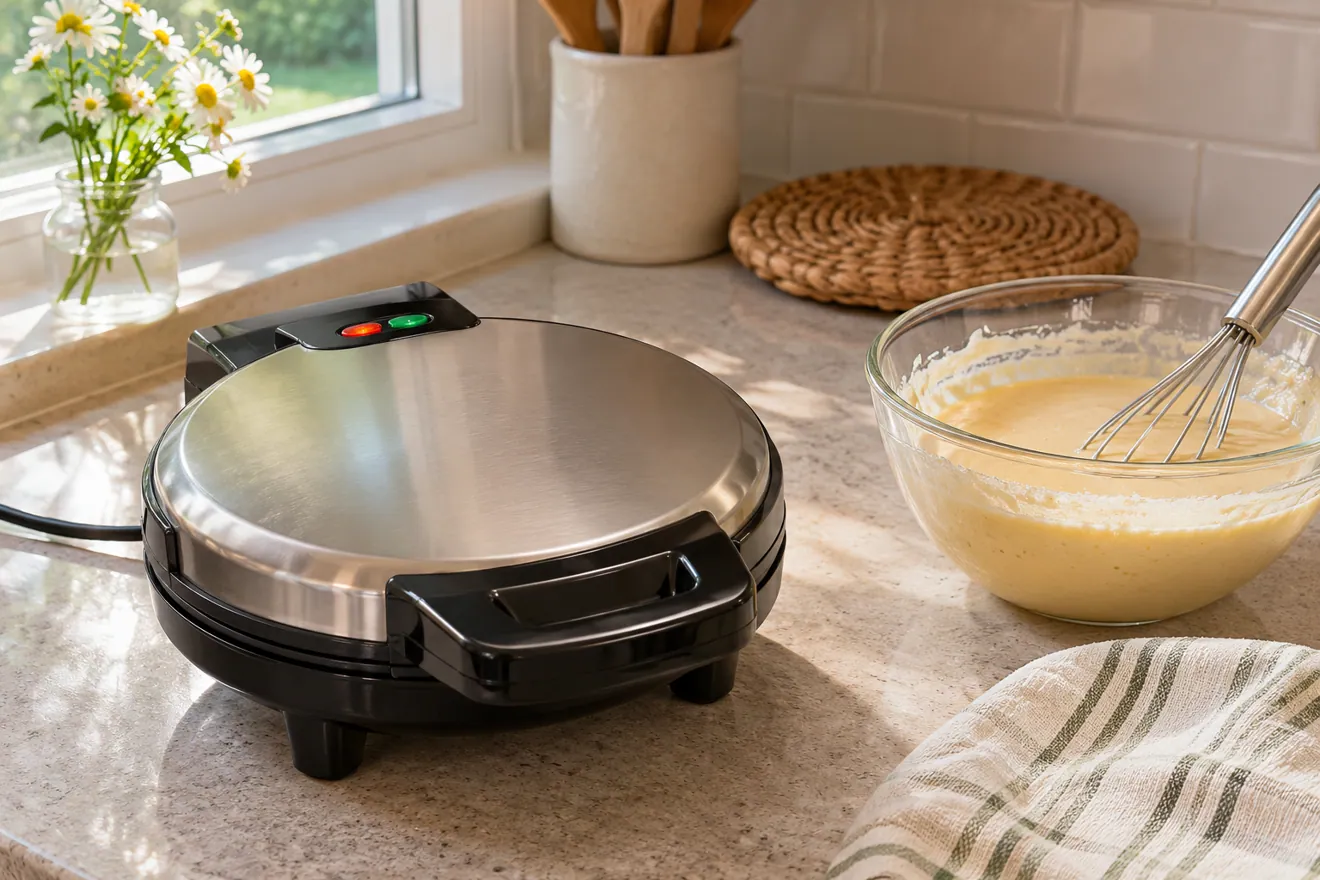
Place the waffle maker on a stable heat-safe surface with enough clearance around it. Allow it to reach the temperature recommended by the manufacturer and recipe. Pouring batter before the plates are hot can affect how quickly the exterior sets and browns.
Remember that the readiness indicator may refer to the machine's temperature rather than the waffle's doneness. Follow the appliance instructions and the recipe's cues for each batch.
2. Use the Correct Amount of Batter
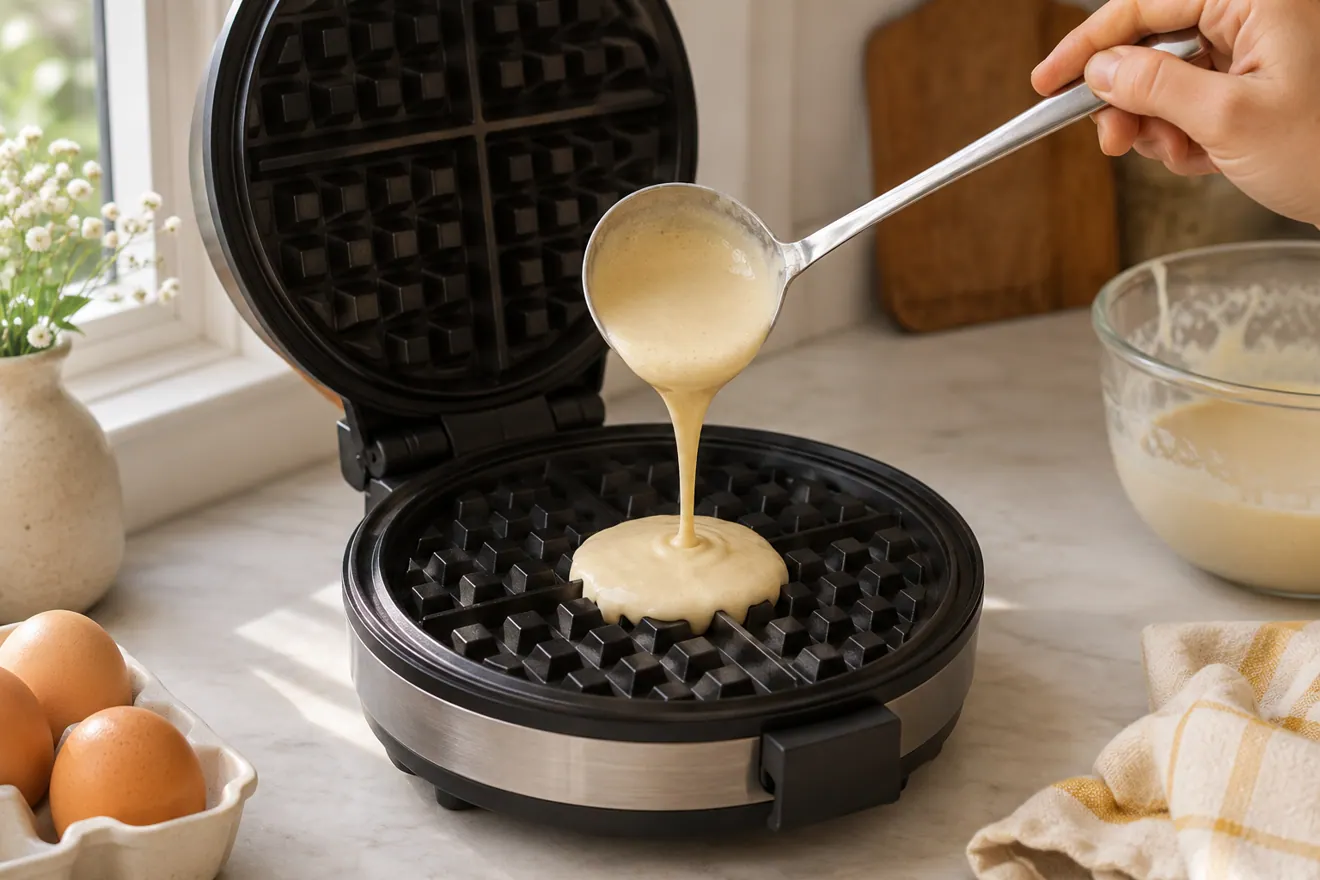
Too little batter may produce a thin waffle that dries out; too much can overflow and create a thick centre that takes longer to cook. Use the measured amount suggested for your waffle maker's plate size.
Belgian-style deep-pocket waffle irons and thinner classic waffle irons produce different results. A batter designed for one may not behave identically in the other.
3. Mix the Batter Exactly as Directed
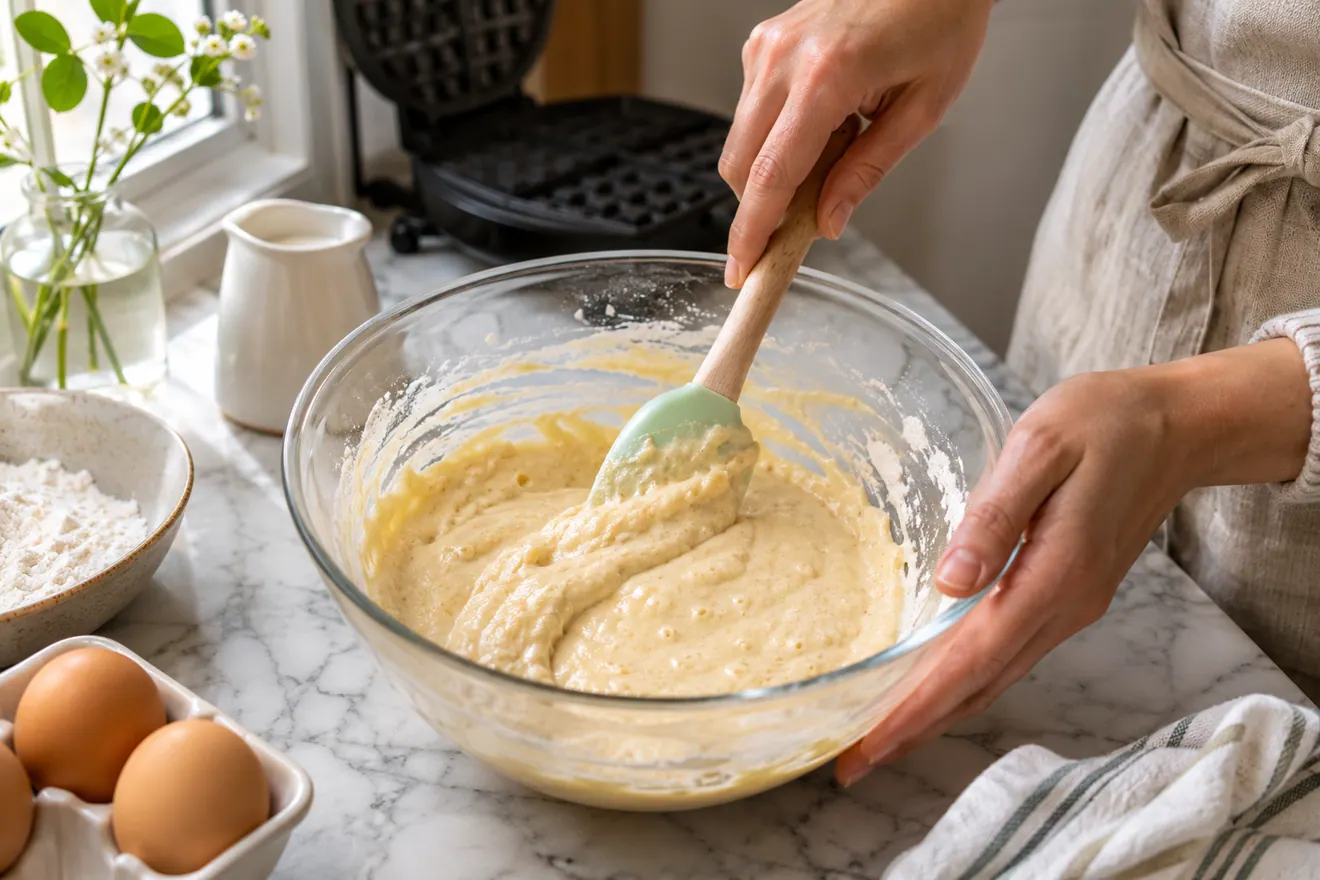
Some waffle recipes ask you to whisk wet and dry ingredients separately and combine gently. Others use whipped egg whites, yeast fermentation or a prepared mix with its own instructions. Changing the mixing method can alter both lift and crispness.
When a recipe asks you to fold in egg whites, do so gently enough to preserve air. When it asks for a batter rest, allow the stated time. Don't keep stirring until every tiny lump disappears if the recipe cautions against overmixing.
4. Give the Waffle Time to Brown
A waffle may look golden before excess surface moisture has evaporated. Follow the cooking cues in the recipe and the instructions for your waffle iron. Resist opening the machine prematurely; doing so can tear the waffle or interrupt cooking.
Many machines release steam during cooking, but the amount and timing vary. Use visual colour, the machine's design and the recipe together rather than relying on a universal number of seconds.
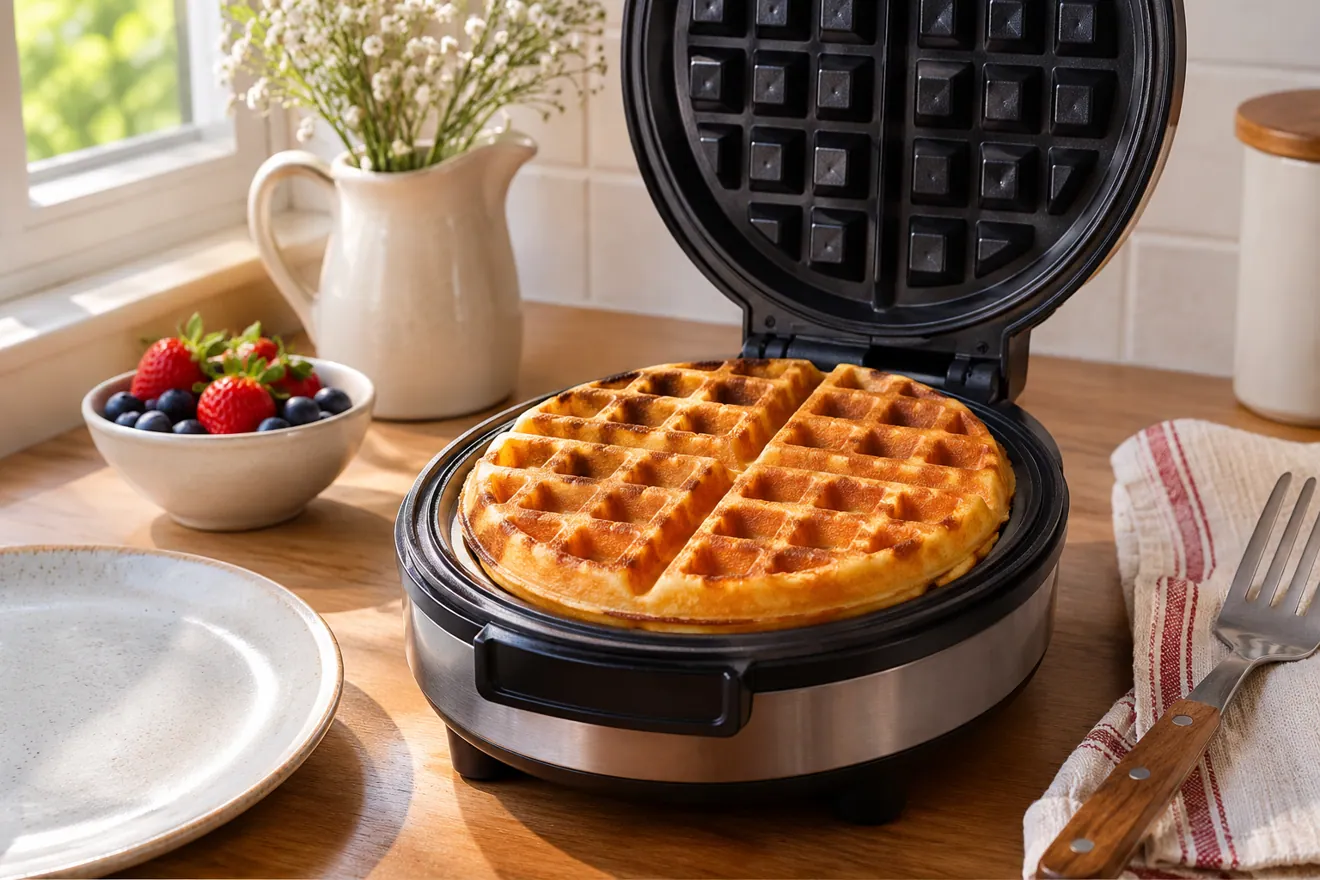
5. Move Finished Waffles to a Wire Rack
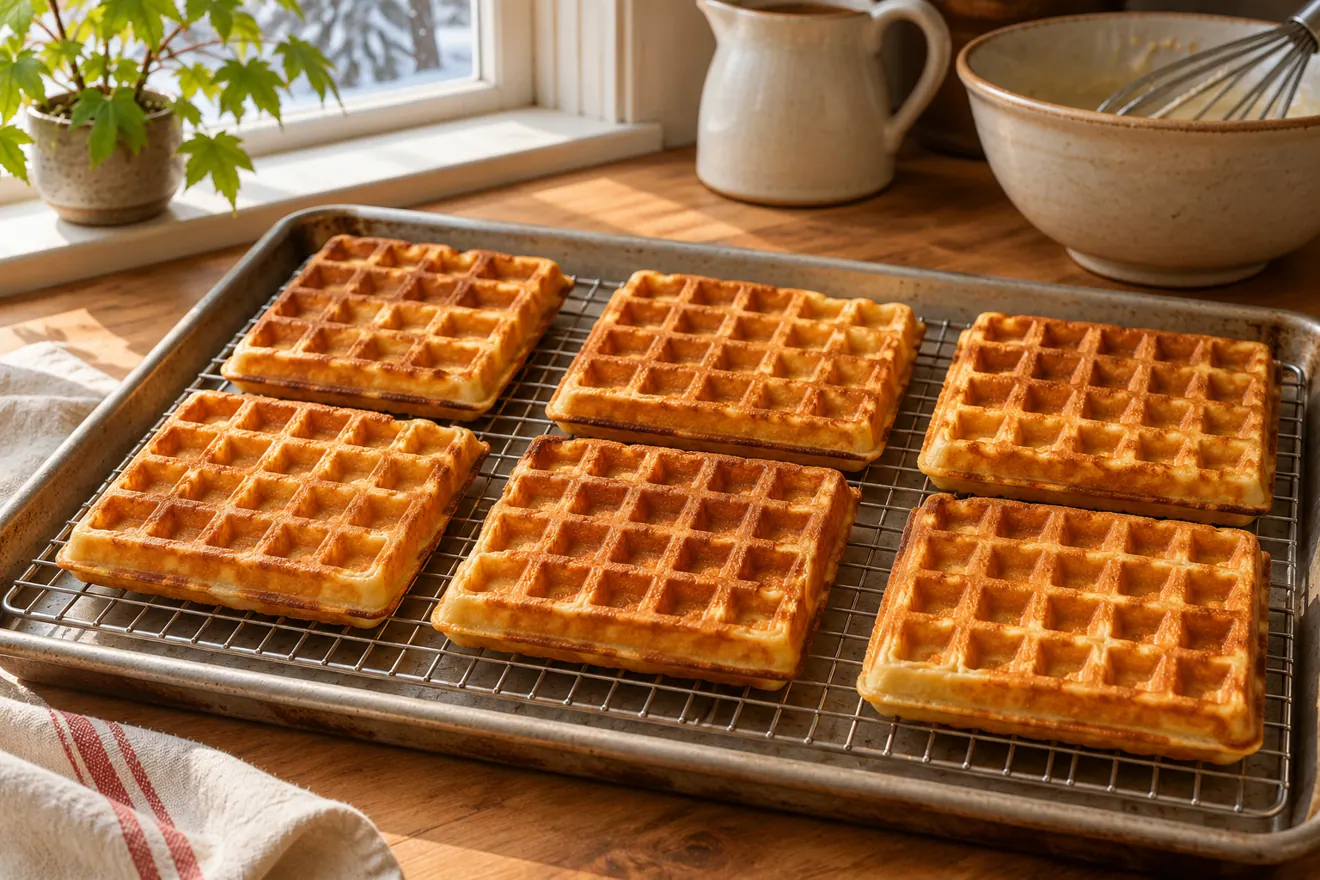
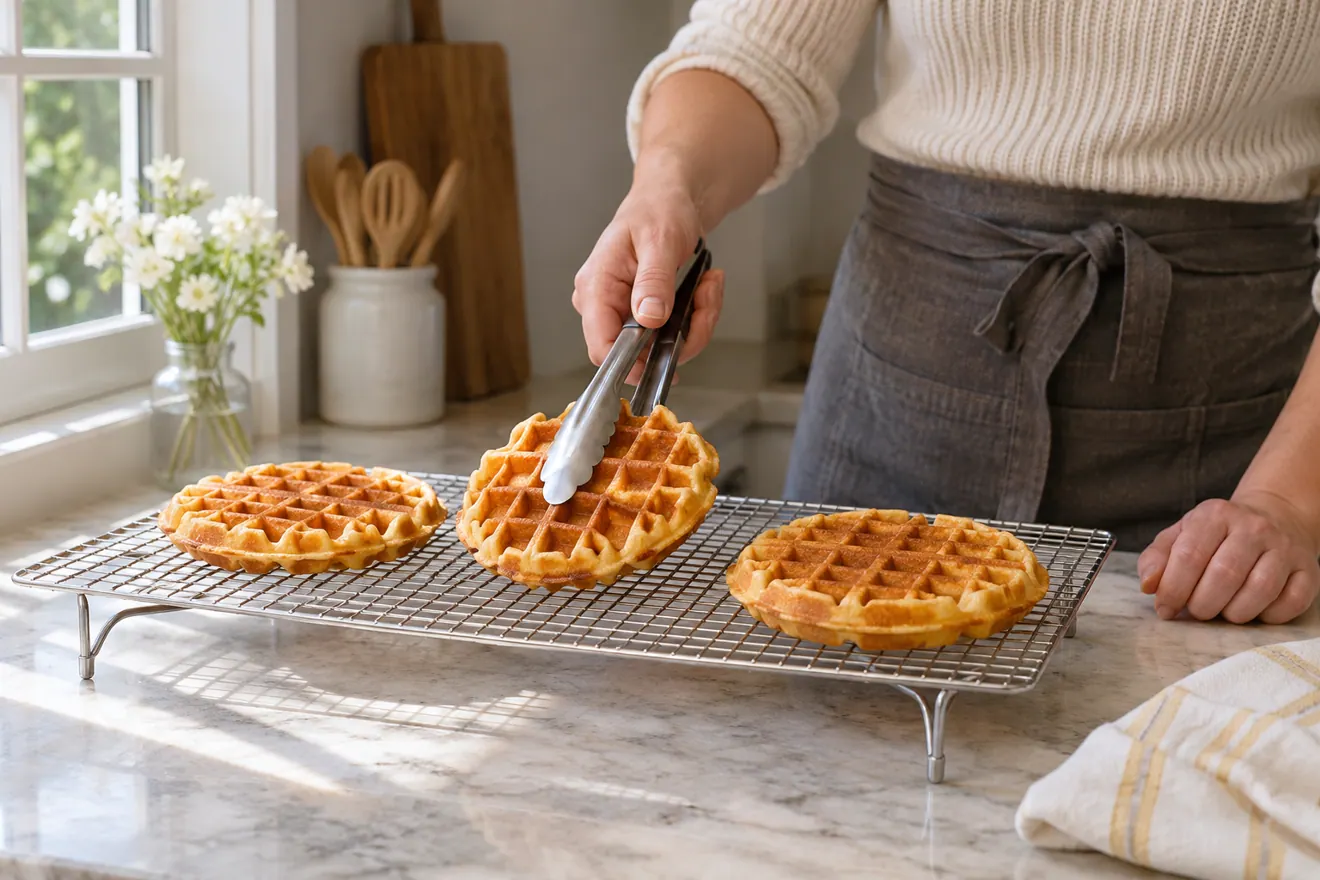
Instead of stacking waffles straight onto a plate, transfer them carefully to a wire cooling rack. Air can circulate beneath them, allowing steam to escape without condensing against the underside.
Work carefully because waffles and waffle irons are very hot. Use suitable utensils and keep the rack away from children. A brief rest can help the crust become more distinct as the surface releases moisture.
6. Avoid Stacking Hot Waffles
A stack looks attractive in photographs, but it is one of the fastest ways to trap steam between freshly cooked pieces. If you want a beautiful stack on the serving table, assemble it immediately before guests take their portions rather than using the stack as the holding method.
For a large group, keep finished waffles separated on racks or trays in the short-term holding arrangement recommended by your recipe.
7. Use a Short Oven Hold When the Recipe Supports It
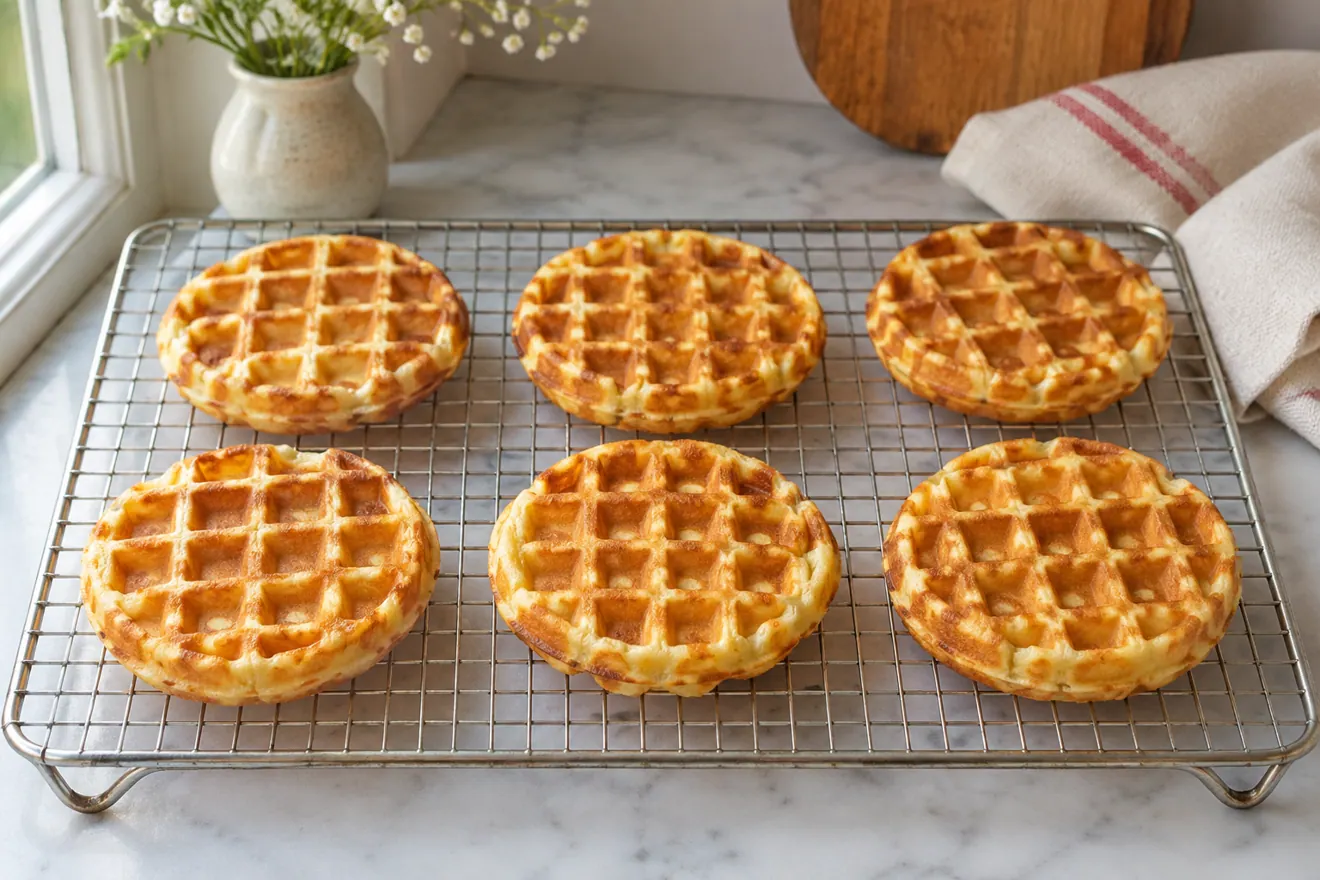
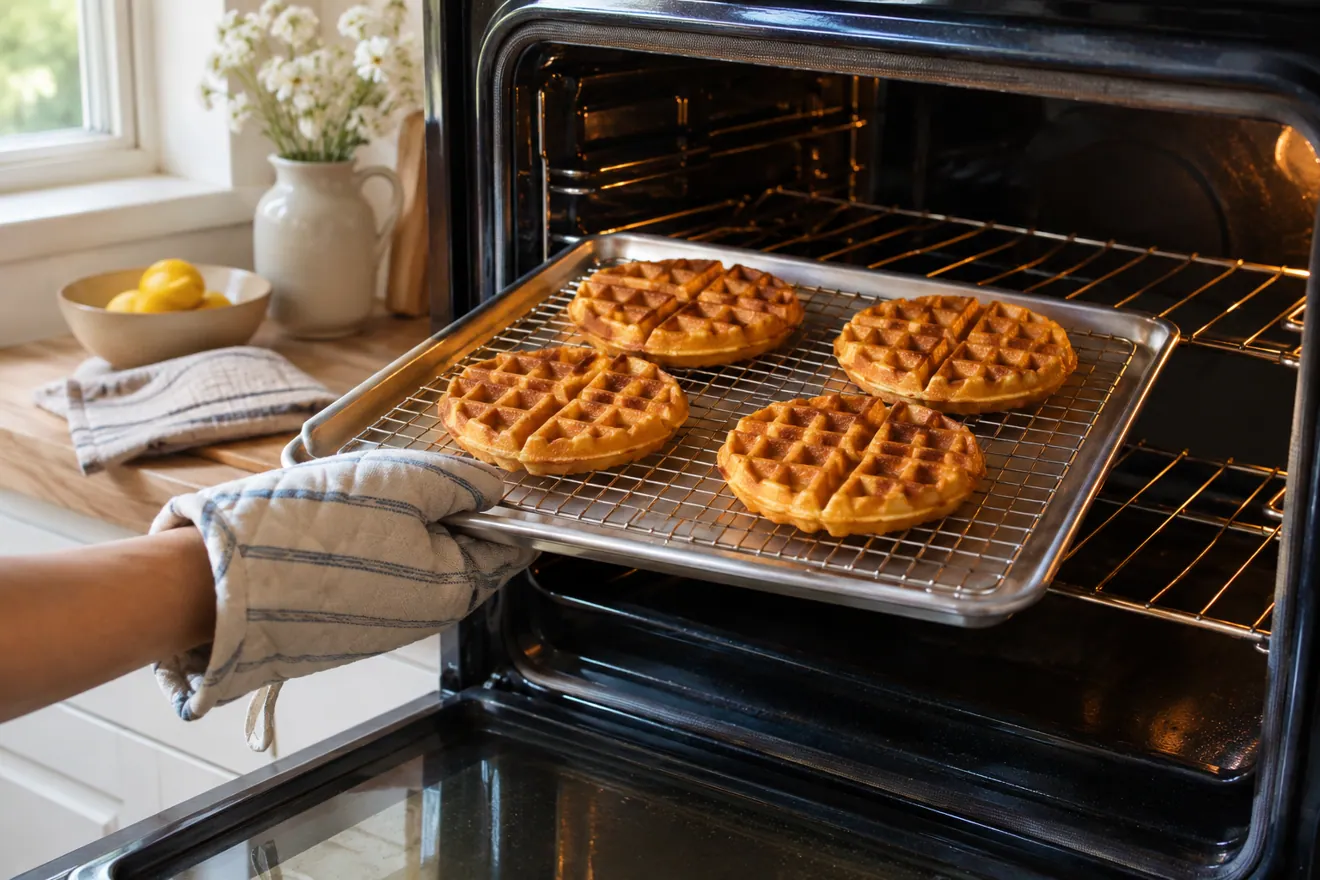
Some waffle recipes recommend keeping finished waffles warm and crisp on a rack set over a baking sheet in a low oven. That setup allows more air movement than placing waffles directly onto a covered plate.
Use the specific recipe's oven temperature and holding time, and consider safe hot-holding guidance. Do not assume a low oven can hold waffles indefinitely; too much time can dry the interior and toughen the crust.
8. Keep Waffles in a Single Layer
Whether on a rack or in a recipe-approved warm oven, a single layer helps steam escape. If your rack cannot accommodate the full batch, cook and serve in waves or use additional suitable racks, provided the oven can safely accommodate them.
A crowded oven doesn't necessarily improve consistency. Allow room for air circulation and avoid placing racks where they touch heating elements.
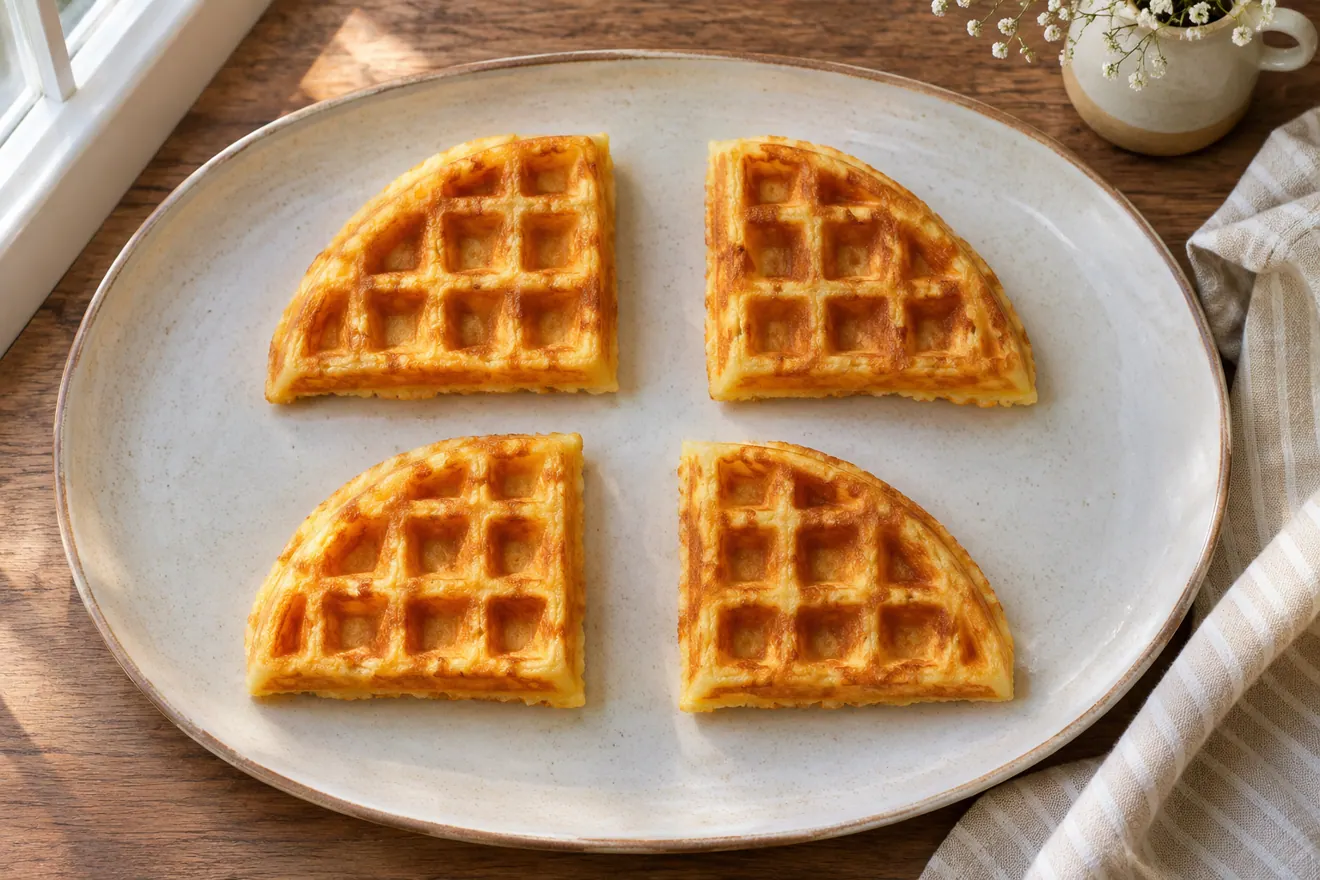
9. Don't Add Syrup Until Serving
Maple syrup, fruit compote, whipped cream and yogurt all add moisture to the waffle's surface. Topping a waffle before the guest is ready to eat it softens the crust. Serve sauces and toppings in separate bowls or small jugs.
Keep perishable toppings cold until required. Let guests choose their own amount so waffles stay crisp longer and the plate doesn't become overly sweet.
A small chilled Greek Yogurt Parfait can be served alongside waffles for guests who prefer yogurt to syrup.
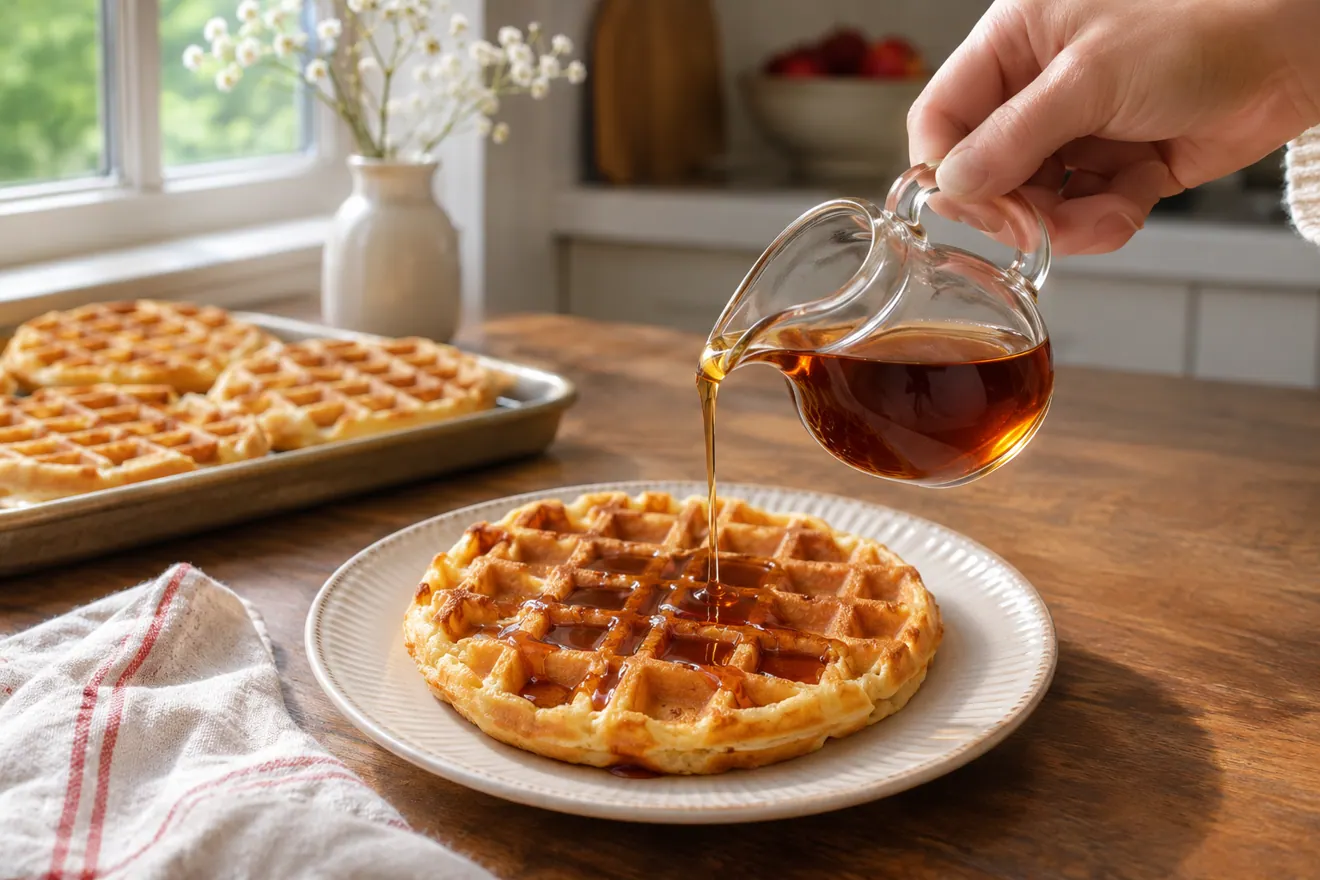
10. Plan the Cooking Order
Know how many waffles your machine makes per cycle and how long one batch takes under the recipe. If you have one single-waffle iron and twelve guests, some holding or phased serving will be necessary.
For a large crowd, consider making the main savoury dish first and then cooking waffles shortly before eating. If a second person can manage fruit, drinks and plates, the waffle cook can focus on the machine safely.
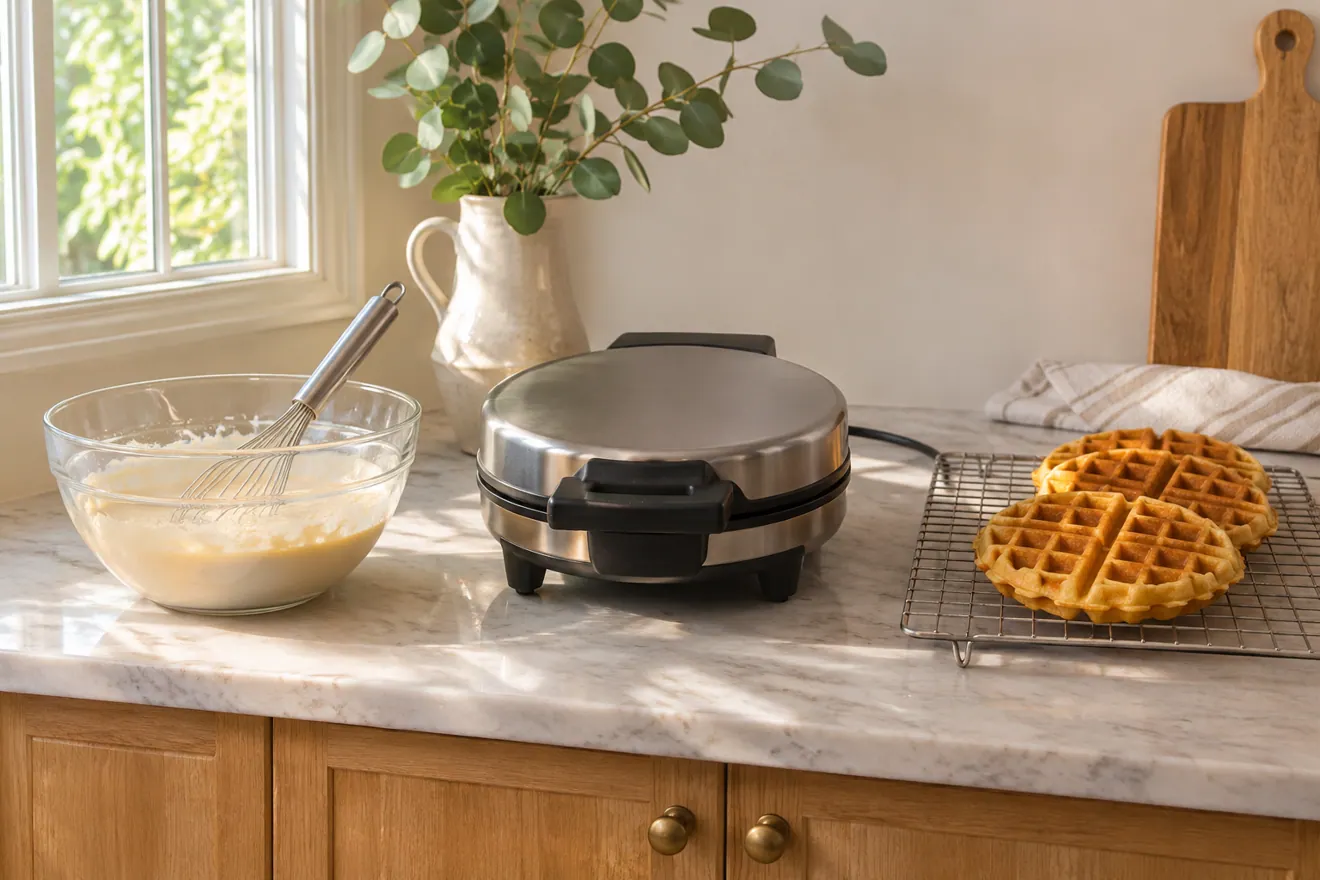
11. Consider a Second Waffle Maker
Two machines can reduce the wait at a big gathering, but only if the electrical setup supports them. Check appliance power requirements, kitchen circuits and safe countertop spacing rather than using unsafe extension cords.
If you don't have another machine, an organized single-iron workflow may be more practical than buying equipment for one party.
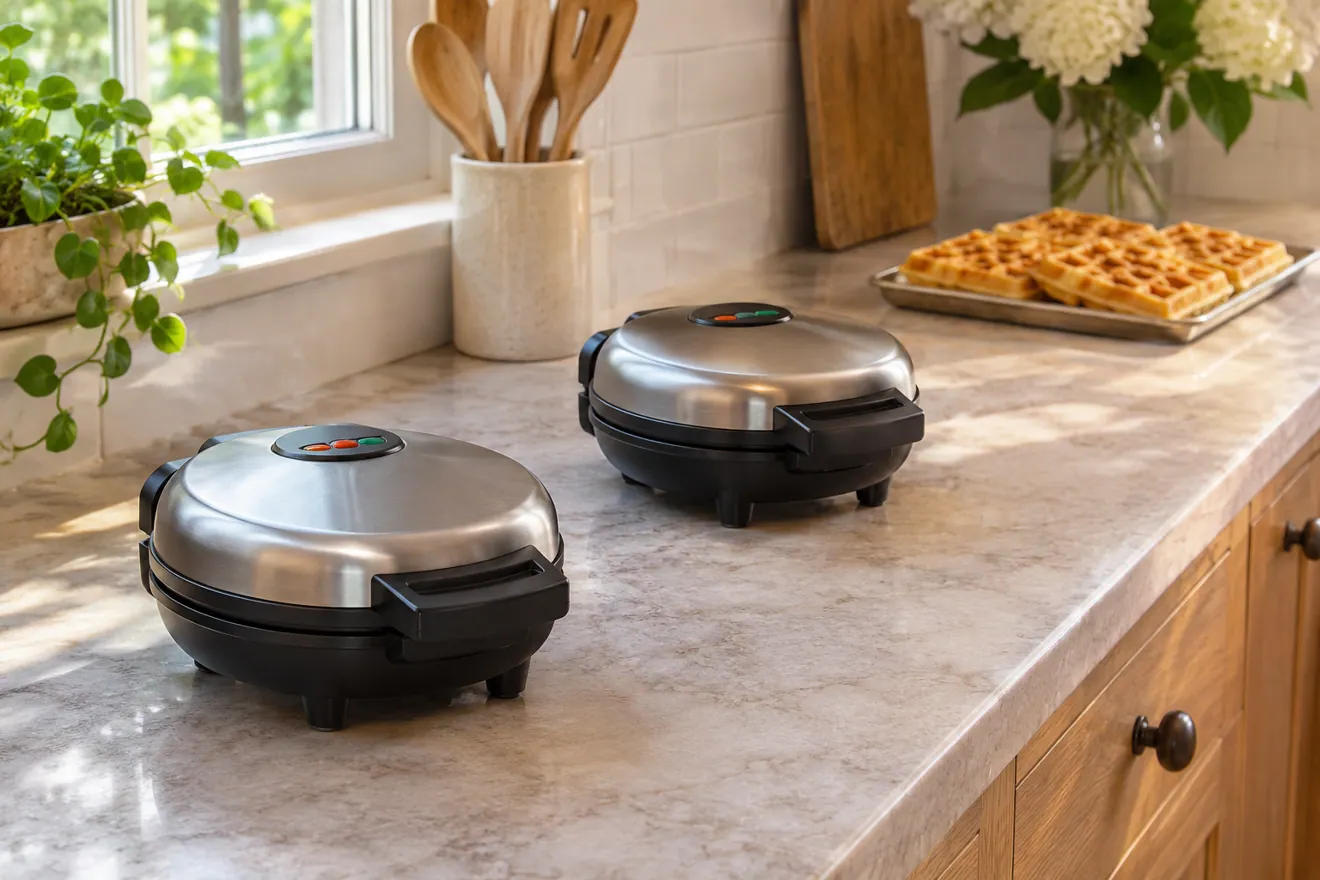
12. Make a Waffle Bar Instead of Plating Everything
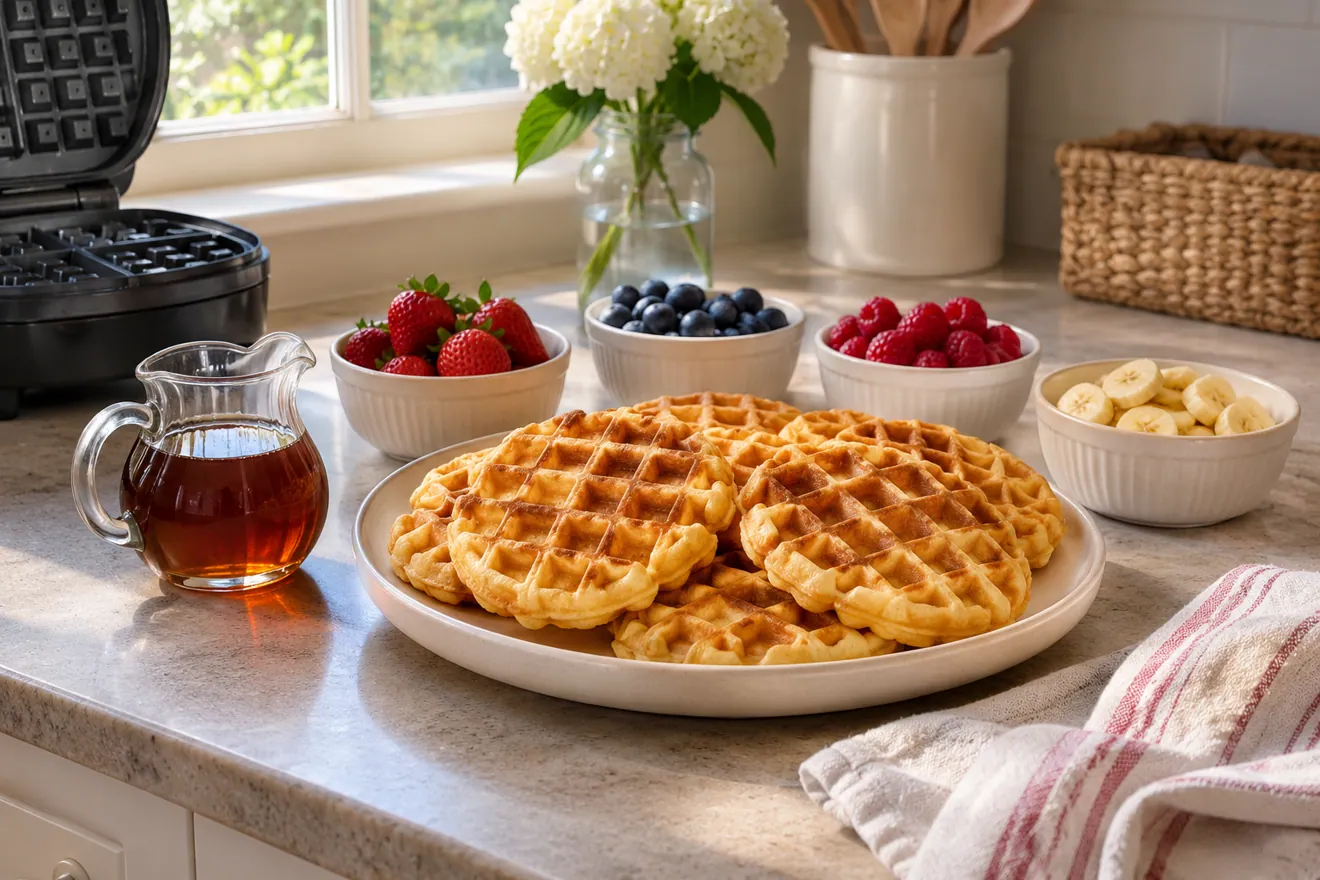
At a waffle bar, guests take their plain waffle and add toppings themselves. This keeps the crust from sitting under syrup while the host prepares individual plates. Offer a few options with contrasting textures: berries, bananas, a suitable syrup, perhaps yogurt or a little chopped chocolate.
Choose one serving location for the finished waffles and another for toppings when space allows. This prevents a queue around the hot waffle maker.
How to Make Waffles Ahead
Some recipes are designed for freezing fully cooked waffles. This can be a useful strategy for a large brunch because you can prepare the waffles ahead and reheat them using the recipe's specific method. Freeze only after safe cooling, protect portions from freezer air and label the date.
Reheating in a toaster or oven may restore some crispness better than microwaving, but appliance settings and waffle size vary. Never use a toaster for a waffle with loose toppings or one unsuitable for that equipment.
Can You Refrigerate Batter Overnight?
That depends on the leavening and recipe. Some yeast waffles are deliberately fermented overnight under controlled conditions, while ordinary baking-powder batters may not perform the same way after a long rest.
Use a recipe written for overnight batter preparation and maintain appropriate refrigeration where eggs and dairy require it. Do not leave raw batter on the counter overnight.
Which Waffle Maker Creates the Crispiest Waffles?
Waffle thickness, plate pattern, heat control and recipe all affect the result. A thin waffle may develop a larger proportion of crisp surface, while a deep Belgian waffle may have a tender interior beneath its browned exterior.
Choose a machine that heats consistently and matches your preferred style. Even a premium waffle maker can't compensate for a recipe intended to make soft, cakey waffles.
Common Problems: Waffles Are Pale and Soft
The waffle iron may not have preheated fully, the batter may be too wet for the recipe or the waffle may have been removed early. Check the machine temperature, measured ingredients and cooking cues before changing the formula.
Also verify that you're not sealing waffles while hot. If they leave the iron crisp but soften on the plate, the holding method may be the primary problem.
Common Problems: Waffles Are Crisp but Dry Inside
Excess cooking time or an overly dry batter can create a hard waffle rather than a crisp exterior with a tender middle. Follow the recipe's doneness guidance and avoid extending the cooking period solely for deeper colour.
Some waffles continue firming slightly after leaving the iron. Test the next batch after a short rack rest before deciding it needs extra cooking.
Common Problems: Waffles Stick to the Iron
Check that the iron is properly preheated and maintained, and use the fat or release method specified by the manufacturer and recipe. Don't scrape non-stick plates with metal utensils that could damage the coating.
Opening too early can split an unfinished waffle. Follow the machine's instructions before attempting to lift it out.
Food Safety at a Waffle Buffet
Raw flour and eggs can carry harmful germs. Wash tools and hands that touch batter and save tasting for after cooking.
Keep perishable toppings at 4°C (40°F) or colder until serving. Put out small bowls and replace them with fresh chilled portions.
A Low-Stress Waffle Timeline for Ten Guests
The night before: select a waffle recipe, confirm yields and equipment, and prepare recipe-approved components. Before guests arrive: wash and cut appropriate fruit, set out clean plates and organise chilled toppings. Near serving: preheat the iron and begin cooking. During service: move waffles onto racks, use a recipe-supported short hold if necessary and provide toppings separately.
For a waffle-focused brunch, expect more hands-on cooking than for a breakfast casserole. The best timeline is the one your iron's actual batch capacity supports.
Check how many waffles your iron makes per round before you choose the serving time. With one two-waffle iron and ten portions, plan five rounds. Put only the first tray out when you’re ready to serve, and keep the other waffles on the rack until their turn.
Frequently Asked Questions
Why do waffles get soggy when stacked?
Steam becomes trapped between hot waffles and condenses on their surfaces. A rack and a single-layer holding arrangement allow moisture to escape more easily.
Can I keep waffles crispy in the oven?
Some recipes provide a short oven-holding method using a wire rack over a baking sheet. Follow the recommended temperature and duration, and avoid holding them indefinitely.
Is a Belgian waffle less crispy?
Not necessarily. Thickness and recipe influence the balance of crisp exterior and tender interior. A tested crisp Belgian-waffle recipe can produce excellent contrast.
Can I make waffles the day before a party?
Yes, when using a recipe that supports cooling, freezing or another safe make-ahead method and a suitable reheating process.
When should guests add fruit and syrup?
Immediately before eating, so the topping doesn't soften the crust while the waffle waits on the table.
Serve the Waffle, Save the Crunch
The secret to crisp waffles for a crowd is less about a special ingredient and more about a reliable system. Start with a recipe made for crispness, preheat the iron, let steam escape, hold finished waffles only as directed and keep toppings separate. A little planning lets everyone enjoy the texture you worked to create.
Some images are AI-generated illustrations of the dishes and techniques described.
IN PICTURES
From the baking notebook
FROM THE RECIPE BOX


