On this page
Pancakes are easiest to enjoy straight from the skillet, when the edges are tender and the centers are still warm. Serving a crowd creates a different problem: the earliest batch can cool while the final pancakes are still cooking. Stacking hot pancakes under a tight lid seems convenient, but trapped steam can make them wet. A well-organized warming station lets the cook finish a manageable series of batches while guests eat together.
The best strategy begins with the menu
If you're serving pancakes alongside eggs, fruit, yogurt and coffee, plan the order of work before lighting the skillet. Wash and cut fruit ahead, prepare toppings in serving dishes and preheat the oven only when needed. Pancakes should generally be among the last items cooked. That simple adjustment reduces holding time and protects texture better than any reheating trick.
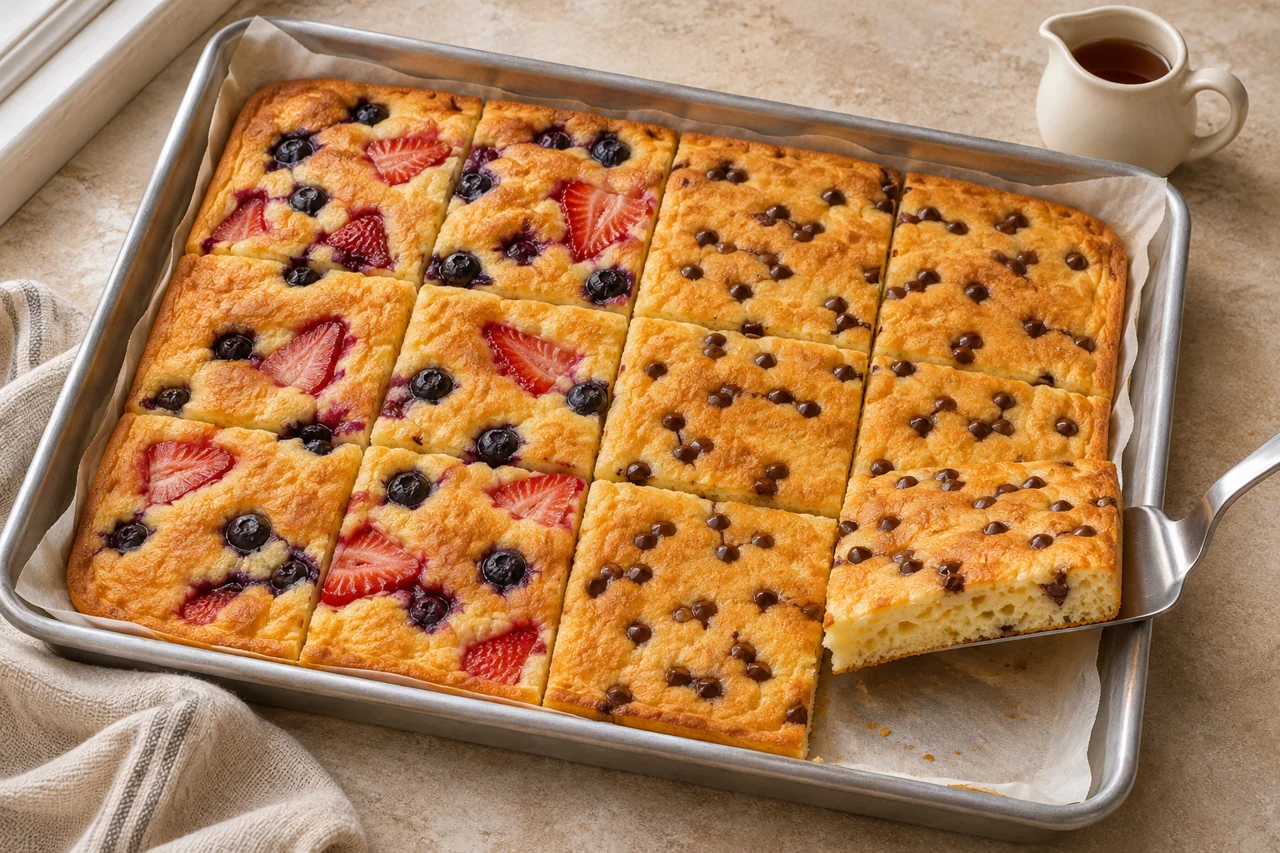
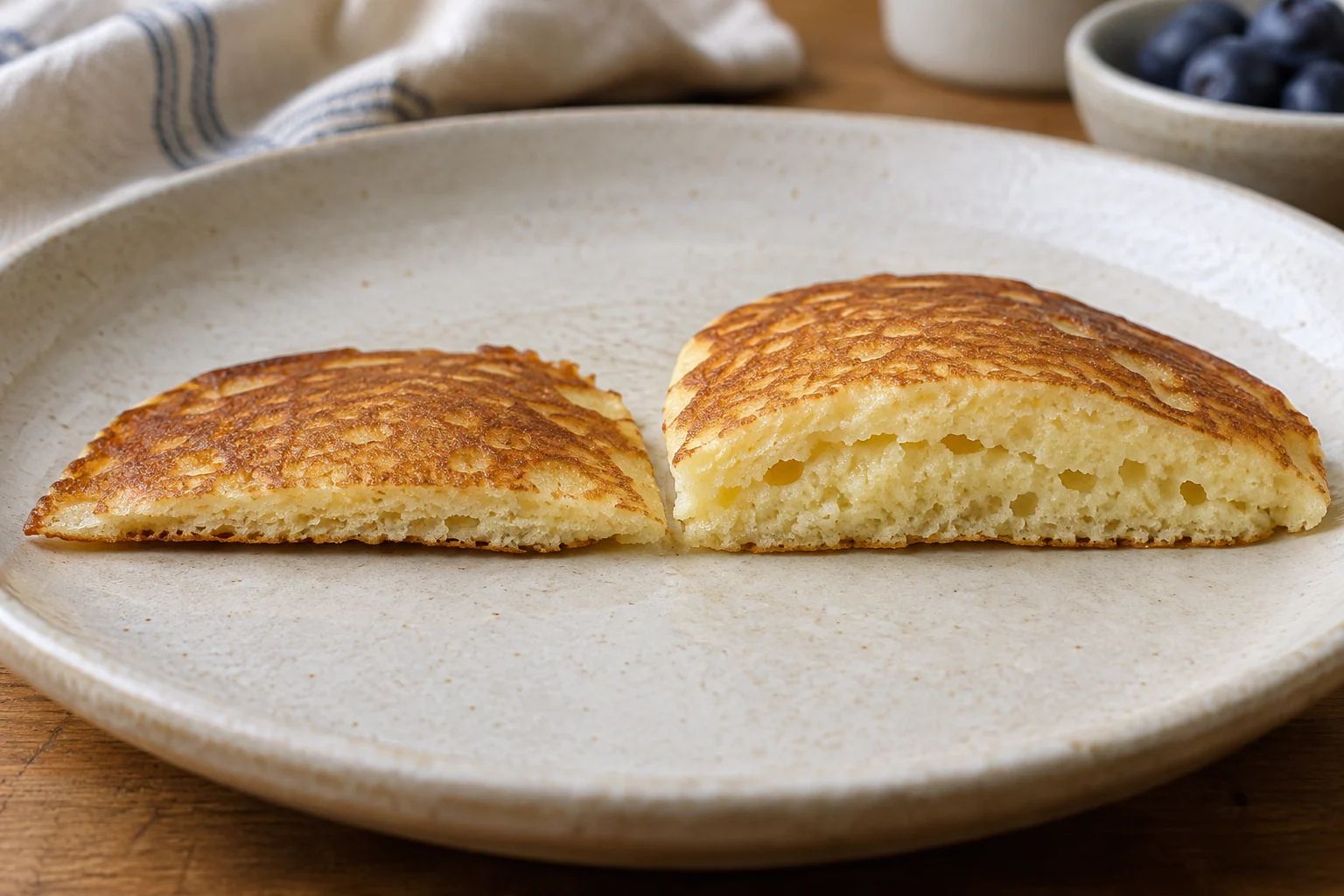
When the number of skillet batches would keep you at the stove all morning, Sheet Pan Pancakes let you cut and serve one tray.
Why pancakes become soggy in a stack
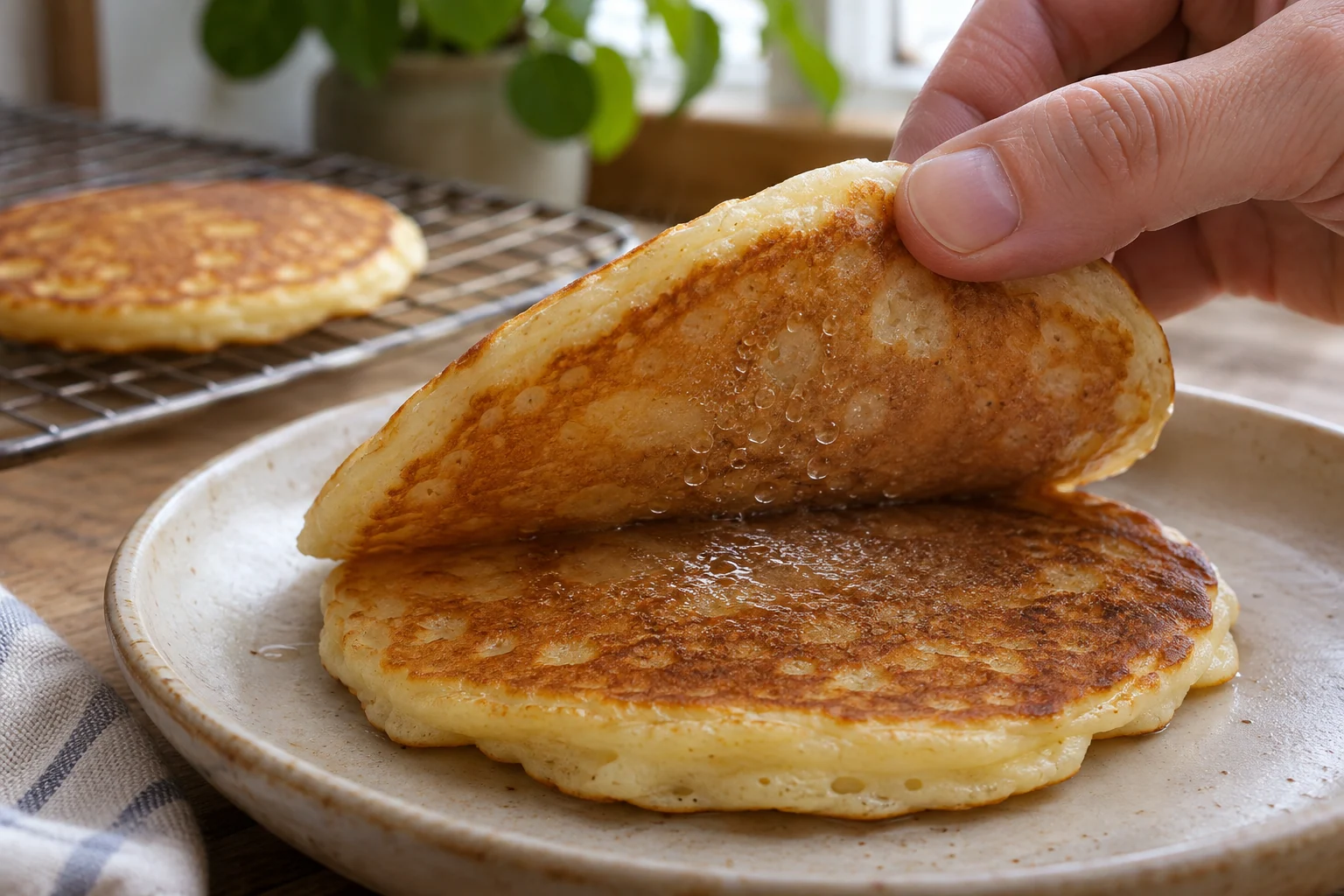
Freshly cooked pancakes release moisture as they cool. If piled tightly, steam condenses between surfaces and softens the browned exterior. A large covered stack can also compress the bottom pieces. A cooling or warming rack gives air space beneath each pancake, reducing contact with trapped moisture. The goal is to hold warmth while allowing just enough ventilation to prevent a damp exterior.
Use a wire rack over a baking sheet
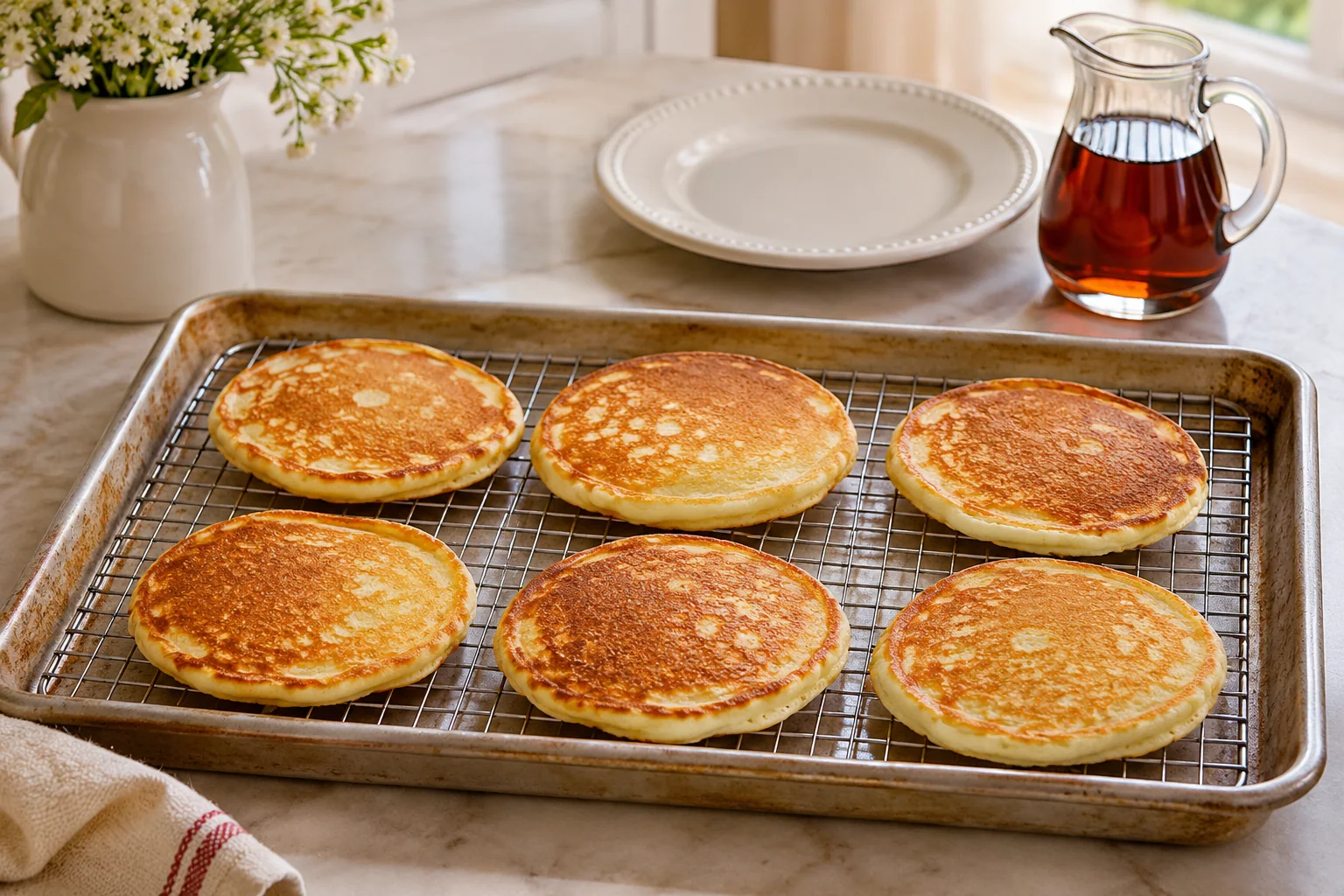
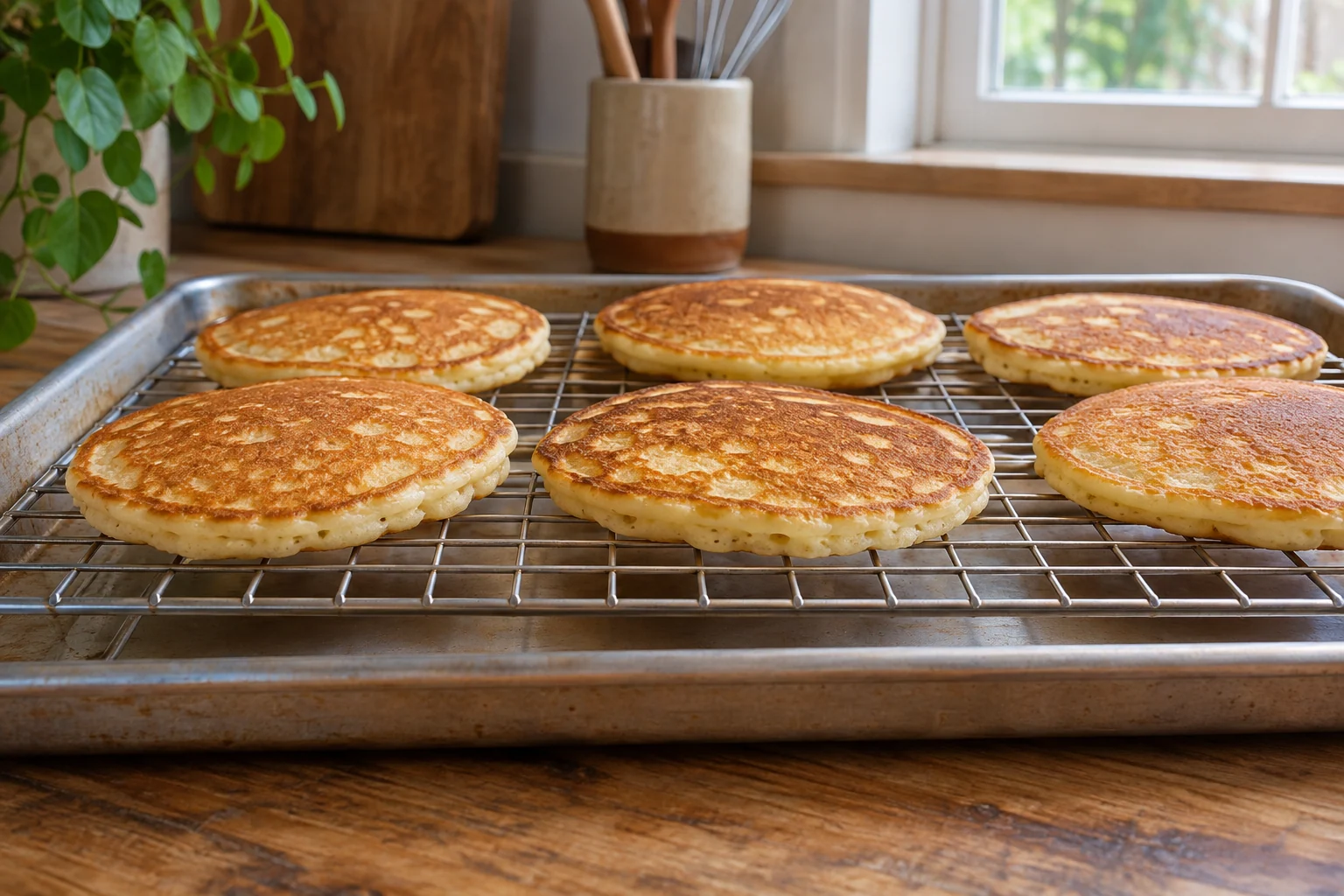
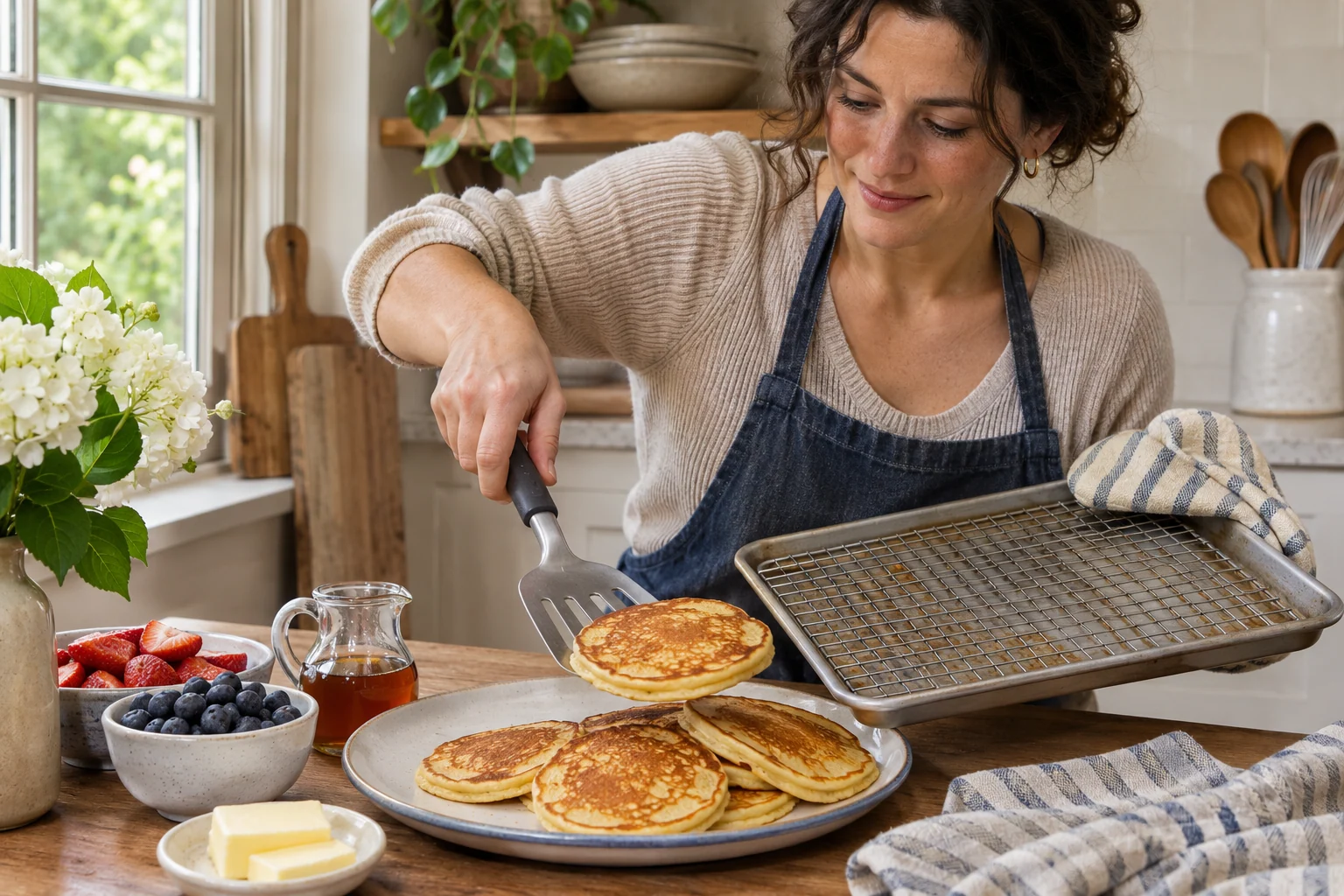
Place an oven-safe metal cooling rack inside a rimmed baking sheet, if the rack and sheet are approved for oven use. Arrange finished pancakes in a single layer without overlapping. This exposes more surface to warm air and prevents the bottom from resting on a potentially wet plate. Not every decorative cooling rack is oven-rated; check its coating and manufacturer instructions before placing it in a heated oven.
Gentle holding rather than continued baking
For the short wait between batches, use a low oven around 95°C (200°F) if your pancake recipe allows. Arrange fully cooked pancakes on the rack and serve as soon as the last batch is ready. For a longer buffet, check the food itself with a thermometer and keep it at or above 60°C (140°F). Thin pancakes lose their tender edges quickly, so a second freshly cooked platter will often taste better.
How long should pancakes stay warm?
For quality, keep the warming interval as short as possible—ideally the time needed to finish the remaining skillet batches. The precise limit depends on recipe, thickness and oven performance. A thin buttermilk pancake may dry sooner than a thicker oat pancake. Test one piece after a short hold and adjust your cooking schedule rather than treating a warm oven like overnight storage.
With Basic Buttermilk Pancakes, try one from the first batch as the last batch cooks to see how the edges have held up.
Should you cover the rack?
A tight sheet of foil traps moisture and can soften browned surfaces. Leaving pancakes fully uncovered in too much heat can dry their edges. Some recipes use a loose cover or a short uncovered hold, depending on pancake type. Start with a tested method and make small adjustments. Avoid placing foil near heating elements or using plastic wrap in the oven.
Keep the skillet temperature steady
If the first few pancakes are golden and the later ones nearly burned, the skillet may have become too hot as the session progressed. Use medium or recipe-specified heat, and adjust between batches. Allow the pan to recover briefly after adding batter. A steady cooking surface makes all pancakes equally cooked before they enter the warming station.
For Chocolate Chip Pancakes, wipe away stray melted chocolate between batches before it scorches on the pan.
Use a consistent batter portion
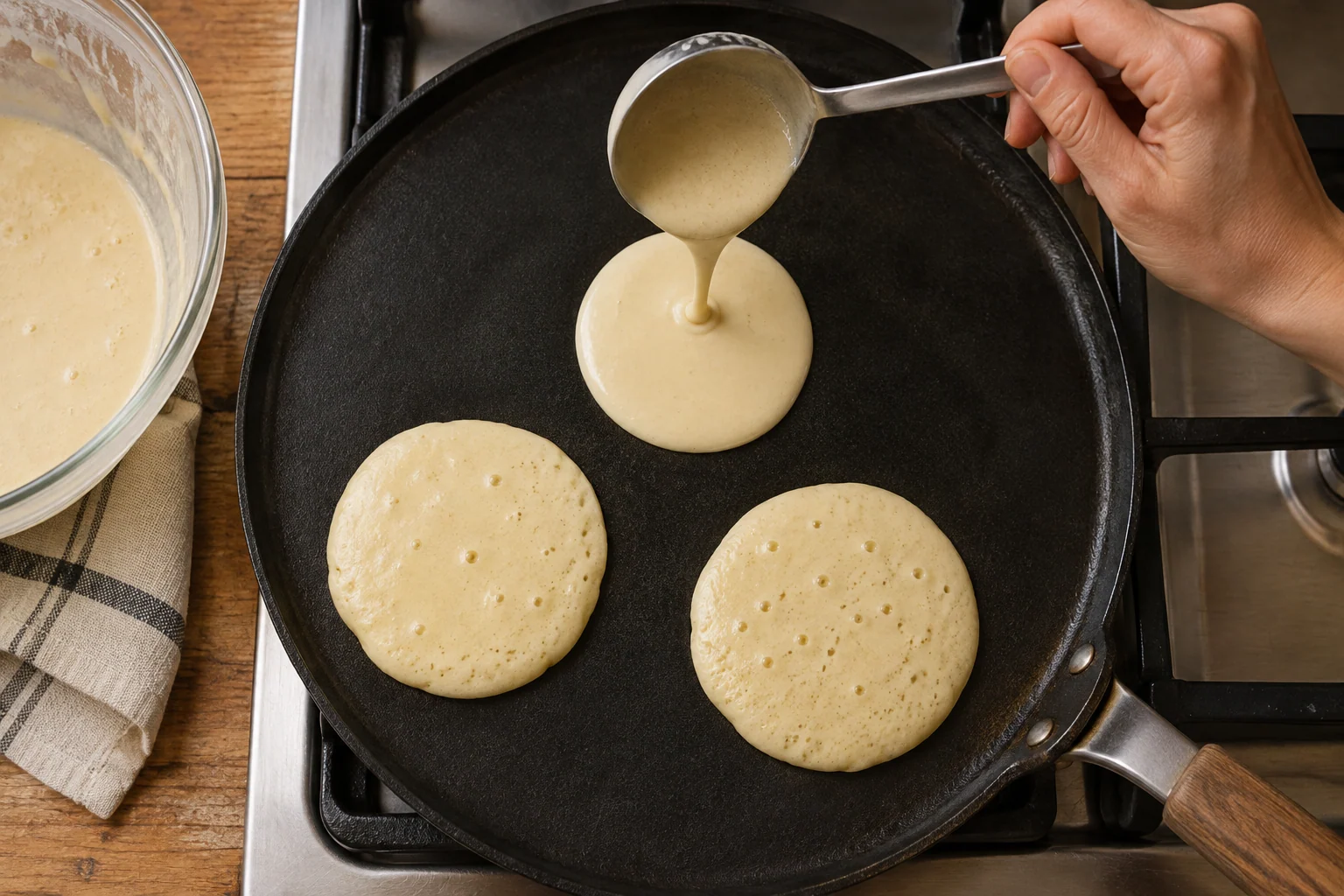
A measured ladle or scoop helps pancakes cook at roughly the same pace. A huge thick pancake may look browned outside while the middle is still raw; a very small one dries quickly. Choose one serving size and keep it consistent. This also makes headcount planning easier because each guest can be offered a predictable number of pieces.
For Blueberry Pancakes, use the same scoop each time so a berry-heavy pancake doesn’t quietly become twice as thick.
Avoid overmixing the batter
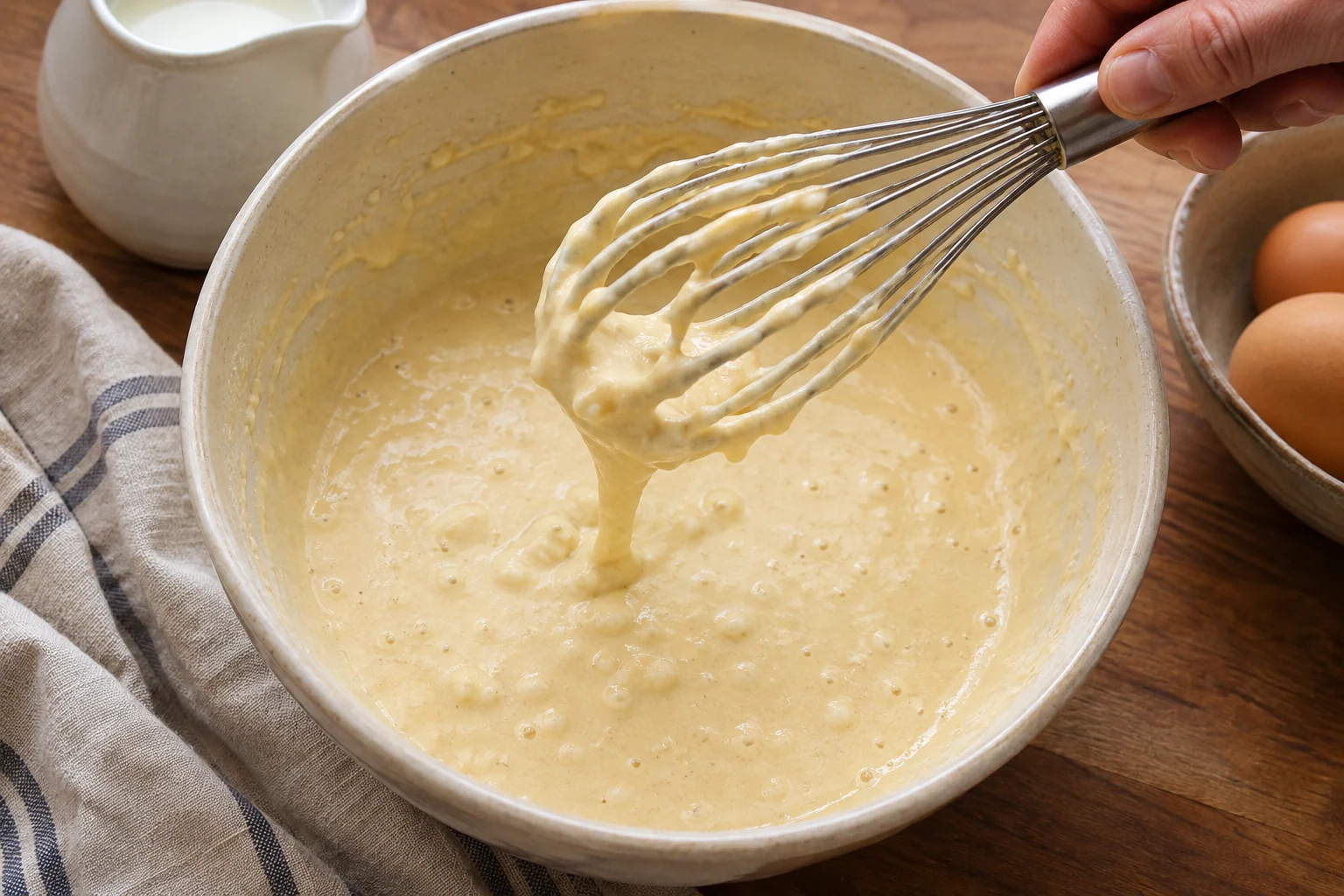
Many pancake recipes advise mixing only until the dry ingredients are incorporated, allowing some small lumps. Excessive stirring develops gluten and can make pancakes tougher. The exact method varies, especially for sourdough, blender or gluten-free batters. Follow the formula rather than trying to make every pancake batter perfectly smooth.
Easy Blender Pancakes follow their own mixing method. Keep that recipe’s blending step separate from the hand-whisked batter shown here.
When to flip
Look for recipe-specific visual cues, often bubbles on the surface, edges beginning to set and a golden underside. Flip gently once, then finish cooking the second side. Pressing with a spatula squeezes out gas and can make pancakes denser. A warm holding oven is not intended to cook liquid raw centers; pancakes should be properly cooked before entering it.
Use the flipping cues in Fluffy American Pancakes when making thicker rounds that need time to cook through.

Two skillets versus one griddle
For six or more guests, an electric griddle or two suitable skillets can increase output, provided you can monitor both safely. Too many cooking surfaces may make one batch burn while you pour another. Choose capacity that matches your attention and available space. Test griddle settings before the event, as dial temperatures may not reflect the actual plate.
The first-pancake test
Cook one small pancake before committing to an entire tray. Evaluate pan heat, batter consistency and cooking time, then adjust. The first pancake often reveals whether the pan is greased excessively or isn't evenly heated. A careful test can save many poorly browned pieces that would otherwise need to be held while you troubleshoot.
One-Bowl Pancakes are a straightforward choice for testing your scoop size and the heat of your skillet.
Toppings belong at a separate station
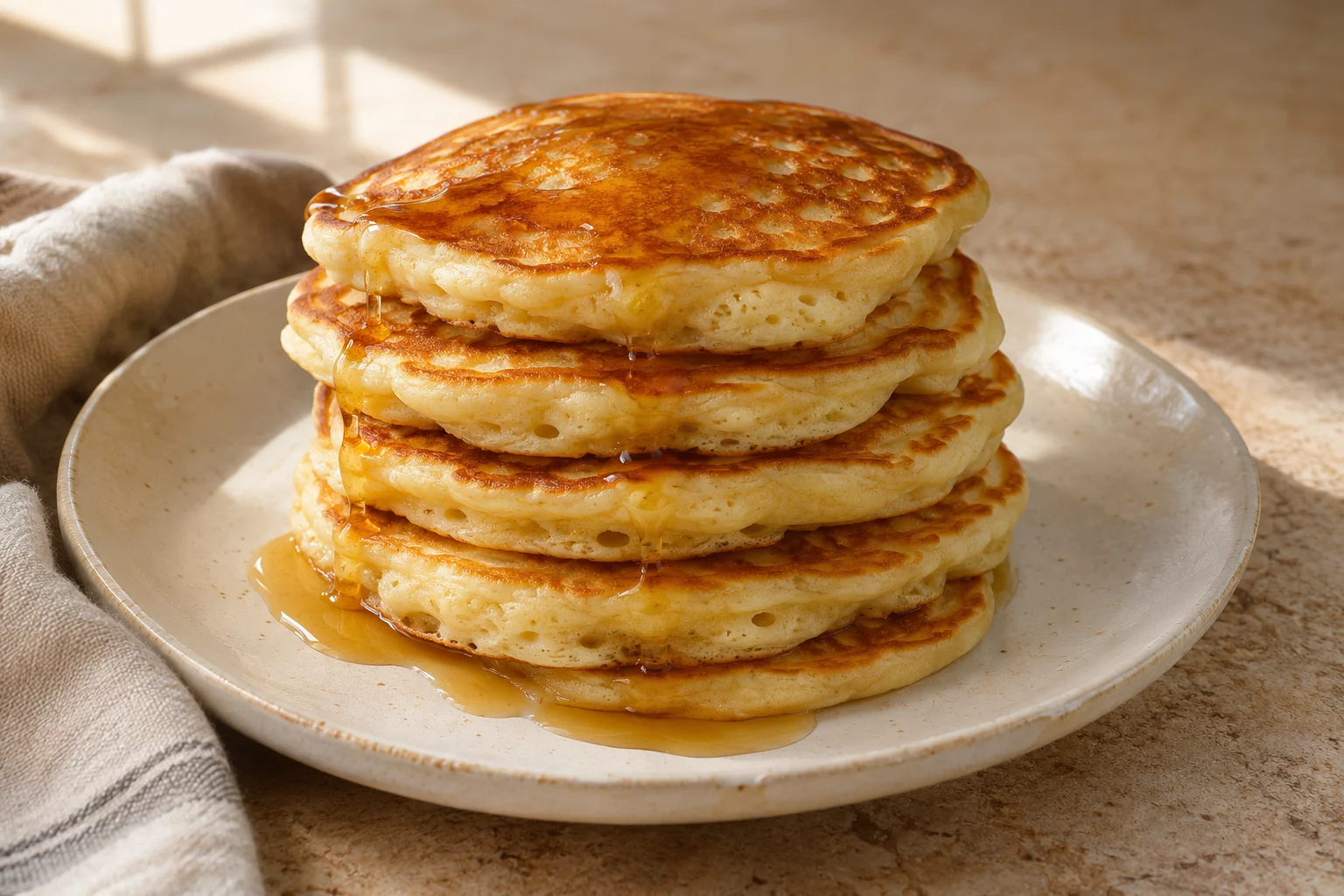
Warm maple syrup, soft butter, fresh berries and whipped cream are appealing but should not sit on pancakes during warming. Syrup soaks the crumb and fruit releases moisture. Place toppings in individual bowls and let guests assemble their plates. Refrigerate whipped cream and other perishable toppings until appropriate service time.
The berry topping in Lemon Poppyseed Pancakes with Blueberry Compote is a good example of a sauce to spoon on at the table.

How much pancake batter to prepare
Use the recipe's actual yield and the size of your scoop. A guest may eat two or three medium pancakes with other brunch dishes, but appetite and pancake diameter vary widely. Prepare a modest buffer rather than doubling the entire recipe by guesswork. If the recipe yields twelve and you're serving eight adults, plan around the rest of the menu and whether guests will want seconds.
Feeding children and adults together
Small pancakes can be easier for children, but mixed sizes can complicate batch timing. Cook minis as their own group and place them on a separate rack section, checking for dryness more often. Offer fruit and toppings separately so guests can customize sweetness. Consider age-appropriate cutting and choking hazards with whole grapes, nuts or large fruit pieces.
Offer Banana Pancakes with toppings on the side so each plate can be finished to suit the guest.
Make-ahead pancakes
Some tested pancake recipes support cooking, cooling and freezing pancakes before brunch. Fully cool and package suitable portions, then reheat by the recipe's approved oven or toaster method. This may be more practical for twenty people than cooking every pancake from raw batter while guests wait. Don't assume all whipped-egg or soufflé-style pancakes freeze and reheat equally well.
If Pumpkin Pancakes are your autumn menu choice, cook a test batch before the gathering to see how the crumb holds up.

Reheating versus keeping warm
A warming rack is for pancakes fresh from the skillet. For cooked pancakes that were refrigerated, reheat them through to 74°C (165°F) before serving. Use a clean food thermometer to check the centre of a thicker pancake. Keep syrup, whipped cream and fruit off the pancakes until they reach the plate.
Don't leave perishable batter on the counter
Pancake batter often contains milk and eggs and should be refrigerated if not cooked promptly. Some batters also change leavening as they stand, producing flatter pancakes. Prepare only the quantity you can cook under the method's timing. A large bowl near a hot griddle for hours is neither a reliable texture strategy nor good food handling.
An efficient brunch timeline
Begin with clean equipment, prepared fruit and a set table. Warm the oven shortly before cooking, make a first test pancake and begin filling the wire rack as each batch finishes. Ask a helper to replenish drinks while you cook. Bring the warmed pancakes to the table as close to the end of cooking as practical, leaving syrup and cream off until served.
If you’re also making Scrambled Eggs, set out the plates first and cook the eggs as the last pancake batch finishes.
Troubleshooting limp pancakes
Check whether steam collected beneath a tight cover or between a tall stack. Next time, use an oven-rated rack and shorter holding time. If the original pancakes were pale and undercooked, fix skillet heat and flip timing first. Holding cannot recreate browned surfaces that never formed.
Troubleshooting dry edges
The oven may be too hot, or the pancakes stayed warm for too long. A thin pancake exposes more edge relative to its center and dries quickly. Reduce the batch count by increasing skillet capacity or prepare part of the menu earlier. Don't soak dry pancakes in syrup while holding them; that replaces dryness with sogginess.
For a tender batch such as Lemon Ricotta Pancakes, shorten the wait and take a smaller platter directly to the table.
Frequently asked questions
Can pancakes be stacked in the oven? A single layer on a suitable rack usually preserves texture better. Is a microwave ideal for holding a crowd's pancakes? It tends to warm unevenly and may make them chewy. Can pancakes be frozen? Many tested recipes allow it. Should syrup go on before warming? No. Can a warm oven hold them all morning? Not without appropriate safe holding and quality limits.
The warm-pancake formula
Cook pancakes fully on a controlled skillet, place them in a single layer on an oven-safe rack, hold briefly in gentle heat and serve toppings separately. Keep the production window short and respect perishable-food safety. That combination gives more guests a fresh-tasting pancake without forcing the cook to make them individually on demand.
IN PICTURES
From the baking notebook
FROM THE RECIPE BOX


