On this page
A fruit tart becomes instantly more polished when its berries or peach slices catch the light beneath a delicate glaze. The shine is attractive, but the coating can also limit surface drying and help fruit stay in place. Too much glaze creates a sticky layer, softens the shell and hides the fruit; too little leaves the arrangement dull. A professional finish is usually a very thin, carefully applied coating.
What does fruit tart glaze do?
A tart glaze, sometimes called nappage, creates a light sheen across fresh fruit and can reduce drying and discolouration during short-term display. It can also help delicate slices adhere to each other. It is not a preservation method that makes custard-filled tarts shelf-stable or eliminates refrigeration requirements.
Choose the glaze for the fruit
A neutral clear glaze suits mixed berries, kiwi and bright citrus, while strained apricot glaze adds a warm golden tone to peaches and stone fruit. Red fruit glaze can intensify strawberries but may tint pale fruit. Select a glaze whose flavour and colour complement the tart rather than compete with it.
Apricot jam as a practical option
Some classic tarts use warmed and strained apricot jam thinned according to a tested recipe. Straining removes pieces that could leave bumps on the fruit. The final glaze should brush easily into a very thin layer; adding excessive water can make it too runny and encourage sogginess.
The finish on Classic Fruit Tart uses apricot jam heated with water and strained if needed. Use a light coat to make the fruit shine.
Neutral glaze and nappage
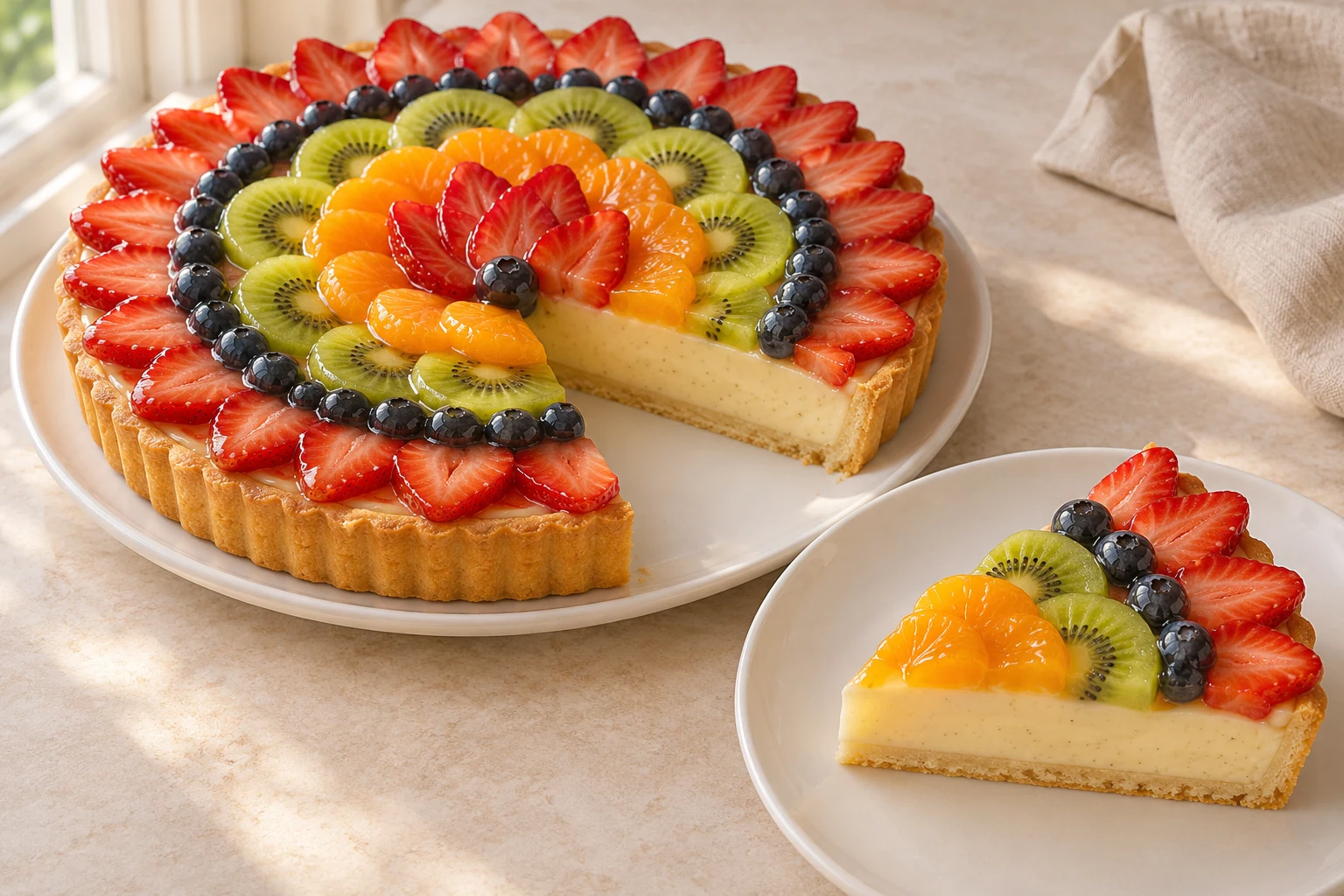
Professional neutral glazes often use sugar, liquid and appropriate gelling agents. Their performance depends on the formula, including acidity, temperature and thickening agent. Use a tested neutral glaze when you need a clear coating rather than improvising gelatin or cornstarch quantities.
Why temperature matters
Some glazes must be warm enough to brush yet cool enough not to melt pastry cream or wilt tender fruit. A very hot syrup can soften berries and warm a chilled tart. Follow the particular glaze's working temperature rather than brushing it straight from a boiling saucepan.
Strain for a smooth finish
A fine sieve can remove fruit pulp, seeds or undissolved lumps from a jam-based glaze. An even liquid spreads more neatly over overlapping slices. Avoid aggressive whisking that creates lots of bubbles, since they can set into a cloudy surface.
Prepare and dry the fruit
Wash fruit appropriately, then dry it thoroughly before arranging. Excess surface water dilutes the coating and can carry moisture into the cream or pastry shell. Fragile raspberries need especially gentle handling; pat rather than crush them.
Glaze only after arranging
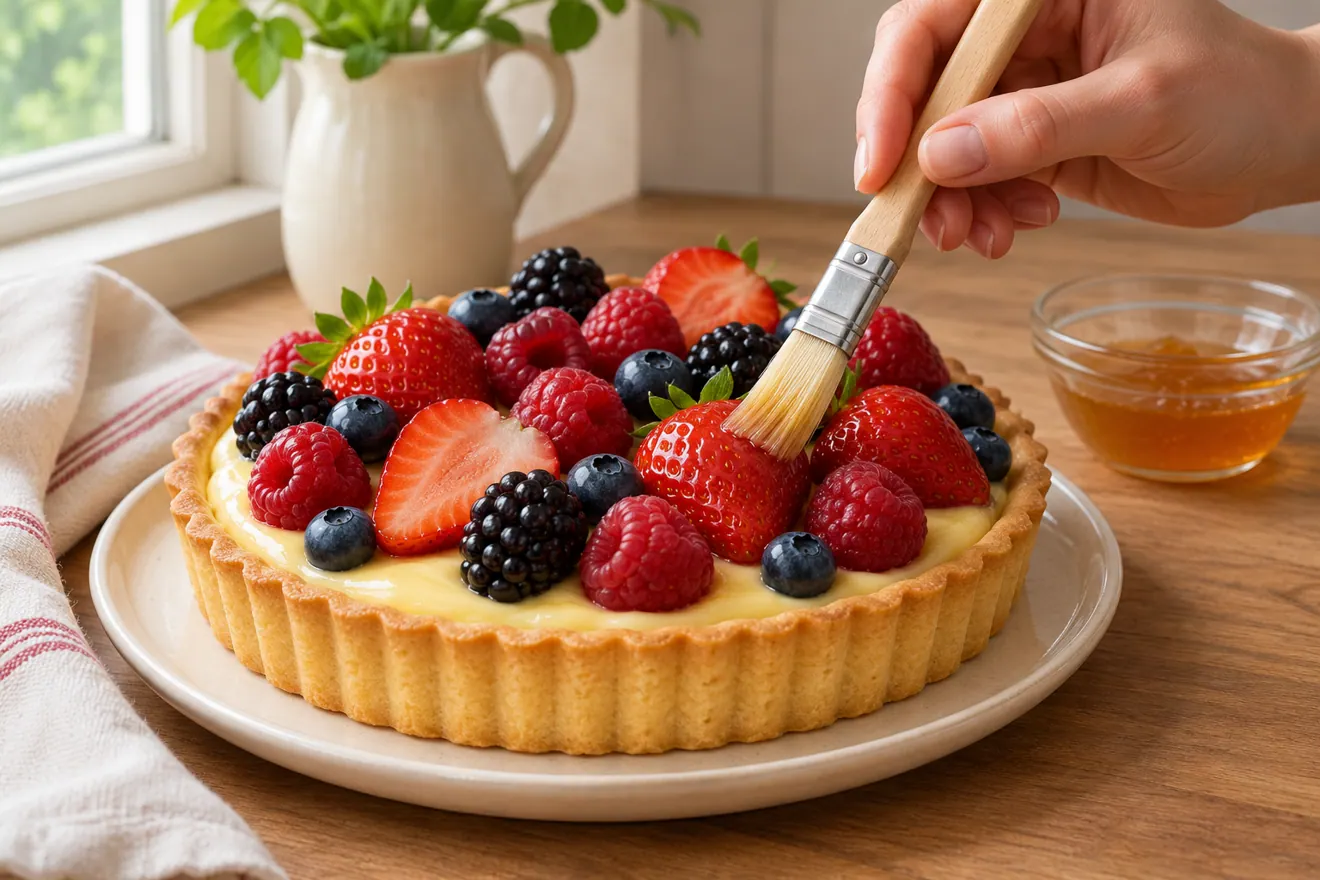
Build a deliberate pattern with the fruit first. Once it is stable, apply a thin coat with a soft pastry brush, touching lightly to avoid disturbing the slices. Brushing each piece before arranging can make it slippery and difficult to position.
Put a small dab on the first berry and check how it settles. If it runs into the custard, let the glaze cool or dab the brush against the bowl before loading it again.
Use a light hand with berries
A heavy brush can bruise raspberries, blackberries and ripe strawberries. Dab rather than drag across very soft fruit. If the glaze is too thick to apply without pressure, adjust only as the recipe directs before coating the tart.
For sliced peaches and pears
Arrange slices in slightly overlapping fans or circles, then brush over the exposed surfaces. Some fruits discolour quickly when cut, so prepare them near assembly or follow a tested fruit-treatment method. The glaze can help appearance but is not a substitute for sensible timing.
Our Strawberry Custard Tart recipe demonstrates a simple strawberry-jam glaze brushed over arranged berries for a glossy finish.
For strawberries
Whole or halved strawberries often look best when their cut faces remain clean and the glaze is light. Place small fruit firmly against the cream, then brush the visible surfaces. Avoid pooling glaze in the centre where it can seep between strawberries and soften the filling.
For a glaze with a stronger strawberry flavour, Strawberry Custard Tart dilutes strawberry jam with water. Keep the custard refrigerated during the final set.

For blueberries and mixed berries
Blueberries may roll or cluster, so arrange them in controlled groups. A small amount of glaze can help the surface look unified, but a thick coat may obscure the individual berries. Mix colours for contrast instead of using an excessively dark glaze.
Should you glaze citrus?
Some citrus segments are already glossy and very juicy. Extra glaze may be unnecessary or make the tart slippery. If using one, choose a formula compatible with the fruit's acidity and remove excess juice before placing the segments on the filling.
How to prevent dripping
Use a brush containing only a small amount at a time and avoid flooding the fruit. Work from the centre toward the outer ring where appropriate. If glaze flows into the pastry rim, it can create a sticky edge and compromise the clean presentation.
Why glaze turns cloudy
Undissolved starch, pulp, excessive stirring or a glaze cooled beyond its working range can make the surface look opaque. A neutral professional glaze should be prepared according to its recipe and applied at the right temperature. Do not keep reheating a delicate gelatin mixture aggressively.
How much glaze should you make?
A thin surface coat uses less than a poured jelly layer. Prepare the amount specified for the size of tart, understanding that some may remain in the bowl. Don't use the leftover glaze as a reason to saturate the fruit.
Filling and shell readiness
The shell should be fully baked and cool; pastry cream or diplomat cream should be properly chilled and set. Glaze cannot rescue a loose filling or wet underbaked base. Keep the components at suitable temperatures during assembly.
Timing before serving
Keep tart fillings made with dairy or eggs at 4°C (40°F) or colder. Refrigerate cooked custard promptly in a shallow covered container, glaze the assembled tart, then chill it again if the recipe calls for a set. Limit total time at room temperature, including serving, to two hours.
Frequently asked questions
Can I use apricot jam? Yes, in a tested thinned and strained glaze. Is glaze essential? No, a fresh fruit tart can look lovely without it. Does it preserve fruit indefinitely? No. Can a heavy glaze make the tart soggy? Yes. Why does my glaze look dull? Thickness, temperature or surface water may be factors.
A polished finishing routine
Start with a crisp cool shell and set filling, dry and arrange the fruit, then brush lightly with the glaze appropriate to its colour and flavour. Refrigerate safely and present the tart while the coating is fresh and the fruit remains vibrant.
Some images are AI-generated illustrations of the dishes and techniques described.
IN PICTURES
From the baking notebook
FROM THE RECIPE BOX


