On this page
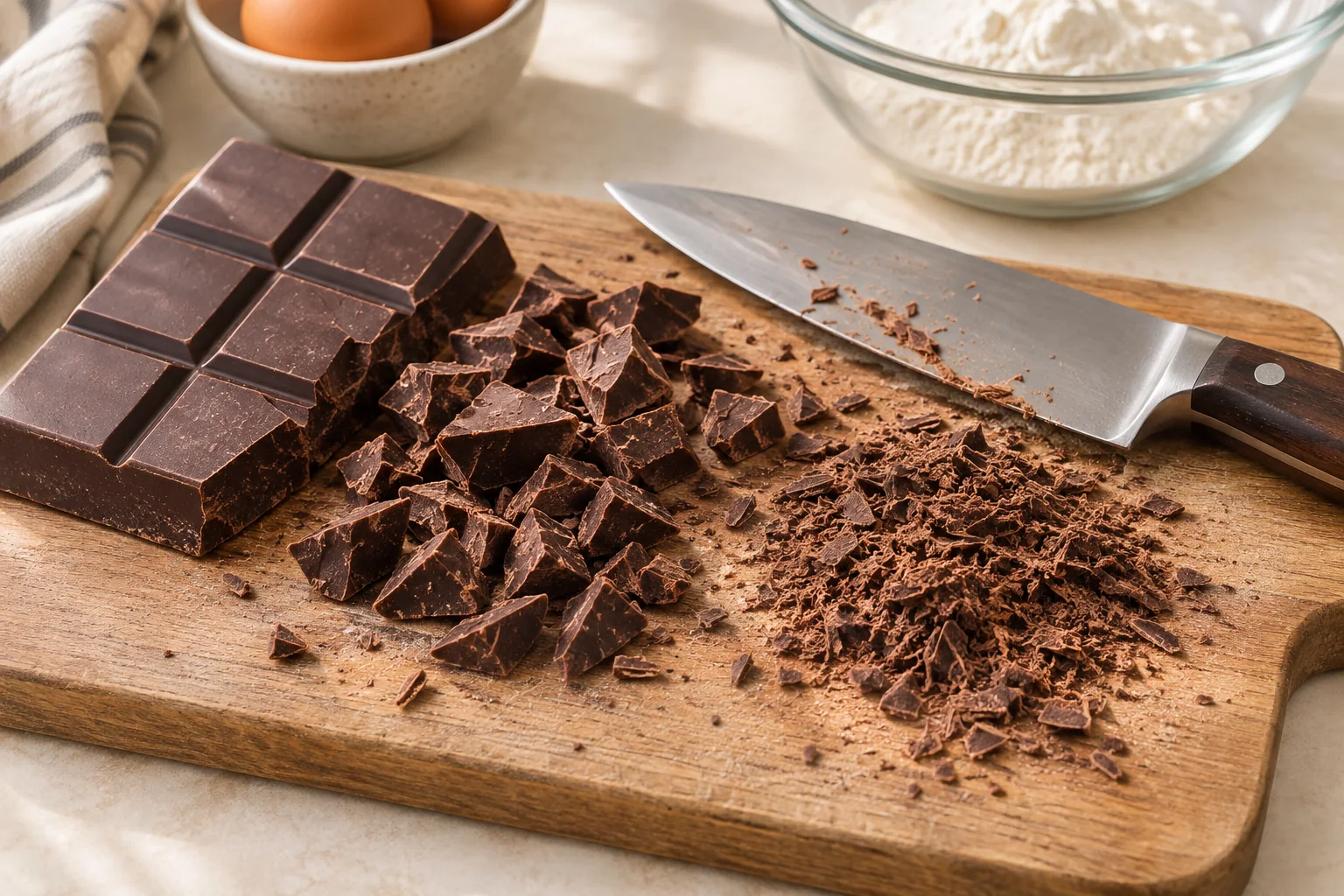
Chopping chocolate seems like the sort of prep step a baker should be able to skip. After all, a bag of chocolate chips is already perfectly portioned and ready to use. But chopping a bar gives you something chips cannot always provide: control over the size, shape and distribution of chocolate through your bake.
Large shards can become molten pockets in a cookie, small flakes spread chocolate flavour throughout the dough, and fine, even pieces melt more readily into a glossy ganache. The way you cut the chocolate changes how the finished dessert looks, tastes and feels. Here's how to chop chocolate for baking neatly, efficiently and safely.
Why Chop Chocolate Instead of Using Chips?
Chocolate chips are designed to be convenient and often keep a more defined shape during baking. Chopped bar chocolate produces an assortment of chunks, small shards and tiny flecks. Those irregular pieces melt at different rates, giving cookies pockets and streaks of chocolate rather than identical little dots.
The best choice still depends on your recipe: a classic chocolate chip cookie may intentionally use chips, while a bakery-style cookie may specify chopped bars.
Choose the Chocolate Your Recipe Calls For
Before chopping, read the recipe. Semisweet, bittersweet, milk and white chocolate differ in sugar, cocoa solids and cocoa butter content. A 70% dark chocolate bar won't taste the same as a sweeter semisweet chip, even if you use the exact same weight.
For ganache, choose a melting-friendly chocolate with the cocoa percentage required by the formula. For cookies, decide whether you want bittersweet puddles, milk chocolate sweetness or a blend of types that the recipe supports.
What Knife Works Best?
A sturdy serrated knife is an especially useful tool for chopping chocolate. Its teeth help grip the firm surface so pieces are less likely to skid away.
Use a knife that feels stable in your hand, has a sound handle and suits the thickness of your chocolate. A serrated bread knife with medium teeth can be effective for many bars, discs and wafers.
Set Up a Safe Cutting Area
Work on a large, dry cutting board on a stable counter. Put a nonslip mat or damp towel underneath the board so it doesn't move while you apply downward pressure. Keep the chocolate dry and remove unnecessary items from the counter.
Use a proper grip with your fingers behind the cutting edge, and keep your non-cutting hand clear of the knife's path. Thick chocolate can require substantial pressure. If the bar is too hard to cut safely, consider breaking it into smaller pieces using an appropriate controlled method rather than forcing the blade.
How to Chop a Chocolate Bar
Place the chocolate on the cutting board with a stable side resting flat. Work from one corner or edge and cut small portions using controlled downward pressure or a gentle rocking motion suited to the knife.
For many ordinary bars, there's no need to saw aggressively back and forth. The serrations bite into the chocolate as you press. Keep the pieces together and repeat until you reach the size the recipe requires.
Why Starting at a Corner Helps
Cutting into a corner creates smaller pieces with less resistance than trying to drive a knife straight through the widest centre of a thick bar. As pieces break off, you can work progressively inward.
Don't brace the chocolate with fingers directly in front of the blade. When a chunk is awkward to hold, reposition it on a flat side or use a more manageable piece.
How Fine Should the Chocolate Be for Ganache?
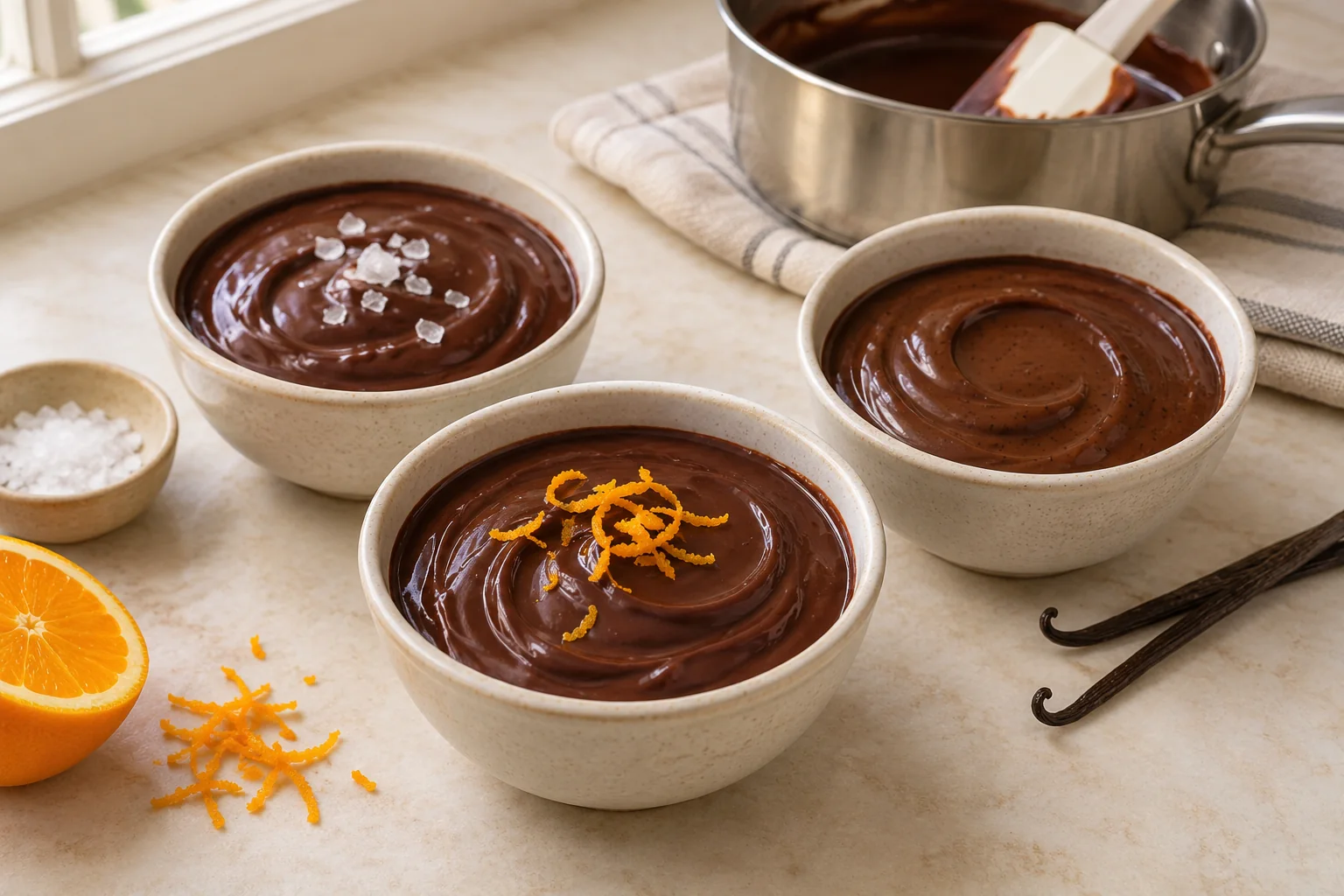
For a ganache made by pouring hot cream over chocolate, fine, relatively even pieces melt more predictably than large irregular chunks. A mixture of very large and very small pieces can leave unmelted fragments and tempt you to overheat the whole bowl.
Chop small enough that the warm cream and the method described in the recipe can melt the chocolate. Some couverture callets are already small and uniform enough that further chopping isn't necessary.
How Big Should Chunks Be for Cookies?
For a bakery-style cookie, you may want a mixture of fine flecks, medium fragments and larger chunks. Fine particles spread chocolate flavour through the dough, while generous pieces create pockets of melted chocolate.
But avoid enormous chunks in a small cookie: they may prevent the dough from holding together and make portioning uneven. Use the size and weight the cookie recipe supports.
Recipe to try: Classic Chocolate Chip Cookies. Use the stated butter texture, dough portions and bake time together to establish a consistent cookie baseline.

How to Chop Chocolate for Brownies
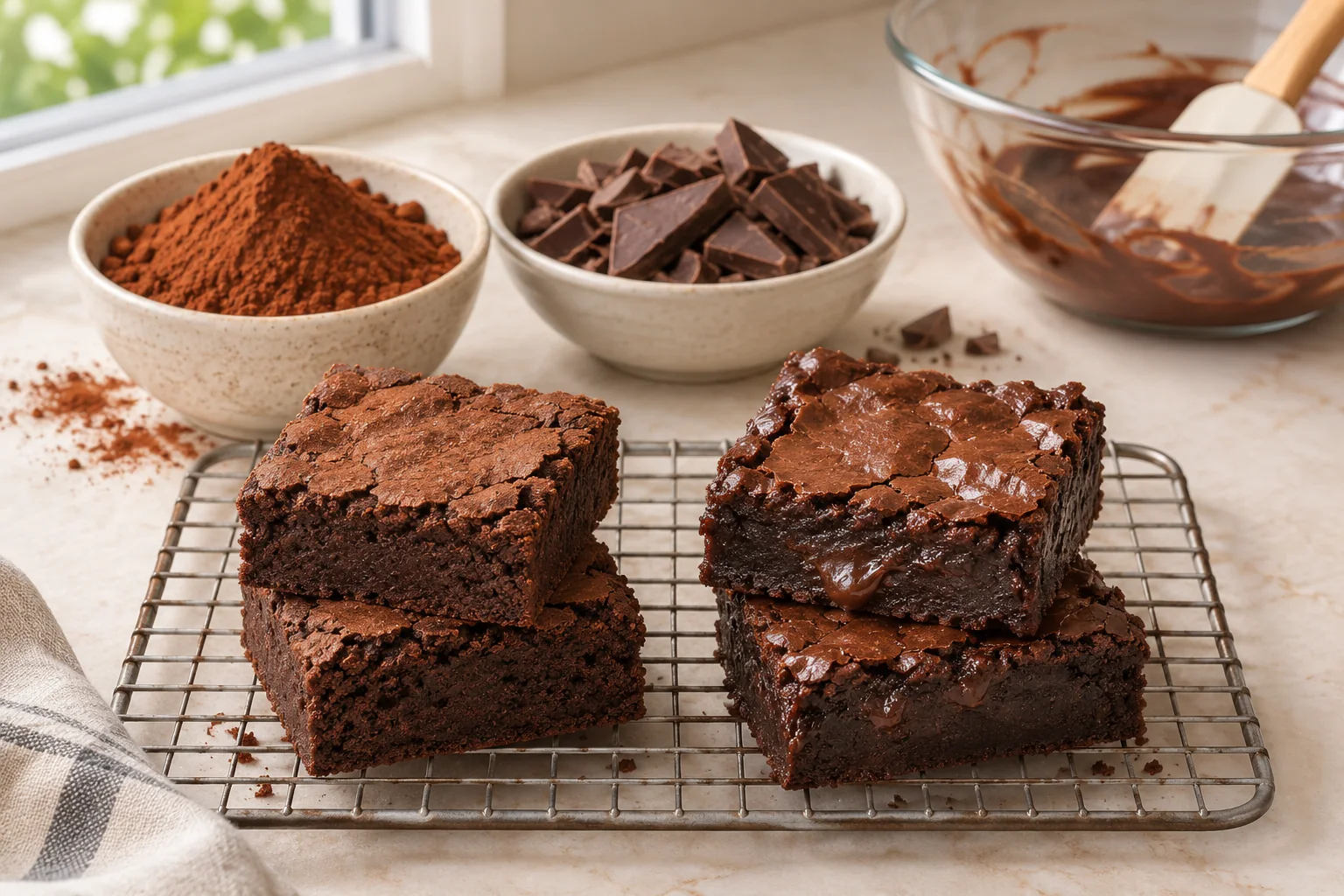
Brownies often use chocolate in two different ways. Some is melted into the batter, while another portion is folded in as pieces. Chop the melting portion finely so it can dissolve smoothly at a gentle temperature.
For folded-in chocolate, larger pieces may be appropriate if the recipe calls for them. Keep the two portions separate and labelled until the recipe reaches the correct step.
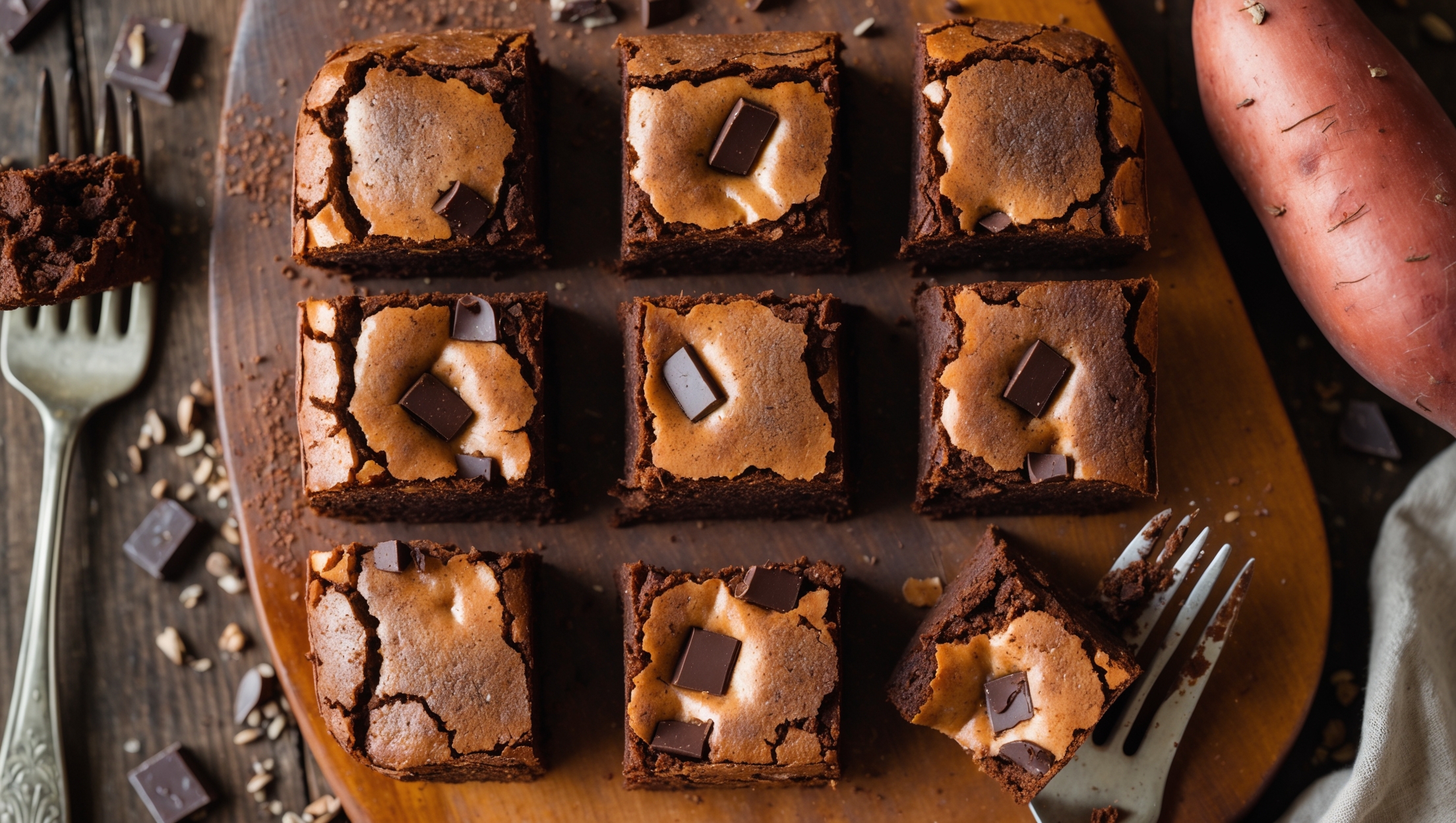
Recipe to try: Sweet Potato Brownies. These brownies use sweet potato in their own formula. Treat them as a separate option, not a direct conversion of a conventional brownie batter.
How to Chop Chocolate for Muffins
Smaller chunks can distribute more evenly in standard and mini muffins. Very large chunks may dominate a small serving or sink in some batters. Follow a recipe that specifies the chocolate amount and form.
If you use a mixture of pieces, measure by weight rather than by a cup full of irregular shapes. That reduces the risk of accidentally adding more chocolate than intended.
Can You Use a Chef's Knife?
Yes, with a stable board and controlled technique. A chef's knife can work well for some thin bars, but very hard chocolate may skid under a smooth blade and cause pieces to fly. Keep the knife sharp and your fingers safely out of the cutting path.
A serrated knife may provide more control on firm bars; choose whichever tool you can operate safely and predictably rather than using unfamiliar equipment solely because a technique video recommends it.
What About a Bench Scraper?
A sturdy bench knife or scraper can sometimes divide small chocolate wafers or callets, but it may be less effective for large, thick blocks. It also needs a stable surface and correct hand placement.
Do not assume a bench scraper is safe for unsupervised children. An adult should manage cutting tools and determine whether children can participate in an age-appropriate activity.
Can You Use a Food Processor?
A food processor is tempting for chopping large quantities. However, it can create uneven pieces and excess chocolate dust, especially if you process for too long. Some small bits may begin to warm or stick together depending on the appliance and chocolate.
Use a tested method only if the recipe can tolerate that range of sizes. For cookies with distinct chunks or ganache requiring uniform small pieces, hand chopping may be more predictable.
Can You Break Chocolate with a Rolling Pin?
Breaking wrapped chocolate can create rough chunks, but the result is less consistent than careful knife work. It may also produce powdery fragments or pieces that are too big for the recipe.
If trying an approved method, use a sturdy, suitable work surface and food-safe containment. Don't strike an exposed chocolate bar on a fragile counter or risk damaging glassware nearby.
Why Chocolate Dust Isn't Always a Problem
Finely shaved chocolate will disperse into cookie dough and may colour or flavour the crumb subtly. That can be desirable in a rustic chocolate-chunk cookie. It isn't desirable if the recipe needs substantial chips that stay distinct throughout the bake.
Keep fine shavings for appropriate uses rather than sweeping all the powder into a delicate white frosting, where it may look like unplanned speckling.
What If the Chocolate Is Very Hard?
Large, thick blocks of chocolate are difficult to cut. A sturdy cutting tool and careful positioning are essential. If your chocolate was stored very cold, follow any manufacturer recommendations for bringing it to a workable temperature while keeping it sealed and dry to avoid condensation.
Don't heat the block until it becomes soft or partly melted just to chop it. Uneven warming can make the exterior messy and the interior difficult to control.
Does Chopping Change How Chocolate Melts?
Yes. Smaller pieces have more surface area relative to their mass and generally warm more quickly than large chunks. Uniform pieces are especially useful in ganache, where gentle melting helps prevent overheating.
Composition still matters: a high-cocoa-butter couverture, a conventional bar and shape-holding chips may have different fluidity even when chopped to similar sizes.
Recipe to try: Chocolate Tart. A chocolate tart offers a complete pastry-and-filling project. Use the chocolate and liquid quantities specified for its filling.

Chopped Chocolate vs Chocolate Chips
| Feature | Chopped chocolate | Chocolate chips |
|---|---|---|
| Shape | Irregular shards and flecks | Consistent pieces |
| Cookie appearance | Mixed melted pockets | Defined spots |
| Control over size | High | Limited to chip size |
| Prep time | Requires chopping | Ready to use |
| Melting | Depends on bar composition and size | Depends on chip formulation |
How to Measure Chopped Chocolate
A scale is best when the recipe specifies weight. A cup of finely chopped chocolate pieces can contain a different weight from a cup of large chunks because the spaces between pieces change.
Measure the chocolate before chopping or place a bowl on the scale after chopping and weigh the exact amount. Consistency matters especially when melted chocolate contributes structure to a cake or ganache.
Storing Leftover Chopped Chocolate
Keep extra chocolate in a clean, dry, well-sealed container under the manufacturer's recommended cool storage conditions, away from heat, sunlight and strong odours. Label it with the cocoa percentage and date if the original wrapper is discarded.
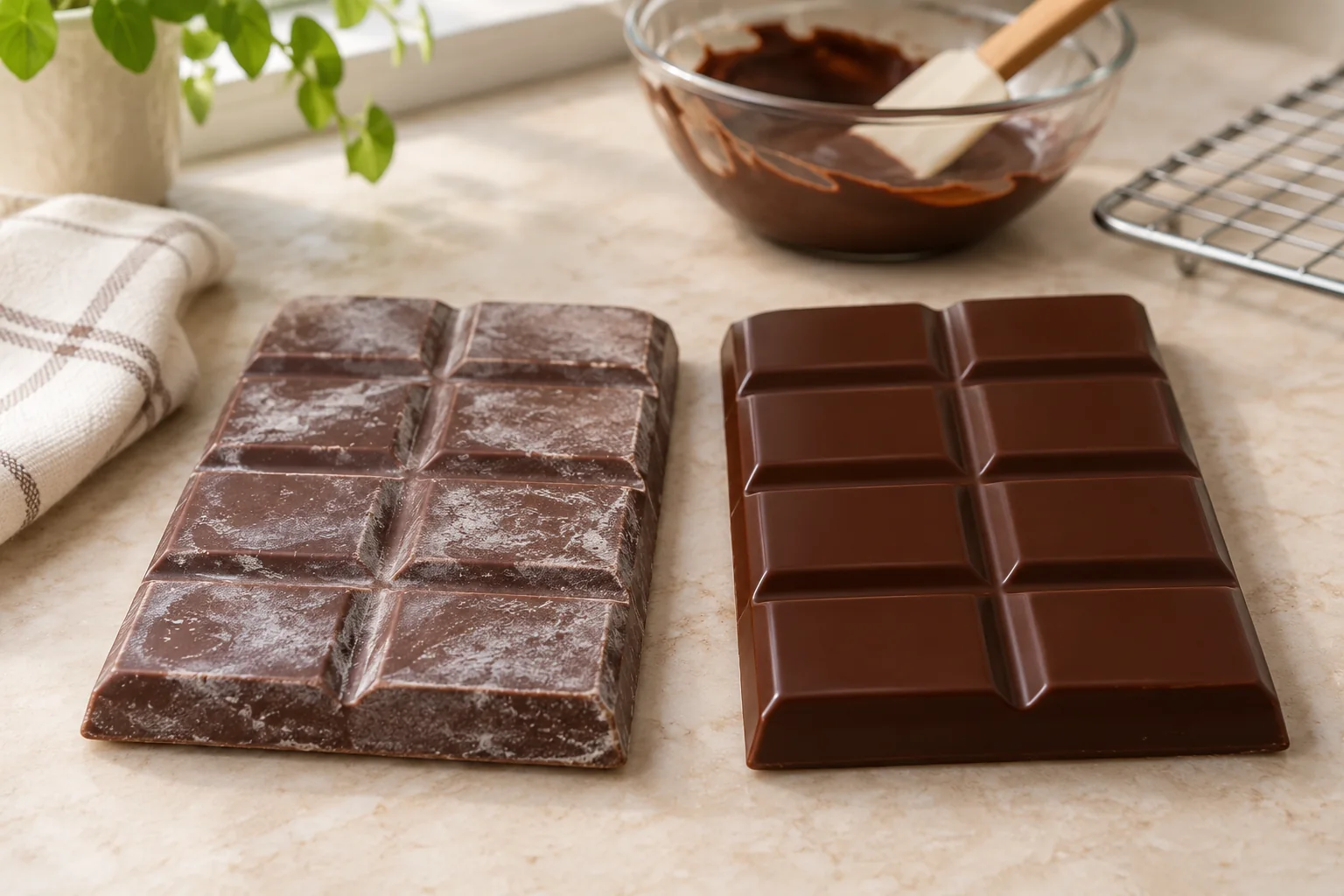
Moisture and temperature fluctuations can cause bloom, the pale streaks or spots sometimes seen on chocolate. Bloom may affect quality, so avoid moving chocolate repeatedly between humid warm air and very cold storage.
Can You Mix Different Chocolates?
For certain cookie recipes, blending chopped semisweet and bittersweet chocolate can create interesting flavour contrast. But milk and white chocolate may melt and behave differently, and substitution ratios may matter in ganache or other precise applications.
For a first attempt, use the type and weight specified by the recipe. Make flavour experiments one change at a time so you can evaluate the result.
Common Chopping Mistakes
Using an unstable board: the blade and chocolate slide. Trying to cut through the thickest section first: requires extra force. Leaving pieces too large for ganache: encourages overheating to melt them. Measuring irregular chunks by volume: can change the chocolate quantity. Using the wrong chocolate: causes sweetness or texture differences unrelated to chopping technique.
Frequently Asked Questions
What knife is best for chopping chocolate?
A sturdy serrated knife often provides good control on firm bars and wafers. Choose a tool that fits the chocolate size and that you can use safely.
Can I use chips instead of chopped chocolate?
Often for mix-ins, but chips may retain their shape rather than forming melted puddles. In ganache or coating, use a recipe tested for the exact chocolate type.
Should chocolate for ganache be finely chopped?
Usually yes, unless you're using small couverture callets or pieces suited to the method. Even sizing helps the chocolate melt gently.
Can I chop chocolate ahead of time?
Yes, when stored correctly in a dry, sealed container under the chocolate manufacturer's conditions.
Why is my chopped chocolate turning powdery?
The cutting technique, tool and chocolate texture may be creating excessive fine fragments. Try controlled cuts with a suitable serrated knife.
Better Pieces, Better Baking
Chopping chocolate is a small technique with a noticeable impact. A stable board, the right knife and an intentional range of piece sizes give you more control than a bag of uniform chips. Once you understand what each size contributes, you can choose between chocolate flecks, chunks and glossy melted pools with confidence.
Related recipe: Chocolate Layer Cake.
Recipe to try: Almond Flour Brownies. This version combines almond flour with dark chocolate. Its proportions are specific to that flour and are not a one-for-one wheat-flour conversion.

IN PICTURES
From the baking notebook
FROM THE RECIPE BOX


