On this page
Puff pastry can rise into dramatic golden layers while its bottom stays pale and limp. That problem is especially common when pastry supports wet fruit, custard or a heavy savoury filling. Crispness depends on moisture management and enough heat reaching the underside before the topping soaks the dough. A puffy rim is not evidence that the centre or base has cooked through.
What makes puff pastry crisp?
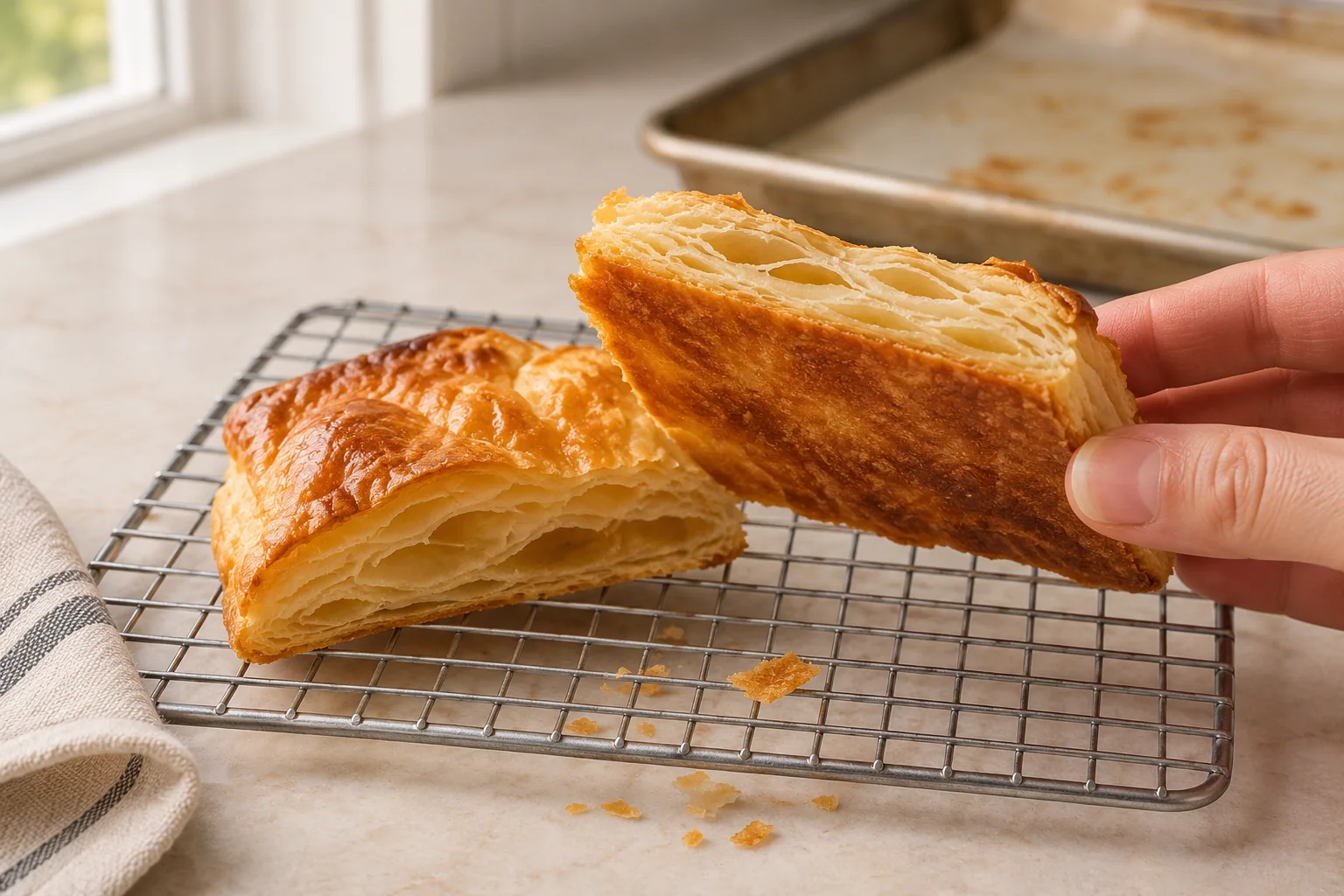
Puff pastry contains alternating thin layers of fat and dough. Heat turns some moisture into steam, separating those layers, while the exposed dough dries and browns. If filling blocks evaporation or the underside receives too little heat, the base can remain soft even when the outer border is impressively tall.
Start with the right product
Use a tested homemade puff formula or a frozen sheet suited to the recipe. Butter-based and other commercial pastries may have different thawing and baking instructions. Don't assume that every block can be placed in the oven at the same temperature or without rolling.
Follow the pastry's bake temperature
Many puff pastry recipes use a relatively hot oven to promote expansion, but precise temperatures vary with filling, thickness and product. Reducing heat dramatically to protect fruit can prevent the base from crisping properly. Choose a formula balancing both components rather than changing the dial blindly.
Preheat thoroughly
An oven or baking surface that's still warming can cause the butter to soften and leak before strong steam expansion occurs. Wait for full preheat and follow any additional time specified for stones or heavy sheets. Verify actual oven temperature if pastry repeatedly comes out pale.
The baking sheet matters
A suitable metal sheet can transfer heat to the bottom pastry more effectively than some insulated or very thick vessels. The ideal choice depends on the formula. Use the specified pan finish and rack position and avoid placing inappropriate cookware directly on a heating element.
Use parchment correctly
Parchment helps pastry release cleanly, but it must be rated for the oven temperature and kept clear of exposed elements. Excessive layers beneath the dough can reduce direct heat transfer, so use the number of sheets the recipe specifies.
Roll to the correct thickness
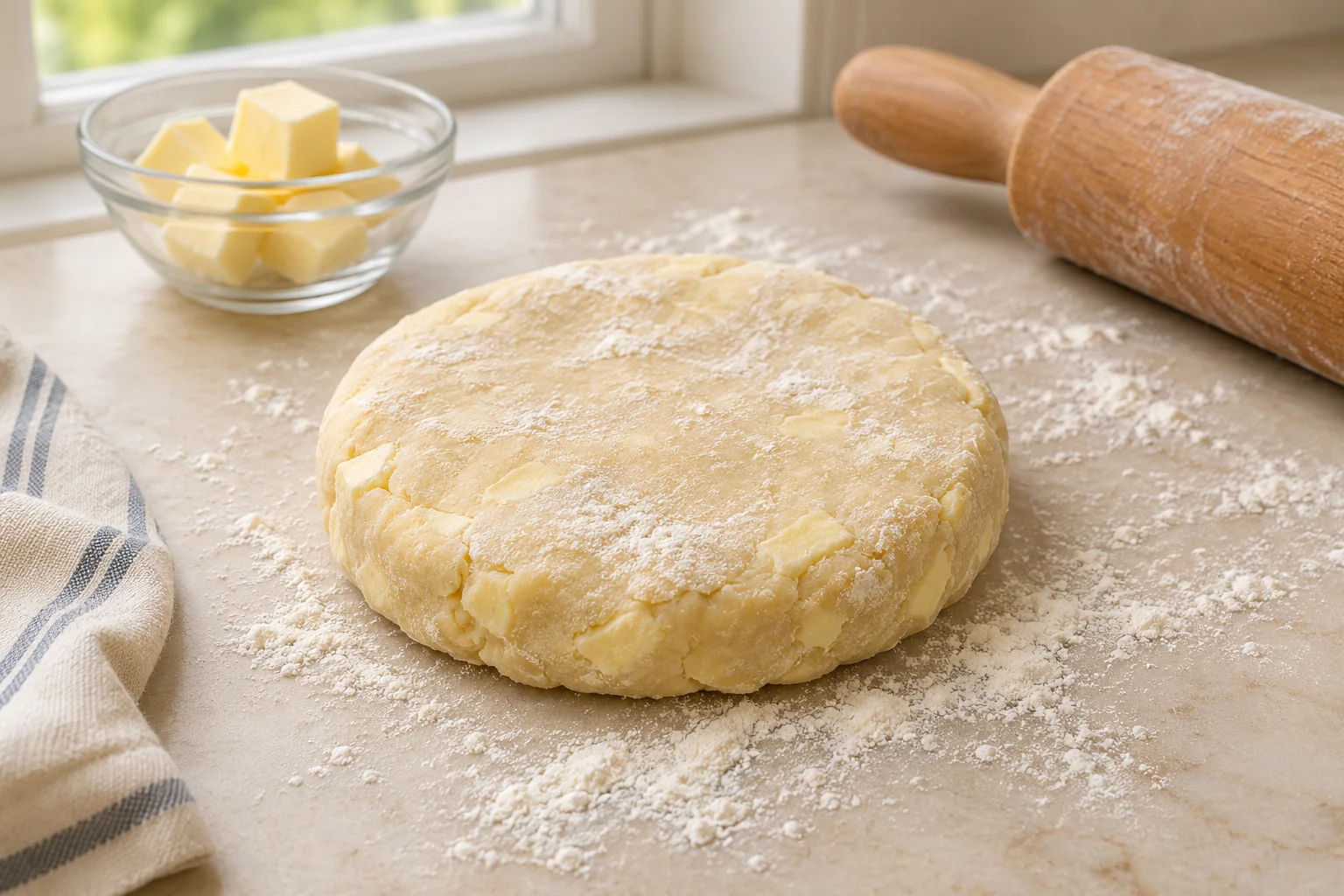
An overly thick centre takes longer to bake and may stay doughy beneath fruit. Very thin pastry can tear and fail to support filling. Roll the sheet evenly to its recipe-specific target, keeping the butter layers cool and intact.
Chill after shaping
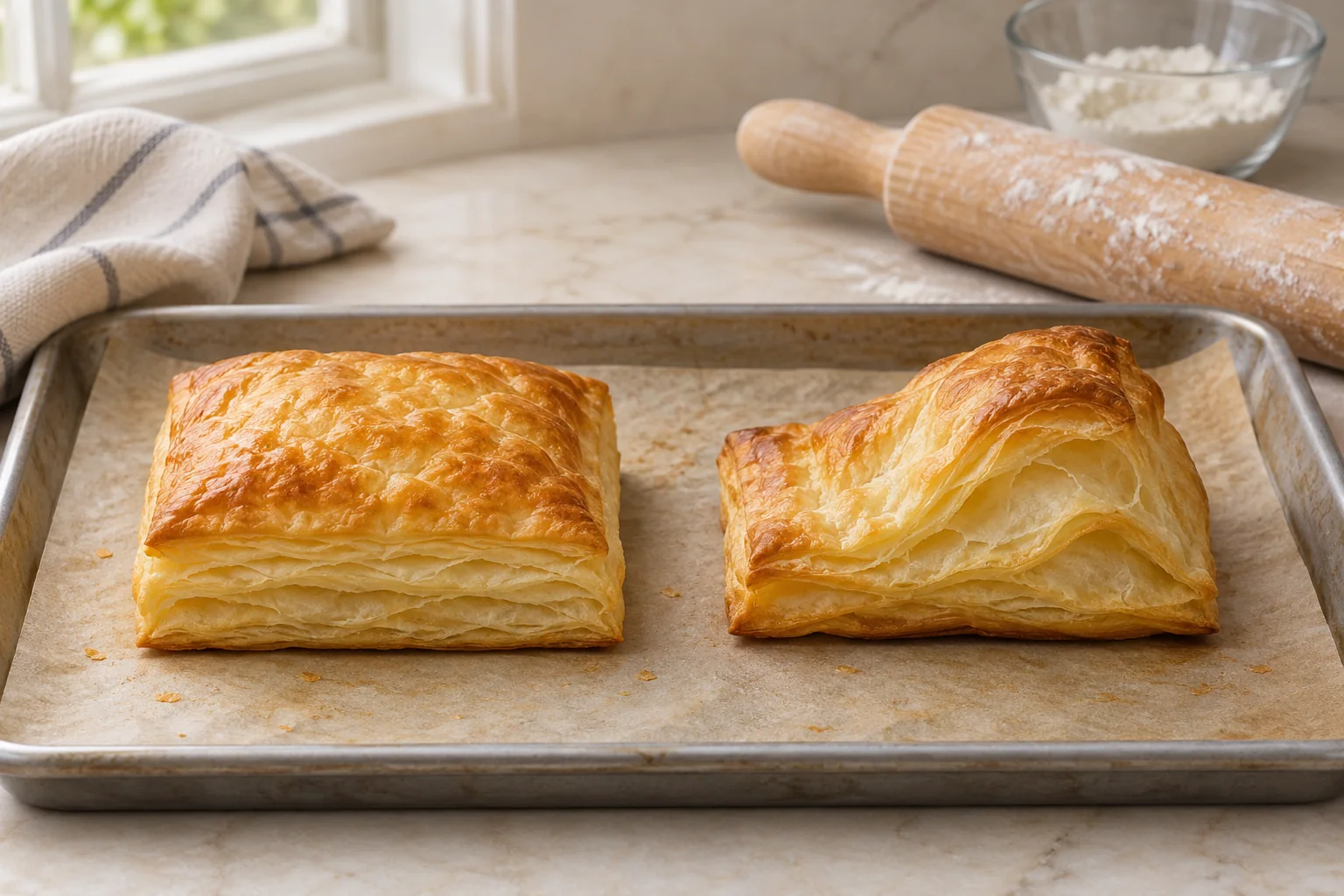
When pastry warms during cutting, the butter layers become softer and can smear. A recipe-approved short chill before baking can help restore a workable structure. This is particularly useful for elaborate cutouts or turnovers prepared in a warm kitchen.
Control liquid in fruit toppings
Fresh berries, juicy peaches and frozen fruit can release water into the dough. A tested tart recipe may dry the fruit, cook it briefly, use a thin barrier or adjust thickener. Randomly piling wet fruit onto raw pastry frequently produces a soft centre.
Leave the raised border free
For a simple puff-pastry tart, a shallow score around the perimeter can define a rim while the centre is docked or topped. Keep thick wet filling away from the edge so it can rise. Do not cut the border completely through unless the recipe calls for separate pieces.
Docking helps keep centres flat
Docking with a fork creates small holes in the area that should remain flatter, while the rim rises. A mille-feuille sheet may also be docked and baked under a suitable weight or another sheet. Follow the exact method for whether holes should penetrate every layer.
Avoid overfilling turnovers
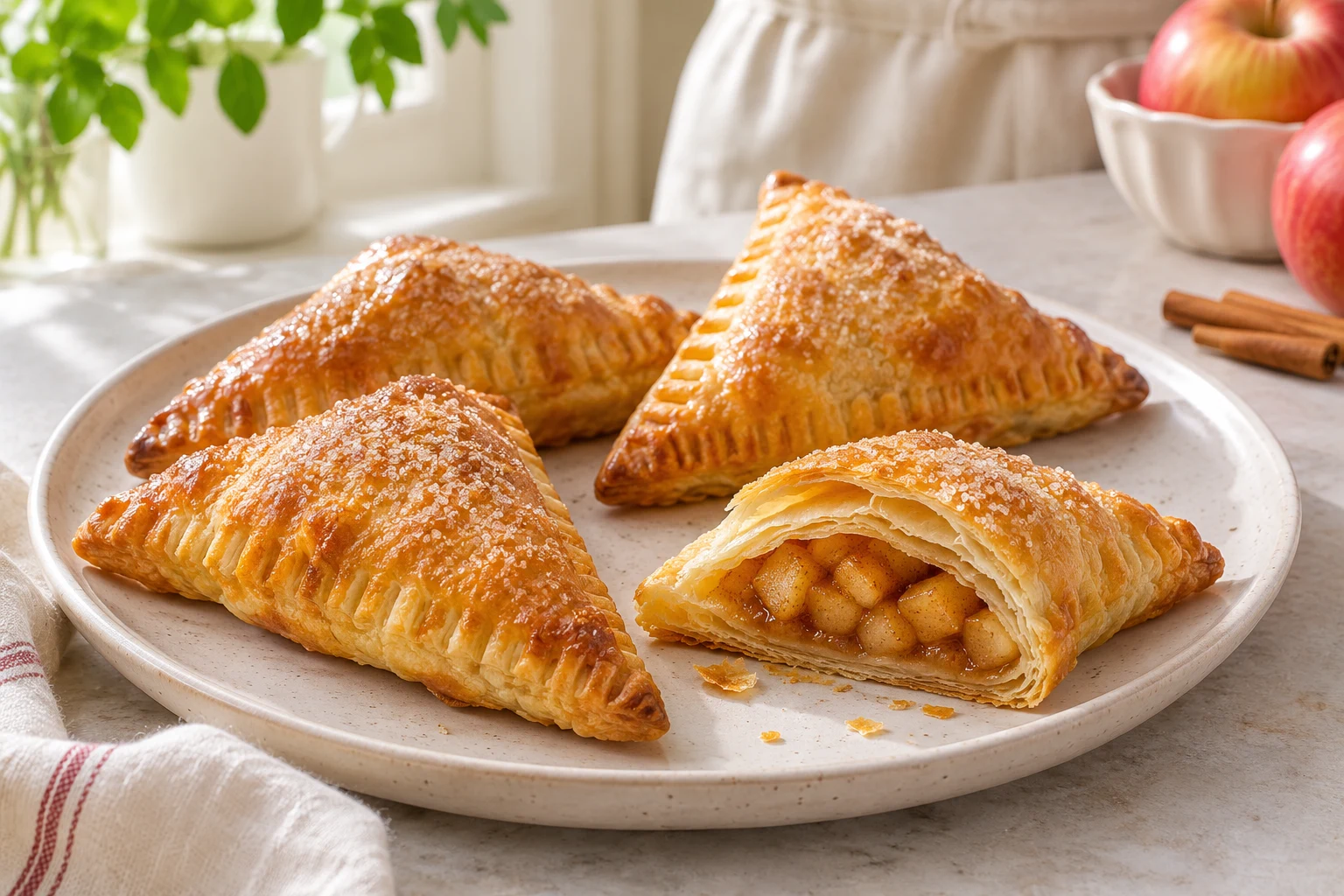
A thick wet filling increases steam inside the package and can leak through weak seams. Use the recommended spoonful per portion, keep the seal clean and cut any required vents. A small, properly filled turnover often bakes more evenly than a bulging one.
Recipe to try: Apple Turnovers. These turnovers use ready-made puff pastry. Keep their assembly and baking directions distinct from a shortcrust pie.
Seal edges without crushing all layers
Press only the seam area as instructed, keeping exposed edges cleanly cut. Squashing every edge with a dull knife or excessive pressure can seal laminated layers together and limit their puff. The purpose is a contained filling with enough room for expansion.
Know when the base is baked
Lift an edge carefully with appropriate tools if the recipe permits and inspect the underside. A finished pastry base should have the intended colour and dry layered texture, not raw pale dough. A golden rim with a wet centre usually needs more suitable baking time or moisture control.
Recipe to try: Cranberry and Orange Pastries. This recipe provides a homemade pastry project with cranberry and orange. Follow its own folding and chilling sequence.

Some tarts benefit from prebaking
Certain puff-pastry tarts use a fully or partially baked sheet before adding moist fillings. Others are designed to bake together. Use the assembly procedure written for the tart rather than assuming all fresh fruit belongs on raw puff pastry.
Mille-feuille needs a different finish
For neat layered desserts, puff pastry is often baked flat and crisp rather than allowed to balloon into large pockets. Docking, controlled weight and full baking are common tools. A soft undercooked centre becomes even less pleasant once it touches pastry cream.
Why the bottom may burn instead
Excess bottom heat, a dark sheet or an oven rack too close to a heating element can burn the underside while the top remains pale. Match the pan and rack to the tested recipe; don't solve sogginess by putting pastry directly on an unsafe surface.
Cooling preserves crispness
Move baked pastry to an appropriate rack so steam can escape rather than condensing beneath it. Don't close warm puff pastry inside an airtight container. For cream-filled pastries, cool completely, then fill near serving while keeping perishable components refrigerated.
Recipe to try: Cranberry Danish. Danish dough also involves yeast and proofing. It is a related pastry project, not an interchangeable version of plain puff pastry.

Frequently asked questions
Does higher heat always fix a soggy bottom? No, filling moisture and thickness matter. Should I use a baking stone? Only with a compatible recipe and appliance. Can frozen fruit go straight on puff? Follow a tested fruit tart method. Does docking stop all puffing? It limits it in selected areas, not everywhere.
Crispness comes from the whole method
Keep butter layers cool, roll evenly, choose suitable oven heat, control the filling's water and bake the underside fully. A crisp-bottom tart is not just about the rim's height; it's about a properly cooked pastry beneath every bite.
IN PICTURES
From the baking notebook
FROM THE RECIPE BOX


