On this page
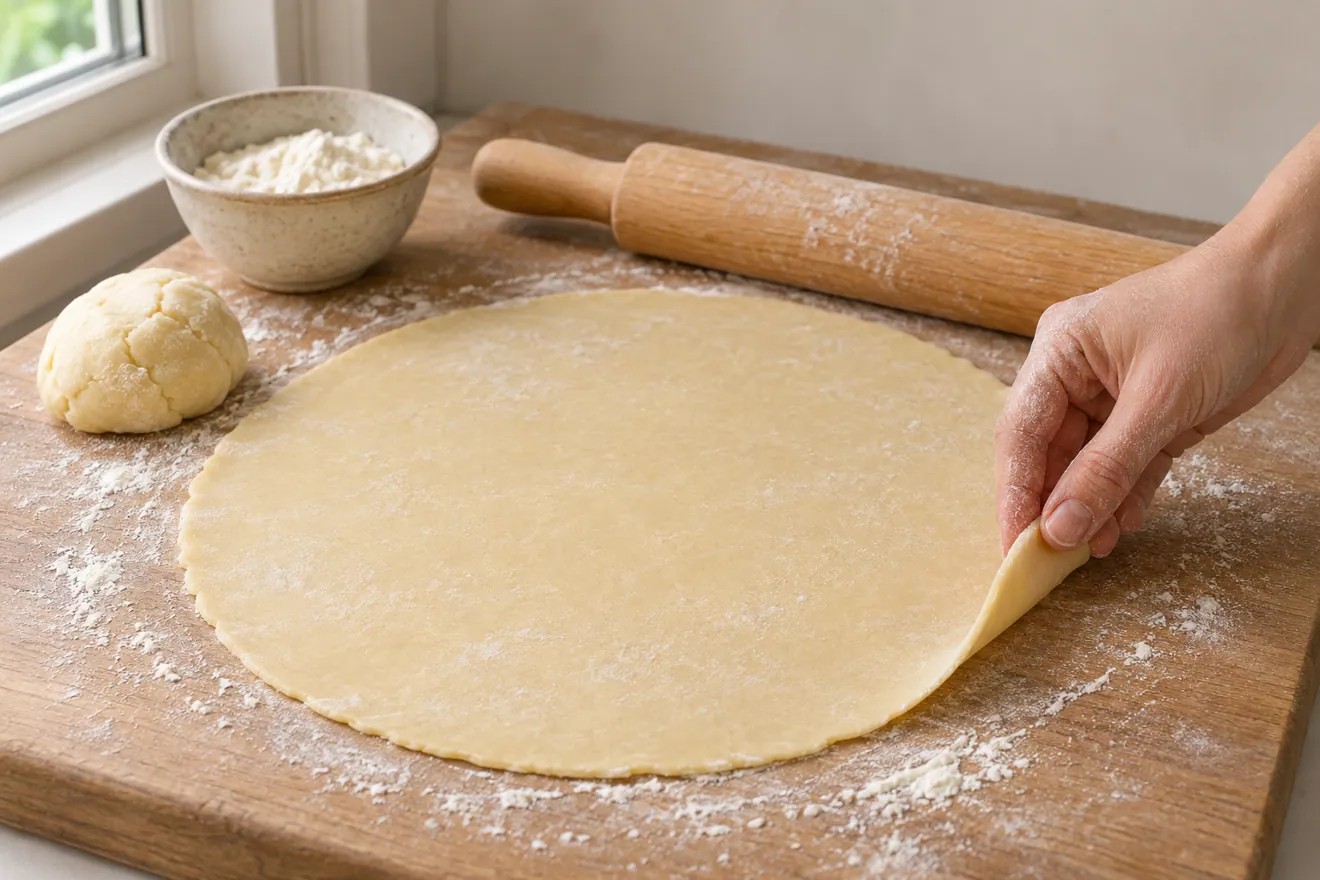
Pie dough thickness is easy to overlook until a slice reveals a heavy, doughy base or a paper-thin rim that has burned. Many conventional fruit pies start with pastry rolled to approximately ⅛ inch (3 mm), but that measurement isn't a law of pastry. The correct thickness depends on the dough, dish, filling and whether the sheet will become a bottom crust, lattice or decorative cutout.
The useful starting point
A common starting thickness for flaky wheat-flour pastry is about 3 mm (⅛ inch). Follow your recipe for hand pies, sweet tarts and other shapes that use a different thickness.
Roll the dough for Blueberry Pie into a 30 cm (12 inch) circle about 3 mm (⅛ inch) thick, as directed in that recipe.
What happens if crust is too thick?
An overly thick bottom can remain pale or underbaked beneath juicy filling, especially in a deep pan. A thick decorative rim may be hard or doughy and overwhelm the fruit. The solution is not automatically baking the pie for twice as long; start by rolling more evenly and using a dough quantity suited to the pan.
What happens if crust is too thin?
Very thin pastry may tear when transferred, develop holes that leak fruit juices, or brown before the filling finishes. A thin shell can also become fragile when lifted. Repeated patching adds extra local thickness and may make the finished base uneven.
Why uniformity is more important than perfection
A consistent sheet cooks and browns more evenly. If one side is ¼ inch and the opposite side nearly transparent, you can get an underbaked patch and a burnt patch in the same pie. Check several spots as you roll instead of measuring only the centre.
Use rolling-pin guides
Removable guides, thickness rings or even two straight clean rails can help maintain an even gap for the rolling pin. They are aids, not replacements for checking the surface. Adjust the guide to the target thickness and keep the dough centred on a lightly floured, cool work area.
Begin with a flattened disk
Chilled pastry is easier to roll evenly when it was flattened into a disk before refrigeration. A thick cold ball tends to crack as you force it outward. If the disk is rock-hard, let it become just pliable enough to roll according to the recipe.
Roll from the centre outward
Apply steady pressure moving from the centre toward the edge and rotate the dough periodically. Avoid repeated hard strokes that create a thin centre and thick perimeter. Lift gently to ensure it isn't sticking, dusting with only enough flour to keep it mobile.
Avoid too much bench flour
Heavy flour additions can dry the outside of pastry and alter its texture. Brush away excess as you fold or transfer. If the dough becomes sticky because butter is melting, a short refrigerator rest may help more than repeatedly adding flour.
How large should the circle be?
Thickness and diameter are related. A deep nine-inch pie pan often needs a rolled circle around twelve or thirteen inches across, depending on depth and desired overhang. Use the dimensions supplied by your recipe instead of assuming a nine-inch circle will reach the rim of a nine-inch pan.
Allow for the pan walls
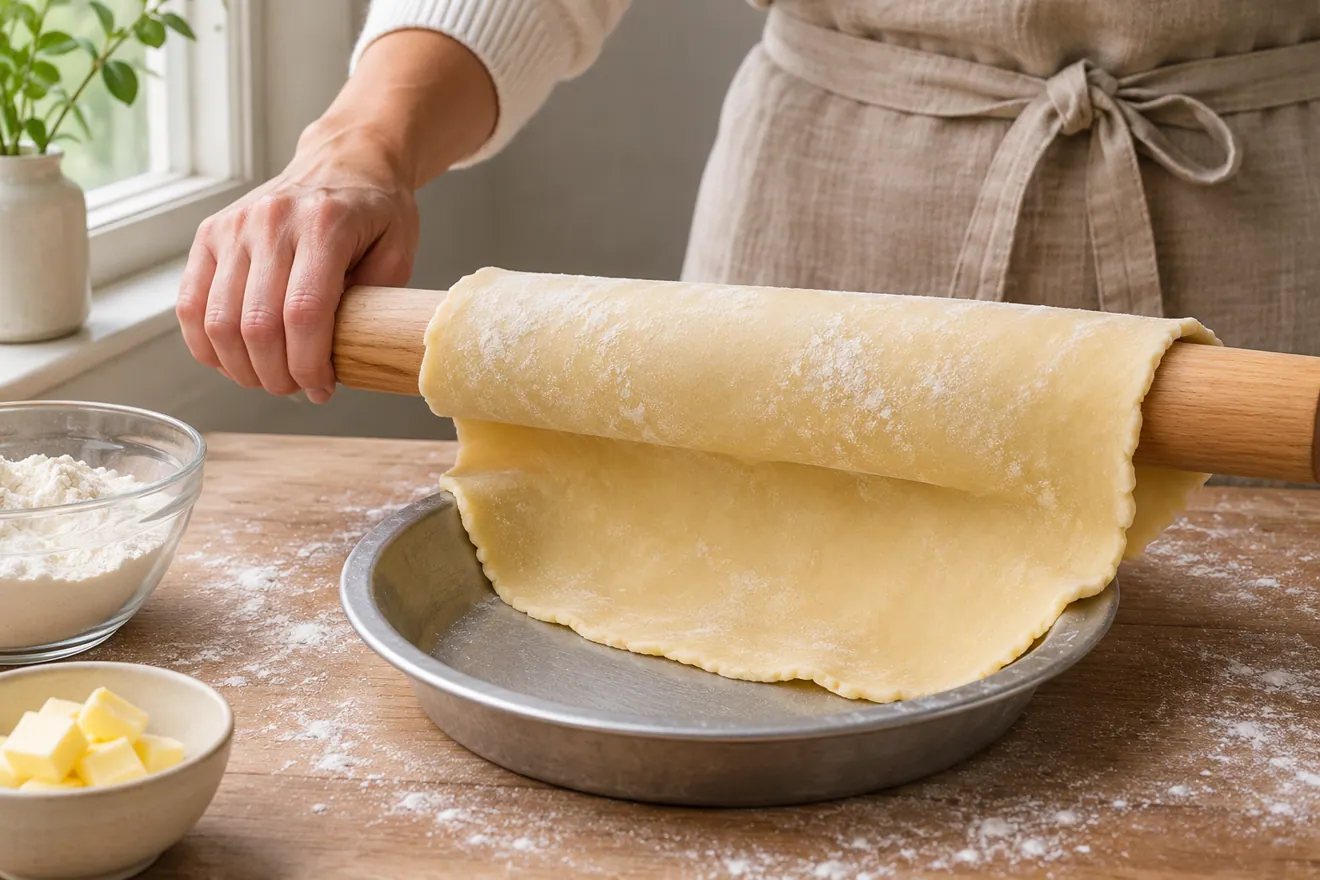
A pastry circle must travel down one side, across the bottom and up the other. A deep dish needs a larger diameter than a shallow plate with the same top opening. Reserve additional dough for a crimped rim and avoid stretching the pastry to compensate for a circle rolled too small.
Centre the sheet before lowering it into the dish. Lift a section of overhang to supply enough slack for the corner where the side meets the base.
Bottom crust considerations
The bottom carries the weight and moisture of filling. It should be substantial enough to handle but thin enough to bake through. For especially wet fruit pies, proper thickener and oven method are as important as pastry thickness; an extra-thick base is not reliable moisture protection.
Top crust considerations
A full top crust generally follows the recipe's approximate thickness to bake evenly with the bottom. Very thick tops can stay underdone along overlaps; very thin tops tear when vented. Cut intentional vents or use lattice according to the filling's needs.
Lattice-strip thickness
Lattice strips may be rolled similarly to other pie pastry, but their width and thickness influence how easy they are to weave and how quickly they brown. Refrigerate strips briefly if they soften, and avoid pulling them tight across the fruit.
The lattice in Strawberry Rhubarb Pie starts from a sheet rolled to about 3 mm. A consistent thickness helps the strips bend during weaving.

Hand pies and mini pies
Smaller pastries have shorter bake times and different folding needs. Very thin dough can leak at sealed edges; too thick a seam can remain raw. Use a hand-pie or tartlet formula tested for the desired dimensions rather than merely shrinking a standard pie by eye.
Use Apple Hand Pies for 3 mm dough cut into smaller rounds. Check that the top and bottom pieces match so you can press their edges together.

Sweet tart dough
Pâte sucrée and pâte sablée can use rolling instructions different from flaky pie dough. Their butter and sugar content affect how they hold a crisp edge and how fragile they become after baking. Follow the tart recipe's thickness and chill schedule.
Measuring without a ruler
Experienced bakers may recognize a thin, flexible sheet by sight and feel, but a ruler or calibrated rolling guide is useful while learning. Avoid repeatedly poking or stretching the pastry. Check the rolled dough before placing it in the dish.
What if the rolled dough cracks?
It may be too cold, too dry or insufficiently hydrated. Let it become slightly more pliable according to the method and join small cracks gently. If large tears appear continually, return to a reliable dough formula rather than pressing dozens of scraps together.
What if it shrinks during baking?
Stretching dough to fit the pan, excessive handling and insufficient rest are common contributors. The solution may be gentler transfer and a covered chill after shaping. Rolling even thinner to fight shrinkage can make the crust fragile without solving the tension.
Blind baking and thickness
An empty tart or pie shell needs a bake schedule appropriate to its pastry thickness. Too thick may remain pale under weights; too thin can crack when the weights are lifted. Follow the recipe's parchment, weights, docking and second-bake instructions.
Bake the pastry before tasting it.
Frequently asked questions
Is ⅛ inch always correct? No, but it is common for many conventional pies. Can you make the bottom thicker than the top? Only if the recipe specifies it. Why are my edges too hard? They may be thick, overbaked or overworked. Should dough be rolled while frozen? Usually it needs enough flexibility to avoid cracking.
A dependable rolling routine
Use the prescribed amount of rested pastry, roll to a consistent measured thickness, make the sheet large enough for the pan and ease it in without stretching. Even, cool dough generally produces a much more attractive crust than obsessive last-minute patching.
Related recipe: Classic Apple Pie.
Some images are AI-generated illustrations of the dishes and techniques described.
IN PICTURES
From the baking notebook
FROM THE RECIPE BOX


