On this page
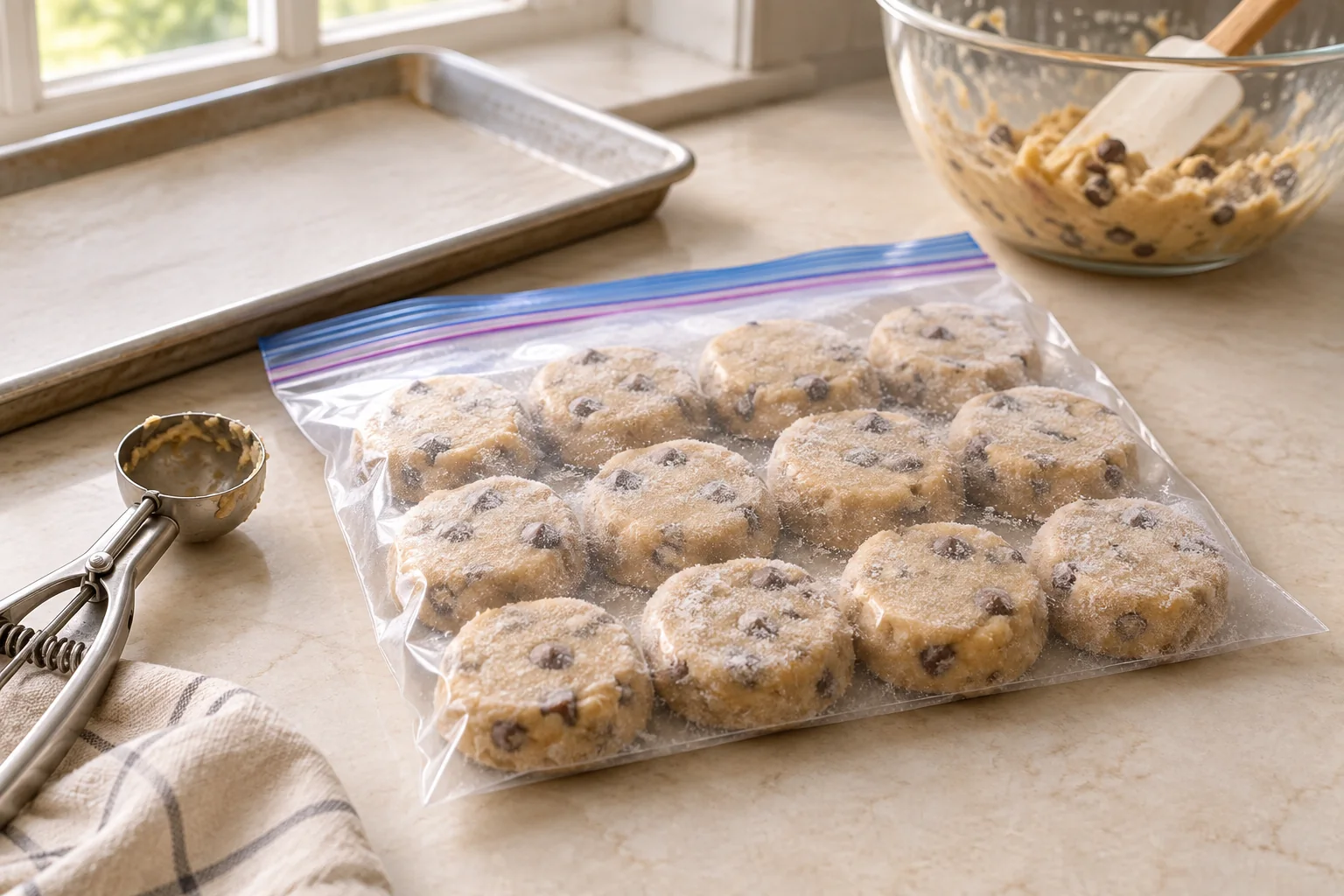
A bag of pre-scooped cookie dough in the freezer can turn an ordinary evening into fresh-baked dessert in minutes. But a labelled freezer bag is more useful than an unidentified block of dough discovered months later. Freezing slows deterioration, while air exposure, odour transfer and repeated temperature changes can still harm cookie quality. The best storage time depends on the recipe, packaging and freezer conditions.
Freezing is best treated as a quality plan
Food kept continuously frozen at appropriate freezer temperatures can remain safe for extended periods, but texture and flavour don't stay perfect forever. Cookie dough contains butter, flour, sugar and often eggs; its storage quality depends on protection from air and on the type of dough. Follow the recipe's stated freezer window for best results.
There is no single universal cookie-dough expiration date
Some tested recipes recommend using frozen dough within a few weeks, others within one to three months for optimal eating quality. The precise period depends on ingredients and wrapping. An expired best-quality window does not automatically prove spoilage, but a badly dried or mishandled dough shouldn't be assumed fine.
Choose dough suited to freezing
Many drop-cookie doughs, including chocolate chip and oatmeal, freeze successfully in scooped portions. Very delicate meringue-based mixtures, specialty batters and already whipped preparations may not behave the same way. Check whether the particular cookie recipe includes frozen-baking instructions.
Portion before freezing
Scoop dough onto a parchment-lined tray in the size the recipe calls for. Space isn't essential during the initial freezing stage because the cookies are not baking yet.
Freeze on a tray first
A brief initial freeze allows soft dough balls to become firm enough that they won't merge into one block inside a bag. Follow a reliable method, then transfer the firm portions to freezer packaging. Don't leave uncovered dough on the tray for days, since exposed surfaces dry and absorb odours.
Use freezer-rated packaging
Once solid, move portions into a well-sealed freezer bag or rigid food-safe container. Press out excess air without flattening the scoops. Thin household wrap alone may not protect against drying over a longer period.
Label the dough thoroughly
Write the cookie name, freezing date, portion weight, intended oven temperature and any recipe-specific frozen-baking adjustment. This prevents confusion between similar-looking chocolate chip and oatmeal scoops and makes it easier to bake the correct number.
Include allergy information when sharing
Peanut butter, tree nuts, wheat, dairy, eggs and sesame may be present in different cookies. Don't rely on the dough's appearance to identify allergens. Label stored portions clearly, especially in households with allergy restrictions.
Keep the freezer consistently cold
Use a reliably cold freezer and avoid repeatedly leaving the bag on the counter during cooking. Frequent thaw-and-refreeze cycles can create frost and change texture. Return unused portions promptly rather than keeping the whole bag beside a hot oven.
Do butter cookies freeze differently?
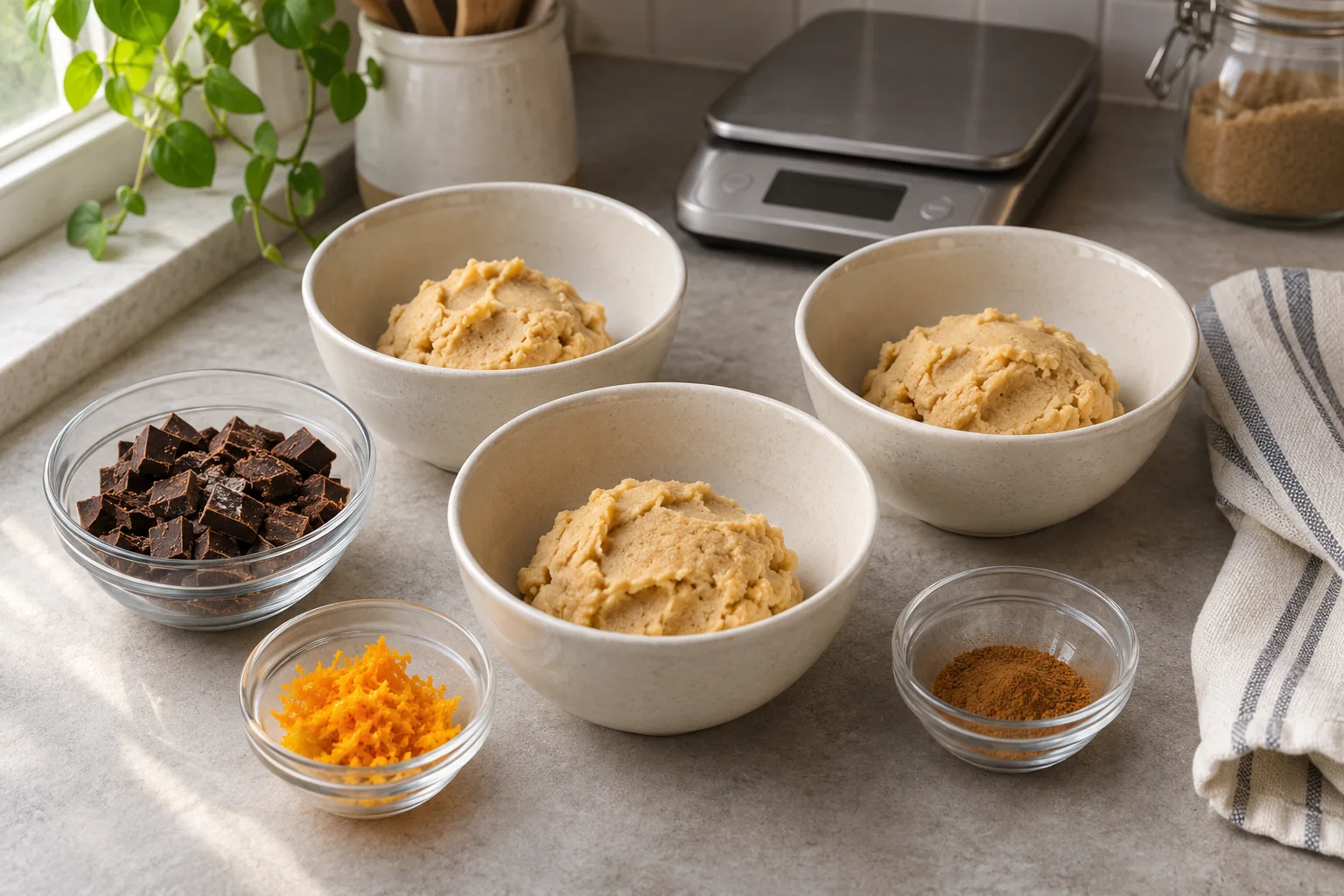
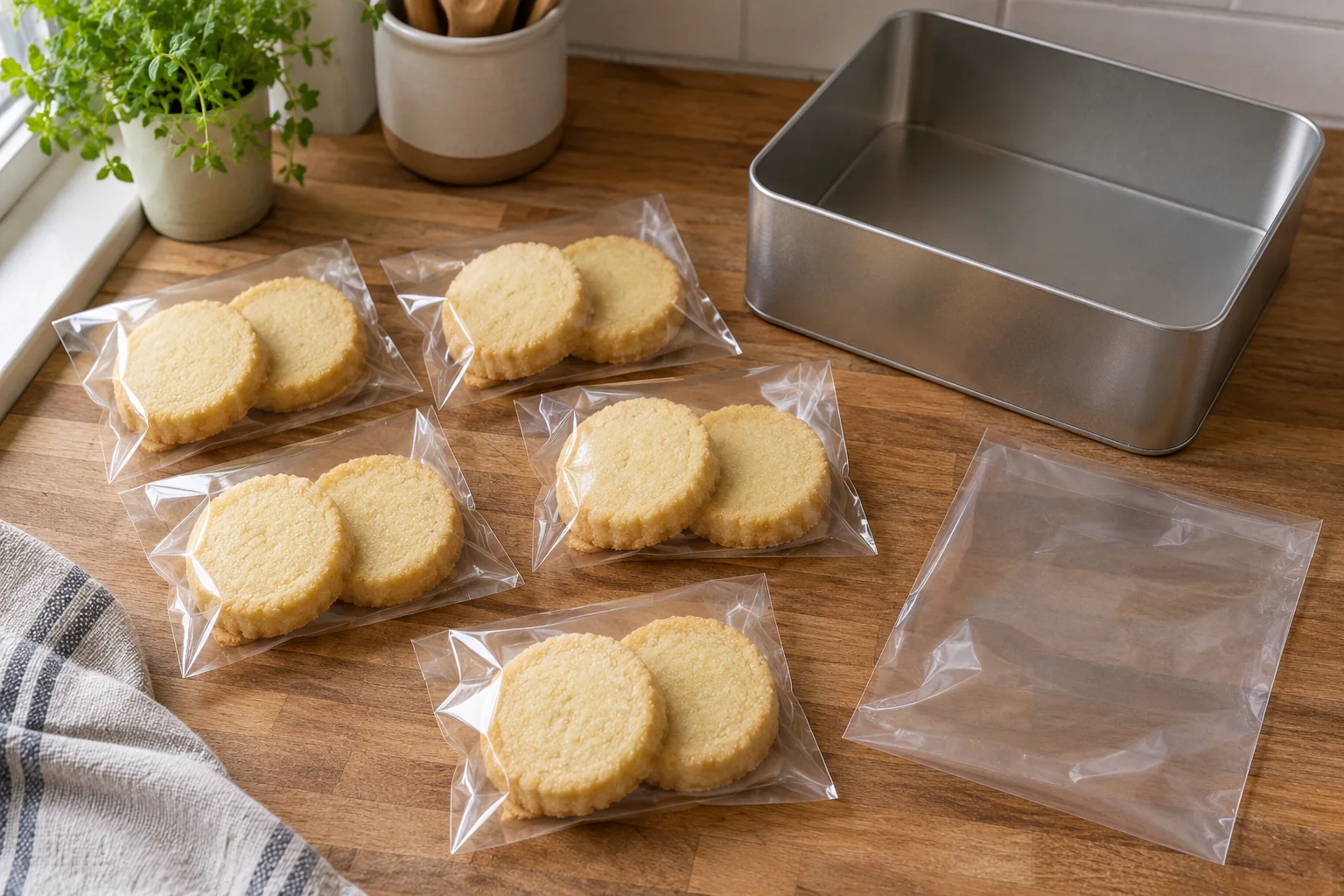
Rich butter doughs often freeze well, but fats can pick up freezer odours and may develop stale flavours during long storage. Tight wrapping matters. A tender slice-and-bake shortbread log may need a different packaging and thawing routine from soft scooped cookie dough.
Slice-and-bake logs
Some cookie recipes ask you to shape dough into a log before chilling or freezing. Wrap it closely, label diameter and slice thickness, and follow the recipe's instructions for cutting. A fully frozen log may be hard to cut safely; allow any specified controlled tempering.
Rolled cutout dough
Sugar-cookie and gingerbread dough may be frozen as disks or as pre-cut shapes when the formula permits. Protect delicate edges with rigid support and prevent drying. Different methods may require thawing before rolling or baking shapes directly from frozen.
Stuffed dough needs extra care
Cookies filled with ganache, cream cheese, fruit or caramel can have different freezer behaviour and food-safety requirements from plain dough. A formula that approves freezing a chocolate chip cookie doesn't automatically approve its cream-cheese-stuffed variation.
Freezer burn and dryness
Pale dry patches, excessive ice crystals or off flavours may indicate exposure to air. Freezer burn primarily affects quality, but unusual odours or evidence of unsafe handling deserve caution. Better packaging and shorter storage often produce a much nicer finished cookie.
Raw dough remains raw
Freezing doesn't make flour or eggs safe to eat uncooked. Do not sample frozen dough as a snack. Bake it thoroughly according to the recipe, using the correct frozen-dough procedure where supplied.
How to bake later
Many drop cookies can go from frozen portions directly to a preheated oven under a tested method. Others need controlled thawing. The dough temperature changes spread and timing, so follow the original recipe's specific direction rather than simply adding a random five minutes.
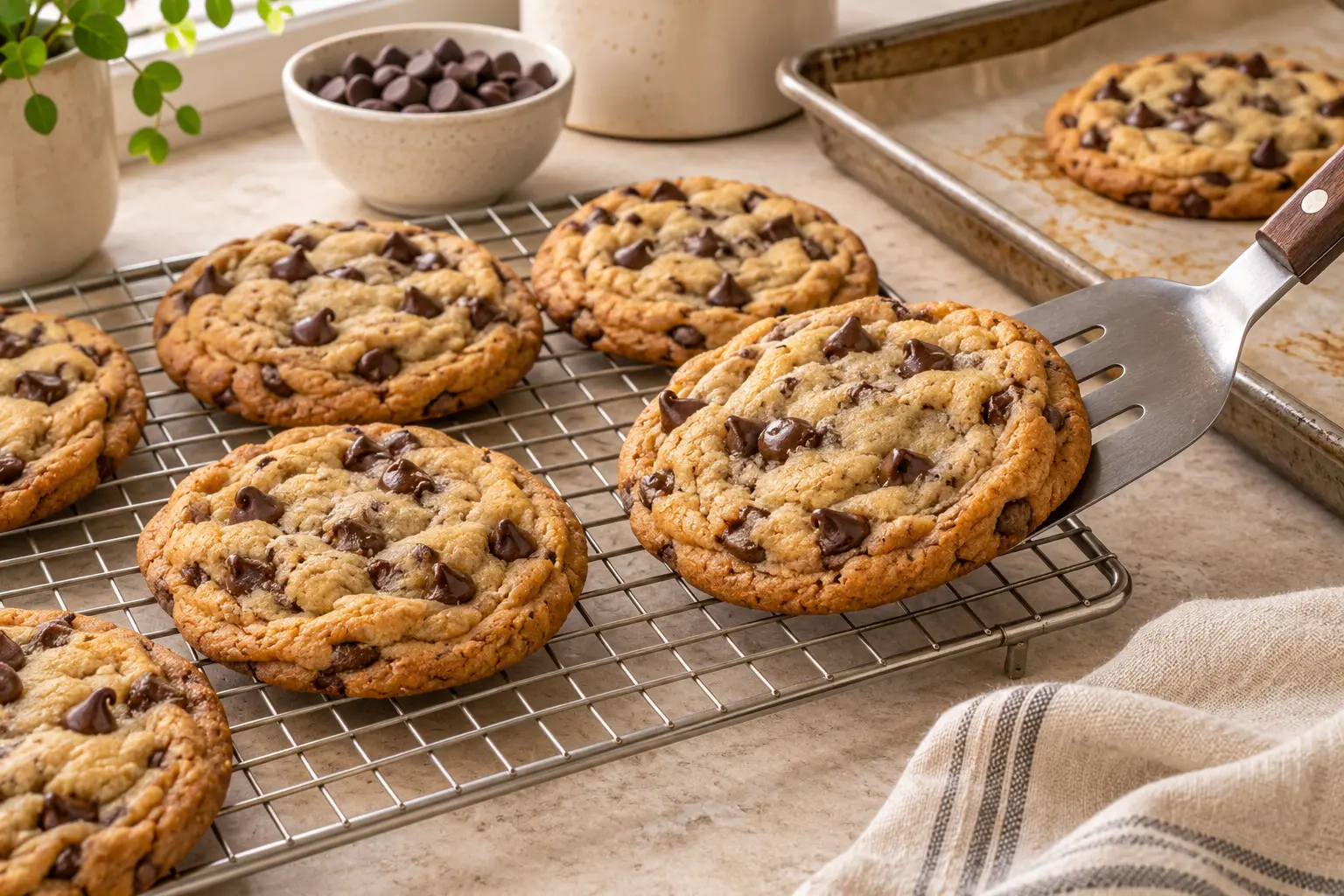
Recipe to try: Classic Chocolate Chip Cookies. Use the stated butter texture, dough portions and bake time together to establish a consistent cookie baseline.

How to thaw when required
Use the refrigeration method the recipe recommends. Leaving egg-containing dough for long periods on a warm counter can be unsafe and can soften fat unevenly. A slightly cool but pliable log or disk is often easier to shape than dough that has become greasy.
Can you freeze baked cookies instead?
Yes, many plain baked cookies can be frozen after complete cooling and protected packaging. This differs from freezing raw dough, because there is no additional baking stage after thawing. Choose baked storage when you want ready-to-eat treats and raw portions when fresh oven aroma matters.
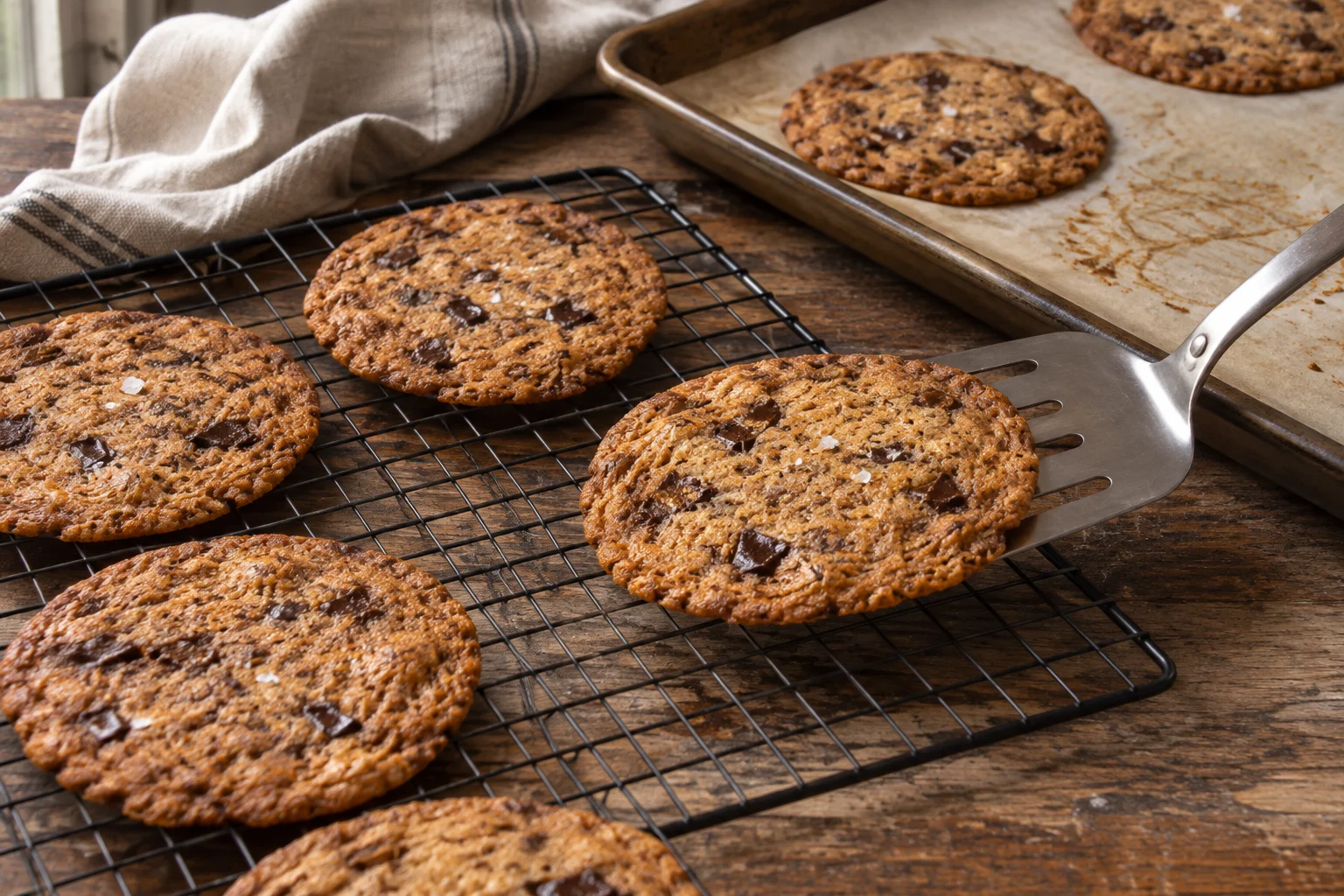
Recipe to try: Crispy Chocolate Chip Cookies. For a crisp cookie option, start with this formula and follow its baking and cooling cues. Thinness alone does not guarantee a crisp texture.
A practical inventory habit
Keep one small freezer container for cookie dough, with labels facing outward. Use older labelled batches before newer ones within their recommended quality window. This is easier than having multiple half-empty unmarked bags scattered through the freezer.
Recipe to try: Chewy Chocolate Chip Cookies. For a chewy cookie option, use this complete formula. Sugar, flour and cooling work together; changing only baking time is not the whole method.
Frequently asked questions
Does frozen dough stay perfect forever? No. Should I freeze dough balls individually first? Often useful. Can I eat frozen dough raw? No. Do I need to thaw before baking? Recipe-dependent. Can I refreeze thawed dough? Food safety and texture depend on how it was thawed and handled.
Plan for fresh cookies, not mystery dough
Portion precisely, freeze until firm, package airtight, label with a date and use the recipe's baking directions. A little organization protects flavour and turns frozen dough into a reliable baking shortcut.
IN PICTURES
From the baking notebook
FROM THE RECIPE BOX


