On this page
French toast is wonderful for two people and surprisingly stressful for twelve. The first batch comes off the pan golden, then you turn around to find the bread still waiting, the plates getting cold and the coffee sitting untouched. Feeding a group successfully isn't about flipping faster. It's about choosing the right cooking method and designing the menu around it.
This guide explains how to make French toast for a crowd, whether you're using a griddle, the oven or a make-ahead casserole. You'll find tips for choosing bread, keeping portions consistent, planning the timeline and serving food safely so everyone can eat together.
Decide Whether You Want Slices or a Casserole
Individual slices of French toast give you crisp edges, familiar shapes and easy portion control. A baked French toast casserole is better when you want one dish that can be served to a group at roughly the same time. Neither method is universally better.
For a small family, the stovetop can be perfectly manageable. For a large holiday brunch, a tested casserole or oven-baked sheet-pan French toast recipe may reduce work. Choose a specific recipe designed for the method instead of pouring ordinary skillet French toast mixture into a large pan and guessing.
How Many Slices of French Toast per Person?
A casual starting estimate is about two moderate slices per adult when French toast is the main breakfast dish, adjusted for bread size, appetite and sides. Smaller children may want fewer; a thick slice of brioche can be much more substantial than thin sandwich bread.
Use the recipe's actual serving yield and your guest list, rather than treating this estimate as a rule. When offering eggs, fruit and another main dish, people may take less French toast.
Choosing the Best Bread
Sturdy bread that can absorb the custard without disintegrating makes the process easier. Brioche and challah are rich and tender; thick white sandwich bread and certain rustic loaves can also work depending on the recipe. Very thin, fragile bread may fall apart with extended soaking.
Some recipes specifically recommend slightly stale bread. Others use fresh thick slices and adjust the soaking time. Follow the chosen recipe and keep slice thickness consistent so the batches cook at a similar rate.
Making the Custard
French toast batter usually combines eggs with milk or another suitable liquid, sometimes vanilla, cinnamon, sugar or salt. The balance matters: too much liquid can make the bread wet, while too little may create patchy coating.
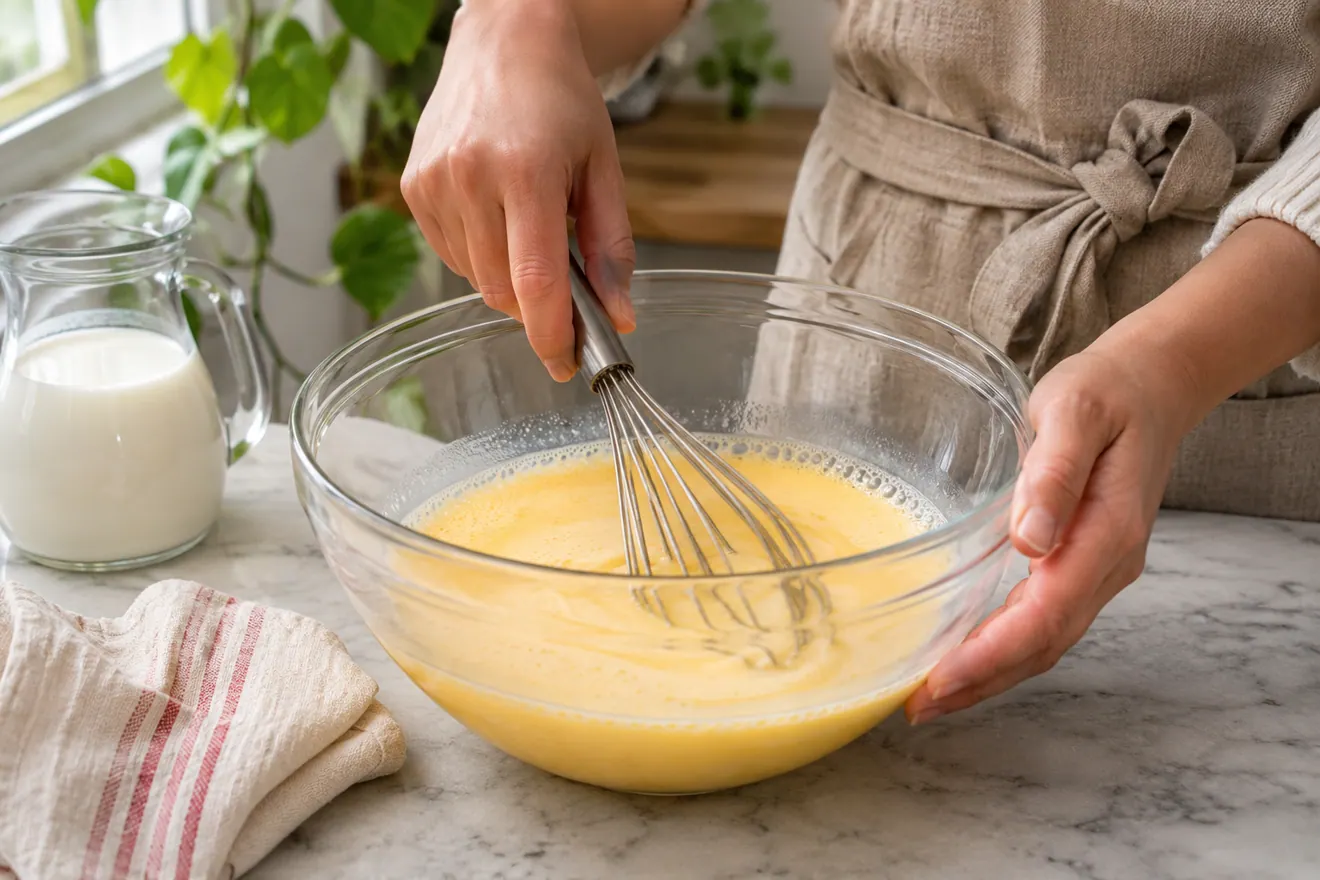
Use the recipe's ratio rather than scaling eggs and milk independently. Whisk until the ingredients are thoroughly combined; pockets of egg white can cook as streaks on the bread.
Scale Ingredients, Not the Pan Depth
For a crowd, make a larger quantity of custard in the recipe's tested proportions and work in manageable batches. Don't fill one shallow skillet with twice as many slices, since crowding reduces contact with the heated surface and can create uneven browning.
If your recipe produces six servings and you need twelve, two original-sized batches may be easier to control than a single giant pan of uncertain temperature.
Method 1: A Large Griddle
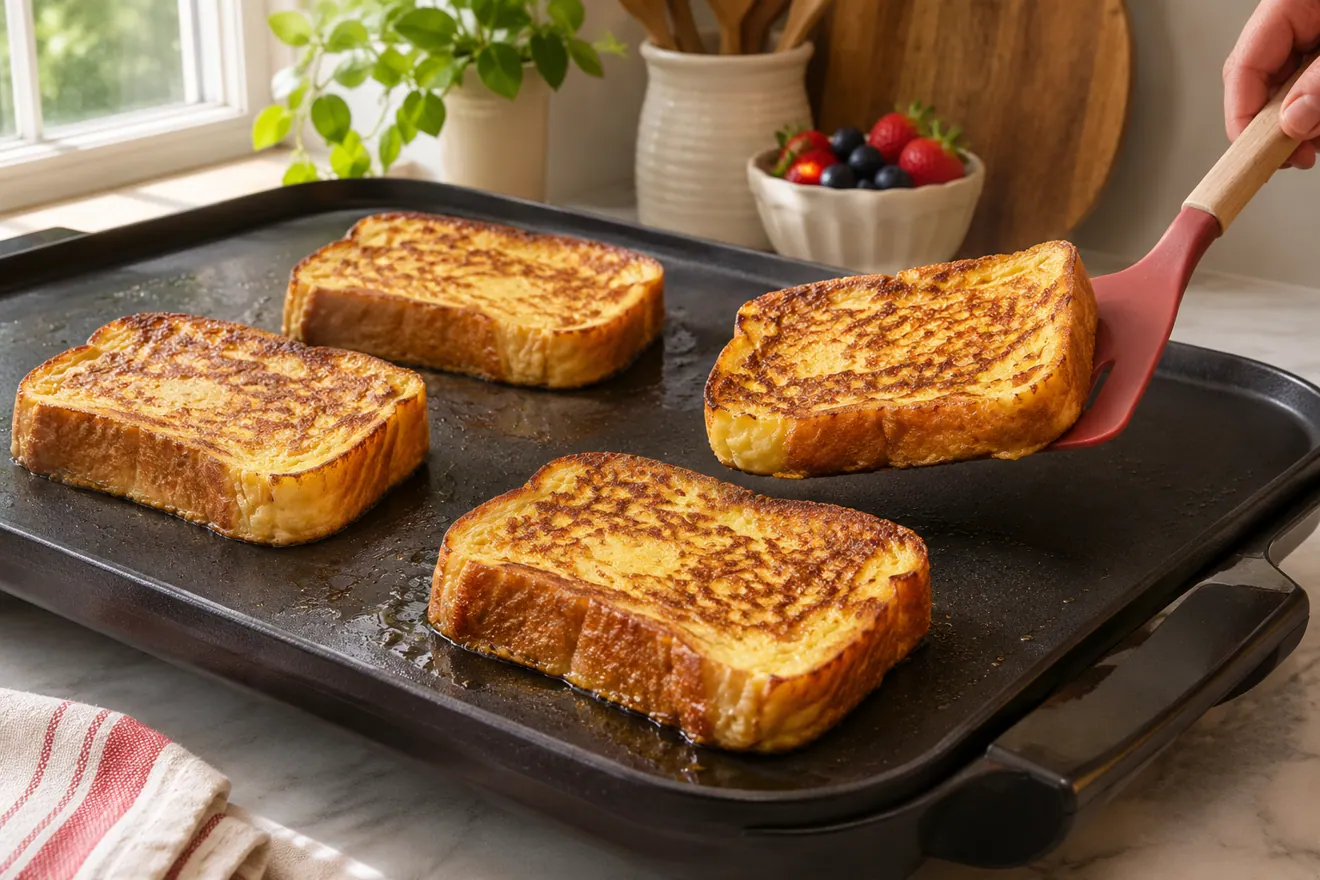
An electric griddle or broad stovetop griddle can cook more slices at once than a small frying pan. Preheat to the recipe's recommended temperature, grease appropriately and leave enough space to flip without tearing the bread.
Arrange slices in a consistent direction, monitor browning and turn as directed. Avoid stacking freshly cooked French toast immediately, because steam can soften its golden surfaces.
If you are feeding just a couple of late arrivals, use Air Fryer French Toast for a separate small batch and follow its temperature check.
Method 2: Two Skillets
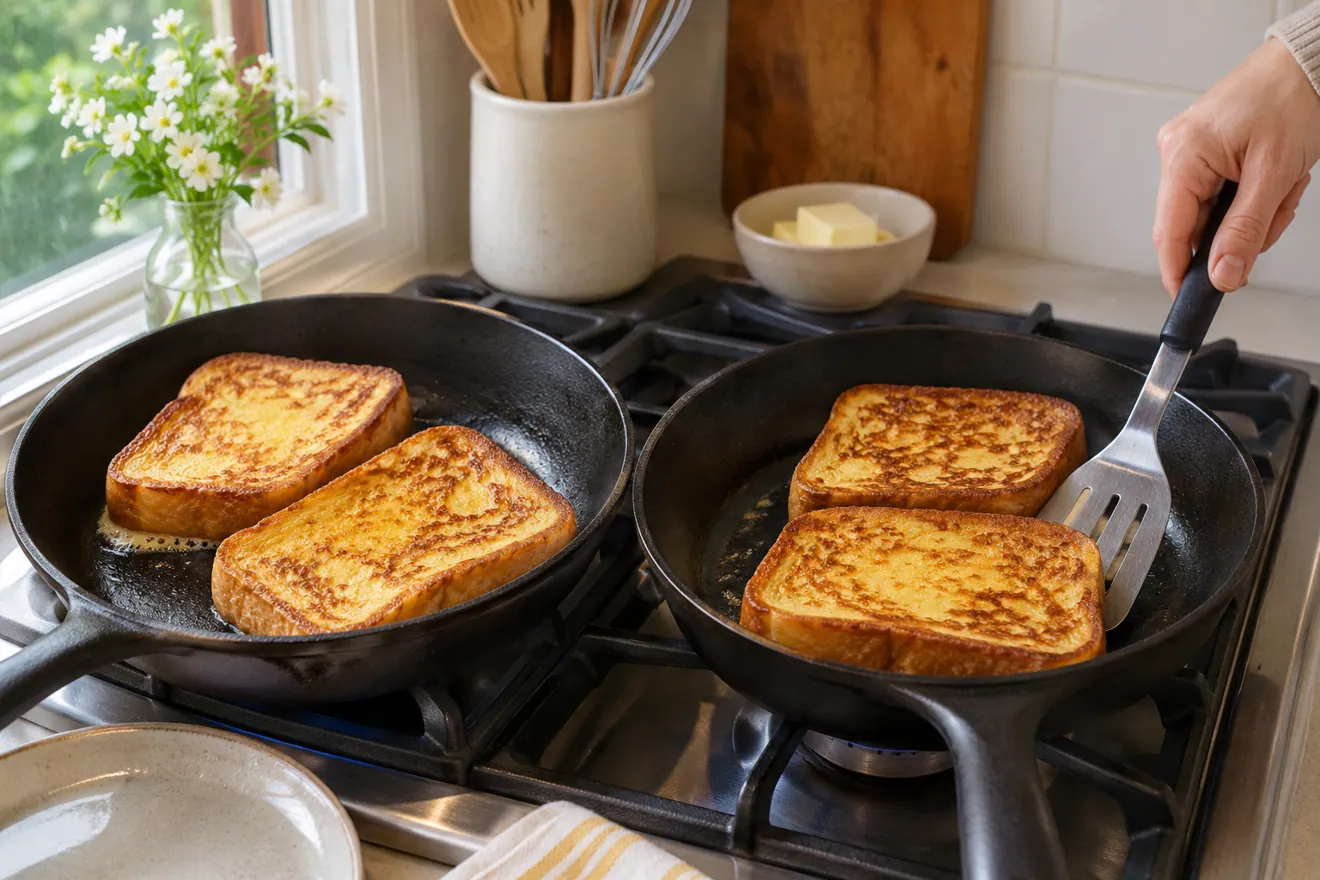
If you don't own a griddle, two skillets can speed up the process when you have enough stove space and an adult able to manage both safely. Use similarly sized pans if possible and adjust heat so one doesn't burn the bread while the other barely colours it.
This method works best with a helper who can prepare plates or fruit rather than adding an unrelated cooking task.
Method 3: Oven-Baked French Toast
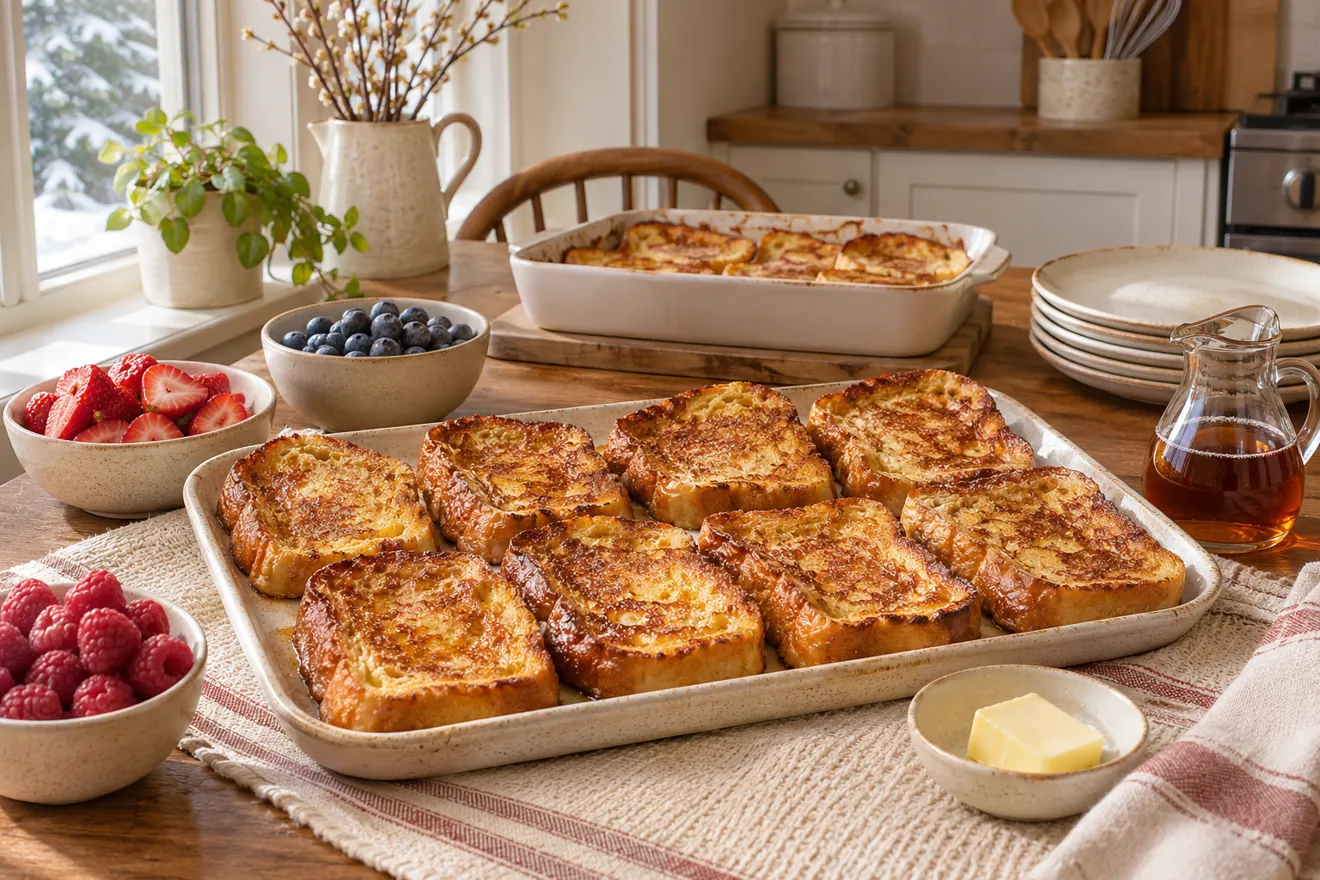
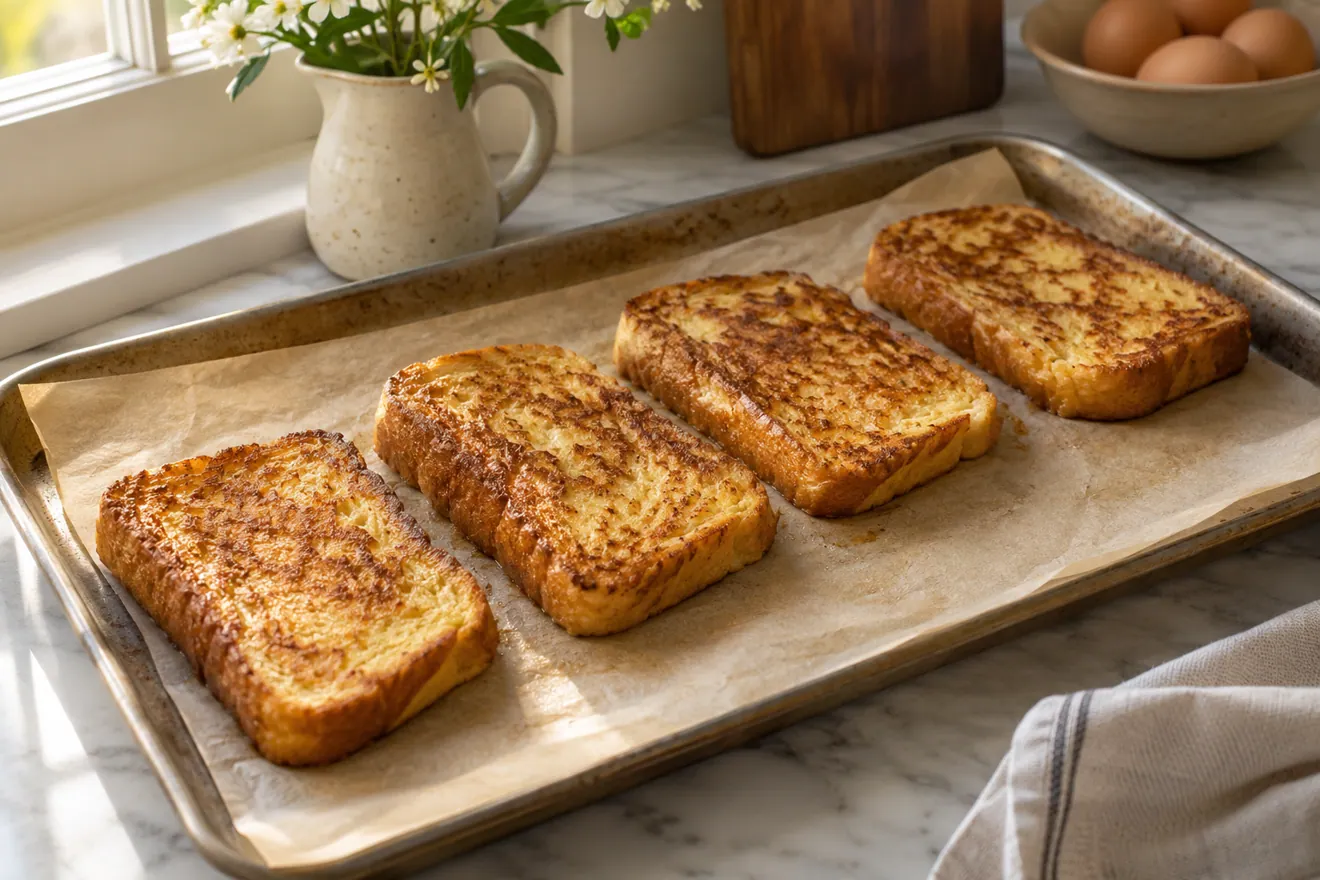
Some recipes are specifically developed for baking individual soaked slices on a sheet pan. This can be convenient for larger groups because several portions cook together with less flipping. However, the finish may differ from skillet cooking.
Use the recipe's exact pan preparation, bread thickness and baking temperature. Don't assume regular skillet instructions automatically work in the oven.
Method 4: Overnight French Toast Casserole
A casserole can be the lowest-stress choice for a holiday breakfast. Recipes written for overnight preparation allow the bread to absorb a measured custard under refrigeration. You then bake the entire dish according to its instructions.
Because it contains raw eggs and often dairy, keep the assembled casserole appropriately refrigerated at 4°C (40°F) or colder until baking. Never leave it overnight on the counter.

Should You Soak Bread Ahead?
It depends on the method. Some casserole recipes are designed around a long chilled soak; individual French toast slices may become soggy if they sit in custard for too long. Follow the specified dipping or soaking time for the bread's thickness and structure.
Preparing custard in a covered container under safe refrigeration may be helpful when a recipe permits it. Stir as required before use and observe raw egg handling practices.
How to Keep French Toast Warm for a Group
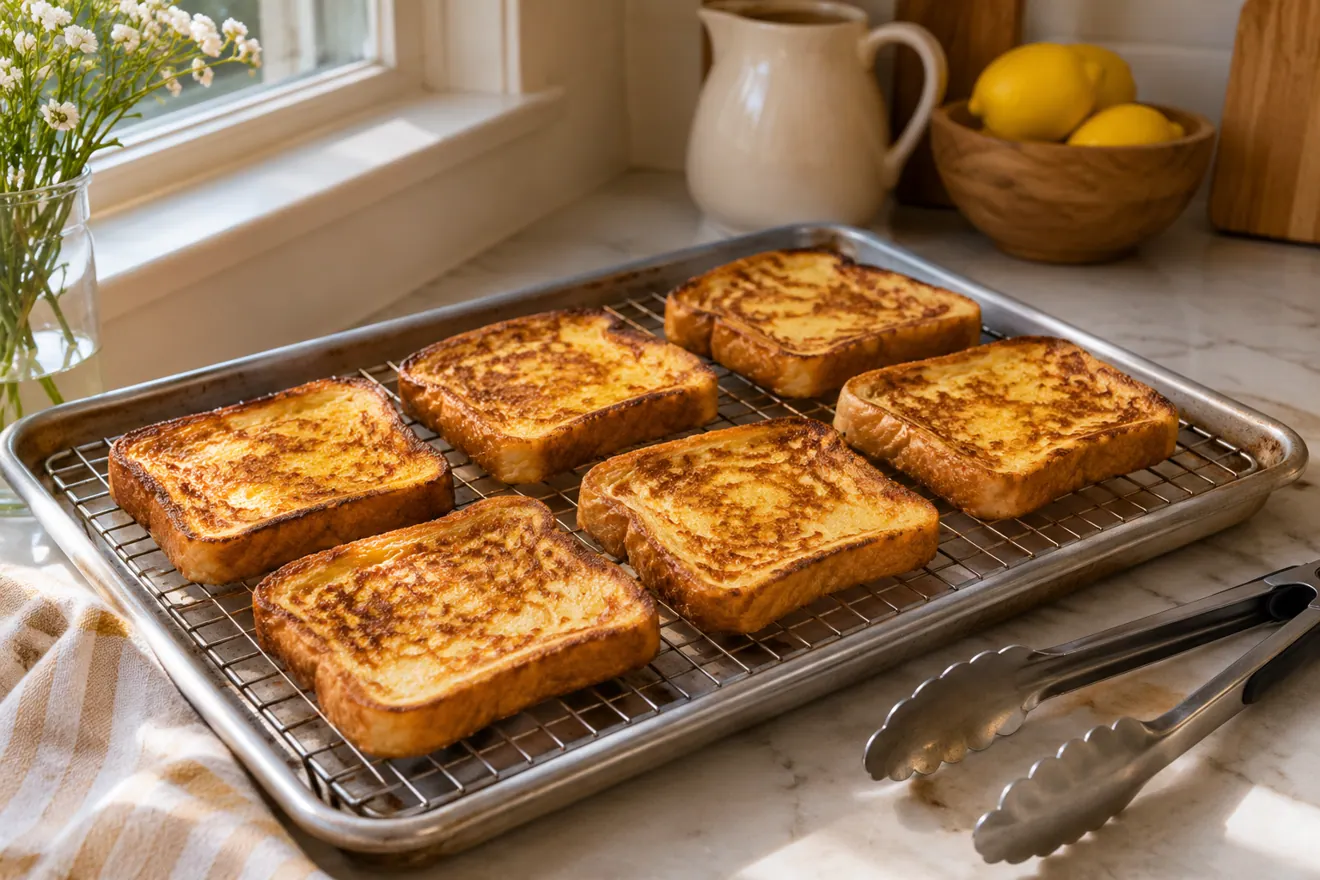
Many stovetop French toast recipes provide a short oven-holding method for finished slices. A single layer on a rack set over a baking sheet may help reduce trapped steam compared with stacking on a plate. Use the recipe's recommended holding temperature and duration.
Do not use a low oven as an indefinite storage solution. Food safety and quality both matter: prolonged holding can dry the interior, while unsafe temperatures can allow perishable cooked foods to become a concern. Serve batches promptly whenever possible.
Prevent Soggy French Toast
Check the bread and soaking method first. Thin bread left in egg custard too long can become saturated and fall apart. A pan that's too cool may not brown properly; one that's too hot may darken the exterior before the middle is fully cooked.
Use a tested recipe, work at its intended heat and avoid stacking hot slices tightly. A golden surface should not hide an undercooked custard centre.
How to Avoid Burned Edges
Butter and added sugar can brown quickly on a hot pan. Use the fat recommended in the recipe and check heat between batches, especially if the griddle becomes hotter over time. Wipe away burnt residue carefully when the equipment can be handled safely.
If cinnamon or sugar collects in the custard dish, stir the mixture according to the recipe for a more even coating.
Toppings That Work for a Crowd
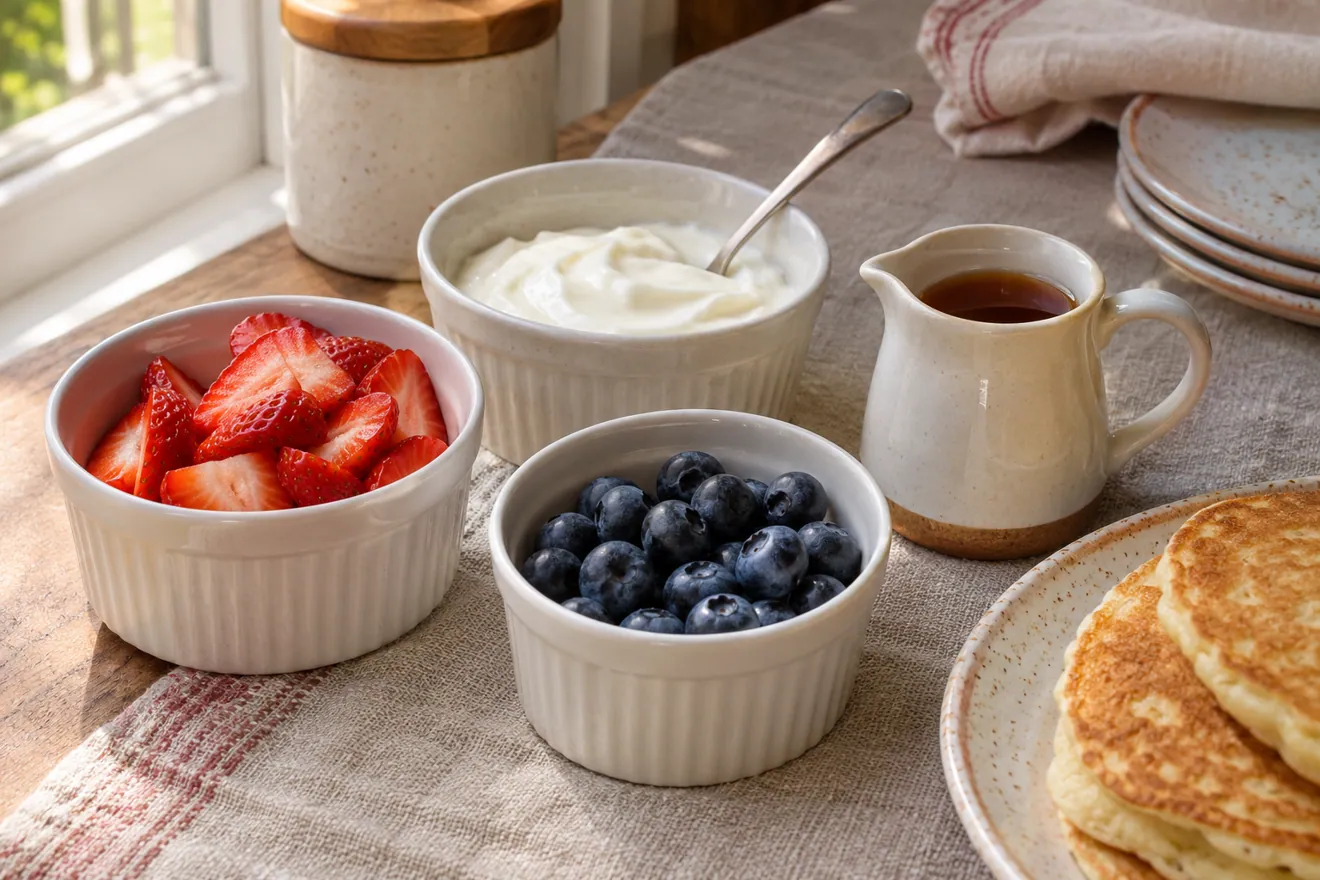
Keep toppings simple and self-serve. Good options include seasonal fruit, pure maple syrup, a suitable berry sauce and plain yogurt or whipped cream where refrigerated storage is available. Not everyone wants the same amount of sweetness.
A tray of sliced strawberries and bananas can be enough for a casual brunch. Avoid creating six different sauces unless you know the guests will use them.
Serving with Sweet and Savoury Sides
French toast is often the sweet centre of the meal, so a savoury egg dish or an uncomplicated protein option can balance the plate. Fresh fruit gives contrast and makes the table feel lighter.
Choose sides you can prepare independently while the French toast cooks. Scrambling eggs for a crowd at the exact same time as managing two griddles can overwhelm one person.
Breakfast Egg Muffins are a practical savoury side if the host can cook, hold or reheat them safely.
For a room-temperature side, consider plain Blueberry Muffins with fruit.
A Timeline for French Toast for 12
The day before: buy bread, check equipment, wash serving dishes and prepare any recipe-approved overnight components. One hour before serving: arrange toppings and confirm oven or griddle instructions. Closer to serving: cook French toast in batches or bake the casserole. At the table: offer warm portions and let guests choose their toppings.
The exact timings depend on your bread, equipment and recipe. A casserole requiring a long bake or rest period needs a different schedule from individual griddle slices.
Turn your timeline into batches. If a griddle holds four slices and the table needs sixteen, plan four rounds plus a few minutes to bring the griddle back to temperature between them. Set out toppings before the first round so cooked slices move quickly to the table.
Serving for 20 or More People
For a larger group, choose a baked French toast method with a known yield or arrange several griddle batches with helpers. Confirm oven space, sheet-pan sizes and the number of portions each batch actually produces.
Consider serving in two waves rather than leaving all food exposed for a prolonged time. Keep cooked food safe and refill plates as required.
Food Safety with Egg Custard
Use a clean bowl for the raw custard. Wash hands, dishes and utensils after they touch it, and send cooked toast to a separate clean plate. Check that the centre reaches 74°C (165°F).
If holding hot food for a short service, maintain at least 60°C (140°F). Refrigerate leftover slices promptly, use them within two to three days or freeze, and reheat to 74°C (165°F).
Common Mistakes When Making French Toast for a Crowd
Using very thin bread: it breaks during soaking. Overcrowding a pan: browning becomes uneven. Mixing a weak custard: slices remain wet and patchy. Stacking hot pieces: trapped steam softens the surface. Cooking at the wrong heat: the exterior browns too quickly or not enough. Skipping a schedule: the last batch arrives long after the first.
Frequently Asked Questions
How much French toast should I make for ten people?
Start from the recipe's yield and your chosen bread size. Two moderate slices per adult may be a useful estimate when it's the main breakfast, adjusted for appetites and side dishes.
Can I make French toast the night before?
A tested overnight casserole recipe can be assembled and refrigerated ahead. Individual sliced French toast needs a recipe that explicitly supports its make-ahead method.
Is a griddle better than a skillet?
A griddle offers more cooking surface, which can speed up a group breakfast. A skillet works well for smaller batches if you plan serving times carefully.
Can I keep French toast warm in the oven?
Many recipes include a limited oven-holding method, but use its safe temperature and duration. Avoid indefinite holding that dries the bread or creates food-safety concerns.
What bread works best?
Brioche, challah and thick-cut sturdy bread are popular, but the right choice depends on the recipe's custard and soaking method.
Make the Whole Table Feel Included
The nicest part of French toast for a crowd is everyone eating together. Choose a method that fits your equipment, use consistent slices and a proven custard, and prepare toppings before you begin cooking. When the kitchen runs on a simple plan, a familiar breakfast becomes a genuinely relaxed gathering.
Related recipe: Vegan French Toast Casserole.
Some images are AI-generated illustrations of the dishes and techniques described.
IN PICTURES
From the baking notebook
FROM THE RECIPE BOX


