On this page
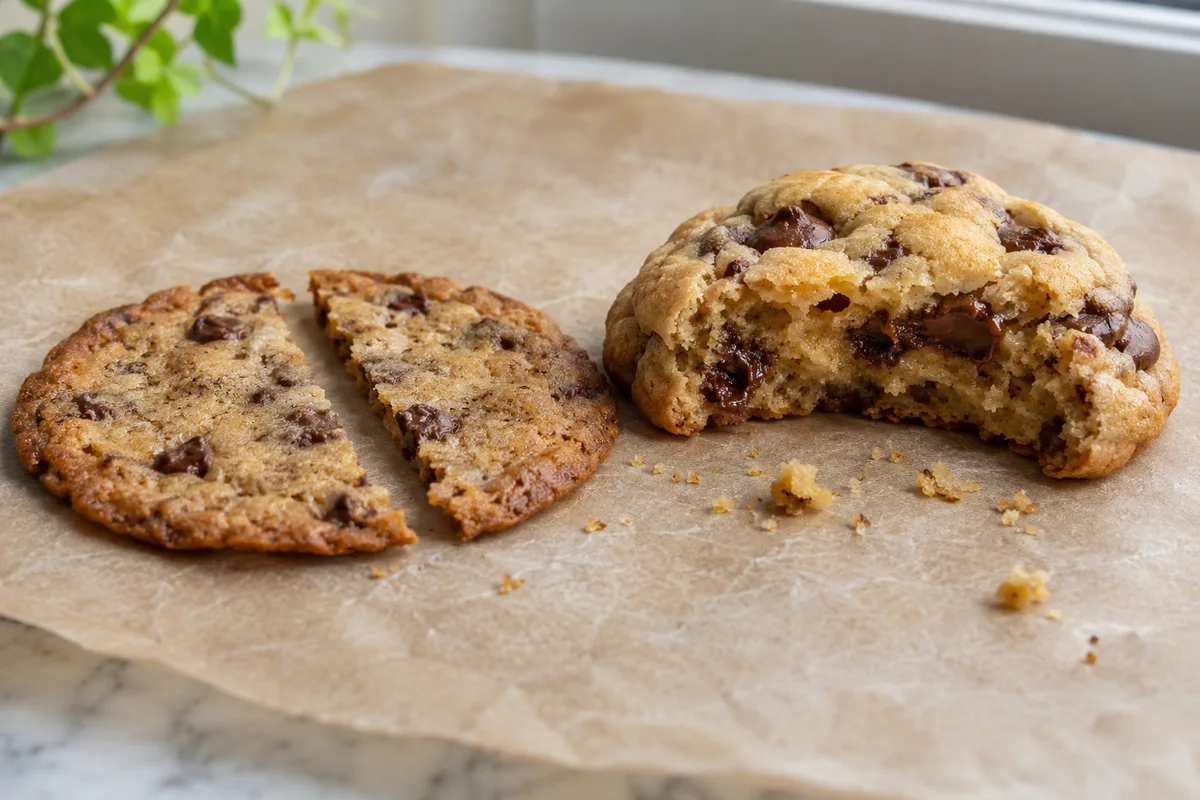
If you want a cookie that snaps at the edge and bends at the centre, assess those two places separately. The test is most revealing after the cookie has cooled, when warm chocolate and soft butter can no longer disguise the crumb.
A crisp cookie snaps
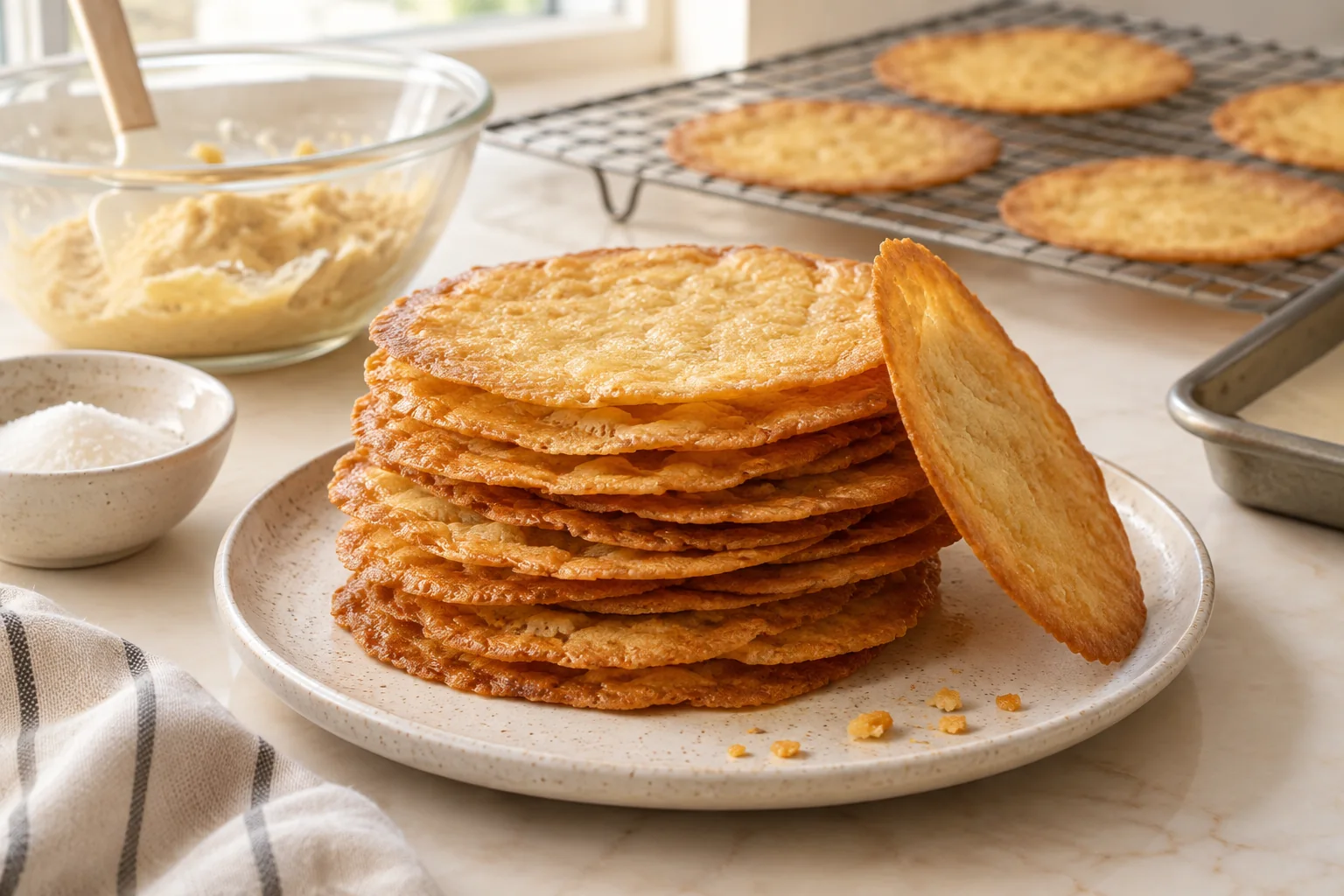
A crispy cookie typically has a relatively dry rigid structure that breaks with an audible snap or clean fracture. Thin sugar cookies, certain shortbreads and delicate wafers are designed this way. A cookie may be crisp only at its edges or uniformly throughout. Crispness isn't the same as a burnt hard cookie; a pleasant snap should accompany balanced flavor rather than excessive dryness.
A chewy cookie bends
A chewy cookie resists a bite and may flex slightly instead of snapping. It often contains more retained moisture or a dense cohesive crumb, though the specific mechanism depends on the formula. A chewy cookie can have a crisp browned edge, creating two textures in one piece. A raw gummy center is not desirable chew; the cookie still needs to be fully baked.
Break a cooled cookie from Chewy Ginger Cookies and compare the resistance of its centre with its edge.

Moisture is central to the difference
A cookie becomes crisper as more water leaves its structure during baking and storage. A thicker chewy cookie may retain more moisture in its center, while a thin wafer loses it quickly. But total recipe water isn't a simple crispness dial; sugar and starch behavior affect how moisture is bound. A very wet dough may also spread thinly and bake crisp, depending on composition.
White and brown sugar
Brown sugar contains molasses-associated moisture and other compounds that can encourage a soft or chewy bite in many recipes. White granulated sugar often supports certain crisp textures. Both affect spread, sweetness, browning and the dough's acid-base balance. A high-brown-sugar cookie can still crisp if baked very thin, so sugar labels alone don't guarantee the final texture.
The sugar blend in Classic Chocolate Chip Cookies is a practical baseline for a texture test.

Fat changes spread and tenderness
Butter contributes dairy flavor, water and fat, and its temperature influences dough spread. A melted-butter formula can create a different chew from one built around creaming softened butter. Oil-based cookies require their own structure. Extra fat isn't automatically a way to make cookies crisp or chewy; it may cause excessive spreading or greasy mouthfeel.

Flour and gluten
Wheat flour contributes starch and proteins that can develop gluten. Some chew is supported by a cohesive network, but excess strong flour or mixing can become tough. A crisp shortbread may rely on a high fat-to-flour ratio and limited handling to remain delicate rather than tough. Choose the flour and mixing method appropriate to each cookie style.
Eggs and structure
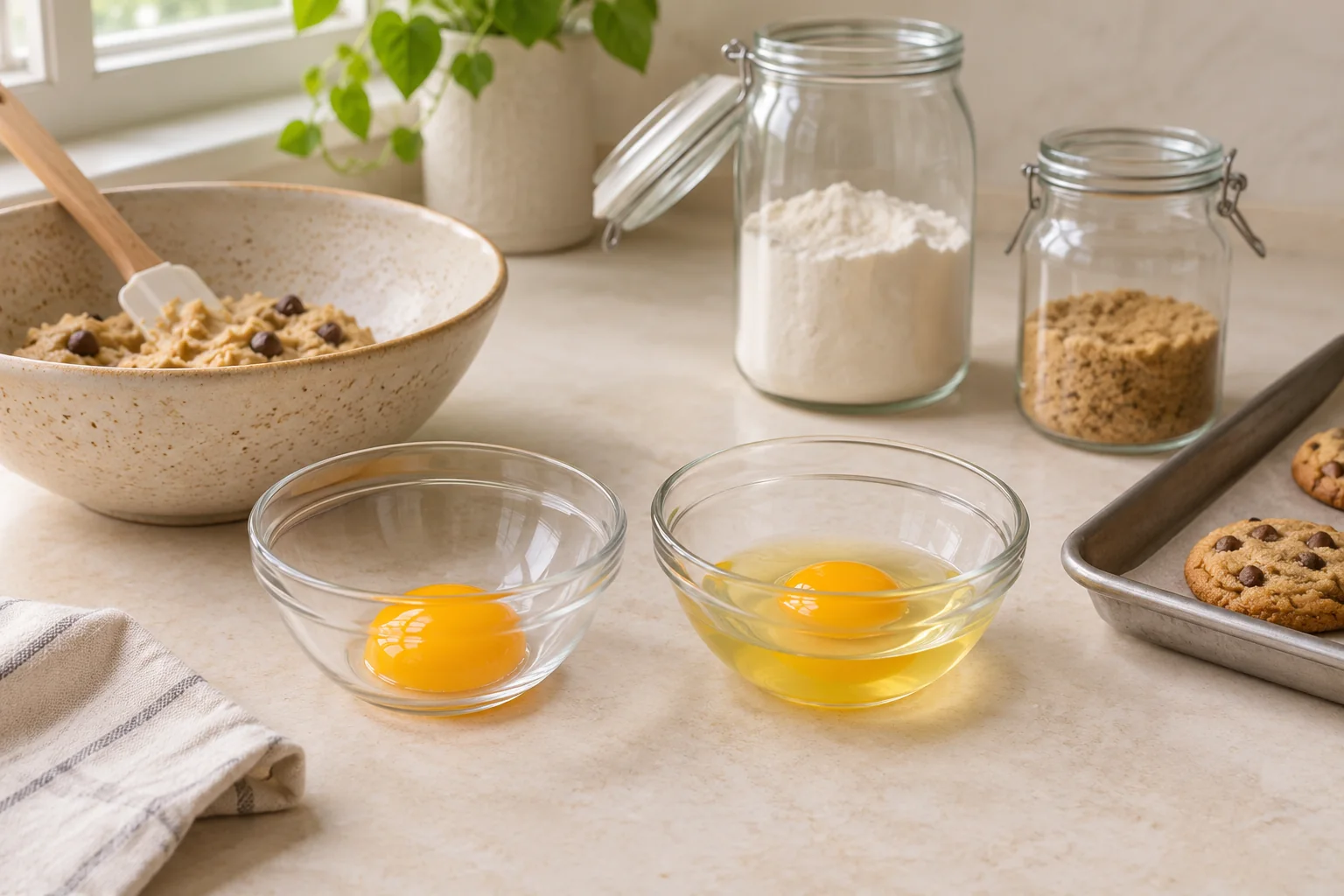
Whole eggs bring water and protein while yolks add fat and emulsifying compounds. Some chewy-cookie formulas use extra yolks, whereas a crisp wafer may use different egg proportions. Substituting whites or yolks without balancing flour and sugar can change spread and setting. Egg quantity shouldn't be altered by intuition to chase texture.
Baking soda and powder
Chemical leaveners affect how the dough expands and sets, and soda also influences pH. Some crisp cookies use little leavening, while some thicker chewy cookies use a defined amount. There is no universal rule that baking soda equals crispy and powder equals chewy. Excess leavener can produce an off taste or collapse.
Cookie thickness
A thin flattened cookie loses moisture more quickly and can become crisp throughout. A large thick mound has more internal moisture and may retain a chewy center after the edges set. This tendency is useful but not sufficient: a too-thick cookie may stay raw. Choose a recipe with an appropriate size and bake schedule rather than simply making giant balls from an ordinary formula.

Oven time and temperature
Longer baking can remove more moisture and make some cookies crisper, but it can also burn sugar or dry them unpleasantly. High heat may set edges early, while a cooler oven can change spread. The correct combination varies by formula. Use the recipe's intended endpoint, noting that fully cooled cookies often feel crisper than hot ones.
Baking sheet color
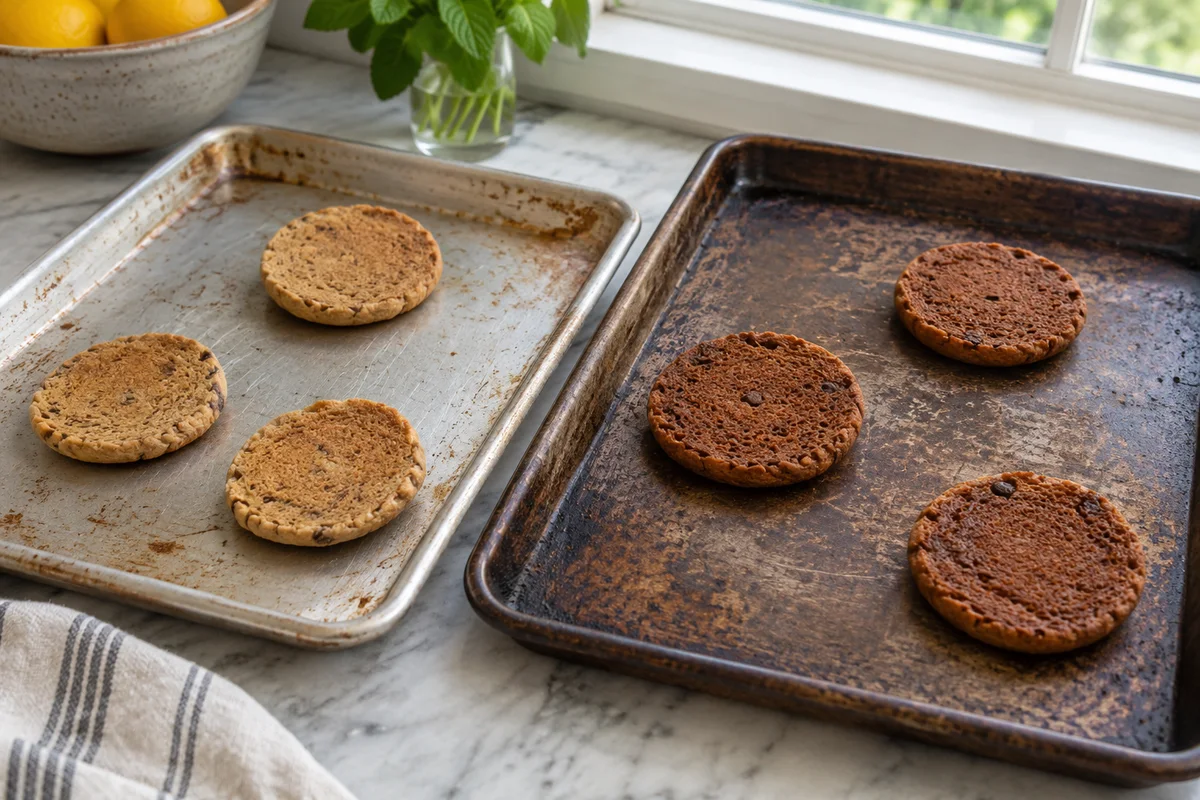
Dark pans may accelerate bottom browning under comparable conditions, affecting edge crunch. Light aluminum can give a different result, and silicone mats may change spreading in certain doughs. Keep sheet type constant when comparing recipes. A very dark base with a raw center is not a successful crispy cookie.
Carryover baking
A cookie resting on a hot sheet continues to set, especially at the bottom. Removing it promptly or allowing an instructed tray rest can influence final crispness. Transfer according to the tested recipe. Don't expect cookies to have their final snap while still warm; cooling changes sugar and fat structure.
How chilling influences spread
Chilling certain butter doughs firms the fat and helps restrict initial spread. A thicker result may stay chewy in the center. But recipes vary, and some crisp sugar cookies also require chilling for shape control. An overnight rest isn't a universal chew enhancer. The recipe's hydration, sugar and oven matter just as much.

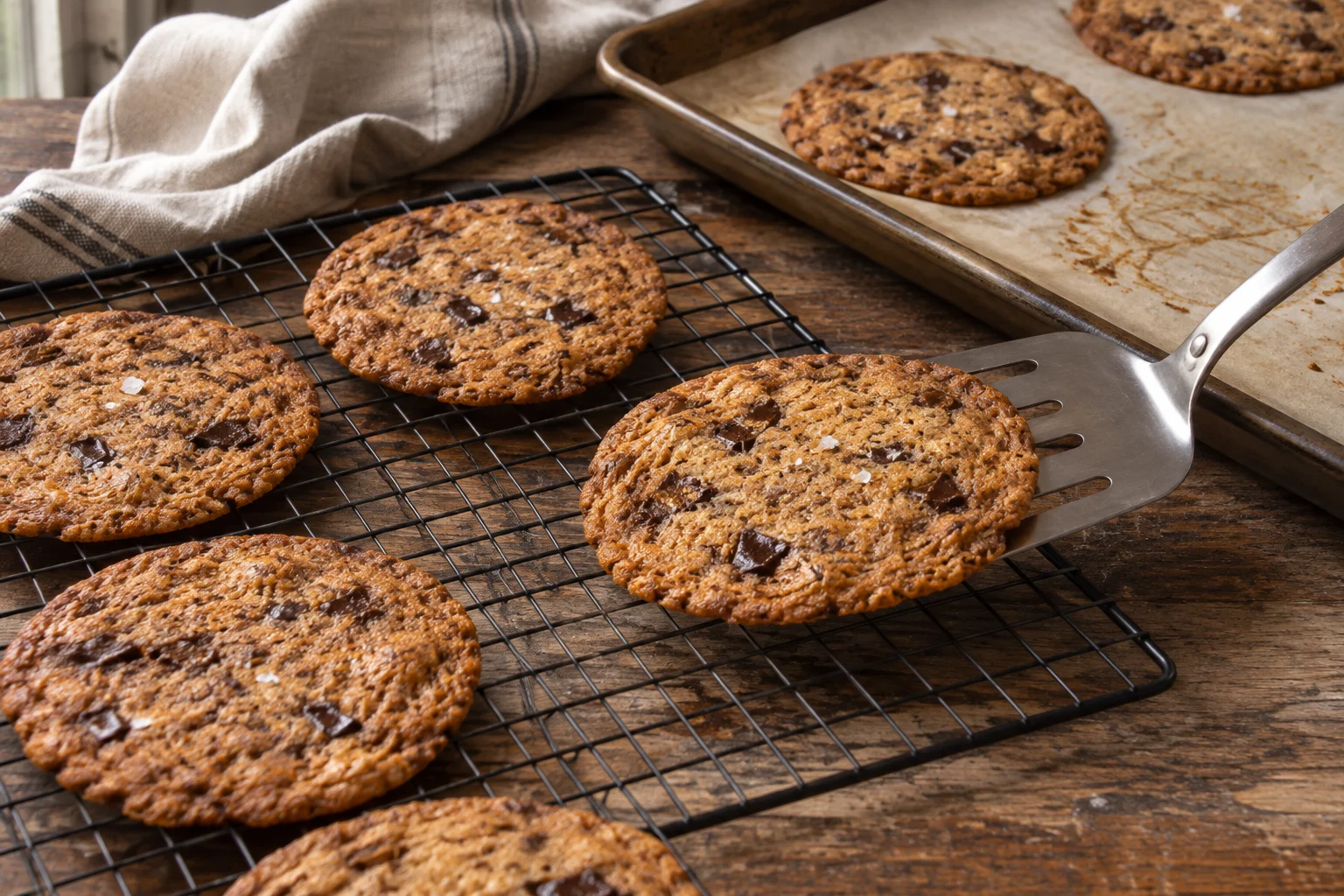
Crispy chocolate chip cookies
A recipe intended for thin crisp chocolate chip cookies usually has a different spread and moisture balance from a thick bakery version. Follow its portion size and baking cues. Adding chocolate chunks in excess can change thickness and the distribution of fat. A crisp version can still be buttery and flavorful without being overbaked.
For a cookie made to snap, start with Crispy Chocolate Chip Cookies rather than overbaking a thick, soft dough.
Chewy chocolate chip cookies
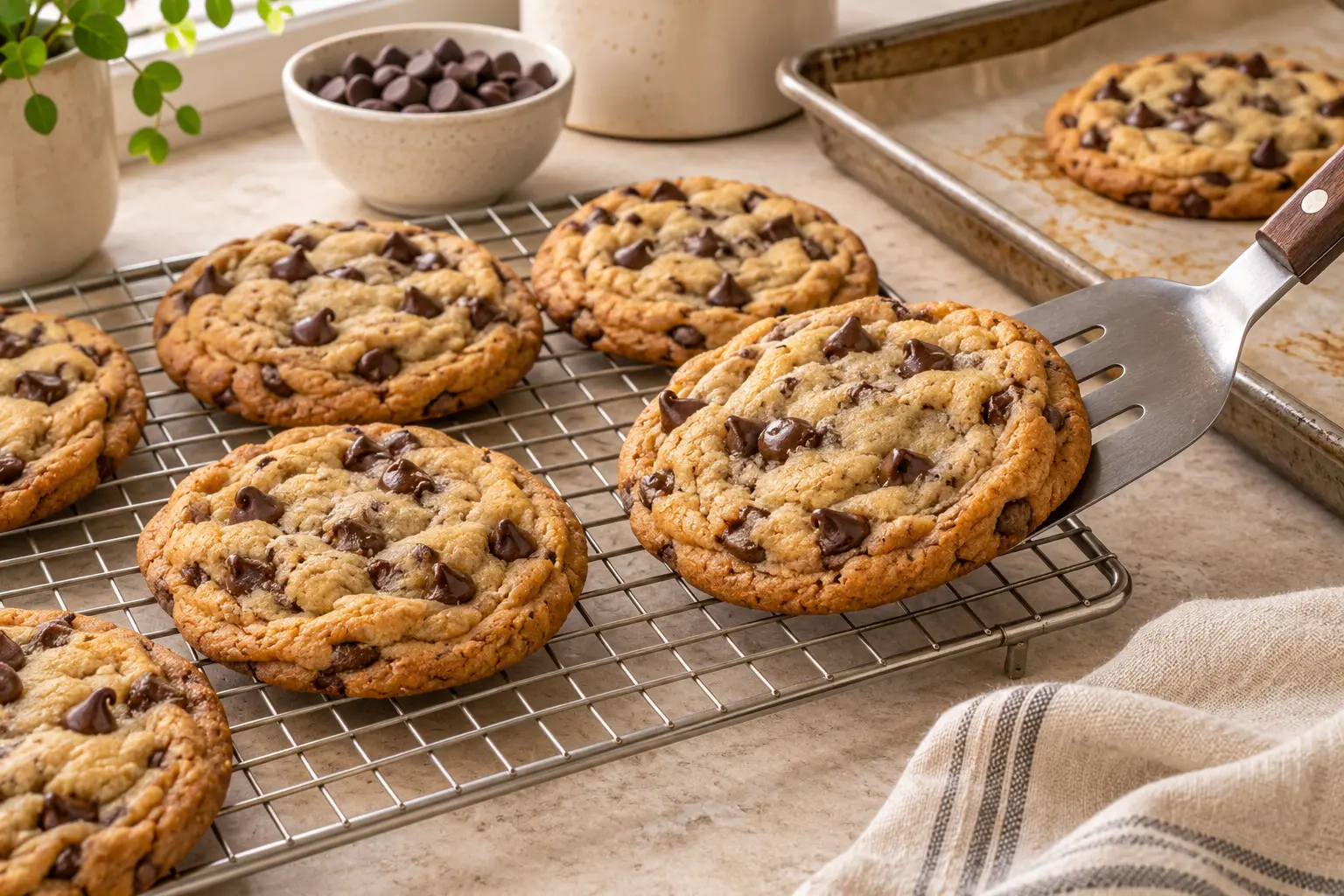
A chewy center often results from balanced brown and white sugar, an appropriate flour and egg system and careful baking. The specific proportions vary. Some successful versions cream butter; others melt it. Choose a proven chewy-cookie recipe rather than replacing the fat or sugar ratio in a thin-crisp formula at random.
Compare Chewy Chocolate Chip Cookies with the crisp version after both batches have cooled.
Shortbread and snap
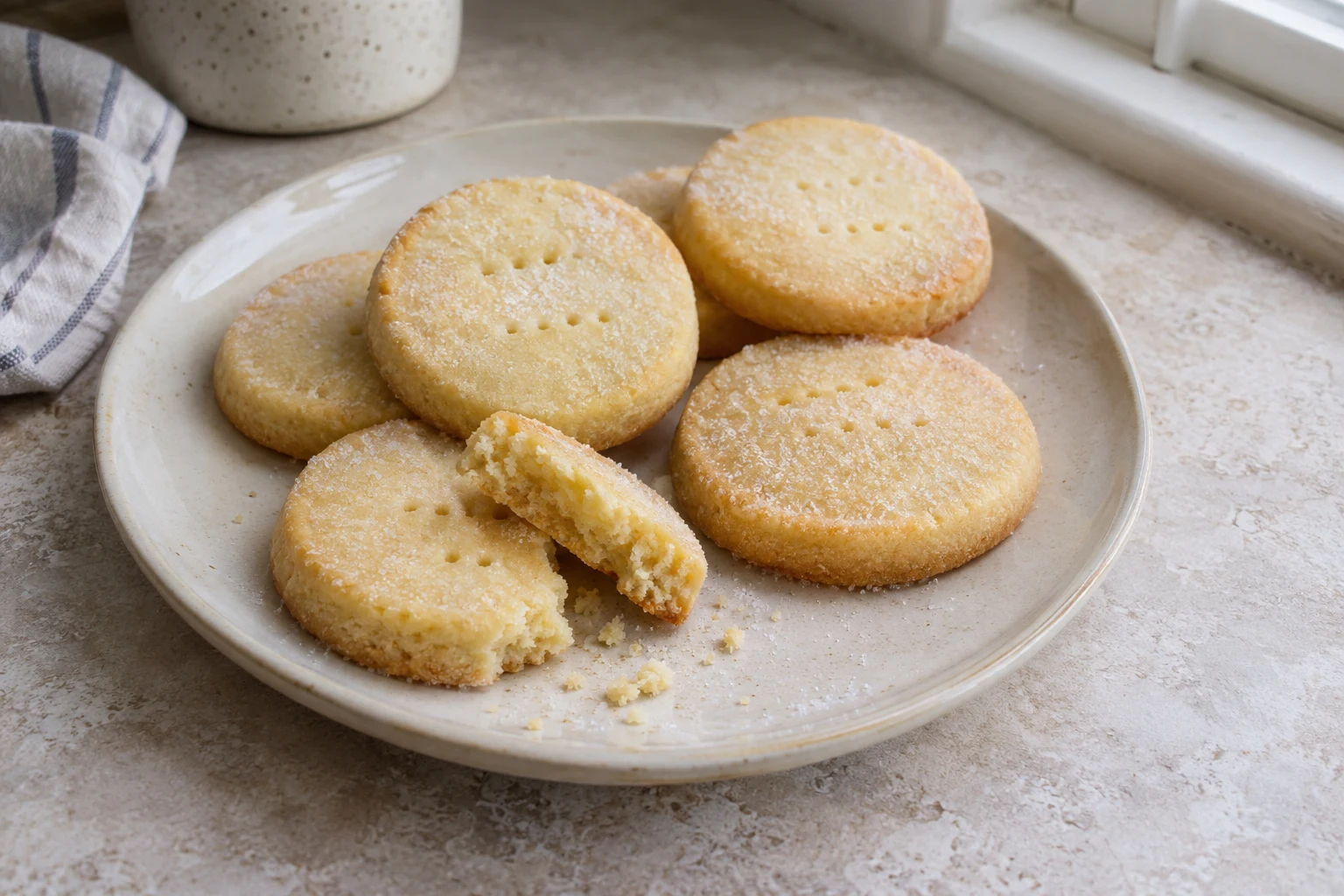
Shortbread is often crisp yet tender and sandy, not necessarily hard. Its high butter content and careful handling contribute a distinct fracture. If baked too long, it may become dry and brittle rather than pleasantly crisp. Cool before moving because hot shortbread can be fragile. The ideal snap should reflect the style, not a universal endpoint.
The buttery crumb of Vegan Shortbread Cookies breaks differently from a thin, crisp drop cookie.
Oatmeal-cookie chew
Oats absorb moisture and contribute a hearty bite. Rolled and quick oats behave differently, influencing spread and texture. A recipe with raisins and brown sugar may be chewy, while a thin oatmeal crisp can be snappy. Use the specified oat type rather than assuming any oats guarantee chew.
In Oatmeal Chocolate Chip Cookies, the oats contribute their own chew, even at the same baked thickness.

Humidity after baking
Crisp cookies absorb moisture from humid air and may lose their snap, while soft cookies can dry out if exposed. Packaging determines whether the baked texture survives. Store thoroughly cooled crisp and chewy cookies separately in suitable airtight containers. Mixing a soft filled cookie with thin wafers can soften the latter even if both were perfect when baked.

Cream-filled cookies
Moisture from buttercream, jam or cream can migrate into crisp cookie shells, softening them during storage. That may be intentional in sandwich cookies but unwanted in a wafer. Dairy or egg-based fillings affect safe refrigeration requirements. Assemble nearer service when crispness matters and the recipe supports it.
A fair texture comparison
Choose a trusted crisp chocolate chip cookie and a trusted chewy variation. Keep portion weight, cooling interval and storage consistent as far as the formulas allow. Note thickness and bite on the first day and the next. Don't compare one warm cookie with another stored in an open bowl overnight; temperature and humidity affect the impression.
What if crisp cookies go soft?
Check whether they were packaged before cooling, stored beside moist treats or exposed to humid air. Some plain baked cookies may be refreshed using a tested brief oven method, but cream-filled cookies need their own handling. A soft biscuit isn't always ruined; it may simply have absorbed water. Don't bake perishable fillings again just to restore crunch.
What if chewy cookies become hard?
They may have lost moisture, been baked too long or made with an unsuitable formula. A cookie that hardens after a day needs a storage diagnosis, while one that was hard immediately may need ingredient or time review. Adding a wet food to a storage container can create spoilage concerns and unpredictable results. Use tested storage techniques instead.
IN PICTURES
From the baking notebook
FROM THE RECIPE BOX


