On this page
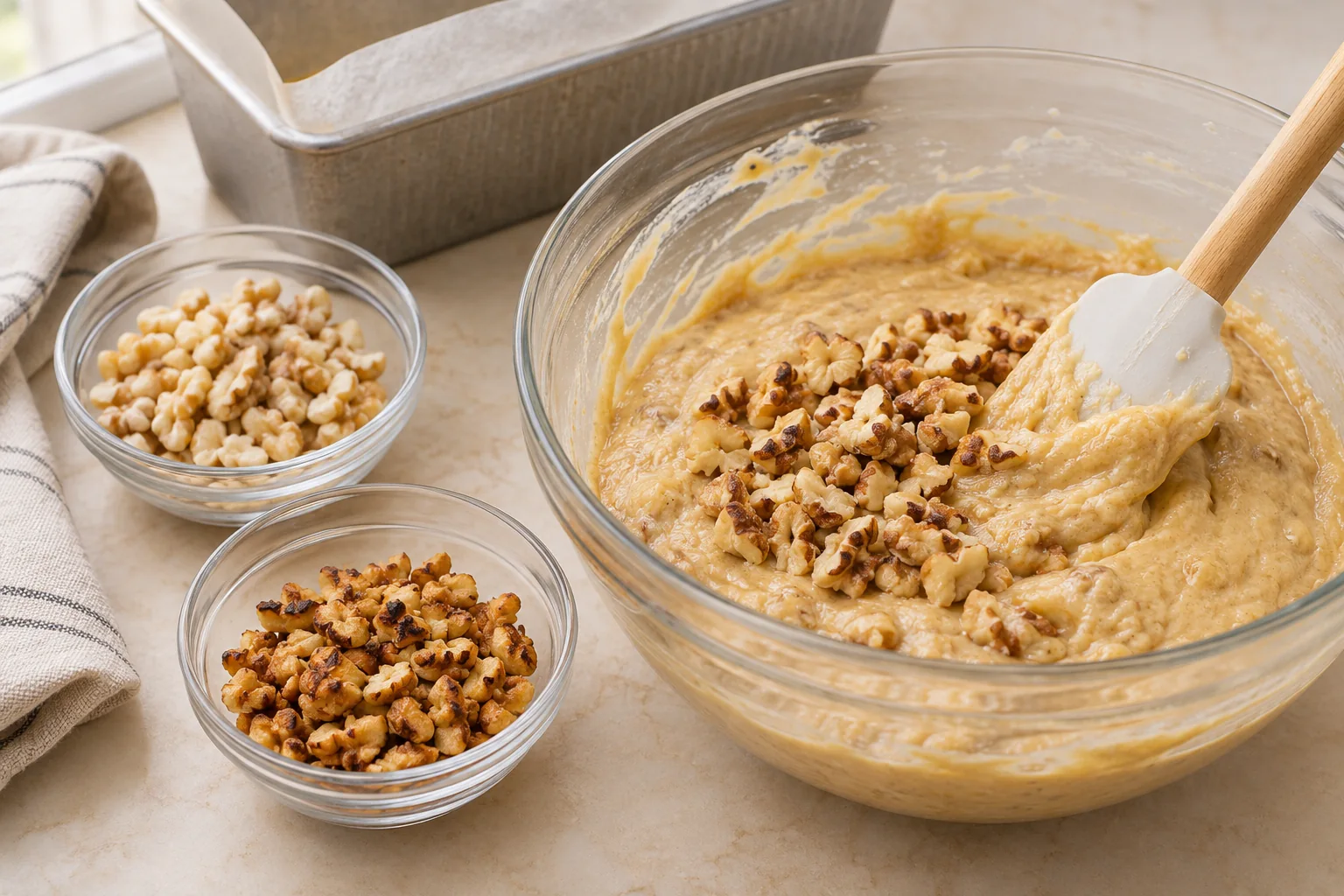
Walnuts folded into banana bread, toasted pecans scattered through pumpkin loaf, or finely chopped pistachios in lemon cake can make a simple quick bread feel more special. Nuts add crunch, richness and roasted flavour, but they also change the texture and weight of a batter. Too many large pieces can make a loaf crumble; too much stirring after adding them can toughen the crumb; and an unplanned topping may burn before the centre finishes baking. Here's how to add nuts to quick breads so they belong in the loaf rather than overwhelming it.
Start with the flavour of the bread
Think about what the main ingredient needs. Banana bread has mellow fruit sweetness that welcomes walnuts or pecans. Pumpkin bread can work beautifully with toasted pecans, while a lemon or orange loaf may suit almonds or pistachios. Chocolate quick bread pairs well with hazelnuts, walnuts and pecans. Choose one nut that complements the dominant flavour instead of using a handful of every bag in the pantry.
Walnuts in banana bread
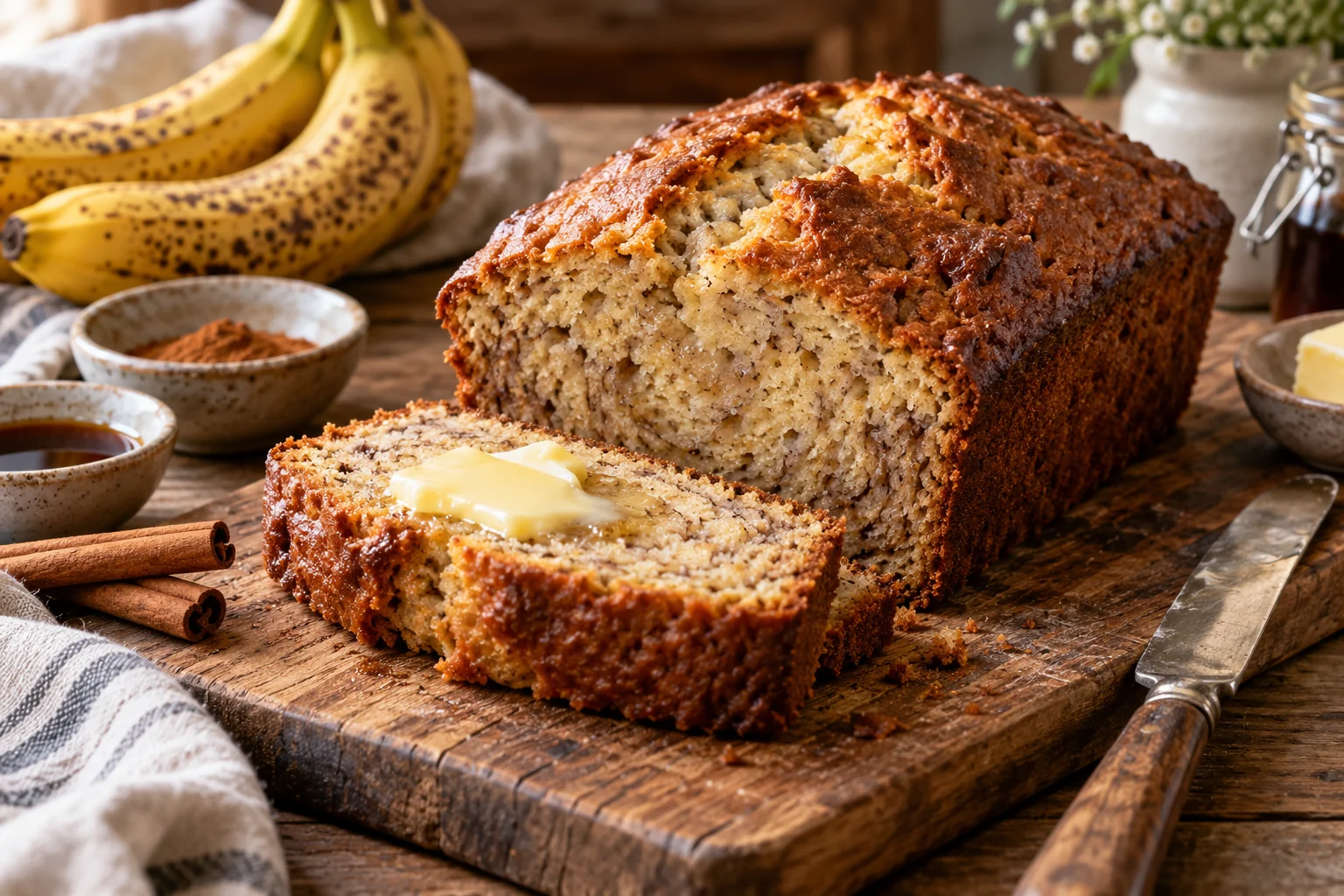
Walnuts are a classic choice because their gentle bitterness contrasts with banana sweetness. Chopped pieces add texture throughout the loaf without becoming as prominent as whole walnut halves. Use the quantity specified by your banana-bread recipe; a dense loaf with too many walnuts can break apart or have difficulty baking evenly around the add-ins.
Recipe to try: Classic Banana Bread. Weigh the banana and use the specified loaf pan. Extra fruit or a deeper pan can change the centre’s baking time.
Pecans in pumpkin and apple bread
Pecans have a rich, slightly sweet flavour that works with cinnamon, maple and autumn spices. They can be mixed into a tested pumpkin or apple quick-bread batter, or used as part of a defined topping. Toasting can intensify their aroma, but the total quantity still needs to match the recipe.
Recipe to try: Pumpkin Bread. Pumpkin bread offers another moist loaf to compare. Follow its measured purée, leavening and pan instructions.

Almonds in citrus loaves
Almonds can bring a pleasant crunch to lemon, orange or cherry quick breads. Sliced almonds often look attractive on the surface, while finely chopped almonds may disperse more evenly through the crumb. Whole almonds are generally too large for many standard loaf batters unless a specific recipe calls for them.
Pistachios for colour and contrast
Chopped pistachios can add gentle nuttiness and an appealing green accent to citrus or berry loaves. Select a suitable unsalted product when the recipe expects one. Roasted salted pistachios will change both flavour and the total sodium content, and removing the recipe's salt blindly may affect the balance of the whole loaf.
Hazelnuts with chocolate
Hazelnuts provide deep roasted flavour, making them a good match for chocolate quick breads. Depending on the recipe, they may be used chopped, toasted or in a measured praline-style component. Whole hazelnuts create large pockets, so consider whether their size suits the texture of the cake.
Should nuts be toasted first?
Toasting can enhance the aroma and crunch of many nuts. It is optional in some recipes but deliberately recommended in others. Use the method and temperature supplied by your recipe, since small chopped pieces can brown faster than whole nuts. Allow toasted nuts to cool before mixing them into a batter unless directed otherwise.
How to toast nuts without burning them
Spread nuts in an even layer on an appropriate baking tray and use the timing specified by a tested recipe. Stir or check as directed. Their oils can make the transition from pleasantly toasted to scorched surprisingly quick. Avoid judging only by colour when the nuts are already dark; aroma is another useful sign, but don't taste them hot.
Chop nuts to match the loaf
A standard quick-bread batter usually benefits from small to medium pieces, which distribute more readily and cut cleanly. Extra-large chunks may create gaps or drag through the crumb when sliced. Very fine nut dust can change the batter's texture if used in large amounts. Follow the recipe's description of chopped, finely chopped or coarsely chopped.
Why even pieces matter
Pieces of dramatically different size can bake and feel differently in a finished loaf. Big chunks may collect in a small area, while tiny bits disappear into the batter. A consistent rough chop gives a more even bite. A chef's knife and a stable cutting board provide control; keep fingers well away from the blade.
Weigh nuts rather than guessing by the handful
A cup of whole walnuts, a cup of finely chopped walnuts and a cup of roughly chopped walnuts may have different weights. If the recipe gives grams, use them. Adding extra nuts without measuring can make a batter heavy and a loaf fragile. Keep a note of how much the original recipe supports before experimenting.
When should nuts go into the batter?
In many muffin-method quick breads, the nuts are folded in near the end, after the wet and dry ingredients have been combined. That keeps mixing brief and helps protect the crumb from excessive gluten development. Some recipes add nuts to the dry ingredients earlier to distribute them. Follow the specific method rather than applying one rule blindly.
How to fold nuts without overmixing
Use a flexible spatula and broad, gentle folding motions. Bring batter from the bottom of the bowl over the top and rotate the bowl until the nuts are reasonably distributed. Stop once there are no concentrated piles. Aggressive beating after the flour is hydrated may toughen certain quick breads.
Why nuts sink to the bottom
Large or heavy pieces can settle through a very thin batter. An excessive nut quantity increases the likelihood of uneven distribution. Some recipes coat add-ins with a small measured amount of flour, but this technique is not always necessary and does not fix a fundamentally incorrect batter. Begin with an established nut-loaf recipe and appropriate piece size.
Does tossing nuts in flour work?
A light flour coating may be useful in certain tested batters, but it isn't a guaranteed solution. Extra unmeasured flour alters the ingredient balance, while a thin batter may still allow pieces to settle. If the recipe instructs you to toss nuts in part of its measured flour, use that amount instead of adding an entirely new handful.
Nuts and batter moisture
Nuts contribute fat and solids, but whole or chopped nuts don't behave like additional flour or pure oil. They can alter mouthfeel and weight without necessarily providing the moisture needed to compensate for too much fruit or dry ingredients. Avoid balancing a gummy banana bread by adding nuts or balancing a dry loaf by adding nut oil unless following a tested formula.
How to keep the loaf from crumbling
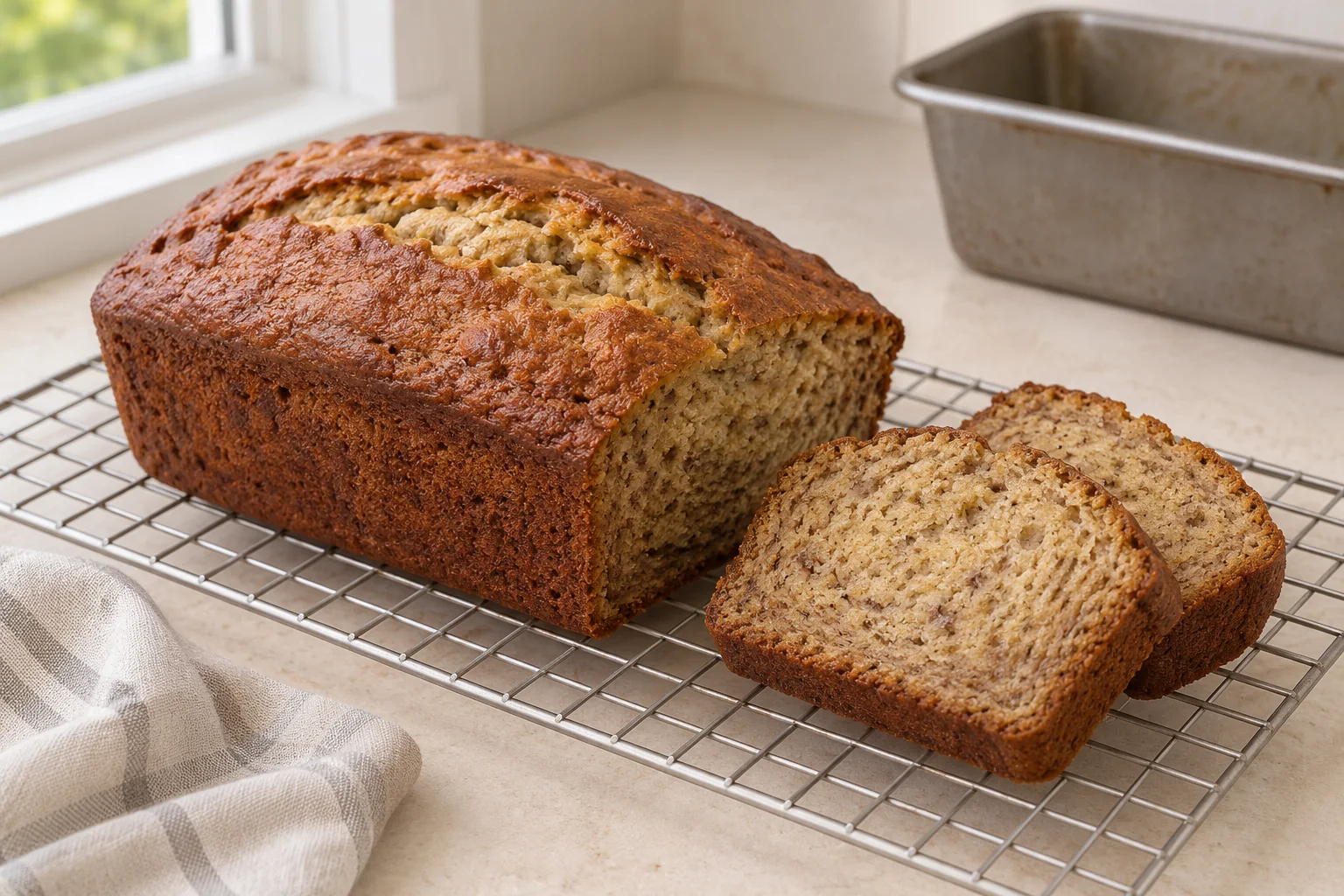
Choose a bread with enough structure for its nut quantity, chop pieces appropriately and bake until the centre is set. Let the loaf cool as directed before slicing. A very warm quick bread can break apart around nuts, even when correctly baked, because the crumb hasn't had time to firm.
A nut topping versus nuts inside
A surface topping creates visible crunch and a bakery-style finish. Nuts folded through the batter contribute more even texture. You can sometimes use both, but the recipe should allocate a measured amount to each so the loaf isn't overloaded. A thick topping may brown or burn during the longer baking time of a deep loaf.
Prevent burned nut toppings
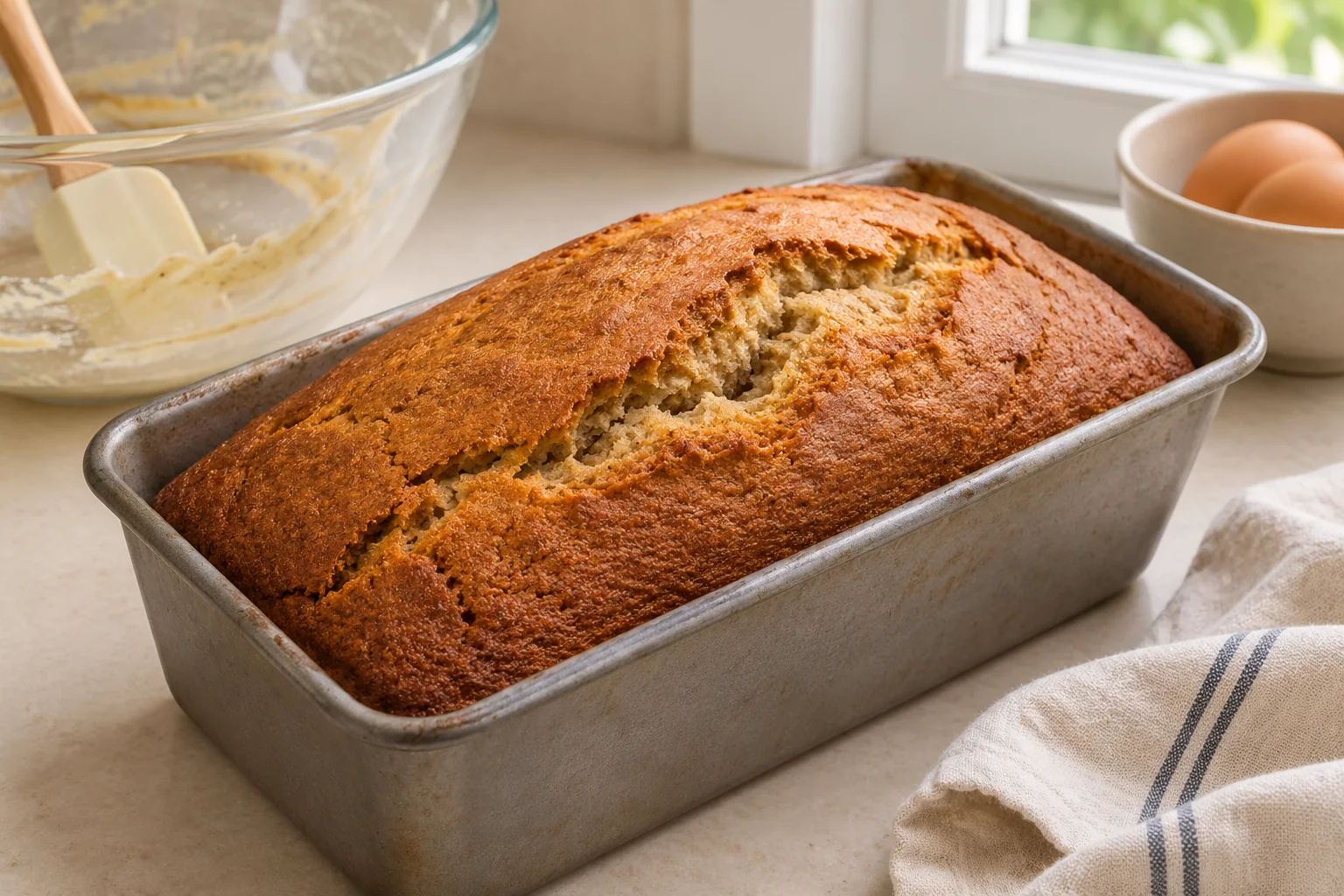
Place chopped or sliced nuts on the surface only as instructed. Some recipes add the topping at the beginning, while others have it applied partway through baking. If the loaf's top becomes dark before the centre is cooked, follow a recipe-approved loose foil tenting method rather than increasing the oven heat.
A banana-walnut bread strategy
Choose a tested banana bread recipe that already includes walnuts or offers a measured nut variation. Weigh ripe mashed banana and chopped walnuts separately. Fold in the nuts when specified, transfer to the stated pan and bake until the actual loaf centre is done. This prevents excessive fruit or nuts from being mistaken for an oven-temperature problem.
Pumpkin bread with pecans
A pumpkin batter may be thick and moist. Toasted chopped pecans can add flavour contrast, but unmeasured extra pumpkin and nuts may interfere with the structure. Follow a pumpkin-pecan recipe designed for those ingredients, using the pan and baking time indicated. Check the centre away from any large nut cluster.
Lemon loaf with almonds
A subtle almond addition can complement lemon, but too much chopped almond may dominate a delicate cake. If the recipe uses almond extract, remember that the extract and the chopped nuts serve different roles. Don't assume an almond-flavoured loaf can receive several extra cups of nuts without becoming dense.
Combining nuts with chocolate chips
Walnuts and chocolate chips make a familiar banana bread combination. But if the recipe provides one total quantity of mix-ins, adding the full stated amount of each may double what the batter can support. Divide the permitted total between nuts and chocolate when a recipe explicitly allows it, or use a formula developed for both.
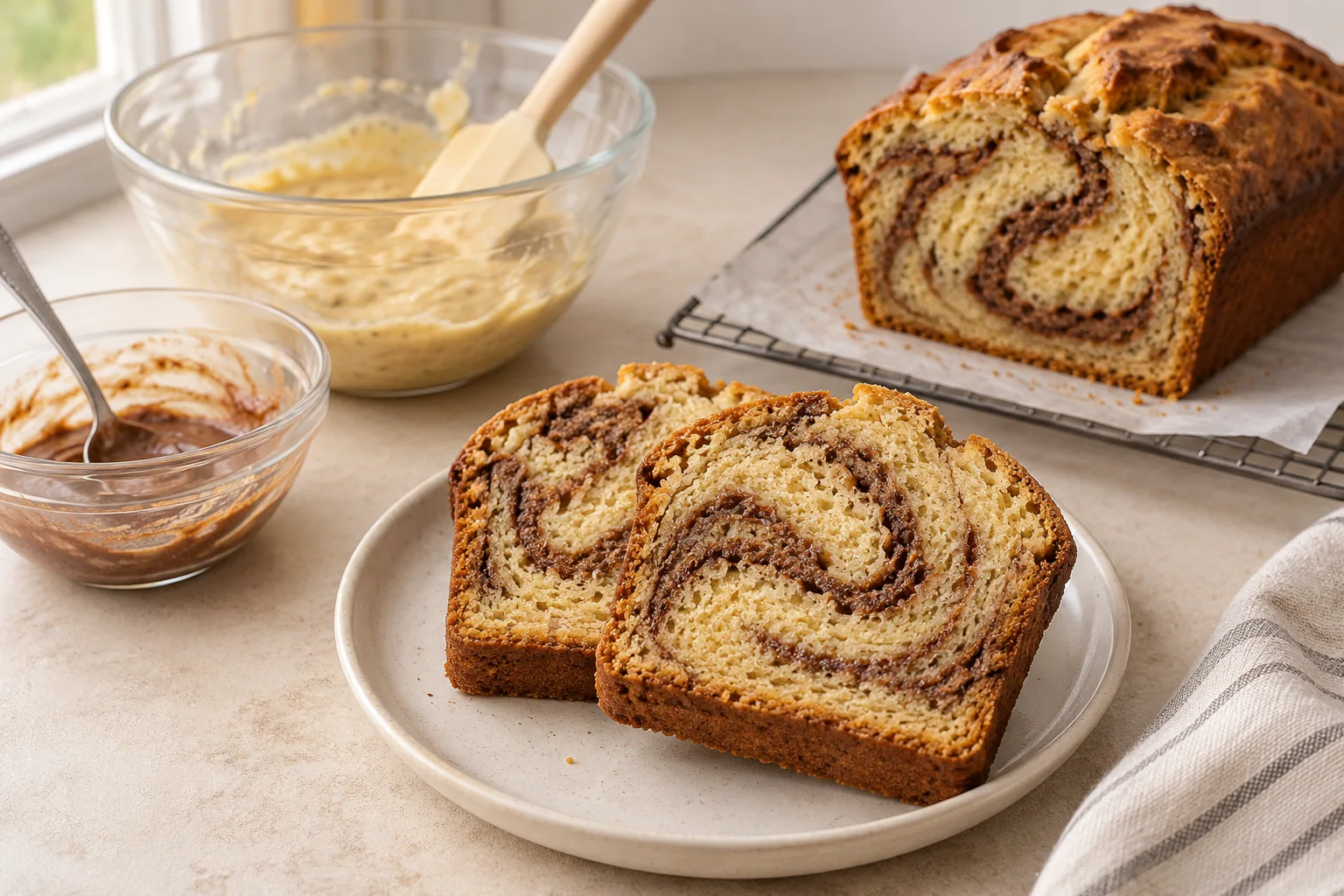
Combining nuts with dried fruit
Pecans and cranberries, walnuts and raisins, or almonds and dried cherries can be lovely together. Watch the total amount of additions and the fruit's moisture. Very large or sticky dried-fruit pieces can clump; prepare them as the recipe directs and avoid arbitrarily increasing the sugar to compensate for tartness.
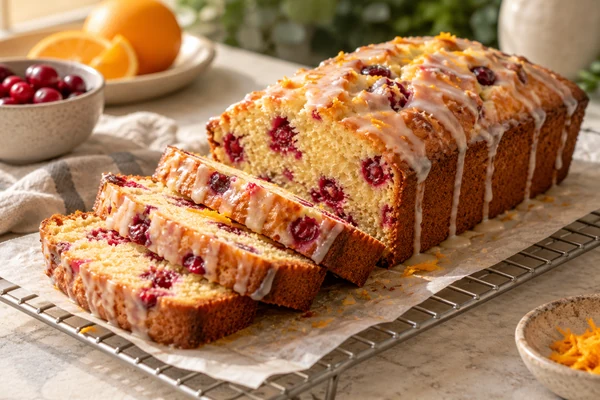
Recipe to try: Cranberry Orange Bread. The loaf pairs cranberries with orange zest. Use the specified cranberry type and loaf pan for its batter.
Nut flours are not the same as chopped nuts
Replacing a portion of wheat flour with almond flour changes the batter's structure and fat balance; adding chopped almonds as a mix-in is a very different adjustment. Nut meals cannot be treated as whole-nut equivalents. For a loaf made substantially with almond flour, choose a recipe developed around it.
Food allergies and cross-contact
Peanuts and tree nuts can cause serious allergic reactions. Check the recipe's ingredients, labels, school or event policies and whether tools may have been cross-contacted. Don't assume a baked loaf is safe for someone with a severe nut allergy merely because the nuts are finely chopped or toasted. Clearly label nut-containing baked goods.
Serving nuts to children
Chopped nuts may be inappropriate for some young children because small hard pieces can pose choking hazards. Follow age-appropriate food safety advice and choose another ingredient where necessary. Baking the nuts into a loaf does not automatically eliminate that concern.
Storing nut quick breads
Cool the loaf fully according to its recipe and wrap properly to reduce drying and unwanted moisture. Nuts contain oils that may deteriorate or develop off-flavours over time, so use fresh ingredients and follow the recipe's storage or freezer window. Loaves with cream cheese or other perishable fillings have stricter refrigeration needs.
Why your nuts taste bitter
Walnuts naturally have some bitter notes, and scorching or age can make that unpleasantly strong. If nuts smell stale, paint-like or rancid before baking, do not use them. For the next loaf, check the freshness of your supply and use a gentler toasting method.
Frequently asked questions
Do I need to toast nuts for banana bread? Not always, but a recipe may recommend it for deeper flavour. Can I add nuts to any quick bread? Some formulas tolerate them, but use a measured variation. Should nuts be coated with flour? Only when the recipe suggests it. Why did my loaf fall apart? Excess add-ins, underbaking or slicing while very warm may contribute. Are nut-free substitutions interchangeable? Choose a tested variation appropriate to the dietary restriction.
The simplest way to get it right
Choose a nut that suits the loaf, use fresh pieces, toast only if the method calls for it, and keep both chop size and weight consistent. Add nuts at the recipe's intended stage, bake until the centre is properly set and let the bread cool before slicing. With those habits, nuts become a satisfying texture accent—not a distraction from the cake itself.
IN PICTURES
From the baking notebook
FROM THE RECIPE BOX


