Directions
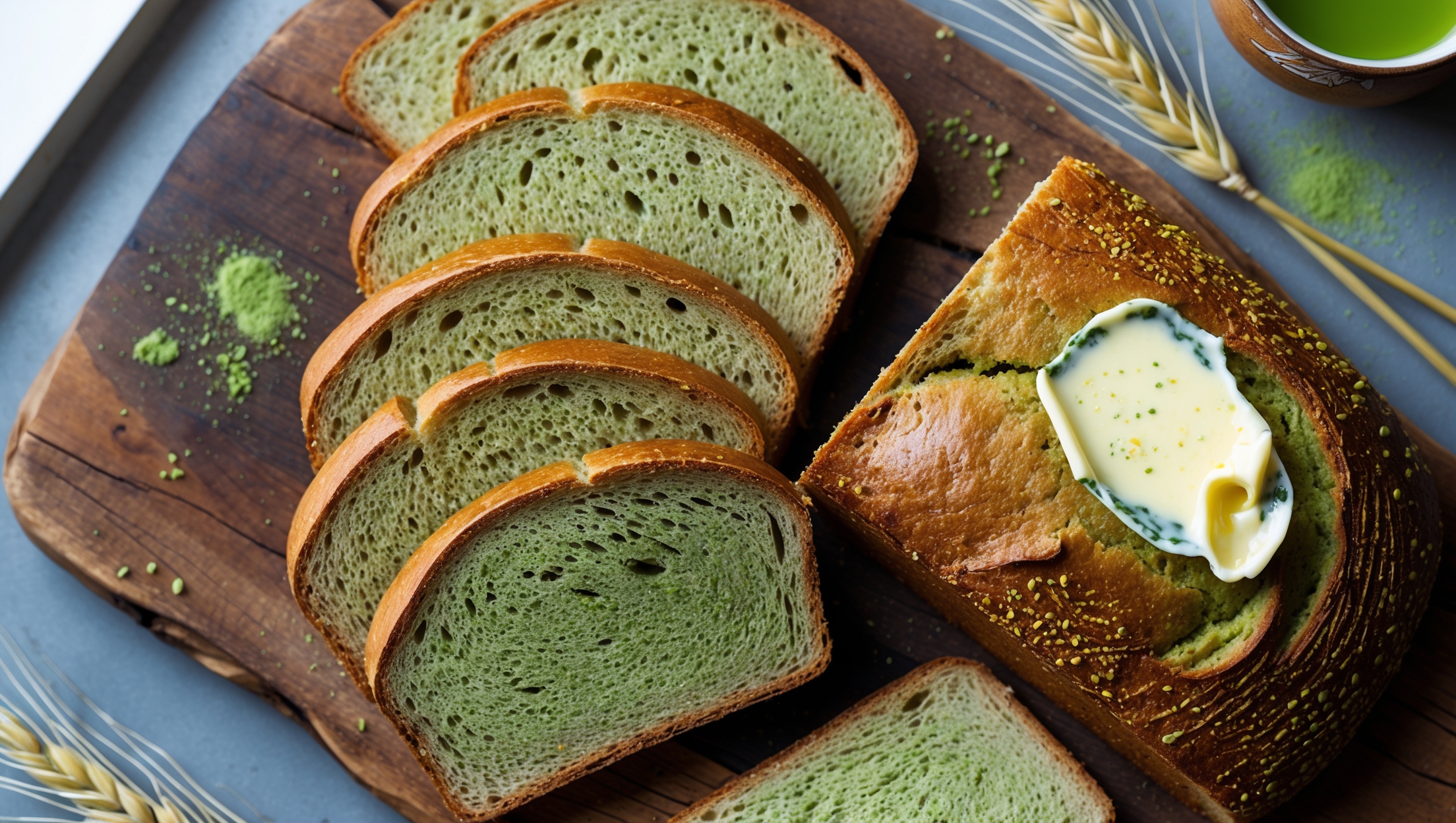
<ol class="no-list-style"><li class="MethodStepper"><h4 class="step-title">Step 1</h4>In a bowl of your stand mixer, whisk together 300g whole wheat flour, 200g bread flour, and 15g matcha powder until evenly combined with no green streaks remaining. The uniform distribution of matcha powder is crucial for both even color and flavor.</li><li class="MethodStepper"><h4 class="step-title">Step 2</h4>In a separate small bowl, combine 320ml warm milk (38°C/100°F) with 15ml honey and 10g instant dry yeast. Stir gently and let sit for 5-10 minutes until foamy. This temperature activates the yeast without killing it, and the honey provides immediate food for the yeast to begin fermentation.</li><li class="MethodStepper"><h4 class="step-title">Step 3</h4>Add the yeast mixture to the flour blend along with 50g sugar, 8g salt, 30g softened butter, and 1 large egg. Attach the dough hook and mix on low speed for 2 minutes until ingredients are combined, then increase to medium speed and knead for 8-10 minutes. The dough should clear the sides of the bowl but remain slightly tacky to the touch. Whole wheat flour absorbs more moisture than white flour, so the dough might seem dry at first but will become cohesive as the bran hydrates.</li><li class="MethodStepper"><h4 class="step-title">Step 4</h4>Transfer the dough to a lightly oiled bowl, cover with plastic wrap or a damp cloth, and let rise in a warm place (around 27°C/80°F) for 60-90 minutes until doubled in size. The matcha slightly inhibits yeast activity due to its antioxidant properties, so be patient with the rise time.</li><li class="MethodStepper"><h4 class="step-title">Step 5</h4>Once doubled, gently deflate the dough and turn it out onto a lightly floured surface. Divide into three equal portions (using your scale for accuracy). Shape each portion into a tight ball by folding the edges into the center, then flipping over and rolling under your palms to create tension on the surface. This shaping builds structure for a good rise.</li><li class="MethodStepper"><h4 class="step-title">Step 6</h4>Flatten each ball into an oval shape with your hands, then fold the top third down and the bottom third up, like folding a letter. Roll each piece into a cylinder about 20cm long. Place the three cylinders side by side in your prepared loaf pan. This method creates an attractive, even rise and a nice pull-apart texture.</li><li class="MethodStepper"><h4 class="step-title">Step 7</h4>Cover loosely with oiled plastic wrap and allow to proof for another 45-60 minutes, or until the dough has risen to about 1cm above the rim of the pan. The dough should look puffy and when gently pressed with a finger, the indentation should slowly spring back about halfway.</li><li class="MethodStepper"><h4 class="step-title">Step 8</h4>Preheat your oven to 180°C (350°F) while the dough completes its second rise. Once ready, brush the top of the loaf gently with a little milk to promote browning without masking the green tint too much.</li><li class="MethodStepper"><h4 class="step-title">Step 9</h4>Bake in the preheated oven for 35-45 minutes, until the bread sounds hollow when tapped on the bottom, or registers 90°C (195°F) on an instant-read thermometer. If the top browns too quickly, tent loosely with aluminum foil after 25 minutes of baking.</li><li class="MethodStepper"><h4 class="step-title">Step 10</h4>Remove from the oven and immediately turn out onto a wire rack to cool completely, about 1-2 hours. Cutting into the bread while hot will cause it to become gummy and compress the texture. The matcha flavor will develop and mellow as the bread cools, becoming more balanced.</li></ol>