Directions
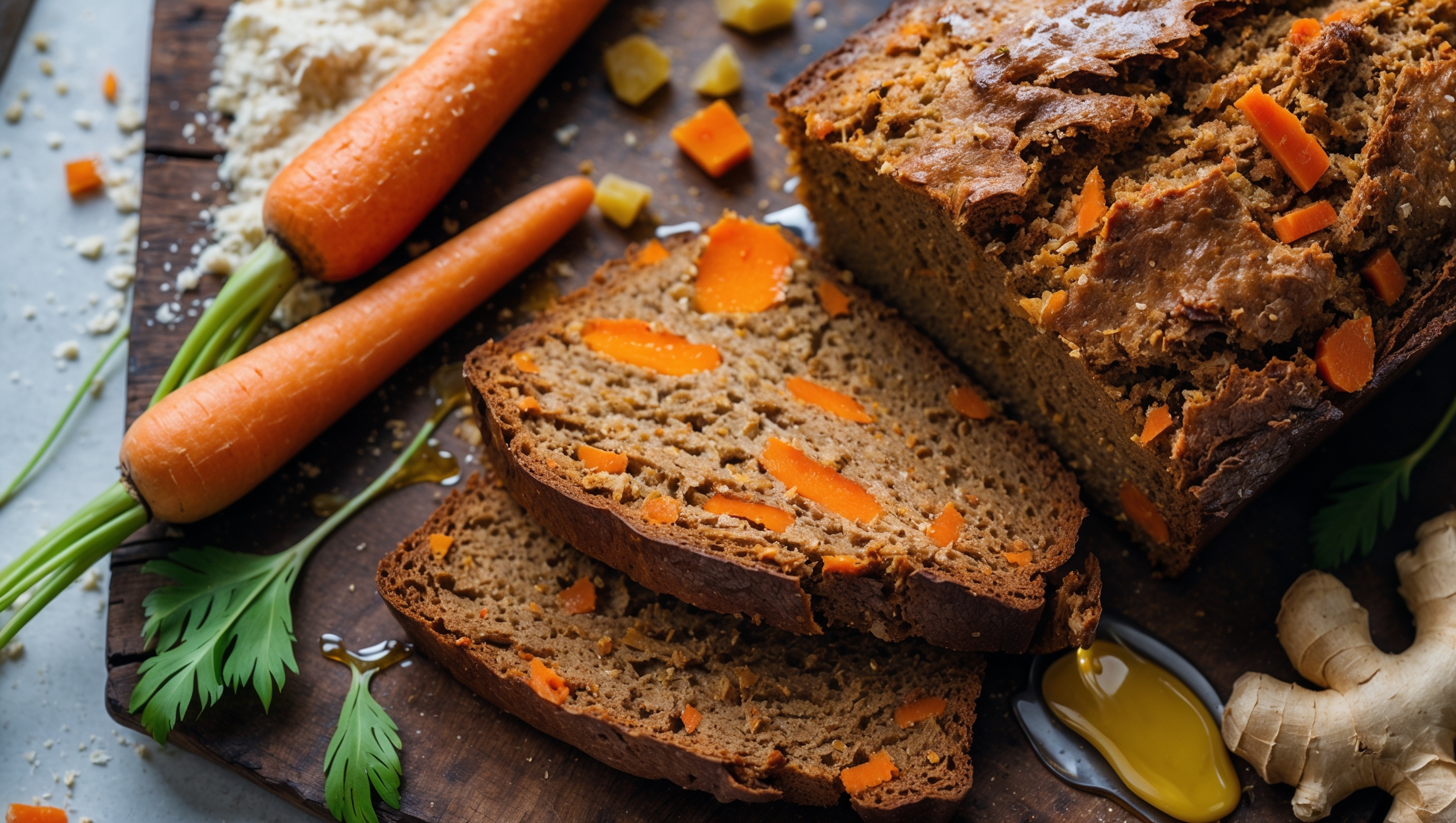
<ol class="no-list-style"><li class="MethodStepper"><h4 class="step-title">Step 1</h4>Begin by preparing your ingredients. Finely grate the carrots and squeeze out excess moisture using a clean kitchen towel - this is crucial as too much moisture can make your bread dense. Finely grate the fresh ginger and chop the crystallized ginger if using. The fine grating ensures the ginger flavor disperses evenly throughout the dough without overwhelming bites.</li><li class="MethodStepper"><h4 class="step-title">Step 2</h4>In a large bowl or the bowl of your stand mixer, combine the whole wheat flour, spelt flour, rolled oats, vital wheat gluten (if using), instant yeast, and salt. Whisk together to evenly distribute the ingredients. The vital wheat gluten is particularly helpful with whole grain breads as it provides structure to counter the bran in whole grains which can cut through gluten strands.</li><li class="MethodStepper"><h4 class="step-title">Step 3</h4>In a separate bowl, mix together the warm water (ensure it's not too hot which would kill the yeast - it should feel comfortable to your finger), honey, and olive oil until the honey dissolves. The honey will not only add sweetness but helps retain moisture in the final bread.</li><li class="MethodStepper"><h4 class="step-title">Step 4</h4>Make a well in the center of your dry ingredients and pour in the liquid mixture. If using a stand mixer, mix on low speed with the dough hook attachment until combined. If mixing by hand, stir with a wooden spoon until a shaggy dough forms. This initial mixing stage hydrates the flour proteins, beginning gluten development.</li><li class="MethodStepper"><h4 class="step-title">Step 5</h4>Add the grated carrots, fresh ginger, crystallized ginger (if using), and sunflower seeds to the dough. Mix on medium-low speed for 5-7 minutes in a stand mixer, or turn the dough out onto a lightly floured surface and knead by hand for 8-10 minutes. The dough should become smooth and elastic, though still slightly tacky due to the moisture from the carrots. The kneading develops the gluten network that will trap gas bubbles during fermentation and baking.</li><li class="MethodStepper"><h4 class="step-title">Step 6</h4>Place the dough in a lightly oiled bowl, cover with plastic wrap or a damp kitchen towel, and let rise in a warm place (about 24-27°C/75-80°F) until doubled in size, approximately 60-90 minutes. This first rise (bulk fermentation) allows flavor to develop and the yeast to produce carbon dioxide gas.</li><li class="MethodStepper"><h4 class="step-title">Step 7</h4>Once doubled, gently punch down the dough to release excess gas. Turn onto a lightly floured surface and shape into a loaf by patting into a rectangle about 20cm x 30cm (8" x 12"), then rolling it tightly from the short end, pinching the seam closed. This shaping technique creates tension in the surface of the dough which helps it rise upward rather than outward.</li><li class="MethodStepper"><h4 class="step-title">Step 8</h4>Place the shaped dough seam-side down in a greased loaf pan. Cover loosely and let rise again until the dough reaches about 2.5cm (1 inch) above the rim of the pan, approximately 45-60 minutes. Meanwhile, preheat your oven to 190°C (375°F). This second rise (proofing) gives the final shape to your loaf.</li><li class="MethodStepper"><h4 class="step-title">Step 9</h4>Just before baking, brush the top of the loaf gently with egg wash and sprinkle with additional sunflower seeds if desired. The egg wash will give your bread a beautiful golden crust, while creating a surface for the seeds to adhere to.</li><li class="MethodStepper"><h4 class="step-title">Step 10</h4>Bake in the preheated oven for 40-45 minutes until the bread is golden brown and sounds hollow when tapped on the bottom. If the top is browning too quickly, tent loosely with aluminum foil after 25 minutes. For the most accurate results, the internal temperature should reach 93-96°C (200-205°F) when tested with a kitchen thermometer.</li><li class="MethodStepper"><h4 class="step-title">Step 11</h4>Remove from the oven and immediately turn out onto a wire rack to cool completely, at least 1-2 hours before slicing. This cooling period is essential - cutting too soon will result in a gummy texture as the starches haven't fully set.</li><li class="MethodStepper"><h4 class="step-title">Step 12</h4>Once cooled, slice and enjoy with butter, cream cheese, or as a base for sandwiches. Store in an airtight container at room temperature for up to 3 days, or freeze sliced bread for up to 3 months, separating slices with parchment paper for easy thawing of individual portions.</li></ol>