
On this page
A muffin recipe asks for sour cream, but you have a carton of plain yogurt in the refrigerator. Can you use it? Often yes, especially when both products have a similar fat content and thickness. Yet replacing rich sour cream with thin nonfat yogurt can change the batter's consistency, tenderness and flavour. Understanding those differences is the key to a successful substitution rather than a disappointing batch of dry or gummy muffins.
Why bakers use cultured dairy in muffins
Sour cream and yogurt both add water, dairy solids and tangy acidity to muffin batter. They can support a tender crumb and balance the sweetness of blueberries, banana or chocolate. Their acidity may also react with baking soda in recipes developed for that combination. But the precise recipe still determines rise, texture and storage.
What is sour cream?
Sour cream is cream that has been cultured with lactic-acid bacteria. It is usually thick, tangy and relatively rich in fat, though reduced-fat varieties exist. That richness contributes to a soft mouthfeel and can make a muffin feel moist. It also affects how the batter mixes with flour and eggs.
What is plain yogurt?
Yogurt is cultured milk, available in different fat percentages, textures and protein contents. Plain regular yogurt may be noticeably thinner than sour cream, while strained Greek yogurt can be thick and higher in protein. The words 'plain yogurt' therefore don't identify one precise ingredient.
The biggest difference: fat content
Full-fat sour cream often contains more fat than standard plain yogurt. Fat can help coat flour proteins and contribute tenderness, though the whole formula matters. If you substitute a very low-fat yogurt into a rich sour-cream recipe, expect a potentially leaner, less tender muffin. Full-fat Greek yogurt may be a closer practical choice for some batters.
The second difference: thickness
A thick dairy ingredient makes a batter behave differently from a pourable one. Regular yogurt may thin a batter originally developed for thick sour cream, while very firm Greek yogurt may make a recipe intended for thin yogurt stiffer. That can affect how evenly berries distribute and how the muffin crowns form.
Compare textures while both products are cold. Thick strained yogurt holds its shape longer than most unstrained yogurt. Use a formula that accounts for the difference.

The third difference: acidity
Both yogurt and sour cream are acidic, but their pH and flavour can vary across brands. In recipes containing baking soda, acidity is part of the leavening system. For many home muffin formulas, plain sour cream and yogurt can both work, but that does not justify changing other acidic ingredients without testing.
Can you replace sour cream with yogurt one-to-one?
Start with a recipe that gives both as options. Compare the fat content and consistency before trying a swap.
Often, if the yogurt is plain and has a similar consistency and fat content. That's strong evidence for that tested recipe—not proof that all sour-cream muffins will respond identically to any yogurt.
Can you replace yogurt with sour cream?
Sometimes. Sour cream can replace yogurt in a muffin recipe when the thickness, fat and acid balance are compatible. Follow the developer's directions, especially if the batter includes other significant liquid components.
What about Greek yogurt?
Greek yogurt is strained and often thicker and richer in protein than ordinary yogurt. In a muffin batter, its thickness can be useful, but a very thick low-fat product may not produce the same result as full-fat sour cream.
Full-fat versus low-fat yogurt
Full-fat plain yogurt can help preserve the richer texture expected in certain sour-cream muffins. Lower-fat or nonfat versions may work in some recipes but can produce a different crumb.
Avoid sweetened flavoured yogurt
Vanilla, strawberry or other sweetened yogurts introduce sugar, flavourings and sometimes stabilizers or fruit pieces. Those change more than the dairy component. For a neutral muffin, select plain, unsweetened yogurt unless the recipe specifically includes a flavoured product.
Blueberry muffins: which is better?
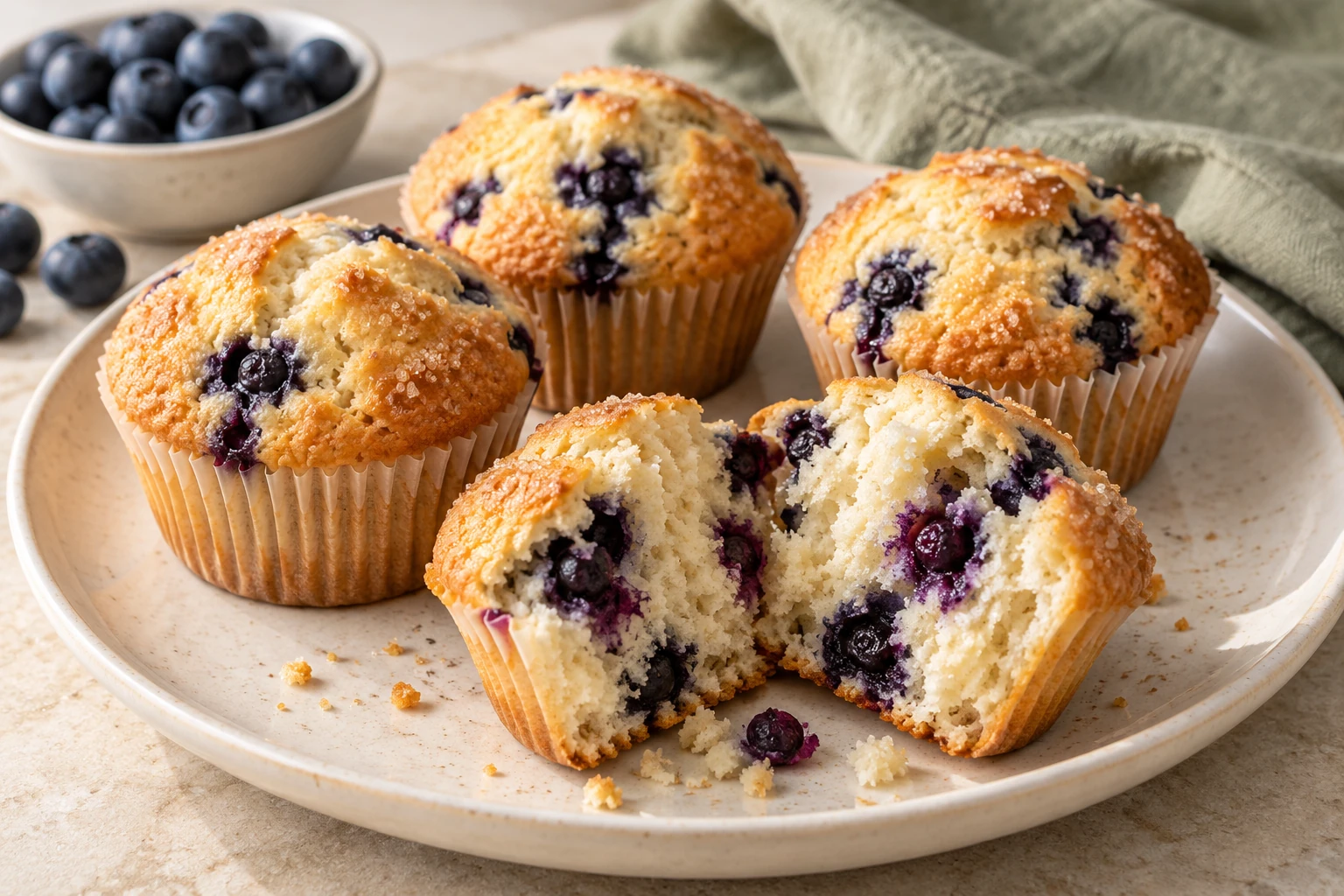
Both cultured dairy products can work in blueberry muffins. The fat and water content affect tenderness, and the amount of berries affects how quickly the centre bakes. Compare the two in a formula that names both as options.
The milk-based Blueberry Muffins is a separate baseline. For a yogurt or sour cream comparison, start with a tested recipe that calls for either of those cultured dairy products.
Banana muffins and sour cream
Bananas supply moisture and natural sweetness. A modest amount of sour cream can provide richness and acidity, but increasing both banana and sour cream without testing may produce a heavy, damp centre. Weigh banana accurately and preserve the formula's dairy quantity.
Banana muffins and yogurt
A plain yogurt muffin can be pleasantly tender alongside ripe banana. If using a very thick Greek yogurt, the batter may need a specific mixing method to avoid dry pockets; a recipe that includes yogurt has already been balanced around its texture. Do not add extra milk by instinct simply because the batter looks thick.
The base for Banana, Zucchini and Apple Mini Muffins uses plain yogurt and gives a Greek-yogurt option. Start with a listed variation so you can judge the texture before making changes.

Chocolate muffins
Cultured dairy can contribute tang and tenderness in chocolate muffins. Some recipes combine baking soda with acidic dairy, and cocoa type may also affect the formula's acid balance. Don't replace both the dairy and the cocoa powder simultaneously unless the developer supplies tested alternatives.
Lemon muffins and vanilla muffins
In a lightly flavoured muffin, the dairy's tang may be more noticeable than in a heavily spiced recipe. Sour cream can give a creamy background, and yogurt may contribute a brighter cultured taste. Lemon juice also adds acid, so use a recipe built for the combination rather than adding unmeasured juice to an already acidic batter.
Why a yogurt swap can make muffins dry
The fat level may be lower, or the altered dairy may change how the batter mixes and sets. But dryness is also frequently caused by overbaking, too much flour or insufficient liquid. Before blaming yogurt, check oven temperature, measurement accuracy and baking time.
Why a dairy swap can cause gummy muffins
A thinner yogurt can introduce a different moisture balance into a formula developed for thicker sour cream. Too much liquid, excessive banana, incorrect pan size or underbaking can all create a dense centre. The solution isn't always more baking time; first determine whether the batter's ingredients match the intended recipe.
How to measure yogurt and sour cream
Use the weight specified by your recipe when possible. A cup of dense Greek yogurt and a cup of thinner yogurt can differ in weight, so a direct volume swap does not ensure identical composition. Stir the product as directed if it has separated in the container, and avoid scooping a large quantity of watery whey while leaving the solids behind unintentionally.
Cold ingredients and mixing
Cultured dairy often comes straight from the refrigerator. Some butter-based muffin recipes specify room-temperature ingredients to avoid partially solidifying melted fat or disrupting creaming. Others are designed for cold yogurt. Follow the method, particularly when mixing with melted butter and eggs.
Can you use dairy-free yogurt?
A plain unsweetened plant-based yogurt may work in some formulas, but brands differ widely in fat, protein, thickeners and acidity. Choose a tested dairy-free formula when allergies or dietary needs matter.
What about buttermilk instead?
Buttermilk is thinner than sour cream or many Greek yogurts. It can contribute acidity and tenderness, but changing to a pourable liquid affects hydration.
Storage and food safety
Both sour cream and yogurt are perishable dairy products. Keep them refrigerated according to package instructions and don't leave measured bowls out unnecessarily while you prepare other ingredients. After baking, storage requirements depend on the complete muffin, particularly any cream cheese topping, custard filling or fresh dairy garnish.
A small test to compare them
Bake a reliable muffin recipe exactly as written, then try a second batch with a recipe-supported substitution. Use the same pan, oven temperature, fruit quantity and fill level. Compare height, crumb tenderness, flavour and next-day texture after safe storage. Changing one variable gives you meaningful evidence rather than a collection of competing guesses.
Weigh the dairy and portion the batter identically. After cooling, cut one muffin from each batch through the centre and compare tenderness, large tunnels and any gummy patches.
Frequently asked questions
Can I use Greek yogurt instead of sour cream? Often, with a suitable full-fat plain product and recipe-specific directions. Can I use nonfat yogurt? Sometimes, but the texture may be less tender. Will yogurt make muffins rise more? Not automatically; leavening depends on the whole formula. Can I use vanilla yogurt? Only if the recipe accounts for its extra sugar and flavour.
Which should you choose?
Choose sour cream when you want the richness and consistency intended by a sour-cream formula. Choose plain yogurt when the recipe is designed for it or explicitly permits the swap. If substituting, compare fat percentage and thickness, and keep the other ingredients unchanged. Good muffins rely on balance—not on declaring one cultured dairy ingredient a universal winner.
Some images are AI-generated illustrations of the dishes and techniques described.
IN PICTURES
From the baking notebook
FROM THE RECIPE BOX


