On this page
That first slice of homemade bread is irresistible: the crust crackles, the kitchen smells wonderful, and the butter is already waiting. But when you cut a large loaf straight from the oven, you can turn a beautifully baked crumb into a sticky, compressed slice.
The short answer: fresh bread needs time to cool because its hot interior is still releasing moisture and becoming firm enough to slice neatly. For a large crusty sourdough loaf, allowing roughly one to two hours is a useful starting point for some recipes, but the recipe, loaf size and bread style matter much more than a universal timer. Dense rye bread can require a much longer rest.
Here is what actually happens after baking, how to cool different kinds of bread, and when it's perfectly reasonable to serve a warm roll.
Why you shouldn't slice bread straight from the oven
Baking transforms dough into bread. Heat causes starches to absorb moisture and gelatinize, while proteins and the rest of the dough structure set. By the time a properly baked loaf comes out, its center may still be extremely hot and tender.
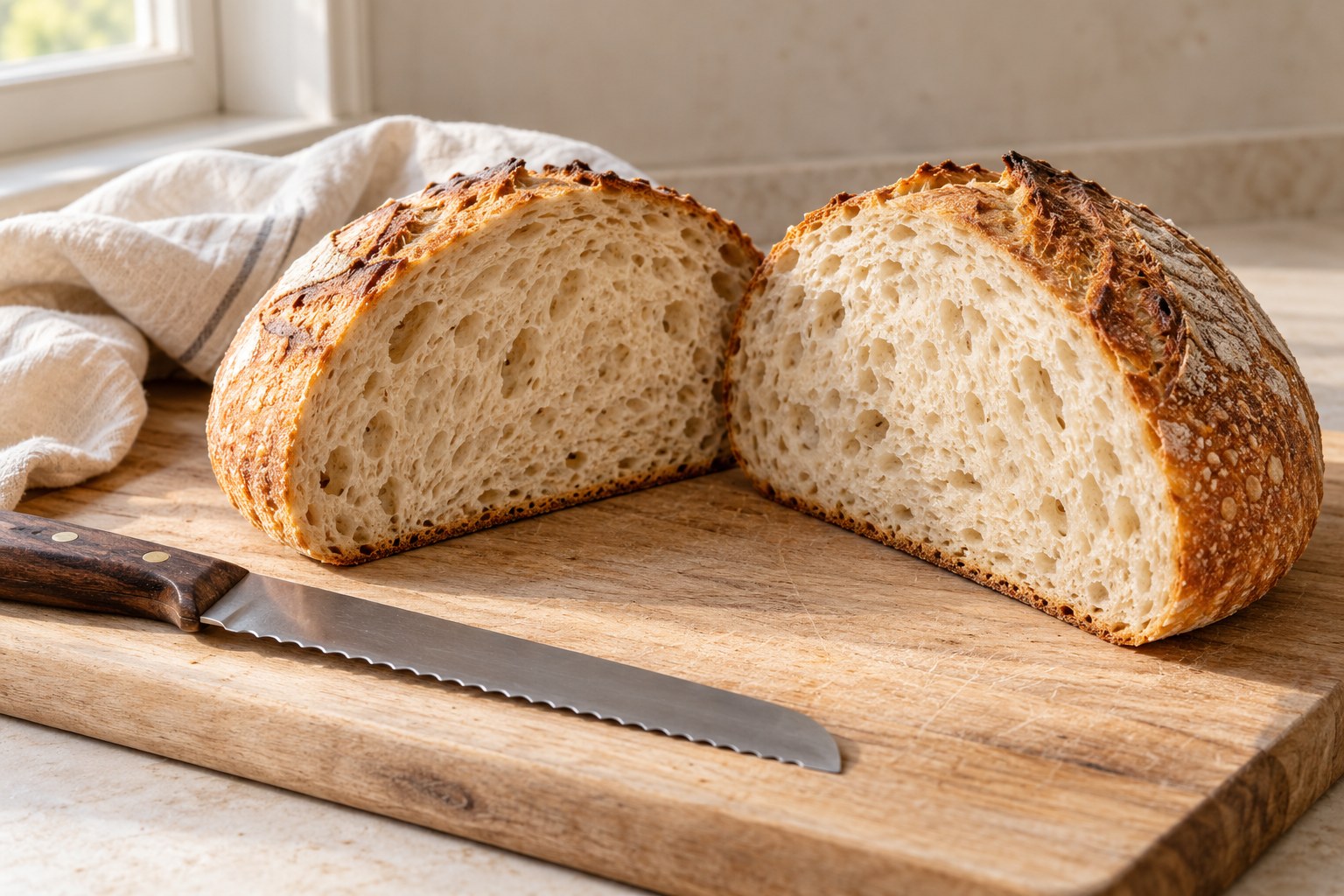
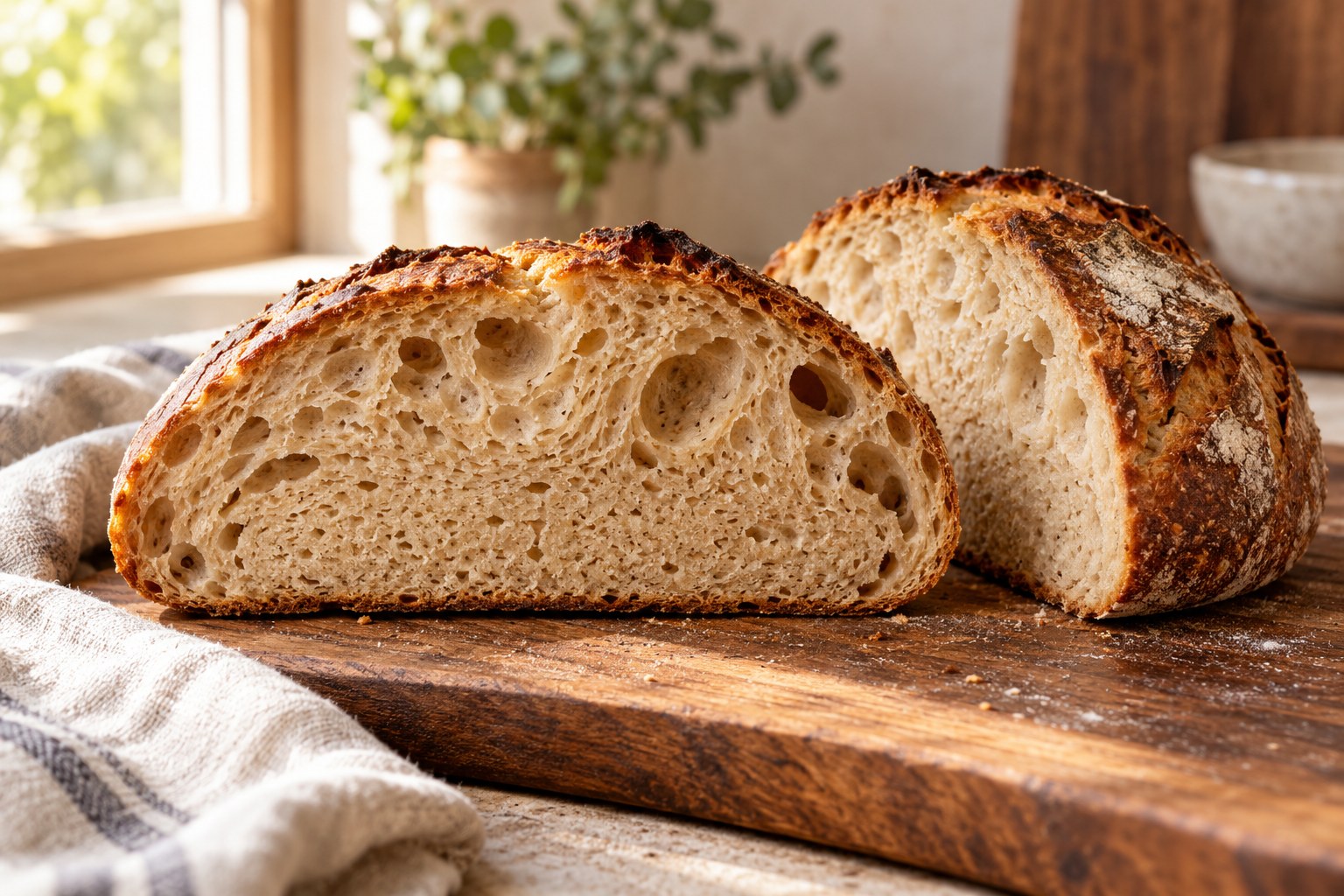
As the loaf cools, its internal structure firms and some moisture continues moving and escaping. Slice into that delicate crumb too soon and the knife can drag through it, squeezing the interior together. The cut face may look shiny or gummy even though the bread was fully baked.
That does not mean all bread must be eaten cold. Soft rolls and some enriched breads are delightful warm. The difference is whether the bread has rested long enough to be cut or pulled apart without ruining the intended texture.
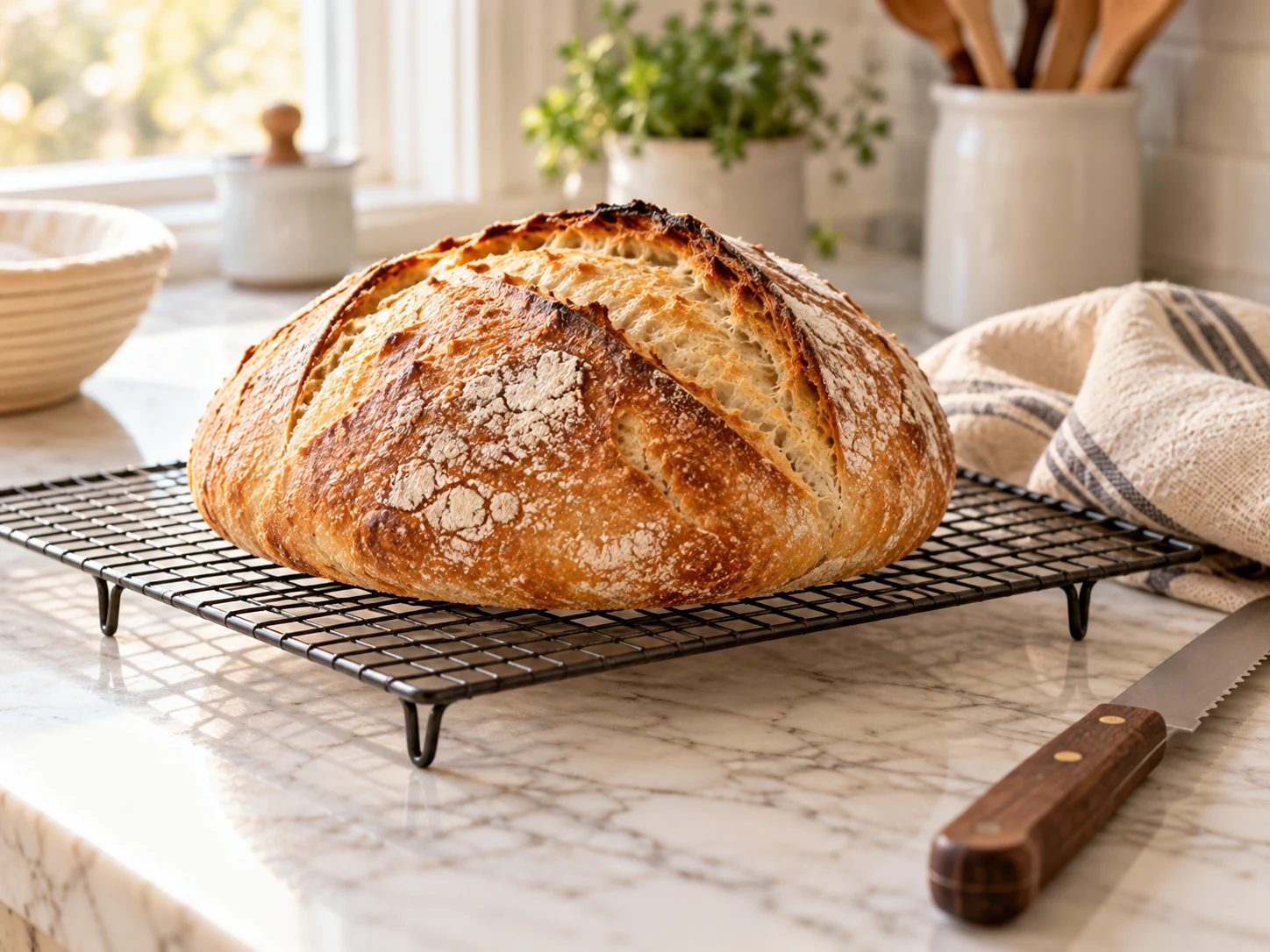
What happens inside bread as it cools?
Three related changes help explain why waiting works.
1. The crumb becomes firmer and easier to cut
The starch-and-protein network has formed during baking, but it is still soft while very hot. Cooling lets the crumb stabilize enough that a serrated knife can cut cleaner slices instead of squashing them.
This early settling is not exactly the same as bread going stale. Staling is a broader process that continues during storage and involves changes in starch structure and moisture distribution. A loaf doesn't become stale merely because you waited for it to cool.
2. Steam and moisture have time to escape
Fresh bread contains plenty of moisture. While it cools, some water leaves as vapor and some redistributes through the loaf. A hot cut exposes the soft interior suddenly, which can make the crumb sticky and accelerate moisture loss from the newly exposed surfaces.
3. The crust develops its final feel
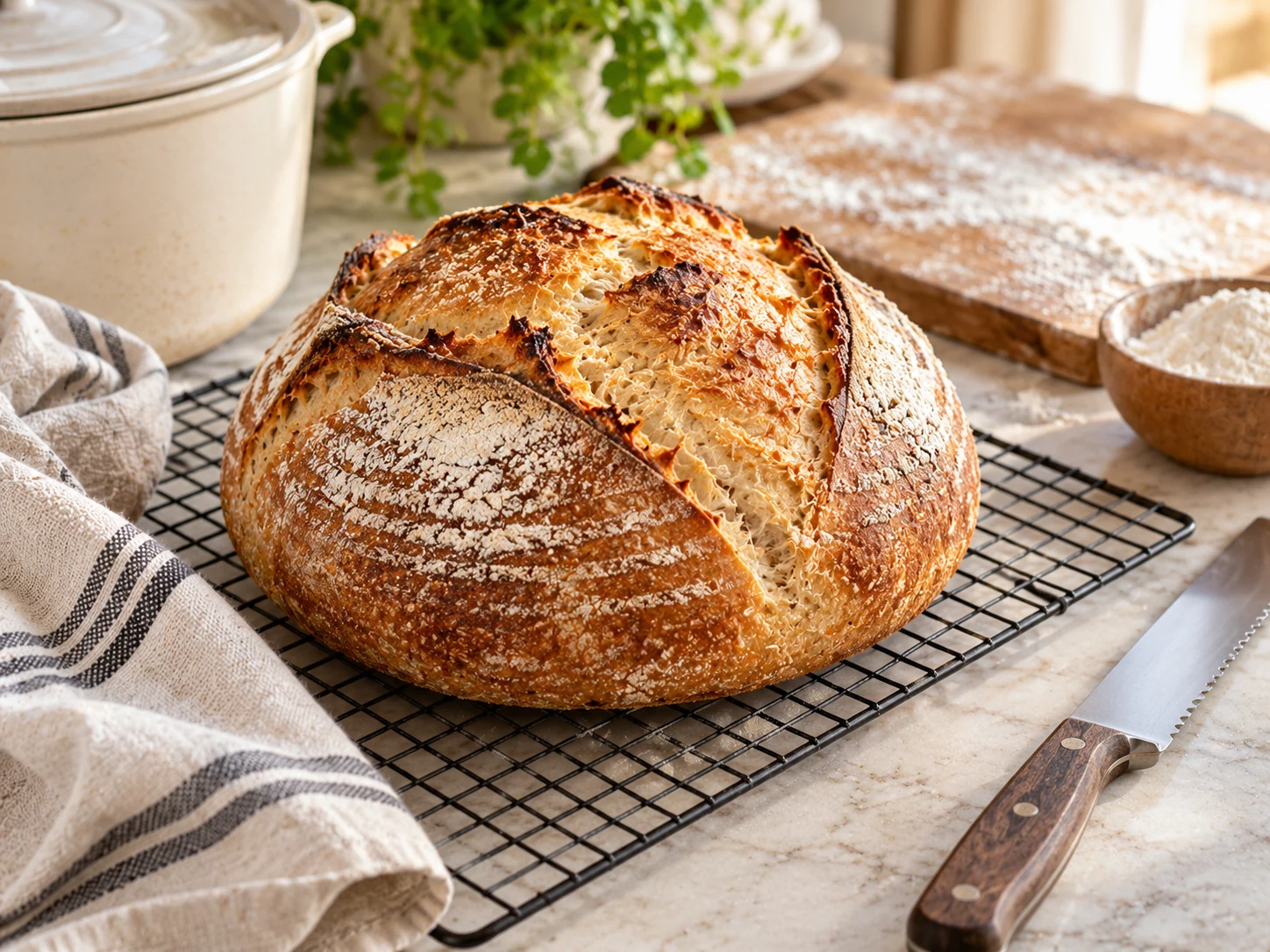
A crusty loaf often crackles faintly as it cools. A wire rack helps air move under the bread rather than trapping dampness against the base. A good crust will naturally soften over time, but there's no reason to make it soggy immediately by leaving it on a wet pan or sealing hot bread in plastic.
How long should bread cool before slicing?
Follow your recipe first. These are practical planning ranges, not guaranteed measurements or food-safety rules:
| Bread type | Useful cooling approach |
|---|---|
| Small dinner rolls | Let them rest until comfortable to handle; many are meant to be served warm. |
| Soft sandwich loaf | Allow roughly 45–90 minutes or until the crumb is set enough for clean sandwich slices, depending on loaf size. |
| Large crusty sourdough or artisan boule | Often around 1–2 hours or longer; ideally cool completely for the cleanest crumb. |
| Brioche or other enriched loaf | Follow its recipe; butter-rich loaves may need a careful rest before neat slicing. |
| Dense, high-rye loaf | Some formulas need 12–24 hours or longer after baking before slicing cleanly. |
A large, high-hydration loaf may feel cool at the crust while still being warm in its center. Conversely, a small soft roll can be ready much sooner. Use the type and size of bread—not only the clock—as your guide.
For a concrete example, The Perfect Loaf's beginner sourdough recipe recommends cooling one to two hours on a rack, while its 90% rye loaf is rested 24 hours before slicing. These are recipe-specific instructions, not universal thresholds.
The best way to cool homemade bread
You don't need special equipment beyond a wire cooling rack and a little patience.
Step 1: Check that the bread is actually baked
Cooling cannot repair a raw center. Before removing bread from the oven, use the recipe's doneness cues: crust color, expected bake time, and, where appropriate, an instant-read thermometer. The correct internal temperature varies by style, so don't use a single number for every loaf.
Step 2: Move the loaf to a rack
If the recipe says to remove it from the pan or Dutch oven, use oven mitts and transfer it carefully. Keep the rack raised so air reaches the base. Avoid leaving a crusty loaf on a solid tray where condensation can collect.
Step 3: Leave the loaf unwrapped while hot
Don't tightly bag freshly baked bread. Steam can condense against the wrapping and soften the crust. For soft bread, some recipes call for butter brushed onto the crust or a brief rest under a clean towel; follow those directions when they are part of the intended finish.
A better bread slice
- Cool on a rack. Move the loaf off the hot tray so air can circulate below.
- Let the crumb set. Follow the recipe and wait until the middle is no longer hot.
- Slice gently. Use a serrated knife without pressing down.
Step 4: Check the center, not only the crust
A thick crust loses heat sooner than the middle. Let the loaf cool until the center is no longer hot and the crumb will stand up to slicing. If you're preparing toast or sandwiches, a fully cooled loaf is easier to portion evenly.
Step 5: Slice with a serrated knife
Use gentle sawing strokes without pushing downward. The knife should move through the crumb without dragging wet dough-like fragments or squashing the whole loaf.
How do you know bread is ready to cut?
There isn't a perfect visual test, but these clues help:
- It's no longer hot in the middle. For a large loaf, a cool surface alone isn't enough—give it additional time if you aren't sure.
- The crumb holds its shape. A cleanly sliced edge should be springy and cohesive, not pressed into a dense, sticky strip by the knife.
- The loaf has rested as its recipe directs. This is especially important for dense rye breads, which may seem gummy when sliced too early even after a successful bake.
Want a rustic bread project? Try our Sourdough Country Loaf or Sourdough Brioche. The brioche recipe already calls for at least one hour of cooling; always follow each recipe's specific instructions.
What happens if you slice hot bread too early?
A few things may happen at once. The knife compresses the delicate interior, the cut surface feels tacky, and the crumb may stick to the blade. A rustic loaf can appear less airy and more dense than it really is.
If you've already cut into it, don't panic. Leave the rest of the loaf on a rack and allow it to finish cooling. Eat the warm slice while it's fresh if the bread was baked through, but avoid wrapping the remaining loaf while it is still steaming.
What you cannot fix by waiting: truly underbaked bread. If the loaf remains wet, paste-like, or raw-looking once fully cooled, review the bake next time—oven calibration, internal doneness, loaf size, proofing, and dough hydration may be factors. Cooling solves cutting problems; it doesn't substitute for baking.
Is it ever okay to eat bread warm?
Of course. Warm Danish Breakfast Rolls (Rundstykker) or soft dinner rolls are often part of the pleasure of baking. If you can pull apart a small roll gently without crushing its soft center, there is little reason to wait until it's cold solely for the sake of a rule.
For a larger sourdough boule you want to slice into even pieces, waiting will usually give a better result. If you're craving warm bread later, allow the loaf to cool first, slice it cleanly, and briefly toast or reheat the portion you're serving.
Should you cover bread while it cools?
For a crackly, crisp-crusted loaf, leave it uncovered on a rack while it is hot. Trapped steam softens the crust, particularly when you seal hot bread in plastic. After it has cooled, store it according to the style of bread and how soon you plan to eat it.
Very soft enriched loaves may have different instructions. If a recipe recommends brushing the crust with butter or placing a cloth loosely over the loaf, it is aiming for a softer finish. That isn't a contradiction—it's a different desired texture.
How to store bread after it has cooled
Once cool, store the loaf in a way that suits its crust and your timeline. A bread bag or appropriate container may help reduce drying, although an airtight bag softens crisp crust. For storage beyond a few days, slice and freeze bread in a well-sealed bag so you can remove only what you need.
Avoid relying on ordinary refrigerator storage as a way to keep most bread soft: refrigerated bread can stale more quickly than bread kept at room temperature or frozen. Storage is a separate decision from the initial cooling period.
Frequently asked questions
Can I cut sourdough 30 minutes after baking?
You can, but a large crusty loaf may still be too hot for a clean slice. Many sourdough recipes recommend an hour or two, and larger or wetter loaves may benefit from longer. Follow your recipe and wait until the interior has settled.
Does bread continue cooking after it leaves the oven?
The hot loaf continues changing and losing heat, but cooling is not a replacement for finishing the bake. Its crumb settles and firms as it cools. A center that was genuinely raw when removed will not be reliably fixed by resting on the counter.
Why is my bread gummy even after it's cooled?
A persistently gummy crumb can come from several factors, including insufficient baking, the bread's formulation, excessive dough hydration for the method, or slicing a dense rye loaf before its recipe's required rest. Assess the exact recipe rather than blaming cooling alone.
Can I speed up cooling in the fridge?
It's generally not the best approach for ordinary homemade bread. Cooling on a wire rack gives steam a route out; refrigerating can soften crust through condensation and ordinary fridge storage can accelerate staling. Follow any recipe-specific chilled-storage requirement for breads with perishable additions.
Should bread cool in the pan?
Use the recipe's directions. Many yeast breads should be removed from the pan after a brief rest so the bottom doesn't steam against the hot metal. Some delicate enriched or specialty loaves require different handling.
What cooling does to the structure of fresh bread
When a loaf leaves the oven, the crust is set but the centre is still very hot. Steam moves through the crumb as the loaf begins to lose heat, and starches and moisture continue to redistribute. If you cut the bread immediately, the crumb may be sticky, compressed or ragged. The problem is not that the bread has somehow become raw again; slicing simply interrupts the cooling process while its internal structure is still tender and under stress.
Cooling is a continuation of a successful bake rather than a period of wasted time. After kneading, proofing, scoring and waiting by the oven, it can be tempting to rush the knife. But the first cut gives you a clearer picture of the result when the loaf has had time to settle. A patient cooling period also helps preserve clean slices for sandwiches, toast and freezing.
There is no single cooling duration that fits every bread. A small breakfast roll with a relatively open crumb and thin crust behaves differently from a very large sourdough boule, a rich brioche or a heavy rye loaf. The relevant questions are the loaf's size, shape, moisture, flour and intended serving style.
Three bread recipes with very different cooling needs
Country sourdough loaf
The Sourdough Country Loaf from What’s Baking? uses 375 g bread flour, 125 g whole wheat flour, 350 g water, 150 g active starter and 10 g salt. It makes a single loaf, with a published baking time of roughly 45 minutes. This is a substantial, high-moisture bread compared with a small dinner roll. Let it cool on a wire rack and evaluate the crumb only after it is sufficiently set, following the recipe's stated cooling recommendations.
A country sourdough often has a chewy interior and a crust that firms as moisture moves outward. Cutting while very hot can squash the open pockets and smear the knife. The cut surface may look slightly glossy even if the dough was baked well. Before diagnosing underproofing or excessive hydration, compare the bread only after an adequate cooling period.
Sourdough brioche
The Sourdough Brioche contains 500 g bread flour, 250 g butter, four eggs, milk, sugar and active starter. The richness gives it a softer, finer crumb than a lean country loaf. While its crust and interior need to set after baking, it is not identical to a crusty sourdough and should not automatically be handled with the same cooling timetable.
Allow brioche to leave the hot pan at the stage indicated by its recipe, then cool with enough airflow to prevent trapped steam at the base. Because enriched bread includes substantial fat and eggs, its eating texture changes as it cools. Pulling it apart while piping hot can damage its delicate interior, even when the aroma makes waiting difficult.
Danish breakfast rolls
The Rundstykker (Danish Breakfast Rolls) make twelve individual rolls from 500 g strong flour, water, yeast, a little butter, salt and toppings. Their published bake takes about 15 minutes, much shorter than a full-size loaf. Rolls can be intended for warm breakfast service and generally need less cooling time before eating, although they should still be handled carefully and allowed to release excess steam.
These three examples show why a cooling guide should not promise that all bread must sit untouched for exactly an hour. For a large sourdough or dense loaf, cutting very early can distort the crumb; for a breakfast roll, serving warm may be part of the intended experience. Follow the recipe and decide whether you need neat slices or warm torn pieces.
Choose the best cooling surface
A clean wire rack lets air circulate beneath the loaf and carries steam away from its base. Bread left flat on a cutting board immediately after baking can trap condensation underneath, softening the bottom crust. This is especially noticeable with breads intended to have a crisp exterior. A rack wide enough to support the bread without bending it is useful for both loaves and rolls.
Remove the bread from the pan when the recipe instructs. Some soft enriched loaves need a short rest to become sturdy enough to lift, while leaving others in the hot pan too long can trap moisture. Use oven mitts and support large loaves from below. The freshly baked crust and baking vessel can cause burns, even if the loaf looks ready to serve.
A draughty open window, direct fan or crowded counter is not always ideal. Give the bread enough room to release heat naturally without placing it in a dirty or exposed area. Avoid putting a warm loaf directly into a plastic bag. Condensation inside the packaging can soften crust and create a damp surface long before the loaf is ready for storage.
How to recognize bread that is ready to slice
Start by consulting the source recipe's cooling advice. The outside may feel cool while the centre of a large loaf still contains considerable heat. A thermometer can help you observe cooling, but there is no universal finished internal temperature that proves every crumb is ready for slicing. Size, formula and intended use matter more than one fixed number.
For a country-style sandwich loaf, wait until it is no longer hot and the crumb has settled enough that a sharp serrated knife does not crush it. For brioche, support the softer interior and avoid tugging at the crust. For small rolls served warm, the aim may be a comfortable eating temperature rather than perfectly even slices. A warm roll broken open by hand need not meet the same cutting requirement as a bread intended for neat sandwich slices.
When you cut, use a stable board and a suitable serrated bread knife. Saw gently without pressing down so hard that the crumb compresses. If the blade drags or smears wet-looking dough, consider whether the loaf needs more cooling before deciding that the formula was wrong.
Why fresh bread sometimes looks gummy
Gumminess has several possible causes. Very hot slicing can smear a still-settling crumb, but underbaking, excessive moisture, weak fermentation or insufficient dough development can also produce a genuinely gummy interior. A loaf should not be declared perfectly baked merely because cooling improves the cut surface.
When troubleshooting, write down the loaf's flour, hydration, proofing, pan or baking vessel, oven temperature, actual bake time and cooling period. Compare an appropriately cooled slice with one cut too early on another occasion. If a properly cooled loaf is still wet or pasty, examine baking and dough preparation rather than telling the baker to wait another hour without further evidence.
For sourdough specifically, the starter's activity, fermentation and shaping all affect crumb. Waiting to slice gives you a clearer view of the final result, but it cannot fix a loaf that was severely underbaked or improperly fermented. Keep a small baking log so you can distinguish cooling effects from earlier stages.
How crust changes during cooling
Some crusty breads crackle as they leave the oven. Heat escapes, moisture moves and the crust contracts. This is normal for many lean breads. If you place them in a sealed container too early, trapped steam can soften the crust you worked to develop. On the other hand, certain soft sandwich loaves are meant to have a tender outer surface rather than a crackling one.
Decide whether the loaf is supposed to be crisp or soft before choosing a cooling and packaging strategy. A country loaf may benefit from airflow, whereas an enriched soft loaf may have recipe-specific finishing or wrapping advice. Do not apply a hard-crust storage method to every bread without considering the intended texture.
Cooling bread before freezing or making sandwiches
If you plan to freeze the loaf, let it cool completely first. Warm bread sealed in freezer packaging can create condensation and ice crystals, contributing to poorer texture after thawing. Slice only when the crumb can be cut cleanly, then wrap or portion in food-safe freezer materials. Label the bread type and freezing date so you do not need to open packages repeatedly to identify them.
For sandwiches, fully cooled slices are usually easier to handle. Spreading butter or soft fillings over steaming-hot bread can change their texture, while moist sandwich fillings can make the bread soggy during storage. A warm toast or breakfast roll is a different serving context; use the form that suits the meal.
A practical cooling timeline for a baking day
Before the loaf goes into the oven: Clear a safe space for a wire rack and identify when the bread recipe expects you to remove the loaf from its pan. Have mitts and a stable cutting board ready.
Immediately after baking: Follow the recipe's removal directions and transfer to the rack. Do not wrap steaming bread tightly or place it in a closed plastic box. Protect the loaf from contamination while it cools.
During the rest: Leave the loaf undisturbed enough for the crumb to settle. Resist repeated slicing to see whether it is ready. Check the overall temperature and the recipe's cooling guidance, remembering that large loaves take longer than small rolls.
Before storage: Decide whether the bread will be eaten that day, sliced for sandwiches or frozen. Let it cool sufficiently for the intended packaging. Keep enriched or filled breads under the storage conditions appropriate for their ingredients.
Cooling questions home bakers often ask
Can I cut just the heel while the loaf is still warm?
You can choose to enjoy warm bread, but the early cut may compress the crumb or release steam. If neat slices matter, wait until the loaf has cooled adequately. For small rolls, serving warm is often part of the recipe's intention.
Why is the bottom crust damp after cooling?
The loaf may have sat on a solid surface that trapped steam or remained in the pan too long. Use a rack and follow the recipe's removal instructions. If the bread itself is underbaked, changing the rack alone will not correct the problem.
Does bread keep cooking after removal from the oven?
Heat and moisture continue to redistribute as the interior cools, and texture changes during that period. However, it is not safe to rely on cooling as a substitute for properly baking the bread in the first place.
Can I cover cooling bread with a towel?
A towel can soften the crust or trap some moisture, depending on the fabric and conditions. Use that approach only when it suits the particular bread's intended texture. For a crusty sourdough, free airflow may be preferable.
Cooling for next-day sandwiches and toast
If the loaf is intended for sandwiches, let it cool enough to cut evenly. Very warm bread can squash under a knife and create sticky or ragged slices. Once fully cooled, portions can be wrapped or frozen in suitable packaging. For toast, you can often slice the fully cooled loaf in advance and separate the slices before freezing, so only a few need to be removed at a time.
Use a sharp serrated knife and a stable cutting board. Let the blade's teeth do the work instead of pushing downward until the loaf compresses. Country sourdough may support firmer slices for toast, while enriched brioche is softer and requires gentler handling. A warm breakfast roll can be treated differently, since its intended serving style may involve tearing rather than neat sandwich slices.
How to assess your bread after cooling
Look for a crumb that is properly set and tastes appropriate for the recipe. A compressed slice caused by cutting too soon should not be confused with a loaf that was severely underbaked. If the entire crumb is persistently wet and gummy after a suitable cooling period, examine the original dough preparation, fermentation, pan, oven temperature and baking time. Cooling can improve the cut but does not fix raw dough.
If the bottom crust is damp, check whether the loaf spent too long on a solid surface or in its baking vessel. Use a wire rack to allow steam to escape on all sides. If the crust is hard but the centre remains tender, that may simply be the intended contrast for a lean country loaf. The most useful observation is how the loaf eats after an appropriate cooling period, not just how impressive the steam looked on leaving the oven.
Final bread-cooling checklist
Before the bake is finished, clear a suitable rack, prepare oven mitts and identify when the recipe asks you to remove the bread from the pan. Allow the loaf to cool with adequate airflow and avoid enclosing it in plastic while hot. When ready to slice, use a suitable knife, check the crumb, and package only at a temperature appropriate for the intended storage. Record any issues for the next bake, including the cooling time and loaf size.
The takeaway
Letting bread cool is part of baking it well. A short rest can be plenty for a warm dinner roll, while a big crusty loaf or dense rye bread deserves much more patience. Cool it on a rack, let the crumb settle, and use a sharp serrated knife when it's ready.
Your reward is a cleaner slice, better texture, and a much more accurate picture of how your homemade loaf really turned out.
IN PICTURES
From the baking notebook
FROM THE RECIPE BOX