
On this page
A cookie that spreads across the baking sheet can be delicious if it was designed to be thin and crisp. But when a recipe promises thick chewy rounds, unexpected spread suggests that fat melted before the dough structure set. Flour, sugar, dough temperature and oven heat interact, and changing one ingredient at random may create a dry cookie instead. Begin by comparing the actual result with the recipe's intended portion and shape.

Cause one: butter was too warm
Softened butter should be pliable but still solid when a recipe calls for creaming. Partly melted butter may reduce aeration and cause dough to spread faster, depending on the formula. A warm kitchen or long mixer run can soften it further. Some recipes deliberately use melted butter but balance it with different ingredients and chilling. Don't import the butter state from another recipe.
What to check before chilling
Touch the dough briefly with clean hands only for handling, not tasting, and note whether it is greasy and slumping or cohesive. If the butter was accidentally melted, a refrigerator rest may firm the fat but cannot necessarily restore the original creamed structure. Follow the author's recommended corrective method or remake an important batch. Avoid adding extra flour simply because the dough feels sticky.

Cause two: too little flour
Undermeasured flour leaves less structure relative to fat and sugar. A measuring cup that was lightly filled when the recipe assumed a different method can alter the ratio; a scale is more consistent. Too much flour has the opposite risk of dry bready cookies. Before increasing the amount, weigh the next batch accurately according to the recipe instead of guessing by dough appearance.
Flour type matters too
Bread flour, all-purpose flour and cake flour vary in protein and absorption. A formula designed around one type may spread differently with another. Some bakery cookies use a blend intentionally. Don't replace cake flour with high-protein flour in an attempt to make every cookie taller; texture and chew will change. Use the specified variety or a validated substitution.
Cause three: sugar ratio changed
White and brown sugar affect moisture, flavor and spread differently. Sugar dissolves as dough heats and influences when the structure sets. Replacing a substantial amount of brown sugar with white, using liquid honey in place of granulated sugar or reducing sugar can all alter diameter. The effect is recipe-dependent. Maintain the original sugar types and weights before investigating more obscure causes.
How packed sugar changes measurement
A cup of packed brown sugar doesn't weigh the same as a loosely spooned cup of brown sugar. Inconsistent packing can shift the recipe's effective ratio. Weigh ingredients if the author provides grams. A dark molasses-rich sugar may behave differently from ordinary light brown sugar even at the same weight, so keep the product type consistent when troubleshooting.
Cause four: leavening is wrong
Baking soda and baking powder behave differently. Soda can affect pH and spreading in some cookies, while baking powder contributes another rise pattern. An accidental large scoop of soda may create an odd taste and exaggerated spread. Increasing leavener isn't a safe way to fix a flat cookie. Confirm the correct powder, measurement and freshness before baking another batch.

Cause five: dough needed chilling
Some butter-rich cookie formulas are designed for refrigerated resting. Cold fat melts more slowly in the oven and hydration changes during the wait, potentially producing thicker pieces. If you skipped the stated chill, spread may increase. Other cookies are intended to bake immediately. Follow the specific rest and portioning instructions instead of imposing an overnight chill on every cookie recipe.
Cause six: the baking sheet was hot
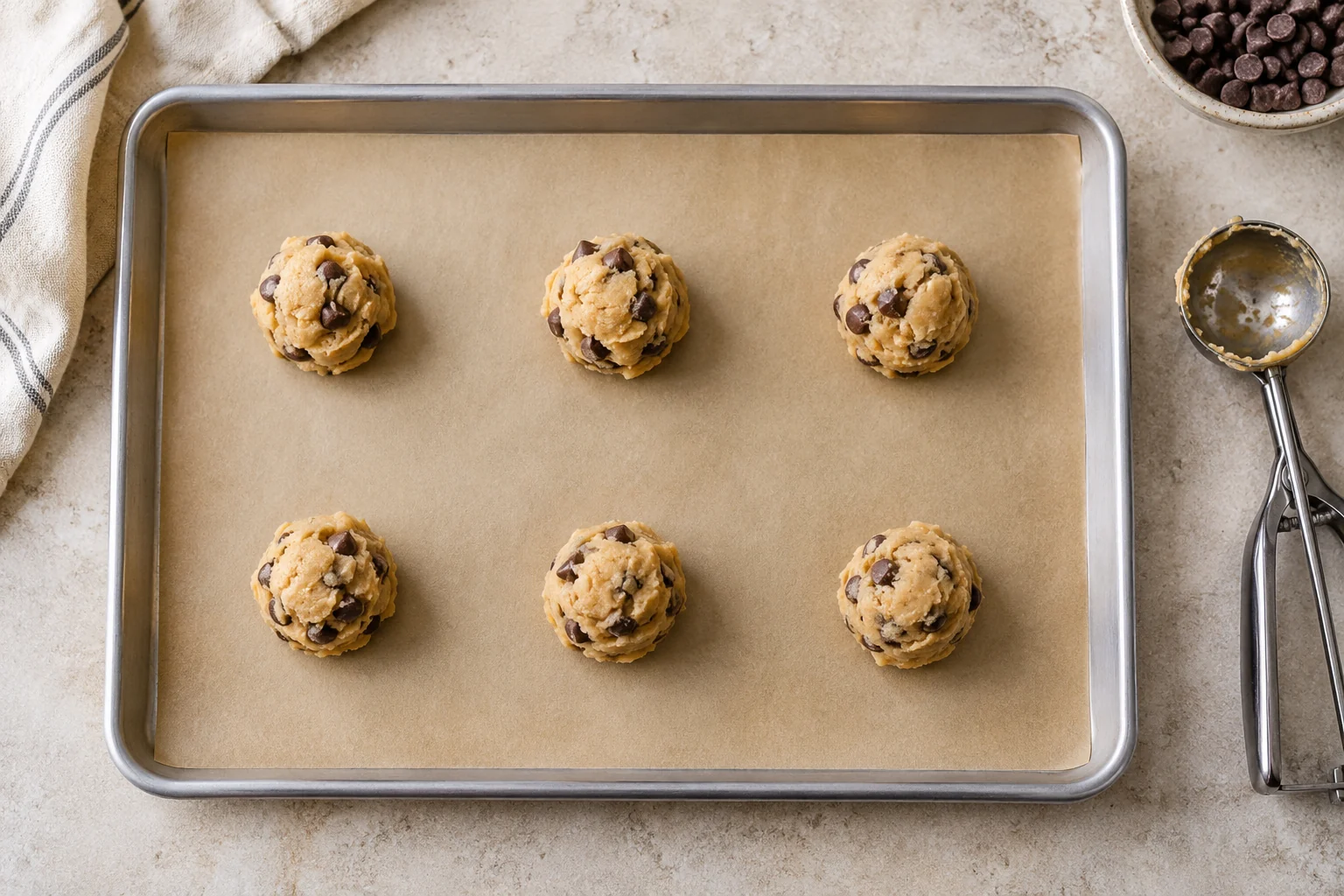
A portion of cookie dough placed onto a sheet that just left the oven begins warming and softening before baking. The second batch can therefore spread more than the first even when the dough itself is identical. Let sheets cool fully or alternate between two suitable pans. Don't set refrigerated dough onto hot metal while waiting for the oven timer.

Cause seven: oven temperature is off
An oven that is cooler than its set point may allow butter and sugar to flow for longer before structure develops. A very hot oven has its own browning and underbaking risks. Verify actual temperature if repeated batches don't match a trusted recipe. Follow the recommended rack placement and note whether convection mode is active.
The oven preheat signal isn't always enough
Some ovens announce readiness before their walls and cookware environment have fully stabilized. For delicate or temperature-sensitive cookies, allow the method's preheat period and use a reliable thermometer if the oven seems inconsistent. Opening the door repeatedly also changes heat. A consistent oven makes comparing batches more meaningful.

Cause eight: dough portions were too small or flat
A thirty-gram ball and a ninety-gram mound spread and set differently. Flattening a dough designed to bake as a tall scoop can produce a thin cookie. Weigh portions and follow the shaping instruction. If a recipe specifies a generous mound, don't press it flat merely because another cookie formula requires it.
Overmixing and aeration
Extensive creaming or mixing may alter how much air enters the cookie dough, influencing spread and a cakier texture in some formulas. Undercombined ingredients can create greasy patches. Follow the original mixing endpoint rather than beating butter and sugar until extremely fluffy for every recipe. Scrape the bowl so the mixture is uniform.
Pan material and lining
Dark sheets may brown bottoms faster, while parchment, silicone mats and bare metal can change how a particular dough spreads. Using a different lining from the author introduces another variable. A very thick insulated tray can also alter heat delivery. For troubleshooting, repeat on the recommended pan before changing the ingredient list.
Excessive greasing
A cookie tray coated heavily with melted butter or oil may encourage spreading or greasy edges, depending on the dough. If the recipe calls for parchment on an ungreased tray, follow that. Nonstick cookware may not require additional fat, though some recipes specify it. Avoid assuming more grease always makes cookies release better.
Dough made with oil
Oil-based cookie dough is a separate type of formula. Substituting oil for creamed butter removes the solid-fat aeration and changes water content. A thin cookie may result unless the entire method is adjusted. Choose a tested oil-based recipe when avoiding butter rather than simply pouring oil into a conventional creaming recipe.
Too much egg or liquid
Large eggs, extra milk or unmeasured extracts can increase moisture and change the dough's consistency. A larger egg isn't always disastrous, but precision matters in a small batch. Use the recipe's egg size and don't add extra liquid to make a stiff dough easier to stir without checking its intended state.
Mix-ins affect geometry
Very large chocolate chunks, nuts and dried fruit can cause uneven spread and strange edges. A dough overloaded with inclusions may not have enough binding mixture to hold a tall mound. Follow the intended amount and distribution. If one cookie looks flattened only where a large chocolate pool melted, don't conclude that the entire dough formula is wrong.
Why every tray isn't identical
Cookie spread can change through the session as dough warms, pans become hot or oven cycles fluctuate. Keep unbaked portions covered at their intended temperature, cool trays and use consistent scoop weight. A first batch may be a useful calibration, but it shouldn't be treated as defective merely because the last tray had different conditions.
What to do if cookies are already flat
Fully baked thin cookies can still make excellent ice cream sandwiches, crumb crusts or chocolate-dipped treats. If they are underbaked in the center, treat that separately; raw flour and eggs require proper cooking. Adding frosting doesn't restore missing height. For next time, isolate the most likely cause and make a controlled test batch.
One-variable testing
Start by weighing flour, sugar and butter accurately and checking the recipe's intended dough temperature. Bake equal scoops on a cool recommended sheet in a verified oven. If spread remains excessive, change one factor only within tested guidance. Photograph the cooled diameter. A kitchen record helps you solve the real problem instead of accumulating arbitrary additions.
Frequently asked questions
Does chilling fix every flat cookie? No. Can hot sheets cause spreading? Yes. Is more flour the best cure? Not automatically. Will extra baking powder make cookies taller? It can cause other defects. Is melted butter always wrong? No, when the formula intends it. Why did only the second tray spread? Pan and dough temperature may have changed.
The flat-cookie checklist
Keep the intended butter state, measure flour and sugar correctly, follow leavening and chilling, use cool sheets and verify oven heat. Thick cookies come from a balanced recipe and consistent conditions, not a last-minute handful of flour.
How to review a single failed tray
Compare the first and last sheets from the same dough. If the early cookies stayed thick and later ones flattened, check whether the waiting dough warmed or the pans were still hot. A recipe-wide flour imbalance would more often affect every tray. This distinction prevents changing the entire formula when only your batching conditions need attention.
IN PICTURES
From the baking notebook
FROM THE RECIPE BOX


