On this page
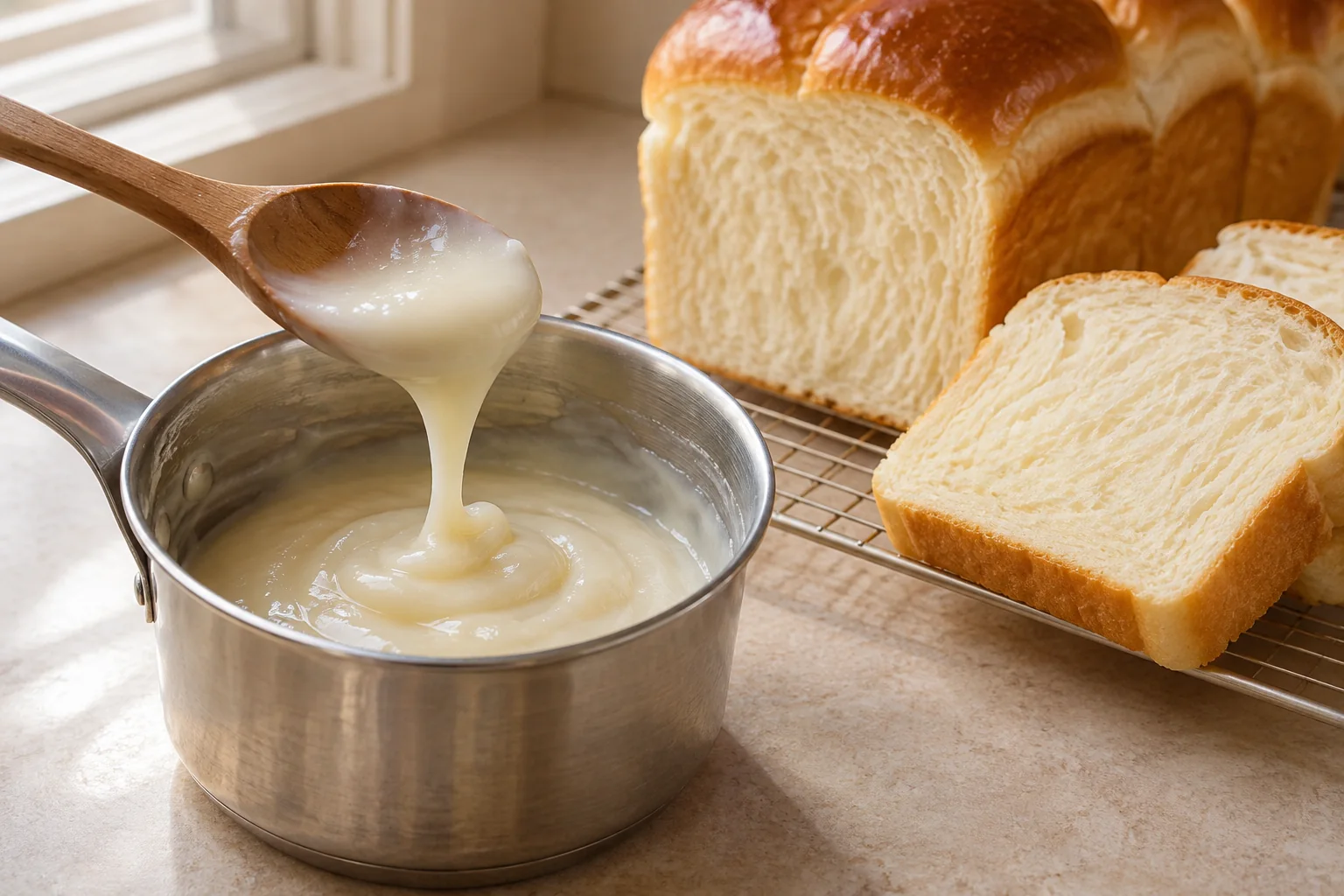
A loaf of soft milk bread that stays tender the following day can feel like bakery magic. Tangzhong offers a practical explanation. The technique preheats a small portion of flour with liquid to thicken its starch before that mixture becomes part of yeast dough. The result is a dough able to carry extra moisture while retaining useful structure, often creating an exceptionally soft crumb in sandwich bread, rolls and cinnamon buns.
What tangzhong means in baking
Tangzhong is a flour-and-liquid paste cooked before mixing the main dough. It is used in numerous soft yeast breads. The method is associated with East Asian bread-making and was popularized widely in home baking through soft milk bread and cinnamon roll recipes.
Why heating flour makes a difference
As starch granules are heated with sufficient liquid, they gelatinize, swelling and holding water in a new way. This allows a portion of the dough's water to remain associated with the cooked paste during mixing and baking. The loaf often feels moist and pillowy without becoming as loose as simply adding extra water to an ordinary dough.
Typical tangzhong proportions
Many tangzhong formulas cook a small portion of the recipe's flour with about five times its weight of liquid. The amount of total flour allocated to the paste varies. Use the recipe's gram weights, and count both the paste flour and liquid in the total dough formula.
Example using flour and milk
A formula may direct you to combine 25 g flour with 125 g milk to make a small paste. These amounts illustrate the common ratio, not a complete recipe for bread. Both flour and milk need to be included in the total dough formula so the final hydration isn't accidentally increased.
How to mix the slurry
Whisk flour and liquid together thoroughly while still cold if the recipe uses a saucepan method. A smooth initial slurry avoids dry lumps when heating begins. Put the mixture over the recipe's specified moderate heat and stir as it thickens.
Know when to stop heating
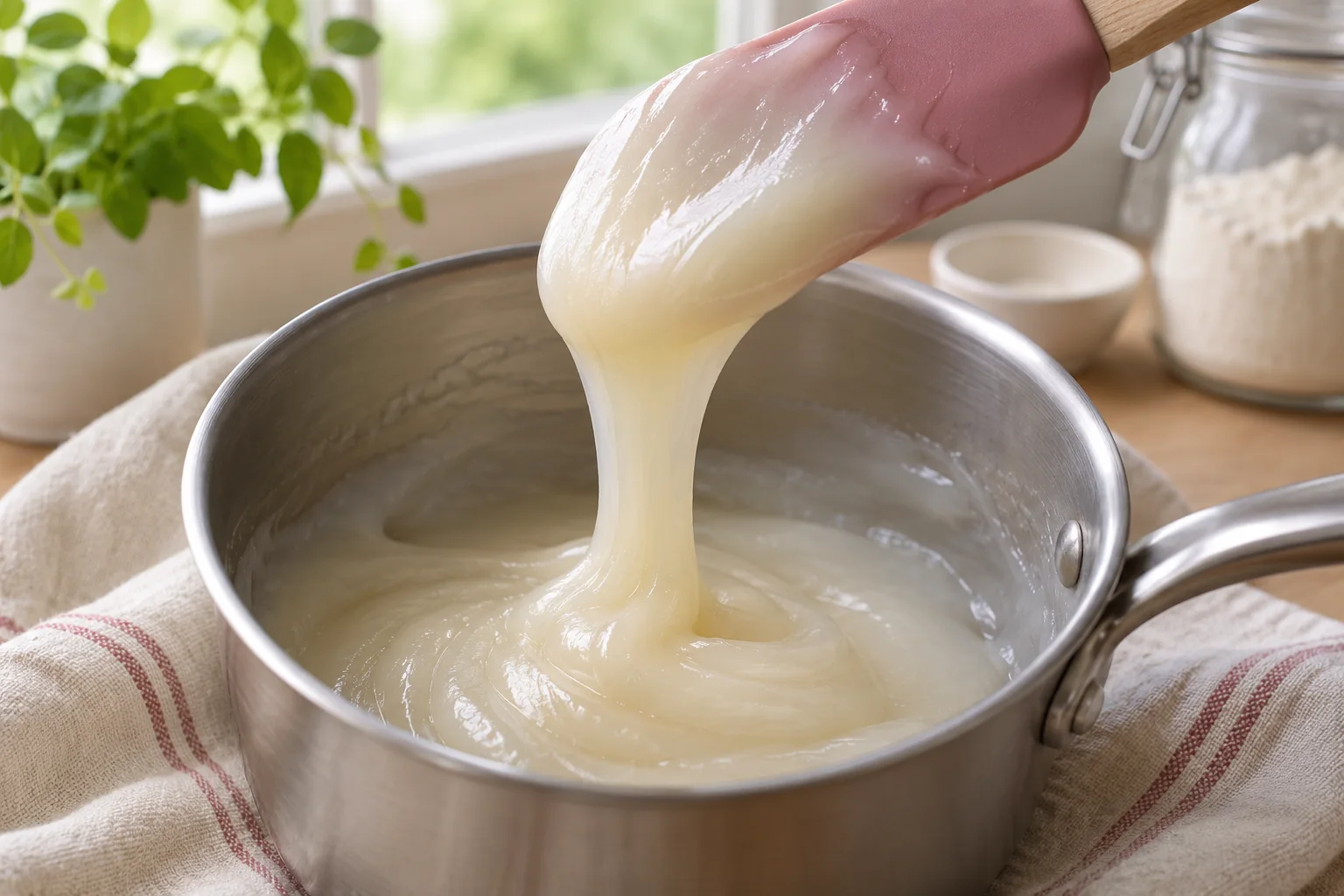
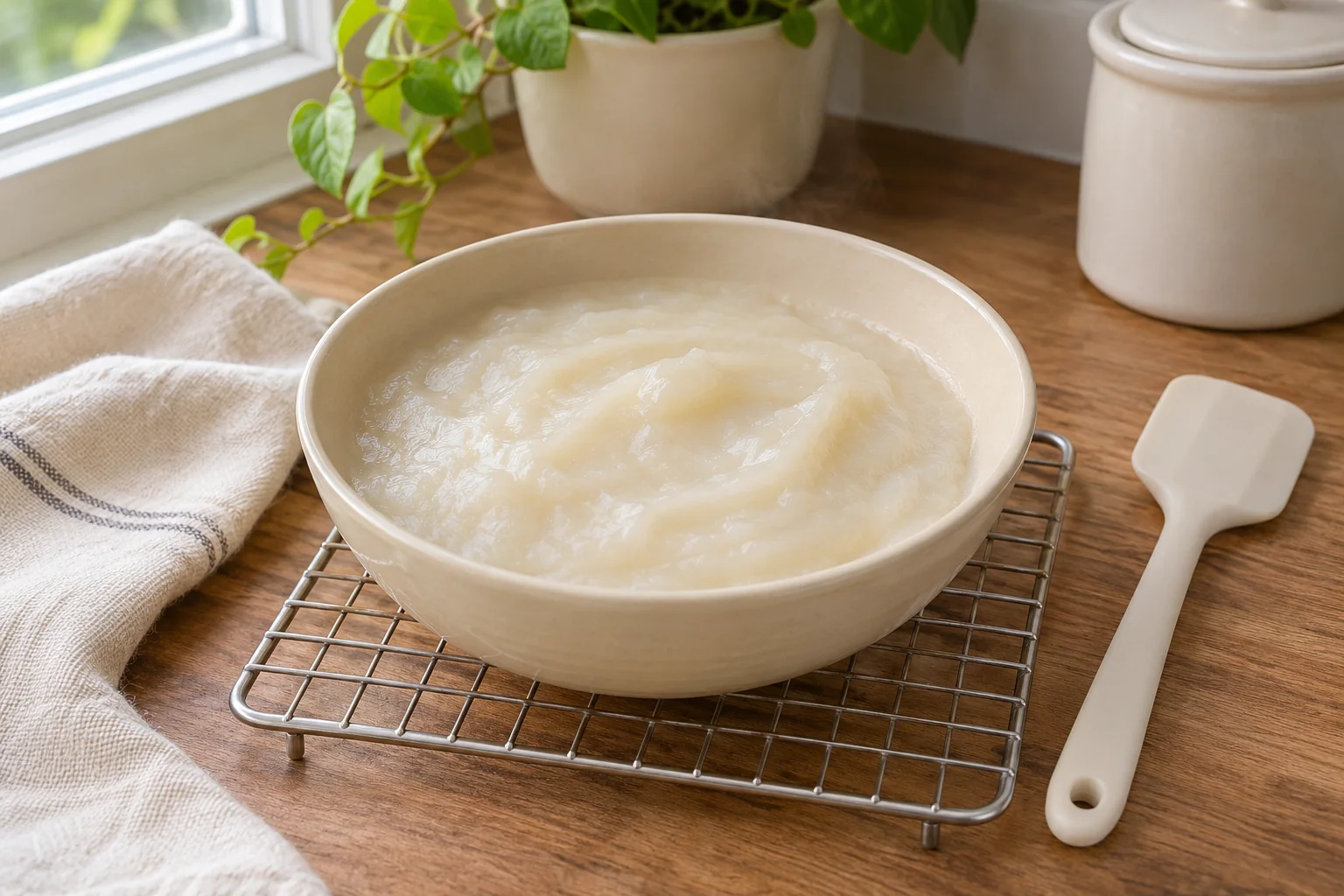
The mixture typically changes from a pourable liquid to a thick, pudding-like paste. Remove it at the method's endpoint before it scorches or loses too much water to evaporation. A paste that's brown and dry is no longer the intended ingredient.
Let it cool before adding yeast
Freshly cooked tangzhong can be hot enough to damage yeast and alter the intended dough temperature. Cool it using the recipe's method before combining with the remaining ingredients. Don't put a steaming saucepan directly into a cold glass bowl that isn't rated for sudden temperature changes.
Why tangzhong is excellent for milk bread
Milk bread aims for a fine, soft, resilient crumb. Tangzhong helps incorporate moisture in a way that supports that eating texture. The recipe still needs proper gluten development, yeast fermentation and proofing. A paste alone cannot create a well-risen loaf from inactive yeast.
Recipe to try: Soft Milk Bread. Pillowy-soft, subtly sweet milk bread with a tender, pull-apart texture and golden crust that makes for perfect sandwiches, toast, or enjoying warm with butter.
Cinnamon rolls benefit too
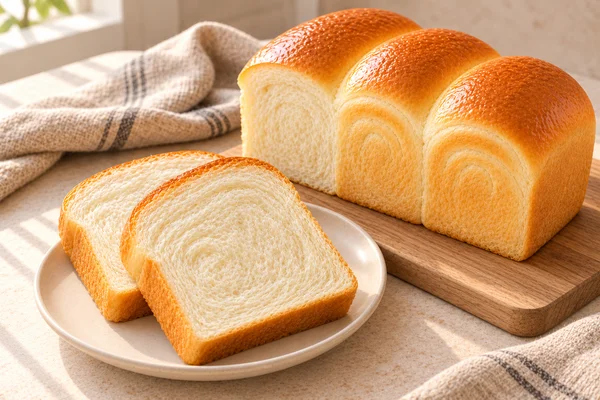
Tangzhong can support a soft cinnamon-roll crumb when the whole dough is designed for it. It does not replace adequate kneading, proofing or correct baking. A filling or icing may also require refrigeration even when the plain bread itself would not.
Does it change the flavour?
Tangzhong mostly alters texture and moisture retention, though milk choice and overall dough hydration can influence flavour. It isn't a substitute for butter, sugar, salt or fermentation. A lean tangzhong bread won't taste exactly like sweet enriched milk bread unless the full formula supports that result.
How the paste affects kneading
The cooked portion can make dough feel supple and sticky. A well-designed formula includes enough raw flour to develop gluten as well as the gelatinized portion. Avoid adding handfuls of flour simply because the dough feels softer than your usual sandwich dough.
Can you use a stand mixer?
Yes, many milk bread recipes use a stand mixer, but the correct speed and duration depend on the dough and appliance. Scrape the bowl and assess gluten development using recipe-specific cues. Overmixing can overheat enriched dough and make it harder to shape.
What about plant-based milk?
A plant-based milk may work in a recipe designed or tested for that substitution, but sweetness, fat and protein vary by product. Choose an unsweetened version when the formula calls for it. Changing the milk alone does not make bread vegan if butter, eggs or dairy icing remain.
Yudane is related but different
Yudane usually involves pouring boiling water over flour, often at an approximately equal weight ratio, rather than cooking a much looser slurry on the stove. Both gelatinize starch. The techniques shouldn't be swapped without changing the flour and water allocation.
Can you add tangzhong to any bread?
Not every bread benefits equally. Soft sandwich loaves and rolls are natural candidates, while a crisp baguette may have different texture goals. Use a tested conversion or recipe rather than adding extra cooked flour and liquid to an already balanced formula.
Recipe to try: Tangzhong Sandwich Bread. Pillowy-soft sandwich bread with a cloud-like texture and subtle sweetness achieved through the Japanese tangzhong method, resulting in exceptionally tender slices that stay fresh for days.

What if the dough is too wet?
First verify that the flour and liquid used in tangzhong were deducted from the main dough. Then check flour type and measuring accuracy. The recipe may intentionally produce a soft tacky dough; don't keep adding flour until it resembles a stiff bagel dough.
What if the bread is still dry?
Overbaking, excess flour or poor wrapping after cooling may be responsible. Tangzhong improves water retention but cannot prevent all moisture loss. Check pan size, oven temperature, bake endpoint and storage before increasing the tangzhong percentage.
What if the bread collapses?
Excess fermentation, underdeveloped gluten, inappropriate flour or a too-wet formula may cause collapse. A large amount of cooked paste can also alter dough strength. Follow the tested proportion and fermentation schedule rather than doubling tangzhong to make bread twice as soft.
How to store tangzhong bread
Cool bread thoroughly before bagging to avoid condensation and a soggy crust. Store according to the complete bread recipe. A tangzhong loaf can stay pleasant longer than an otherwise comparable loaf, but perishable fillings and toppings still require refrigeration.
Recipe to try: Japanese Milk Bread Rolls. Pillowy-soft, cloud-like Japanese milk bread rolls with a rich, buttery flavor and feathery texture that pulls apart in satisfying, tender strands.

Frequently asked questions
Is tangzhong a yeast starter? No. Does it add extra flour? Usually it uses some flour already in the formula. Can I make it with water? Yes. Does it help every recipe? No. Is an overnight rest required? Not inherently; follow the method.
A small step with a real purpose
Tangzhong works by changing starch hydration before bread mixing begins. Measure the paste carefully, cool it, and use it in a dough designed to take advantage of that extra moisture. The payoff is a tender loaf, not a shortcut around fermentation.
IN PICTURES
From the baking notebook
FROM THE RECIPE BOX


