On this page
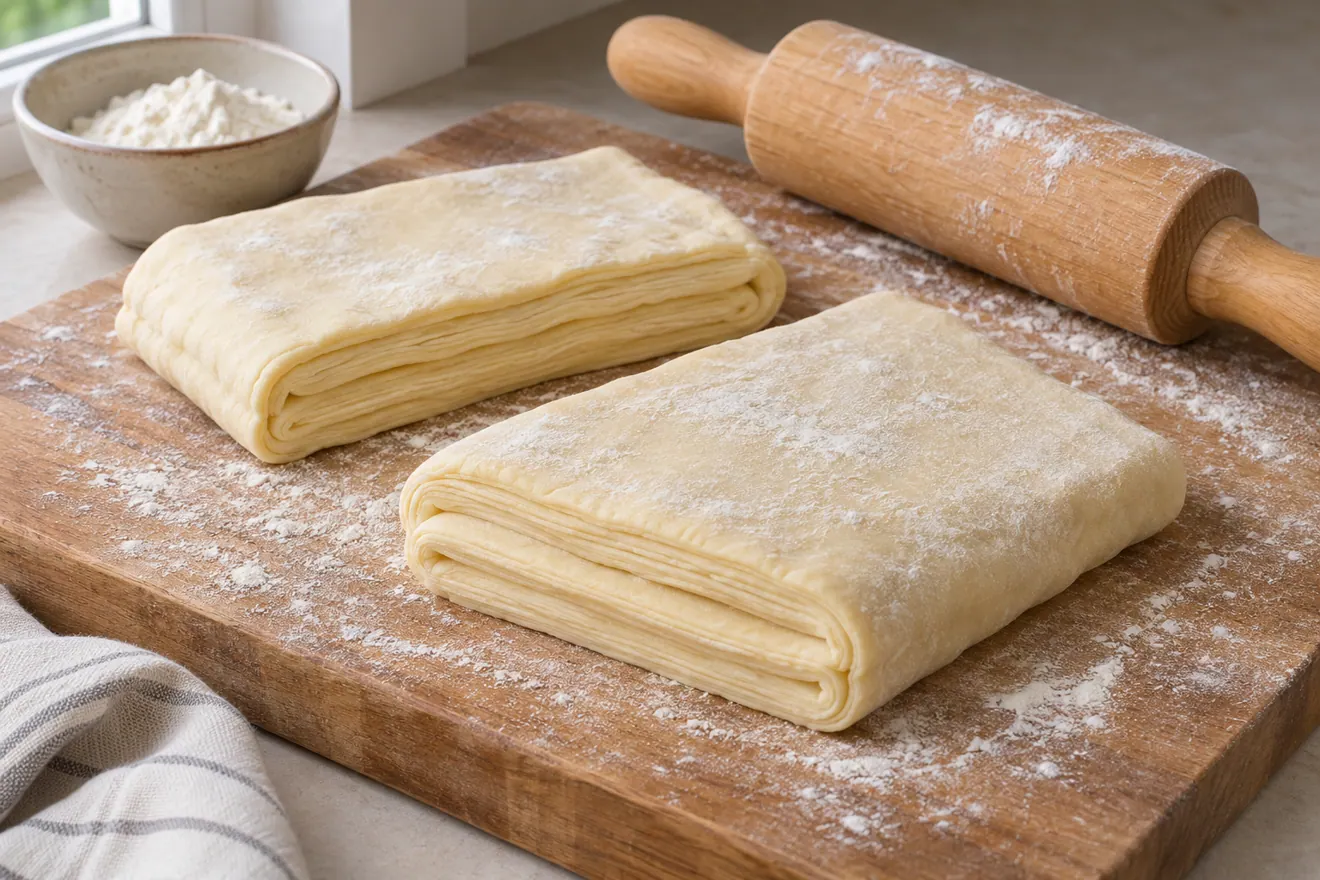
In laminated pastry, the folds determine how alternating sheets of butter and dough are arranged. A single fold, also called a three-fold or letter fold, creates three stacked sections. A book fold, often called a double or four-fold, creates four sections by folding toward the centre and closing like a book. Both can produce beautiful puff pastry, but they build layers at different rates and require different handling.
Why laminated dough is folded
Puff pastry and some croissant doughs contain a continuous dough sheet enclosing butter. Rolling and folding reorganize that block into alternating layers. During baking, steam and melting fat help the pastry expand and separate. The layer structure depends on how the dough is rolled, folded and rested, not just the arithmetic.
What is a single fold?
A single fold divides a long sheet visually into three sections, folding one end toward the centre and the opposite end over it, like folding a business letter. The resulting packet has three dough sections stacked together. It is often described as a three-fold or one turn.
How to execute a single fold
Roll the dough into the rectangle dimensions prescribed by the formula. Brush off excess bench flour, fold the lower or upper third toward the centre, then fold the remaining third over the top. Align corners and keep the packet square without squeezing its edges excessively.
The dough in Classic Croissants uses three single turns, with refrigeration between them. Follow the recipe's own schedule and rolling dimensions.
What is a book fold?
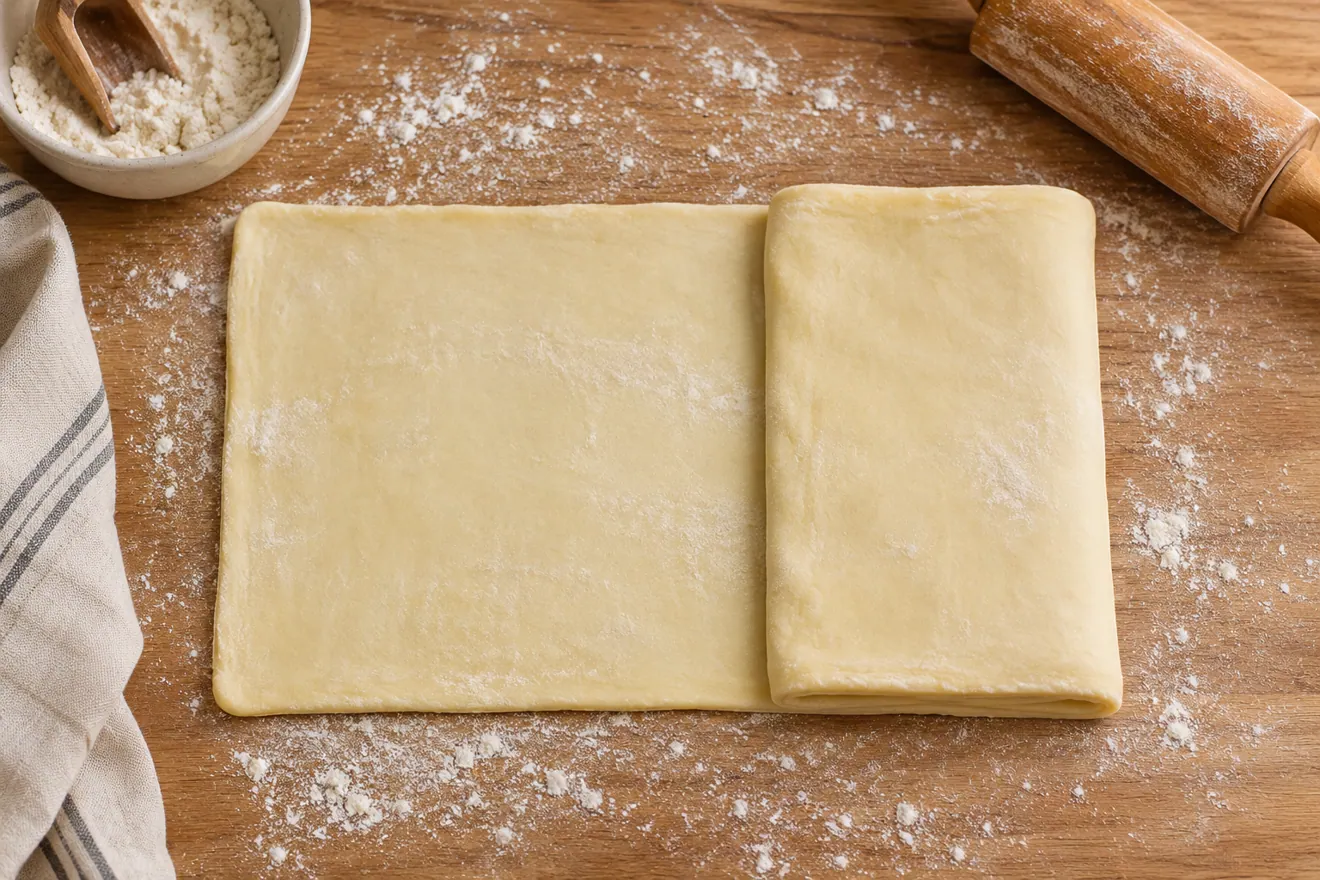
A book fold typically involves folding each end inward to meet near the middle, then closing the dough in half along that meeting line. This makes four sections of dough. It may be called a double turn or four-fold, even though the names can vary across pastry schools.
How to execute a book fold
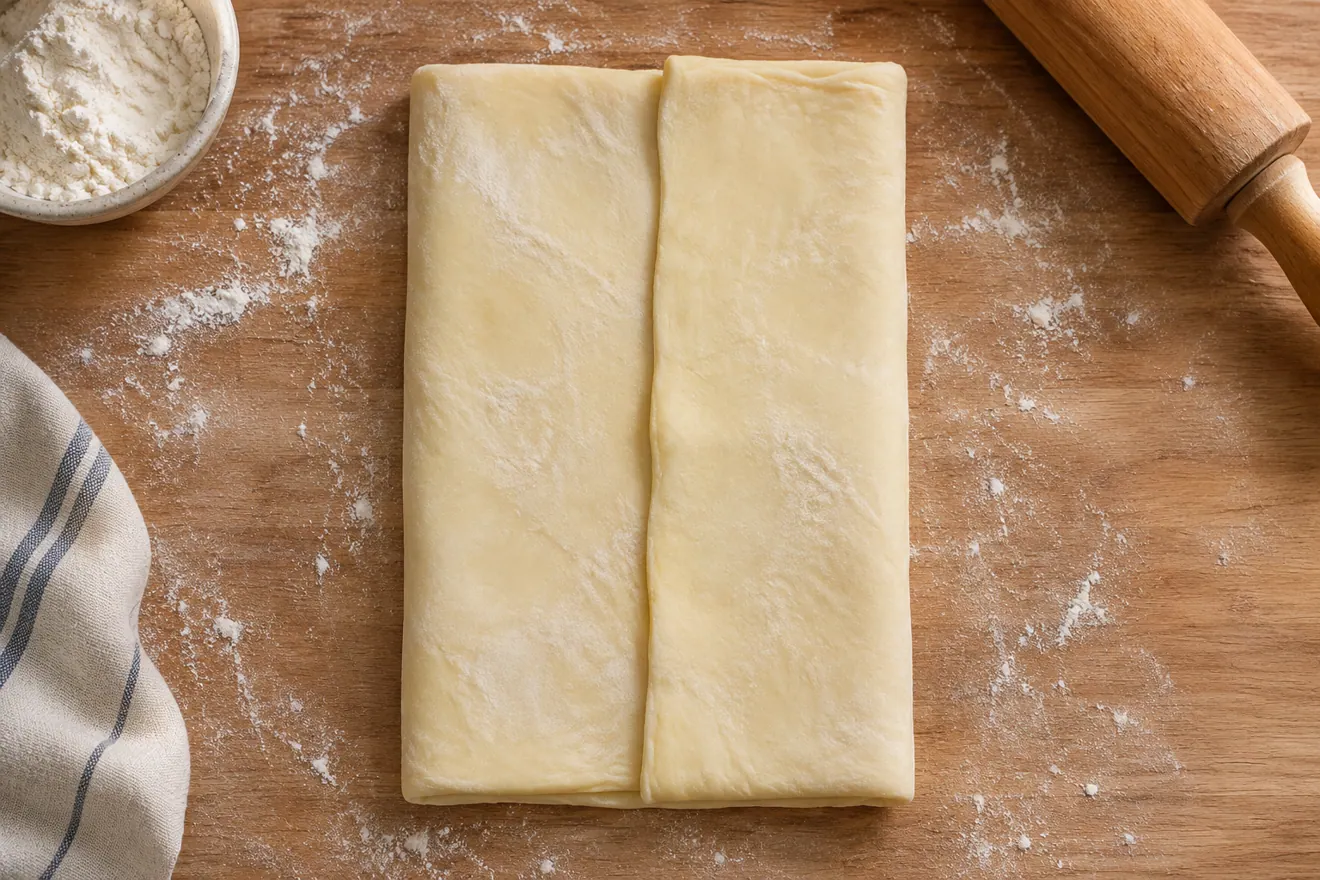
Roll an even rectangle to the prescribed dimensions. Fold one end inward toward the centre, then the other so the edges meet with an appropriate small allowance if required. Fold the entire piece closed like a book. Avoid a thick overlapping lump at the centre, which would create uneven lamination.
Before making the last fold, look for two ends meeting near the middle. Brush away loose flour so it does not collect at the join.
Why fold count matters
Each fold multiplies the number of stacked sections in an idealized model: a letter fold by three, a book fold by four. Real pastry layers can merge, stretch, break and taper, so the final count isn't simply an exact measurement of usable flakes. More folds are not automatically better.
In 81-Layer Reverse Puff Pastry with Cultured Butter, four single turns produce the recipe’s calculated layer count. The baked height also depends on keeping the pastry and butter layers intact.

Three-fold versus four-fold results
Either method can create many layers with good technique. Book folds increase nominal sections faster and may reduce the number of turns needed in some formulas, but they can also be more demanding to keep even. Single folds are straightforward for learners and offer relatively easy alignment.
Don't mix turn schedules casually
A professional formula may use three book folds, several single folds or a specified combination. Replacing every single fold with a book fold changes the total lamination and dough handling. Follow the recipe's schedule unless you have a tested conversion.
What is a turn?
A turn generally refers to rolling and folding the dough once as directed. Some pastry methods also rotate the packet a quarter turn before rolling again. Record the turn type and count so you don't accidentally repeat an extra fold after a refrigerator rest.
How to track orientation
After folding, many bakers place the closed edge or spine to a consistent side before rolling again. Some mark the dough lightly with finger indentations to remember the completed turns. Choose a simple system that matches the recipe and doesn't puncture butter layers.
Butter temperature is critical
Butter should be pliable enough to stretch with the dough. If too hard, it fractures and breaks lamination; if too warm, it smears into dough and may leak. Keeping butter and dough at compatible firmness is more important than performing the theoretical maximum number of folds.
Why resting between turns helps
Rolling develops tension in the gluten and can warm butter. Refrigerated rests relax the dough and restore manageable butter firmness. The exact interval depends on the formula and room conditions. Don't keep rolling an elastic or greasy packet simply to finish quickly.
Roll evenly before folding
An uneven rectangle creates thick areas that accumulate in subsequent folds. Use controlled pressure and square corners. Brush off excess flour before folding, since trapped dry flour can interfere with layer contact and create seams.
Avoid crushing the edges
Hard pressing can flatten the layers together. Use enough pressure to align and seal the packet where instructed, but not so much that butter becomes a uniform paste. Clean trimming may be part of some formulas to expose or tidy layered edges.
Single folds for beginners
A three-fold is easy to visualize and repeat. It gives you time to learn butter firmness, dough resistance and consistent thickness. Start with a tested puff pastry formula using this method before experimenting with faster book-fold schedules.
Book folds for advanced control
A book fold can be efficient and produce excellent pastry when rolled and aligned accurately. It isn't inherently more professional or superior. If the butter is uneven or the packet too short, a rushed four-fold can concentrate thickness and spoil the consistency.
Croissant dough is not identical to puff pastry
Both are laminated, but croissant dough usually contains yeast and follows fermentation and proofing steps. The fold type, number of turns and butter quantity are tailored to each dough. Don't transfer an all-butter puff pastry turn schedule directly to yeasted croissants.
What if butter leaks during rolling?
Stop and assess temperature. A warm smear suggests excessive softness, while a cracked butter sheet suggests insufficient plasticity. Follow a suitable recipe-approved rest or recovery. Adding flour to absorb leaking butter may hide the symptom but not restore the internal layers.
What if the dough resists rolling?
Gluten tension may have built up. Cover and rest as directed rather than forcing the rectangle longer. Excessive pulling can tear the dough and reveal the butter block, leading to uneven puff.
Why fewer folds may sometimes be better
Over-lamination can make layers very thin and less distinct, depending on the method, while excessive handling warms and damages the dough. A tested formula chooses turns to achieve the intended balance of lift and texture. More mathematical layers do not guarantee more height.
Frequently asked questions
Is a single fold a three-fold? Usually yes. Is a book fold a four-fold? Usually yes. Which gives more layers per turn? The book fold. Can I replace one with the other? Only with a calculated and tested method. Does the dough need chilling? Most laminated recipes use rests.
Make folds deliberate
Work with cool pliable butter, roll evenly, brush away excess flour and follow the exact turns and rests in your pastry recipe. Whether you choose a letter fold or a book fold, precision and temperature control will do far more than chasing an impressive layer count.
Related recipe: Classic Croissants.
Some images are AI-generated illustrations of the dishes and techniques described.
IN PICTURES
From the baking notebook
FROM THE RECIPE BOX


