On this page
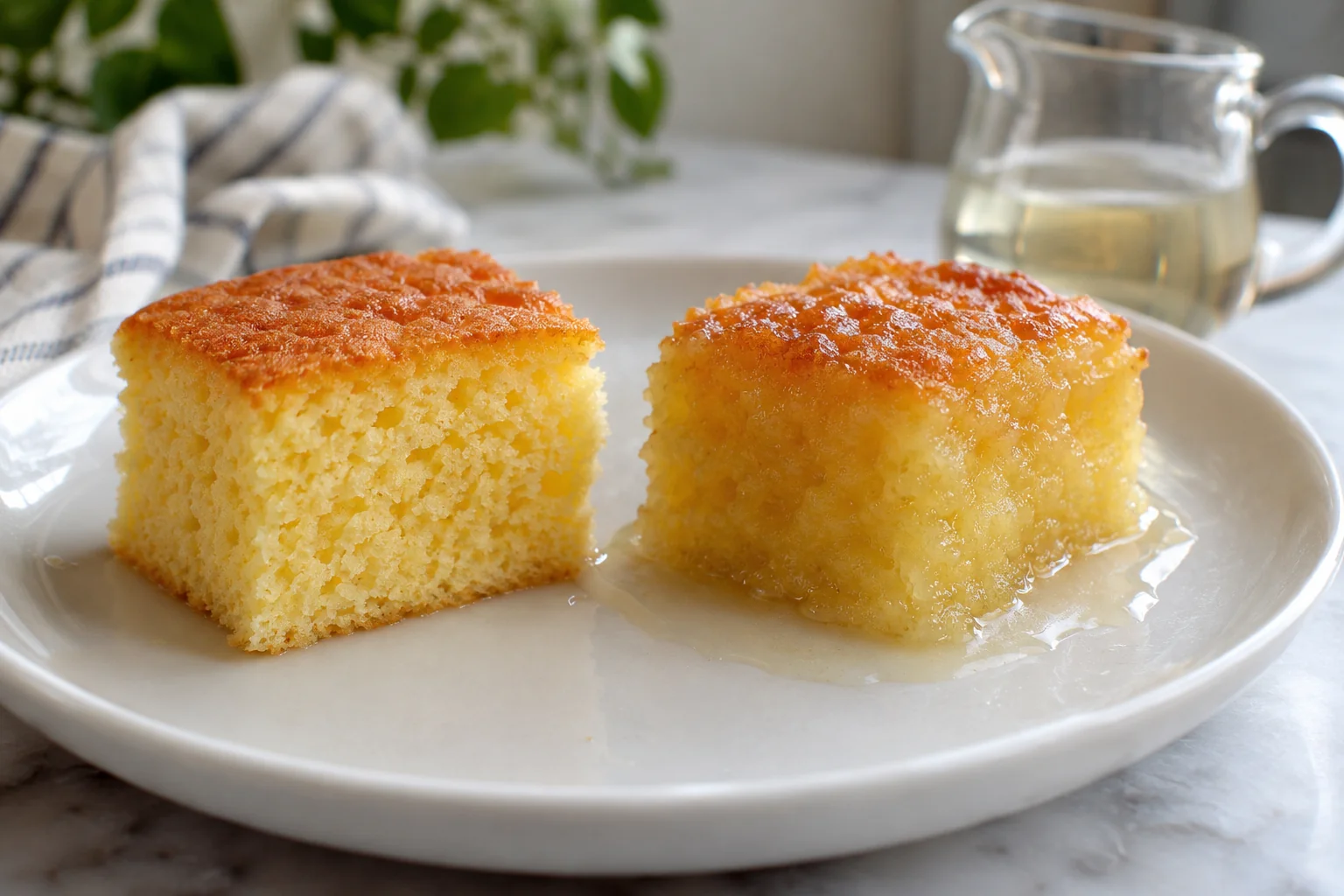
A light brushing of simple syrup can make a cake feel beautifully moist and bring a subtle flavour into layers that would otherwise be plain. But syrup is an accent, not an excuse to soak an underbaked cake. Too much liquid makes a sponge gummy, weakens the structure beneath frosting and can cause layers to slide. The art is choosing a flavour that complements the cake and applying only the amount the recipe can comfortably absorb.
What is cake simple syrup?
Basic simple syrup is sugar dissolved in water, typically heated until the crystals disappear and cooled before use. A common starting formula uses equal quantities of sugar and water by weight, though some bakeries make lighter or richer syrups for different desserts. Follow a tested recipe for final concentration and storage.
Why bakers brush cakes
A controlled amount adds moisture to a baked crumb, especially when a sponge is intended to be assembled with cream or fruit. The syrup can also carry coffee, citrus, spice or vanilla flavours. It doesn't replace correct baking or prevent every cake from drying out during prolonged storage.
Start with the right cake style
Airy sponge and genoise are traditional candidates for light syrup brushing. A tender butter cake may need only a modest application, while an already moist oil cake might need none. Read the assembled dessert's recipe before adding syrup to every layer automatically.
How to prepare a basic batch
Combine measured sugar and water in a small saucepan and heat gently while stirring until the sugar dissolves. Some formulas simmer briefly; prolonged boiling concentrates the mixture. Cool to the recipe's specified temperature before brushing onto the cake.
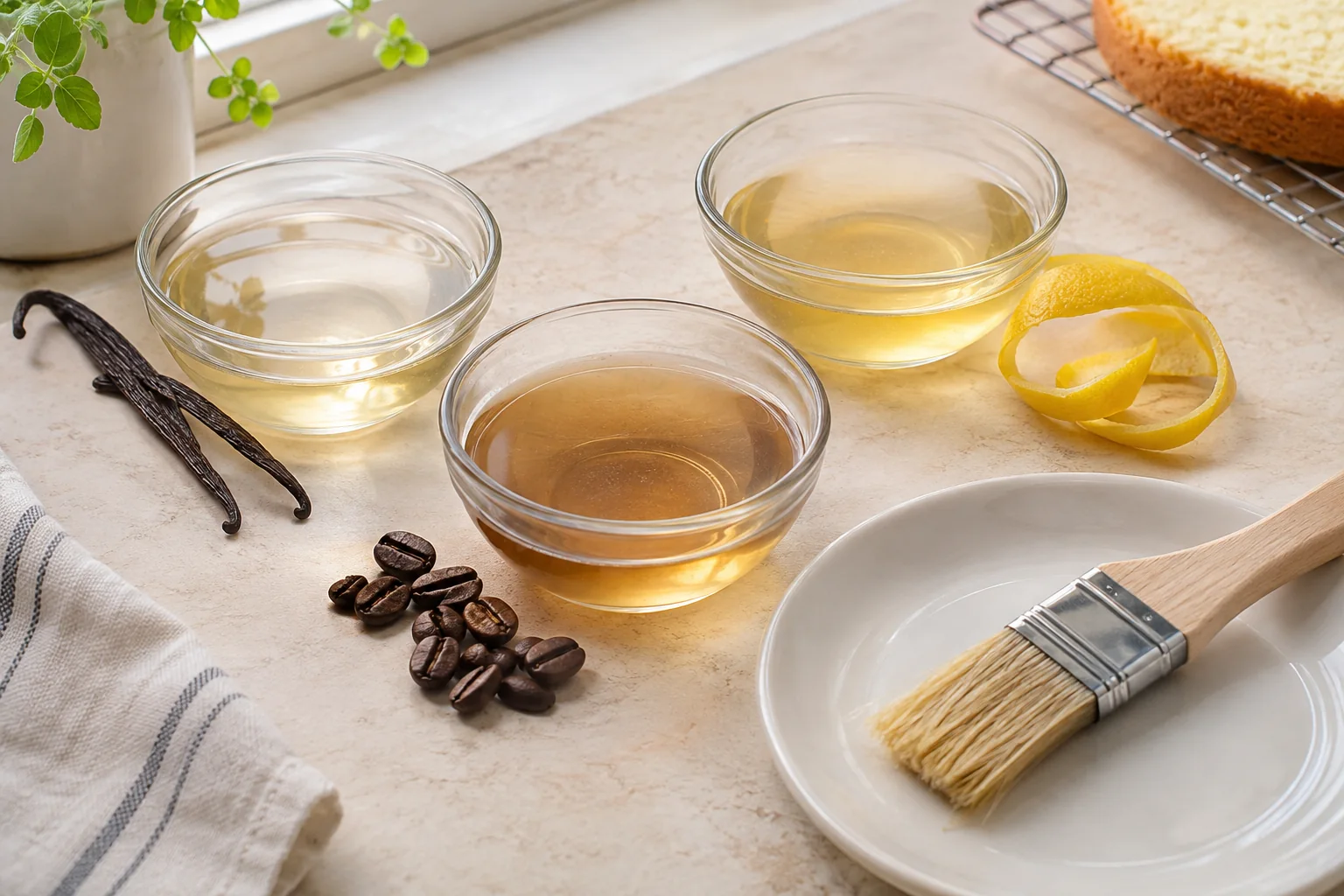
Vanilla syrup
Vanilla is a versatile choice for birthday cakes, white chocolate fillings and berry layers. Add vanilla extract according to a tested method after cooking when appropriate, or infuse a split bean into the warm syrup. Keep the flavour subtle so it doesn't compete with the frosting.
Recipe to try: Classic Vanilla Layer Cake. A tender, moist three-layer vanilla cake with silky buttercream frosting that delivers pure, aromatic vanilla flavor in every delicate, buttery bite.

Lemon syrup
Lemon zest and a measured portion of juice bring brightness to vanilla sponge, poppyseed cake and blueberry layers. Juice adds acidity and liquid, so use a developed lemon syrup rather than pouring straight lemon juice over cake. Strain zest when you want a smooth, clean finish.
Recipe to try: Lemon Layer Cake. A show-stopping triple-layer cake bursting with bright lemon flavor, filled with tangy lemon curd, and wrapped in silky lemon buttercream for the perfect balance of sweet and citrus.

Orange syrup
Orange pairs naturally with chocolate, almond, vanilla and warm spices. Use carefully washed zest or a recipe-approved amount of juice for a fragrant result. A little zest can make more impact than a large amount of extra water-rich juice.
Coffee syrup
Strong brewed coffee or espresso can bring depth to chocolate cake and tiramisu-style layers. Consider whether the dessert will be served to children or people avoiding caffeine. Concentrated coffee can be bitter, so balance its strength with the syrup's sweetness.
Recipe to try: Mocha Bundt Cake. Rich mocha-infused bundt cake with deep coffee and chocolate flavors, crowned with a silky espresso glaze that perfectly balances sweetness and bitterness.

Maple syrup variation
Maple flavours suit pecan, walnut, pumpkin and spice cakes. Pure maple syrup has its own water and sugar composition, so substituting it one-for-one for the sugar in a basic syrup changes concentration. Use a tested maple-soak formula instead of guessing.
Cinnamon and warm spice
A cinnamon stick, cardamom pods or cloves can infuse warm syrup for autumn and holiday cakes. Strain the whole spices before use. Ground spices can leave specks and gritty deposits, so a smooth infusion may be preferable for a delicate white frosting.
Berry syrup
A strawberry, raspberry or blueberry infusion can add colour and fruit aroma. The fruit's acidity and pectin influence texture, and a puree-based sauce is not exactly the same as a thin syrup. Strain seeds if the dessert needs clean smooth layers.
Rose or floral syrups
Food-grade rosewater or orange blossom water can pair beautifully with pistachio, almond and citrus cakes. These flavours can overpower quickly; start with the tested amount. Never use perfume, candle fragrance or non-food-grade floral essences in edible syrups.
Chocolate and caramel pairings
A subtle coffee or vanilla syrup can enhance chocolate cake without making it excessively sweet. Salted caramel frosting is already rich, so a heavily sweetened caramel soak may overwhelm it. Balance the three parts of the finished slice rather than treating every layer as an independent sweet element.
How much syrup should you brush?
There is no universal tablespoon-per-layer figure. Cake thickness, density and moisture level determine absorption. Use the recipe's quantity and apply gradually with a pastry brush or suitable bottle, allowing the surface to absorb before adding more.
Signs of too much syrup
The crumb looks wet or translucent, liquid pools on the cake board, or the layer becomes fragile when lifted. Excess can mix with filling and make the cake slide. Stop before the syrup reaches that stage, especially with tall stacked cakes.
When to apply it
Many assembled cakes are brushed after the baked layers cool and are trimmed, before the filling is added. Warm or frozen cakes may absorb syrup differently depending on the recipe. Use the dessert's assembly schedule rather than pouring boiling syrup directly into a chilled frosted cake.
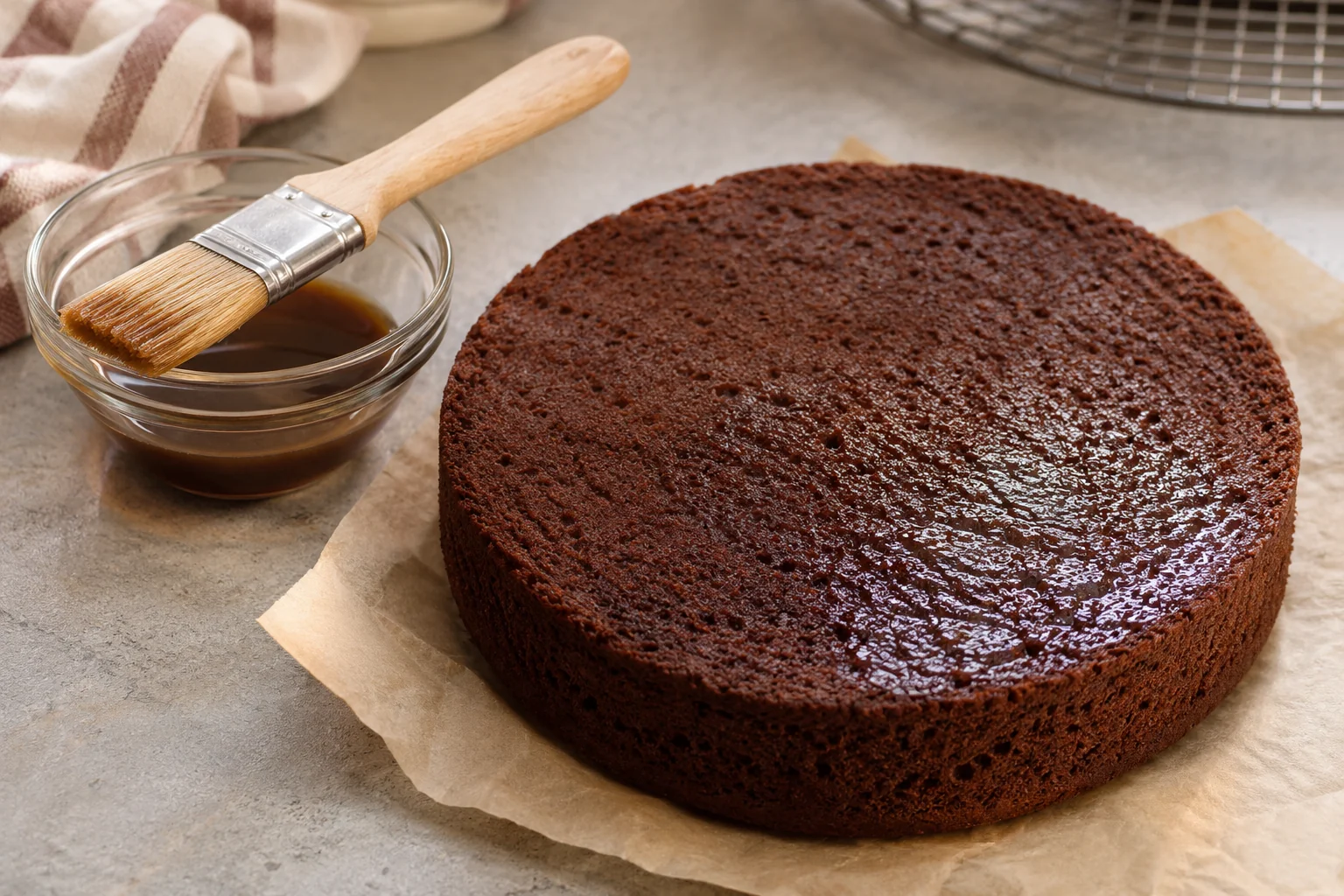
Use a pastry brush carefully
Dip lightly and move evenly across the surface without tearing a delicate sponge. A squeeze bottle can work for larger rounds if you control the flow. Concentrate on dry-looking areas while keeping the overall application uniform; don't create puddles at the edges.
Does syrup make cake last longer?
It can improve the impression of moisture over a particular serving window, but it does not make perishable fillings shelf-stable. A cake with whipped cream, custard, cream cheese or fresh fruit requires proper refrigeration regardless of syrup.
Cooling and storage safety
Prepare syrup using clean equipment, cool safely and refrigerate flavoured versions according to the recipe, particularly those containing fruit or fresh juice. Don't assume every homemade syrup will safely last for weeks on the counter. Label the date and discard suspicious batches.
Alcohol-flavoured syrups
Some adult desserts use liqueur or spirits for flavour, but adding alcohol does not guarantee safety or that any alcohol will cook off. Use recipe-specific quantities, label clearly and provide a suitable alcohol-free alternative when serving a mixed group.
A simple flavour pairing guide
Vanilla sponge pairs with lemon or berry; chocolate pairs with coffee or orange; almond cake pairs with cherry or rose; gingerbread pairs with orange and spice. These are starting ideas, not rigid rules. Let the frosting, filling and fruit determine how much extra flavour you need.
Frequently asked questions
Does every cake need syrup? No. Can you brush butter cake? Yes when the recipe supports it. Should the syrup be warm? Follow the assembly method, often cooled. Can syrup rescue a dry overbaked cake? It can improve moisture but won't undo toughness. Can I freeze syrup-brushed layers? Use a tested make-ahead plan.
Use syrup as a finishing detail
Make a balanced flavour, apply a measured light coat and preserve the cake's ability to hold filling. The best syrup leaves each bite pleasantly moist without announcing that the cake has been soaked.
IN PICTURES
From the baking notebook
FROM THE RECIPE BOX


