On this page
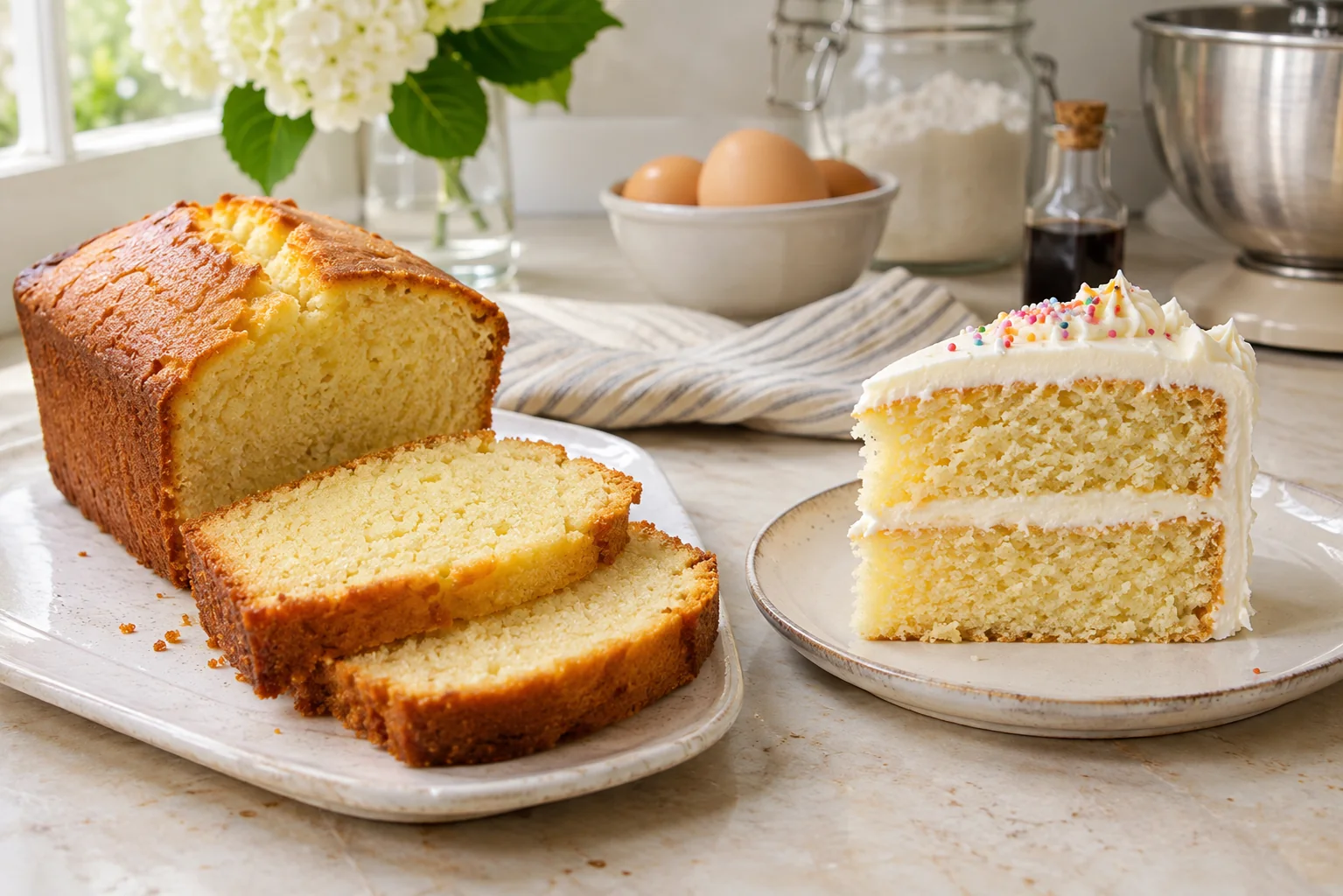
A slice of pound cake feels distinct from an everyday vanilla layer cake: it is rich, buttery and close-textured, with enough substance to enjoy on its own. The name originally referred to a simple formula using a pound each of flour, butter, sugar and eggs, but modern pound cakes often adjust that ratio. Understanding how the ingredients and mixing differ explains why one cake supports a dense golden slice while another is designed to be light and layered with frosting.
The traditional pound cake formula
Historically, a pound cake used equal weights of four primary ingredients: flour, butter, sugar and eggs. The name describes those quantities. A modern pound cake may use smaller batches, added dairy, leavening or different proportions while retaining a rich, firm character.
Recipe to try: Pound Cake Bundt. A buttery, dense pound cake with a tender crumb and crisp exterior, baked in a decorative bundt pan for an impressive yet comforting dessert.

What 'regular cake' means
Regular cake isn't a precise baking category. It might describe a yellow butter cake, vanilla layer cake, oil-based snack cake or another common style. For a useful comparison, think of a classic frosted butter layer cake: generally lighter and more aerated than a traditional dense pound cake.
The role of butter
Classic pound cake is butter-forward, so butter flavour is prominent and fat contributes to a tender but substantial crumb. Many layer cakes also use butter, though their proportions and mixing aims can differ. An oil cake may feel moister at cool temperatures but lack the same butter aroma.
Sugar isn't only for sweetness
Sugar influences moisture, tenderness, browning and how air is held during creaming. The high proportion used in some pound cakes creates a rich, golden crumb. Simply reducing sugar by a third can make the cake denser or drier rather than producing a better-balanced version.
Eggs help pound cake hold together
Eggs provide moisture, protein and emulsifiers that support the tight, sliceable structure. Classic pound cake uses a generous amount relative to its flour. A layer cake may use additional liquids and chemical leavening for a different crumb.
How flour influences texture
Pound cakes can use all-purpose or cake flour depending on the recipe. Flour protein and mixing determine structure. The dense bite does not mean a well-made pound cake should be tough; excessive gluten development and overbaking can still produce a rubbery result.
Creaming butter and sugar
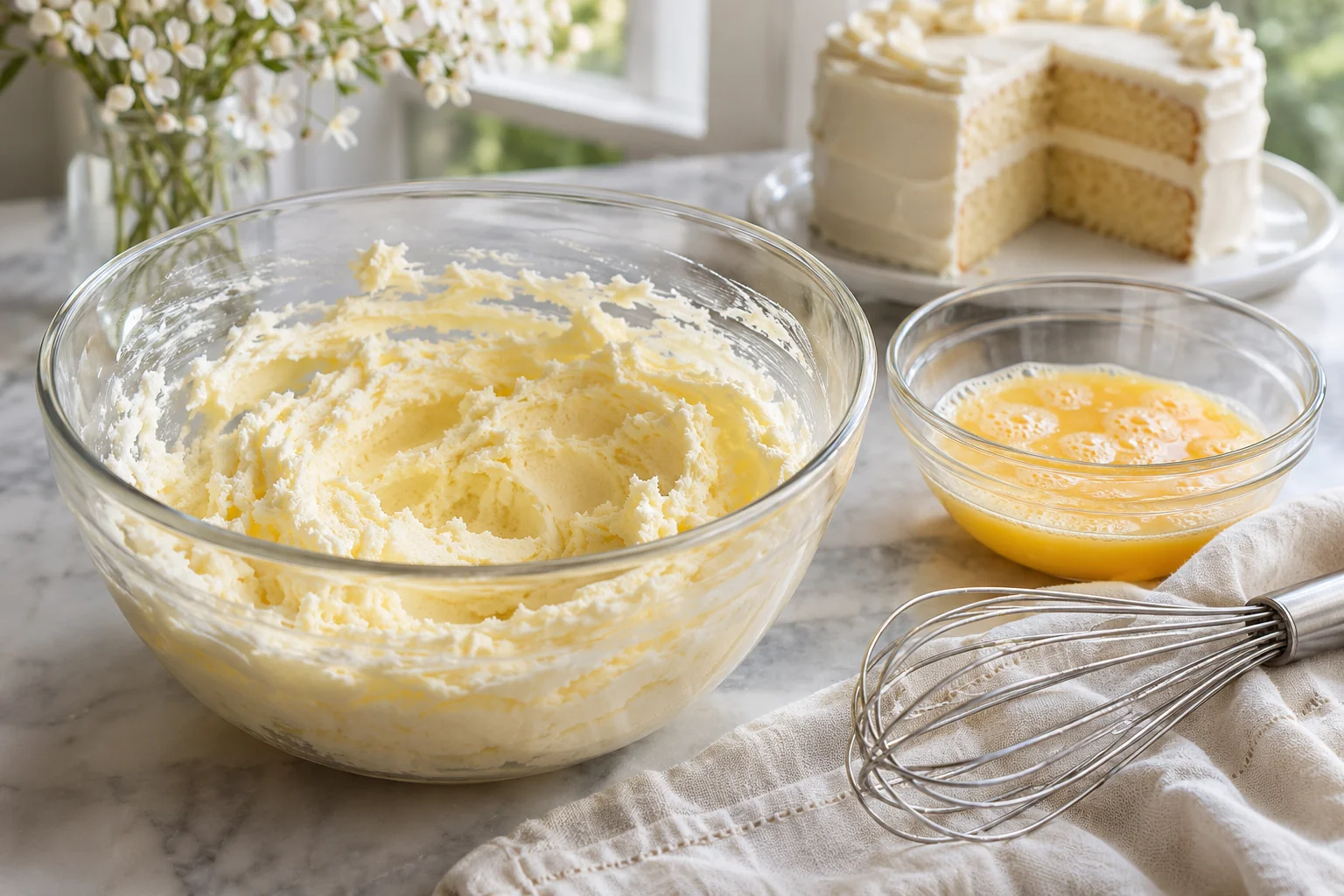
Many pound cakes rely on carefully creaming butter and sugar to incorporate air. This is important because traditional versions may contain little or no chemical leavening. Scraping the bowl and working with butter at the specified temperature helps create a fine, even crumb.
How layer cakes gain lightness
Common vanilla layer cakes may use creaming, reverse creaming or oil-based mixing, plus baking powder or soda and an appropriate liquid. These systems can create a softer, more open crumb suited to stacked layers and frosting. The formula defines the method, not the fact that it is baked in a round pan.
Does pound cake use baking powder?
Traditional equal-weight formulas may depend largely on incorporated air and eggs, while many contemporary recipes use baking powder for reliability. Both can be legitimately called pound cake. Read the full formula rather than assuming a loaf with no powder must be the only authentic version.
Why pound cake is often a loaf
A loaf pan gives a compact shape that slices neatly for coffee or afternoon tea. Pound cake can also be baked in Bundt pans or other moulds with suitable recipes. A vanilla layer cake is commonly baked as thinner rounds, but pan shape alone doesn't determine cake type.
Dense versus underbaked
Pound cake should be fine-textured and substantial, not wet, pasty or gummy. If a knife reveals a raw stripe, the problem may be ingredient balance, emulsification or insufficient baking. Don't describe an uncooked centre as simply traditional density.
Why pound cake sometimes gets a dark crust
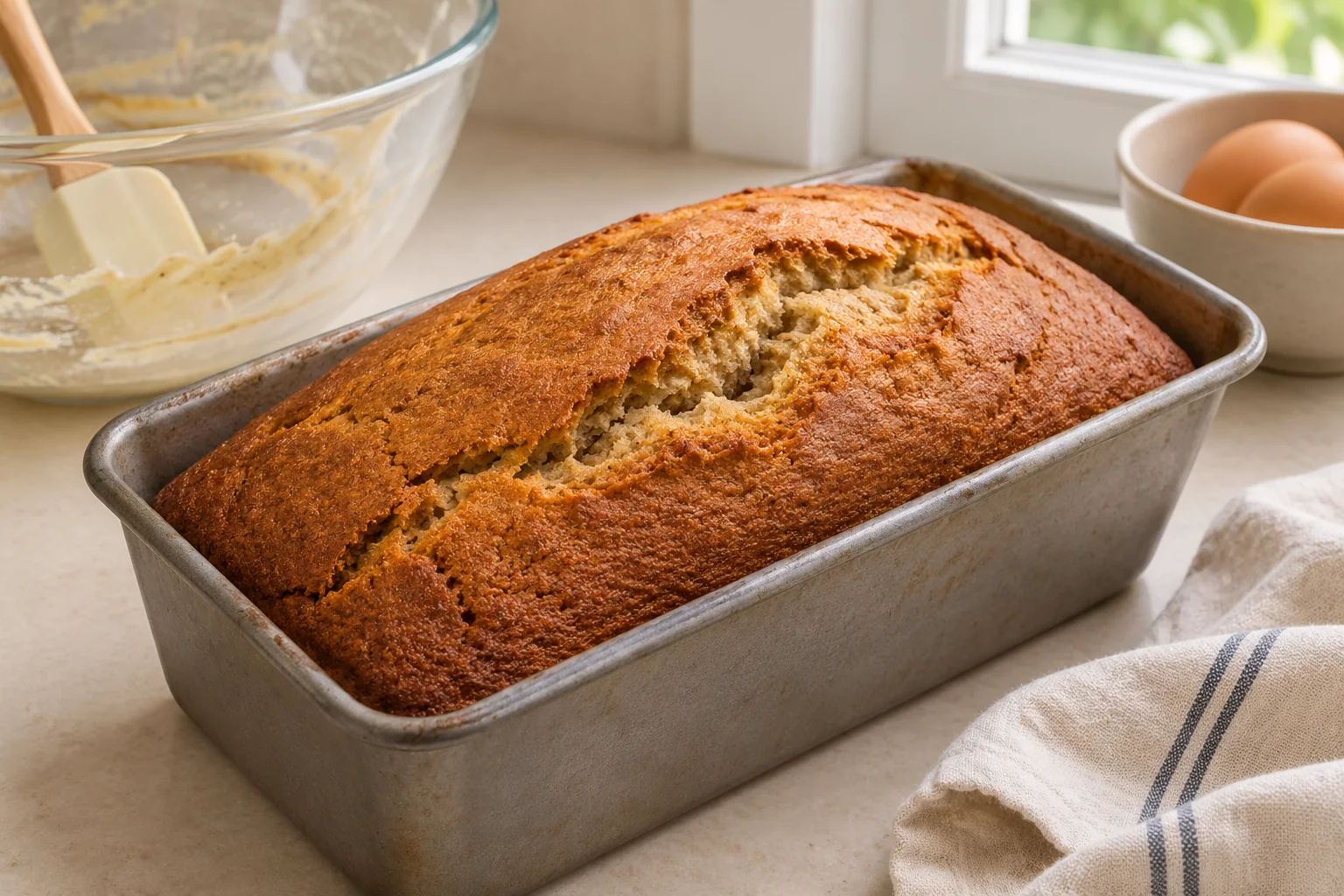
Its high butter and sugar content plus extended baking can produce a golden or darker exterior. A loaf has a deep centre and may need longer baking than a shallow layer round. The recipe's pan material and oven setting matter so the crust doesn't become bitter before the middle sets.
What is the crack on top?
A central split is common in many loaf cakes, including pound cake, as the outer crust sets while the interior continues rising. The crack isn't necessarily a defect. Different oven temperatures and pan proportions change how dramatic it becomes.
Cooling the two styles
A pound cake generally benefits from a recipe-defined rest in its pan before transfer to a rack. An airy layer cake may need a different time to prevent tearing. Always cool before tightly wrapping; trapped steam can soften the crust.
Serving pound cake simply
A good pound cake can stand alone, lightly dusted or paired with berries and a modest spoonful of whipped cream. Its rich crumb also works with coffee, tea or citrus glaze. Heavy buttercream between multiple thick pound-cake layers may produce an overly dense dessert.
Serving layer cake
A classic layer cake is formulated to balance sponge, filling and outer frosting. Its softer crumb can absorb syrup and contrast with creamy layers. That construction is different from a plain thick slice of pound cake, though creative hybrids are possible.
Recipe to try: Classic Vanilla Layer Cake. A tender, moist three-layer vanilla cake with silky buttercream frosting that delivers pure, aromatic vanilla flavor in every delicate, buttery bite.

What about sour cream pound cake?
Some modern pound cakes add sour cream, cream cheese or milk to adjust moisture and tang. Such formulas are not the original four-ingredient equal-weight composition, but they belong to a familiar modern pound-cake family. Use their exact mixing and storage guidance.
Recipe to try: Sour Cream Coffee Cake Bundt. A tender, cinnamon-swirled bundt cake with a rich sour cream base and buttery streusel layered throughout, creating the perfect balance of moist crumb and sweet, nutty crunch.

Storage and freezing
Many plain pound cakes store and freeze well when cooled and wrapped correctly; a frosted layer cake's storage depends heavily on its filling. Cream cheese, fresh fruit and whipped cream introduce refrigeration needs. Don't assign the same shelf-life to all cake slices.
Frequently asked questions
Is pound cake heavier? Often compared with a classic airy layer cake. Is it always made with one pound of each ingredient? Not today. Can you frost it? Yes, though heavy frosting may overwhelm the rich crumb. Is a Bundt cake always pound cake? No, the pan shape isn't the definition.
Choose the bite you want
For dense buttery flavour and clean slices, reach for pound cake. For a lighter canvas that welcomes layered fillings, choose a conventional layer-cake formula. Both depend on precise ingredient balance and correct mixing, rather than one being an improved version of the other.
IN PICTURES
From the baking notebook
FROM THE RECIPE BOX


