
On this page
Mini muffins are a lovely way to turn a breakfast bake into something bite-sized, whether you're packing lunches, putting together a brunch table or making a smaller snack for children. The ingredient list often stays familiar, but the baking process changes: tiny cups heat quickly, fill levels matter and an extra few minutes can dry out the whole batch. Here is how to understand mini muffin portions, yields and times without relying on a single number that won't fit every recipe.
How small is a mini muffin?
Mini muffin tins generally have cups substantially smaller than standard twelve-cup muffin pans, but actual capacity differs among brands. The depth and width influence how much batter each cup holds and how fast the centre cooks. A mini muffin from a shallow pan won't necessarily use the same portion as one from a deeper mini pan.
Start with pan capacity, not guesswork
Check the pan manufacturer's specified capacity if available. If the recipe gives a fill level, follow that direction. Many recipes fill mini wells around two-thirds to three-quarters full, though formulas designed for tall domes may use more. A small scoop or measuring spoon makes the portions consistent.
Measure an empty well with water, then dry it before adding batter. For a conversion, use the intended fill level rather than the volume to the rim.
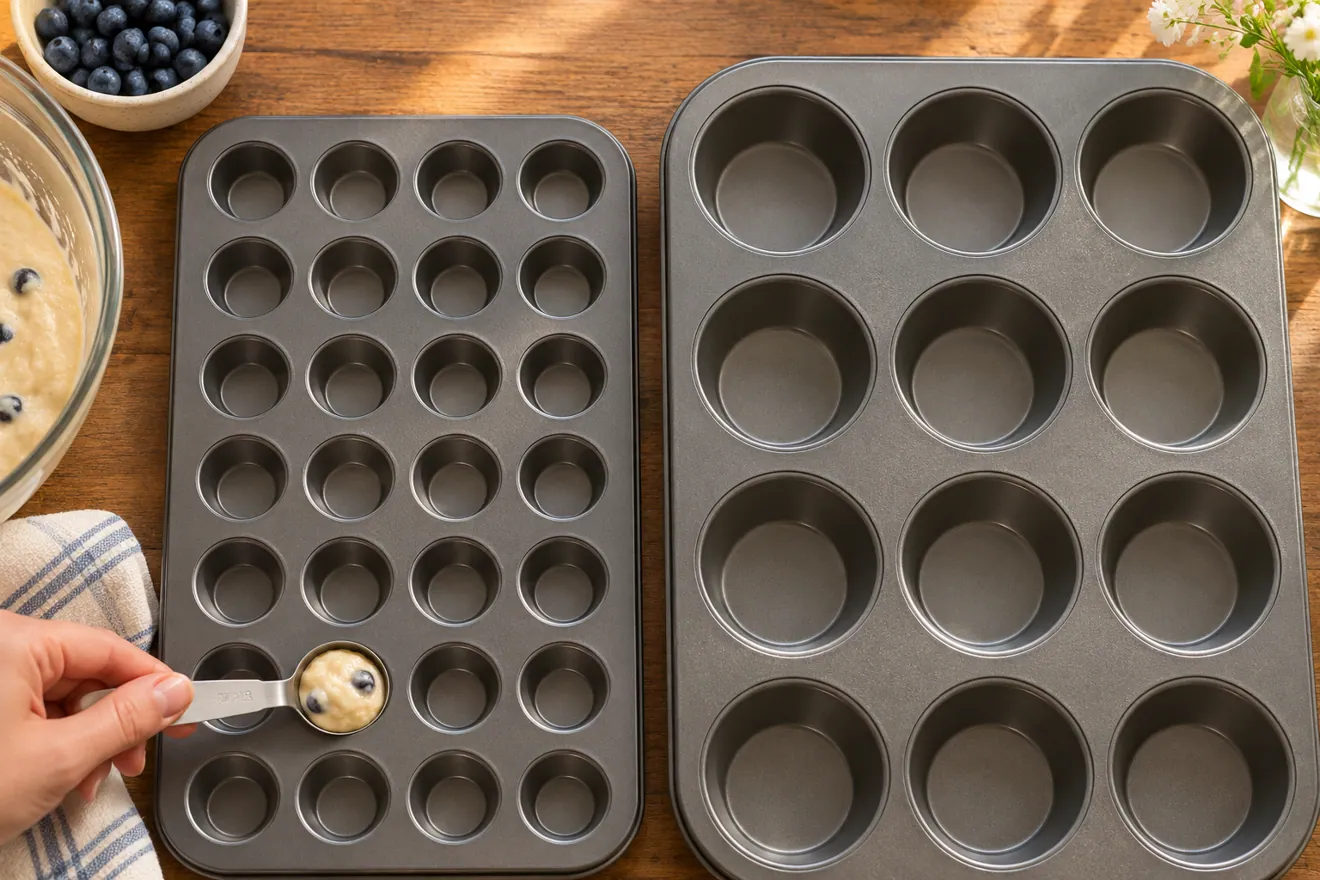
Why mini muffins bake faster
Smaller batter portions have less distance for heat to travel before reaching their centres. A recipe written for standard muffins therefore often needs less baking time when made in mini cups. However, batter composition, frozen additions, pan colour and oven accuracy still matter.
A useful time-conversion starting point
For example, a muffin taking 21 minutes in a standard pan might need around 14 minutes in a mini pan. That's an early-checking estimate, not a universal baking endpoint; check the centre using the recipe's doneness cues.
Typical mini muffin baking times
Some tested mini recipes bake in approximately 7–10 minutes at a relatively high oven temperature, while others take around 12–15 minutes or longer. The wide range is normal. A cinnamon doughnut-hole muffin and a dense bran mini muffin do not contain the same batter or require identical baking.
Why your own recipe matters more than a chart
A formula with high moisture from banana or pumpkin may need more time than a light vanilla batter, and frozen berries can cool the mixture. Rather than choosing one mini muffin baking time and using it for everything, begin at a recipe-supported estimate and test an actual centre muffin.
How many mini muffins come from twelve standard muffins?
A common practical range is roughly three to four dozen mini muffins from a recipe that makes twelve standard muffins, but this varies considerably by pan capacity and fill level. Do not promise exactly thirty-six portions without checking your equipment.
How to portion batter evenly
Use a teaspoon-sized or small cookie scoop suitable for your pan, ensuring each well receives a similar amount. Scrape the scoop level or use a consistent motion. Filling by eye alone often produces some underfilled cups and some overflowing ones, making the batch bake unevenly.
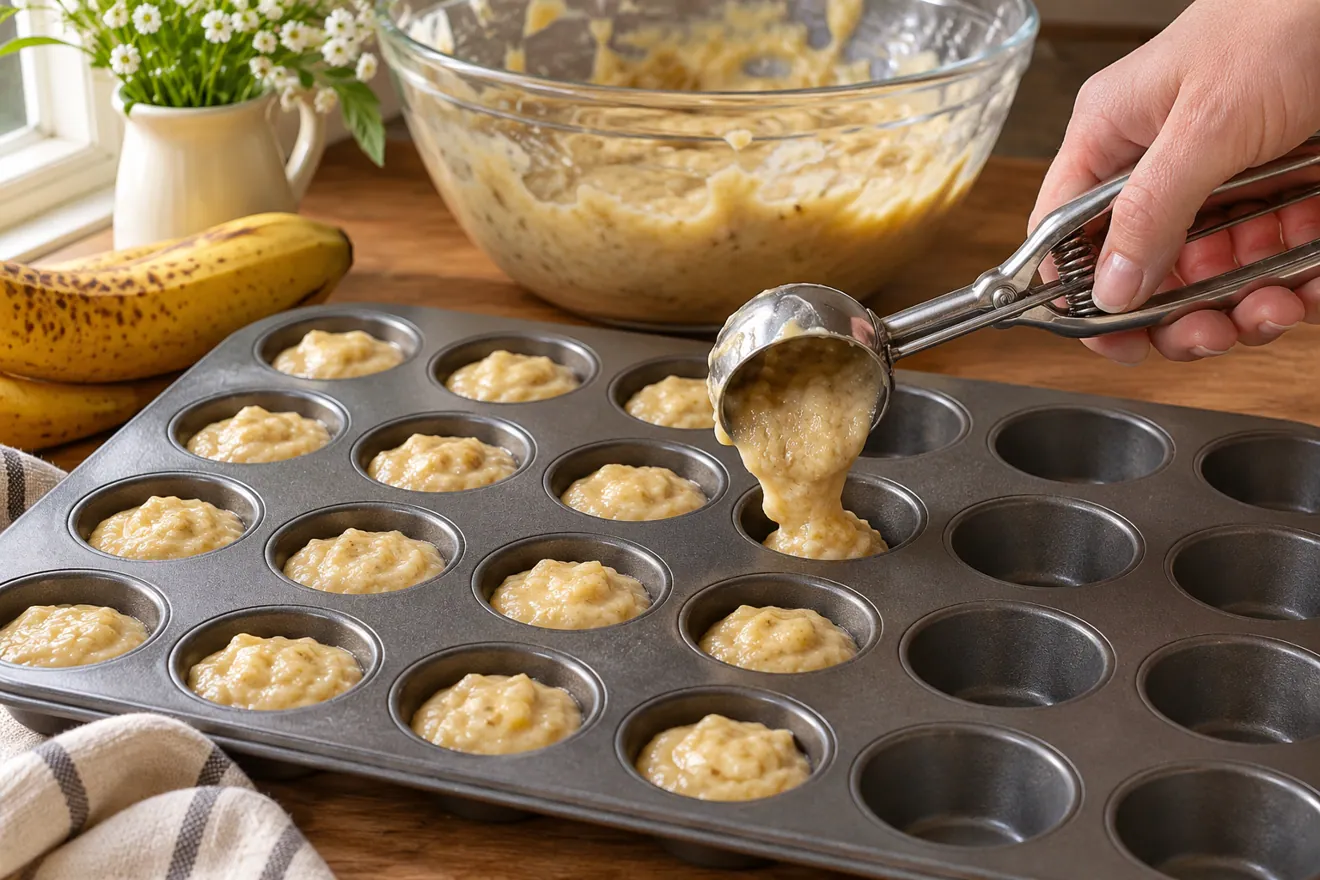
How full should the pan be?
Many mini muffin formulas specify about two-thirds to three-quarters full. Too little batter can produce short, quickly dried muffins; too much may spread over the rim and bake into joined mushroom caps. Use the fill line described in your recipe, especially when the batter rises vigorously.
Do you keep the same oven temperature?
Often a conventional recipe keeps the same oven temperature when switching to mini cups, with the time shortened. Some purpose-built mini muffin recipes use different temperatures to produce the intended rise and crust. Follow the original recipe's conversion instructions rather than automatically increasing heat to force a tall dome.
Metal versus silicone pans
A metal mini muffin pan may transfer heat differently from a silicone mould, influencing browning and release. Dark finishes also absorb and transfer radiant heat differently from light finishes. For the most reliable first bake, choose the pan material recommended by the recipe.
Paper liners or greased wells?
Both can work depending on the pan and recipe. Tiny paper liners help with portioning and handling, while appropriately greased wells may produce a more browned side crust. Confirm that the liners actually fit the cups. Oversized papers can fold inward and lead to misshapen muffins.
How to prevent sticking
Use the pan preparation instructed by the recipe, including suitable grease or liners. Don't scrape a nonstick pan with metal tools. Allow the baked muffins to rest for the prescribed short period before removing them. If they are still very delicate, loosen gently rather than pulling the top away from the bottom.
How to tell when mini muffins are done
Look for set tops with a slight spring and test the crumb using a small wooden pick or cake tester. Insert it into the centre of a muffin away from a large fruit or chocolate chunk. Raw batter requires more baking; a juicy blueberry streak should be distinguished from an unbaked centre.
Bake muffins through before tasting them. Wait until the muffins have baked through before tasting them.
Why mini muffins dry out quickly
A higher proportion of their surface is exposed to oven heat relative to their small interior. Even a short overbake can make them dry. Start checking early, use the correct portion and remove the pan when the muffins meet the doneness guidance rather than seeking a very dark top.
Banana mini muffins
Banana batter can make tender minis, but too much mashed fruit may leave wet centres. Measure banana accurately.
Bake Banana, Zucchini and Apple Mini Muffins to see a formula designed for a mini pan. Start checking at 10 minutes as directed and keep baking if you see damp batter.
Blueberry mini muffins
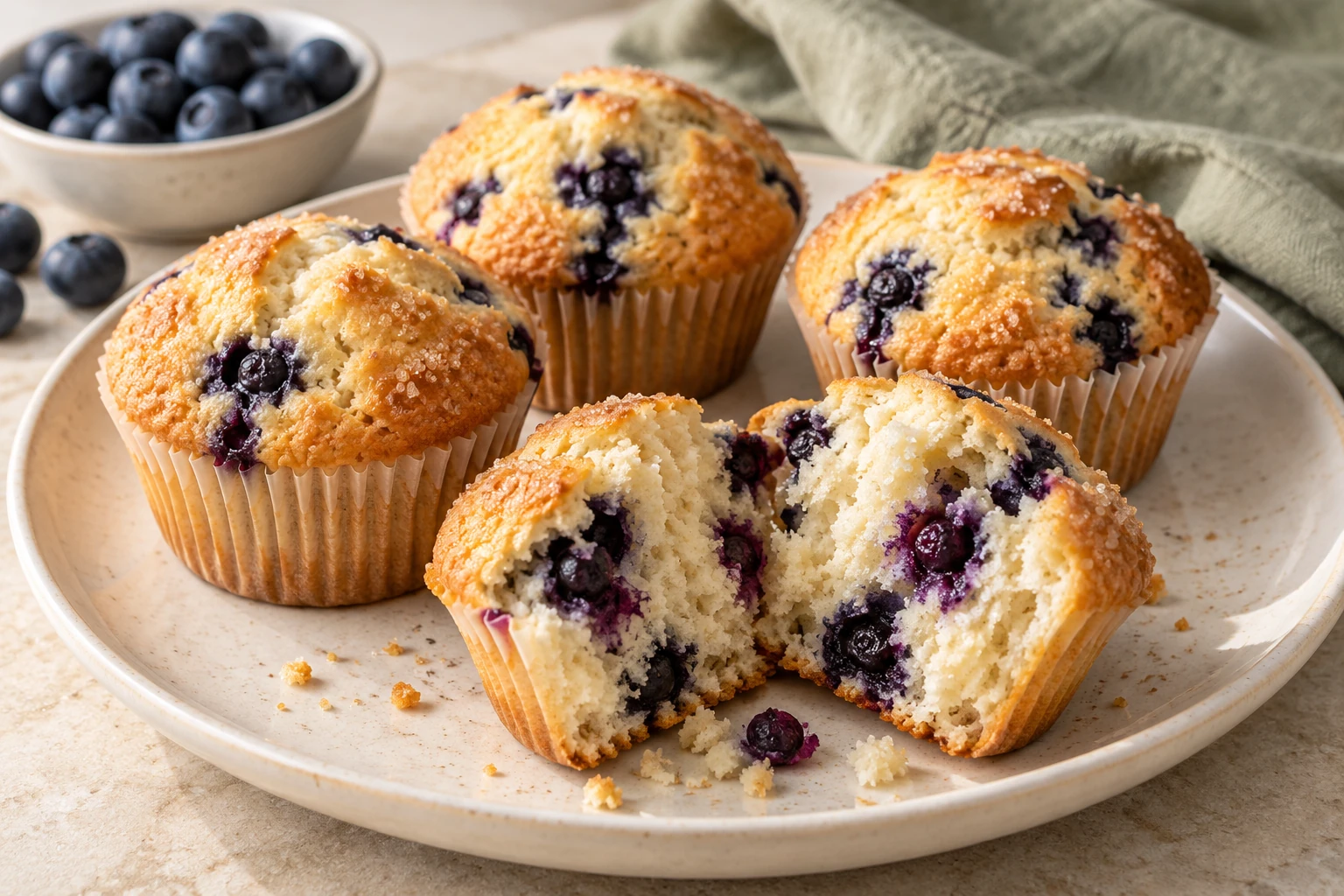
Small blueberries fit well in minis, but generous fruit quantities may overwhelm a tiny portion. Use the berries and measured amount in a tested mini muffin recipe. If adding frozen berries, keep them frozen until folding and assess doneness carefully because the fruit may increase baking time.
The photo shows the standard size of Blueberry Muffins. If testing a mini version, check the centre early and use smaller berries so the wells fill evenly.
Chocolate chip mini muffins
Mini chocolate chips can distribute more evenly than oversized chunks in very small portions. Use the recipe's suggested amount, since too many chips can affect batter distribution. If the muffins contain a melted chocolate centre, follow a specific filled-mini recipe for safety and doneness.
The chocolate in Chocolate Chip Muffins is a mix-in. Keep the formula and test with small chips so each mini muffin gets a little chocolate.
Savoury mini muffins
Cheese, cooked vegetables and egg-based batters may need different baking and storage practices than plain sweet muffins. Follow a tested savoury mini formula. Refrigerate dairy-rich or egg-based finished snacks according to food-safety guidance, rather than assuming every mini muffin can sit out all day.
How to bake two pans at once
If the recipe supports multiple pans, allow adequate airflow and follow any recommended rotation. Oven hot spots can become more noticeable when mini muffins bake for only a few minutes. A fully preheated oven and consistent portioning give a more even batch.
Cooling without soggy bottoms
After the recipe's short pan-rest period, transfer minis to a wire rack so steam doesn't remain trapped beneath the bases. A small offset spatula or other non-damaging tool may help lift them gently. Cool fully before storing or freezing.
Mini muffin storage and freezing
Some plain mini muffins freeze well after proper cooling, packaging and labelling. Their small size makes them convenient to defrost in portions. Use the specific recipe's safe storage and reheating methods, especially when the muffins contain cream cheese, custard or other perishables.
Frequently asked questions
How much batter goes in a mini cup? Follow your recipe's fill level and the pan's capacity. How long should minis bake? Often less time than standard muffins; a one-third reduction is an initial guide. Can you use regular muffin batter? Frequently, with an appropriate time adjustment, but not all formulas convert well. Why are the edges dry? Portions may be small or the muffins overbaked.
A simple mini-muffin plan
Prepare the pan before mixing, use an even scoop, keep the oven fully preheated and begin checking well before the standard muffin time. Once you've found the reliable portion and timing for your pan, write it beside the recipe so the next batch comes out just as good.
Related recipe: Mini Muffins (Banana, Zucchini, or Apple – nut-free versions).
Some images are AI-generated illustrations of the dishes and techniques described.
IN PICTURES
From the baking notebook
FROM THE RECIPE BOX


