On this page
The best school-lunch baking is not necessarily the fanciest. It is the slice of pumpkin bread that survives a busy backpack, the little muffin that can be eaten during a short break, or the savoury flatbread that tastes good at lunchtime without a microwave. A good lunchbox recipe needs to work twice: first in the kitchen, where it should be realistic to prepare, and then several hours later, when someone opens the container.
This guide brings together practical lunchbox baking ideas for back-to-school, drawn from the published What’s Baking? recipe collection. We will look at which bakes are genuinely suitable for packing, what their actual recipes contain, how to portion and freeze them, and what to serve alongside them. You will also find a simple prep schedule, school-allergy considerations, food-safety advice, and solutions to familiar problems such as soggy sandwiches and crumbly bars.
There is no promise that every recipe here is nut-free, gluten-free, low in sugar, or approved by every school. Some contain eggs, dairy, wheat, or nuts, and several are desserts rather than everyday lunch mains. I will flag those differences clearly, because a label that sounds reassuring is not a substitute for checking ingredients and your school’s policies.
First, what makes a bake lunchbox-friendly?
A delicious recipe does not automatically make a practical packed lunch. Think about the day between breakfast and the moment a child eats it. Will the item be chilled or at room temperature? Does its frosting need refrigeration? Will it crumble when removed from its wrapper? Can your child open the container and eat it within the time available?
The easiest candidates tend to be sturdy slices, unfrosted mini muffins, individually portioned bars, and soft breads. Sticky frostings, delicate decorations, large whole loaves, and fillings that leak often create unnecessary trouble. That does not make them bad recipes; it just means they may be better served at home or packed with more care.
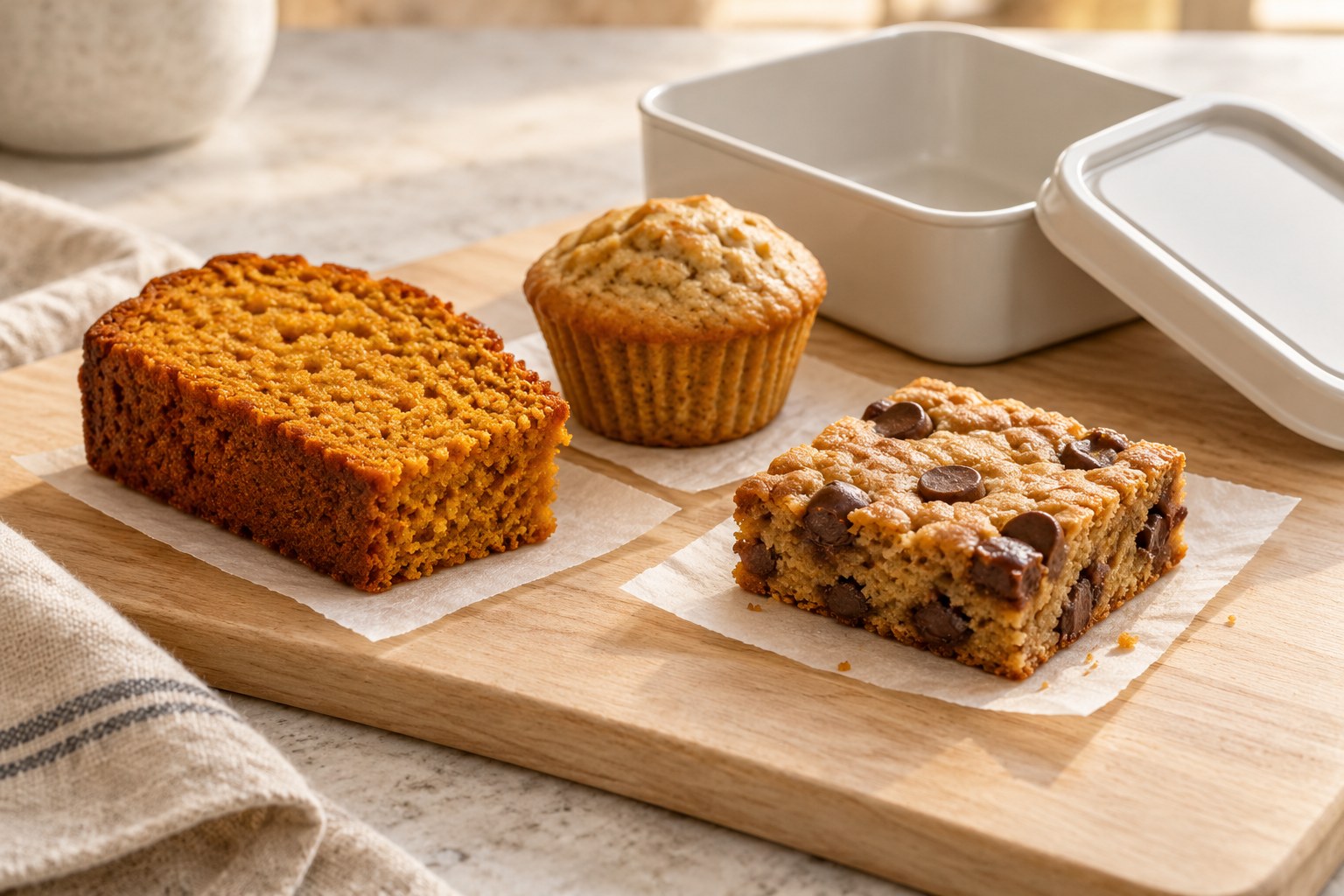
Four practical questions to ask before baking:
- Can it be held comfortably? Bars and small slices are easier to handle than a large frosted cake.
- How does it taste after cooling? Some breads remain soft, while others become dense or need warming.
- What else will be in the box? A sweet bake works best as part of a lunch with produce and satisfying protein foods, not as the whole meal.
- What does the school permit? Review restrictions on peanuts, tree nuts, sesame, eggs, dairy and other ingredients before choosing a recipe.
For a balanced approach, Canada’s Food Guide encourages including vegetables and fruits, whole-grain foods and protein foods in packed meals. A muffin or cookie bar can have a place in that lunch, but it does not need to carry the nutritional burden of the entire meal. Health Canada’s healthy eating at school guide offers more ideas for planning and getting children involved.
1. Chocolate chip cookie bars: An easy batch bake to portion
Chocolate Chip Cookie Bars are a classic choice when you want a pan of something that can be cut into consistent servings. Compared with individual drop cookies, a pan of bars eliminates repeated scooping and usually makes portioning straightforward. A square placed in a small compartment is easy to recognize and eat.
What the published recipe actually uses: All-purpose flour, butter, two eggs, brown and granulated sugars, and chocolate chips. It is not naturally gluten-free, dairy-free or egg-free. The main ingredients also mean it belongs in the treat category, even if you serve it in a lunchbox.
For cleaner cuts, allow the slab to cool completely. If the chocolate is still warm and fluid, cutting too soon can smear the surface and break the edges. A sharp knife wiped between cuts makes neater squares. Choose sizes based on your child’s appetite and the rest of the packed lunch rather than assuming every square must be large.
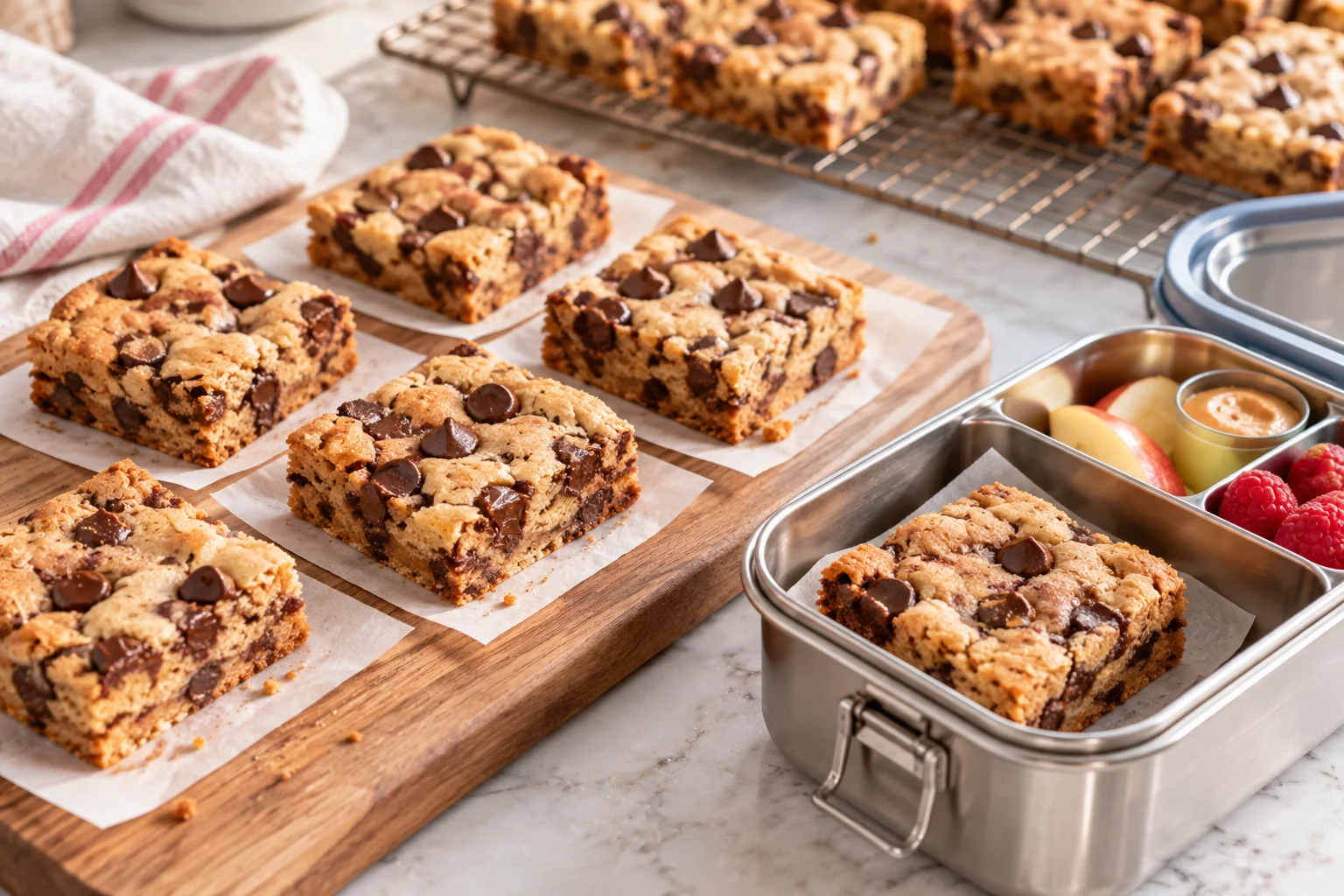
To prepare ahead, cut the cooled slab, separate portions with parchment, and freeze in an airtight container if the recipe and storage method are suitable. Thaw a portion properly before packing. Do not place a still-warm bar beside chilled food; the trapped steam can soften it and warm neighbouring items.
Lunchbox pairing: A bar, fresh fruit, and a separate savoury main such as a sandwich or a rice-and-bean dish. If your school has a shared-food policy, remind children to keep their own food rather than trading portions.
2. Vegan white-chocolate blondies: Soft, rich and individually wrapped
The site’s Vegan Blondies with White Chocolate are a different bake from peanut-butter blondies. Their published ingredient list contains vegan butter, brown sugar, flour, flaxseed mixed with water and vegan white chocolate. Chopped walnuts or pecans are listed as optional. They are vegan as written when the specified vegan ingredients are used, but the flour contains wheat and the optional nuts may be unsuitable for a particular school.
Blondies tend to be softer and richer than a biscuit, which makes them useful in modest portions. They should be completely cooled and set before slicing. A square that is still warm can tear, stick to its wrapping, or crumble against other lunch items. Parchment dividers help the individual pieces keep their shape.
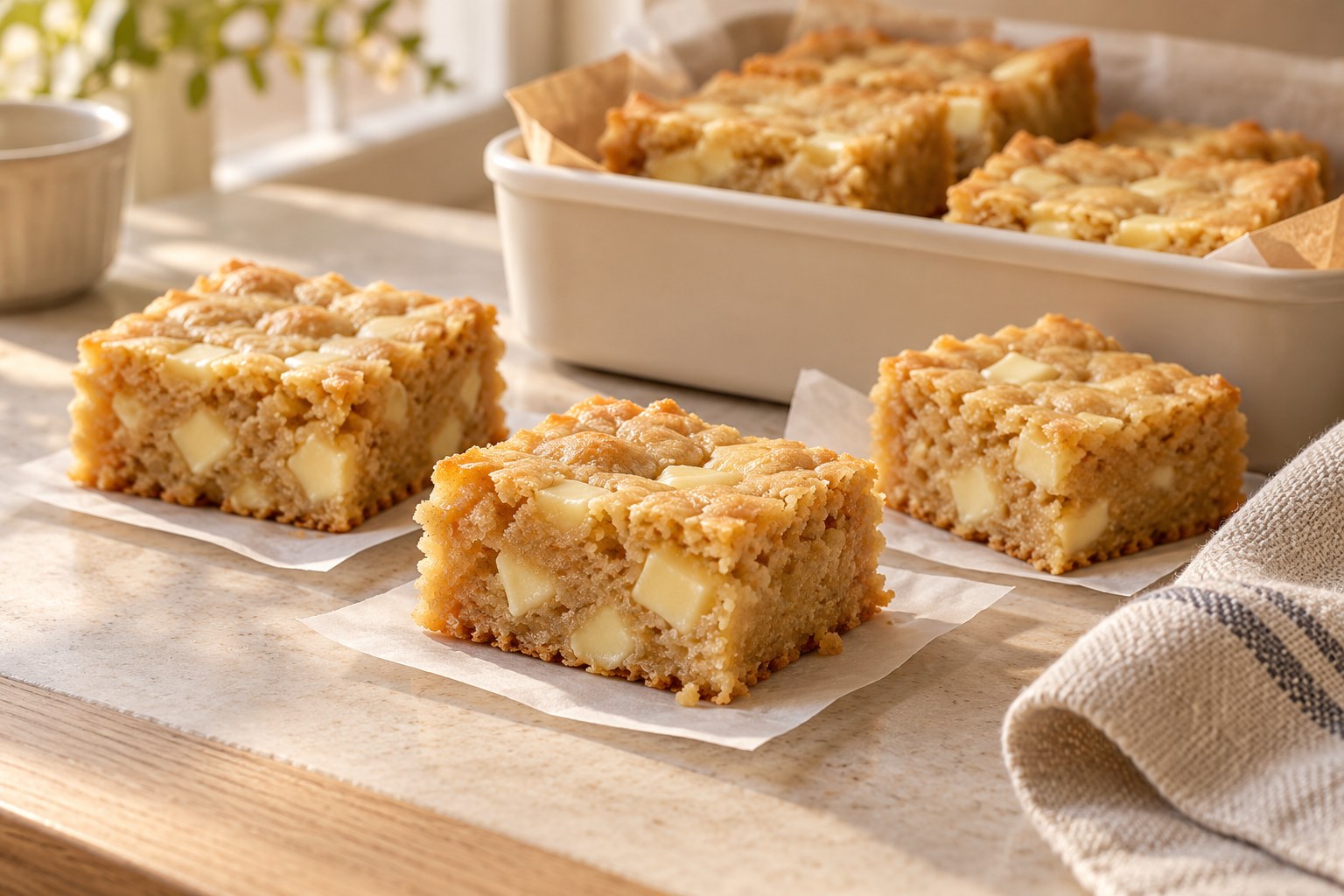
Check the packaging of vegan white chocolate carefully: ingredient formulations vary, and “vegan” is not a promise about possible cross-contact with milk or nuts. Do not add the optional nuts unless the child can have them and the school permits them. If the school requires a specific allergen standard, check all packaged components and kitchen cross-contact risks rather than relying on the recipe’s title.
Try this when: You have time for a weekend bake and want an occasional sweet treat that can be served in small squares. Pair it with something fresh and unsweetened, rather than treating the blondie as a substitute for lunch.
3. Pumpkin bread: The slice that holds up in a container
Pumpkin Bread is a sturdy, sliceable option for autumn or any time you have pumpkin purée available. Cinnamon, nutmeg, cloves and ginger supply the familiar warm flavour; pumpkin contributes colour and moisture. After resting, a loaf is easy to cut into portions and is less awkward to pack than a big frosted cake.
The published recipe includes wheat flour, butter, eggs, milk and sugar. Walnuts or pecans are optional. It is therefore misleading to describe this loaf as automatically nut-free, dairy-free, gluten-free or a vegetable serving equivalent to fresh produce. What it offers is a pleasant homemade bake that can be part of a varied lunch.
Let the loaf cool before cutting; steam inside a warm loaf can create gummy slices and damp packaging. Use a serrated knife with gentle strokes so the soft crumb does not compress. If the slices are very thick, halve them to suit a smaller lunch compartment.
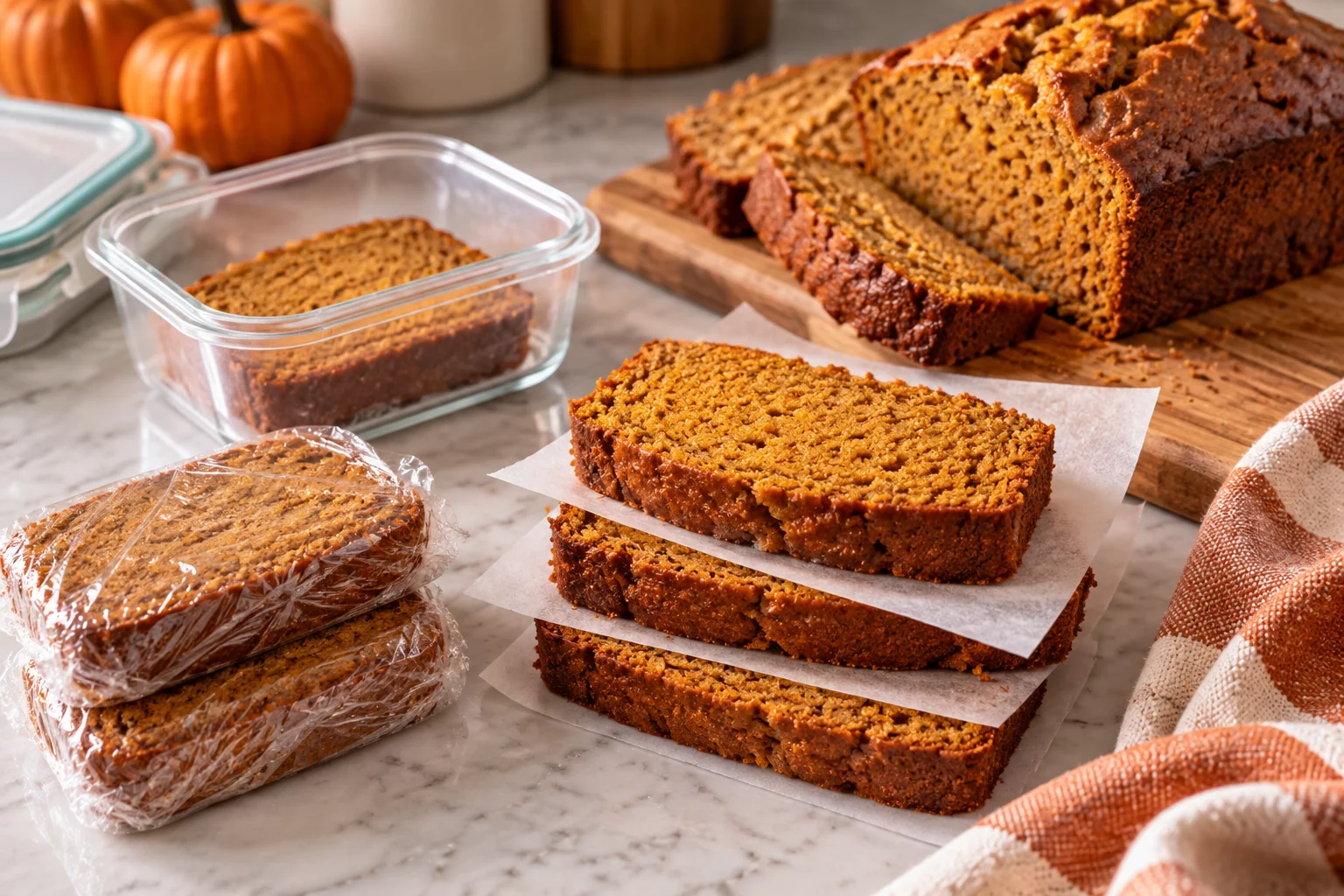
For freezing: Wrap cooled individual slices, label the container with the date, and freeze promptly. The best thawing approach depends on the loaf and the child’s lunch schedule; if other perishable foods are travelling with it, the whole packed meal still needs appropriate cold storage. If you add a spread or dairy-based topping, that changes the storage requirement.
Easy pairing: Pumpkin-bread slice with a savoury sandwich, cucumber pieces or an apple. The spice flavours make it enjoyable without an extra sugary glaze.
4. Mini muffins: Make the batch small enough to eat
The published Mini Muffins (Banana, Zucchini, or Apple — Nut-Free Versions) are particularly well suited to the lunchbox format. Small muffins are easy to divide among family members, and you can vary the fruit or vegetable add-in across baking sessions.
The actual base recipe contains all-purpose and whole-wheat flour, butter, plain yogurt, milk and two eggs. Banana, zucchini and apple are alternative mix-ins. Calling these muffins “nut-free versions” does not eliminate their wheat, milk or egg content, nor does the name guarantee that every brand of ingredient is safe for a specific allergy. The recipe also includes sugar; adding produce does not turn a muffin into a complete lunch.
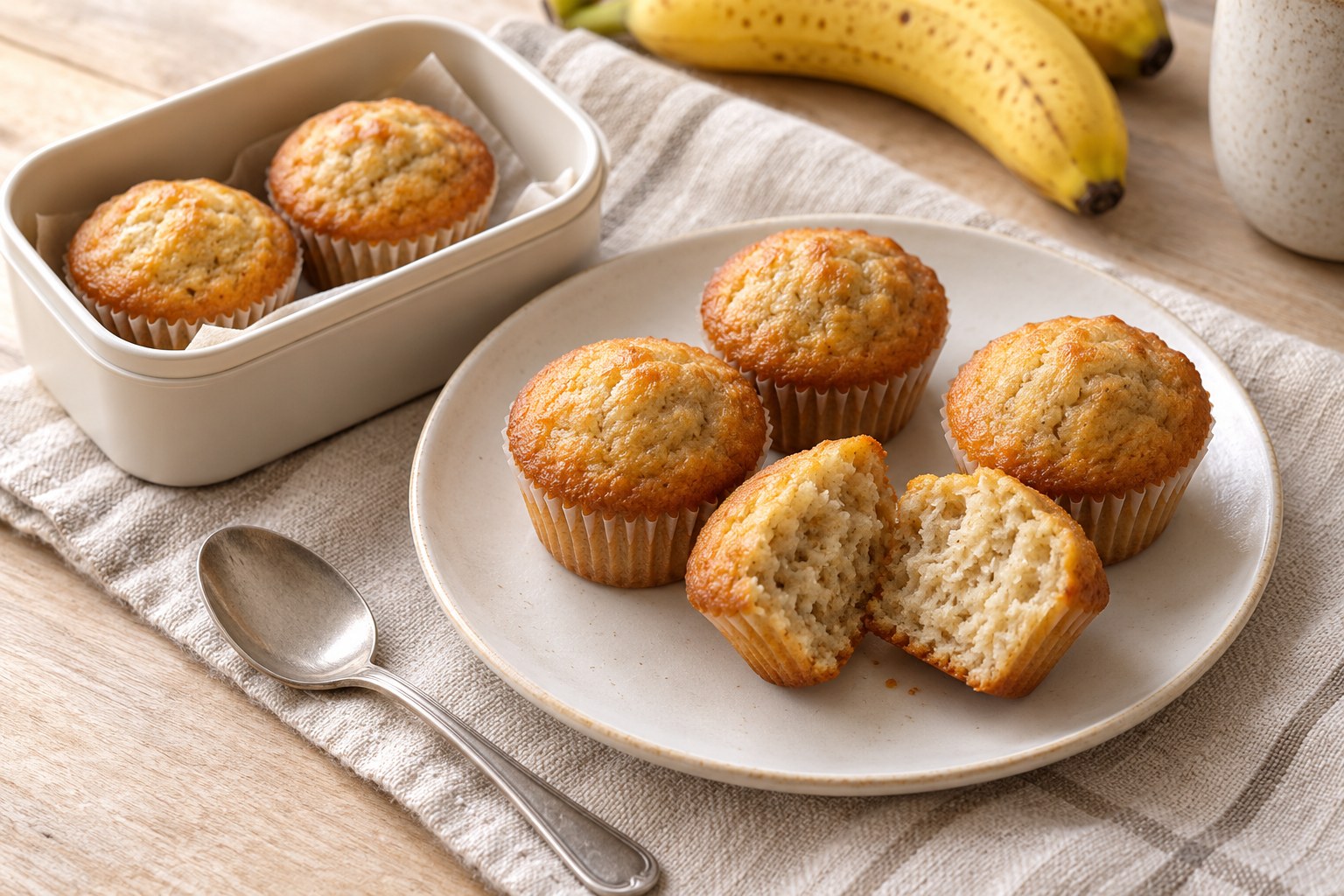
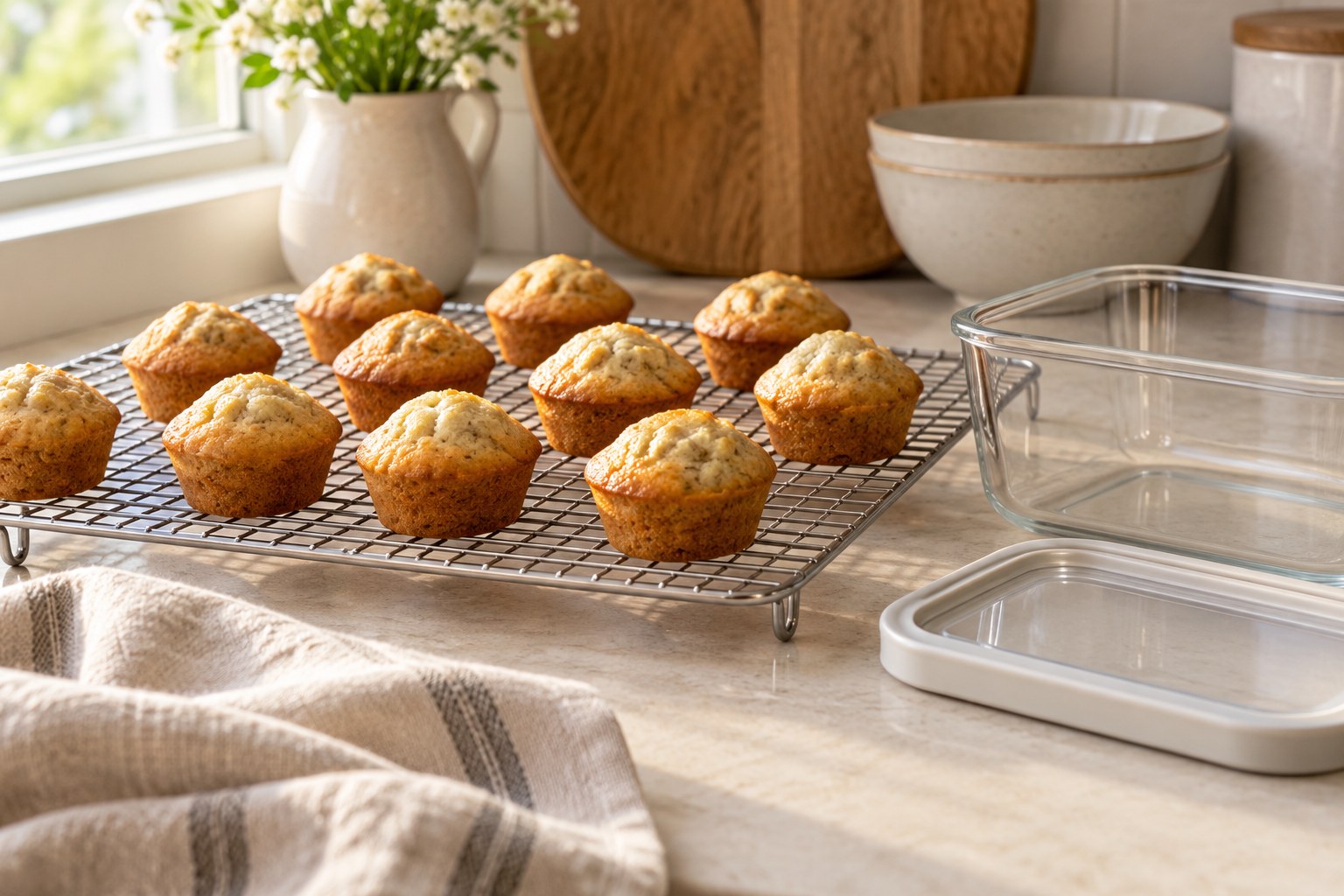
The most useful technique is moisture management. Mashed banana adds softness, while zucchini should be squeezed according to the recipe so the batter does not become waterlogged. Finely diced apple distributes more evenly than huge chunks. Once baked, cool muffins on a rack rather than sealing them in a container while warm. Trapped steam is one of the fastest ways to make a good muffin soggy.
Try packing one or two according to appetite, alongside a main dish and fruit or vegetables. Muffins also make a convenient baking project for children who can help line tins, count portions or stir the bowl with supervision. Adults should handle hot trays and sharp tools.
When to bake: On a quieter evening, then cool and store or freeze portions so mornings involve packing rather than starting the oven.
5. Vegan coconut macaroons: A small, chewy treat with an ingredient check
Vegan Coconut Macaroons use aquafaba, cream of tartar, sugar, desiccated coconut and coconut flour, with vegan dark chocolate as an optional finish. The published recipe permits almond flour as an alternative to coconut flour, so use care: choosing that option introduces a tree-nut ingredient.
These are not the same as French macarons, which commonly use almond flour and have a different technique and structure. Coconut macaroons are typically chewy, coconut-forward mounds that can be portioned neatly once cooled. Because they are small and sweet, they can serve as an occasional dessert with lunch.
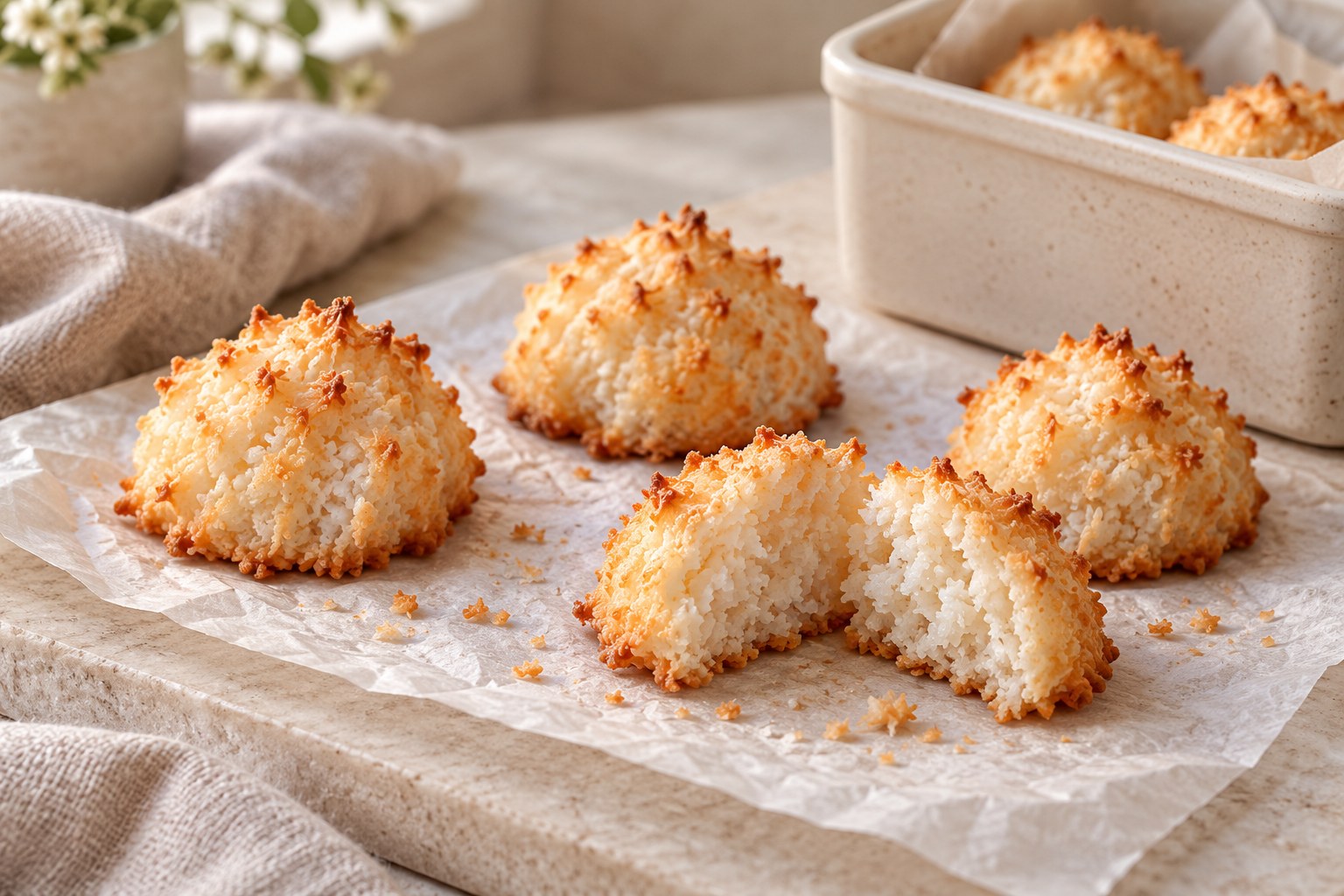
Allow the surfaces to dry and set fully before storing so the bottoms do not stick together. Use parchment between layers if the recipe produces a tacky finish. Skip chocolate dipping if the lunch will be kept warm or the extra coating will make a mess; and remember that dairy-free chocolate must be verified by label for anyone who needs it.
Important allergy distinction: Coconut is not a universal safe substitute for tree nuts, and school policies differ. Read the school’s instructions, check product labels and avoid cross-contact. Do not say “gluten-free” unless you have checked all the particular ingredients and preparation conditions.
6. Vegan vanilla-bean cupcakes: Better for special lunchbox days
Vegan Vanilla Bean Cupcakes are an attractive option for birthday celebrations or an occasional lunch treat, but the published recipe makes cupcakes, not a “vanilla cupcake loaf.” Its batter uses plant milk, vinegar, flour, cornstarch, applesauce, oil and vanilla. The frosting uses vegan butter and powdered sugar.
Unfrosted cupcakes travel much better than tall, generously iced ones. If the occasion calls for frosting, put the cupcake into a container with enough headroom and follow the storage guidance appropriate to the frosting ingredients and packing conditions. Vegan buttercream is not automatically safe to leave at warm temperatures indefinitely. Individual brands have different formulations.
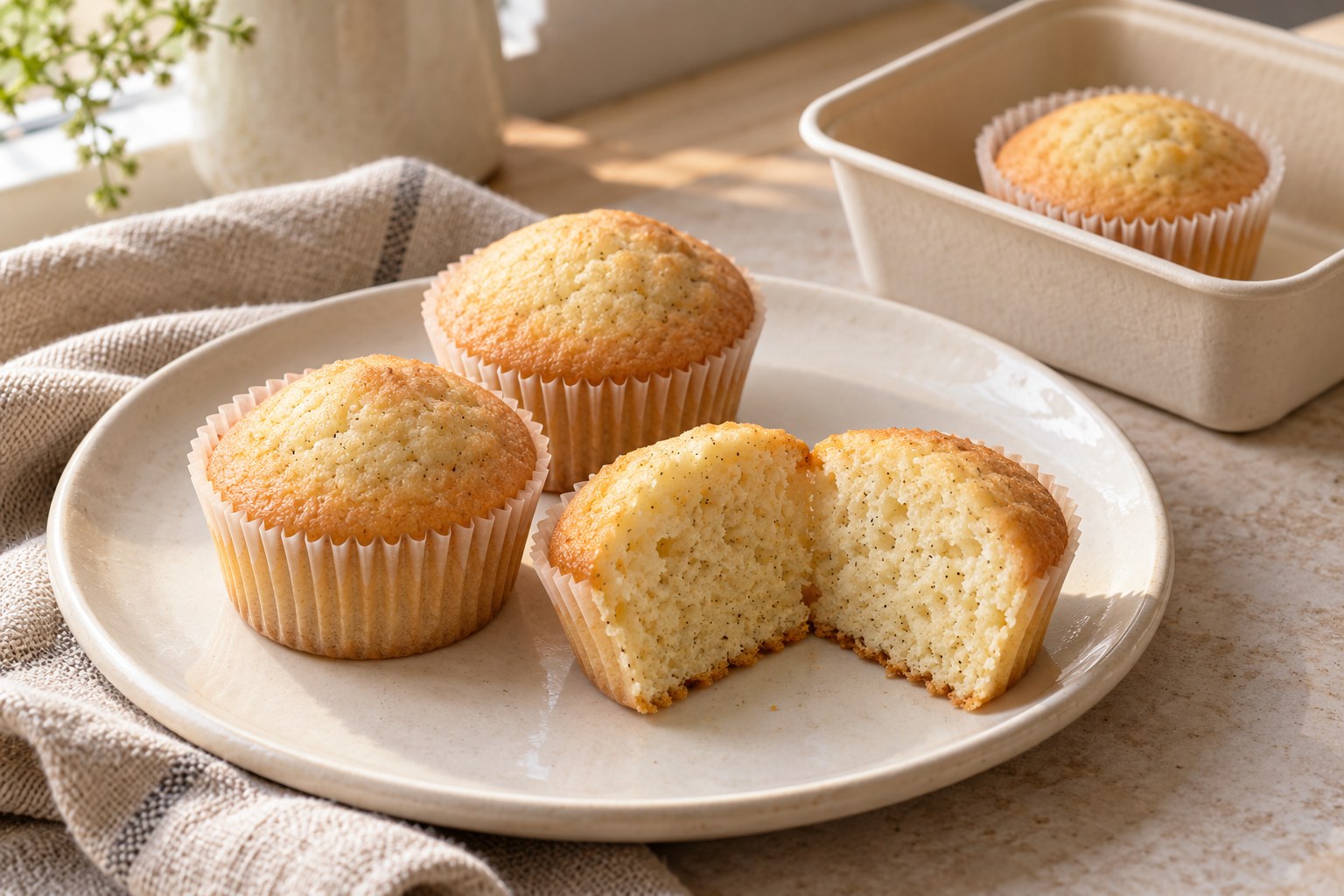
The recipe does not become nut-free just because it is vegan. Some plant milks are made with almonds; soy can also matter for allergies. Use the ingredient version that is appropriate for your household and school, and verify the complete recipe before attempting substitutions. For a gluten-free need, this recipe’s all-purpose wheat flour is not suitable as written.
Lunchbox strategy: Reserve decorated cupcakes for a planned special occasion. For everyday use, the unfrosted version creates less mess and can be packed with a simple lunch. A small sprinkle of powdered sugar at home may be enough decoration without transporting a fragile swirl of frosting.
7. Tigelle flatbread: A savoury lunchbox component, not a three-ingredient shortcut
The site’s Tigelle (Italian Flatbread) is a substantial dough recipe using flour, milk, butter, yeast, salt, sugar and olive oil. It is not a three-ingredient flatbread and is not naturally gluten-free or dairy-free. The recipe lists a considerable preparation period because the yeast dough needs time.
Small, soft rounds can still be useful lunchbox components. Cut them into manageable pieces and pair with a spread or filling that meets your family’s needs. The finished bread can be packed separately from moist vegetables so the crumb remains pleasant. If you use hummus, cheese, cooked vegetables or other perishable fillings, treat the combined lunch as temperature-sensitive.
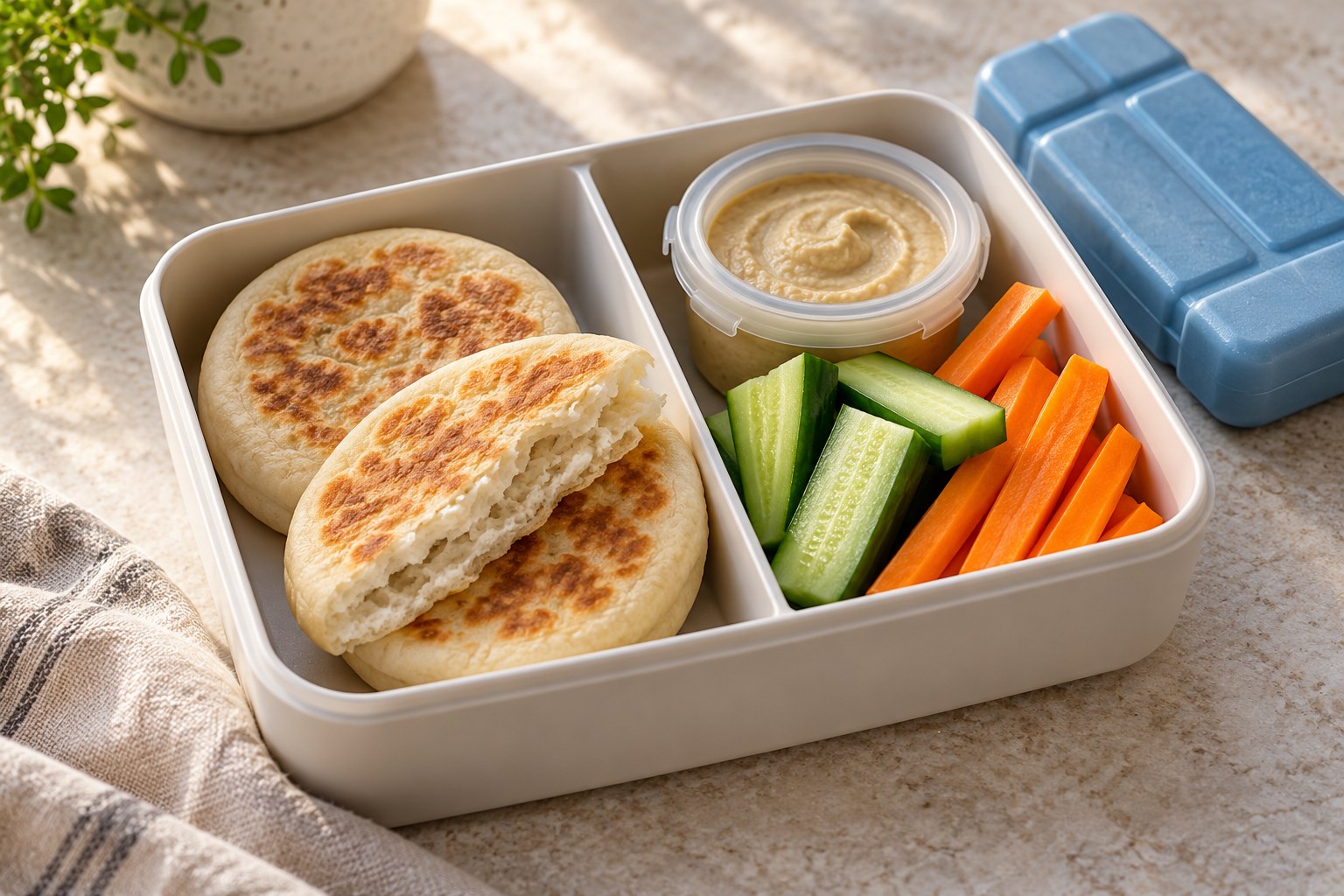
Try making the dough on a day with enough time rather than adding yeast proofing to a school morning. Once baked, cool the breads completely. An airtight container helps protect them from drying, but very warm bread sealed too soon becomes damp. Reheating before packing may soften the texture briefly, but only pack when cooled appropriately and follow food-safety requirements.
Possible assembly: Flatbread rounds, cucumber, carrot sticks and Classic Homemade Hummus in a separate leak-resistant container. Remember that hummus contains tahini (sesame), a relevant allergen for some school policies.
8. Herb-and-garlic sandwich bread: Useful for everyday savoury lunches
Herb and Garlic Sandwich Bread has a softer and more savoury role than the sweet options above. Its published formula includes strong bread flour, yeast, butter, roasted garlic, herbs and water. This is yeast-raised sandwich bread, not a ready-made cheese-and-herb loaf, and the ingredient list does not include cheese.
Slice the loaf only once cool to avoid compressing its interior. Slightly thinner pieces often fit lunchbox containers better and leave more room for fillings. A sturdy sandwich made from homemade bread can be a main component rather than an extra dessert.
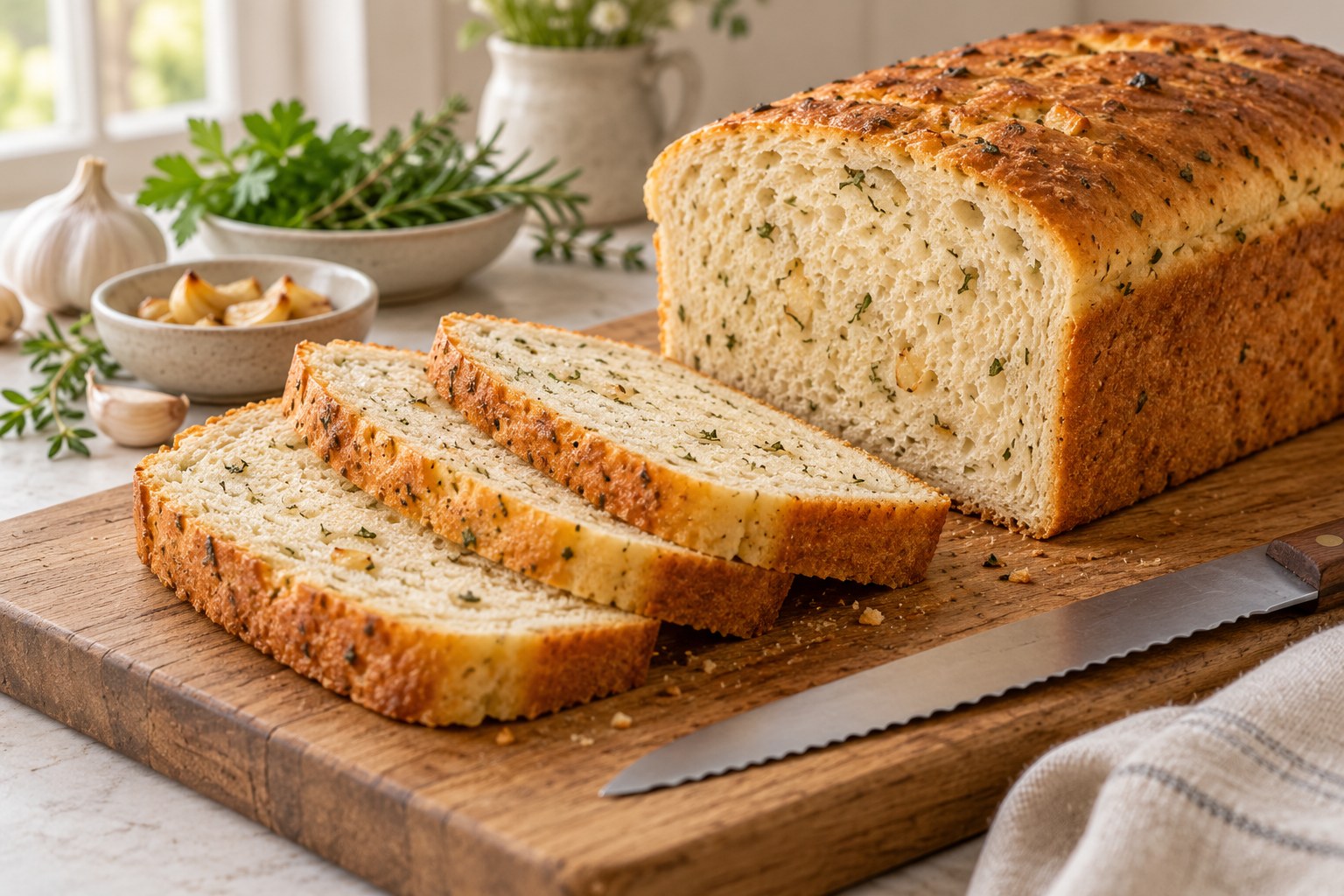
Moist fillings are the main challenge. Thoroughly pat dry cucumber or tomato slices, or pack especially wet ingredients separately so the bread does not become sodden. A thin barrier of an appropriate spread can help, but it should not be treated as a guarantee against sogginess. If the sandwich includes dairy, eggs, hummus or other perishable ingredients, use a chilled packing setup.
A home-baked loaf can also be turned into toast fingers for a dip, or used alongside soup in a properly insulated container. Follow the published bread method for yeast timing; shortcuts that omit the rising stages would create a different recipe.
9. Gluten-free blondies: Check the nut content before packing
Gluten-Free Blondies offer a different type of bar for families who need to avoid gluten ingredients. The published flour mix contains white rice flour, tapioca flour, almond flour, and xanthan gum. The recipe also includes butter, eggs, white chocolate, and optional walnuts or pecans.
That means gluten-free is not the same as nut-free, dairy-free or egg-free. Almond flour is part of the actual published formula; simply omitting optional nuts does not remove the almond ingredient. For a child with a diagnosed gluten-related condition, verified ingredient labels and cross-contact precautions are essential as well.
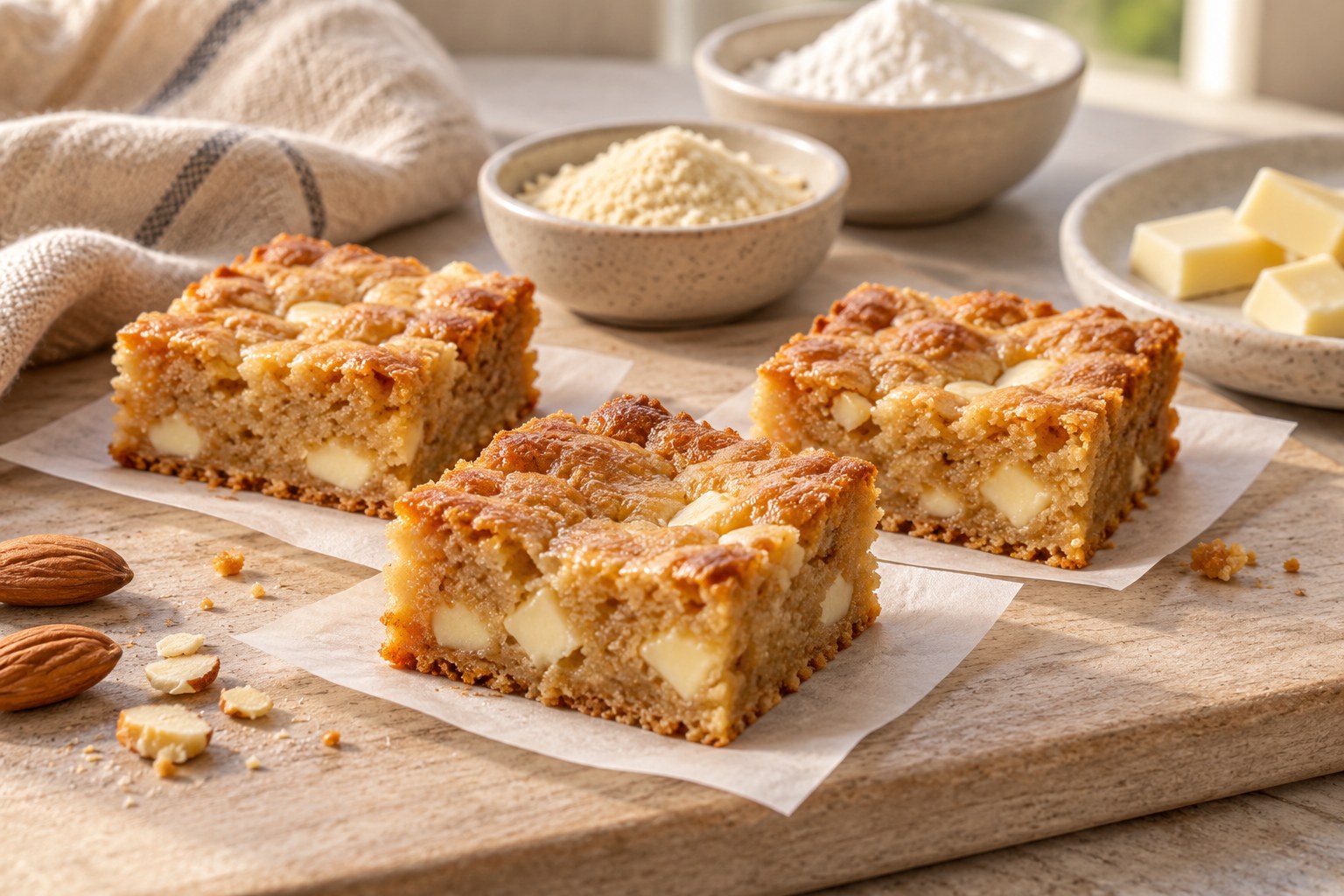
Because blondies are rich and soft, cut and cool them carefully. Bake according to the original recipe; do not assume swapping in ordinary wheat flour or sunflower seed flour will yield the same result. If you need a completely nut-free, gluten-free combination, choose a suitable independently developed recipe rather than casually replacing the structural flour in this one.
Packing approach: A small square in its own compartment, with a substantial savoury lunch and fruit or vegetables. Keep the ingredient distinction clear when sharing homemade bakes with other families.
10. Chickpea blondies: Do not confuse “made with beans” with allergy-friendly
Chickpea Blondies are an unusual bake that uses canned chickpeas for part of its body. The published recipe also calls for almond butter or peanut butter, two eggs, oat flour, maple syrup, brown sugar and chocolate chunks. These bars are not egg-free or nut-free as written, and the recipe does not make an automatic gluten-free guarantee for every ingredient brand.
Chickpeas give the batter moisture and a different texture from a traditional flour-heavy blondie. Thorough draining matters; excess liquid can make the middle overly soft. If you are curious about bean-based baking, make the recipe as written first and assess its cooled texture before attempting substitutions. A spreadable batter does not automatically mean a finished bar will hold together for transportation.
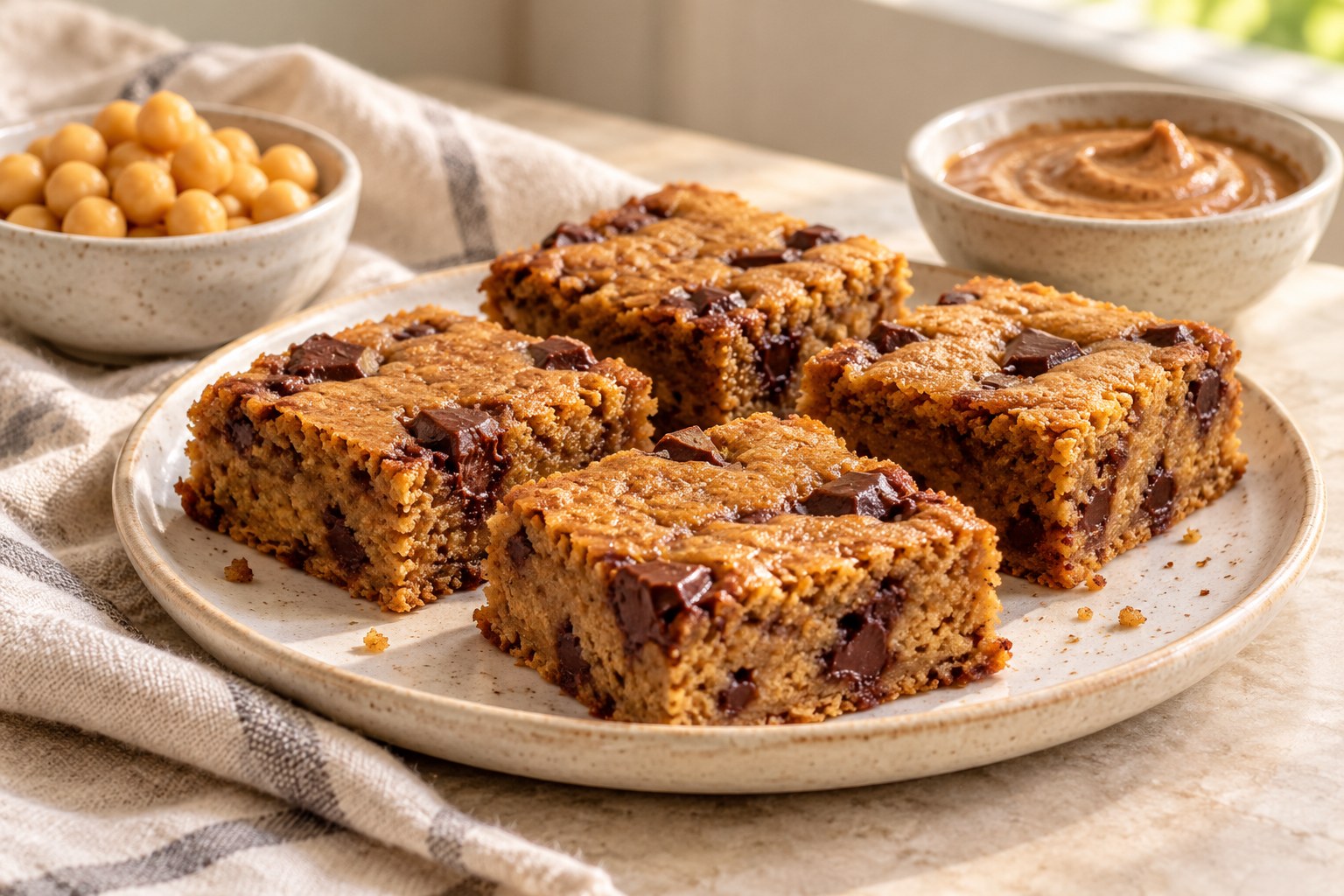
For most classrooms with peanut or tree-nut restrictions, this is not the safest default recipe because of the nut butter ingredients. Choose another item from this guide or an appropriate professionally developed allergy-aware formula. Replacing nut butter with another spread can affect binding, flavour and thickness and should not be presented as a verified one-for-one change.
A home-made treat should be accurately named. “Chickpea blondie” tells readers what they are getting; “nut-free peanut-butter cookie” would not. Small corrections like this are especially important when children and school staff are involved.
A bonus savoury option: Bombay sandwiches with vegetables
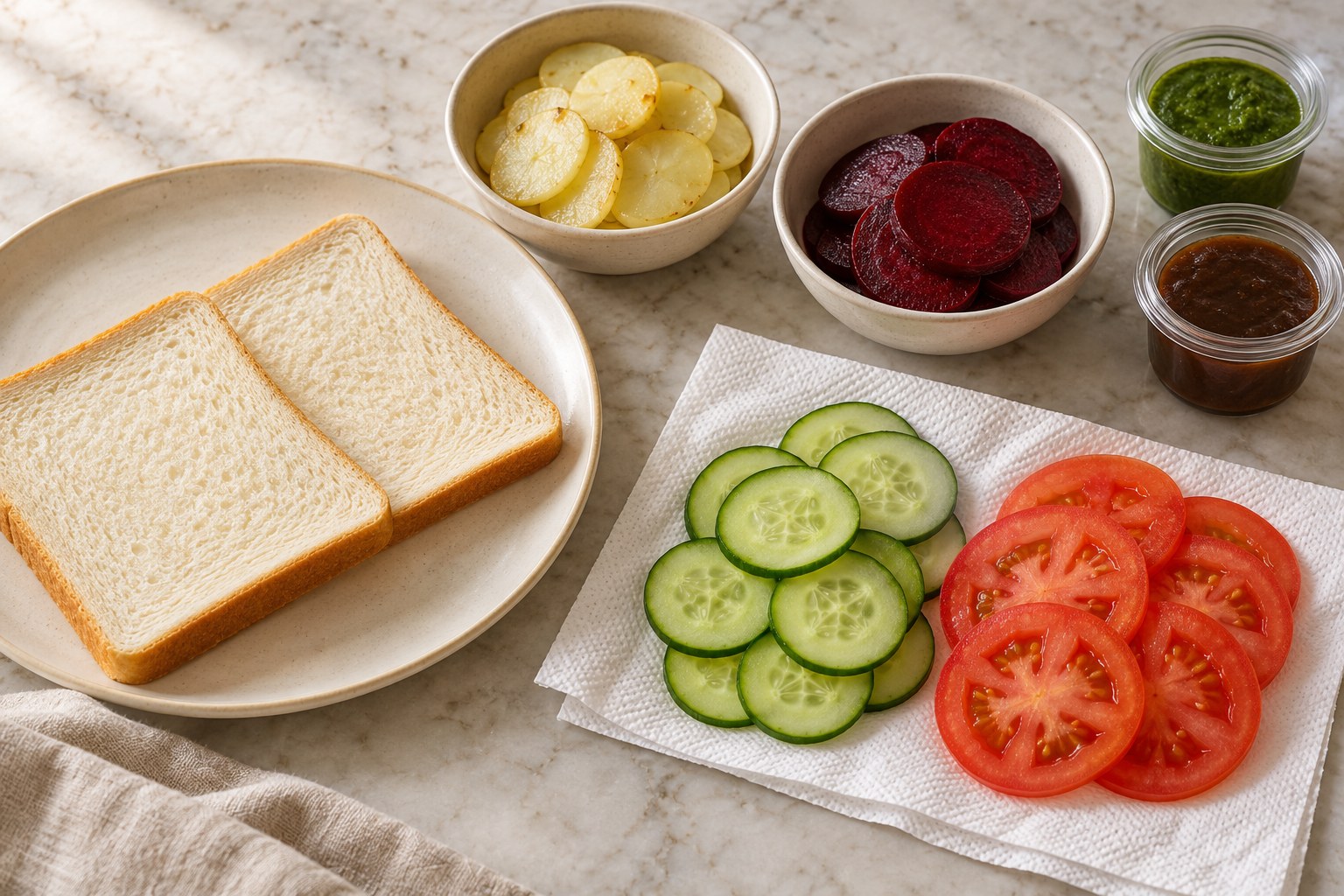
The Copycat Chaiiwala — Bombay Sandwich is not a baked bar, but it offers an alternative when the lunchbox needs a filling savoury centre. The published recipe combines bread with cooked potato and beetroot, cucumber, tomato, red onion, butter, mint-coriander chutney and tamarind chutney. It is assembled and grilled, rather than baked as a loaf.
For school packing, let cooked components cool safely, choose a manageable sandwich size, and pay attention to moisture from tomato, chutneys and cucumber. Packing chutney separately may preserve the bread’s texture. Because the filling includes cooked vegetables and other ingredients that may be perishable, use appropriate cold storage instead of assuming the grill makes it shelf-stable.
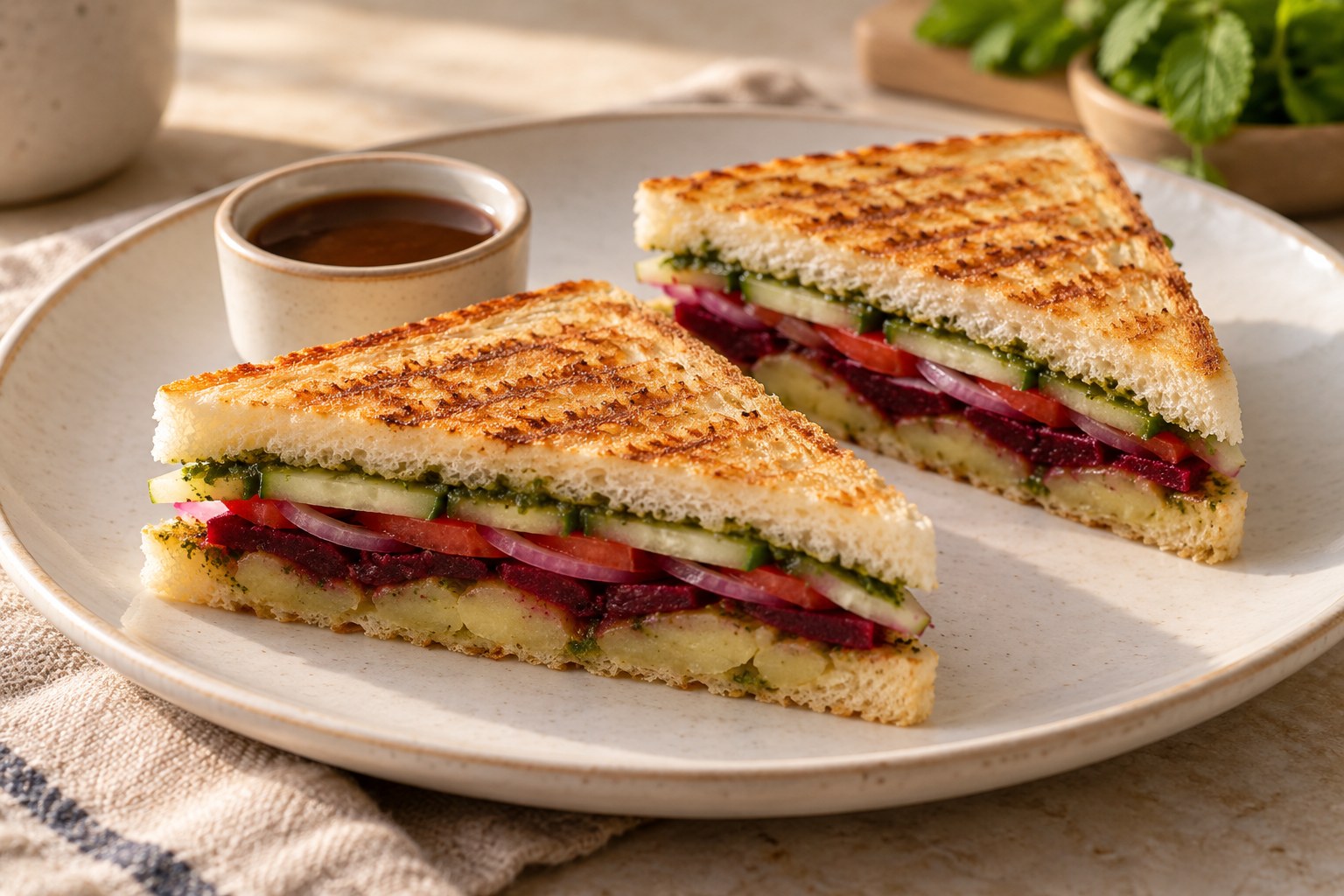
It is also important to check whether a child enjoys the spices and texture. A smaller, familiar filling may be easier than a heavily loaded sandwich for a young child with limited eating time. The goal is a lunch they can realistically manage, not a photographically perfect stack that falls apart when unwrapped.
How to assemble a complete school lunch around one bake
The temptation is to fill three compartments with three homemade treats and call the lunch ready. A better approach is to select one baked item, then build a satisfying meal around it. Think of the bake as the bread, the treat or the savoury accompaniment; which role it plays determines what else to pack.
If you are packing chocolate-chip cookie bars, the main lunch might be a sandwich or a grain-and-bean salad, with fruit and water. If you are packing herb-and-garlic bread or tigelle, those breads can be the carbohydrate component of a savoury lunch with an appropriate protein food and vegetables. If you choose a mini muffin as a snack, the main meal should still provide substance.
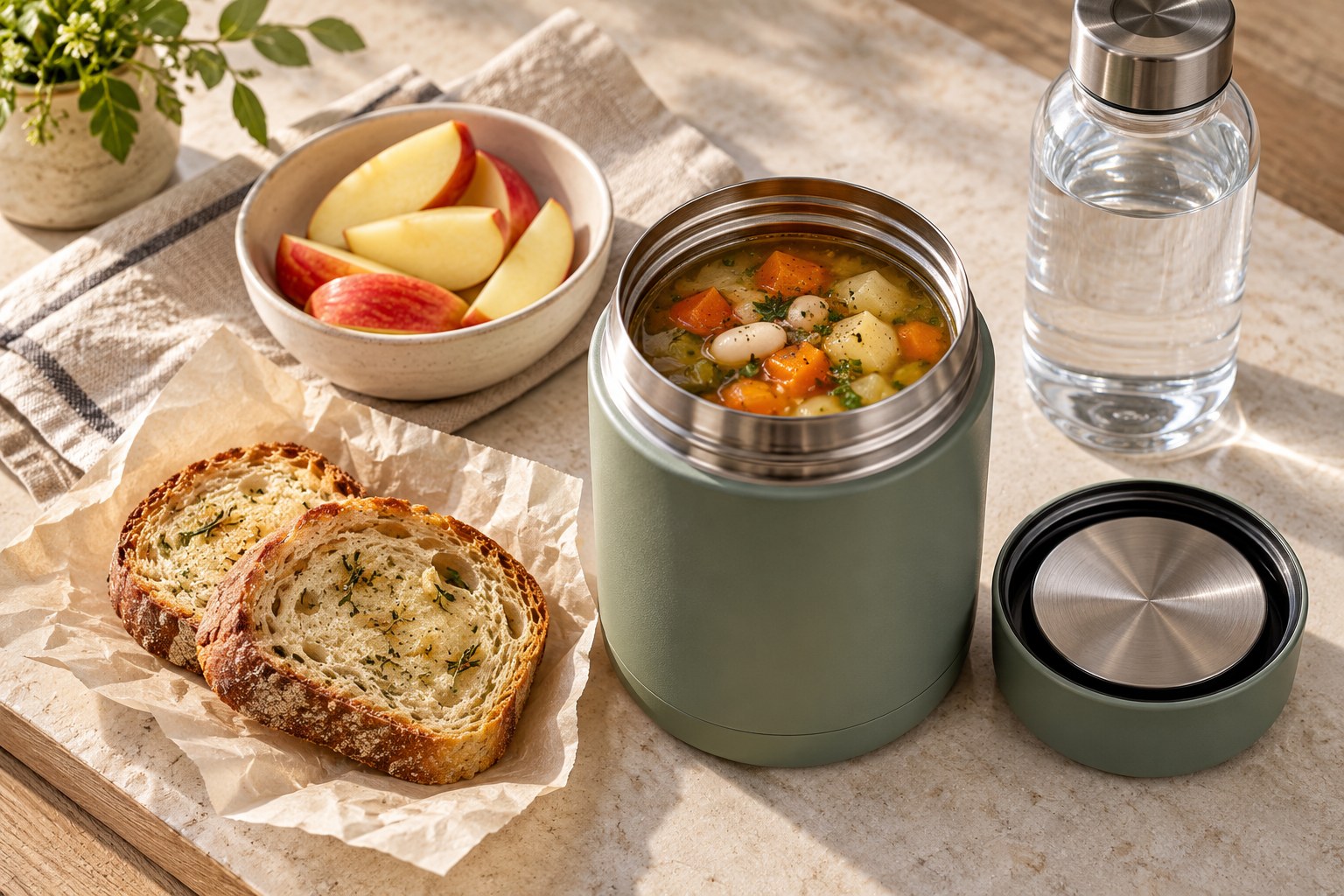
Here are a few flexible combinations rather than rigid rules:
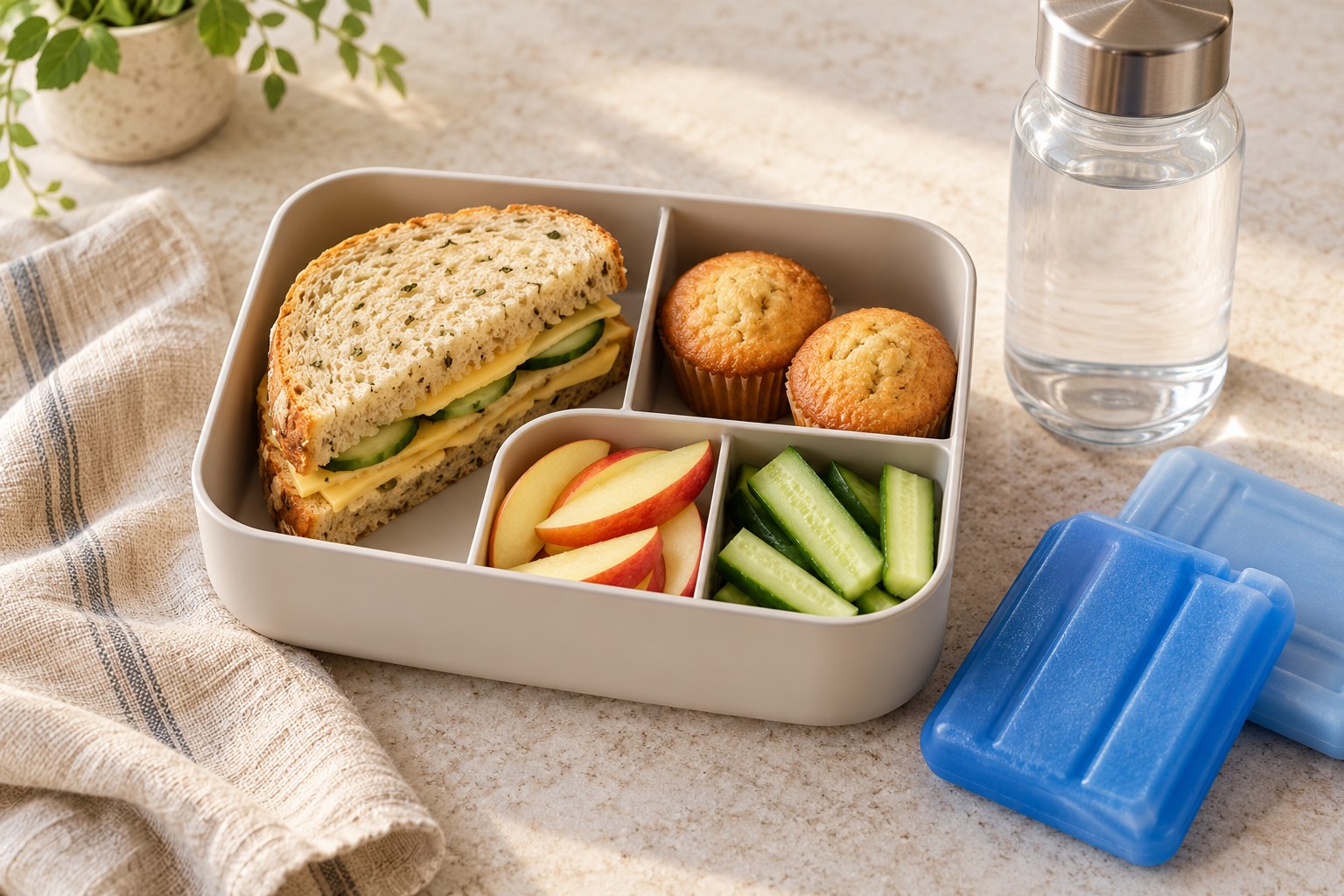
- Sweet-and-savoury: Half a sandwich, sliced cucumber, fruit and a small pumpkin-bread slice.
- Flatbread lunch: Tigelle, a permitted dip, crunchy vegetables and a piece of fruit.
- Leftover-friendly: A well-chilled portion of a suitable main dish, a mini muffin and water.
- Occasional celebration: A simple savoury lunch with an unfrosted vanilla cupcake for dessert.
- Cool-weather lunch: Warm soup in a correctly used insulated flask, with sliced herb bread and a piece of fruit.
These are planning ideas, not precise nutritional prescriptions. Children vary in appetite, eating time, sensory preferences and dietary requirements. Ask which parts actually get eaten instead of assuming a colourful box is always successful.
A five-day back-to-school lunchbox baking plan
The following plan assumes you have baked and stored the items safely ahead of time. Rotate the fresh sides and main meals to match your family’s needs and the school’s allergen rules. There is no requirement to serve a sweet baked item every day.
Monday: Pumpkin bread and a familiar main
Pack a modest slice of Pumpkin Bread alongside a familiar savoury meal. Include a crisp fruit or vegetable and water. Skip the optional walnuts or pecans only if doing so meets your family’s requirements; always check all other ingredients and cross-contact risks. This is an easy way to use slices frozen from a weekend batch.
Tuesday: Mini muffins in a small container
Choose a couple of Mini Muffins in the flavour your child prefers. Add a balanced main and fresh produce. Muffins are especially useful when lunch time is short because there is little unwrapping or cutting to do. They contain milk, eggs and wheat as published.
Wednesday: Flatbread and vegetables
Use Tigelle as the main bread component. Keep a suitable spread or dip in a leak-resistant container and add vegetables. Chill perishable ingredients. If it is a sesame-restricted school, avoid hummus with tahini and choose a permitted alternative instead.
Thursday: Herb bread sandwich
Build a sandwich using Herb and Garlic Sandwich Bread. A sturdy sandwich can be more practical than multiple loose snacks. Pack any especially juicy components carefully and include fruit or vegetables. The bread contains wheat and butter as written.
Friday: A small sweet treat
For an occasional treat, add a piece of Chocolate Chip Cookie Bars to an otherwise balanced lunch. A treat does not need a health halo to be enjoyable. It can simply be a favourite bake shared at the end of a school week.
A realistic weekend batch-baking plan
A useful freezer routine should make weekday packing simpler, not create a second full-time job. Pick one bread or muffin recipe and one occasional sweet. You do not need to prepare ten different recipes in a single afternoon to make lunches feel varied.
Before baking: Check the school’s current allergen policy and the ingredients already in your pantry. Decide how many servings you actually need. Find freezer bags or containers and write labels before the kitchen becomes busy.
During baking: Start with the recipe requiring the longest resting or baking time. While a loaf bakes, wash produce, set aside containers and prepare ingredients for another batch if practical. Do not run more appliances than you can safely supervise. Let children help with measuring or lining tins if appropriate for their age and abilities.
After baking: Move items to a rack and cool them completely. Slice loaves, cut bars, and separate individual portions. Label each container with its actual contents, preparation date and any relevant allergen information. This is especially helpful if the freezer contains recipes that look similar but have different ingredients.
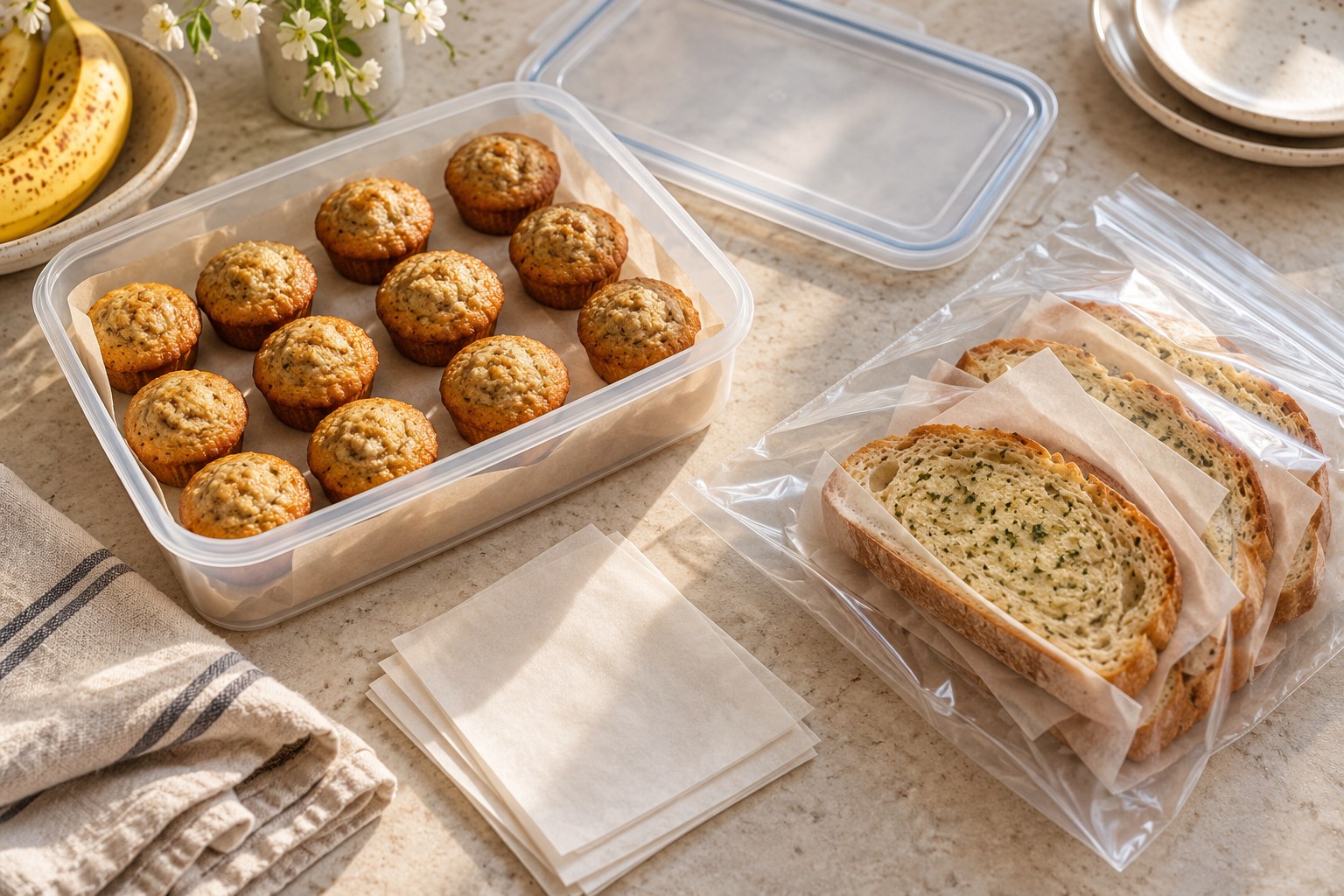
During the week: Use the portions you have, and add fresh produce, a satisfying main or leftovers prepared safely. Thaw frozen items in a way that respects the recipe and the packing conditions. Do not assume a frozen muffin replaces an ice pack for other perishable foods.
The benefit is predictability. When you know there are a few usable bread slices and muffins ready, you have more room to improvise with the rest of lunch.
Freezer, refrigerator and lunchbag food safety
Food safety matters more than an attractive freezer label. According to Health Canada’s Safe School Lunches guidance, perishable foods should stay out of the 4°C to 60°C danger zone. A soft-sided insulated bag with sufficient cold packs is useful for foods that must stay cold, and a suitable insulated food container is needed for hot foods.
Many bakes can be portioned and frozen successfully, but homemade food does not acquire an automatic five-day refrigerator life or two-month freezer life from a blog post. Shelf life depends on the recipe, fillings, handling and actual storage temperature. Frostings, dairy spreads, cooked vegetable fillings, cut fruit, dips and sandwiches may have different requirements from a plain, fully baked cookie bar. Follow current food-safety guidance and the specific recipe’s storage notes.
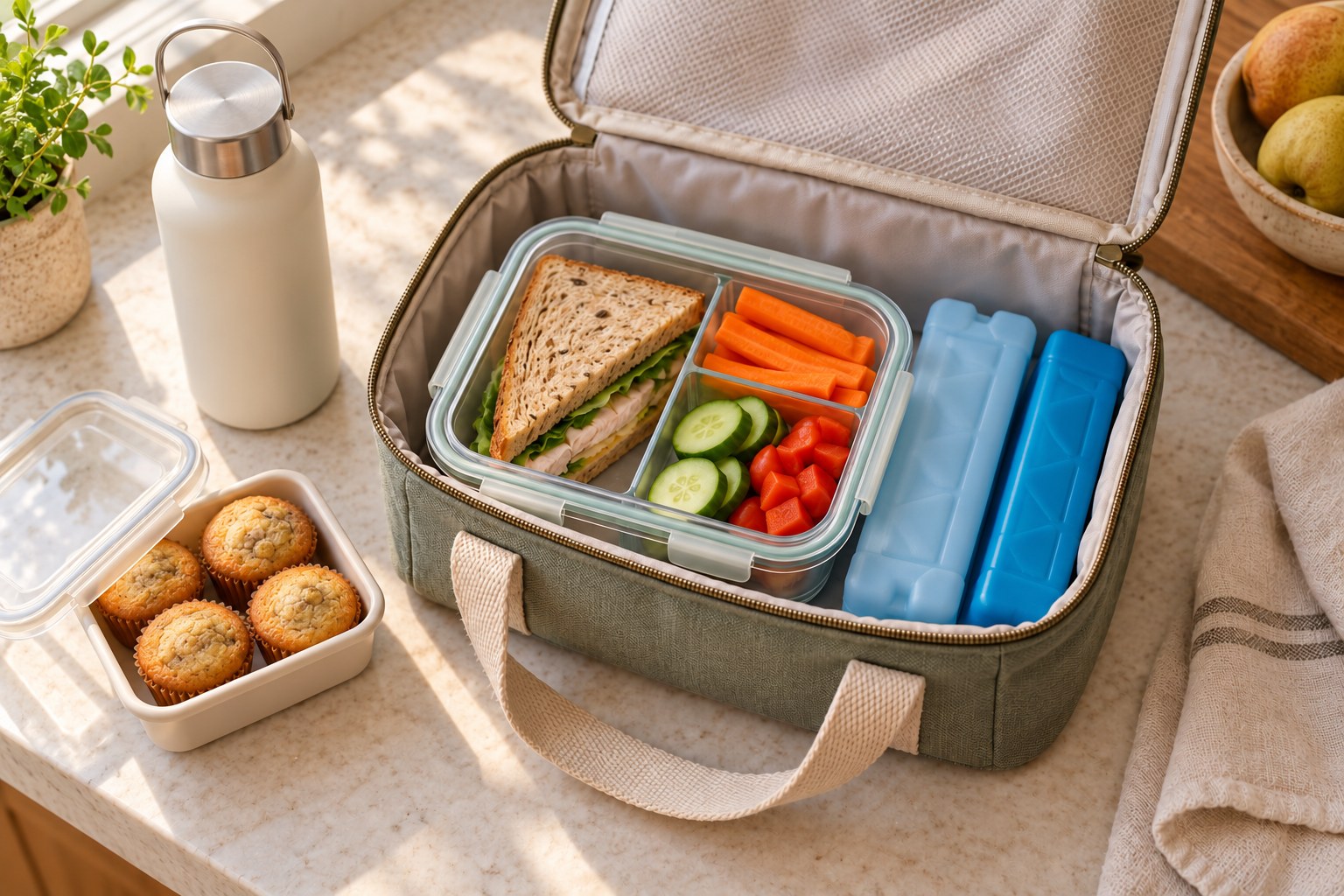
A few packing habits worth keeping:
- Cool cooked items promptly and never leave perishable food sitting out for extended periods while lunchboxes are assembled.
- Choose a leak-resistant container for dips, moist fillings or yogurt. Keep wet toppings away from bread until eating when possible.
- Use ice packs for perishable foods that need to stay cold; frozen baked goods alone are not a dependable substitute.
- For hot soup or other hot food, use a clean thermos according to its instructions. Do not mix hot and cold items in a way that warms the cold food.
- Encourage handwashing, food-label awareness and not sharing lunches when allergy precautions matter.
- Discard food that may have been held unsafely, even if it looks or smells fine.
For a recipe containing cream cheese, whipped topping, custard or another temperature-sensitive filling, be particularly cautious. Pretty icing and a sturdy lunchbox do not make temperature control optional.
School allergies: “Nut-free” needs more than a substitution
Canadian schools can have different policies about peanuts, tree nuts, sesame and other ingredients. The important question is not whether a recipe headline says “school-safe”; it is whether its actual ingredients and preparation meet the school’s current requirements and the child’s individual needs.
For instance, the site’s Chickpea Blondies require almond or peanut butter; the Gluten-Free Blondies contain almond flour; and Vegan Blondies with White Chocolate list optional walnuts or pecans. Vegan Vanilla Bean Cupcakes may use almond or soy milk depending on the selected ingredient. These are meaningful distinctions and should not be hidden behind broad labels.
The Canadian Food Inspection Agency advises checking ingredient lists and allergen statements on packaged foods. Labels can change from one purchase to the next. Its guide to understanding allergen labels is a useful reference when planning packed lunches.
Substitutions have limits. Using sunflower seed butter instead of peanut butter might remove one ingredient, but it can change a recipe’s binding or texture, and does not address possible cross-contact from other ingredients or equipment. Changing wheat flour to oat flour without recipe testing can also affect structure. When an allergy or gluten-related condition is involved, choose a reliably suitable recipe and check your kitchen setup rather than making casual guesses.
Do not send food for classroom sharing unless the school permits it and you can provide accurate ingredient information. A homemade label should state what is really in the item, not just a broad category such as “healthy,” “natural,” or “allergy-friendly.”
Simple ways to prevent soggy and broken lunchbox bakes
Problem: The muffin tops are wet by morning
The muffins may have been packed while warm. Cooling creates steam; if that steam becomes trapped, condensation settles on the surface. Cool baked muffins thoroughly on a rack before storing. Also avoid layering warm muffins directly on top of each other. If the batter itself was excessively wet, check whether zucchini was squeezed and whether fruit quantities matched the recipe.
Problem: Cookie bars crumble when sliced
Warm bars often lack the structure they develop after cooling. Let the pan cool completely, then use a sharp knife and gentle pressure. If the bars still fall apart, check the recipe’s baking time, flour quantities and whether any substitutions changed the mixture. Freezing individual portions after proper cooling may help with handling but cannot rescue a badly formulated bake.
Problem: Bread is tough or stale by lunch
Overbaking, cutting it while hot, or exposing slices to air can contribute. Follow the recipe’s bake and cooling instructions, store slices properly, and keep the bread away from wet fillings. Some breads are delicious warm but less tender after several hours, so test a lunchbox portion at home before depending on it for a whole school week.
Problem: Frosting smears across the lid
A generous piped swirl may be wrong for the available lunchbox space. Use a taller container, a less elaborate finish, or an unfrosted cupcake. Check whether the frosting needs refrigeration rather than assuming a closed plastic box keeps it safe.
Problem: The savoury sandwich becomes wet
Cooked potato, chutney, tomatoes and cucumbers release moisture. Drain and dry components when suitable, separate sauces, and assemble carefully. If the item requires chilling, do not compromise food safety in pursuit of a crisp texture.
Problem: The child brings home the same baked snack every day
It may be too large, unfamiliar, difficult to open or served at the wrong time, rather than simply “too healthy.” Ask which part is unappealing. Rotate one component, reduce the portion or offer a choice between two appropriate options. Canada’s Food Guide suggests involving children in planning and checking why some foods come home uneaten.
Frequently asked questions about school lunch baking
Can I pack a homemade muffin directly from the freezer?
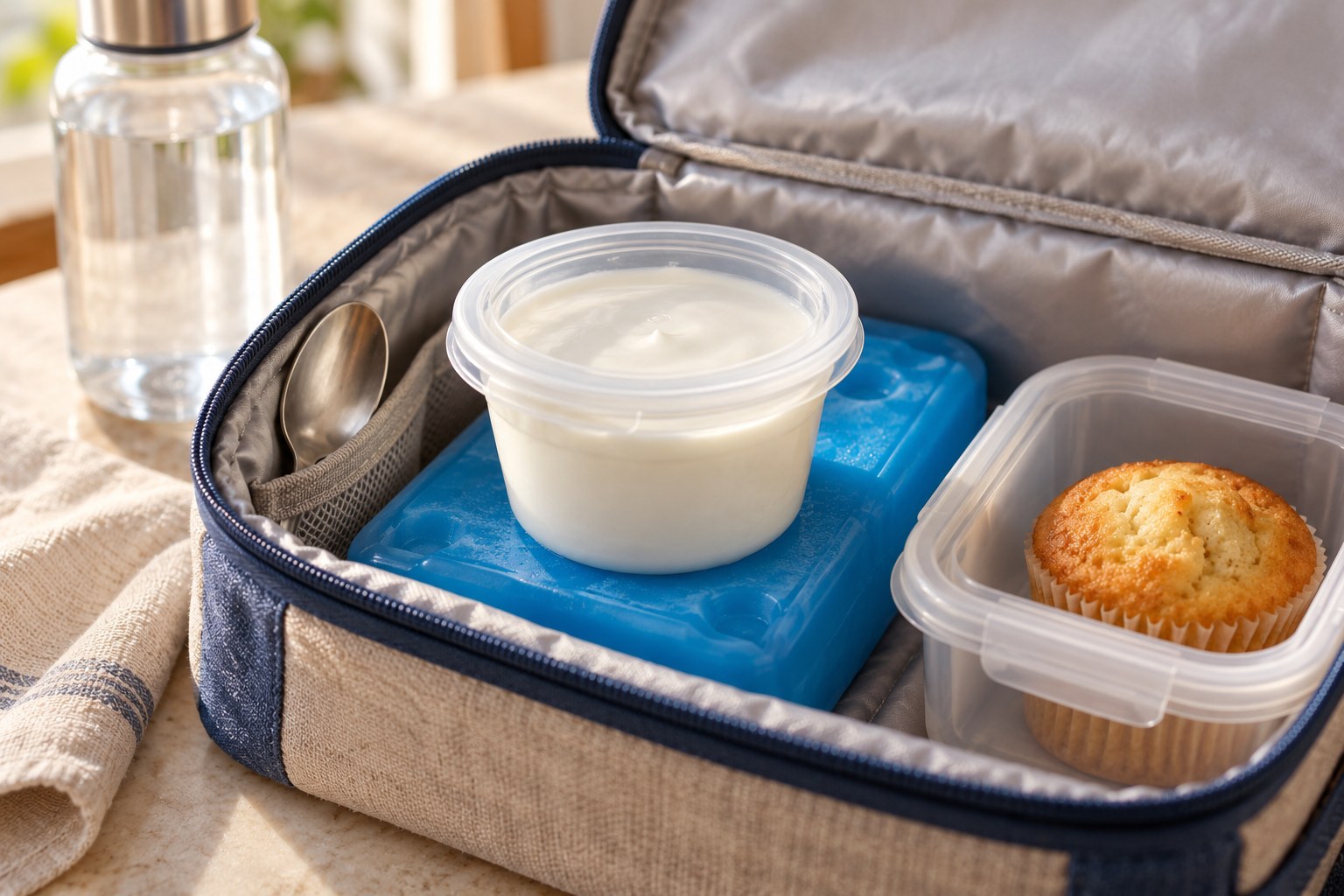
Sometimes a frozen muffin can thaw in a lunchbag, but the result depends on its size, ingredients, starting temperature and environment. Follow appropriate thawing and storage methods. Most importantly, do not rely on the frozen muffin to chill meat, dairy, hummus or other perishable items; use adequate cold packs and an insulated bag when needed.
Are vegan baked goods automatically nut-free or safe for school?
No. Vegan means ingredients are chosen without animal products; it does not exclude nuts, wheat, soy or sesame. The published vegan blondies may contain optional nuts, and a recipe using almond milk may be unsuitable for a tree-nut allergy. Inspect the full formula, labels and cross-contact conditions.
Is the gluten-free blondie recipe also nut-free?
No. The What’s Baking? version uses almond flour in its flour blend, plus eggs and butter. Use a recipe designed for your particular dietary needs instead of assuming “gluten-free” covers other allergies.
Are coconut macaroons the same as almond macarons?
No. Coconut macaroons are typically coconut-based mounds; macarons are a different filled cookie with a different preparation method. The linked vegan coconut macaroon formula has coconut flour or optional almond flour and uses aquafaba rather than eggs. Check the chosen flour and package labels carefully.
How many treats should I pack in a school lunch?
There is no universal number. Consider appetite, age, the main meal, the school’s eating schedule and your family’s preferences. A small baked treat is generally easier to incorporate than several large dessert portions. Ask the child what they find filling and manageable.
Can I replace butter with oil or eggs with flaxseed in any bar recipe?
Not reliably. Some published vegan recipes use flaxseed and vegan butter because their formulas were designed around those ingredients. A different bar recipe may depend on eggs for structure or butter for texture. Find an appropriate recipe for the desired substitution rather than promising that a one-to-one change will work.
What if my school has a peanut-free policy?
Check the complete school policy, including its guidance about tree nuts, sesame and cross-contact. The original blondie and chickpea recipes require careful attention to nut-containing ingredients. Read labels every time and follow any individual allergy plan for your child.
Can I send cream cheese frosting or yogurt with a homemade bake?
Yes, when appropriate for the child and school, but these perishable foods need suitable temperature control. Use an insulated bag and cold packs according to Health Canada’s food-safety guidance. Do not leave a dairy-based topping at room temperature for hours because it is paired with bread.
Should every lunch include a baked item?
No. Baking is one helpful tool, not a daily obligation. Some days fruit, sandwiches, vegetables, leftovers, or another familiar food will be easier and more appealing. Plan around what the child can safely and comfortably eat.
How do I know which What’s Baking? recipe details to trust?
Use the linked individual recipe for its actual measurements and cooking method, and compare the ingredients with any allergy or dietary claim. This article explains lunchbox uses and practical adaptations but does not replace the recipe card. If an adaptation is not tested and published, it should be described as an idea to investigate, not an established formula.
Final thoughts: Bake once, pack thoughtfully
A good back-to-school baking routine is less about filling a freezer with a hundred matching bars and more about having a few dependable options ready when the morning is busy. Choose one sturdy sweet bake, one practical bread or muffin, and some savoury lunch components that your child actually enjoys. Cool and store them correctly, keep allergens and school policies in mind, and pack perishable items at safe temperatures.
If you want an easy place to start, choose the published Mini Muffins for manageable portions or the Herb and Garlic Sandwich Bread for a savoury base. Both offer different strengths and have real ingredient requirements worth checking. The goal is not a perfect-looking lunchbox: it is a realistic, satisfying lunch that arrives in good condition and can be eaten safely.
Cut bars into packable portions. Check school allergen requirements separately. AI editorial illustration.
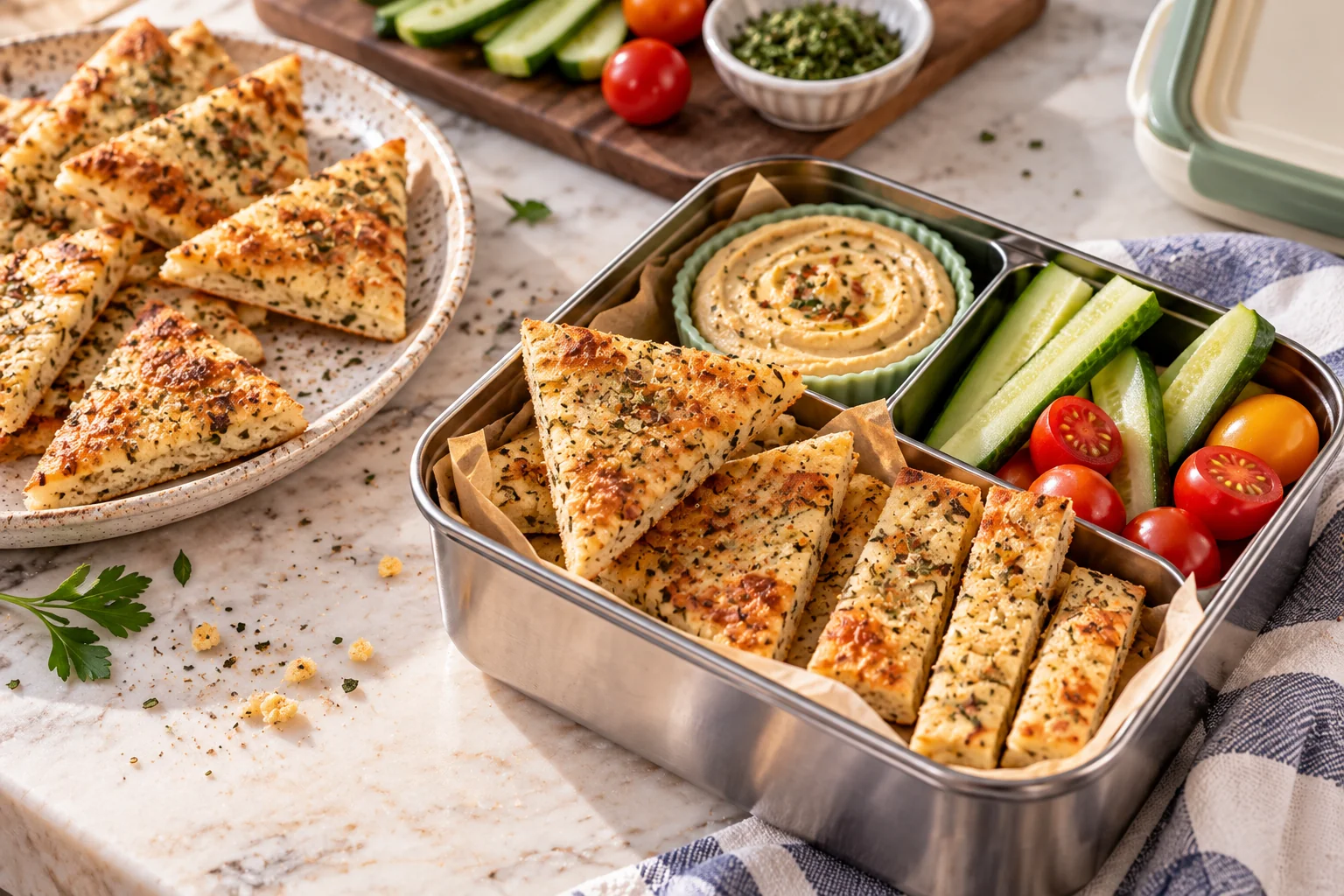
Pack a savory option with vegetables and a small dip. AI editorial illustration.
IN PICTURES
From the baking notebook
FROM THE RECIPE BOX


