
On this page
Salted caramel sauce takes only a short list of ingredients and turns them into something wonderfully complex: deep toasted sugar, a little richness from butter and cream, and salt that keeps the sweetness from feeling flat. Drizzled over apple cake, tucked between brownie layers or spooned onto vanilla ice cream, it's one of those finishing touches that makes a familiar dessert feel special.
Making it at home is less about secret ingredients than timing. Sugar stays pale for a while, then moves through the golden stages quickly. If you have everything measured and know when to remove the pan, you can make a smooth sauce without complicated equipment.
What Is Salted Caramel Sauce?
Classic caramel sauce is made by cooking sugar until it develops an amber colour, then incorporating ingredients such as butter and heavy cream. Salt rounds out the flavour and adds a savoury edge to the sweetness. Its final texture is pourable when warm and often thicker after chilling.
It's different from a chewy caramel candy. A wrapped caramel must reach a more precise final sugar concentration to set correctly. A caramel sauce is formulated to remain spoonable or pourable and works as a topping or filling when the recipe's consistency is suitable.
A Reliable Starting Recipe
For a tested home-baking formula, use King Arthur Baking's Caramel Sauce recipe and its salted variation. The following ingredient amounts are based on that published formulation:
- 198 g granulated white sugar
- 28 g cold water
- 85 g unsalted butter, at room temperature
- 113 g heavy whipping cream
- 1/2 teaspoon table salt for the salted variation
- 1/8 teaspoon cream of tartar, optional
- 2 teaspoons vanilla extract, or the recipe's suggested flavouring alternative
The original formula uses 1/4 teaspoon salt for regular caramel and suggests doubling it for salted caramel. This is a practical starting point, not a requirement that every salted caramel taste equally salty. Follow the linked recipe's exact cooking procedure and adjust salt only within a tested variation and according to your taste after safe cooling.
Why Begin with Sugar and Water?
This method is called wet caramel. Dissolving the sugar in water at the beginning helps it distribute more evenly as it heats. Once the water boils away, the concentrated syrup can caramelize and develop colour.
A dry caramel is made from sugar alone and can also be delicious. However, a wet method often feels more forgiving for beginners because the sugar is less likely to darken in isolated patches before the rest melts.
Equipment You Will Need
Use a clean, deep, heavy-bottomed saucepan, preferably with a light interior so you can judge the caramel's colour. A digital kitchen scale, heat-resistant spatula, measuring spoons and a clean heatproof storage jar will help you work consistently.
Choose a saucepan with extra room above the syrup. Adding cream to hot caramel creates a vigorous rush of steam and bubbles, and an undersized pot can overflow. Protect your hands and keep children away from the stove.
Step 1: Measure Everything Before Heating
Weigh the sugar, water, butter and cream and measure the salt and vanilla. Cut butter into manageable pieces so it can be incorporated gradually. Have your heatproof container ready and positioned away from the burner.
Caramel doesn't allow much time for last-minute measuring. Once the syrup begins to brown, you should be watching the pan, not looking through the refrigerator for cream.

Step 2: Dissolve the Sugar
Combine sugar, water, salt and optional cream of tartar according to the tested recipe. Stir briefly at the beginning if directed, then place the saucepan over the specified heat.
Once boiling begins, follow the recipe's instruction to gently swirl the pan rather than stirring. Excess agitation can encourage sugar crystals to form, which may make the sauce grainy.

Step 3: Cook Until the Syrup Turns Amber
Watch the liquid as the initial water evaporates. The syrup remains relatively clear for a while, then develops light golden patches. Keep an eye on those areas and swirl gently as instructed to even the colour.
For the referenced formula, remove the pan at the recipe's indicated amber stage, before the sugar becomes too dark. The heavy pan retains heat and the caramel can continue browning even off the burner.

Step 4: Incorporate the Butter Carefully
Remove the pan from the burner and add the measured butter according to the recipe, gradually and carefully. The mixture may bubble as water in the butter turns to steam.
Keep hands and face back from the pot. Use heat-resistant utensils, stand on a stable surface and never touch or taste the hot caramel.

Step 5: Add the Heavy Cream Slowly
Pour in the measured cream gradually, following the recipe. Hot sugar and cooler liquid can bubble and steam violently. The tall saucepan is there for safety, not just convenience.
Stir carefully until the mixture is cohesive. If some caramel firms into lumps after the temperature changes, use the recipe's approved method to dissolve them instead of applying uncontrolled high heat.

Step 6: Add Vanilla and Finish the Sauce
Once the sauce is combined, stir in vanilla as directed. Some bakers prefer to evaluate the salt balance after the sauce has cooled enough to taste safely. Remember that the type of salt matters: fine table salt and large flaky crystals don't measure the same way by volume.
Do not add additional water, cream or butter just because the hot sauce appears thin. It thickens as it cools.

Step 7: Let the Sauce Cool Safely
Allow the sauce to cool as the recipe directs before transferring and storing it. Use a suitable heatproof container and follow safe chilling practices for cream-based foods.
Even after vigorous bubbling stops, caramel remains dangerously hot. Never taste it directly from the pot or a freshly coated utensil.
What Does Properly Cooked Caramel Look Like?
A finished caramel sauce usually appears smooth, cohesive and glossy, with a golden-brown colour that becomes lighter after cream is added. When warm, it flows from a spoon. After chilling, the sauce may be much thicker and need gentle reheating for drizzling.
A few bubbles on the surface are normal immediately after cooking. An oily ring, gritty particles or a harsh burnt smell can indicate problems with the formula or technique.

How Much Salt Should You Use?
Salted caramel should have a balanced flavour in which the salt is noticeable but doesn't overwhelm toasted sugar and dairy richness. The referenced tested recipe uses 1/2 teaspoon of table salt for its salted adaptation.
If using a coarse or flaky finishing salt, don't substitute the same volume blindly. Salt grain size changes how much a spoon holds. For consistent results, follow a recipe designed for the particular type of salt.
Does the Cream Need to Be Warm?
Some caramel recipes recommend gently warming cream before adding it to hot sugar to reduce temperature shock. Others are developed for a different cream temperature. Both approaches require careful handling, as hot caramel still foams strongly when liquid is added.
Use the method specified in the formula you've chosen. Don't improvise with a very cold splash of cream simply because the sauce seems too thick.
Why the Sauce Turns Grainy
Unwanted sugar crystals are a common cause. If sugar isn't properly dissolved, or crystals fall from the sides into boiling syrup, the solution may begin crystallizing instead of remaining smooth.
Start with clean equipment, use the measured water and follow the recipe's stirring and swirling instructions. Optional cream of tartar in certain formulas helps discourage crystallization; it isn't a replacement for sound technique.

Why the Caramel Burns
Sugar can change from amber to burnt quickly. Aggressive heat, a thin pan or distraction near the end may leave the sauce harsh and bitter. The cream won't reverse the burnt flavours once the sugar has scorched.
For another attempt, choose a sturdy pan, keep heat under control and remove the caramel at the recipe's target colour. Learn the visual cue before trying a larger batch.
Why the Sauce Is Too Thin
A hot sauce may look runny even when it is perfectly made. Allow it to cool to the recipe's intended serving or storage temperature first. If it remains far too thin, check whether too much cream was added or the sugar and water measurements were incorrect.
Don't try to fix the texture by cooking the sauce to a dark burnt colour. Use the recipe's guidance for adjustments and remember that final consistency depends on the full ingredient balance.
Why the Sauce Is Too Thick
Salted caramel sauce usually thickens in the refrigerator. This is expected and doesn't mean it failed. Warm a small portion gently using the recipe's reheating instructions if you want to drizzle it over dessert.
If it sets unusually hard, review the proportions and cooking process. Avoid repeatedly microwaving the entire jar without checking the glass and heating method are suitable.
Why the Butter Separates
An oily surface can indicate that the mixture has not emulsified correctly, possibly because of temperature or ingredient balance. Controlled mixing according to the recipe may help, but adding more butter to an already separated sauce can worsen the problem.
For persistent separation, use a tested sauce-repair method rather than guessing at additions. Never handle hot caramel aggressively to force it together.
Ways to Use Salted Caramel Sauce
With Apple Desserts
Apple crumble, apple cake, baked apples and apple pie pair naturally with toasted caramel flavour. Use a modest amount so the fruit remains the focus. A warm sauce can be drizzled at the table when the recipe supports it.
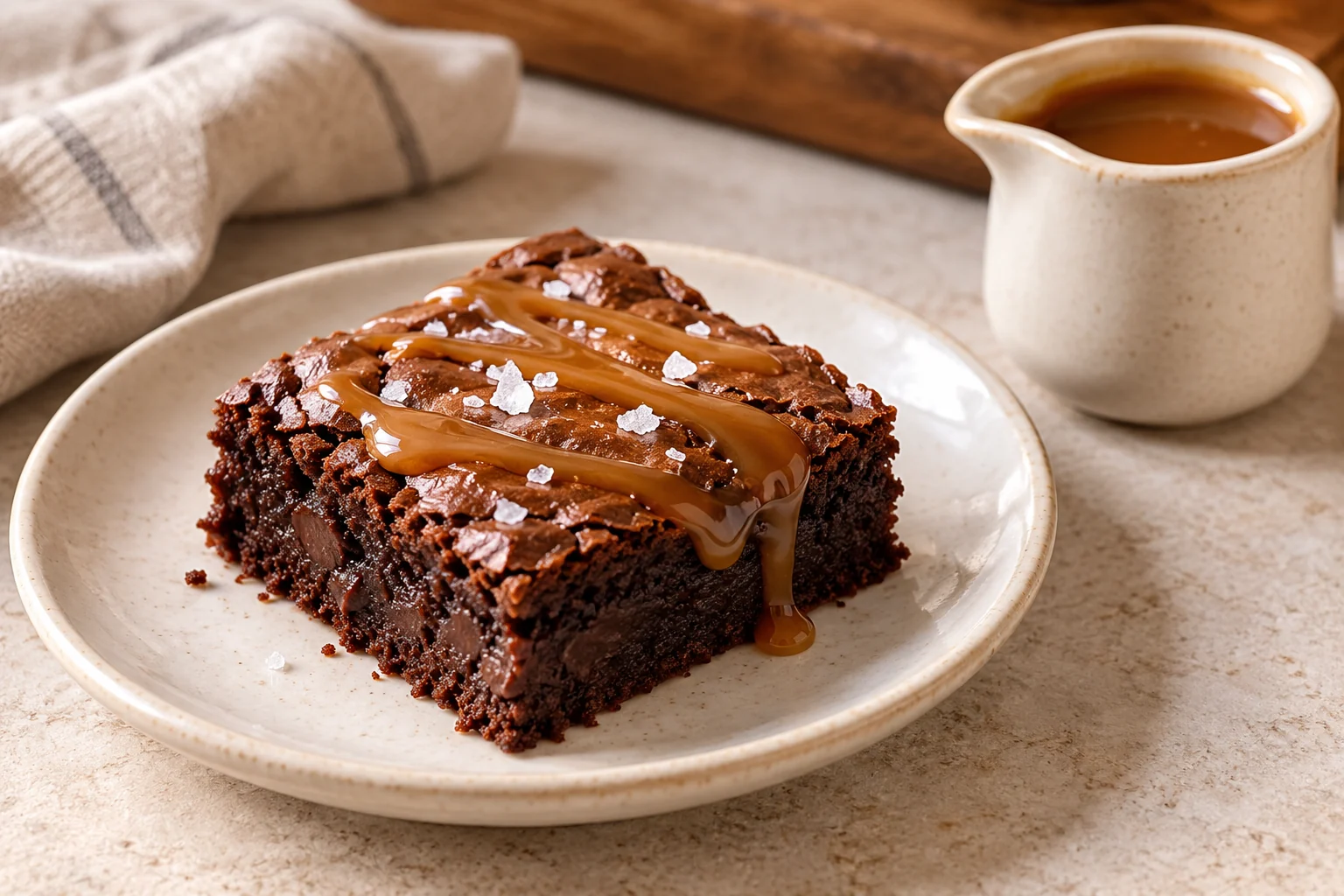
With Brownies and Chocolate Cake
A small ribbon of caramel can balance rich cocoa. For a layered cake, the sauce must be thick enough not to run out between layers, so choose a filling method designed for its texture.
Over Ice Cream
Vanilla ice cream and a little salted caramel make a simple dessert feel complete. Warm sauce only as directed and allow it to reach a safe eating temperature before serving.
In Coffee Drinks
A measured spoonful can flavour coffee or a milk-based drink. Use a sauce that mixes smoothly and keep cream-based caramel under suitable refrigeration between uses.
With Pancakes or Waffles
For a celebratory breakfast, serve a small jug of caramel on the side rather than pouring it over waffles in advance. Adding sauce just before eating helps protect the crisp surface.
Can You Double the Recipe?
Caramel requires careful heat management, and a larger amount of syrup may take longer to cook and cool. Doubling every ingredient without considering pan capacity and bubbling can create a safety problem.
For reliable results, make two original-sized batches unless the recipe developer gives specific large-batch directions. A deep saucepan and a clear work area matter even more with larger quantities.
Storage and Refrigeration
Homemade caramel sauce containing cream and butter is perishable. Refrigerate it according to the tested recipe; King Arthur Baking directs that its caramel sauce be stored in the refrigerator and briefly reheated before serving as needed.
Don't assume high sugar concentration makes a homemade dairy sauce shelf-stable. For longer storage or gifting, follow a validated formula and applicable food-safety requirements rather than using ordinary room-temperature jars.
Frequently Asked Questions
Can I make salted caramel without a candy thermometer?
Yes, if you use a sauce recipe designed around clear visual cues for the amber stage. Precise chewy caramel candies are a different project and benefit from a thermometer.
Why did my caramel sauce harden when I added cream?
The cooler cream may have caused some hot sugar to firm temporarily. Follow the recipe's gentle method for dissolving lumps; don't use uncontrolled high heat.
How do I make caramel sauce less sweet?
A slightly deeper amber colour and the correctly measured amount of salt may provide a more balanced taste, but avoid cooking to the point of burning. Use a tested recipe for any major sugar adjustment.
Can I use milk instead of cream?
Not as a direct replacement unless the recipe permits it. Cream's fat and water balance affect richness, texture and the finished emulsion.
Is salted caramel the same as butterscotch?
They can taste similar, but classic caramel generally begins with caramelized granulated sugar, while many butterscotch sauces are based on brown sugar and butter and follow different methods.
Make a Sauce Worth Saving
The best salted caramel sauce is deep, smooth and balanced, not simply the sweetest sauce you can make. Measure carefully, use a trustworthy recipe, stop the sugar at the right amber stage and treat hot caramel with respect. Once you know the sequence, you'll have a versatile topping for everything from ice cream to holiday cakes.
Related recipe: Salted Caramel Cream Pie.
Images are AI editorial illustrations of the baking technique.
IN PICTURES
From the baking notebook
FROM THE RECIPE BOX


