On this page
You heat the cream, pour it over chopped chocolate, stir—and instead of silky ganache, the mixture turns dull and grainy. Perhaps a shiny ring of oil appears around the bowl, or the chocolate becomes thick and clumpy just when it should be smooth. It's frustrating, but a broken ganache often can be brought back together.
The useful first step is understanding what went wrong. Ganache is an emulsion: droplets of fat from chocolate and cream must be distributed through a water-containing mixture, along with sugar and cocoa particles. When that balance is disturbed by too much heat, insufficient liquid or abrupt temperature changes, the smooth texture can disappear.
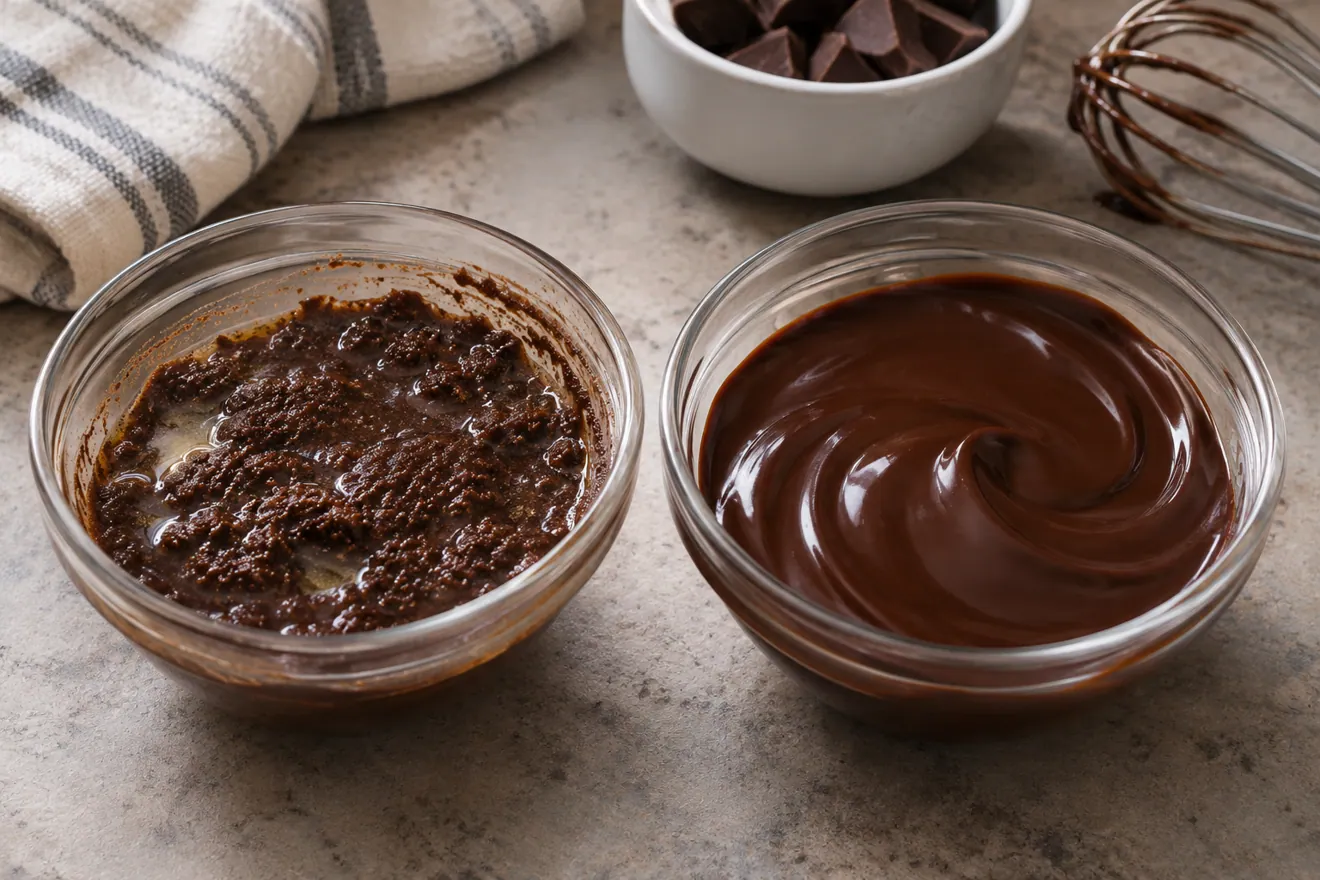
What Does Split Ganache Look Like?
A well-made ganache is smooth and cohesive, often with a gentle sheen. Broken ganache may look oily, separated, gritty, curdled or unusually stiff. You might see pools of fat at the edge or tiny lumps that do not disappear as you stir.
But not every lump means the emulsion has broken. Undermelted chocolate pieces can remain in an otherwise smooth mixture. If the ganache is cool and contains distinct firm pieces, the solution may be gentle warming rather than an emulsion repair.
The Two Main Reasons Ganache Breaks
Excess heat: overheating can destabilize the mixture and cause fat to separate. This may happen when cream is boiling aggressively, chocolate is heated too long in a microwave or ganache is repeatedly reheated to melt one last stubborn piece.
Insufficient liquid for the chosen chocolate: very dark chocolate contains more cocoa solids and often needs a different cream ratio from milk or white chocolate. Too little water-containing liquid can leave an emulsion that is stiff, rough and unstable.
Temperature shock may also cause trouble, particularly when very cold cream is added suddenly to a warm mixture and solidifies some fat before it can blend evenly.
Before You Fix It, Stop Adding Heat
If the ganache has become oily or grainy while you are microwaving, pause. More heat is not always the answer; it may worsen the separation. Move the bowl away from the heat and examine the texture.
If you can still see isolated solid pieces of chocolate in a mostly smooth liquid, gentle, brief warming with mixing may be appropriate. If the mixture has separated into fat and grainy solids, start with an emulsion-repair method instead.
A Gentle Repair Method: Warm Liquid, a Little at a Time
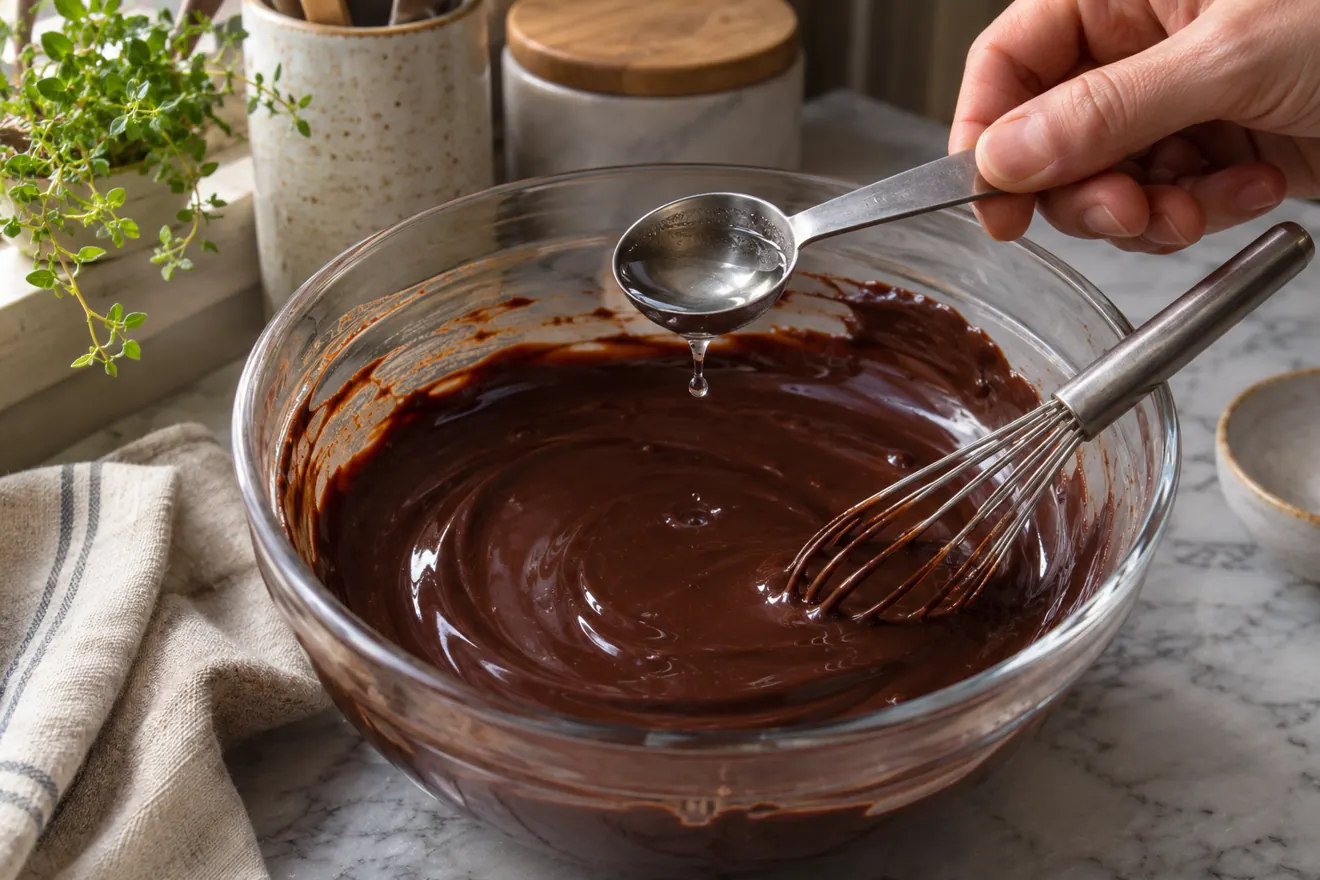
Whisk in a small amount of warm water and check the texture before adding more. Stop as soon as the mixture is smooth.
The suggested warm-water range is approximately 90–95°F (32–35°C), and a teaspoon is a sensible initial amount for a typical home batch.
This sounds counterintuitive if you've heard that water ruins chocolate. A tiny accidental splash into plain melted chocolate can make it seize; a controlled addition of sufficient liquid to an existing ganache can instead help restore an emulsion. The total balance and how the water is introduced make the difference.
Step 1: Assess the Batch
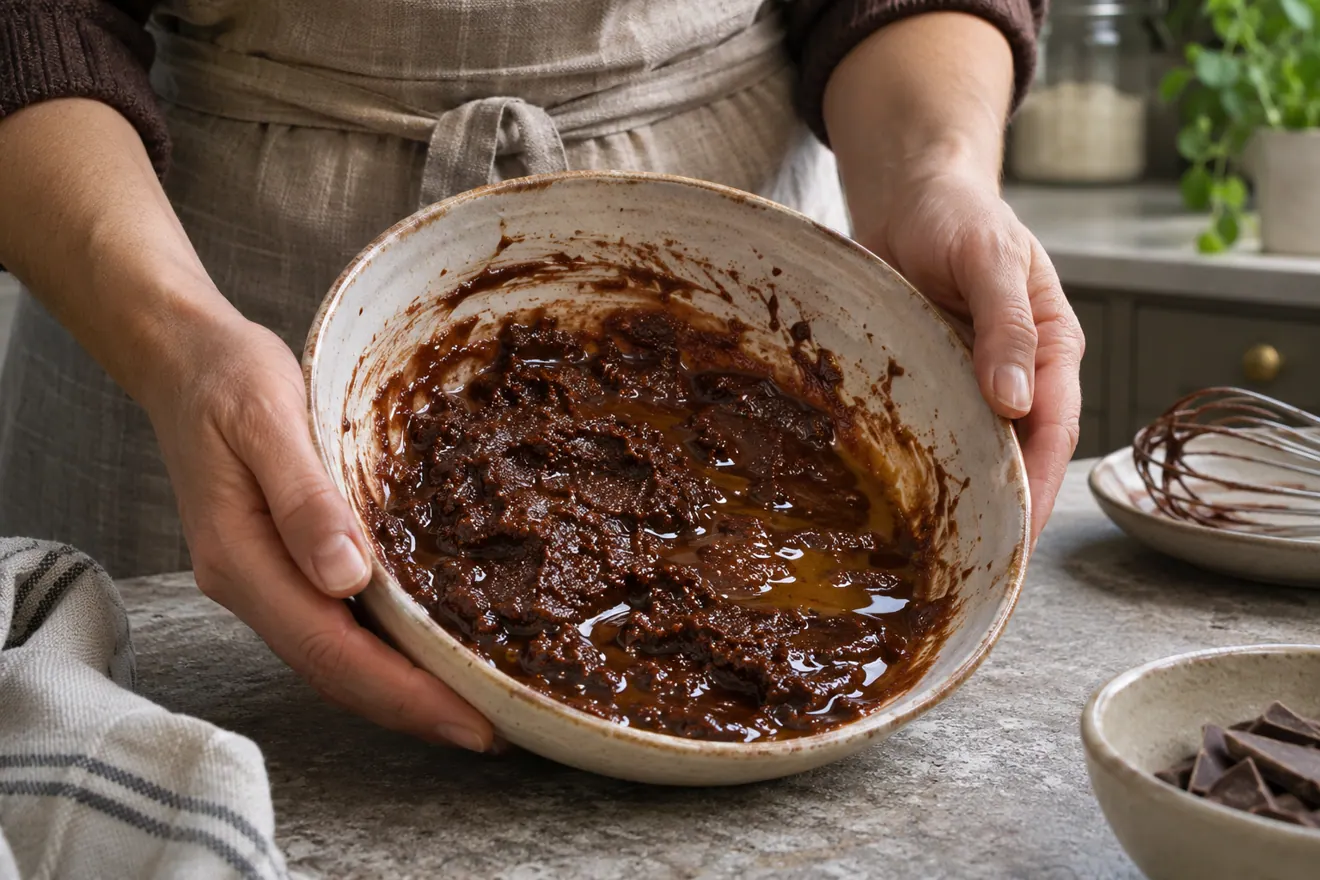
Look for separated oil, coarse graininess or a very stiff chocolate mixture. If the ganache is very cold, it may need gentle warming to become workable; if it is piping hot, allow it to cool toward a warm, manageable temperature.
Do not attempt to repair burnt chocolate. If it smells scorched and tastes acrid after cooling, the underlying flavour is damaged even if the texture improves.
Step 2: Prepare Warm Water
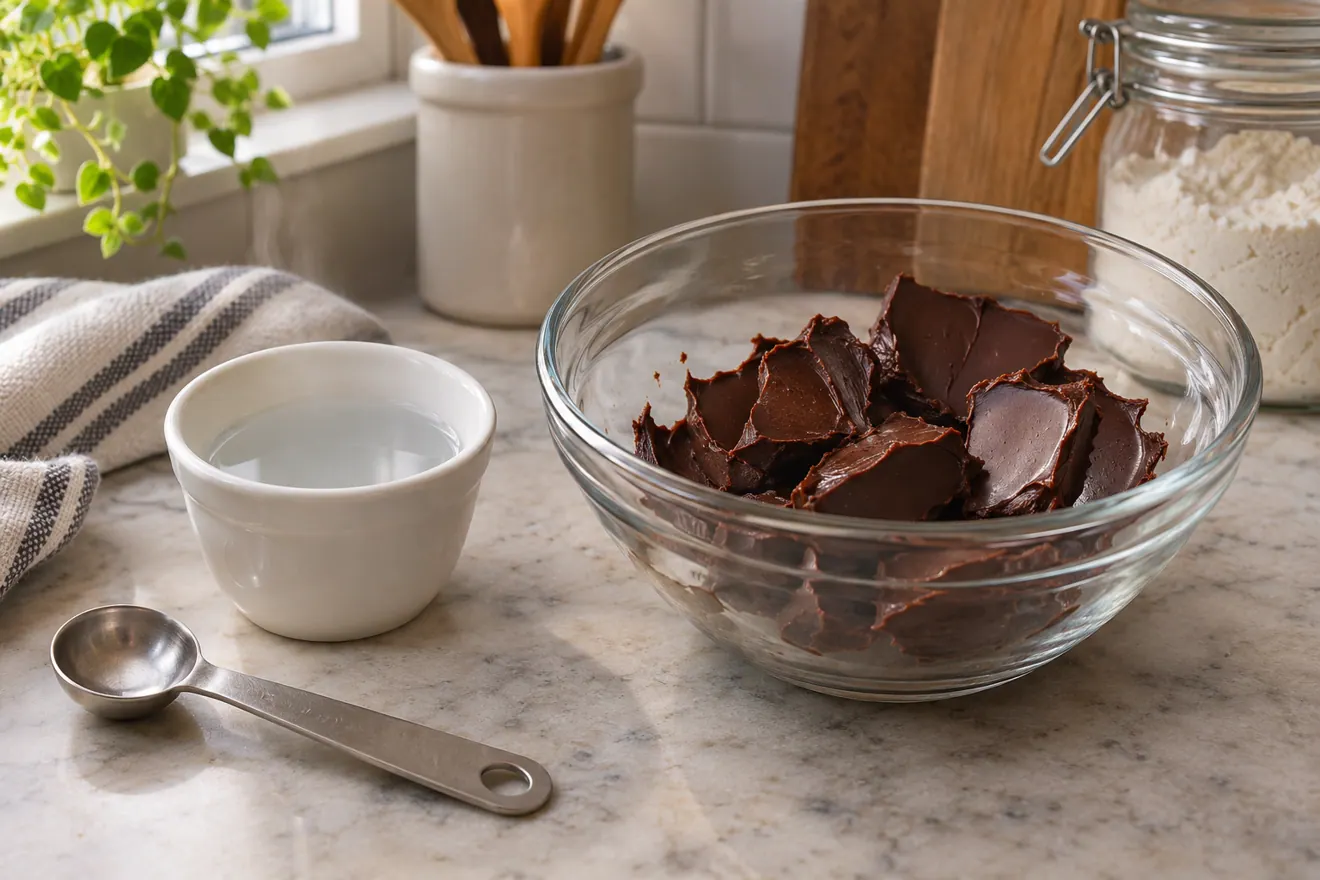
Use clean warm water in the range recommended by the repair method, rather than boiling water. Keep it in a small cup with a teaspoon so you can add precise amounts.
For food safety, ensure all tools and the bowl are clean. If the original ganache has spent too long at unsafe temperatures or otherwise shows spoilage, texture repair cannot make it safe.
A thermometer makes the difference between comfortably warm and hot easier to judge.
Step 3: Add a Small Amount and Whisk
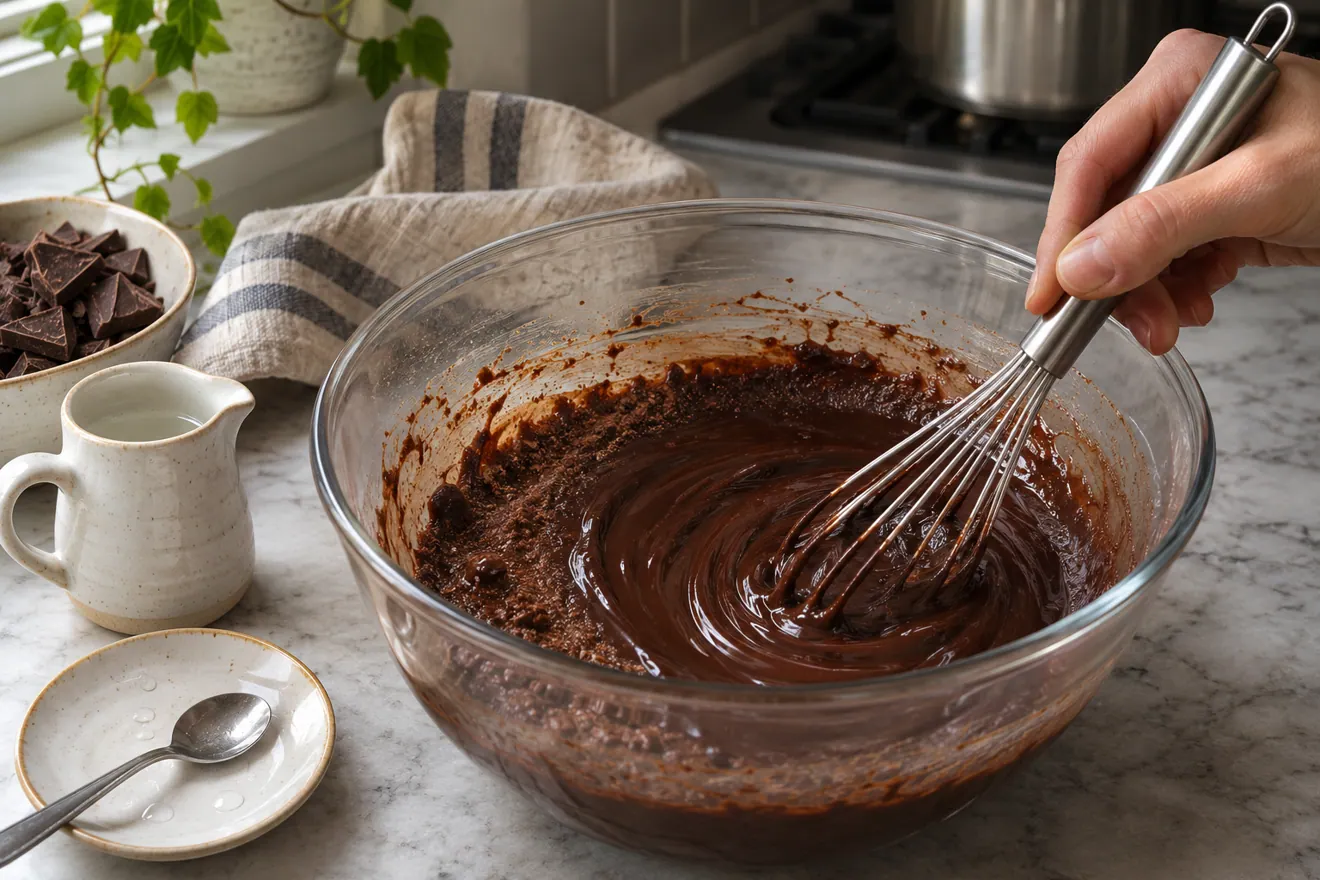
Add approximately one teaspoon of warm water to the separated ganache and whisk carefully. At first, the mixture may look no better. Continue working the liquid in and assess whether the surface begins to regain a unified gloss.
Do not pour in half a cup at once. Too much added liquid can produce ganache that is much thinner than your intended cake filling or truffle centre.
Step 4: Repeat Only as Necessary
Continue with small additions, whisking between each one, until the ganache comes together. You are looking for a smooth, cohesive texture rather than an oily outer layer around a grainy middle.
Once it is repaired, stop adding liquid. The finished consistency will continue to change as it cools, so don't judge final thickness while the ganache is still warm.
Test the technique on a few spoonfuls before adjusting a large batch. If the sample comes back together, use that texture as your cue while you work on the rest.
Step 5: Let the Ganache Set Before Using
Cover and cool the repaired ganache according to the original recipe's requirements. If it is intended as a filling, wait until it reaches the stated spreadable consistency. If it is for a drip, allow it to cool until it flows at the right speed.
Because adding water alters the original ratio, an exact recipe yield or firmness cannot be guaranteed after repair. Test a small amount before using the entire batch on a decorated cake.
Can Warm Cream Fix Ganache Instead?
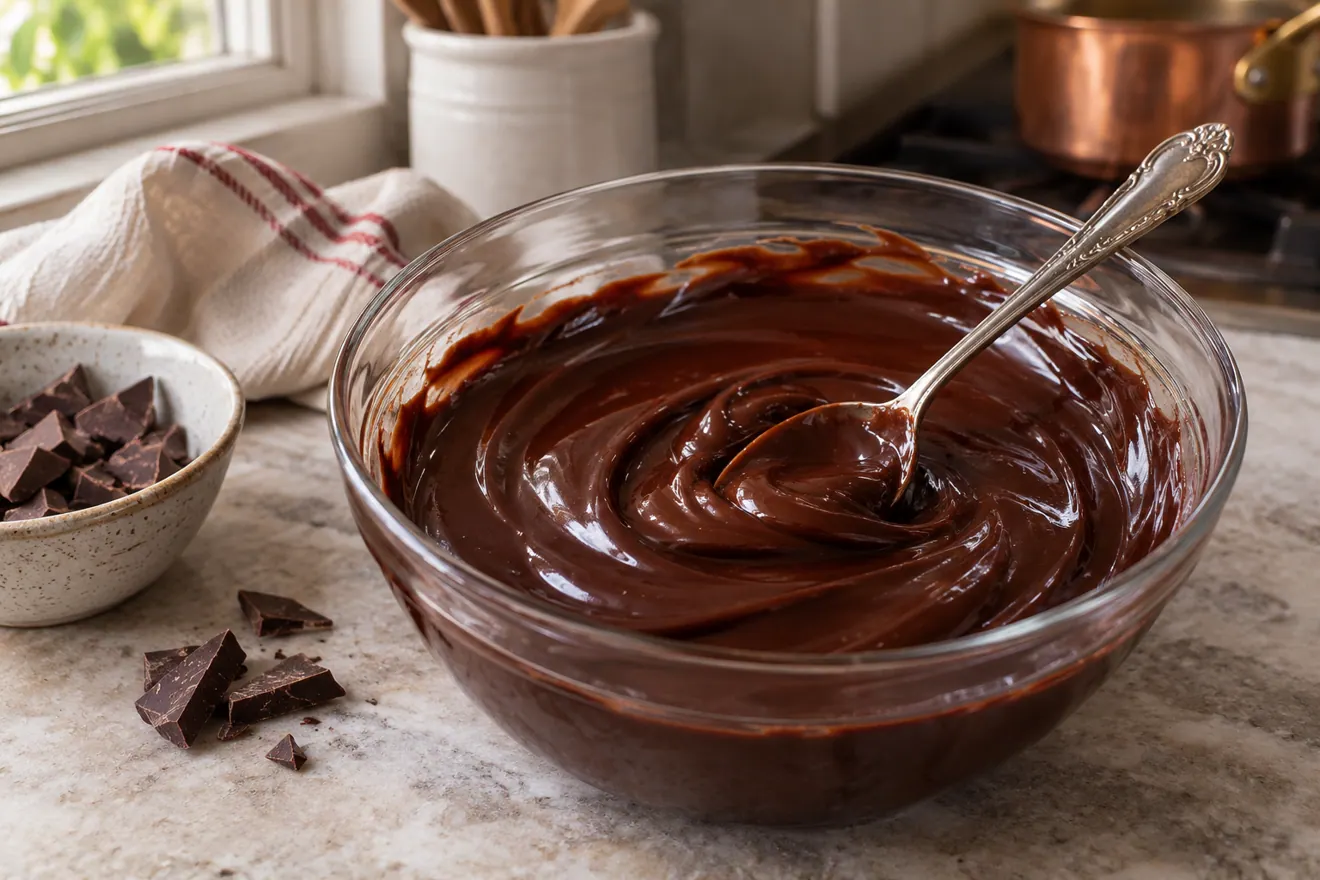
Some recipes and pastry chefs use warm cream to adjust a stiff ganache. Cream contributes both water and fat, so it isn't identical to adding warm water. The correct approach depends on the original formula and why the emulsion separated.
For a simple broken-chocolate-and-cream ganache, follow one well-tested repair method rather than switching repeatedly between water, cream, butter and oil. Adding extra butter to an already oily ganache often makes the imbalance worse.
When an Immersion Blender Helps
An immersion blender can make a very fine emulsion when used correctly. Keep the head submerged to limit air bubbles, use short controlled pulses and avoid incorporating unnecessary air. A tall, narrow vessel can help on suitable batches.
Blending alone won't always repair a mixture with insufficient liquid. If you're using a recipe that specifies an immersion-blender repair, follow its ingredient and temperature instructions rather than overprocessing a bowl until it becomes warmer.
Why Very Dark Chocolate Can Be Tricky
Chocolate labelled 70%, 80% or higher may behave differently from semisweet chocolate with a lower cocoa percentage. Darker chocolate often contains more cocoa solids and less sugar, changing the balance needed for a smooth ganache.
Don't automatically use a white-chocolate or milk-chocolate cream ratio with very dark chocolate. A formula designed for your specific chocolate is more reliable than a universal one-to-one rule.
What if the Ganache Is Thick but Not Split?
Ganache naturally thickens as chocolate fats crystallize during cooling. A smooth, firm bowl with no oil separation may be behaving exactly as intended. Gently warm or soften it according to the recipe if you need a pourable texture.
A ganache made for truffles is supposed to set more firmly than a cake glaze. Avoid “fixing” a properly set mixture by adding liquid without checking the intended consistency.
What if the Ganache Is Too Runny?
A runny ganache may be warm rather than broken. Allow it to cool for the recipe's recommended time, because thickness can increase dramatically as it sets.
If the formula contains too much cream, simply whisking longer may not fix it. Use a tested adjustment for that chocolate and application instead of dumping in random chocolate pieces that may not emulsify fully.
How Temperature Affects Ganache Texture
A ganache that's warm enough to pour can become firm when chilled. Heat changes the state of cocoa butter and milk fat, while cooling allows the fat network to form. Sudden temperature changes can also encourage separation if the emulsion isn't stable.
Warm cream should be introduced as the recipe directs, and chocolate should be chopped sufficiently small to melt evenly. Avoid both aggressively boiling the cream and overheating chocolate to eliminate stubborn bits.
Fixing Ganache for a Cake Drip
A repaired ganache may be suitable for a drip if it has regained smoothness and the flow is correct. Test one small drip down a cold cake or the side of a chilled glass before pouring the whole batch.
If the drip runs to the bottom, the ganache may be too warm or thin. If it stops immediately at the top, it may be too cool or thick. Let temperature and consistency guide you before changing the formula.
Fixing Ganache for Truffles
Truffles need a firmer set than drips. Added water may change final firmness, so chill and assess a repaired batch before shaping. If it remains too soft, the most reliable option may be using it as a sauce or filling for another dessert rather than forcing it into truffle balls.
Only use it if it has been handled and stored safely. A successful texture repair doesn't extend the ganache's safe storage life.
For an example of a ganache firm enough to portion after chilling, see Keto Chocolate Truffles. The recipe demonstrates what to look for when you scoop a test piece.

How to Prevent Ganache from Splitting Next Time
Chop chocolate uniformly, weigh it accurately, use the cream ratio specified for the chocolate type, heat liquid gently, and stir until smooth without excessive reheating. When using a staged cream-addition technique, begin by creating a smooth elastic centre and gradually incorporate the remaining liquid.
If your ganache repeatedly breaks, write down the chocolate brand, cocoa percentage, cream fat percentage and temperature. Changing all four between batches makes the problem difficult to diagnose.
Storage and Food Safety
Refrigerate homemade cream ganache and desserts filled or frosted with it at 4°C (40°F) or colder. Limit room-temperature handling and serving to a total of two hours. Divide large amounts into shallow clean containers to refrigerate promptly, and use the shortest storage time given for any component.
Discard ganache that has sat out beyond the safe window. Repairing the emulsion changes its texture only.
Frequently Asked Questions
Can you rescue grainy ganache?
Often, yes. When the problem is a broken emulsion, a small amount of warm liquid whisked in gradually can restore smoothness.
Why does adding water sometimes fix chocolate?
A small accidental amount of water can seize plain melted chocolate, while carefully adding more liquid to a ganache can help restore a stable emulsion. The context and total liquid proportion matter.
Will the repaired ganache set as firmly?
Not necessarily. Extra liquid changes the recipe ratio, so test the consistency after cooling before using it for truffles or structured fillings.
Can I keep heating until the lumps disappear?
Not if the mixture is already oily or split. More heat may worsen the separation. Distinguish unmelted chocolate pieces from an unstable emulsion first.
Does split ganache mean the chocolate is bad?
No. Split ganache is often a technique or ratio problem. Spoiled ingredients or unsafe handling are a separate issue and should not be ignored.
Save the Ganache, Learn from the Batch
Once the ganache looks glossy again, try it in a spoonful-sized test for your intended use. A mixture that flows as a cake glaze can still be too soft to roll into a truffle. Record the amount of water you added so you can adjust your next batch.
Some images are AI-generated illustrations of the dishes and techniques described.
IN PICTURES
From the baking notebook
FROM THE RECIPE BOX


