
On this page
A cream puff can emerge from the oven wonderfully crisp and become soft an hour after filling. A fruit tart shell can look perfectly golden yet lose its crunch once it meets pastry cream. Moist filling naturally migrates into dry pastry, so the solution is a combination of proper baking, cooling, moisture barriers and assembly timing—not simply adding more flour to the crust.
Why pastry gets soggy
Crisp pastry contains comparatively little free water after baking. Pastry cream, whipped cream, fruit, custard and jam contain much more moisture. When they're placed in direct contact, moisture moves into the pastry and softens its structure. The longer the contact, the greater the potential loss of crispness.
Start with a thoroughly baked shell
A pale, underbaked shell has little chance of resisting a wet filling. For choux pastry, the walls need to be dry enough not to collapse as steam condenses. King Arthur Baking advises checking that cream puff interiors are dry instead of trusting the exterior's colour alone.
Dry choux after baking

Some cream puff formulas direct bakers to make a small slit and return the shells briefly to the oven to release steam. Others split the cooled shells so their interiors can dry. Follow the actual recipe rather than opening the oven at an arbitrary early stage, which could cause unbaked puffs to collapse.
Cool before filling
Warm pastry can produce condensation when it meets cold cream and may soften butter- or chocolate-based fillings. Transfer shells to a rack and allow complete cooling as directed. Once cool, handle them in a clean, dry environment and avoid sealing them while steam remains.
Fill close to serving
For cream puffs and éclairs, King Arthur Baking recommends filling shortly before serving because wet cream eventually softens the crisp shells. A tested mini puff recipe suggests filling within about an hour of service for best texture. That is a quality recommendation, not permission to leave cream unrefrigerated.
Keep shell and filling separate when possible
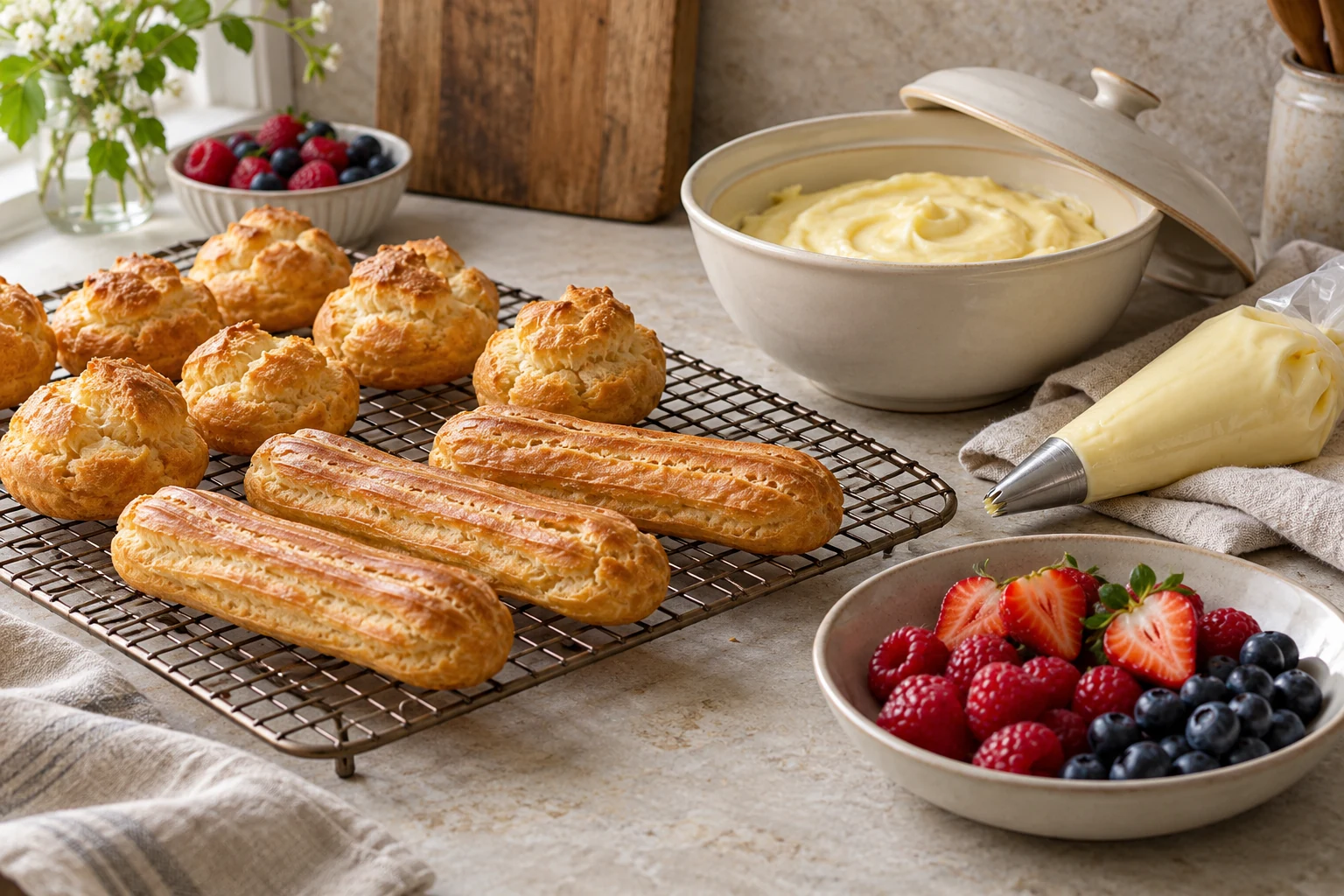
For entertaining, bake shells ahead according to the recipe and prepare pastry cream in advance under proper refrigeration. Store the components separately, then pipe the cream and finish with icing near service. This often gives a better texture than fully assembling everything the previous night.
Fruit tart shell preparation
A tart shell intended for cold pastry cream generally needs to be fully baked, not merely lightly coloured. Let it cool before adding filling. Choose a sweet tart dough formulated for a crisp finish and follow its blind-baking procedure.
Chocolate as a moisture barrier

Some tart recipes use a thin layer of melted chocolate or cocoa-butter-based coating inside a cooled shell to reduce direct contact with cream or wet fruit. It must be applied evenly and allowed to set according to a tested method. A very thick layer makes the tart harder to slice and changes the flavour.
What about egg wash?
A cooked egg-wash barrier is used in some blind-baked crust methods, but raw egg wash must be heated adequately according to the recipe. Do not brush raw egg into a finished shell and immediately fill it with cold cream. A barrier is only useful when properly prepared and food-safe.
Drain or dry fruit appropriately

Fresh berries should be washed and dried before arranging. Canned fruit and poached fruit may need measured draining according to the tart formula. An excessive pool of fruit juice can soak into cream and pastry quickly, regardless of how carefully the shell was baked.
Choose the correct filling consistency

Pastry cream should be cooked and chilled until properly thickened. Diplomat cream may be lighter and need stabilization when used for certain cakes. Very loose cream can run into pastry layers and accelerate sogginess. Use a recipe designed for the dessert's shape and serving window.
Don't overfill
A huge mound of cream creates more weight and moisture than a small tartlet or puff may support. It can split shells or squeeze filling through seams. Pipe measured portions and keep the filling inside the pastry walls rather than flooding the top.
Puff pastry needs complete baking
Laminated puff pastry can look golden while its thick interior layers remain soft. For mille-feuille and similar pastries, the recipe may use docking, weights or a second crisping stage to create even, dry sheets. Don't assemble a layered pastry with underbaked interior dough.
Cream-filled mille-feuille

Stacking cream between crisp puff sheets creates a contrast that's best near serving. Longer holding softens the layers, so a production schedule may call for pre-baked pastry sheets and separately chilled cream. If the dessert is intentionally made ahead, follow a pastry formula designed for that holding time.
Hand pies and fruit turnovers
Baked fruit fillings release steam and juice inside pastry. A sealed turnover requires proper filling quantity, edge sealing and vents where specified. Underbaking the bottom leaves softness that won't be cured by a dusting of sugar.
Why reheating filled cream pastries is unsafe or ineffective
A custard-filled éclair is not equivalent to an empty pastry shell. Oven reheating can melt or spoil cream texture and may create food-safety issues. If an assembled pastry has become soft, follow the complete recipe's handling guidance rather than attempting to crisp its shell with the filling inside.
Refrigeration is still essential
Pastry cream, whipped cream, crème diplomat and many dairy- or egg-based fillings require refrigeration at 4°C/40°F or colder. A moisture barrier does not make them safe to keep at room temperature. Use chilled transport and sensible service windows.
How to plan a dessert table
Bake and cool empty pastries first. Prepare fillings and refrigerate them separately. Dry fruit and portion garnishes shortly before guests arrive. Assemble small batches progressively when practical, keeping remaining perishable components chilled.
Troubleshooting a soft base
Was the shell fully baked? Did it cool before filling? Was the fruit wet? Was filling added far too early? Is the filling unusually loose? Change the one factor most likely to matter rather than covering soggy pastry with extra crumbs or a thick chocolate cap.
Frequently asked questions
Can you make cream puffs the night before? Often the empty shells, yes, following the recipe. Should pastry cream be cold before piping? Generally according to its recipe. Will chocolate stop all moisture migration? No. Can you leave filled éclairs out overnight? No. What helps the most? Fully baked shells and filling near service.
Protect the contrast
The reason filled pastry is memorable is the difference between a crisp shell and soft filling. Bake the shell well, cool it fully, prepare moisture carefully and assemble close to serving where possible. Preserve that texture without compromising cold-chain safety.
Related recipe: Lemon Cream Puffs.
IN PICTURES
From the baking notebook
FROM THE RECIPE BOX


