On this page
Puff pastry depends on many thin layers of dough and fat. When you cut through those layers, a clean edge gives them room to expand in the oven. A dull knife, dragging pizza wheel or firm finger pressure can squash the edges together and limit the rise. Proper cutting is not complicated, but it rewards cold pastry, a sharp tool and deliberate movements.
Why cutting affects puff
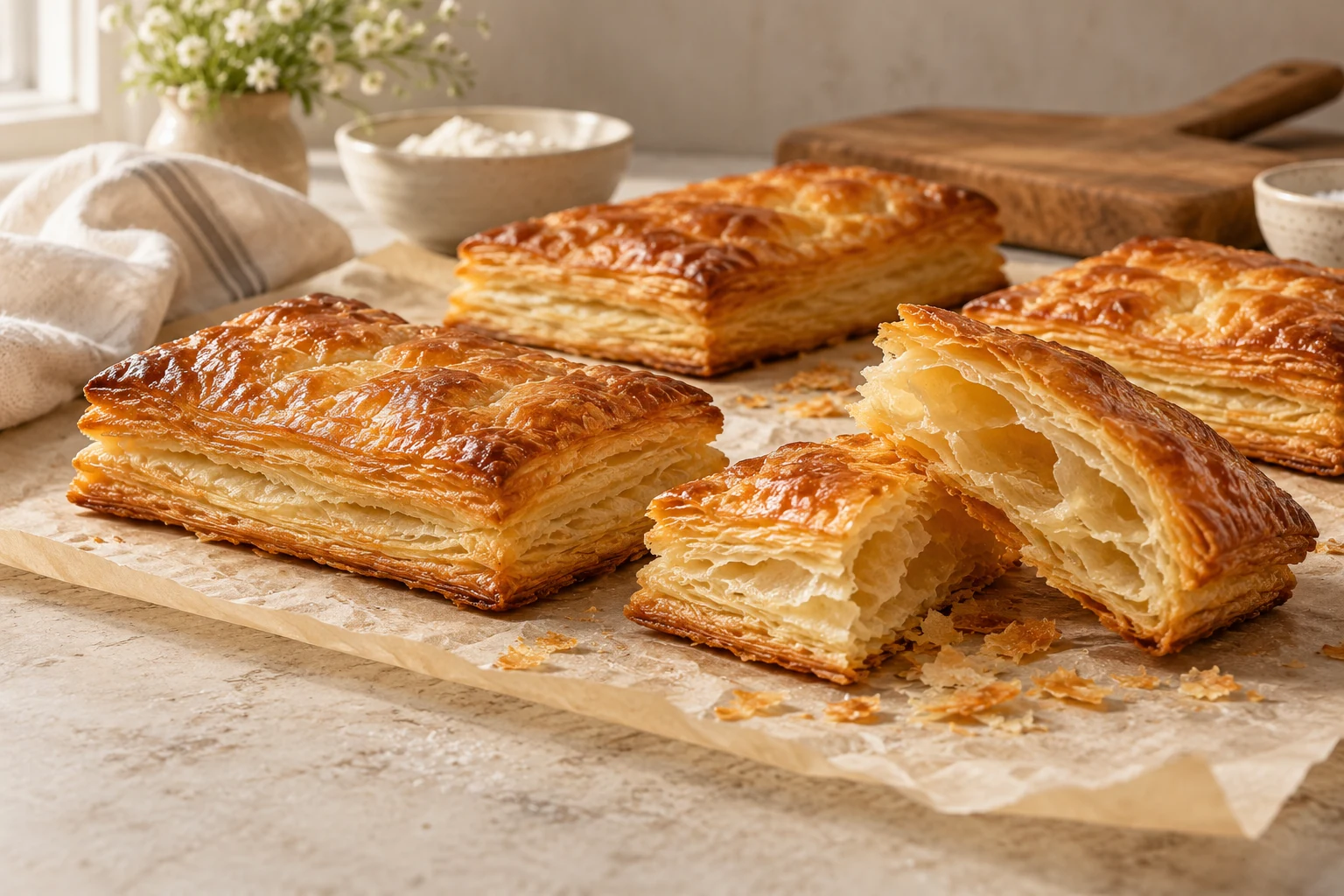
During baking, fat melts and moisture produces steam that helps separate the laminated dough layers. If an edge is smashed together, the layers may remain fused in that area. The pastry can rise unevenly or develop a dense, hard rim instead of an attractive stack of flakes.
Start with chilled, workable pastry
Puff should be cool enough that its fat remains structured, yet pliable enough not to crack when unfolded. Frozen pastry usually needs its manufacturer-prescribed thawing period. If the sheet becomes greasy or stretchy while working, refrigerate it briefly rather than pressing harder.
Choose a very sharp straight knife
A thin, sharp chef's knife or long blade can cut through pastry cleanly when used appropriately. For most straight cuts, use a decisive downward motion rather than a long sawing action that drags the dough. Keep fingers safely clear and use a stable cutting surface.
Pastry wheels can work too
A sharp pastry wheel is convenient for long strips or lattice work, but a dull wheel may mash layers as it rolls. Apply only the pressure needed to cut through the sheet. If the wheel tugs at the pastry or leaves a shiny compressed edge, switch tools.
Avoid serrated sawing
A serrated knife can snag and drag cold pastry depending on the blade and method. For raw laminated sheets, a clean vertical or swift single-direction cut is often preferable. Use the tool suggested by the pastry recipe for shaped items.
Do not crush the edge with fingers
Picking up delicate cut pieces by squeezing their sides can fuse thin edges and deform the shape. Transfer them with a thin spatula or gently support the base. Leave enough spacing on the baking sheet for expansion.
Work on a lightly floured surface
A small amount of flour may prevent sticking, but heavy dust can dry pastry or keep seams from sealing where they need to. Brush excess away. If the sheet begins sticking because the butter has warmed, a cold rest is usually better than repeatedly adding flour.
Measure first, cut once
Mark even strips or rectangles with a ruler or small guide before cutting. Consistent sizes help pieces bake evenly. Crooked pieces can still be delicious, but they may brown at different rates or cause awkward joins in a tart or turnover.
Cutting rectangles and squares
Use a straightedge to guide the blade if safe for your equipment, measuring the size the recipe calls for. Lift cut pieces gently onto a lined pan, keeping their original proportions. Avoid stretching one rectangle to make it match another.
Cutting circles

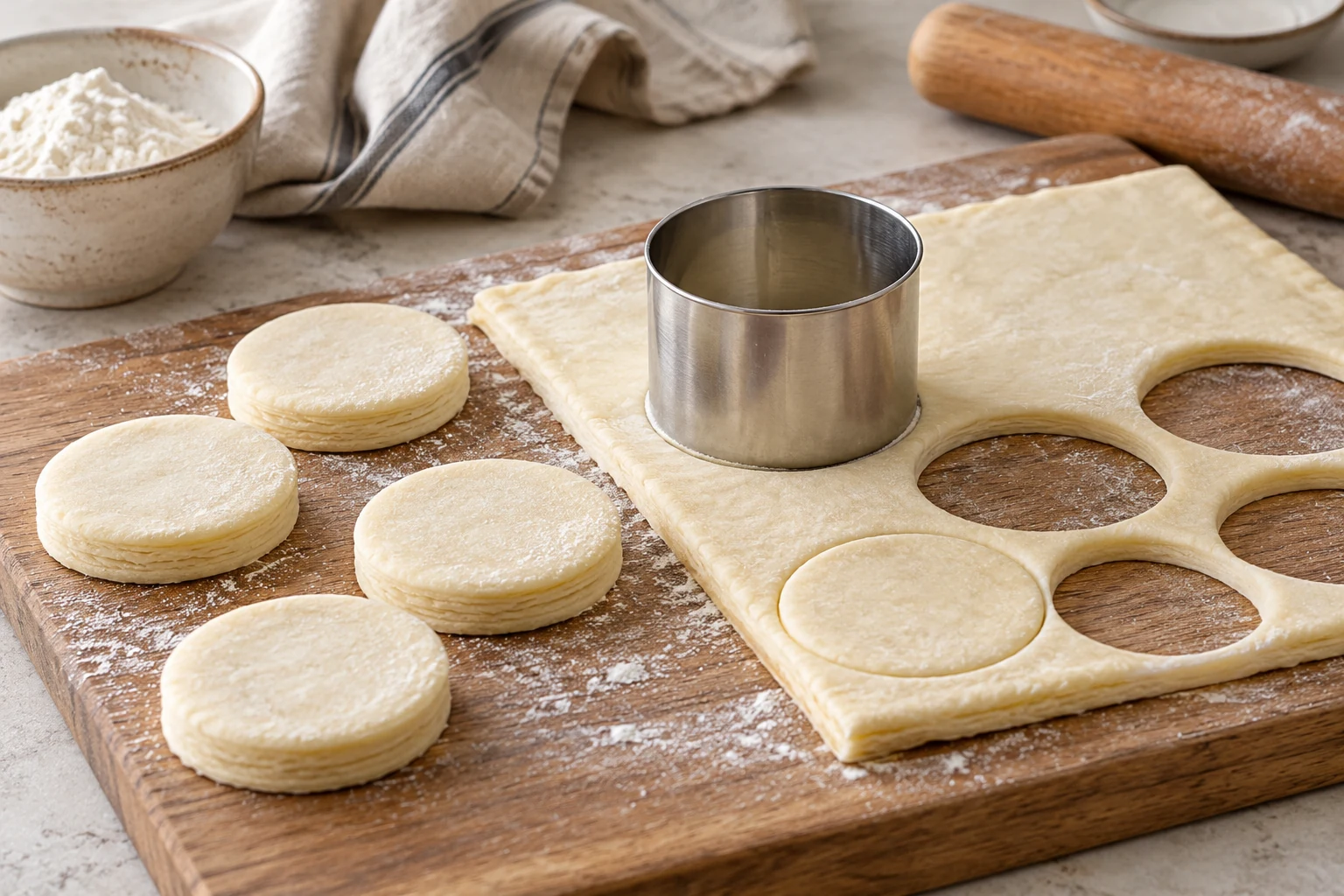
A sharp pastry cutter can make clean rounds for vol-au-vents or tartlets. Press down rather than twisting the cutter, which can distort or pinch the edge. Lift the ring carefully. Some recipes use two sizes to create a raised border.
Why twisting cutters is unhelpful
A twisting motion can drag dough around the edge instead of making a straight cut, potentially compressing layers. Using a firm downward press gives a cleaner edge. Similar advice applies to many laminated biscuits, although each dough has its own handling requirements.
How to score without cutting through
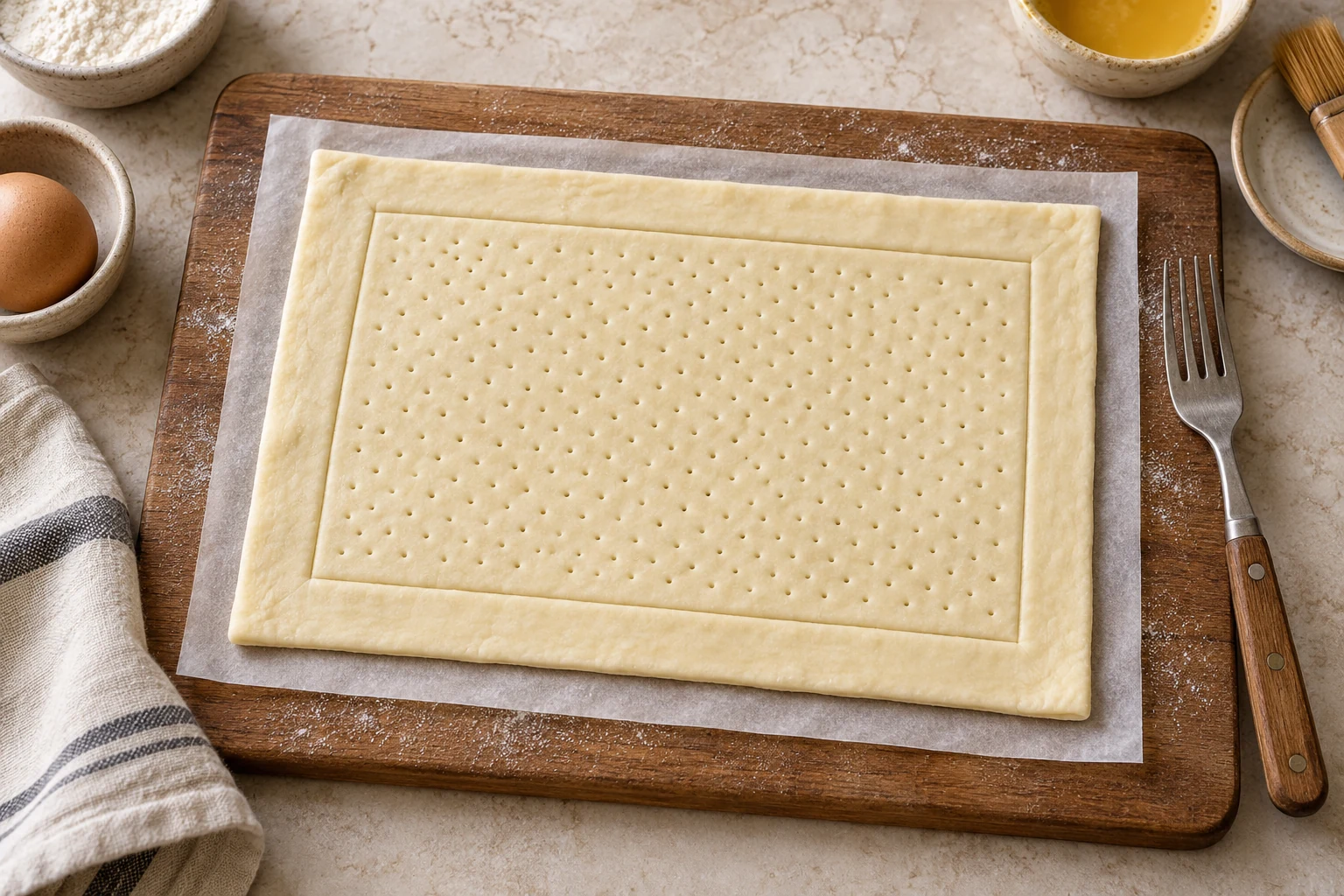
Some recipes call for a shallow border score around a puff pastry rectangle, marking where an interior filling should sit. Scoring should cut only the specified upper layers, not completely separate the border. Use the recipe's directions for depth and placement.
Docking is different from scoring
Docking means making many small holes with a fork or tool to limit puffing, typically in a centre that should stay flat. Scoring marks a line or decorative pattern, while cutting separates portions completely. Use each technique intentionally.
Leave space for expansion
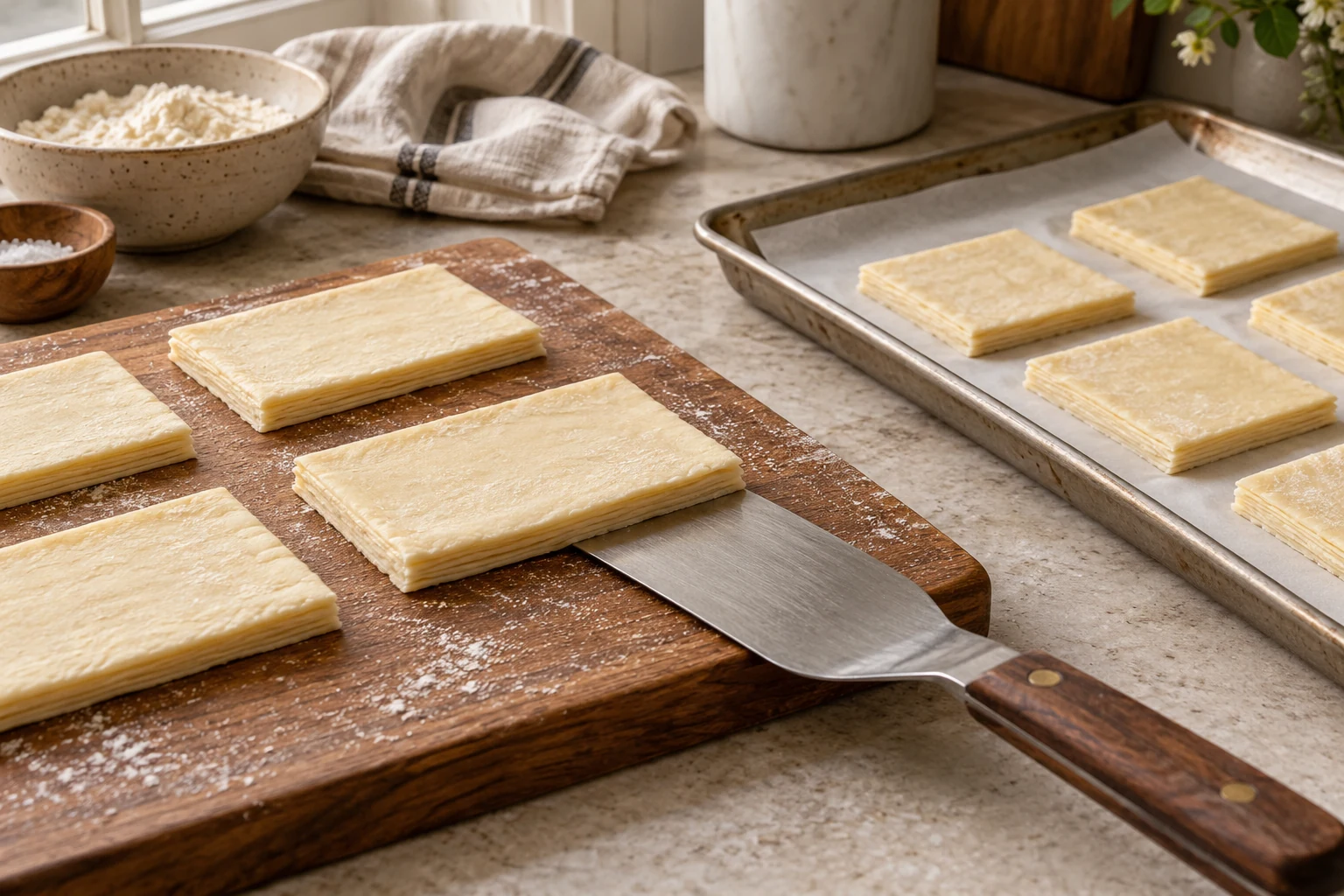
Puff pastry expands in height and may shift outward. Position pieces according to the recipe's baking-sheet spacing so their edges don't bake together. A tightly crowded tray can limit airflow and make the bottoms less crisp.
Sealing turnovers

Turnovers need joined seams, which may be pressed or crimped according to the recipe. Intentionally sealing the folded edge is different from crushing all four cut edges. Keep filling away from the seam, use the prescribed wash and avoid excess pressure in the areas meant to puff.
Why cutouts can become lopsided
Uneven rolling thickness, warm dough, damaged edges and crowded trays all contribute. Try consistent thickness and a short chill after shaping. Avoid combining too many scraps into a thick patch that rises unpredictably.
Handling scraps

Puff pastry scraps have laminated layers already oriented in particular directions. Kneading them into a ball destroys much of that alignment. Some recipes stack scraps and roll gently for simple shapes; don't expect reworked pieces to puff like untouched sheets.
Cutting baked puff pastry
A crisp baked sheet may shatter under a blunt knife. For mille-feuille, some chefs cut sheets before baking or use a careful sawing motion with a sharp serrated knife after baking, depending on the dessert. Raw puff and baked puff need different cutting techniques.
Food safety while handling
Keep butter-rich raw pastry cool and follow the storage instructions for commercial or homemade dough. A pastry sheet containing perishable fillings should not sit on the counter for an extended period. Work in small batches if the kitchen is warm.
Frequently asked questions
Can I use a pizza wheel? Yes, if it is sharp and doesn't crush edges. Why didn't my squares rise evenly? Uneven thickness, compressed edges or baking conditions may be responsible. Should I twist a round cutter? Generally avoid twisting laminated pastry. Can I reroll scraps? Only as the recipe permits, with reduced expectations for puff.
Let the layers do their work
Sharp tools, cold-but-pliable dough and gentle handling preserve puff pastry's engineered layers. Plan the cuts, transfer without squeezing and bake according to the formula. Clean edges are a small detail with a very visible payoff.
Related recipe: Apple Turnovers.
IN PICTURES
From the baking notebook
FROM THE RECIPE BOX


