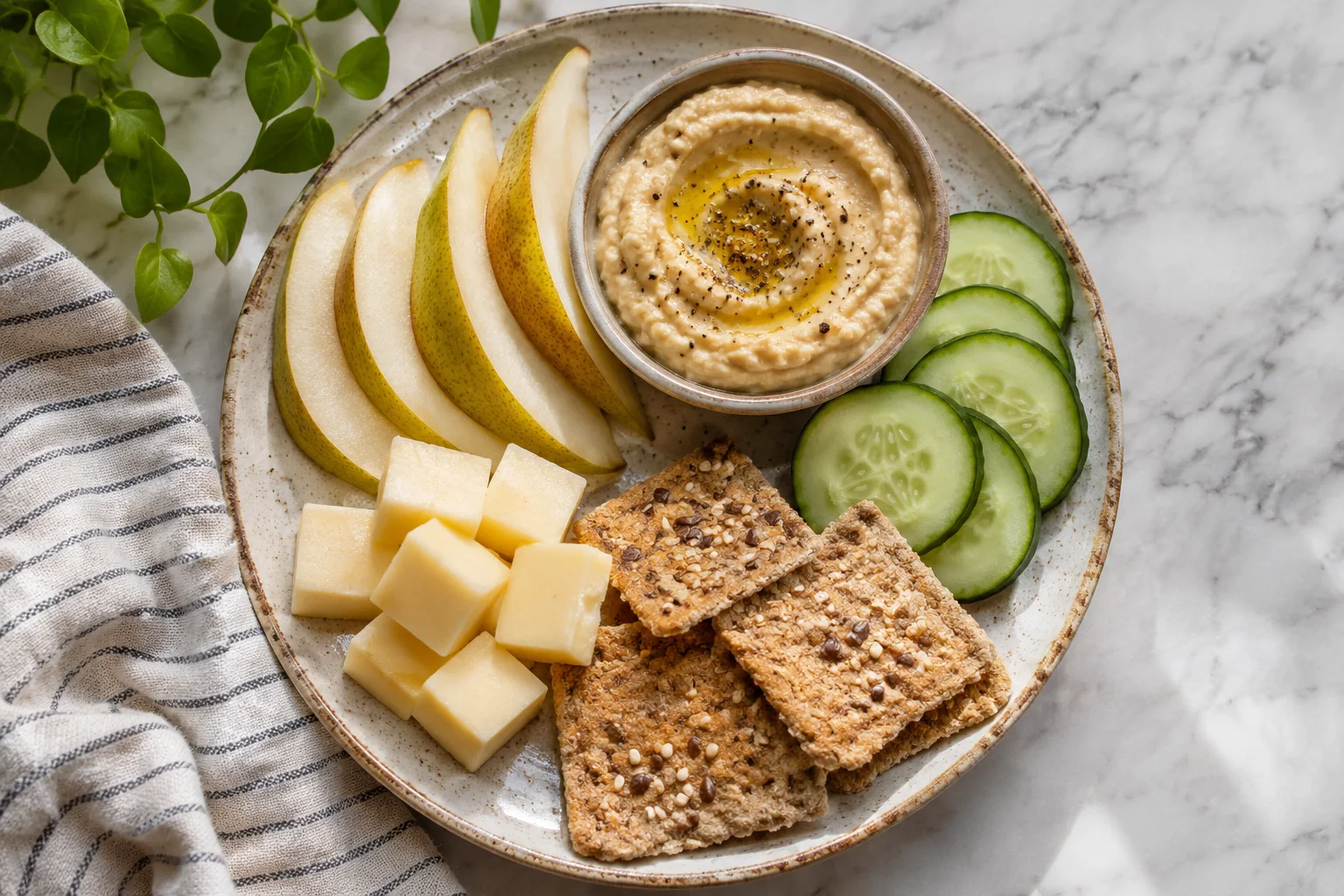
On this page
A snack can be more useful than a random handful of crackers when it helps bridge the gap between meals. A balanced snack plate brings together foods with different textures and nutrients, so it feels satisfying without becoming a second elaborate lunch. It can be a few slices of apple with cheese and whole-grain crackers, or hummus with crunchy vegetables and pita. The guiding idea is variety and convenience, not a rigid formula that everyone must follow.
Begin with hunger and the next meal
A snack eaten an hour before dinner serves a different purpose from one eaten after a long shift with several hours until the next meal. Adjust portions to appetite and schedule. If you're very hungry, a small complete meal may be more appropriate than a tiny plate designed only to look appealing.
A simple three-part framework
Choose a fruit or vegetable, a satisfying protein-containing food and a grain, starch or other energy source. Add a flavourful fat or dip when it suits the combination. A handful of ingredients can fill several roles: hummus contains legumes and fat, while yogurt offers protein and moisture.
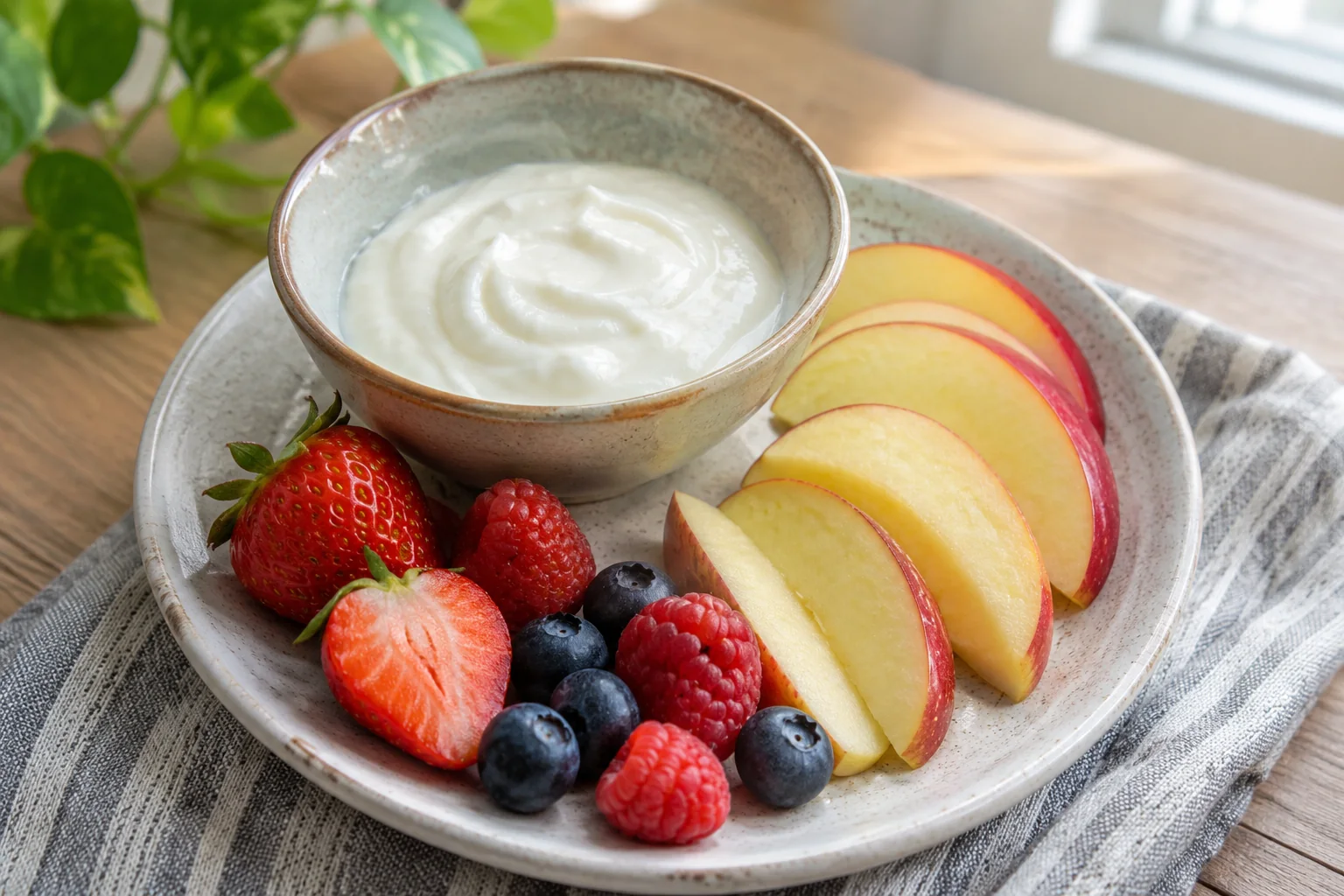
Fruit plus dairy or alternative
Apple slices with cheddar, berries with plain yogurt or a banana with a suitable nut or seed butter make easy combinations. If dairy isn't suitable, choose a fortified plant yogurt or another protein source as desired. Read labels because products vary widely in protein and added sugar.
Recipe to try: Fruit Yogurt Salad. Follow this recipe’s ingredient amounts and complete method.
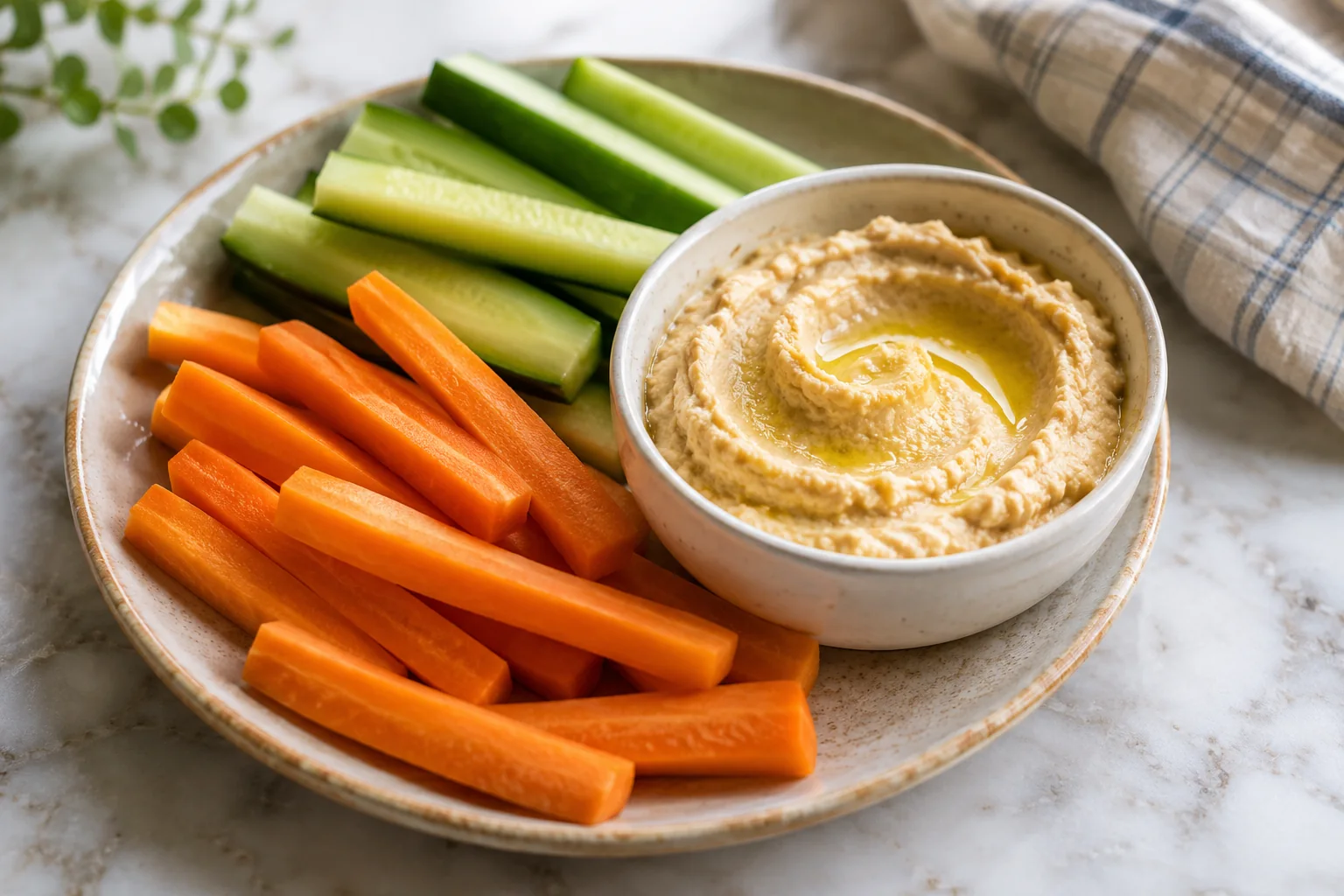
Vegetables plus hummus
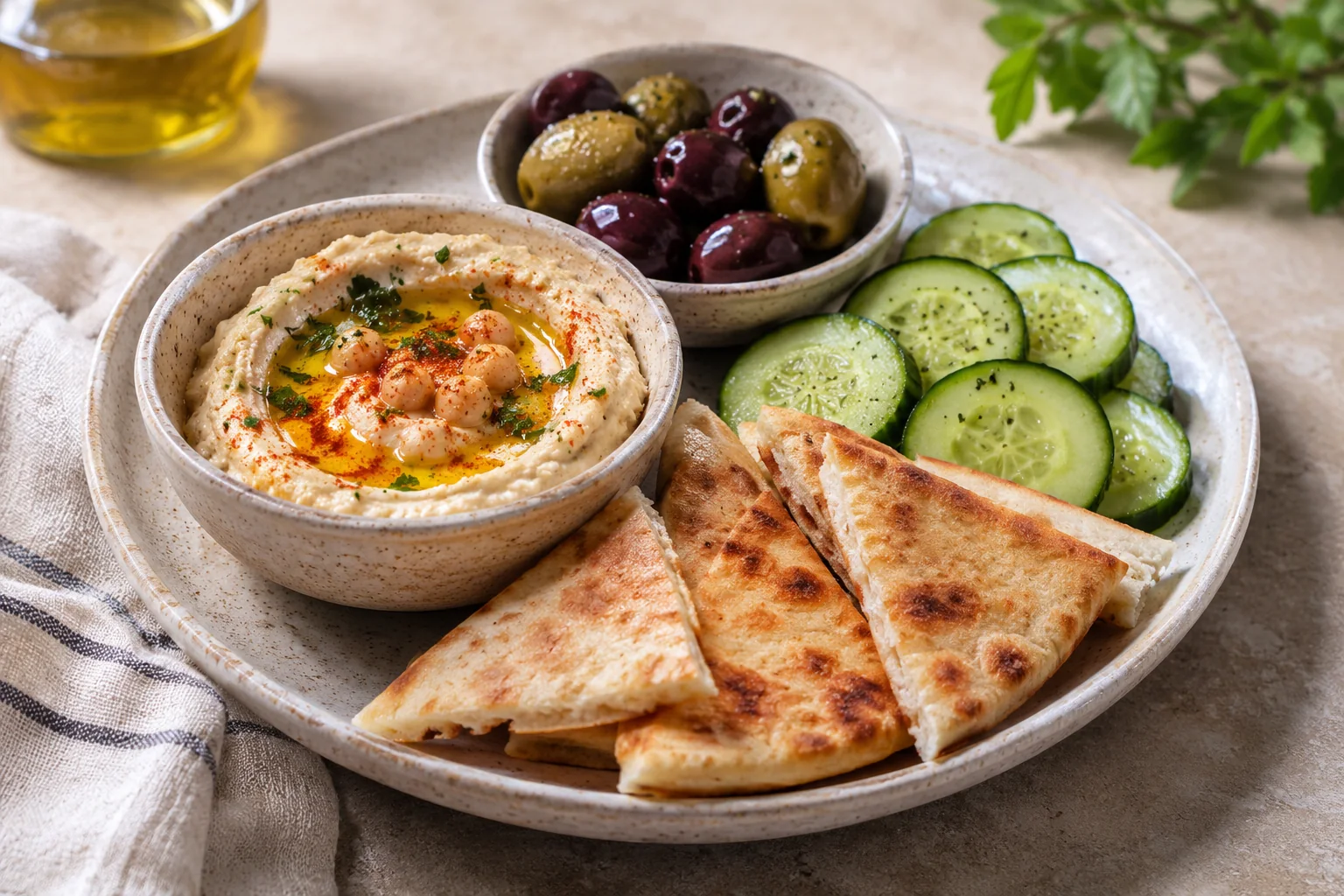
Carrots, cucumber and pepper strips are convenient with hummus. Add a few pita wedges or whole-grain crackers if the snack needs more substance. Hummus may contain sesame, and some commercial varieties contain significant sodium, so consider allergies and personal needs.
Recipe to try: Classic Homemade Hummus. Follow this recipe’s ingredient amounts and complete method.
Eggs and toast
A properly cooked hard-boiled egg with toast and sliced tomatoes can make a straightforward savoury snack. Prepare and store eggs safely, then keep them refrigerated before packing. A snack doesn't need to be cold if you are eating it immediately at home.
Yogurt and fruit plate
Plain Greek yogurt with berries and a sprinkle of oats or granola offers contrasting creaminess and crunch. Choose toppings thoughtfully when serving children, especially where whole nuts or very hard pieces may pose a choking risk. Add granola near eating time to preserve texture.
Beans as a snack anchor
Roasted chickpeas, a small bean dip or lightly seasoned edamame can make vegetables and crackers more filling. The exact texture depends on preparation; crunchy roasted legumes may be unsuitable for very young children. Cook and store legumes according to their product instructions.
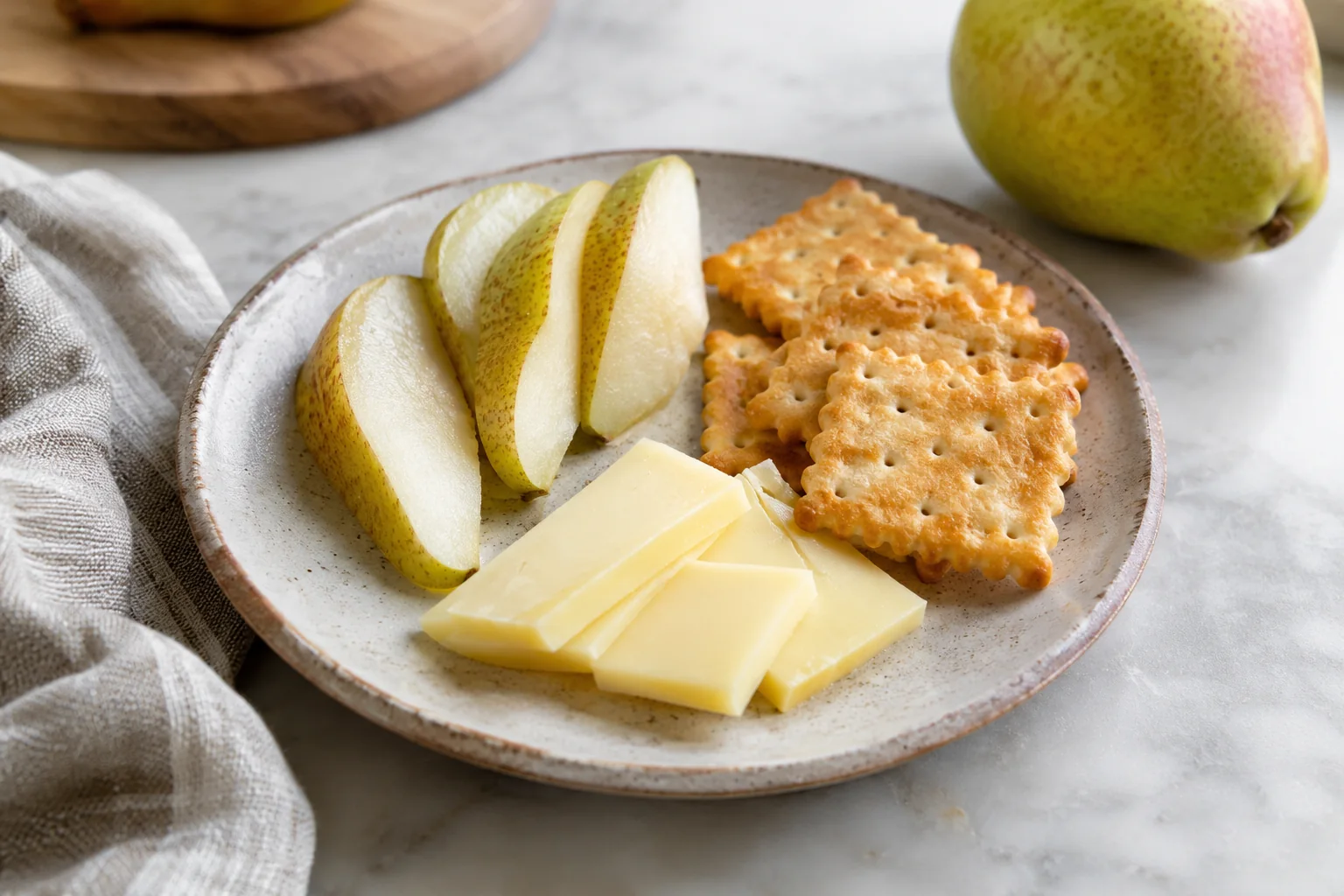
Cheese, pears and crackers
A few pieces of cheese, fresh pear and crisp whole-grain crackers offer creamy, juicy and crunchy textures. A sharp cheese can provide strong flavour in a modest portion. Replace cheese with tofu cubes or another suitable food when dairy is avoided.
Recipe to try: Homemade Cheese Crackers with String Cheese or Cheese Cubes. Follow this recipe’s ingredient amounts and complete method.
Nut and seed butter combinations
Smooth peanut, almond or sunflower seed butter can be paired with toast or fruit when safe for the eater. Nut and seed allergies require careful labeling and cross-contact prevention. At schools with restrictions, check the specific policy rather than assuming sunflower butter is automatically permitted.
A savoury mini mezze plate
Combine cucumber, cherry tomatoes, hummus, a few olives and pita. Cut food appropriately for young children and be mindful of salty additions. This flexible format is useful when you have several vegetables but not enough of any one ingredient for a separate meal.
Recipe to try: Sourdough Crackers. Follow this recipe’s ingredient amounts and complete method.
A quick snack for two
Set out sliced apple, a bowl of yogurt, crackers and a little cheese. Each person can choose according to hunger and preference. This creates a relaxed snack without making multiple pre-portioned packages that may go uneaten.
For busy workdays
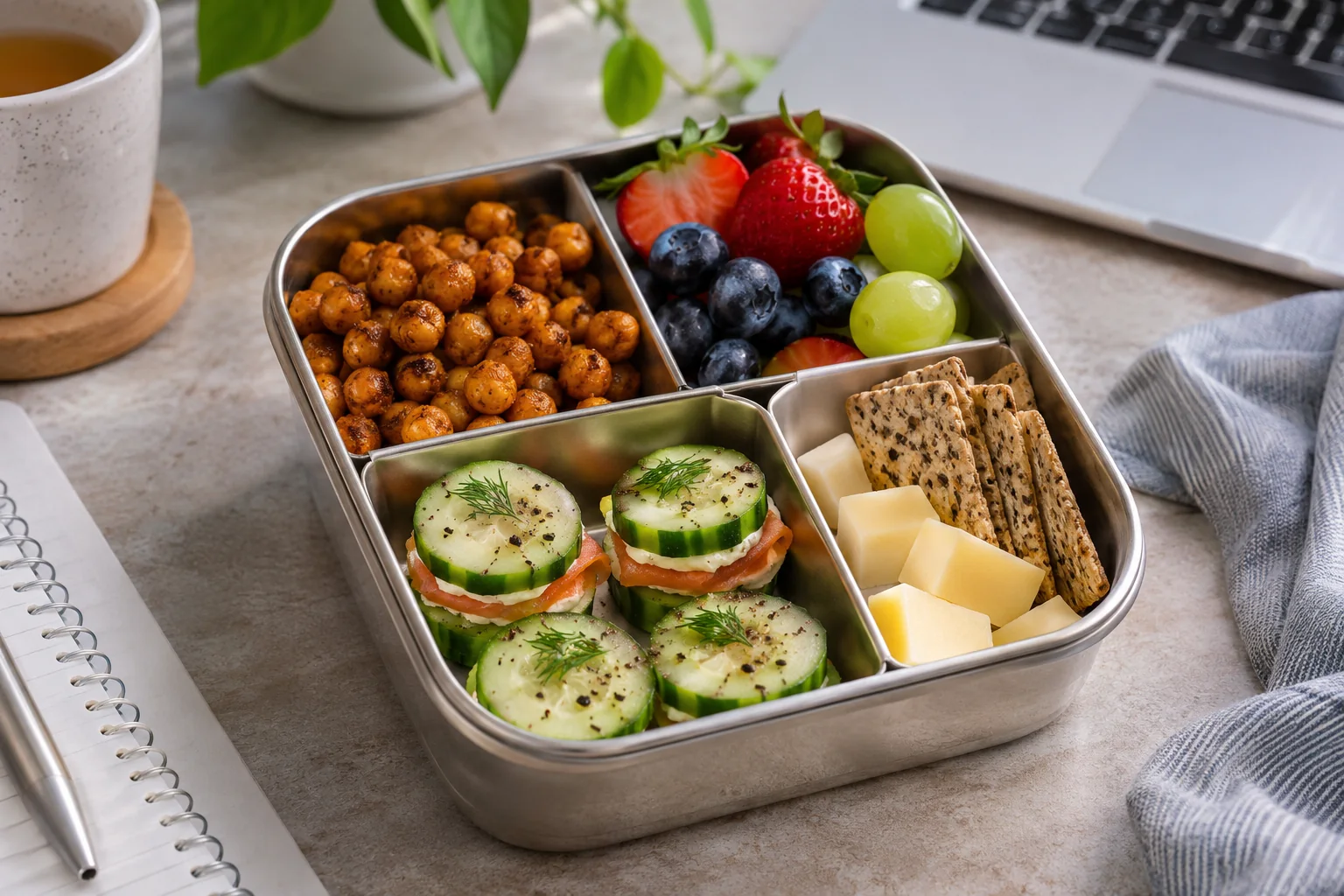
Choose items that transport predictably: a piece of whole fruit, crackers, an appropriate refrigerated cheese or yogurt, and cut vegetables in a sealed container. Pack perishables in an insulated lunch bag with cold packs. Don't leave dairy sitting on a desk through a long shift.
Recipe to try: Keto Cucumber Sandwich Bites. Follow this recipe’s ingredient amounts and complete method.
For school lunchboxes
Select foods appropriate to the child's age and school allergy policy. Use fruit prepared safely, a familiar protein-containing item and an easy-to-open grain option. Check whether the child can manage the containers independently. An attractive plate idea is only helpful if it becomes a practical packed snack.
For an afternoon energy dip
Pair carbohydrates with a source of protein or fat if that combination feels satisfying. Examples include toast with peanut butter, crackers with cheese or fruit with yogurt. Hydration, sleep and the timing of meals also affect energy; a snack isn't a cure for every cause of fatigue.
Portioning without obsession
Use a small plate or divided container as a practical guide, then let appetite, age and activity influence how much you serve. Avoid prescribing identical snack portions to a child, an active adult and someone with different nutrition needs. The framework is flexible by design.
Make colour useful
Red peppers, green cucumber, orange carrots and purple berries look inviting while offering variety. You don't need a rainbow at every snack. Choose two produce items you enjoy and can afford, changing them with seasons and availability.
Avoid a snack plate made only of dips
Three bowls of sauces with almost no substantial food may not satisfy hunger. Choose an anchor such as crackers, bread, eggs or beans and balance it with produce. Similarly, an enormous board of cheese and nuts can be more like a meal than a light snack.
Make it affordable
Use apples, carrots, bananas, canned chickpeas, oats, eggs and store-brand yogurt according to budget and preferences. Pre-sliced fruit and individually packaged snacks can save time but often cost more per serving. A few reusable small containers can simplify preparation.
Prepare components, not entire plates
Wash and cut suitable vegetables, portion crackers into dry containers and store dips separately. Assemble shortly before eating to keep textures pleasant. Cut fruit may brown or release moisture if prepared too early; lemon can help some fruits but doesn't replace refrigeration.
Food safety is part of preparation
Keep dairy, eggs, hummus and cut produce properly chilled at 4°C (40°F) or colder, and avoid leaving perishables at room temperature beyond safe limits. Clean hands and utensils matter especially when preparing several days of snacks for the family.
A week of simple combinations
Monday: apple, cheddar and crackers. Tuesday: hummus, peppers and pita. Wednesday: yogurt, berries and oats. Thursday: egg, toast and cucumber. Friday: pear, sunflower butter and whole-grain crackers. Repeat favourites rather than treating variety as a daily requirement.
A balanced snack should feel easy
A small selection of foods you enjoy, prepared safely and in suitable portions, is more helpful than a complicated board that takes forty minutes to assemble. Start with produce, add something satisfying and make the plate fit your real day.
IN PICTURES
From the baking notebook
FROM THE RECIPE BOX


