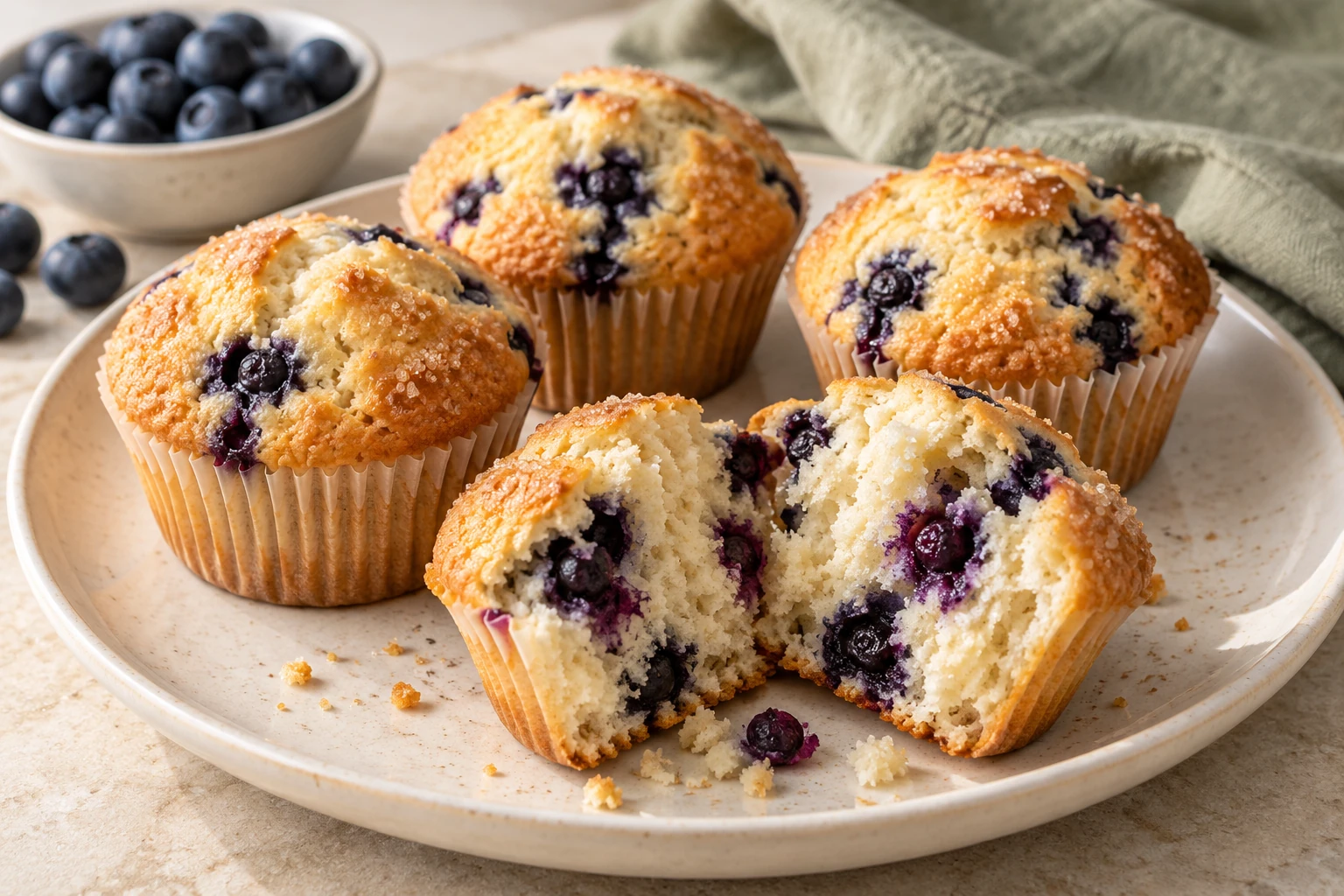
On this page
A bag of frozen berries makes fresh-tasting blueberry muffins possible even when berries are out of season. But when you tip the berries into batter, the result can be unexpectedly purple, stiff, streaky or wet at the centre. Frozen fruit behaves differently from fresh fruit: it lowers batter temperature, can release extra juice as it cooks and may break apart during mixing. A few technique changes help you enjoy juicy berries without losing a tender muffin crumb.
Can you use frozen berries in muffins?
Often yes. Many established muffin recipes allow frozen blueberries or other small berries to replace fresh berries, usually in the same measured quantity. The best result comes from following the recipe's frozen-fruit instructions. Some muffins tolerate the swap with almost no changes; others require an extended baking time or a different handling method.
Should you thaw frozen berries first?
For many blueberry muffin recipes, add berries while they are still frozen.
Why frozen berries stain the batter
Blueberry skins contain coloured pigments that can spread into the batter as juice escapes. Warmth, crushing and prolonged stirring increase the effect. Frozen berries can be particularly fragile once their surface starts thawing. Purple streaks are generally a presentation issue, not evidence that the muffins are unsafe.
How to keep the batter from turning purple
Keep berries frozen until the batter is ready. Fold them in at the final step with a flexible spatula and use only the strokes needed to distribute them. Portion promptly instead of leaving the berry-filled bowl on the countertop. The longer frozen berries sit and begin thawing, the more likely their juice is to colour the batter.
When rinsing frozen blueberries helps
This can remove some surface pigment. Work efficiently so the berries remain as cold and intact as possible.
When not to rinse berries
Not every frozen berry needs or benefits from rinsing. Soft raspberries may break apart, while cut strawberries have a very different structure from small blueberries. Rinsing adds water if fruit isn't thoroughly dried. Follow the specific recipe's instruction rather than applying the blueberry trick indiscriminately.
Choose the right frozen fruit
Whole frozen blueberries are convenient because their small size distributes readily in ordinary muffins. Raspberries can work but may break into the batter, while larger strawberries often need a recipe that specifies how to prepare and portion them. Mixed-berry bags vary in fruit size and juice content, so check whether your chosen recipe permits the mixture.
Use the same measured fruit quantity
Frozen berries are not a reason to increase the amount simply because they seem compact in the bag. Weigh the fruit if the recipe provides grams. Adding more than recommended can crowd the crumb, create wet pockets and make muffins difficult to bake through.
How to fold in frozen berries
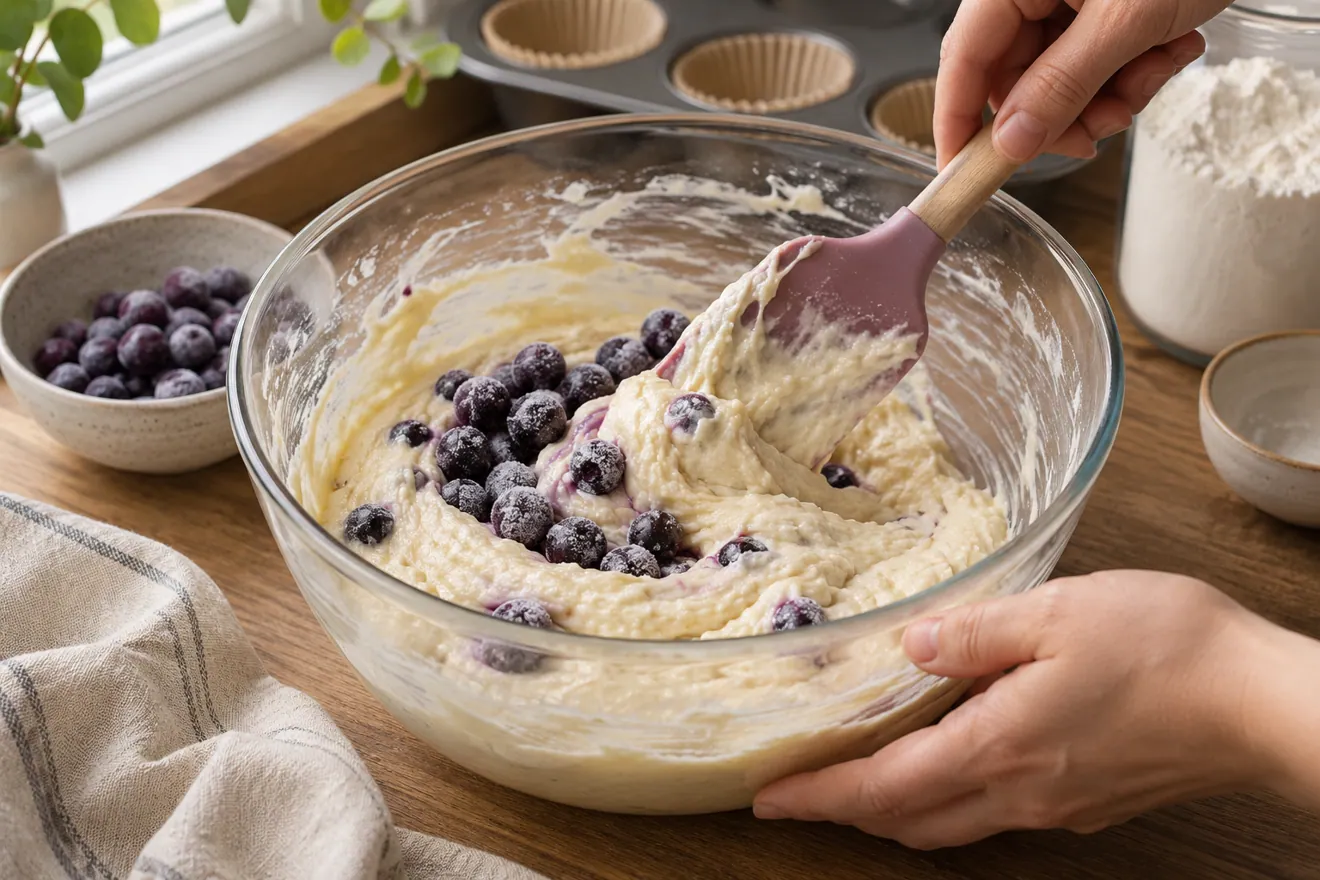
Finish mixing the muffin batter according to the recipe before adding fruit. Scatter berries over the surface and fold with a flexible spatula using broad, gentle movements from the bottom of the bowl. Stop as soon as the fruit is reasonably distributed. Vigorous mixing can crush berries and toughen some wheat-flour batters.
Scoop under the batter with the spatula and turn it over the fruit. Stop once the berries are distributed with no dry streaks, then portion the batter.
Why the batter becomes very thick
Frozen berries cool the mixture, and some batters stiffen noticeably as a result. Butter-based formulas can also firm when they encounter cold fruit. A thick mixture does not automatically need extra milk.
A thick batter can be right for the recipe. The thick texture of Pumpkin Muffins, for example, comes from pumpkin purée. With a frozen-berry batter, check the recipe before thinning it with extra liquid.

Should you coat frozen berries with flour?
Some home bakers toss fruit in a little flour to reduce sinking, but the technique isn't consistently necessary and cannot compensate for a batter with the wrong viscosity. Adding extra dry flour changes the ingredient balance. Only use a measured coating when the recipe specifies it.
Why berries sink to the bottom
Fruit may sink when the batter is very thin or pieces are especially heavy. Check the measured batter ingredients and fruit size rather than automatically coating every berry in flour. Using a thick muffin recipe intended for juicy additions is often more effective than adjusting a thin cake batter.
Will the muffins need longer in the oven?
Often they will. Frozen fruit absorbs heat as it warms, so the centre of the muffin may take longer to reach the required doneness. This is a recipe-specific observation, not a guarantee for every oven and muffin size.
Use Blueberry Muffins for an example with an initial hotter bake followed by a lower oven temperature. Check the centre for wet batter before taking the muffins out.
How to check doneness accurately
Begin checking around the recipe's earliest stated time, then continue until the crumb is properly baked. Insert a tester into the cake portion of a centre muffin, avoiding a juicy berry pocket. A streak of fruit juice is different from raw batter. Follow any thermometer or visual endpoint supplied by the recipe.
A skewer pushed through a berry can come out purple. Try a second spot near the centre away from a berry. The skewer should come out free of wet batter.
Bake muffins through before tasting them. Wait until the muffins have baked through before tasting them.
How to prevent wet centres
Do not add unmeasured extra berries, and keep the batter portion size consistent. Bake in the specified pan and allow for the cold fruit's influence. If the tops are golden but the centres are raw, check oven accuracy and pan capacity before trying a new fruit ratio.
Frozen blueberries in mini muffins
Mini muffins have a small amount of batter around each berry, so oversized fruit pieces can dominate the centre. Use a mini-muffin recipe with suitable berry size and amount. Check for doneness earlier than standard muffins, but recognize that frozen berries may still require a little additional time within the recipe's range.
Frozen raspberries in muffins
Raspberries are delicate and tend to break into smaller pieces, especially as they thaw. Handle them gently and avoid long mixing. A recipe designed for raspberry muffins may expect visible streaks and a softer fruit texture; don't treat those characteristics as automatic defects.
Frozen strawberries and mixed berries
Strawberry pieces and mixed berries vary considerably in size. Large frozen chunks can leave wetter pockets than whole blueberries. Choose a muffin formula specifying fruit preparation and quantity rather than replacing tiny berries with large frozen pieces without adjustments.
Do frozen berries change the colour after baking?
Some berries may tint the crumb near the fruit even with careful handling. This can look attractive in a rustic breakfast muffin. If a very clean yellow crumb matters for photography, use a tested blueberry-rinsing approach or fresh berries when available.
How to avoid soggy muffin bottoms
Once muffins are baked, follow the recipe's short pan-rest instructions and transfer them to a wire rack. Leaving hot muffins in the pan for too long traps steam below the liners and can soften the bases. Wrap or freeze only after appropriate cooling.
Can frozen berries be used in streusel muffins?
Often, yes, provided the batter formula tolerates frozen berries. The crumb topping may need a well-baked base beneath it; excess berry juice can soften the top and centre. Choose a tested streusel blueberry muffin recipe rather than doubling the berries and topping simultaneously.
Try Blueberry Streusel Muffins for a formula that accepts fresh or unthawed frozen blueberries. Check the centre when the crumb topping turns golden.

Food handling and storage
Keep frozen fruit at the temperature on the package. Follow package directions for cooking. If the fruit matches a recall, return or discard it as the notice directs. Rinsing fruit to reduce colour bleeding does not change its recall status.
Bake muffins through before tasting them. Refrigerate muffins with perishable fillings or toppings according to the recipe.
Frequently asked questions
Do I need to defrost blueberries? Many muffin recipes say no. Why did the batter become blue? Berry pigments escaped during mixing. Will they take longer to bake? They may; check the recipe's doneness instructions. Can I use mixed berries? Choose a formula tested for their size and juice content. Will rinsing always help? It can reduce blueberry colour bleed, but is less suitable for delicate berries.
A reliable frozen-berry workflow
Preheat the oven and prepare the muffin tin first. Measure fruit and keep it frozen while you mix. Fold berries in briefly at the end, portion immediately and bake until the crumb tests done. With this sequence, frozen berries become a year-round convenience rather than a reason for purple, underbaked muffins.
Related recipe: Blueberry Muffins.
Some images are AI-generated illustrations of the dishes and techniques described.
IN PICTURES
From the baking notebook
FROM THE RECIPE BOX


