On this page
Puff pastry that is too thick can remain doughy in the centre; pastry rolled too thin can lose structure, tear and barely puff. A common question is how thin to roll the sheet, but there is no single answer for every pastry. A turnover, vol-au-vent, palmier and mille-feuille ask the dough to behave differently. The correct goal is an even thickness matched to the recipe, while keeping butter layers intact.
Start with the purpose of the pastry
Before rolling, decide whether the dough is for a baked pastry case, a filled turnover or a thin sheet intended to be layered with cream. Each requires different support and expansion. Use the thickness specified by the particular recipe or commercial pastry package rather than an across-the-board number.
Commercial sheets may already be ready
Some frozen puff pastry products are supplied in sheets that can be unfolded and cut with minimal rolling. Others are sold as blocks intended for rolling. Read the manufacturer instructions before reducing thickness. Unnecessary rolling can make an evenly laminated sheet less consistent.
Thickness often varies by application
Many pastry recipes work with thin sheets on the order of a few millimetres, sometimes near ⅛ inch, but specific pastries may require thicker or thinner dough. A deep vol-au-vent needs enough material for a strong raised ring, while a crisp mille-feuille sheet may be rolled or weighted differently.
Why even thickness matters
When one section is thick and another nearly translucent, the two areas bake at different rates. The thin section may brown too quickly, while the thicker part remains soft. The rise can also look lopsided. Measure at several points rather than checking one corner.
Work from cold, pliable dough
Butter layers should be cool and structured, not greasy or melting. Dough that's frozen hard may crack when unfolded, while overheated dough becomes sticky and may smear layers together. Use the recipe's thawing and refrigeration instructions.
Roll from the centre outward
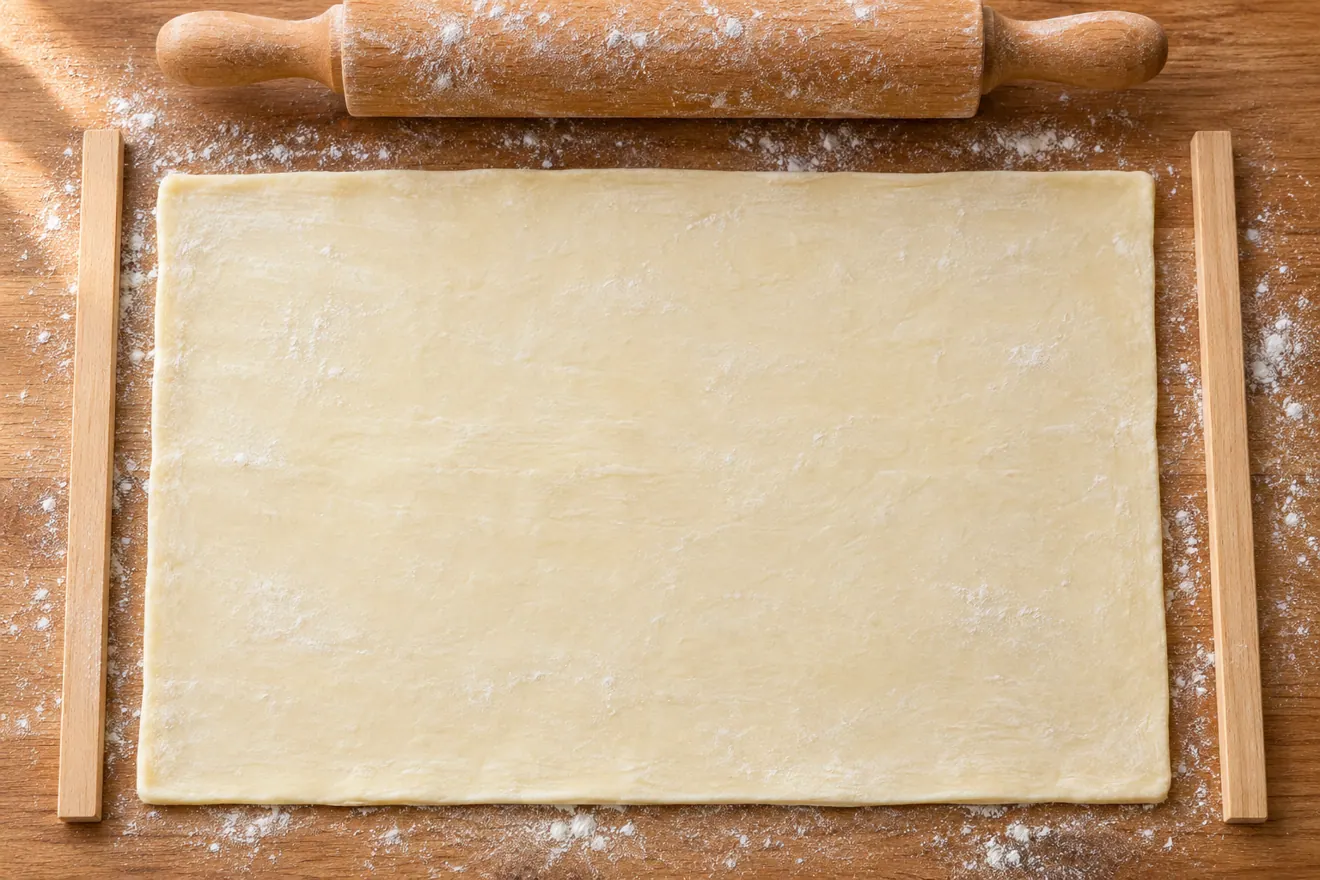
Apply steady gentle pressure with a rolling pin, moving across the sheet in controlled strokes. Rotate as appropriate and avoid rolling only at one end. A forceful flattening motion can distort the lamination, especially when butter and dough have different firmness.
Use thickness guides when learning
A pair of appropriate rolling guides or a calibrated pin can help maintain a consistent final sheet. Choose a setting that matches the recipe rather than treating the guide as a universal pastry standard.
Keep the surface lightly floured
Dust just enough to prevent sticking, then brush away excess. Heavy flour can dry the surface and interfere with a turnover's seal. If dough begins sticking because fat has warmed, chill it rather than continuing to work in large amounts of flour.
Don't stretch the pastry by hand
Pulling a sheet to fit a pan creates uneven thickness and tension. The dough may shrink during baking and the corners can become paper-thin. Roll to the required dimensions, then lift it gently with a rolling pin or other safe transfer method.
Rolling for turnovers
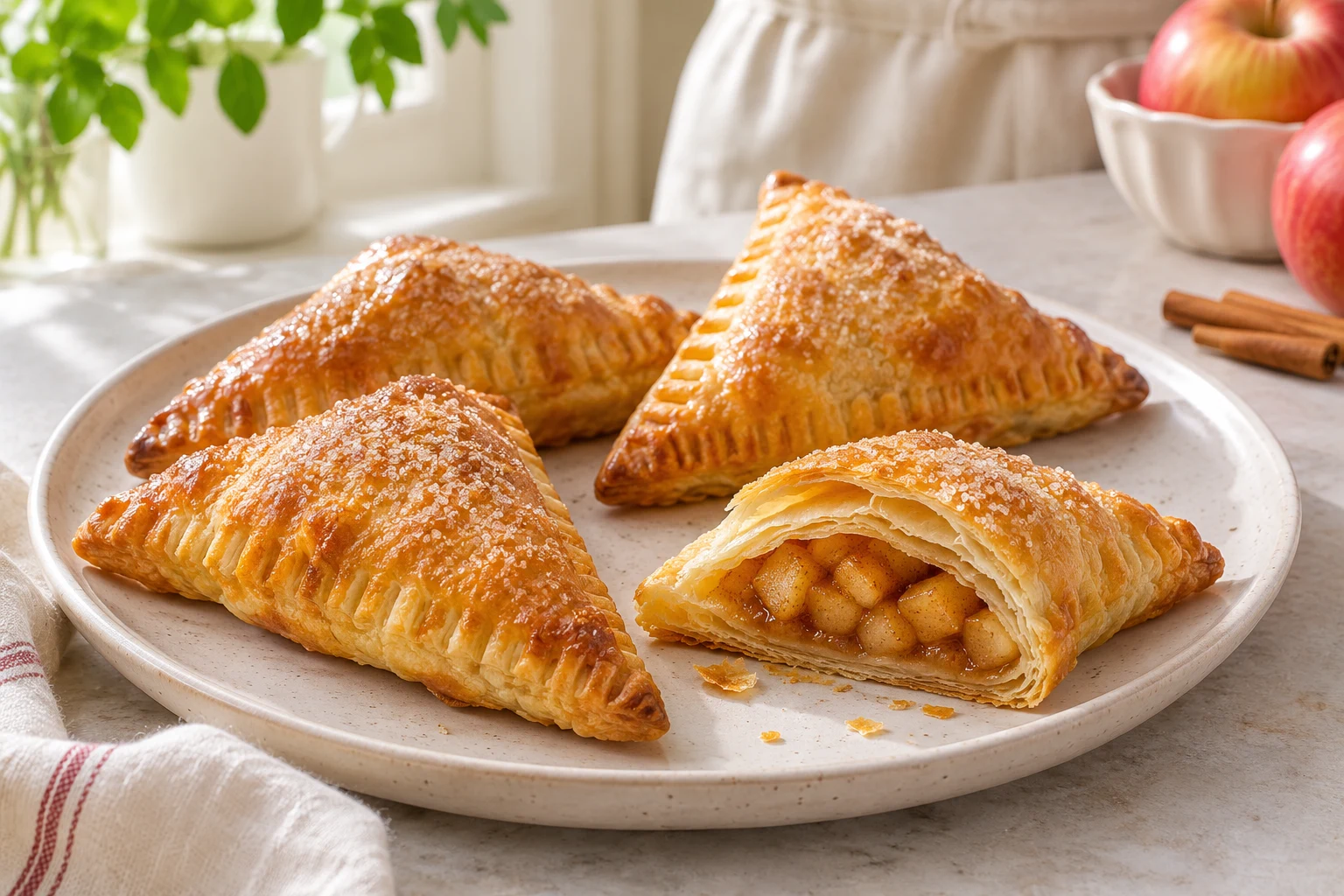
Turnovers need enough dough to enclose filling, seal the edges and puff without splitting. Very thin pastry can leak; very thick pastry can make the centre underbaked relative to the filling. Follow a turnover recipe designed for the pastry you're using.
The pastry for Apple Turnovers is rolled to approximately 3 mm before it is cut and filled. Return it to the refrigerator if the layer starts to soften.
Rolling for a tart base
A puff-pastry tart may need a border score and docking in the centre to control rising. The thickness must support the fruit and keep a crisp bottom. Some recipes use a preheated baking surface or a fully baked shell before adding wet toppings.
Rolling for mille-feuille
Layered pastry desserts often require flat, crisp sheets rather than towering puff. Recipes may dock the dough or bake it between sheets or with weights. The final thickness and baking method are part of one system, so don't simply roll excessively thin to force flatness.
Rolling for palmiers
Palmiers rely on repeated folds and sugar-coated surfaces. Their thickness and cutting width determine the spiral and crispness. Keep the dough cool and use the method supplied by the recipe, rather than pressing the sugar in so aggressively that layers are destroyed.
Roll a block to about 3–4 mm in Palmiers. The recipe gives separate instructions for a pre-rolled sheet.

Lamination versus ordinary pie dough
Puff pastry contains many repeated layers of dough and fat. A conventional flaky pie crust has a different fat distribution and handling tolerance. Advice to knead or rework pie dough shouldn't automatically be applied to laminated puff pastry.
What if the sheet springs back?
The gluten may need a rest, especially after repeated rolling. Wrap and chill or rest as the recipe directs so the dough relaxes. Forcing the sheet to hold a new shape can cause shrinkage later.
What if butter breaks through?
Butter that is too soft may smear or leak through the dough; very hard butter can crack into pieces. Either can compromise lamination. Stop and correct the temperature gently rather than adding large amounts of flour and continuing to roll aggressively.
What if the sheet tears?
Small tears may be handled with a recipe-approved patch, but multiple openings that expose butter indicate the dough may need rest or a different rolling method. Repeatedly gathering puff pastry into a ball sacrifices the layers that make it rise.
Chill after shaping
Many recipes return assembled pastry to the refrigerator briefly before baking. This firms fat and may improve shape retention. The chill time is formula-specific. A pastry containing wet filling still needs proper food-safe handling.
Baking until layers are cooked
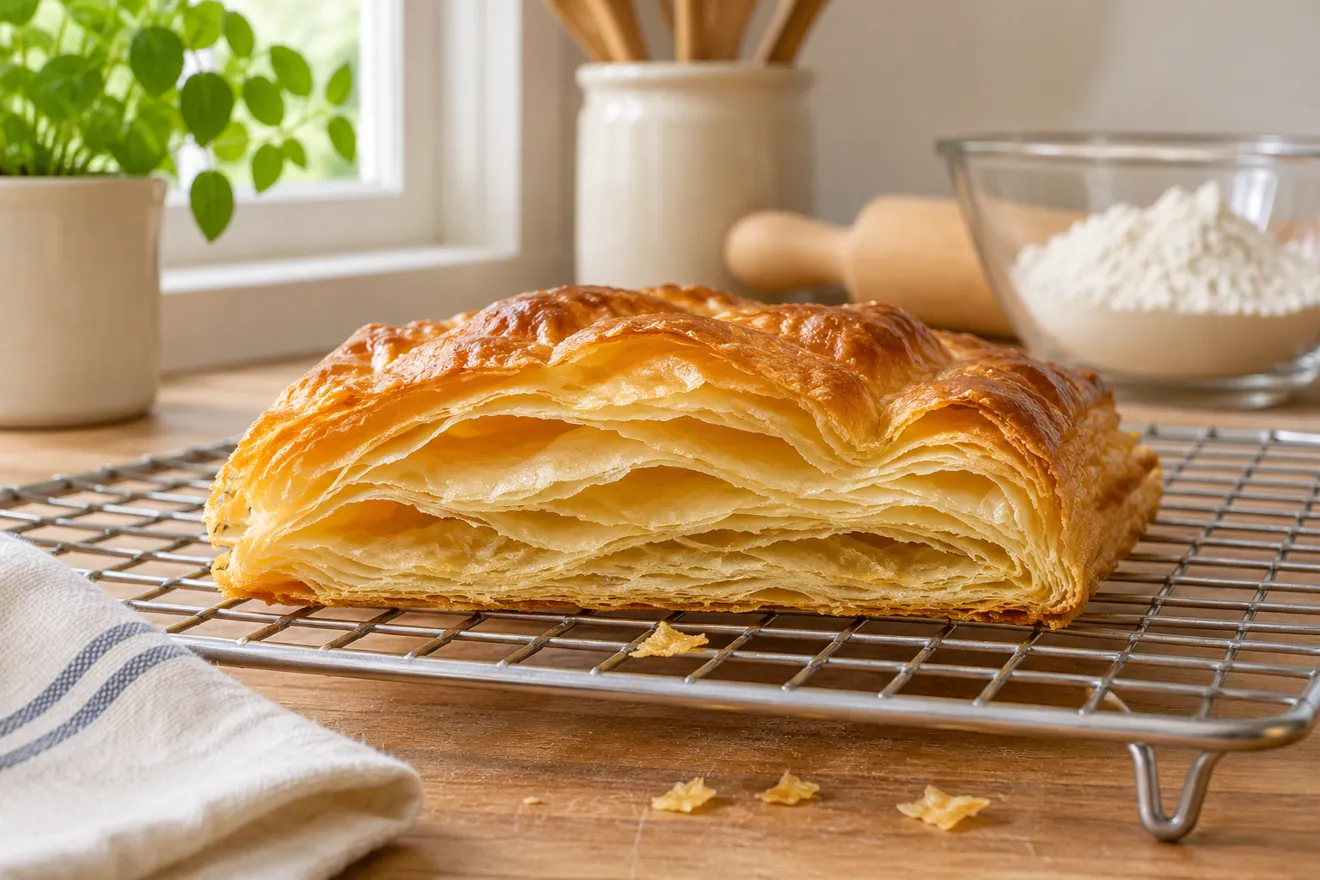
A browned top isn't always enough when pastry is thick or carries moist toppings. Check the base and interior according to the recipe. A very pale bottom can remain soft regardless of an impressive puffed edge.
Look at an exposed edge as well as the top. A glazed surface may darken before the layers between the outer and inner edges finish cooking.
Bake dough through before tasting.
Frequently asked questions
Is ⅛ inch always right? No, it's one common reference point. Should I roll store-bought sheets? Only as the package or recipe requires. Why did puff collapse? Warm butter, compressed edges, insufficient baking or wet filling may contribute. Can I fix excess thickness after cutting? It's better to roll evenly before portioning.
Roll for the pastry in front of you
Maintain the butter layers, aim for even thickness and use the exact dimensions the dessert requires. The most impressive puff comes from controlled lamination and baking, not the thinnest possible sheet.
Related recipe: Apple Turnovers.
Some images are AI-generated illustrations of the dishes and techniques described.
IN PICTURES
From the baking notebook
FROM THE RECIPE BOX


