On this page
A pie dough recipe says it makes one crust, but your deep pie dish demands more pastry than the dough seems willing to provide. Or you double the recipe and end up with piles of scraps after weaving a lattice. Dough quantity matters because it determines whether you can line the pan without stretching and finish the rim without thick, badly patched seams. A reliable approach uses the actual pan dimensions and tested dough yield.
What does one crust mean?
A single-crust pie uses a pastry shell on the bottom and sides, generally without a full pastry lid. It can hold a pumpkin custard, lemon filling or an open fruit pie with a streusel top. A double-crust pie uses enough additional pastry for a top sheet or lattice. The amount isn't necessarily two identical dough balls.
Why pan depth changes dough needs
A nine-inch pie plate with shallow sides requires less rolled area than a deep-dish nine-inch pan. The pastry must cover the full interior and an overhang for the rim. A wide flared dish also differs from one with nearly straight walls. Read the recipe's pan size and depth, not just its diameter.
Use the recipe's original yield
Its ingredients include 300 g flour plus measured fat and water. That total illustrates a complete formula; it is not a universal pie dough weight for every brand, dish or pastry style.
A practical starting estimate
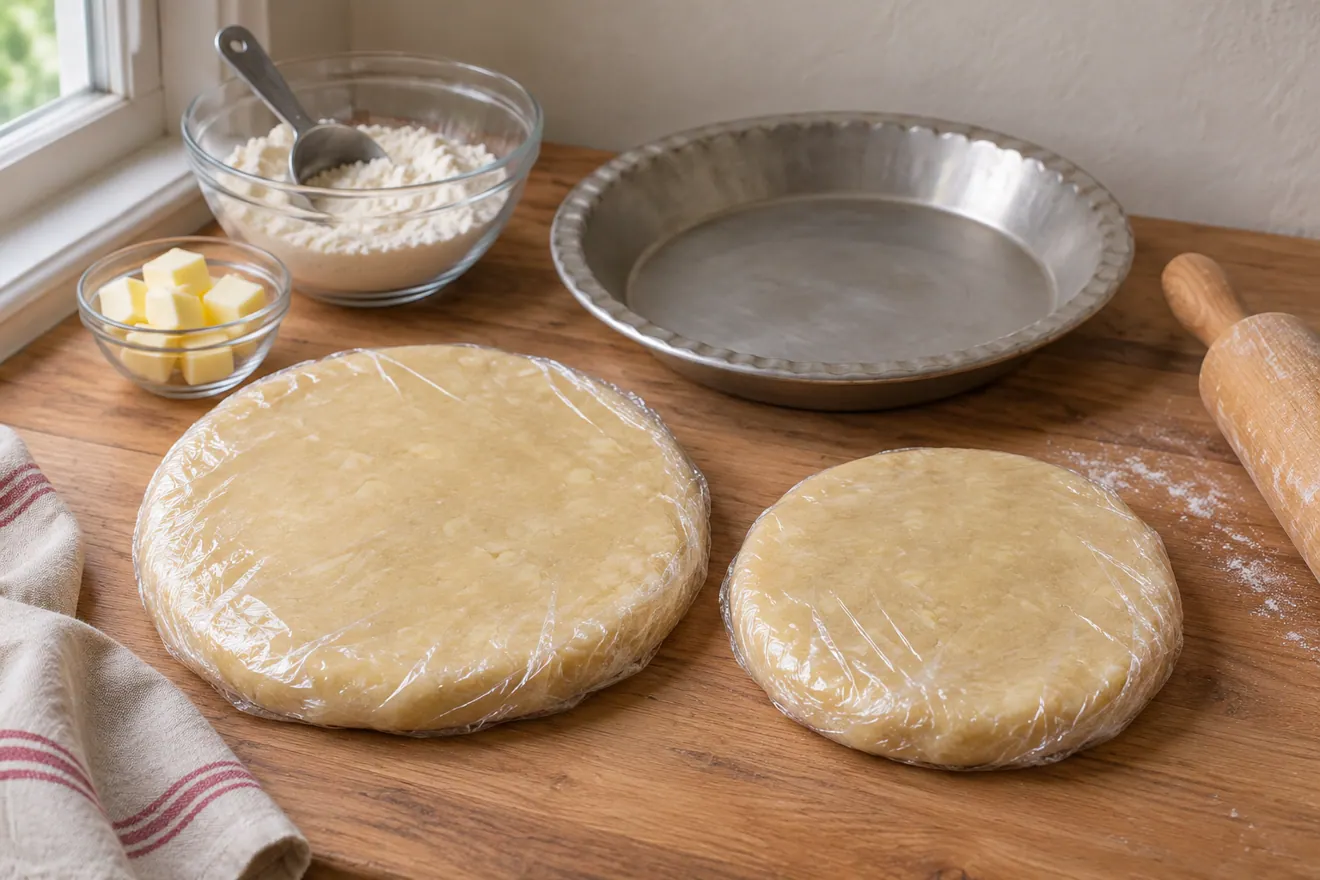
Many conventional nine-inch pie recipes use roughly one batch of pastry for a single crust and twice that or a separately scaled formula for a top-and-bottom pie. The top may need slightly less dough than the lower crust if it doesn't have to reach down the pan sides. Follow the actual recipe rather than assuming equal portions.
Why deep-dish needs extra pastry
A deeper dish adds wall area and often a more substantial decorative rim. If a recipe says standard nine-inch and you use a deep dish, simply rolling the same dough thinner may cause tears and uneven baking. Choose a deep-dish formula or scale by an authoritative pan-volume or pastry-yield conversion.
Lattice isn't automatically half a top crust
A lattice leaves gaps, so it can use less material than a solid top, but strips need enough length to cross the full pie and allow trimming. Wide woven strips, braids or decorative cutouts can use more than you expect. Start with a recipe whose yield includes the chosen lattice design.
The pastry in Strawberry Rhubarb Pie divides about 60 to 40 between bottom crust and topping. Set the full top portion aside before rolling the base.

Think in rolled circles
For many ordinary nine-inch pies, a base circle may be roughly twelve to thirteen inches across when rolled to the recipe's thickness. A shallow dish may need less, while a deep dish may need more. Rolling dimensions provide a better planning clue than counting cups of flour in isolation.
How to check your pan before mixing
Measure the opening diameter and approximate interior depth, and look at the design of the rim. A pan with wide handles or an exaggerated lip may need more overhang for a crimped finish. Use the pan's manufacturer capacity if available.
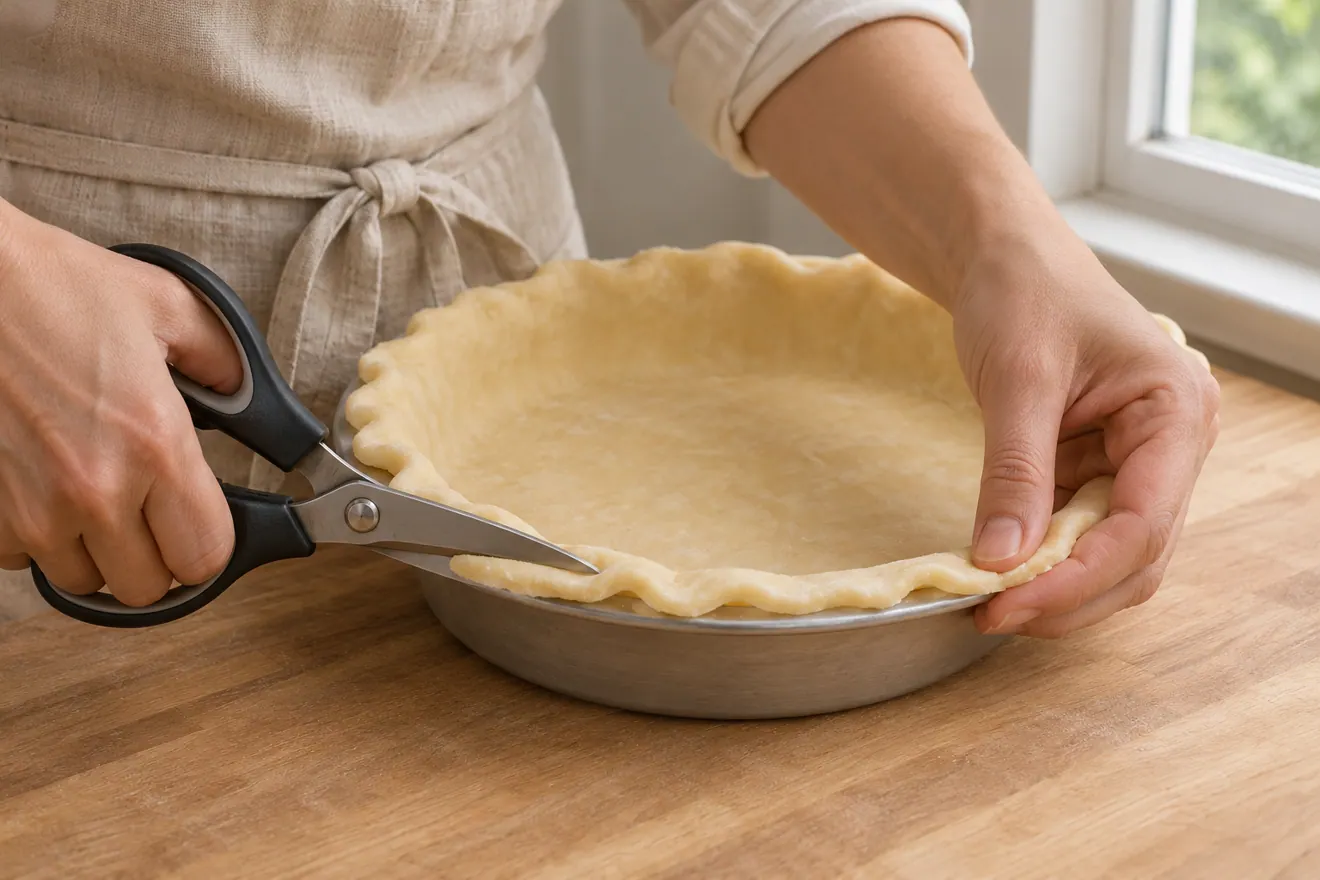
If your dish differs from the one in the recipe, measure across its opening and add enough for the two sides and planned overhang. Compare that with the diameter given for the rolled sheet before starting.
Use a scale for consistent portions
Weigh the mixed dough before dividing. If the recipe calls for more dough underneath than on top, divide accordingly. A lower crust for a deep dish generally benefits from enough material to line the walls naturally, whereas an overly thick solid lid may take too long to bake.
Divide pastry about two-thirds for the base and one-third for the top in Classic Apple Pie. Weigh the dough first so the larger portion matches the size of the dish.

Plan a modest safety margin
A small margin allows trimming and repair, especially if you're new to rolling pastry. Too much extra dough isn't a reason to create a huge doubled-over rim, which can remain doughy. Keep the edge proportionate to the filling and pastry type.
Do not stretch the dough
Pulling a too-small circle to the rim may cause shrinkage in the oven. If it won't fit without tension, roll again within the method's safe handling limits or make an appropriately sized fresh batch. Stretching is not a substitute for enough pastry.
Can you re-roll scraps?
Some doughs tolerate one gentle re-roll of cool scraps for small cutouts. Repeated reworking can develop gluten and incorporate excess flour, making pastry less tender. Use the original dough for the main shell and reserve reworked pieces for modest decorations if the recipe permits.
Hand pies require a different calculation
Individual turnovers need repeated cutouts and often more seams relative to filling volume. A dough batch making one large pie may produce a variable number of hand pies depending on the diameter of each round. Use a hand-pie recipe giving expected yield and individual dough weight.
For Apple Hand Pies, reserve one round of dough for each base and another for each lid. Count both when planning how many rounds the dough must yield.
Mini tarts and tartlets
Mini tart rings are shaped differently from pie plates. Dough quantity depends on depth, diameter and whether you're pressing or rolling the pastry. A very thin sweet tart shell can be fragile, and a thick one can dominate the filling. Select a tested tartlet recipe for your equipment.
Slab pies
A slab pie may use a rectangular baking sheet or pan and requires pastry for a much larger surface area than a round pie. Don't treat one nine-inch pie crust as automatically covering a half-sheet pan. Look for a tested slab-pie formula and its intended dimensions.
No-roll and press-in crusts
Some recipes press pastry or cookie crumb mixtures into the pan rather than rolling. The required weight still depends on surface area and thickness, but the method uses different distribution and compression. A rolled flaky-pastry calculator isn't automatically appropriate for a pressed crumb crust.
Freezing extra dough
Many pastry recipes allow unused dough to be shaped into disks, tightly wrapped and frozen for later. Label quantities and dates so you know whether a disk suits a single crust or a lattice topping. Follow the dough's thawing and safe storage instructions.
What if dough is too little midway through lining?
Don't force a paper-thin base to create extra rim material. If only a small repair is needed, use a chilled patch according to the recipe. If the entire circle is short, make more dough or change to a shallower suitable dish before filling.
What if you have too much dough?
Trim cleanly and use suitable scraps for small decorations or a separate pastry snack, respecting raw flour food safety and baking them completely. Avoid stacking leftover pastry heavily onto the rim; the thick area can remain underbaked.
Frequently asked questions
How much dough for a nine-inch pie? Use the tested formula for its pan depth and crust style. Can one crust make a lattice? Not usually if it is already needed for the bottom. Is double-crust dough exactly twice single-crust dough? Sometimes, but pan and design affect portions. How do I plan a deep dish? Choose an appropriate recipe and pan capacity.
Measure the dish before the dough
The easiest way to avoid pastry shortages is to plan the crust type, measure the actual pan and follow a recipe with enough yield to roll evenly. Then trim and crimp deliberately rather than stretching or building uneven patches at the last moment.
Related recipe: Classic Apple Pie.
Some images are AI-generated illustrations of the dishes and techniques described.
IN PICTURES
From the baking notebook
FROM THE RECIPE BOX


